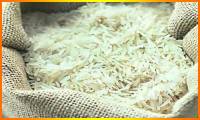
Rice export rules relaxed for select European countries.
India on Friday said that the requirement for a certificate of inspection from Export Inspection Council (EIC)/Export Inspection Agencies (EIAs) for rice exports is limited to the EU, UK, Iceland, Liechtenstein, Norway and Switzerland. 'Exports to other European countries are exempt from this requirement for six months,' the Directorate General of Foreign Trade (DGFT) said in a notification. The DGFT also revised the policy to export feathers, skins and other parts in line with applicable regulations of the EU and UK, including provision for issuance of Veterinary Health Certificate wherever required by the importing country.
Source: economictimes.indiatimes.com
West Asia conflict: Govt to setup weekly monitoring mechanism to track exim trends.
The government will setup a weekly monitoring mechanism to track export-import trends and sectoral stress indicators amid concerns that supply chain disruptions, logistics constraints and rising input costs due to geopolitical tensions could impact industries, the commerce and industry ministry said Friday. In a statement, it said that Customs have agreed to examine specific cases relating to destuffing to further streamline procedures with regard to hazardous cargo.
Source: economictimes.indiatimes.com
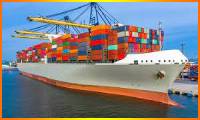
West Asia crisis: Piyush Goyal meets Kuwait, UAE to restore trade, energy flows.
Commerce and Industry Minister Piyush Goyal on Friday held separate discussions with his Kuwaiti and UAE counterparts on containing disruptions in energy supplies and restoring trade flows at the earliest. India's trade with West Asia has been disrupted severely because of the attack by the US and Israel on Iran.
Source: economictimes.indiatimes.com
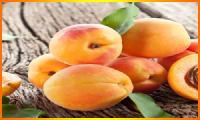
Ladakh turns to apricot blossoms to stretch short tourism season.
In a bid to extend the tourism season beyond the traditional summer months, the Tourism Department in the cold desert region of Ladakh has been organising Apricot Blossom Festivals across multiple villages, drawing inspiration from Japan’s famed cherry blossom celebrations. The festival is already underway in several locations, with apricot orchards in full bloom, transforming parts of the region into swathes of white and pale pink and attracting a growing number of travellers as well as local visitors.
Source: thehindubusinessline.com
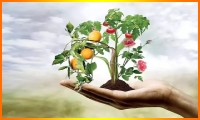
Structural gaps affect growth of India’s high-value horticulture sector: Report.
The FICCI-Grant Thornton report -- ‘Vision 2030: Focusing on high-value horticulture for Aatmanirbhar Bharat’ -- has said that persistent upstream weaknesses, fragmented value chains, and weak market anchoring have limited the realisation of India’s high-value horticulture sector, though the sector has the scale, market demand, and policy momentum to become a central driver of farmer income growth and agri industrialisation. The report highlighted that a mission-led, market-backed transformation anchored in clean planting material production, orchard rejuvenation, localised processing, export readiness, and productive partnerships is essential to unlock durable value.
Source: thehindubusinessline.com
Union Agriculture Minister Shri Shivraj Singh Chouhan releases the agricultural roadmap for four districts; observes Integrated Farming Model and interacts with farmers at Advanced Agriculture Festival.
Union Minister for Agriculture and Farmers’ Welfare, and Rural Development, Shri Shivraj Singh Chouhan presented a major initiative for farmers on the second day of the Advanced Agriculture Festival being held in Raisen, Madhya Pradesh, by releasing a comprehensive agricultural roadmap for four districts — Sehore, Raisen, Vidisha, and Dewas. On this occasion, he also inspected an Integrated Farming Model with the objective of promoting modern agriculture practices. At the same time, during special sessions organised at the Festival on the Crop Insurance Scheme and Integrated Farming, the Union Minister directly interacted with farmers, listened to their problems in detail, and held extensive discussions with scientists and experts to find practical solutions.
Source: pib.gov.in
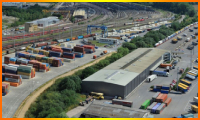
Department of Commerce and Ministry of Ports, Shipping and Waterways Hold High-Level Meetings to Address Packaging, Logistics and Shipping Challenges Amid West Asia Situation.
The Government of India has continued its proactive and coordinated response to the evolving situation in West Asia by convening high-level stakeholder consultations to address emerging logistics, packaging and shipping-related challenges impacting India’s trade and export ecosystem. In this regard, two important meetings were held, one under the chairpersonship of the Commerce Secretary and another co-chaired by the Secretary, Ministry of Ports, Shipping and Waterways (MoPSW) and the Commerce Secretary, bringing together senior officials, port authorities, shipping agencies, Export Promotion Councils (EPCs), industry representatives and other stakeholders.
Source: pib.gov.in
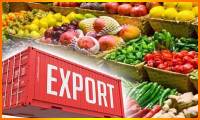
West Asia conflict & India’s agri exports: Building resilient supply chains in uncertain times.
India’s agricultural export story has been built on steady demand from West Asia. Over the years, the region has emerged as a dependable market for staples such as basmati rice, spices, fruits, vegetables, dairy, and meat. In 2025, India’s agri exports are estimated at $55 billion, with $11.8 billion flowing to West Asian countries alone. This level of concentration reflects strong trade relationships, but it also exposes a critical vulnerability.
Source: fnbnews.com

Dairy industry should enhance production, processing and marketing.
The dairy farming sector is a crucial component of the rural economy in India. Milk production has become a significant source of income for rural households. Dairy products, including milk, are integral to contemporary diets. In 2024, the Indian dairy market was valued at US$135.30 billion and is expected to grow substantially, reaching US$274.09 billion by 2032 with a compound annual growth rate (CAGR) of 9.33%.
Source: fnbnews.com
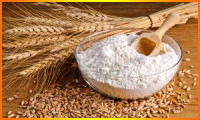
India set to double wheat, flour export quota to tap global price spurt.
India is set to more than double its export quotas for wheat, including for its flour products atta and maida, two people aware of the decision said. The move was cleared recently by a top panel monitoring supply of essentials amid the West Asia war, they said. This marks India's calibrated return to the global wheat markets after nearly four years.
Source: livemint.com