Indian wheat body urges FSSAI to issue crop-specific risk-based sampling and testing guidelines.
The Wheat Products Promotion Society (WPPS) has urged the Food Safety and Standards Authority of India (FSSAI) to issue a wheat-specific, risk-based sampling and testing guidelines, besides publishing an operational due-diligence check list for grain processors. In a letter to FSSAI chairperson Punya Salila Srivastava and CEO Rajit Punhani, WPPS Chairman Ajay Goyal said health-based food-safety standards should remain fully protective.
Source: thehindubusinessline.com

PMFME Conclave 2026 Concludes with Recognition of Top-Performing States, Banks and Grassroots Functionaries.
The PMFME Conclave 2026 organised by the Ministry of Food Processing Industries (MoFPI) on 24–25 August 2026 at India Habitat Centre, New Delhi, concluded today with a focus on sharing implementation experiences, strengthening stakeholder capacity and recognising excellence under the Pradhan Mantri Formalisation of Micro Food Processing Enterprises (PMFME) Scheme. The two-day Conclave brought together 500+ stakeholders from across the country, including representatives from States and Union Territories, State Nodal Departments/Agencies, District Nodal Officers (DNOs), District Resource Persons (DRPs), banks and financial institutions, Ministries and Government organisations, technical institutions, industry bodies, incubation centres and PMFME beneficiaries.
Source: pib.gov.in
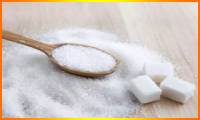
भारत का चीनी उद्योग
भारत का चीनी उद्योग कृषि, उद्योग और ग्रामीण आजीविका का एक बड़ा इकोसिस्टम है। भारत दुनिया का दूसरा सबसे बड़ा गन्ना उत्पादक देश है। गन्ना सेक्टर लगभग 5 करोड़ किसानों और चीनी मिलों व उनसे जुड़े उद्योगों में काम करने वाले करीब 5 लाख श्रमिकों को आजीविका प्रदान करता है।
Source: pib.gov.in
राष्ट्रीय व्यापारी कल्याण बोर्ड ने देशभर के व्यापारियों के साथ संवाद को मजबूत करने के लिए 100वीं वर्चुअल कॉन्फ्रेंस बैठक आयोजित की
राष्ट्रीय व्यापारी कल्याण बोर्ड (एनटीडबल्यूबी) ने आज अपनी 100वीं वर्चुअल बैठक आयोजित की। यह बैठक देशभर के व्यापारी समुदाय के साथ नियमित जुड़ाव को मजबूत करने की दिशा में एक अहम पड़ाव है।
Source: pib.gov.in

India-Russia FTA talks with EAEU reach advanced stage, says Russian Deputy PM Manturov.
India and Russia-led Eurasian Economic Union (EAEU) negotiations for FTA have reached an advanced stage, according to Russian First Deputy PM Denis Manturov who met External Affairs Minister S Jaishankar in Moscow this Monday. Manturov said the FTA that the Russia-led Eurasian Economic Union has been negotiating with India since August last year will be a new driver for sustainable trade growth. 'Its preparation is in an active stage and it is important to maintain a high pace of negotiations,' he mentioned at the 27th Session of the India-Russia Inter-Governmental Commission on Trade, Economic, Scientific, Technological and Cultural Cooperation, which he is co-hosted with Jaishankar in Moscow.
Source: economictimes.indiatimes.com
India’s merchandise exports rise 15% to over $25 billion in Aug 1-21.
The country's merchandise export during August 1-21 is estimated to rise by 15 per cent to more than USD 25 billion, an official said on Wednesday. During April-August 21 this fiscal, the exports crossed USD 200 billion, the official said.
Source: economictimes.indiatimes.com
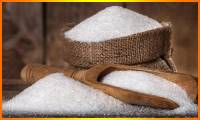
India To Redirect 350,000 Tonnes Of Export-Bound Sugar As Domestic Supply Tightens.
Indian sugar refiners will divert around 350,000 tonnes of sugar originally meant for export to the domestic market after authorities cleared the move to ease a supply shortage, according to a Bloomberg report. The stockpiles could be released to domestic buyers within a week, according the news agency. The quantity would be enough to meet India's total sugar demand for almost five days and could help bring down prices that hit a record high last week.
Source: outlookbusiness.com

Agricultural cooperation plays key role in Vietnam-India bilateral trade.
Vietnam and India’s recent decision to open their markets to fresh durian and grapes marks a strategic step toward diversifying agricultural exports and could provide fresh momentum toward the two countries’ goal of reaching $25 billion in bilateral trade by 2030. Agricultural trade has long been regarded as one of the most promising areas of Vietnam-India economic cooperation, but its potential remains largely untapped.
Source: en.vneconomy.vn
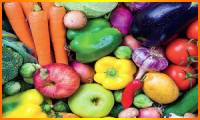
India starts new fruit and vegetable mandi in Kashmir.
The facility will be developed on 50 kanals of land with direct access to the Tangmarg-Gulmarg Road. It will serve the horticulture-producing belt of Tangmarg and surrounding areas, with the project expected to benefit around nine lakh people across 19 blocks in Baramulla and Budgam districts.
Source: freshplaza.com
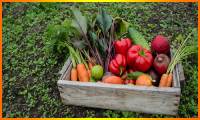
Nepal imports US$158.25 million in agricultural products via Kakarbhitta.
Nepal imported agricultural products worth Rs 24.2674 billion (US$158.25 million) through the eastern border crossing at Kakarbhitta during fiscal year 2025/26, according to Nand Kishor Singh, chief of the Plant Quarantine Office in Kakarbhitta. The imports came from India, China, Australia, and Bangladesh, and covered food, fresh vegetables, and fruits. Singh says food grains and pulses accounted for the largest share of the total.
Source: freshplaza.com