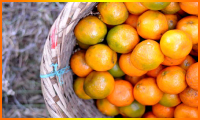
Indian orange exports continue flowing despite thin margins
Ansari highlights that the season splits into two main cycles, with certain timing variations observed across regions. "The Ambiya variety typically runs mid-September to the end of December, sometimes even mid-January. Mirug is harvested from the end of January until mid-April." He explains that Mirug oranges are more durable, sweeter, and better suited for long-distance trade. "Mirug can be stored in cold storage, allowing exporters to time sales during high demand periods. Ambiya oranges are more perishable and not suitable for cold storage, requiring quicker movement after harvest."
Source: https://www.freshplaza.com/

'Fair and balanced trade deal': MEA says deputy US trade representative to visit India on Dec 10-11
Deputy U.S. Trade Representative Rick Switzer will visit India on December 10-11, the Indian foreign ministry spokesperson said on Monday, as New Delhi looks to reduce punitive tariffs imposed on its goods by Washington for its purchase of Russian oil. "Both governments remain engaged with a view to concluding a fair, balanced, and mutually beneficial, multi-sectoral bilateral trade agreement,"
Source: https://economictimes.indiatimes.com/

Challenges Faced by Approved Units Under PLISFPI
The Ministry has not observed any operational challenges among the approved units under Production Linked Incentive Scheme for Food Processing Industries (PLISFPI). Support is provided under the PLISFPI scheme to facilitate greater participation of small and medium enterprises and diversification into new and value added product categories. Under the PLISFPI Scheme, 69 applicants and 40 contract manufacturers of the applicants are from Micro, Small and Medium Enterprises (MSME) Sector. Further, Ministry of Food Processing Industries (MoFPI) provides support to micro enterprises under Pradhan Mantri Formalisation of Micro Food Processing Enterprises (PMFME) and Pradhan Mantri Kisan SAMPADA Yojana (PMKSY) Schemes.
Source: https://www.pib.gov.in/
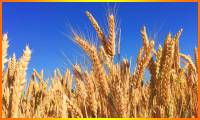
NDA govt doubled MSP, quadrupled crop procurement: Shivraj Singh Chouhan in Rajya Sabha
The NDA government has not only fixed the Minimum Support Price of crops at double their cost of production but has also increased procurement four-fold compared to the UPA government, Minister of Agriculture and Farmers Welfare Shivraj Singh Chouhan said in the Rajya Sabha on Friday. Responding to supplementaries during Question Hour in the Upper House regarding Minimum Support Price (MSP) for crops, Chouhan said the previous UPA government had refused to give a 50 per cent hike over the cost of production of crops as recommended by the Swaminathan Commission. However, the Modi government in 2019 decided to accept these recommendations and offer MSP with a 50 per cent margin over the production cost, he added.
Source: https://economictimes.indiatimes.com/
Development of Cold Chains and Post-Harvest Infrastructure
Under the Pradhan Mantri Kisan Sampada Yojana (PMKSY), one of the components is Scheme on “Integrated Cold Chain and Value Addition Infrastructure”. The objective of the component scheme is to provide integrated cold chain, preservation and value addition infrastructure facilities, without any break, from the farm gate to the consumer in order to reduce post-harvest losses. A total of 404 projects have been approved under the scheme of which 300 projects have been completed. The details of total number of cold chains, pack houses, reefer vans, ripening chambers, and cold storages available in the country,
Source: https://www.pib.gov.in/

Circular economy to boost dairy farmers' income by 20% in 5 years: Amit Shah
Union Home and Cooperation Minister Amit Shah on Saturday expressed confidence that implementation of the circular economy model across the country will increase dairy farmers' income by 20 per cent in the next five years. Shah was addressing cattle rearers associated with Banas Dairy at an event held at Sanadar village in Gujarat's Vav-Tharad district to mark the inauguration of the dairy's bio-CNG and fertiliser plant and ground-breaking of its milk powder plant. He praised Banas Dairy's management for successfully developing a model for a circular economy in the dairy sector, which includes generating extra income for farmers through various means, such as converting cattle dung into biogas and bio-fertiliser.
Source: https://www.thehindubusinessline.com/

Integration of FPOs with National Agricultural Value Chains
Further, FPOs are supported for availing input licences (seed, fertilizer & pesticide) & mandi licences for marketing of produce. To strengthen integration of FPOs in value chains, weekly webinars are being conducted for FPOs. Credit linkage and e-commerce enablement has also been supported. As on 31.10.2025, 4,642 FPOs are linked with the National Agriculture Market (e-NAM) platform, credit-linked subsidy has been sanctioned to 236 FPOs under the PM Formalisation of Micro Food Processing Enterprises (PM-FME) Scheme and 1590 FPOs have availed benefit under the Agriculture Infrastructure Fund (AIF). Under PM-KISAN, benefits are extended to individual eligible farmers and not to FPOs.
Source: https://www.pib.gov.in/
Boost in Domestic Production of Pulses to Reduce Import Dependence
The objective of the Mission is to enhance pulses production with a special focus on Tur, Urad, Masoor, promoting production and availability of climate resilient seeds for farmers, Increase area under pulses cultivation, promote post-harvest storage and management technology. The Mission also supports forassured procurement of Tur, Urad, Masoor by National Agricultural Cooperative Marketing Federation of India (NAFED) and the National Cooperative Consumers’ Federation (NCCF) for next four years as per the norms of Price Support Scheme (PSS) underPradhan MantriAnnadataAaySanrakshanAbhiyan (PM-AASHA). It is envisioned under the Mission for promotion of productive land use through horizontal and vertical expansion of pulses into underutilized and competing crop areas, increasing overall land productivity, encouraging sustainable crop rotations, and improving soil health.It is targeted under the Mission to reach total pulses production by 350 lakh tonnes by the end of 2030-31 to achieve self-sufficiency in pulses.
Source: https://www.pib.gov.in/
Crop Diversification and Promotion of High-Value Crops
The Department of Agriculture & Farmers Welfare (DA&FW) is implementing Crop Diversification Programme (CDP), a sub-scheme of Pradhan MantriRashtriyaKrishiVikasYojana (PM-RKVY), in the Original Green Revolution States viz; Haryana, Punjab and Western Uttar Pradesh since 2013-14 to divert the area of rice crop to alternative crops such as pulses, oilseeds, coarse cereals, nutri cereals, cotton etc. The CDP provides support to the farmers for four major components viz., (i) alternate crop demonstrations, (ii) farm mechanization and value addition, (iii) site specific activities and (iv) contingency for awareness, training, implementation, monitoring, etc.
Source: https://www.pib.gov.in/

Food Processing Through Green Technologies
Ministry of Food Processing Industries (MoFPI) supports renewable source of energy viz. Solar, Bio-mass, Wind, etc. for the project in the schemes and provides financial assistance for incorporating renewable/alternate energy technologies in food processing units, with a maximum permissible cost of ₹35 lakh per project under component schemes of Pradhan Mantri Kisan SAMPADA Yojana (PMKSY). Under component schemes of PMKSY, as per the Scheme guidelines, consent to operate (CTO) issued by the concerned state Pollution board/Agency in respect of Water and Air, is mandatory for release of instalment of Grant-In-Aid/Subsidy to the approved projects. Further, Project Implementation Agency (PIA) has to comply with the requirements of Cold Chain infrastructure as per the directions of Ministry of Environment, Forest & Climate change, Government of India with respect to use of Non-ODS (Non- Ozone depleting Substances) and low GWP (Low Global Warming Potential) refrigerants-based energy efficient cooling systems.
Source: https://www.pib.gov.in/