
International Year of Millets (IYM) 2023 kick starts with Focussed Activities being undertaken by Central Ministries, State Governments and Indian Embassies.
Spearheaded by the Prime Minister, the Government of India sponsored the proposal for International Year of Millets (IYM) 2023 which was accepted by the United Nations General Assembly (UNGA). The declaration has been instrumental for the Government of India to be at the forefront in celebrating the IYM. The PM of India, Shri Narendra Modi has also shared his vision to make IYM 2023 a ‘People’s Movement’ alongside positioning India as the ‘Global Hub for Millets’.
‘Millets’ were among the first crops to be domesticated in India with several evidence of its consumption during the Indus valley civilization. Being grown in more than 130 countries at present, Millets are considered traditional food for more than half a billion people across Asia and Africa. In India, millets are primarily a kharif crop, requiring less water and agricultural inputs than other similar staples. Millets are important by the virtue of its mammoth potential to generate livelihoods, increase farmers’ income and ensure food & nutritional security all over the world.
Recognising the enormous potential of Millets, which also aligns with several UN Sustainable Development Goals (SDGs), the Government of India (GoI) has prioritized Millets. In April 2018, Millets were rebranded as “Nutri Cereals”, followed by the year 2018 being declared as the National Year of Millets, aiming at larger promotion and demand generation. The global millets market is projected to register a CAGR of 4.5% during the forecast period between 2021-2026.
On 6th December 2022, the Food and Agriculture Organization (FAO) of the United Nations, organized an opening ceremony for the International Year of Millets – 2023 at Rome, Italy. The event was attended by a delegation of senior government officials from India. Next in the series, prior to the year-long celebration of ‘International Year of Millets (IYM) 2023’, the Department of Agriculture & Farmers Welfare hosted a special ‘Millet Luncheon’ for the Members of the Parliament at the Parliament house.
The Department of Agriculture & Farmers Welfare has taken a proactive multi-stakeholder engagement approach (engaging all the central government ministries, states/UTs, farmers, start-ups, exporters, retail businesses, hotels, Indian Embassies etc.) to achieve the aim of IYM 2023 and taking Indian millets globally. Ministries, states and Indian embassies have been allocated focussed months in 2023 to carry out various activities for promotion of IYM and increase awareness about benefits of millets for the Consumer, Cultivator and Climate.
Among central ministries, the activities related to IYM for the month of January 2023 will be kick started by the Ministry of Sports and Youth Affairs, Government of India. The ministry has planned 15 activities over 15 days in January which include engaging sports persons, nutritionists and fitness experts through video messages, conducting webinars on millets with leading nutritionists, dieticians and elite athletes, promotion amplification through Fit India App, etc. Some of the other ministries which have planned events in January are Ministry of Food Processing Industries which will be organizing Millet Fair-cum-exhibitions in Andhra Pradesh, Bihar and Madhya Pradesh; FSSAI will organize Eat Right Melas in Punjab, Kerala and Tamil Nadu etc.
With respect to states, Chhattisgarh, Mizoram and Rajasthan have been allocated the month of January for carrying out specific activities for sensitization and promotion of IYM. The states will be conducting millet centric activities including mahotsavs/ melas and food festivals, training of farmers, awareness campaigns, workshops/ seminars, placement of hoardings and distribution of promotional material at various key locations in the state, etc. Other states that are organizing similar activities in the month of January include Maharashtra, Uttarakhand and Punjab.
During January 2023, Agricultural and Processed Food Products Export Development Authority (APEDA) and DA&FW will be participating in the Trade Show in Belgium wherein a multi-stakeholder delegation with representatives from DA&FW, APEDA, start-ups, exporters and Farmer Producer Organizations (FPOs) will showcase the diversity of Indian millets through RTE and RTC millet-based products marketed by Indian companies, B2B, B2G interactions etc.
Moreover, Embassies of India across more than 140 countries will be participating in celebration of IYM during 2023 by conducting side events on IYM involving the Indian Diaspora through exhibition, seminars, talks, panel discussions, etc. In January, Embassy of India in Azerbaijan and Embassy of India in Belarus will be conducting activities such as B2B meeting with the participation of local chambers, food bloggers, importers of food items and local restaurants etc. Cooked Millets dish exhibitions/ contests will be organized with the help of Indian diaspora and Millets dishes will be served as part of the Republic Day celebrations. The High Commission of India in Abuja and Consulate General of India in Lagos, as part of promotion of IYM, have planned a Millets Food Festival and a Millets Food preparation competition in January 2023. The Millets Food Festival would be held at the High Commission premises and provide stalls for preparation with invitees including both Nigerian dignitaries and Indian community.
Towards this endeavour, through a collaborative approach, the DA&FW urges everyone including the International Organizations, Academia, Hotels, Media, Indian Diaspora, Start-up communities, Civil Society, and all others in the Millets value-chain to come forward and join hands to revive the forgotten glory of ‘Miracle Millets’ through the grand celebration of International Year of Millets - 2023.
Millets are also an integral part of the G-20 meetings and delegates will be given a true millet experience through tasting, meeting farmers and interactive sessions with start-ups and FPOs.
The spirit of the whole of government approach is truly being seen in the celebration of the International Year of Millets 2023.
Source: pib.gov.in

Agriculture GVA growth likely at 3.9% in FY23: ICRA.
India’s agricultural GVA growth is likely to be 4 per cent during third quarter (October-December) of current fiscal, but may slide to a record 3 per cent growth in next quarter. Improved fertiliser availability and healthy reservoir storage levels along with a likely increase of rabi sowing areas by 1-2 per cent from year-ago level will help the farm sector’s overall growth, according to a report by rating agency ICRA.
Rabi sowing rose by 4.4 per cent until December 23 from year-ago, covering 89 per cent of the total area sown in the 2021 season. 'Given the brisk sowing, improved fertiliser availability and healthy reservoir levels, rabi sowing in FY2023 is expected to exceed year-ago levels,' the agency said.
The agricultural GVA growth estimated at 3 per cent for the last quarter of current fiscal is due to base effect. The agri GVA growth in Q4 of FY22 was over 4 per cent.
The agency also said that overall farm sector GVA growth is projected to rise to 3.9 per cent in FY23 as against 3 per cent registered in FY22.
The GVA of agriculture, forestry and fishing has grown by 4.5 per cent in H1 FY23, even as the first advance estimates for kharif crop production displayed a mixed y-o-y trend for FY23, the ICRA report said. The GVA of other sub-sectors such as livestock and fisheries, recorded a CAGR of 6 per cent and 6.7 per cent, respectively during FY2017-21, higher than the 2 per cent growth seen in the crops sector in the period.
'The spell of excess rainfall during September-October 2022 is likely to have dampened yields, thereby posing some downside risk to the First Advance Estimates. However, the earlier fears of widespread crop damage now appear unfounded,' it said.
Further, it said that reservoir storage on a pan-India basis stood at 77 per cent of live capacity at Full Reservoir Level (FRL) as on Dec 22, higher than the year-ago as well as historical average levels, which aided in accelerating the pace of the sowing of rabi crops.
Rabi sowing is likely to exceed the year-ago levels in the ongoing season by 1-2 per cent, entailing an additional area of 8.7-9.4 million hectare in the remainder of the season against 10.6 million hectare in the same period of last fiscal.
Source: thehindubusinessline.com
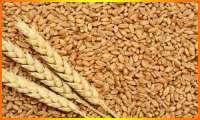
Wheat exports rise 30 pc to USD 1.5 bn in Apr-Nov.
Wheat exports rose 29.29 per cent to USD 1.50 billion during April-November this fiscal from USD 1.17 billion in the same period the previous year, the commerce ministry said on Friday. Though the government banned wheat exports in May, some shipments are allowed to meet the food security needs of the countries that request it.
The ministry said that Basmati rice exports too increased by 39.26 per cent to USD 2.87 billion during April-November 2022, while that of non-basmati rice registered a growth of 5 per to USD 4.2 billion in the same period.
'Wheat export has registered an increase of 29.29 per cent in eight months of the current fiscal as its export rose to USD 1508 million in April-November 2022 from USD 1,166 million in April-November 2021,' it added.
The outbound shipments of agricultural and processed food products rose by 16 per cent in the eight months of the current fiscal to USD 17.43 billion.
'For 2022-23, an export target of USD 23.56 billion has been fixed for the agricultural and processed food products basket and an export of USD 17.435 billion has already been achieved in eight months of the current fiscal,' the ministry said.
In April-November 2022, fresh fruits were exported to the tune of USD 991 million against USD 954 million in the corresponding months of the previous fiscal.
The export of pulses increased by 90.49 per cent in eight months of the current fiscal to USD 392 million, it added.
Similarly, dairy products recorded a growth of 33.77 per cent as its export rose to USD 421 million in April-November 2022 from USD 315 million in the year-ago period.
Source: economictimes.indiatimes.com
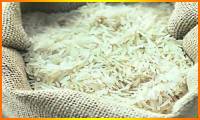
Rice Export: India's basmati rice is being cooked in these countries including America, Iran, Yemen, so many lakh tons were exported.
Rice Export From India: India has dominance in the world in terms of agriculture. India ranks among the top countries for producing and exporting many crops. India's sugarcane, wheat and coarse grains gather a lot of headlines in foreign countries. On the initiative of the Central Government, the next year is being celebrated in the form of coarse grains in the world. At the same time, India has emerged as the world's largest rice exporter. The rice here is liked to be eaten in many countries.
Know first, India exported so much
According to media reports, India is the largest exporter of rice in the world. India also exports the most basmati rice. If you look at the figures, despite shipping restrictions, India has exported 126.97 lakh tonnes of fragrant basmati and non-basmati rice during the current financial year. India's exports have increased by 7.37 percent compared to last year.
In the same period last year, exports were 118.25 lakh tonnes. The export of basmati rice in the April-October period of the financial year 2022-23 was 21.59 lakh tonnes last year, which has increased to 24.97 lakh tonnes in the same period. The export of non-basmati rice has increased by about 5 lakh tonnes. It was earlier 96.66 lakh tonnes. Which has now increased to 102 lakh tonnes.
These countries like India's basmati rice
According to media reports, India used to export basmati rice to markets like America, Europe and Saudi Arabia. Non basmati rice is sent to African countries. About two-thirds of basmati rice is exported to Iran, Saudi Arabia, Iraq, the United Arab Emirates and Yemen.
Product will decrease in Kharif season 2022-23
According to the data of the central government, the production of rice from July to June of the last kharif season was 111.76 lakh tonnes, which is estimated to come down to 104.99 million tonnes in the kharif season of this crop year 2022-23. Explain that in order to control the prices of rice, the central government had banned the export of broken rice in September. Up to 20 percent customs duty was imposed on non-basmati rice. However, experts say that all this did not affect the export of basmati rice.
Source: abplive.com
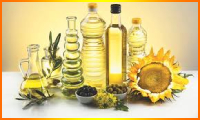
Global oilseeds output estimated higher despite setback to palm kernel, sunflower.
Global oilseed production estimates have been lowered by at least one million tonnes (mt) on fears of palm kernel, cottonseed, rapeseed and sunflower seed output being affected. However, overall oilseed production during the current season (November 2022-October 2023) is projected to be over six per higher than last season.
According to the US Department of Agriculture (USDA), oilseed production will be higher mainly in view of soyabean output being about 10 per cent higher this season at 391.17 mt against 355.61 mt a year ago.
This will result in edible oil production rising by over 4 per cent to 217.55 mt against 208.95 mt a year ago.
B35 scheme
'Global edible oil supply this season is likely to be at least 7 mt higher with oilseed production projected to rise sharply by over 30 mt. Even if Indonesia diverts more palm oil for biodiesel by introducing B35 (biodiesel with 35 per cent palm content), there will be ample supply,' said BV Mehta, Executive Director of the Solvent Extractors Association of India.
'Indonesia wants the B35 scheme to be successful and it is trying to balance between the higher biodiesel content and edible oil supply. Jakarta might resort to cutting the domestic market obligation (DMO) for local refiners,' said Pakistan-based edible oil analyst Abdul Hameed.
The USDA raised the oilseeds trade volume as it sees a higher export of sunflower seed exports from Ukraine this season. It has projected the trade at 198.27 mt compared with 178.01 mt last season.
The higher availability of sunflower seeds will be another factor to drag soyabean prices, but palm oil might gain as a result.
'The price gap between soyabean and palm oil may narrow in the coming delays. Soyabean prices will decrease but palm oil can gain by at least $100 a tonne,' said Hameed.
According to traders, a higher rabi oilseed production in India might be another factor. 'This season, mustard production will be about or over 9.5 mt due to higher acreage and conducive weather,' said Amith Aggarwal, co-founder and CEO of AgriBazaar.
'Indonesia has come up with B35 just to keep palm oil steady. We have to see how this will unfold. Raising the blending by 5 percentage points will not make much of an impact,' Mehta said.
Hameed said Indonesia was lower the DMO and raising the diesel-palm oil blending limit since inventories with Jakarta could be lower. 'The market thinks Indonesia might have 6-7 mt of palm oil stock. But I will not be surprised if it is half of that,' he said.
Though palm oil production is stabilising, it may be slow in the first quarter of 2023. 'Indonesia palm oil exports are expected to slow in the first quarter, though they might meet the festival season demand,' Hameed said.
Price outlook
Mehta said edible oil prices could rule a tad lower in the first quarter and may be slightly higher in the second half.
According to SEA, palm oil prices are currently at least $300 a tonne lower than the average 2021 December rates. On the other hand, prices of soyabean and sunflower oils are lower by less than $100.
This is where, Hameed says, there is some room for palm oil to gain.
'The sunflower oil outlook is bearish and it is now discounted at $80-100 a tonne to soyabean. The market looks bearish since Russia and Ukraine hold last year’s stocks and this year’s crop looks good,' he said.
'Still, India will gain if it buys more palm oil, which is nearly $400 a tonne lower than soyabean and sunflower oils,' the Pakistan analyst said.
Source: thehindubusinessline.com
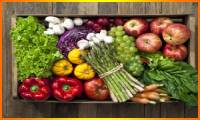
Blockchain to be used to push farm exports.
India's natural farming could soon get a technological push through blockchain, as the government plans to use the technology across all export-driven crops to increase the country's food shipments and incentivise farmers to take up chemical-free processes.
The Niti Aayog has launched a pilot project in collaboration with the Himachal Pradesh government on apple farming, to ensure quality production while also monitoring the produce across the entire storage and supply chain.
'Lack of quality produce and traceability has hampered India's food exports apart from disincentivising growers. Blockchain technology can help bridge this gap,' a senior government official told ET.
'By recording information about products at every stage of the agricultural supply chain, a blockchain helps remove redundant processes, ensure quality control and monitor storage conditions,' the official added.
After the completion of the pilot project on apples, the technology will be replicated across other crops including mangoes, bananas, grapes and pomegranates, besides vegetables.
India ranks second in fruits and vegetable production in the world, after China, but its share in the global fruits and vegetable market is just 1%.
Under the blockchain technology, IoT sensors are used to generate crop data and its storage, distribution of grown crops to the food processing companies, supply of processed food to wholesalers and retailers and its storage. Through this, even consumers can back-trace the supply chain to ensure quality products while buying.
According to the Agriculture and Processed Food Products Export Development Authority, India exported fresh fruits and vegetables worth about $1.52 billion in 2021-22, with fruits accounting for $750.7 million and vegetables for $767.01 million.
Exports of processed fruits and vegetables totalled $1.73 billion. These included about $1.12 billion of processed vegetables including pulses and $610.69 million of processed fruits and juices.
Major destinations for India's fresh fruits and vegetables include Bangladesh, the UAE, Nepal, the Netherlands, Malaysia, Sri Lanka, the UK, Oman and Qatar.
Source: economictimes.indiatimes.com
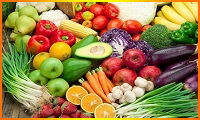
Food testing, essential part of food safety ecosystem.
Food is an integral part of everyday life; it provides nutrition and nourishment for leading a healthy life. The food that we consume should be safe in all aspects and not pose any harm to the body. For this reason, it is of paramount importance that the food production, from “farm to plate” should go through rigorous monitoring and testing, which is primarily the responsibility of the food business operators. Food safety has become an important public health issue and food testing laboratories play an important role in determining the safety and quality of the food, which in turn contributes to avoid health hazards.
Consumers also must know about the nutritional composition of food products to help them make healthy choices in daily diet. This will help them refrain from consuming the compounds they are allergic to or foods to be avoided. Nutritional labels state the nutrient composition, total calorific value, total fat, saturated fat, cholesterol, sodium, carbohydrate, dietary fibre, sugars, protein, vitamins, calcium, iron and so on. Food testing gives an authenticity check which ensures the quality of the contents of the food product. In this way, food testing ensures that consumers do not become a victim of economic fraud and ensures the safety of the food consumed.
In recent years, both intentional and unintentional adulteration are reported in the entire food value chain, and detection of these substances can be possible only with high-end state-of-art food testing laboratories. It is important to maintain the general overall quality of food supply in the entire value chain, and to provide consumers with food products that are safe to consume. Hence, food testing is an essential part of the efficient production of harmless, valuable processed food products. Food testing can range from processed foods to agricultural commodities, from the field to the store. The testing can be done on raw materials, the product during its processing and production, as well as the finished products.
Process of the food manufacturing chain, food product testing is the most important step, because it determines the safety of the food for use. In India, the rules set by FSSAI are strictly monitored. Consumers stay away from food products that do not fulfil the FSSAI requirements. Food product testing is vitally necessary, to ensure that the food is free of physical, chemical, and biological hazards. Examples of potentially hazardous food contaminants include metals, e-Coli bacteria, salmonella, cleaning agents, additives, preservatives, pesticides, and more. Food product testing is the scientific analysis of food and its contents. It is done to provide information about various characteristics of food, including the structure, composition, and physicochemical properties.
Food safety is an important factor that must be considered. Food manufacturers must pay attention to the food safety of their products. This effort is to ensure the safety of customers & potential consumers. Food poisoning cases that occurred can be lessons for manufacturers to improve the wholesomeness of their products. This is because whenever there are food poisoning cases, normally there would be temporary closure of outlets or products recall from the market.
Source: fnbnews.com