
Israel approves duty-free import of 30 million eggs to offset wartime shortages .
Israel's Ministry of Agriculture approved an increase in the import quota by 30 million eggs with exemption from customs duties. This was done to offset expected shortages caused by the Iron Swords War in Gaza.
The 30 million is in addition to 16 million eggs in the existing quota.
In general, in Israel, an average of 40 million edible eggs are produced every week, which satisfies the local demand. About 70 per cent of Israel's laying hens are concentrated in the Galilee and the Golan, and they produce about one billion and 600 million eggs a year - about 73 per cent of the total national production.
However many of the farms where eggs are produced were evacuated because of the threat of attacks by Hezbollah terrorists based in Lebanon.
Eggs can be imported to Israel from the following countries, from avian flu-free areas: Poland, Ukraine, Spain, Portugal, Bulgaria and the US, eggs for industry. In addition, the veterinary services of the Ministry of Agriculture are working to open up Italy as an additional import source, subject to receiving avian flu-free areas.
Source: aninews.in
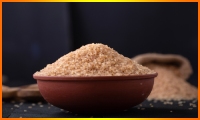
Waning supplies prop up India rates to 4-month peak, Thai prices rise.
Prices of parboiled rice exported from top hub India jumped to their highest level in four months this week, while strong demand and shrinking supplies supported rates for the Thai variety.
Rates for India's 5% broken parboiled variety were quoted at $525 to $535 per ton this week, their highest levels since September, rising from last weeks $510 to $517 range.
Despite sluggish demand, prices are rising due to reduced paddy availability caused by strong government buying, said Himanshu Agarwal, executive director at Satyam Balajee, a leading exporter.
Thailand's 5% broken rice prices were quoted at $665 per ton on Thursday, climbing from last week's $648-$650 per ton.
Thai traders noted strong demand from Indonesia and some from African markets drove the prices higher.
'There is lots of new demand from Indonesia after they announced plans to buy rice from many countries, creating lots of activities for the market, which drove up the price,' a Bangkok-based trader said.
Supplies have also dropped, which also contributed to price increases. Traders said new supply is expected to enter the market around next month.
In Vietnam, prices of the 5% broken rice were steady at $653 per metric ton, remaining at the same levels seen in the past three weeks.
'Demand is not strong at the moment as buyers are awaiting new supplies from the winter-spring harvest,' said a trader based in the Mekong Delta.
'We expect this year's exports to possibly hit $8 million tons, same as 2023 (levels), as global demand for Vietnamese rice will remain strong,' the trader added.
Rice prices in Bangladesh have gone up by 5 Bangladeshi Taka ($0.0457) this week despite good yield and reserves, which the government blamed on hoarding by unscrupulous businesses to make windfall profits.
The country's food minister, Sadhan Chandra Majumder, warned millers and traders to bring down prices, or else stern action will be taken against those stockpiling.
Source: business-standard.com

Maize prices surge 20% in India as government promotes ethanol production.
Maize prices increased by 20% in the first two weeks of January compared to October as demand picked up after the government’s plans to procure the commodity for ethanol production due to restrictions on the use of sugar for producing biofuel.
As per trade estimates, maize prices increased to Rs 2,366 per quintal in Gulabbagh in Bihar and feed-grade maize prices increased to Rs 2,400 per quintal in Ahmedabad in Gujarat.
'The prices will stay firm in the coming months because the demand is going to go up significantly,' said Gopal Sharma, a maize trader from Begusarai in Bihar adding that there even could be shortage of the commodity going forward.
India is promoting the use of maize as an alternative to sugar to boost ethanol production and ensure sufficient supply of the sweetener in the market. In December, the government directed sugar mills not to use cane juice to produce ethanol as the country's sugar production is expected to decline in the 2023-24 marketing year that began in October.
The production of maize is estimated to be 35.91 million tonnes in 2022-23 in the agriculture ministry’s third advance estimate which traders said is insufficient to meet the demand once distilleries start producing ethanol with it.
The kharif harvest was also lower 25-27% than expected in certain parts of the country due to erratic and scanty rainfall during the season.
With the government planning to procure maize federally, farmers have planted more of it, moving away from other crops, taking the rabi (winter) sowing of the cereal to 20.51 lakh hectares till January 12, up by 4% against 19.71 lakh hectares during the corresponding period last year, according to government data, across major growing states - Karnataka, Madhya Pradesh, Bihar, Tamil Nadu, Telangana, Maharashtra and Andhra Pradesh.
India aims to raise corn production by 10 million tonnes over the next five years as demand for ethanol production grows, besides higher demand from the poultry industry, which uses it as feed and has recently approached the government to open duty-free imports to meet future demands.
Source: economictimes.indiatimes.com

APEDA invites bids to conduct study of Indian organic market.
The Agriculture and Processed Food Products Export Development Authority (APEDA) has invited bids to conduct a study on the Indian organic market and to formulate an export promotion strategy. The idea is to explore and utilise avenues for promotion and branding of Indian organic products.
The scope of the study “Indian Organic Market and Export Promotion Strategy” includes estimation of the market size, assessment of demand, capturing trends and extrapolating the market size for the upcoming 10 years and benchmarking it to global growth estimates among others.
The study will also capture the trends in organic exports in the past five years, major market destinations and composition of exports, policy environment, best practices and organic promotion initiatives of major exporters such as the US, EU, UK and Canada.
The exports of India’s organic products stood at $708 million in 2022-23 and considering the global market size of around $138 billion, APEDA sees a tremendous scope to significantly increase the organic exports in the near term, the apex agri export promotion body said in the tender document.
The shift in global consumption patterns towards healthier, safer, sustainable and nutritious food has propelled organic products into the limelight. APEDA believes that the surge in demand presents a golden opportunity for India, to meet the growing global demand for organic products and to tap into the global organic food market.
APEDA, which is taking steps to promote exports of organic products, is also the secretariat for National Programme for Organic Production, specifying the accreditation and certification programmes for organic production.
The organic certification programme covers all agricultural commodities including non-APEDA scheduled products and over 10 lakh farmers are registered under the programme.
Source: thehindubusinessline.com

'India-Australia Trade Can Double to USD 100 Billion By 2029'.
'India-Australia bilateral trade (in goods and services) has crossed USD 48 billion and I expect it to double to nearly USD 100 billion in the next five years. The recently signed trade agreement is beneficial for India as its trade deficit with Australia has fallen by 15% since the implementation of this pact,' said Ms. Majell Hind, Consul General of Australia in Mumbai, while addressing an event organized by the Indo Australian Chamber of Commerce (IACC), in collaboration with The Australian Consulate-General Mumbai, Newland Global Group, World Trade Center Mumbai, and the All India Association of Industries.
Australia, with its large reserves of critical minerals such as Lithium, Cobalt and other rare minerals, can be India’s key strategic partner in attaining mineral security and in its quest for sustainable growth and carbon-neutrality, Ms. Hind added.
Ms. Hind further added, 'India-Australia bilateral relations are at their historic peak. Bilateral trade has grown by 50% in the last two years, driven by the Economic Cooperation and Trade Agreement (ECTA). The trade agreement has provided tangible benefits to Indian businesses by offering critical raw materials at a competitive price and providing Australian market access at a preferential rate.'
The event marked the launch of a compendium of case studies on 'Advocating Business Success between Australia and India.' This compendium, compiled by Newland Global Group and supported by the Australian Government’s Department of Foreign Affairs and Trade and the Centre for Australia-India Relations, showcases the business journey of 26 companies from both countries, covering diverse sectors such as healthcare, technology, renewables, education and mining, to name a few.
Commenting on the importance of the compendium of case studies in strengthening economic cooperation, she remarked, 'The compendium highlights that India’s agriculture exports to Australia has grown 11%, while its apparel exports has increased 20% since the signing of the trade agreement. The ECTA also points out that Indian exports of industrial products have grown 50%, mostly in the areas of insecticides, forklifts trucks and transmission shafts.'
The compendium of case studies was launched by Ms. Majell Hind, Consul General of Australia in Mumbai, Dr. Vijay Kalantri, Chairman, MVIRDC WTC Mumbai, Capt. Somesh Batra, Vice Chairman, MVIRDC WTC Mumbai, Ms. Petula Thomas, CEO of the Indo-Australian Chambers of Commerce along with other dignitaries.
Speaking at the launch event, Dr. Vijay Kalantri, Chairman, MVIRDC WTC Mumbai, stressed the importance of capacity building for both countries to leverage the trade potential offered by the bilateral relationship. Commenting on the compendium of case studies, he added, "The compendium of case studies, illustrating the journey of other businesses, provides crucial insights into the business environment in both countries and can act as a gateway for furthering economic cooperation.'
Dr Kalantri raised hope that in the next five years, bilateral trade will double because of the existing trade agreement and with the future implementation of a more comprehensive agreement.
He remarked, 'Today, Australia is the 12th largest trade partner of India. In next 5 years, Australia can become top 5 trade partner and trade can double with the increasing interest shown by companies from both the sides.'
Dr Kalantri further added, 'The long-standing India-Australia trade ties received a major boost after the signing of the India-Australia ECTA. India's trade deficit with Australia has significantly declined, indicating that Indian businesses have benefited from the preliminary trade agreement. However, we believe that the best is yet to come. With the ongoing negotiations for the India-Australia Comprehensive Economic Cooperation Agreement (CECA), we strongly look forward to more economic opportunities for both countries.'
In her remarks, Dr Monika Kennedy, Senior Trade and Investment Commissioner, Austrade in Mumbai pointed out, 'Last year, Australian Hon’ble Prime Minister Mr. Anthony Albanese led a trade delegation to India, which was the highest-ever delegation to leave Australian shores. There is lot of interest and curiosity from companies of both the countries to do business with each other. Lot of groundwork has been done by both the governments to promote two-way trade and investment. I expect remarkable surge in investment from Australia to India in the coming years as more Australian companies get to know the emerging business opportunities in India,'
Ms. Kennedy informed that the negotiation on the Comprehensive Economic Cooperation Agreement (CECA) is progressing well and it can be concluded soon.
Addressing the event, Ms. Petula Thomas, CEO of the Indo-Australian Chambers of Commerce, said, 'A compendium of case studies like this is very timely and also highlights the ever-growing trade and partnership between India and Australia. It is a practical tool that will guide businesses in leveraging trade agreements and partnerships. Showcasing the power of innovation, the compendium has provided the companies with an opportunity to share their journey.'
Speaking on this occasion, Mr. Dipen Rughani, Chief Executive Officer, Newland Global Group informed that India is emerging as a strategic economic partner of Australia under the current evolving geopolitical circumstances. Australia is keen to strengthen ties with India to diversify and make its supply chain resilient. India also offers a huge consumer market for Australian companies.
Following the launch of the compendium of case studies, experts engaged in a panel session to discuss their experiences, challenges, and prospects of business in the India-Australia economic framework. The discussion also emphasized the role of business literacy with regard to the Indian market in developing and strengthening the bilateral relationship. The panelists at the session were Indian representatives of successful Australian companies.
Ms Malini Dutt, Trade and Investment Commissioner, Investment NSW proposed vote of thanks for the event.
Mr. Dipen Rughani, Chief Executive Officer, Newland Global Group (2nd from left) being felicitated by Dr Vijay Kalantri, Chairman, MVIRDC WTC Mumbai. Also seen in the photograph are (from left to right) Ms. Majell Hind, Consul General of Australia in Mumbai, Capt. Somesh Batra, Vice Chairman, MVIRDC WTC Mumbai and Dr Monika Kennedy, Senior Trade and Investment Commissioner, Austrade in Mumbai
Source: smestreet.in

India for finding solution to food stockholding issue first at WTO; then talk on other agri matters.
India would not negotiate any other issue in the agriculture sector till a permanent solution on public stockholding for food grains is found by the WTO members, an official said on Thursday.
The issue would prominently figure in the 13th ministerial conference (MC) of the WTO (World Trade Organisation), scheduled from February 26-29 in Abu Dhabi.
MC is the highest decision-making body of the 164-member global trade watchdog WTO.
'The public stockpiling of food grain is the longest pending issue. The promise was made by the members in Bali MC, and then later endorsed by subsequent conferences.
'Without that, we will not take part in any discussion on any other issue on agriculture, unless the mandated issue is settled. This is our first ask,' the official said.
Developed countries have raised flags over India's food security programmes, such as buying rice and wheat from farmers at a government-administered price for distribution through public ration shops. They allege that this public procurement at subsidised rates and storage distorts global agri trade.
However, India has maintained they have to protect the interest of poor and vulnerable farmers, besides taking care of the food security needs of a large section of the population.
The government provide 5 kilogrammes of free foodgrains per month to around 80 crore poor people, free ration to about 80 crore people under the Pradhan Mantri Garib Kalyan Anna Yojana (PMGKAY). The Covid-19 pandemic has proved the importance of such initiatives.
Over 80 countries, including from Africa, are backing India's stand.
As part of finding the solution, India has pitched for changes in the formula to calculate the food subsidy cap and inclusion of programmes implemented after 2013 under the ambit of the 'Peace Clause'.
The WTO members at the Bali ministerial meeting in December 2013 had agreed to put in place a mechanism popularly called the 'Peace Clause' and committed to negotiating an agreement for a permanent solution.
Under the Peace Clause, WTO members agreed to refrain from challenging any breach in the prescribed ceiling by a developing nation at the dispute settlement forum of the WTO. This clause is there till a solution is found.
Under global trade norms, a WTO member country's food subsidy bill should not breach the limit of 10 per cent of the value of production based on the external reference price (ERP) of 1986-88.
Subsidies over and above the prescribed ceiling are seen as trade-distorting. The limit is fixed at 10 per cent of the value of food production for developing countries like India.
India has earlier informed the WTO that it has used the peace clause to provide excess support measures to rice farmers for the marketing year 2020-21, in order to meet the domestic food security needs of its poor population.
Some WTO nations, including the US and Europe, have been trying to shift the narrative of food security from public stockholding (PSH) to value-chain, market access and export restrictions.
'India strongly opposes any comprehensive outcome on agriculture, linking PSH with domestic support or work programme as suggested by some developed country members,' the official added.
These members want discussions on issues like providing information on export restrictions at least 30 days prior to the notification, which is not feasible.
India has also conveyed that support measures given by them to its poor farmers like input subsidies such as on electricity, irrigation, fertiliser and even direct transfers are non-negotiable.
Further, New Delhi is pitching for reducing support measures by the developed countries to their agri sector, which runs into billions of dollars.
The Geneva-based 164-member multi-lateral body deals with global exports and import-related norms. Besides, it adjudicates trade disputes between the member countries.
The official said that taking the ERP at 1986-88 basis will give a distorted picture of the support measures.
'In a session on agriculture, we gave a presentation about how the India programme is beneficial and also on the ERP, many delegates were surprised to see the kind of stark comparison in the ERP...what caught their attention was that one burger price is equivalent to 1,000 kg of wheat or rice prices...because ERP is 1986-88 price,' the official added.
Source: thehindubusinessline.com
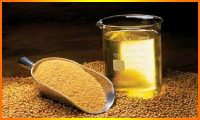
India s oilmeals exports surge 24% in April-December 2023-24.
A surge in the export of soyabean meal helped India to register a 24 per cent growth in the export of oilmeals during the first nine months of 2023-24.
Data compiled by the Solvent Extractors’ Association of India (SEA) showed that India exported 34.96 lakh tonnes (lt) of oilmeals during April-December of 2023-24 against 28.16 lt in the corresponding period of 2022-23, a growth of 24.16 per cent.
BV Mehta, Executive Director of SEA, said the export of oilmeals increased by 19 per cent in Q1 of 2023-24 due to the export of soyabean meal. India exported 12.16 lt of oilmeals during Q1 of 2023-24 (10.16 lt in Q1 of 2022-23). Of this, the share of soyabean meal was at 3.64 lt (75,454 tonnes).
He said the export of oilmeals increased by 43 per cent in Q2 of 2023-24, mainly due to a sharp increase in the export of soyabean and rapeseed meal. India exported 10.66 lt of oilmeals during Q2 of 2023-24 (7.46 lt). Of this, the share of soyabean meal was at 2.22 lt (45,885 tonnes), and that of rapeseed meal was at 7.23 lt (5.33 lt).
Though the export of oilmeals increased by 16 per cent in third quarter of 2023-24, it was down from the Q2 due to the ban on the export of de-oiled rice bran. India exported 12.20 lt of oilmeals during Q3 of 2023-24 (10.53 lt).
Competitive rapemeal supplier
On demand for Indian soyabean meal in the international market, he said improved price competitiveness and the shortage of Argentine export supplies in recent months helped boost the demand. The total export of soyabean meal was reported at 12.11 lt (4.47 lt) during April-December 2023-24.
India exported 18.24 lt of rapeseed meal (16.69 lt) during the first nine months of 2023-24. He said India is the most competitive supplier of rapeseed meal to South Korea, Vietnam, Thailand and other Far-East countries.
Major importers
South Korea imported 7.30 lt of oilmeals (7.15 lt) during April-December 2023-24. This included 5.13 lt of rapeseed meal, 1.83 lt of castorseed meal, and 32,946 tonnes of soyabean meal.
India exported 3.61 lt of oilmeals (6.84 lt) to Vietnam during the first nine months of 2023-24. This included 90,540 tonnes of ricebran extraction, 2.19 lt of rapeseed meal, 50,506 tonnes of soyabean meal, and 905 tonnes of groundnut meal.
Thailand imported 4.95 lt of oilmeals (5.09 lt) during April-December 2023-24. This included 4.81 lt of rapeseed meal, 8,445 tonnes of soyabean meal, 4,666 tonnes of ricebran extraction, and 701 tonnes of castorseed meal.
India exported 6.62 lt of oilmeals (2.81 lt) to Bangladesh during the first nine months of 2023-24. This included 27,771 tonnes of ricebran extractions, 3.14 lt of rapeseed meal, and 3.21 lt of soyabean meal.
Source: thehindubusinessline.com
Commerce ministry to launch portal to provide info for aspiring exporters.
The commerce ministry will launch an online platform in the next 2-3 months to provide all relevant information, including details about custom duties, for aspiring exporters. Director General of Foreign Trade (DGFT) Santosh Kumar Sarangi said the portal will act as a one-stop place for getting all information on engaging in export activities.
The 'Trade Connect ePlatform' will provide facilitation for new and aspiring exporters, information on various regulations to access markets, sectors, export trends, and easy access of benefits under Free Trade Agreements.
Besides, it will facilitate access to sector specific events along with a facility to address trade related queries to officials in Government of India and associated entities to get expert advice.
Source: economictimes.indiatimes.com

Horticulture production in 2022-23 is estimated to be 2.32% higher: Third Advance Estimate.
The total horticulture production in the year 2022-23 is estimated to be 2.32% higher over the previous year on account of higher output of fruits and vegetables, according to the Third Advance Estimate of 2022-23 released by the ministry of agriculture.
While the production of vegetables is estimated to be 213.88 million tonnes in the year 2022-23, over 209.14 million tonnes of last year due to an increase in potato and tomato output, the data for onions has not been included.
Sowing of rabi (winter) onions has fallen up to 20% in some main producing regions in Maharashtra and Karnataka till the first week of January due to erratic rainfall pattern and lower reservoir levels which have hampered irrigation activities.
Potato production is expected to be 60.22 million tonnes, while the production in the year 2021-22 was 56.18 million tonnes.
Tomato production is expected to be 20.37 million tonnes in the year 2022-23 as against 20.69 million tonnes in the year 2021-22.
The production of fruits is estimated to increase from 107.51 million tonnes in the year 2021-22 to 109.53 million tonnes in the year 2022-23.
The total horticulture production in the year 2022-23 is estimated to be 355.25 million tonnes, which is approximately 8.07 million tonnes more as compared to the year 2021-22, the statement issued by the ministry said.
The area under horticulture crops is estimated to increase marginally to 28.34 million hectares over last year’s 28.04 million hectares.
Source: economictimes.indiatimes.com

1,000 Kg Lablab Beans From Assam Exported To London.
In a recent development for Assam's agriculture sector, 1,000 kg of lablab beans, known locally as urohi, cultivated by farmers associated with Dihingparia Farmer Producer Company (FPC) in Nitaipukhuri, Sivasagar district, were successfully exported to London. This accomplishment follows a recent consignment where 500 kg of urohi was exported.
Expressing his congratulations, Agriculture Minister Atul Bora extended heartfelt wishes to the officials of the Horticulture Department of the Assam Government, concerned authorities of Sivasagar District Agriculture Department, Assam Agribusiness and Rural Transformation Project (APART), and every farmer contributing to the urohi production.
Highlighting the positive trend in crop exports, Bora expressed confidence in initiating a new agricultural revolution in Assam's economy. He anticipates further growth in crop exports, paving the way for a flourishing agricultural economy in Assam.
Source: guwahatiplus.com