
India-China border trade resumes after 6 years; first batch of 16 traders flagged off for Tibet.
India-China border trade through the Shipki-La pass in Himachal Pradesh's Kinnaur district resumed on Saturday after a gap of nearly six to seven years, with the first batch of 16 local traders crossing into China-occupied Tibet. Himachal Pradesh Revenue and Horticulture Minister Jagat Singh Negi inaugurated the trade at Shipki-La and flagged off traders from Namgya, Dubling and Leo villages. The traders were felicitated with traditional Khata scarves before their departure.
Source: economictimes.indiatimes.com
India-Arab business chambers join hands to push trade & investment ties.
In a significant step towards advancing India–Arab economic relations, the India & Arab Countries Chamber of Commerce, Industry & Agriculture (IACCIA) and the Associated Chambers of Commerce and Industry of India (ASSOCHAM)signed a Memorandum of Understanding (MoU) this week to promote bilateral trade, investment, industrial collaboration, and business partnerships between India and the 22 Arab countries.
Source: economictimes.indiatimes.com
India's envoy Vinay Mohan Kwatra meets US official Allison Hooker, discusses advancing bilateral ties.
India's ambassador to the US, Vinay Mohan Kwatra, has met senior US Department of State official Allison Hooker and discussed advancing the bilateral partnership. Kwatra met Hooker, the US Under Secretary of State for Political Affairs, on Friday.
Source: economictimes.indiatimes.com

India and Rwanda Hold First Joint Trade Committee Meeting to Deepen Bilateral Trade and Investment Cooperation.
The First Session of the India–Rwanda Joint Trade Committee (JTC) was held in New Delhi on 30 and 31 July 2026. The Indian delegation was led by Joint Secretary, Department of Commerce, Shri Amit Kumar, while the Rwandan delegation was led by Director General, Asia, Pacific and Middle East Affairs, Ministry of Foreign Affairs and International Cooperation, Republic of Rwanda, Mr. Virgile Rwanyagatare. Delivering the inaugural address, Additional Secretary, Department of Commerce, Shri Yashvir Singh, said the inaugural Session establishes a permanent, structured and periodic apex mechanism to review bilateral commerce, diversify the trade basket, expand two-way investment and address logistical impediments.
Source: pib.gov.in

APEDA Facilitates First-Ever Air Shipment of Karnataka's Neelam and Totapuri Mangoes to the Maldives.
The Agricultural and Processed Food Products Export Development Authority (APEDA), under the Ministry of Commerce & Industry, Government of India, has facilitated the first-ever air shipment of Neelam and Totapuri mangoes from Karnataka to the Maldives. Flagged off on 30 July 2026, the export marks a significant milestone in promoting Karnataka's late-season mango varieties in international markets and further strengthening India's mango export basket.
Source: pib.gov.in
PM Modi, Burnham discuss trade pact in 1st call.
Congratulating UK PM Andy Burnham on assuming office, PM Narendra Modi said the two leaders will collaborate closely to fully harness the trade and investment opportunities presented by the recently operationalised India-UK Comprehensive Economic and Trade Agreement (CETA), for the 'shared prosperity and well-being of both our people'.Burnham officially took office as UK PM on July 20, 2026.The leaders discussed the West Asia conflict, agreeing to continue to work closely together towards de-escalation and the reopening of the Strait of Hormuz. According to the UK, Burnham set out his ambitions to further enhance ties, including through the UK-India Vision 2035 framework.
Source: timesofindia.indiatimes.com
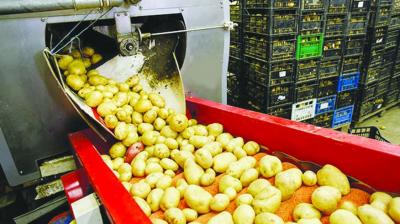
Processed food exports climb 16 per cent as US remains India’s biggest overseas market.
India’s processed food exports are cooking up fresh momentum, with ready-to-eat meals, instant coffee and frozen potato products finding growing acceptance in international markets. According to an analysis by The Economic Times, outbound shipments of processed food products rose sharply in 2025-26, supported by rising demand across developed and emerging markets.
Source: indiantelevision.com

India-EU FTA includes dedicated framework to address CBAM concerns, says commerce official.
The India-European Union free trade agreement (FTA) includes a dedicated framework to address concerns surrounding the European Union's Carbon Border Adjustment Mechanism (CBAM), with safeguards aimed at easing compliance for Indian exporters, particularly small and medium enterprises (SMEs), a senior commerce ministry official said on Thursday. Speaking at the Indo-German Chamber of Commerce (IGCC) Industry Dialogue 2026, Additional Secretary in the Department of Commerce Darpan Jain said the agreement contains a separate annexure on CBAM that lays out a comprehensive work plan to help India navigate the EU's carbon tax regime.
Source: economictimes.indiatimes.com

India seeks sunflower oil alternatives on Black Sea disruptions.
India, the world’s top sunflower oil buyer, is rushing to secure supplies of alternate vegetable oils as attacks in the Black Sea region disrupt imports and its own crops falter due to weak monsoon rains. With shipments from top producers Russia and Ukraine facing delays of up to 60 days and prices rising, according to traders, the country is turning to South American suppliers and to rival oils like palm and soy to plug the import gaps.
Source: economictimes.indiatimes.com
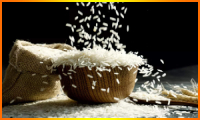
Buffalo meat, non-basmati rice lift India’s Q1 agri produce exports.
Robust demand for buffalo meat and non-basmati rice has pushed up India’s exports of agricultural products that are monitored by APEDA, by around 14 per cent in value terms to $7.641 billion during the April-June quarter of the current financial year. Exports stood at $6.711 billion in the same period last year.
Source: thehindubusinessline.com