
Efforts on in EU to treat basmati rice as a generic variety, denying protected geographical indication for India.
Efforts are underway in the European Union (EU) to try to deny protected geographical indication (PGI) status for basmati rice from India and render it as a generic variety of the cereal. Some experts in Europe are claiming that the sales of rice labelled as fragrant rice are ten times the output in the origin areas. The experts, however, have no proof or laboratory findings to prove that 90 per cent of rice sold as basmati is non-basmati, said trade sources.
Source: thehindubusinessline.com
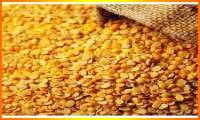
African pigeonpea prices firm up on fears of lower production.
Prices of tur (pigeonpea) in origins such as the East African producing countries are up by over 10 per cent due to lower-than-expected crops in the region. African producers have emerged as the major origins as far as India’s imports of pigeon pea are concerned. 'African tur was very cheap. Prices have gone up by about Rs. 10 a kg in Africa due to concerns over a lower-than-expected crop. African tur is now selling at Rs. 70-75 per kg, which was earlier selling at Rs.65,' said Bimal Kothari, chairman, India Pulses and Grains Association (IPGA). Though prices have firmed up in Africa, they are still below the Indian minimum support price of Rs. 8,450 per quintal.
Source: thehindubusinessline.com
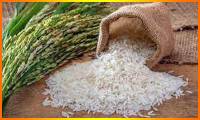
Value-added rice products offer new growth opportunities for Indian industry: IREF.
Value-added rice products, including convenience foods, bran oil, protein and husk-derived industrial materials, could open new growth opportunities for India’s rice industry by helping businesses earn more from each tonne of grain, according to the Indian Rice Exporters’ Federation (IREF). The Bharat International Rice Conference (BIRC) 2026, scheduled for October 23–25 at Bharat Mandapam in New Delhi, will examine these opportunities and identify promising products based on an IREF–EY assessment. “The next opportunity is not simply to export more tonnes of rice, but to earn more value from each tonne. A miller, an exporter and an ingredient manufacturer will need different pathways,” said Rajeev Setia, President, Basmati, speaking on behalf of IREF.
Source: thehindubusinessline.com

India sunflower oil imports may jump 30% after import duty cut.
India's sunflower oil imports are likely to rise 30% in the 2026/27 marketing year to 3.5 million metric tonnes, as a cut in import duties has lowered prices and boosted demand, the head of a leading industry body told Reuters on Wednesday. The surge in sunflower oil imports is expected to reduce soyoil purchases by 10.7% to 5 million tonnes in the next marketing year starting from November 1, said Angshu Mallick, president of the Solvent Extractors' Association of India (SEA).
Source: thehindubusinessline.com
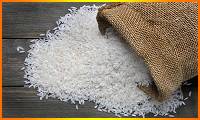
India’s rice industry looks beyond raw grain to tap next billion-dollar opportunities.
India’s rice industry is looking beyond exports of raw grain to tap growing markets for rice-based noodles, edible oil, protein, specialised ingredients and industrial materials, with a new industry assessment set to identify the value-added products that could offer the biggest commercial opportunities. The Bharat International Rice Conference (BIRC) 2026, to be held in New Delhi from Oct. 23-25, will examine the potential at a session titled 'Beyond Raw Rice: The Next Billion-Dollar Opportunity'.
Source: thehindubusinessline.com
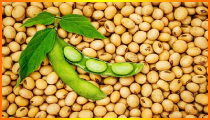
Indian govt approves procurement of 7.11 lakh tonnes of soybean, moong, and tur at MSP in 3 States.
The Indian government has approved procurement of 5.21 lakh tonnes (lt) of pulses and 1.90 lt of oilseeds at their minimum support prices (MSPs) in Uttar Pradesh, Telangana and Karnataka as the fresh kharif harvest starts arriving in mandis (agricultural produce marketing committee yards). The decision will benefit growers.
Source: thehindubusinessline.com

Agriculture sector binds India-Argentina partnership.
Argentine Ambassador to India Mariano Caucino on Wednesday stated that the bilateral link between the two countries is destined to continue expanding in key economic fields. 'Agriculture is one of the cores of economic cooperation between India and Argentina. As you know, Argentina is India’s number one provider of edible oils', the envoy explained speaking at GLOBOIL summit in Mumbai.
Source: economictimes.indiatimes.com
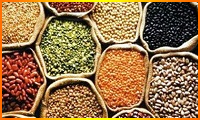
Pulses import duties may ease over poor rains.
The government is considering reducing import duties on chana and yellow peas as deficient and erratic monsoon rainfall this year threatens pulse yields and prices of key legumes rise ahead of the festive season, commodity traders said. At present, imports of chana attract a 10% duty, while yellow peas are subject to a 30% duty. Tur and urad imports are allowed duty-free until March 31, 2027. The proposed reduction in duties on chana and yellow peas would be to improve domestic availability and contain prices. Prices of chana, moong, matar and tur have risen by up to 10% over the past month, with a 3-5% spike in the past week, as concerns over crop prospects combine with higher festive demand.
Source: economictimes.indiatimes.com

Export schemes extended amid West Asia crisis.
The government Wednesday extended support for exporters by renewing two key schemes and enhancing insurance cover against payment defaults amid the ongoing crisis in West Asia, providing policy stability to the sector. The Centre extended the duty refund scheme Remission of Duties and Taxes on Exported Products (RoDTEP) and the Rebate of State and Central Taxes and Levies (RoSCTL) scheme for exporters of apparel, garments and made-ups by three months to December 31 along with continuing the enhanced insurance cover against payment defaults until March 31, 2027, for export consignments to West Asia under the Export Promotion Mission.
Source: economictimes.indiatimes.com
केंद्रीय मंत्री श्री शिवराज सिंह चौहान की अध्यक्षता में दिल्ली में राष्ट्रीय कृषि सम्मेलन- रबी अभियान में राज्यों के कृषि मंत्रियों ने की सहभागिता|
राष्ट्रीय कृषि सम्मेलन- रबी अभियान-2026 के दूसरे दिन केंद्रीय कृषि एवं किसान कल्याण तथा ग्रामीण विकास मंत्री श्री शिवराज सिंह चौहान की अध्यक्षता में विभिन्न राज्यों के कृषि मंत्रियों और वरिष्ठ अधिकारियों ने सहभागिता की। इन्हें संबोधित करते हुए केंद्रीय मंत्री श्री शिवराज सिंह चौहान ने कहा कि प्रधानमंत्री श्री नरेंद्र मोदी के नेतृत्व और मार्गदर्शन में देश की खाद्य सुरक्षा सुनिश्चित करने और किसानों की आजीविका को बेहतर बनाने के लिए केंद्र और राज्यों को दलगत राजनीति से ऊपर उठकर 'टीम एग्रीकल्चर' की भावना से काम करना होगा। उन्होंने स्पष्ट शब्दों में कहा कि सरकारें और पार्टियां आती-जाती रहती हैं, पार्टियां बनती और बिगड़ती हैं, लेकिन देश और किसान शाश्वत हैं। इस मंच पर कोई राजनीति नहीं है, बल्कि लक्ष्य सिर्फ यह है कि खेती कैसे बेहतर हो और किसान कैसे आगे बढ़े। उन्होंने गर्व के साथ रेखांकित किया कि प्रधानमंत्री श्री नरेंद्र मोदी के नेतृत्व में देश के हर नीतिगत फैसले और अंतरराष्ट्रीय समझौतों में किसानों के हितों को सर्वोच्च प्राथमिकता दी गई है। इस अवसर पर केंद्रीय मंत्री श्री चौहान ने प्रधानमंत्री राष्ट्रीय कृषि विकास योजना (पीएम-आरकेवीवाई) के तहत 10 राज्यों के कृषि मंत्रियों को मंच पर ही 1200 करोड़ रुपये से अधिक के वित्तीय स्वीकृति पत्र प्रदान किए।
Source: pib.gov.in