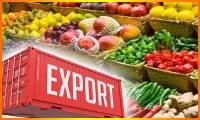
Increased agri exports, demand-based crop cultivation among objectives of National Cooperative Exports: Amit Shah.
Increased agri exports, farmers’ enrichment, demand-based crop cultivation, organic products export, bio-fuel exports and overall cooperative sector development are the objectives of National Cooperative Exports Ltd (NCEL), which was formally launched on Monday by Cooperation Minister Amit Shah.
Agriculture contributes about 15 per cent of GDP, whereas nearly 60 per cent of the total population is engaged in it. 'No country can strengthen its economy by ignoring this 60 per cent of the population,' he said.
'We have to grow, increase our GDP and the income of this 60 per cent has to be increased by providing them employment opportunities. The only solution is to strengthen the cooperatives,' Shah said. He was optimistic that NCEL would work towards fulfilling the six objectives.
NCEL would serve as a link between farmers (through cooperatives), and overseas markets with good demand for milk products, jeera, isabgol, spices and ethanol. Shah said NCEL has received orders worth Rs 7,000 crore and negotiations are currently on for a further Rs 15,000 crore.
NCEL was recently declared the canalising agency for government-to-government non-Basmati rice exports. Orders received from different countries through diplomatic channels would be routed through it.
Pointing out that farmers were not getting the benefit of exports, the minister said NCEL would pass on minimum 50 per cent profit directly to farmers’ bank accounts after purchasing products from them at minimum support prices (MSPs). This would encourage farmers to grow demand-driven crops.
'Currently, farmers grow whatever they want to. NCEL will try to ensure that crop patterns are changed in line with export demand,' Shah said, adding the agency would have to fulfil all the brand-building, packaging and marketing requirements.
The minister also said the government would run pilot projects through Nafed and NCCF to increase pulses production, and the agencies would start registering farmers growing pulses.
Source: thehindubusinessline.com
FTA likely on track as UK warms to investment pact.
India and the United Kingdom are trying to find a middle ground to conclude a bilateral investment treaty along with a free trade agreement (FTA) by the end of this month, said people with knowledge of the matter.
The prospects of a deal have brightened with the UK softening its stance on India's proposal that investors exhaust all local remedies before opting for international arbitration, they said, even as UK Prime Minister Rishi Sunak's visit to India to ink the pact remains uncertain.
The UK had been insisting on 'pre-establishment national treatment' while raising concerns about the time-consuming legal processes to resolve disputes related to investments in India.
The UK wanted to keep the investment pact out of the trade deal.
'The UK has had issues with the long time it takes to exhaust local remedies for dispute resolution but is now showing flexibility,' said a government official, who did not wish to be identified.
The bilateral investment treaty (BIT) has been seen as one of the sticky points in the ongoing FTA negotiations between the two sides.
A separately revised investment treaty for the UK could set the stage for revision of similar pacts with other countries in future, according to people in the know.
India considers an investment treaty with the UK crucial as the latter is among the top investors in the country. In 2022-23, India received $1.74 billion in foreign direct investment (FDI) from the UK, up from $1.65 billion in the previous financial year. Between April 2000 and March 2023, FDI inflows from the UK amounted to $34.3 billion.
Under the rule of exhaustion of local remedies in India's model BIT, a claim must first be submitted before a relevant domestic court or administrative body. The idea is to prevent arbitrators from having expanded jurisdiction.
Pre-establishment national treatment allows foreign investors to drag the government to arbitration overseas even before an investment is made.
Arbitration cases
After witnessing an increase in arbitration cases, India had amended the model BIT in December 2015, making it mandatory for foreign investors to exhaust local judicial remedies before seeking arbitration.
India has lost multiple arbitration disputes, such as those with Cairn Energy PLC, Vodafone Group BV and Devas Mauritius Ltd, which were initiated invoking the pre-2015 BIT provisions. It is, therefore, now cautious in its approach to BIT, said experts.
According to the United Nations Conference on Trade and Development, 11 investor-state dispute settlement cases were filed against India between 2000 and 2020.
Source: economictimes.indiatimes.com
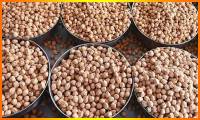
Australia holds on as biggest chickpea exporter: USDA.
IN ITS INTERNATIONAL Agricultural Trade Report released this week, USDA has confirmed that Australia, India, and Canada are the world’s three largest chickpea exporters, and accounted for more than 40 percent of the world’s shipments in 2022.
The agency has highlighted the impact of Indian policy and tariffs on global chickpea trade, with India’s domestic production being the world’s largest at 11.9 million tonnes (Mt) in 2021, more than double the figure produced in 2012.
The report values India’s 2022 imports at US $50M, down from the record $1.3 billion in 2017, with Tanzania providing 90pc of India’s 2022 chickpea import requirements.
The Foreign Agriculture Service report acknowledges Australia’s record chickpea production of more than 2Mt in 2016-17, when 62 percent of its chickpea exports went to India.
'Exports fell drastically to less than 1pc after India applied tariffs to limit imports,' the report said.
'This blow to the Australian chickpea sector emphasised the importance of diversifying export markets.
'Australia continues to be the largest exporter with approximately one-third of the global exports spanning the past 10 years.
In 2022, Bangladesh and Pakistan accounted for nearly 80pc of Australia’s chickpeas exports.
Changes in North America
Indian Government policy has also had an impact on US chickpea exports.
'In 2019, India imposed retaliatory tariffs on 28 US products including chickpeas, levying additional duties on chickpeas in response to Section 232 National Security Measures on Steel and Aluminum and the termination of India’s Generalized System of Preferences status.
'The 10pc retaliatory tariff resulted in US chickpea exports, valued at $6.4M, coming to a halt by 2022.
'Fortunately, India’s retaliatory tariffs were repealed for chickpeas in late September 2023.
'The US market share was 4pc before 2019.'
'India exports have been trending up and doubled last year to total $226M in 2022, with increased exports to the United Arab Emirates and Iran.'
Canadian production hit 214,000t in 2020 before falling to 76,000t in 2021 due to lower area and yields.
Canada’s top three chickpea markets are Pakistan, the US, and the European Union, which account for more than half its exports.
Canada also imports chickpeas, with the US and Australia its primary suppliers.
US chickpea imports have more than doubled during the past 10 years to a record $69M in 2022, with more than half the total coming from Canada.
Chickpea production in the US increased from 161,000t in 2012 to a peak of 580,000t in 2018, following record high exports to the EU and India in 2017, but in 2022 dropped back down to 166,000t with the subsequent decline in exports.
'US chickpea exports grew from $52M in 2013 to total $169M in 2017 but declined to $67M by 2022 in part due to drastically reduced shipments to India.'
Canada on $20M, the EU on $15M, and Pakistan on $8M were the three major markets for US chickpea exports in 2022, accounting for two-thirds of shipments.
'Exports in 2022 were down more than 20pc from the year before due to lower exports to Pakistan as Pakistan imported more from Australia.'
Solid demand from Turkey, Pakistan, Bangladesh
Turkey’s chickpea production has averaged more than 520,000t in the past decade, during which time its exports have more than doubled.
Turkey accounted for 9pc of global imports in 2022, when Mexico and Russia accounted for nearly two-thirds of the total, down 7pc from the year before on lower shipments from both suppliers.
Pakistan’s production has plunged from 751,000t in 2013 to 234,000t in 2021.
'During the same period, imports surged from $40M in 2013 to $262M in 2022 due to strong domestic demand and lower production.
'Australia is the largest supplier with nearly half of the trade followed by Canada and Russia, accounting for an additional 30pc.'
Bangladesh’s production dropped from 7000t in 2012 to 5000t in 2021, and its imports have averaged roughly 225,000t per annum during the past 10 years.
Bangladeshi imports dropped by one-third in 2022 because of lower sales from Australia as a supplier of more than 90pc of its demand.
Production of chickpeas in the EU dropped from 38,000t in 2012 to 3200 tons in 2022 due to a drop in area harvested since 2018.
The EU was the world’s third-largest importer in 2022, with Mexico and Turkey accounting for more than 45pc of the trade.
EU imports in 2022 were up by nearly a third from 2021 because of increased volume from Argentina, Canada, and Russia.
Source: graincentral.com
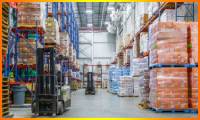
Kerala: 10 spots identified for mini food parks.
The state government has zeroed in on 10 locations in 10 districts for setting up mini food parks in the state that was announced in the state budget of 2022-23.
The locations are Kalamassery (Ernakulam), Dharmadom (Kannur), Idukki (Idukki panchayat land), Kottarakara (Kollam), Ollur (Thrissur - land of Kerala Agriculture University), Vengara (Malappuram), Thiruvalla (Pathanamthitta - land under the possession of Traco cables), Kattakad (Thiruvananthapuram - land under KTU), Ettumanoor (Kottayam - land of Kottayam Spinning Mills) and Uduma (Kasaragod).
The minimum land requirement for setting up a ‘mini food park’ is 10 acres. Out of the 10 acres, the allottable land would be 7.5 acres (75%), while the remaining 2.5 acres will be earmarked for common facilities such as roads, drainage, park, sewage treatment unit, office, etc. Each of these parks are expected to accommodate about 25 units each at an average plot size of 0.30 acres per unit. The proposal to set up 10 mini food parks as a measure to enhance the facilities for processing and value addition of agricultural resources, was proposed by finance minister K N Balagopal in his budget speech of 2022. In the current year, Rs 100 crore has been earmarked for the purpose. The allocation for the parks was made from KIIFB funds.
The government had in April this year issued the sanction for setting up the parks and had entrusted Kinfra as the special purpose vehicle for the purpose. Kinfra has already prepared the prerequisites for setting up the parks as well as the facilities required in the park. The mini food parks aims at producing value-added products from the agricultural products that would yield more income to the farmers as well as reduce wastage.
3 parking facilities in Old Delhi to be operational in a month
The Municipal Corporation of Delhi (MCD) is set to open the multilevel parking facility at Chandni Chowk in a month's time. The facility, which has a capacity to accommodate 2,338 vehicles, will provide relief from congestion in the area. Equipped with modern facilities, such as CCTV and lifts, the project has been long delayed but is now nearing completion. Additionally, work is underway to improve parking facilities in neighboring areas, with another parking facility set to open in a month's time.
CR Park street food vendors ready for Durga Puja rush
During Durga Puja, Chittaranjan Park in Delhi becomes a popular destination for food lovers seeking Bengali cuisine. Street vendors and stalls increase prices and production to cater to the festive rush. Puchkas, ghugni, Mughlai paratha, bhetki fish fry, and various chops are among the popular dishes. Some vendors also extend their operating hours till 4am. While prices may go up, the abundance of authentic Bengali food attracts visitors like Jayanta Bhattacharya, who enjoys indulging in sweets and savory items during the festivities.
Karnataka high court's idea of parking at Cubbon Park irks many
A proposal by the high court to provide parking arrangements for public litigants in a 500-meter stretch of Cubbon Park has raised concerns among walkers, joggers, and heritage activists. The community is planning to raise the issue with the HC registrar-general, arguing for a traffic-free park for the well-being of citizens. The registrar-general has requested the police and relevant departments to create parking space and submit a compliance report. However, the proposal has been met with apprehension due to potential safety risks and the impact on the park's environment.
Source: timesofindia.indiatimes.com

Ireland wants to further deepen its strong economic, cultural ties with India.
The Irish government wants to further deepen its strong economic and cultural relationship with India as part of its renewed Asia Pacific strategy launched this week, Deputy Prime Minister Micheal Martin has said. Ireland's Asia Pacific Strategy had a target of EUROS 100 billion in trade with the region by 2025, which has been exceeded two years ahead of time.
'We have a strong economic relationship but also a strong cultural relationship (with India),' Martin told reporters in Dublin on Tuesday.
'We want to deepen that and we're launching our Asia Pacific strategy to support our continued ambitions to expand across Asia Pacific, which will fuel economic growth into the future across the world,' Martin, also Ireland's Minister for Foreign Affairs and Minister for Defence, said.
The Tanaiste, as the Deputy Prime Minister is known in Ireland, swapped roles with the country's Indian-origin Prime Minister (Taoiseach), Leo Varadkar, as part of their coalition arrangement at the end of last year.
In his role as Minister for Foreign Affairs, he is focussed on deploying the country's Global Ireland strategy and renewed the country's commitment to the Asia Pacific region within that strand this week.
India is a key aspect of the renewed Asia Pacific strategy, building on a new Consulate General in Mumbai as part of efforts to expand Ireland's footprint in the region.
Addressing a query on the US and UK stance in favour of Canada over the withdrawal of Canadian diplomats from India recently, Martin said that both countries must eventually find the capacity to engage over the issue and work things out.
It came after Canada said last week it had withdrawn 41 diplomats following an alleged Indian threat to unilaterally revoke their status amid strained bilateral relations over Prime Minister Justin Trudeau's claims of Indian agents being involved in the June murder of Canadian Sikh Hardeep Singh Nijjar.
It led to the US and UK siding with Canada to say the move impacted the effective functioning of the Vienna Convention on Diplomatic Relations. The Ministry of External Affairs (MEA) has strongly rejected the allegation of Indian involvement and also refuted any violation of the Vienna Convention in relation to the diplomats' exit.
'It would not be for Ireland to arbitrate or mediate between two major countries, they are two friends of Ireland,' said Martin.
'But we believe that India and Canada ultimately will develop the capacity to resolve this. I think it's in both their interests to do so. It is a challenging issue. But I don't have any doubt that over time, this will evolve and moderate, and we would like to think that all countries have the capacity to engage and work this out,' he said.
When asked about raising matters related to areas such as Manipur and Kashmir with India directly, the minister added that Ireland looks at issues through a human rights lens especially as it approaches its election to the UN Human Rights Council in a couple of years' time.
'It is a fundamental obligation of all states to uphold freedom of expression, freedom of opinion, vision, of fundamental rights, identity, and so forth. So, it's through those lens that we would discuss with other states specific issues,' he said.
Source: economictimes.indiatimes.com
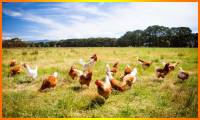
South Africa: Poultry industry welcomes green light for imports.
The South Africa Poultry Association (Sapa) has welcomed the opening up of imports to fertile eggs for hatcheries including products such as powder and liquid eggs.
This comes after Minister of Agriculture Thoko Didiza announced that the government would allow imports of poultry products to ensure sufficient stock for the festive season.
Department of Agriculture, Land Reform, and Rural Development (DALRRD) spokesperson Reggie Ngcobo said the department is working with all stakeholders in the poultry industry and 'doing everything possible to contain the Highly Pathogenic Avian Influenza (HPAI) which is plaguing not only South Africa but other parts of the world.
'Since the 1st of September, the department has granted 115 permits for fertiliser eggs, 48 permits for egg powder, 2 406 permits for poultry meat and 24 permits for table eggs.
'A permit might be for a shipping container up to 10 000 tonnes,' Ngcobo said.
Sapa’s Egg Organisation general manager Abongile Balarane said these are 'good steps' to assist the industry during the crisis.
'Under normal circumstances, the South African Egg Industry has about 27 million hens that provide us with eggs daily.
'Unfortunately, about six million of those layer hens have been culled with another three million suspected to be affected,' Balarane said.
'As an industry, we have fully agreed to import a bulk of powder and liquid eggs which are mainly used for industrial purposes, and then channel all the available fresh table eggs to the consumers.
'This will assist us while we are rebuilding the flock size and waiting for vaccines to be allowed in South Africa.'
He said most SADC countries like Zimbabwe, Namibia, Angola, and Malawi which are bird-flu free can assist the industry in providing needed supplies.
'In 2017 during the previous avian influenza, we had poor, rotten eggs dumped on South Africa from South America.
Balarane said it resulted in reputational damage for the industry because consumers weren’t happy with poultry products.
He said this led to the revision of the current regulation R.345, which sets out clear rules for anyone wishing to import shell eggs and products into South Africa.
'The 40 days from the day of lay is to protect the consumer from poor quality eggs, refrigerated as low as +1 to +4 degrees celsius, from sea exporting countries.'
To immediately expose eggs to ambient South African temperatures increases the decline in quality, Balarane said.
South African eggs may not be sold after 40 days from the date of lay, the rule applies to all unpasteurised table eggs sold in South Africa.
Balarane said the call from frozen food importer/exporter, Hume International, for immediate legislative intervention by uplifting the 40-day rule under regulation R.345, and assurance for importers, is not supported by the poultry industry.
'Everyone must abide by the laws of the country.
'We call on DALRRD for immediate assistance to fast-track our discussions to open SADC countries that do not avian influenza at the moment.'
The general non-availability of eggs on South African shop shelves has triggered a sharp spike in the price of eggs where product is still available.
Freight News saw earlier this week at a retailer in Randburg, a tray of '30 large Farmhouse eggs' advertised for R136.99.
Prior to the current bird flu outbreak, such a tray would be priced between R90 and R100.
Some consumers say that although supply shortage has been touted as the reason for eggs becoming so expensive, sharp increases should be seen for what it is – price gouging.
Source: freightnews.co.za
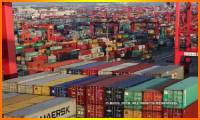
India, Saudi Arabia commerce ministers discuss ways to promote trade ties.
Commerce and Industry Minister Piyush Goyal on Wednesday held discussions with his Saudi Arabian counterpart Majid bin Abdullah AlKassabi on ways to further promote trade ties between the two countries.
Goyal was in Riyadh for two days to attend the seventh edition of Future Investment Initiative (FII).
'Discussed how the robust India-Saudi trade ties can be further scaled to make global supply chains more resilient,' Goyal said on social platform X.
He also met Saudi Arabia Energy Minister Prince Abdul Aziz Bin Salman Al-Saud; Investment Minister Khalid A Al Falih; Industry and Mineral Resources Minister Bandar bin Ibrahim AlKhorayef; and Governor Public Investment Fund (PIF) Yassir Rummayyan.
Goyal talked about the multiple opportunities offered by India.
The bilateral trade between the countries stood at USD 52.75 billion in 2022-23 against USD 42.86 billion in 2021-22.
India received USD 3.22 billion in foreign direct investment from Saudi Arabia between April 2000 and June 2023.
Source: business-standard.com
ICAR-IIHR encourages soilless culture for vegetables and fruits to offset water scarcity.
ICAR-IIHR (Indian Institute of Horticulture Research) sees immense opportunity in the Cocoponics/Soilless culture – A new method of growing vegetables and medicinal herbs in terrace/ rooftop/ vertical gardening. This is because soilless system techniques have been integrated into horticultural production, maximising the efficiency in the use of water and nutrients.
In an age of climate change and environment degradation, soilless cultivation is gaining ground because of increasing scarcity of arable land and the increase in extreme weather conditions has led to a large proportion of crops, especially vegetables, being cultivated in protected soilless cultivation methods to provide people with sufficient and high-quality food.
The BESST-HORT (Business Entrepreneurship and Start-up Support through Technology in Horticulture) comprehends that soilless cultivation is a modern cultivation system of plants that uses either inert organic or inorganic growing substrates, mostly in combination with nutrient solution to supply nutrients to plants.
In this regard, it is organising a one day hands on training program on 'Cocoponics/Soilless culture – A new method of growing vegetables and medicinal herbs in terrace/ rooftop/ vertical gardening' on October 27, 2023 at the ICAR-IIHR, Hesaraghatta Lake, Bengaluru. The programme according to the organisers includes theory, practical demonstration & discussion. The course director is Dr Kalaivanam. The course co-directors are Dr G Selvakumar, Dr MR Rohini, Dr Priti Sonavane. The course coordinator is Dr MV Dhananjaya and the BESST-HORT team.
The objective is to impart training on soilless culture, is because this innovative approach has gained popularity in recent years, especially for growing vegetables and medicinal herbs on terraces and in other limited-space environments.
According to IIHR, soilless culture has found a place in urban and peri-urban areas of India, where limited space and soil quality issues are common. Indian farmers and gardeners use soilless culture to grow a wide range of crops, including vegetables, medicinal herbs, and even exotic plants. This method allows for the year-round cultivation of crops that may not thrive in certain climatic conditions.
Further, soilless culture techniques are seen as more water-efficient compared to traditional soil-based agriculture, a critical factor in a country like India, which faces water scarcity issues in many regions.
Research institutions, agricultural universities, and government initiatives have been promoting soilless culture methods and providing training to farmers and enthusiasts. This helps disseminate knowledge and expertise about these innovative growing techniques. Also commercial soilless culture farms and greenhouses have been established in various parts of India, producing high-value crops and aiding the growth of the economy. In addition, the use of soilless culture in India has also opened up opportunities for the export of fresh produce and medicinal herbs, as it allows for the production of high-quality, disease-free crops.
Despite the potential benefits, soilless culture faces challenges in terms of initial investment, energy costs, and the need for specialised knowledge. However, with time, more cost-effective and sustainable approaches are being developed to address these challenges. However, the adoption of soilless culture in India varies from region to region, but is popular among progressive farmers. As technology and expertise continue to evolve, it's likely that soilless culture will play an increasingly important role in India's agriculture and horticulture sectors, said the experts.
Source: fnbnews.com
UK-India FTA raises concerns among British rice millers.
A 1 billion ($1.2 billion) corner of the UK economy is fearing for its future as Britain and India close in on a long-awaited free-trade agreement.
British rice millers such as Tilda and Veetee Rice have thrived for decades by importing low-tariff unmilled brown rice from the likes of India and Pakistan and 'polishing' the grains into the white product loved by UK consumers.
But with India pressing for tariffs on white rice to be slashed, and little feedback from British trade officials, concerns are mounting for an industry that employs more than 3,000 people at 16 mills and processing plants scattered from Kent in southern England to Yorkshire in the north.
'It is crucial that existing tariffs on milled (white) rice are maintained,' Alex Waugh, outgoing director of The Rice Association, said at a private event in the House of Commons last month attended by rice industry leaders and government officials. 'If access on milled rice is conceded, the basis of operations will be undermined, the incentive for future investment in the UK will be lost and ultimately jobs will go.'
A spokesperson for the UK Department for Business and Trade said officials were working towards an 'ambitious trade deal.'
'We have always been clear we will only sign a deal that is fair, balanced and ultimately in the best interests of the British people and the economy,' the spokesperson said.
One person with knowledge of the UK dialog said the question of tariffs on rice was yet to be fully addressed, adding that it was a contentious issue and that the two sides were still some way off ironing out the more 'difficult' details of a trade deal.
A separate source with knowledge of the Indian negotiating team confirmed that the subject of tariffs on rice was very sensitive, and that an agreement had not yet been reached.
Currently, the UK imports vast quantities of brown rice from India around 150,000 metric tons, or a quarter of its total rice imports, originate in the country. Import tariffs make this cost-effective. The levy on brown basmati is 25 a ton, or zero if it's included in a list of special varieties. That's much lower the levy on white basmati, at around 121 a ton.
Slashing the tariff on white rice would leave UK mills redundant, industry leaders claim, while bringing negligible price benefits for consumers, threatening security of supply and potentially risking a drop in quality.
Waugh contends there would be little gain for India from lower UK tariffs. Farmers in the country already tend to get a better price from UK mills than from domestic players for their brown rice, he said, since those buyers need to secure pesticide compliance and are increasingly keen to source rice with improved sustainability credentials.
For Indian millers, meanwhile, the quantities of their milled rice which would be exported to the UK are likely to be too small to really move the dial on their profits.
The downsides for the UK extend beyond lost jobs and production, Waugh added.
Source: economictimes.indiatimes.com
Making EU-India partnership defining force for world will be my priority: Ambassador Delphin.
Newly-appointed envoy of European Union Herve Delphin on Monday said making the EU-India strategic partnership a defining force for the world of today and tomorrow will be his key focus. Delphin said the EU's partnership with India is one of the most significant relationships developed by the grouping on the global stage.
The EU ambassador to India made the remarks after presenting his credentials to President Droupadi Murmu at an official ceremony at the Rashtrapati Bhavan.
The envoy said boosting economic opportunities, ensuring resilient supply chains and promoting faster green and digital transition will be the focus of his efforts in India.
'The strategic partnership with India is one of the most significant relationships developed by the European Union on the global stage,' he said.
'It is an honour for me to represent the EU in India and contribute to make EU-India a defining force for the world of today and tomorrow,' Delphin added.
The ambassador said the EU and India are trusted partners and friends, with strong bilateral cooperation.
'Over the years, our strategic ties have both broadened and deepened based on shared goals and interests -- on trade, trusted technology, security, green and clean energy technologies, sustainability, security and defence and more,' he said.
'We have an ambitious agenda to bring this partnership to a new level. My mission is to contribute to turn this into a reality for the mutual benefit of Europe, India, our companies and our people,' Delphin said.
The EU is India's second-largest trading partner, accounting for Euro 120 billion worth of trade in goods in 2022 or 10.8 per cent of the total Indian trade.
India is the EU's 10th-largest trading partner, accounting for 2 per cent of the grouping's total trade in goods. Trade in services between the EU and India reached more than Euro 45 billion in 2022. The EU as a whole is also one of the largest investors in India.
Emphasising the strong mandate he has received from Brussels to unlock the full potential of the EU-India partnership, Delphin said: 'The EU and India have much to gain from each other.'
'Together, we also have much to offer to the world in order to address the global challenges of our times, be it geopolitical, climate change, environment, sustainable development,' he added.
'Our common democratic values and principles are the fertile ground on which this relationship flourishes and we must continue to tend it,' the ambassador said.
Currently, India and the EU are negotiating a bilateral free-trade agreement (FTA) and an investment protection pact, besides another one on geographical indications.
These pacts are being considered crucial to unlock the full economic potential of the EU-India relationship.
The India-Middle East-Europe Economic Corridor (IMEC) initiative recently signed by the EU, France, Germany, Italy, India, the United States, Saudi Arabia and the United Arab Emirates (UAE) is another major step to expand economic opportunities.
The EU and India have also made significant forward movement in the last few years to deepen their security and defence cooperation, including on counter-terrorism, cyber and maritime security.
The Indo-Pacific region at large and the Indian Ocean in particular are key areas where this cooperation can be brought to bear, according to the EU.
With a career spanning 30 years with the EU, Delphin is a specialist in foreign policy and international relations.
Prior to his posting in India, he was heading policy planning at the European Diplomatic Service, EEAS, where he also served as the acting director of strategic communications and foresight.
A French national, he was awarded the title of 'Knight of the Legion of Honour' (Legion d'Honneur), the highest French National Order, in 2014.
Source: economictimes.indiatimes.com