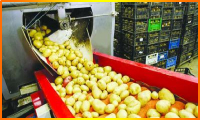
Shri Prahlad Singh Patel emphasises India is one of the fastest-growing economies with many investment opportunities especially in the food processing sector.
Union Minister of State for Food Processing Industries and Jal Shakti Shri Prahlad Singh Patel has emphasised that India is one of the fastest-growing economies with many investment opportunities, especially in the food processing sector. Breifing the media on second edition of World Food India 2023 in New Delhi today he said World Food India is an effort towards projecting potential of the sector before global stakeholders. He pointed out that the event is a unique example of whole of the Government collaborative approach, as 11 central Ministries/ Departments & their associated autonomous bodies are participating in it.
Shri Patel said so far 23 States/UTs and exhibitors from 16 countries have consented to participate in the event & more stakeholders are likely to be on boarded in remaining days of the event.
The Minister further apprised of the wide international representation in the event & about 10 overseas Ministerial & official delegations from many countries are participating in the event. He said a Reverse Buyer Seller Meet is also being organized in association with Department of Commerce & its associated commodity boards as part of the event & it is likely to have participation of about 1000 overseas buyers from more than 75 countries. In all the event is likely to witness participation of more than 900 exhibitors.
Shri Minhaj Alam, Additional Secretary, Ministry of Food Processing Industries informed that exhibition is being held in Hall Nos 1,2,3,4,5,6 & 14 in addition to various activities in open space of Pragati Maidan & Bharat Mandapam. He provided brief of the arrangements at the venue for facilitating exhibitions, B2B, B2G & G2G meetings and collaborations.
The second edition of the global mega food event, World Food India 2023, is being organised by the Ministry of Food Processing Industries (MoFPI) from 3rd-5th November 2023 at Pragati Maidan in New Delhi. The Hon’ble Prime Minister, Shri Narendra Modi, will inaugurate the event at the iconic Bharat Mandapam in Pragati Maidan on 3rd November, in the presence of Shri Pashupati Kumar Paras, Union Minister of Food Processing Industries. The Hon’ble President, Shrimati Draupadi Murmu will present the valedictory address on November 5th.The Netherlands will be the ‘Partner Country’ in this edition of World Food India, while Japan and Vietnam are ‘Focus Countries’.
The experiential Food Street, curated by Celebrity Chef Ranveer Brar, promises to be the chief attraction for food enthusiasts and industry professionals alike. Spread over 3 Zones, it boasts a sustainable food theatre with a focus on Shree Anna or millets; pavilions showcasing regional cuisines from all corners of the country, street food as well as food from the royal culinary heritage of India.
Also on the cards is an attempt at setting a Guinness Record for the longest dosa in the world. 60 to 80 chefs will be working together to create a millet dosa over 100 feet long, a testament to the dedication and skill of the team effort.
To celebrate the International Year of Millets 2023, a monumental installation of 50,000 tetra-pack containers of millet beverages will be created and distributed to underprivileged children. The 75,000 visitors expected to visit over three days will also be treated to cultural programs, including dance and musical performances. The success of World Food India 2023 will establish a Global Food Event in the country at par with similar marquee events across the globe.
Source: pib.gov.in
Centre extends curbs on sugar exports as DGFT notifies shipments policy.
The Centre has decided to curb sugar exports for an indefinite period as per a Director-General of Foreign Trade (DGFT) notification. On Wednesday, the DGFT notified the sugar export policy which extended the restrictions that have been in place since October 2022. Though the policy allows exports with prior permission from the government, the Food Ministry is unlikely to issue any permit this year, except some quantities through diplomatic channels.
Restriction on export of sugar (Raw Sugar, White Sugar, Refined Sugar and Organic sugar) is extended beyond October 31, 2023, till further, the DGFT said, adding other conditions will remain unchanged. The notification has also clarified that export restriction will not be applicable to sugar being exported to the European Union and US under tariff rate quota (at concessional duty) as per prescribed procedure.
El Nino threat
When sugar was put under restricted category from June 1, 2022, it was made clear that shipments may be allowed with permits issued by the Food Ministry, which will be continued in principle as per notification.
However, the Food Ministry is unlikely to issue any sugar export quota in the current season (October-September) considering tight supply situation in the domestic market, sources said. There is an expected drop in production, though it may be higher than estimated annual demand of 27.5-28 million tonnes (mt).
'The government will likely build higher domestic stock for 2024-25 season in view of potential threat from El Nino to sugarcane crop next year as the opening stock in current season is around 6 mt, which is just enough for domestic demand for October and November,' a source said.
Higher ethanol demand
Besides, there will be higher requirement of sugarcane for ethanol as the government has set a blending target of 15 per cent for 2023-24 ethanol year (November-October), up from 12 per cent target in 2022-23.
In a notification issued on October 28, 2022, the Directorate General of Foreign Trade said that the restriction on sugar exports – mandatory for exporters to have a prior permit from the Food Ministry – would be in place until further orders or October 31, 2023, whichever was earlier. For the 2022-23 sugar season, permits were issued for export of 6.2 mt.
Sugar mills in Maharashtra are expected to start crushing around Dussehra and in Uttar Pradesh factories may begin operation from last week of this month.
The Centre had earlier expected 5-5.5 mt of sugar diversion towards ethanol against 4.1 mt last season. But, considering the crop situation in Maharashtra and Karnataka, the diversion may not be that high, sources said. Sugar is not actually diverted to produce ethanol, which is made out of molasses or sugarcane juice/syrup or grains. The estimate is based on how much quantity of sugar could have been produced from the same quantity of sugarcane that gets diverted towards ethanol.
Though Indian Sugar Mills Association had on August 2 estimated sugar production for current season to drop to 31.68 mt (after diversion towards ethanol) from 32.8 mt in 2022-23 season.
Source: thehindubusinessline.com
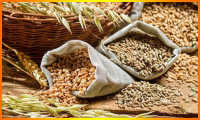
Cabinet approves Minimum Support Prices (MSP) for Rabi Crops for Marketing Season 2024-25.
The Cabinet Committee on Economic Affairs, chaired by the Hon’ble Prime Minister Shri Narendra Modi, has approved the increase in the Minimum Support Prices (MSP) for all mandated Rabi Crops for Marketing Season 2024-25.
Government has increased the MSP of Rabi Crops for Marketing Season 2024-25, to ensure remunerative prices to the growers for their produce. The absolute highest increase in MSP has been approved for lentil (masur) at Rs.425 per quintal followed by rapeseed & mustard at Rs.200 per quintal. For wheat and safflower, an increase of Rs.150 per quintal each has been approved. For barley and gram an increase of Rs.115 per quintal and Rs.105 per quintal respectively, has been approved.
Minimum Support Prices for all Rabi crops for Marketing Season 2024-25
(Rs.per quintal)
| S.No | Crops | MSP RMS 2014-15 | MSP RMS 2023-24 | MSP RMS 2024-25 | Cost* of production RMS 2024-25 | Increase in MSP (Absolute) | Margin over cost (in per cent) |
| 1 | Wheat | 1400 | 2125 | 2275 | 1128 | 150 | 102 |
| 2 | Barley | 1100 | 1735 | 1850 | 1158 | 115 | 60 |
| 3 | Gram | 3100 | 5335 | 5440 | 3400 | 105 | 60 |
| 4 | Lentil (Masur) | 2950 | 6000 | 6425 | pib.gov.in | ||
19 Oct, 2023

Philippines gets highest rice export allocation from India. The Philippines will receive 295,000 metric tons of non-basmati white rice from India, the largest rice exporter in the world. This was the culmination of rice importation talks between the two nations since August. The Philippines had recently gone through a lean season, jacking up rice prices and moving President Ferdinand Marcos Jr to resort to a price cap. 'Request made at the leadership level and the positive decision reflects the growing confidence in the bilateral relationship,' the Indian embassy in Manila said in a statement to the media on Wednesday, October 18. Other countries also set to receive rice exports from India are Nepal, Cameroon, Cote d’ Ivore, Republic of Guinea, Malaysia, and Seychelles. The Department of Agriculture has yet to comment on this latest development. This story will be updated once the agency gives a statement. Authorities expected rice prices to drop should the importation talks push through. Despite India’s rice export ban, its government allowed exports to select countries through the National Cooperative Exports Limited. A Reuters report said, India in July banned exports of non-basmati white rice and later imposed a 20% duty on exports of parboiled rice. Last August, the Indian government allocated export quotas of non-basmati white rice to Singapore, Bhutan, and Mauritius. Source: rappler.com |
|||||||
19 Oct, 2023
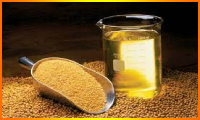
Oilmeals export up 29 per cent in H1 this fiscal. India exported 22.76 lakh tonnes (lt) of oilmeals during April-September of 2023-24 against 17.62 lt in the corresponding period a year ago, registering a growth of 29.15 per cent. Data provided by the Solvent Extractors’ Association of India (SEA) showed that India exported 3.30 lt of oilmeals during September 2023 against 2.40 lt in September 2022, up 37.35 per cent. BV Mehta, Executive Director of SEA, said India was outpriced in the international market in the case of soyabean meal last year. India exported 5.86 lt of soyabean meal during the first six months of 2023-24 against 1.21 lt in the corresponding period of 2022-23. Export of rapeseed meal increased to 13.44 lt during April-September 2023-24 against 12.40 lt during the period. Castor seed meal export from India increased to 1.81 lt in the first half against 1.54 lt a year ago. Rice bran shipments down However, there was a decline in the export of ricebran extractions during the first six months of the current financial year. India exported 1.51 lt of ricebran extractions during April-September 2023-24 against 2.04 lt in the corresponding period of 2022-23. Mehta said India exports around 5-6 lt of de-oiled ricebran every year to Vietnam, Bangladesh, Thailand, etc. Stating that India exported around 1.5 lt during April-July 2023-24, he said the Government prohibited export of of de-oiled ricebran with effect from July 28 until November 30. This decision has seriously affected domestic ricebran processors and export of de-oiled ricebran, he said. Korea top buyer Oilmeals from India are exported to countries such as South Korea, Thailand, Vietnam and Bangladesh. South Korea imported 4.62 lt of oilmeals from India during the first six months of 2023-24 (5.29 lt in April-September of 2022-23). This included 3.41 lt of rapeseed meal, 98,080 tonnes of castorseed meal, and 23,091 tonnes of soyabean meal. Vietnam imported 3.02 lt of oilmeals from India during April-September 2023-24 (3.11 lt). This included 90,540 tonnes of ricebran extraction, 1.62 lt of rapeseed meal, 49,162 tonnes of soyabean meal, and 748 tonnes of groundnut meal. Thailand imported 3.74 lt of oilmeals from India during the first six months of 2023-24 (3.58 lt). This included 3.63 lt of rapeseed meal, 6,193 tonnes of soyabean meal, 4,666 tonnes of ricebran extraction, and 701 tonnes of castorseed meal. Bangladesh imported 4.35 lt of oilmeals from India during April-September 2023-24 (1.81 lt). This included 27,771 tonnes of ricebran extractions, 2.38 lt of rapeseed meal, and 1.68 lt of soyabean meal. Source: thehindubusinessline.com |
|||||||
19 Oct, 2023
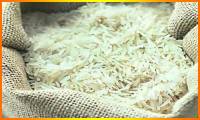
India lifts ban on rice export, allows export of 95,000 tons of rice to Nepal. India has withdrawn its three-month long ban on rice exports to Nepal. In a notice issued by India's Department of Commerce on Wednesday, it is mentioned that India will now export 95,000 tons of rice to Nepal. Such exports will be carried out through the National Co-operative Exports Limited of India. In mid-July, India announced a ban on the export of non-Basmati white rice. India announced a ban on rice exports in an effort to control rising food prices in their domestic market. Last year, too, India had banned the export of broken rice and slapped a 20 percent duty on export of husked rice, semi-milled and wholly-milled rice. The three-month long restriction was lifted only in December 2022. Nepal imports large quantities of paddy and rice from India. With the announcement of the ban on rice export by India, the price of rice has soared in the Nepali market. The Government of Nepal had been repeatedly writing letters, requesting its southern neighbor to lift the export restriction on rice. Nepal had sought permission to import 100,000 tons of rice. In response, India has now agreed to export 95,000 tons of rice to Nepal. Government records show that Nepal fulfills around 20 percent of its demand for rice through imports. Of around seven million tons of demand, around 1.5 million tons of rice is imported. India is the world's top exporter of rice, accounting for about 40 percent of the global trade in grains produced. Along with India, Thailand, Vietnam, Pakistan and the USA are other top rice exporters. The major buyers of rice are countries like China, the Philippines and Nigeria. India has set quotas for Nepal, Cameroon, Ivory Coast, Malaysia and the Philippines, among others, to sell the farm product. Source: myrepublica.nagariknetwork.com |
|||||||
19 Oct, 2023
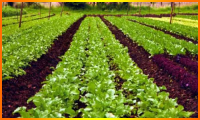
President launches agri roadmap for Bihar, asks farmers to embrace organic farming. Launching an agricultural roadmap for Bihar, President Droupadi Murmu Wednesday called for climate-friendly agricultural practices and suggested that the state’s farmers take up organic cultivation. 'For some time, Bihar has received less rain. Otherwise, rivers and ponds have been part of its identity. Water conservation is required. Climate-resilient agriculture will play a key role in environment conservation. There has been growing demand for organic farming now… it is good to know that the state government has developed an organic farming corridor along Ganga,' she said in Patna. Governor Rajendra Arlekar, Chief Minister Nitish Kumar and Deputy CM Tejashwi Yadav were present at the launch of the fourth Agricultural Roadmap that will run till 2028. The President said it was heartening to learn that the agriculture roadmap provides for mega food parks and export infrastructure. She also praised increased productivity in wheat and maize farming in Bihar and spoke of how the state had become one of the top producers of honey, makhana and fish. Calling herself the daughter of a farmer, Murmu also said she would like to return to her village after her tenure as President — to engage in farming. The Chief Minister reminded Murmu of JD(U)’s support for her Presidential candidature and requested her to visit Bihar frequently. This was Murmu’s first visit to Bihar after becoming President. The President accepted the invitation and termed herself a 'Bihari' as her home state of Orissa had historical links to Bihar. Saying Bihar had a key role in making India a developed country, Murmu called it the land of Buddha where there was no place for 'ill-will and conflict'. CM Nitish said: 'The fourth agriculture roadmap involves a cost of Rs 1.62 lakh crore from agriculture and other departments. Our farmers have excelled in potato and rice farming besides recording high productivity in production of vegetables. We have identified 9 lakh crore acres, mostly in North Bihar where there is water-logging for 8-9 months in a year. We have been developing it for fish and specialised farming. We have already become self-reliant in fish production.' The CM also requested Governor Arlekar to assess the agriculture roadmap and give his feedback to departments concerned. Source: indianexpress.com |
|||||||
19 Oct, 2023
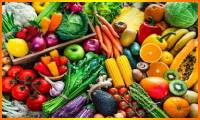
Horticulture output rises to 351.92 million tonne in 2022-23: Government data. India's horticulture production is estimated to have risen annually by 1.37 per cent to 351.92 million tonne in 2022-23 due to better productivity, according to government data. Ministry of Agriculture and Farmers Welfare on Wednesday released the second advance estimates of the area and production of various horticultural crops for the year 2022-23. According to this estimate, total horticulture production in the country is expected to be a record 351.92 million tonne in 2022-23, with an increase of about 4.74 million tonne (1.37 per cent) as compared to the previous year, an official statement said. Union Agriculture Minister Narendra Singh Tomar said that 'along with food grains, horticulture is also continuously recording record production in the country, which is the good result of the hard work of our farmers, the efficiency of scientists and the farmer-friendly policies of the central government under the able leadership of Prime Minister Narendra Modi, who is committed to the welfare of farmers.' Production of fruits, vegetables, plantation crops, flowers and honey is expected to increase. 'Fruit production is estimated to be 108.34 million tonne in the year 2022-23 as compared to 107.51 million tonne in the year 2021-22. The production of vegetables is estimated to be 212.91 million tonne in the year 2022-23 compared to 209.14 million tonne in the year 2021-22,' the statement said. Production of plantation crops is estimated to increase from 15.76 million tonne in 2021-22 to 16.05 million tonne in 2022-23, which is an increase of about 1.78 per cent. As per the data, potato output is expected to be 60.54 million tonne compared to 56.18 million tonne in the year 2021-22. Source: economictimes.indiatimes.com |
|||||||
18 Oct, 2023

7th Africa Agri Expo Commences in February, 2024, Participate in Largest Agriculture Show. The Africa Agri Expo (AAE) - Africa’s largest agriculture gathering is a well-known event among agriculture enthusiasts — especially those who are targeting the African agriculture sector. The show after the conclusion of its previous six editions has now started inviting participation for its successor — the 7th edition, scheduled for 19th and 20th Feb 2024 in Sarit Expo Centre, Nairobi, Kenya. The two-day exhibition cum conference will witness participation from more than 35 countries and TAB group (the organizers) are confident of surpassing all previous records. The anticipated footfall will be 5000+ with thousands of global agriculture companies taking the lead. The show is held under the patronage of the Ministry of Agriculture and Livestock Development Kenya and companies that will be here at the show will get tremendous exposure in terms of new markets, insights, prospects and captivating deals. New technologies and solutions that can aid and uplift Africa’s rich agribusiness market will be the centre of attraction when displayed in front of the attendees. Top companies from agrochemicals, agriculture machinery, equipment, technologies, fertilizers and irrigation and many more will be present, and it will be a boon to watch new offerings first-hand. The conference, having 500+ senior delegates, ministry officials, key associations’ representatives, decision-makers and highly designated persons will run parallel to the exhibition. With more than 10 sessions comprising technical, knowledge and panel discussions – the expert speakers will talk about how to strengthen the agriculture sector, make food more resilient and at the same time figure out ways towards achieving sustainability targets — incorporating new technologies and solutions. Top companies and organisations like Rokosan, Natural Storage Solutions, DVA, Draminski, A & S Thai Works, Navbharat Seeds, Borregaard, Agrex Do Brasil, Kenya Investment Authority (KenInvest), National Irrigation Authority Kenya (NIA), Agriculture Sector Network (ASNET), aak/CropLife Kenya, Kenya Organic Agriculture Network (KOAN), Society of Crop Agribusiness Advisors of Kenya, Rural Agency for Community Development and Assistance (RACIDA) and many others who are already coming to the show to engage and talk business with people that matter most to their business. 7th AAE is running an Early Bird Offer till 31st Oct 2023 wherein interested companies can book their booths or buy conference tickets at significantly discounted rates. Source: krishijagran.com |
|||||||
18 Oct, 2023

Mayiladuthurai is now part of protected agri zone in Tamil Nadu. Mayiladuthurai district is now part of the Protected Agricultural Zone. The state Assembly on Wednesday passed a bill to amend the TN Protected Agricultural Zone Development Act, 2020 for this purpose. The bill also provides for including ‘animal husbandry and inland fishery’ within the ambit of the term ‘Agriculture’. Besides, the water resources minister and food minister, water resources secretary, and food secretary have been included as members of the Tamil Nadu Agricultural Zone Development Authority. The decision to include Mayiladuthurai district in the Protected Agricultural Zone was taken at the first meeting of the authority chaired by Chief Minister MK Stalin on May 12, 2022. The previous AIADMK regime, in February 2020, had formed the Protected Agricultural Zone by including Thanjavur, Thiruvarur, and Nagapattinam, certain blocks of Cuddalore and Pudukottai districts. Welcoming the decision, Thamizhaga Vazhvurimai Katchi leader T Velmurugan said the government should come forward to include the entire Cuddalore district as part of the zone. M Sinthanai Chelvan of Congress too welcomed the move and said originally, Kattumannarkovil taluk was under the zone. After this taluk was bifurcated, the Srimushnam area was not covered under the zone. 10 bills passed On the concluding day of the short-duration winter session of the state Assembly, 10 bills were passed. When Tamil Nadu Private Universities (Amendment) Bill came up for consideration, Velmurugan welcomed it but proposed an amendment to be made in future. He said the private universities have refused to admit students on a merit basis despite receiving huge funds from the state government. The government should bring in an amendment in future to check this trend. Source: newindianexpress.com |