India s merchandise exports in Jan 2024 registers 3.12 % growth at USD 36.92 Billion over USD 35.80 Billion in Jan 2023.
Table 1: Trade during January 2024*
|
|
| January 2024 (USD Billion) | January 2023 (USD Billion) |
| Merchandise | Exports | 36.92 | 35.80 |
| Imports | 54.41 | 52.83 | |
| Services* | Exports | 32.80 | 28.00 |
| Imports | 16.05 | 14.83 | |
| Overall Trade (Merchandise +Services) * | Exports | 69.72 | 63.80 |
| Imports | 70.46 | 67.65 | |
| Trade Balance | -0.74 | -3.85 |
* Note: The latest data for services sector released by RBI is for December 2023. The data for January 2024 is an estimation, which will be revised based on RBI’s subsequent release. (ii) Data for April-January 2022-23 and April-September 2023 has been revised on pro-rata basis using quarterly balance of payments data.
India’s overall exports (Merchandise and Services combined) in April-January2023-24* are estimated to be USD 638.37 Billion, exhibiting a negative growth of (-) 0.19 per cent over April-January 2022-23. Overall imports in April-January 2023-24* are estimated to be USD 708.79 Billion, exhibiting a negative growth of (-) 5.69 per cent over April-January 2022-23.
Table 2: Trade during April-January 2023-24*
|
|
| April-January 2023-24 (USD Billion) | April-January 2022-23 (USD Billion) |
| Merchandise | Exports | 353.92 | 372.10 |
| Imports | 561.12 | 601.47 | |
| Services* | Exports | 284.45 | pib.gov.in |
16 Feb, 2024
Farmers are making India self-sufficient and a large producer of food grains, pulses, lentils, vegetables, fruits: Shri Piyush Goyal. Union Minister of Consumer Affairs, Food and Public Distribution, Textiles and Commerce & Industry, Shri Piyush Goyal has expressed happiness at the rise in the production and quality of Agriculture products to make India self-sufficient and for also enabling export of over $50 billion of agri-related products. Shri Goyal said this during his address at NAFED: Pulse 2024 Convention organized by Global Pulse Confederation in co-operation with co-operative major National Agricultural Cooperative Marketing Federation of India (NAFED). Shri Goyal thanked the farmers of India for their contribution towards making India self-sufficient and making the country a large producer of food grains, pulses, lentils, vegetables, fruits. He said that this has led to expansion both in production and quality of different food products to make India an exporter of over $50 billion of agri and related products. He said that over the last decade due to the commitment and capabilities of the farmers, pulses production has grown by 60% from 171 lakh tonnes in 2014 to 270 lakh tonnes in 2024. 'The partnership between NAFED and GPC will continue to grow to make pulses not only India’s wonder-diet but to make the wonder-diet of the world', said Shri Piyush Goyal. Speaking on Bharat Dal, the Minister said that under the leadership of Prime Minister Shri Narendra Modi the government launched the India pulse to support the farmers of the country and ensure the availability of reasonably-priced pulses for Indian citizens. He said that the government-procured chana dal retailed under the ‘Bharat’ brand has already captured 25% of the market share of lentil gram in four months of its launch. The Union Minister, further elaborated, that the high ratings the Bharat Dal has received from customer reviews on various e-commerce sites demonstrates the farmers’ ability to produce high-quality pulses and with the support of the government can become the affordable food for the common man. Shri Goyal also said that over the last decade government procurement of pulses has increased by 18 times. Shri Goyal noted that in 2015 the government introduced buffer stock to ensure moderate prices and price stability shielding the consumers from the food inflation that hit many countries including the developed world reeling with a 40-year high of inflation. 'India was the bright spot with among the lowest inflation rates and has been able to reign in double digit inflation to 5-5.5% in the last decade', he said. On Minimum Support Price (MSP), Shri Goyal said that MSP today assures a price 50% over the actual cost of production to our farmers, thereby providing an attractive return on investment. The Union Minister also said that the MSP is the highest today with increases as high as 117% in Masoor, 90% in Moong, 75% more in chana dal, 60% more in Toor and Urad over the amount provided a decade back. Shri Goyal further said that NAFED and NCCF are encouraging farmers to diversify into pulses and lentils and are willing to provide assured prices for 5-year contracts for government procurement, a massive step for the Government of India. Shri Goyal also stated that India is the largest producer and 5th largest exporter of millets in the world and the government is also putting similar focus on pulses and lentils as with millets and urged the industry leaders in attendance to provide suggestions and guidance to improve productivity and grow the pulse industry. Source: pib.gov.in |
|||
16 Feb, 2024
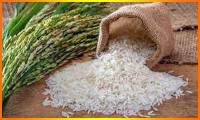
India s basmati rice exports up 19% in April-Dec at $3.97 billion. Basmati rice exports have shown a 19 per cent growth in dollar terms at $3.97 billion in the first three quarters of the current financial year on demand from countries such as Saudi Arabia and Iraq. In the same period last year, basmati exports were $3.33 billion, as per the latest provisional data released by the Agricultural and Processed Foods Exports Development Authority (APEDA). In volume terms, basmati exports were up 11 per cent at 3.54 million tonnes (mt) during April-December 2023 over 3.19 mt in the year-ago period. Shipments of non-basmati rice, which are currently restricted, fell by 28 per cent in value to $3.34 billion over $4.66 billion a year ago. In volume terms, non-basmati shipments were down to 8.34 mt against 13.17 mt a year ago. Overall, cereal shipments were down by a quarter at $7.80 billion compared with $10.37 billion as the government restricted shipments of non-basmati rice and wheat to ensure higher domestic supplies and control price rise. Overall shipments down The overall exports of agri and processed products monitored by APEDA were down 9.14 per cent at $17.88 billion against $19.68 billion a year ago. Except cereals and cashew, all other categories such as fresh and processed fruits and vegetables, livestock products and seeds witnessed a growth during the period. Among livestock products, buffalo meat shipments saw an increase of 15.61 per cent at $2.78 billion, while poultry products registered a growth of 36 per cent at $130 million. However, dairy products saw a decline of around 31 per cent at $327 million from corresponding last year’s $471 million. Pulses exports were up 4 per cent at $454 million ($436 million in same period last year), while processed vegetables registered a growth of around 24 per cent at $454 m($366 m). The processed fruits and juice shipments were up around 4 per cent at $696 m ($670 m). Groundnut exports were up 7.6 per cent at $606 m ($563 m), while guargum shipments registered a steep decline of 20 per cent at $394 m ($496 m). Cashew shipments were flat at $249 m. Source: thehindubusinessline.com |
|||
15 Feb, 2024

India, four other countries voice concern at WTO dispute settlement reform proposal. India, Bangladesh, Egypt, Indonesia and South Africa have raised concerns at a latest World Trade Organization (WTO) draft on dispute settlement reform which proposes inclusion of mediators during consultations and the composition and powers of dispute settlement panels. In a submission made Monday, they said that novel ideas like narrowing the possibility of appeal to 'exceptional circumstances' may lead to confusion and adversely impact the ability of developing countries to access the dispute resolution system. The draft has proposed that the panel be given powers to categorise cases into standard, complex and extraordinarily complex cases, which many countries have opposed. On the introduction of an element of mandatory alternate dispute resolution (ADR) and arbitration, the five nations said that it introduces 'numerous guidelines, requirements, and additional processes, which will curtail the flexibility that is a core characteristic of such processes, therefore disincentivizing developing countries including least developing countries from taking recourse to ADR'. The impact of the introduction of such a multiplicity of provisions has to be examined in greater depth, they said. The submission comes ahead of a key ministerial conference of WTO later this month where India, along with 100 countries, wants restoration of a fully functional and transparent appellate body which ensures a fair appeals process. New Delhi has also emphasised on retaining the member-driven, consensus-based decision making principles of the WTO. The dispute settlement mechanism of WTO is defunct due to a non-functional appellate body since December 2019 as the US has been blocking the appointment of judges. The five nations highlighted that there have been some informal discussions on the appellate review mechanism, which touch on issues of leave to appeal and standard of review. 'This discussion is being conducted in isolation from the issue of the restoration of the appellate body and the permanence of the underlying appellate structure,' they said. As per the submission, the proposed addition of a 'conciliator or mediator assistance during consultations' complicates the litigative streams. 'The proposed inclusion of political consultation in ADR during the compliance stage will make the process more complex and unpredictable for the countries with smaller economies,' they said. Source: economictimes.indiatimes.com |
|||
15 Feb, 2024

Indonesia to Import 1.6mn Tons of Rice as Harvest Delayed. Indonesian Coordinating Minister for Economic Affairs Airlangga Hartarto confirmed that the government had decided to import 1.6 million tons of rice to meet domestic needs due to a two-month delay in the harvest. 'There should be a big harvest in March-April, but it is postponed to April, May, and June, resulting in lower production, so the government decides to import,' Airlangga said in Jakarta on February 15. In addition to importing, he stated that the government will be intensifying rice distribution under the Stabilization of Food Supply and Prices (SPHP) program from 150,000 tons to 250,000 tons to meet people's demand. To facilitate the distribution process, he said that the basic commodity would be repackaged with adjusted weights. 'The rice is usually packed in 5 kilograms. For some regions, we distribute it in larger weights and each region can repack it in 50kg, 25kg, or 5kg packets,' said Airlangga, adding that the costs incurred during the repacking process would be reimbursed by the government. Airlangga further emphasized that these efforts are necessary given the current global economic situation, which shows no signs of improvement in the future. 'Global economic growth is still slowing down,' he said. Source: en.tempo.co |
|||
15 Feb, 2024
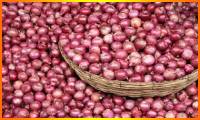
Export ban boon for onion dehydration units. Farmers may be crying over the ban on export of fresh onions imposed by the government. But India’s onion dehydration hub, Mahuva, is all smiles these days. The dehydration units in this coastal town of Bhavnagar have started functioning full throttle 40 days in advance due to the easy and cheap availability of fresh onions. Mahuva processes 90% of fresh onions in the country and bulbs from Gujarat, Maharashtra, Karnataka, and other states are sent here. Factory owners believe that they will process 20% more stock compared to last financial year and are hopeful of bagging good export orders. Vitthal Koradiya, an exporter of dehydrated onions, said, 'Generally, the processing units start operation by the end of Feb or first week of Mar after the arrival of fresh stock. However, due to the export ban, there is a huge availability of stock, and around 40 to 50 big units that have a huge customer base abroad started operations from Jan 8.' All 125 units are expected to start functioning fully in a fortnight. 'There is a 10% rise in the demand for processed onions from the Gulf countries,' Koradiya added. The processing units are currently getting 50,000 to 70,000 bags (each of 50 kg) per day for dehydration while they require two lakh bags per day to start all 125 units. India, one of the biggest exporters of onion in the world, imposed a ban on the export in December last year to control the skyrocketing prices in the local market. The price per kg in the local market crossed Rs 80 per kg before the ban but it has dropped to Rs 30 per kg. Manoj Ram, president of All India Vegetables Dehydration Association said, 'The fresh onion prices in the wholesale market were between Rs 400 to Rs 450 per 20 kg before the ban. At present, we are getting fresh onions for around Rs 225 to Rs 260 and expect this to drop to Rs 200 by the end of Feb.' We also published the following articles recently Marginal rise in average wholesale onion prices at Lasalgaon The average wholesale onion prices at the Lasalgaon Agriculture Produce Market Committee (APMC) increased by 11% to Rs 1,230 per quintal. The minimum and maximum prices were recorded at Rs 700 and Rs 1,500 per quintal, respectively. State starts process to pay 100-day workers by Feb 21 Following CM Mamata Banerjee's announcement, the panchayat department issues SOP and holds meetings with district magistrates (DMs) to ensure pending wages of 21 lakh NREGS workers are paid by Feb 21. BDOs verify beneficiaries through a house-to-house survey and finalise bank payment list by Feb 19. United States bans AI-generated voices in robocalls State attorneys general can take legal action against violators, and the FCC can fine companies using AI-generated voices in unwanted calls. The FCC can also block service providers carrying such calls. Recipients of unwanted robocalls have the right to take legal action and potentially recover damages. Source: timesofindia.indiatimes.com |
|||
15 Feb, 2024

India is Bangladesh s largest export destination in Asia: Indian High Commissioner. India is today Bangladesh's largest export destination in Asia, the Indian High Commissioner here has said, highlighting the importance of multimodal connectivity in unlocking the true potential of bilateral cooperation between the two countries. High Commissioner Pranay Verma made these remarks on Monday after Shipping Minister Khalid Mahmud Chowdhury inaugurated the Sultanganj port, establishing naval connectivity between Bangladesh’s Rajshahi and India’s Murshidabad. 'The future of our partnership lies in efficient multimodal connectivity - encompassing road and rail, inland waterways, and coastal shipping,' he said. Source: ptinews.com |
|||
15 Feb, 2024
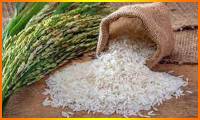
India s basmati rice exports up 19% in April-Dec at $3.97 billion. Basmati rice exports have shown a 19 per cent growth in dollar terms at $3.97 billion in the first three quarters of the current financial year on demand from countries such as Saudi Arabia and Iraq. In the same period last year, basmati exports were $3.33 billion, as per the latest provisional data released by the Agricultural and Processed Foods Exports Development Authority (APEDA). In volume terms, basmati exports were up 11 per cent at 3.54 million tonnes (mt) during April-December 2023 over 3.19 mt in the year-ago period. Shipments of non-basmati rice, which are currently restricted, fell by 28 per cent in value to $3.34 billion over $4.66 billion a year ago. In volume terms, non-basmati shipments were down to 8.34 mt against 13.17 mt a year ago. Overall, cereal shipments were down by a quarter at $7.80 billion compared with $10.37 billion as the government restricted shipments of non-basmati rice and wheat to ensure higher domestic supplies and control price rise. Overall shipments down The overall exports of agri and processed products monitored by APEDA were down 9.14 per cent at $17.88 billion against $19.68 billion a year ago. Except cereals and cashew, all other categories such as fresh and processed fruits and vegetables, livestock products and seeds witnessed a growth during the period. Among livestock products, buffalo meat shipments saw an increase of 15.61 per cent at $2.78 billion, while poultry products registered a growth of 36 per cent at $130 million. However, dairy products saw a decline of around 31 per cent at $327 million from corresponding last year’s $471 million. Pulses exports were up 4 per cent at $454 million ($436 million in same period last year), while processed vegetables registered a growth of around 24 per cent at $454 m($366 m). The processed fruits and juice shipments were up around 4 per cent at $696 m ($670 m). Groundnut exports were up 7.6 per cent at $606 m ($563 m), while guargum shipments registered a steep decline of 20 per cent at $394 m ($496 m). Cashew shipments were flat at $249 m. Source: thehindubusinessline.com |
|||
15 Feb, 2024
APEDA promotes export of agro products. The Agricultural & Processed Food Products Export Development Authority (APEDA), a statutory organization under the administrative control of the Department of Commerce, has the mandate to promote export of agricultural products, including millets, from India. APEDA provides assistance to its registered exporters, including those of millets, under Agriculture & Processed Food Export Promotion Scheme of APEDA. The assistance is provided under various components of the schemes viz. Infrastructure Development, Quality Development and Market Development. Buyer-Seller Meets (BSMs) are organized in the clusters to provide export-market linkages. Regular interactions, through video conferences, are held with the Indian Missions abroad, to assess and tap export opportunities. Country specific BSMs, through Indian Missions, are also organized. State-wise details of India’s millet exports during the year 2022-23 are given below. The year 2023 was celebrated as the International Year of Millets (IYM – 2023). The Government of India has taken a proactive multi-stakeholder engagement approach (engaging various central government Ministries/Departments, States/UTs, farmers, start-ups, exporters, retail businesses, hotels, Indian Embassies etc.) to achieve the objectives of IYM 2023 and taking Indian millets globally. The Government of India has organized various events to make it peoples' movement so that the Indian millets, recipes, value added products be promoted globally. Millets were promoted during the G20 presidency in India, Millet Culinary carnival, International Trade Events, Chefs Conference, exhibition of Farmers Producer Organizations (FPOs), road shows, kisan melas, Chef's training for paramilitary forces, ASEAN India Millet Festival at Indonesia and Delhi etc. To make India a global hub for 'Shree Anna', the Indian Institute of Millets Research (IIMR), Hyderabad has been declared as the Global Centre of Excellence for sharing best practices, research and technologies at the national and international level. IIMR is providing training to the farmers, women farmers, home makers, students and young entrepreneurs on manufacturing of value-added millet food products, daily recipes etc., and supporting them to establish self-enterprise. The institute has also developed value-added technologies, including 'Ready to Eat' and 'Ready to Cook' for millet foods. Other steps taken in this regard are branding of millet foods under 'Eatrite' tag; holding of awareness programmes; and promoting agribusiness incubator and technology business incubators etc. In continuation to the efforts towards mainstreaming millets, a 'Millets Experience Centre (MEC)' has been opened at Dilli Haat, INA, New Delhi with an aim to raise awareness on Millets and encourage its adoption amongst the general public. To encourage consumption of Shree Anna among government employees, all Government offices have been advised to include Shree Anna snacks in departmental trainings/meetings and Shree Anna based food items in departmental canteens. The Government has been working to leverage partnerships with start-ups, academic & research institutions, Indian missions, processors, retailers and exporters to promote Indian millets in the global markets. An Export Promotion Forum (EPF) dedicated to promoting millets in the international market has been established. A separate millet-specific web portal has been developed containing information about millets, their health benefits, production and export statistics, millet exporter’s directory etc. APEDA has also organized a comprehensive global marketing campaign showcasing India’s potential and accordingly E-catalogues of 30 importing countries and 21 millet producing states have been released. A Virtual trade fair (VTF) for millets has been developed and made available for exporters and importers from across the globe providing a single platform to interact and negotiate business deals. VTF is operational for 24X7, 365 days. APEDA has also organized participation in international trade fairs like BIOFACH - Germany, Gulfood - Dubai , Natural Products Expo West - USA , International Food and Drink (IFE) and BSM - UK , SIAL Food - Canada, Seoul Food & Hotel – South Korea etc. facilitating exporters to present and promote their millet products in global markets. APEDA is also working with Indian Missions in importing countries to promote millets and value-added products. Source: timesofindia.indiatimes.com |
|||
15 Feb, 2024

PM Modi, Dubai ruler discuss trade, technology, ties. Prime Minister Modi on Wednesday held talks with Sheikh Mohammed bin Rashid Al Maktoum, the ruler of Dubai who is also its PM and defence minister, focusing on trade, investment, technology, space, education and people-to-people ties. They expressed satisfaction at the rapidly growing economic and commercial ties between India and the Gulf nation, and acknowledged in particular the key role played by Comprehensive Economic Partnership Agreement. They also welcomed signing of bilateral investment treaty, said Indian govt said. 'It is always a delight to meet @HHShkMohd. His vision for Dubai's growth is clearly visible to the entire world. Our discussions covered a wide range of subjects ranging from commerce to connectivity, and ways to boost people-to-people linkages,' Modi posted on X along with photos of the meeting. The govt, in a statement, said, 'PM Modi thanked PM Sheikh Mohammed bin Rashid Al Maktoum for his graciousness towards the Indian community living in Dubai. Both leaders acknowledged the contribution of the Indian diaspora in Dubai's evolution into a global hub for trade, services and tourism.' Source: timesofindia.indiatimes.com |