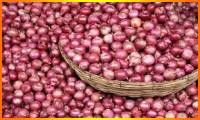
India allows export of onions to select nations.
India has allowed exports of onions on government-to-government basis to some countries, on recommendation of the Ministry of External Affairs, said people aware of the matter.
One of the persons said a limited quantity of onion exports has been allowed for bilateral purposes though no decision has been taken on lifting a complete ban on onion exports. Details of the exporting agency could not be ascertained.
Another person said the government has permitted exports of onions in limited quantities to Bangladesh, Sri Lanka, Mauritius, Bahrain, Bhutan and Nepal, among others.
India, the world's second largest onion exporter, had banned shipments of the kitchen staple in December 2023 till March 2024 due to rising domestic prices and potential shortages. This led to a surge in onion prices in neighbouring countries.
As onion prices started to rise in August 2023, the finance ministry imposed a 40% export duty to curtail shipments. However, it failed to have the desired effect due to under invoicing, prompting the government to impose a minimum export price of $800 per tonne on onions effective October 28.
With severe rain and hail storms damaging the crop in places such as Nashik and Ahmednagar in Maharashtra, onion arrivals fell in the peak season in November, inflating prices and forcing the government to ban shipments of the bulb vegetable effective December 8.
This has led onion prices to crash from more than Rs.40 a kg to about Rs.13 currently in the wholesale market of Nashik, India's main onion-growing region, prompting onion farmers to protest for two months demanding lifting of the export ban.
Onions have 0.6 percentage points weightage in overall inflation and 10 percentage points in the vegetable basket. A rise in onion prices can push food inflation up causing concern for the government which is going to face voters in Lok Sabha elections in a few months.
In early February, a team of central government officials visited the onion growing regions of Maharashtra. The team was expected to make a recommendation to the government on the export ban.
Meanwhile, some large exporters wrote to the government on Sunday, suggesting that instead of completely banning onion exports, the government should permit outward shipments on a restricted basis, adding that any major export volume can lead to a significant price rise in the domestic market.
Source: economictimes.indiatimes.com

APEDA catapults agricultural exports from modest USD 0.6 billion exports in FY1987-88 to USD 26.7 billion in FY 2022-23.
From its modest beginnings with annual exports of USD 0.6 billion in exports during 1987-88, proactive interventions by the Agricultural and Processed Food Products Export Development Authority (APEDA) have taken agricultural exports to a remarkable figure of USD 26.7 billion in the fiscal year 2022-23. This journey of exponential growth is underscored by expanding the export basket to over 200 countries, showcasing a commendable Compound Annual Growth Rate (CAGR) of 12%.
In the fiscal period 2022-23, India's agricultural exports reached USD 53.1 billion, with APEDA contributing a significant 51% of India’s Agri-exports. In the period April-December, 2023, among the 23 Principal Commodities (PCs) in APEDA's export basket, 18 exhibited positive growth. Notably, 13 out of 15 large PCs, with exports exceeding USD 100 million in the previous year, experienced positive growth, with an average growth rate of 12%. Fresh fruits emerged as a standout performer, registering a remarkable growth of 29%. Moreover, the export of processed vegetables surged by 24% in the period followed by Miscellaneous processed items, Basmati Rice, and Fresh Vegetables also saw substantial growth compared to the corresponding period last year. Notably, India has significantly expanded its fresh fruits export footprint, now serving 111 countries compared to 102 destinations in the previous year.
On its 38th Foundation Day on 13.02.2024, APEDA commemorated a remarkable journey of fostering agricultural exports, culminating in significant milestones and unprecedented growth. Founded in 1986 with the mission to promote the export of agricultural products, APEDA has evolved into a pivotal force in catapulting India's agricultural exports to new heights.
During April-November 2023, several key commodities witnessed substantial growth compared to the previous year, like, Bananas: 63%, Lentils (dried and shelled): 110%, Fresh eggs: 160% and Kesar and Dasheri Mango: 120% and 140%, respectively.
During the period from April to December 2023, the export value of Basmati rice surged by 19%, reaching USD 3.97 billion compared to USD 3.33 billion in the previous year. Simultaneously, the quantity of exports witnessed a notable growth of 11%, increasing from 31.98 lakh metric tons to 35.43 lakh metric tons within the same timeframe. Basmati rice found its way to the top markets, with Iran, Iraq, Saudi Arabia, the USA, and the UAE emerging as the top five destinations for these exports. This robust performance underscores the enduring popularity and global demand for Basmati rice, further solidifying its position as a major agricultural product in India's export portfolio.
Source: pib.gov.in

APEDA facilitates export of Bananas from India to Moscow, Russia via Sea.
The Agricultural and Processed Food Products Export Development Authority (APEDA), under the Ministry of Commerce and Industry facilitated the export of bananas from India to Russia via Sea by M/s. Gurukrupa Corporation Pvt. Ltd. a Mumbai-based exporter of fruits and vegetables regularly exporting fresh fruits and vegetables to the EU and the Middle East.
A consignment of 20 MT (1540 boxes) of bananas was flagged off on 17th February 2024 from Maharashtra by Chairman, APEDA, Shri Abhishek Dev in a collaborative effort with the Central Institute of Sub-tropical Horticulture (CISH). APEDA highlighted the development of sea protocol employed for this shipment by CISH for maintaining the quality of fruit in transit.
Chairman APEDA encouraged more exporters to employ novel methods in shipping new products to new destinations, with APEDA supporting and facilitating these endeavors. He highlighted APEDA’s financial assistance scheme, which now is putting special emphasis on supporting women entrepreneurs. He applauded the contribution of CISH in the development of the sea protocols and congratulated all personnel for a successful flag-off.
Recently, Russia has shown keen interest in the procurement of tropical fruits from India with bananas being one of them, which significantly is a major Agri import of Russia, which was presently, primarily being imported from Ecquador, in Latin America.
The major export destinations for Indian bananas include Iran, Iraq, UAE, Oman, Uzbekistan, Saudi Arabia, Nepal, Qatar, Kuwait, Bahrain, Afghanistan, and the Maldives. Additionally, the USA, Russia, Japan, Germany, China, the Netherlands, the UK, and France present India with abundant export opportunities.
The consignment was flagged off under the banner of M/s. Gurukrupa Corporation Pvt., Ltd, the women entrepreneurship is a prolific registered exporter of APEDA. M/s. Gurukrupa Corporation procured bananas directly from farmers of Andhra Pradesh. After harvesting, banana was brought to an APEDA approved packhouse in Maharashtra where it was graded, sorted, packed, boxed and stuffed in containers. The container was transported to JNPT for further voyage to Novorossiysk port, Russia for the final destination at Moscow Russia.
Banana is a major horticultural produce with Andhra Pradesh being the largest banana-producing state in India, followed by Maharashtra, Karnataka, Tamil Nadu, and Uttar Pradesh. These five states collectively contribute around 67 percent to India's banana production in the fiscal year 2022-23.
Despite being the largest global producer of bananas, India’s exports do not reflect this quantitative evaluation. India’s export share in the global market is only 1% even though the country accounts for 26.45 percent of the world's banana production (35.36 Million Metric Ton). In the fiscal year 2022-23, India exported bananas worth USD 176 million, equivalent to 0.36 MMT.
Within the next five years, Banana exports from India are expected to achieve the target of 1 billion USD. This achievement will ensure an increase in farmers’ income and improve the livelihood of more than 25,000 farmers, and is estimated to generate employment for more than 50,000 aggregators directly or indirectly linked to the supply chain.
The increase in the export of agricultural and processed food products is a result of various initiatives undertaken by APEDA to promote agricultural and processed food product exports, such as organizing B2B exhibitions in different countries, exploring new potential markets through product-specific and general marketing campaigns with the active involvement of Indian Embassies with special focus on natural, organic, and Geographical Indication (GI) tagged agro-products.
APEDA is making continuous efforts to promote exports of fresh fruits and vegetables. Continuous efforts in promoting exports of fresh fruits and vegetables especially to long-distance destinations, despite their perishable quality, by the development of sea protocols to retain their attributes is a key goal for APEDA moving forward.
Source: pib.gov.in

Govt looking at expanding rice classification to limit export curbs.
The Commerce and Industry Ministry is weighing the merits of expanding the codes of classification (HSN codes) for rice so that the varieties of non-basmati rice that are not traditionally consumed in the country can be separated from the popular staple variety of non-basmati white rice and excluded from export curbs when restrictions are being contemplated on the latter.
The interests of all stakeholders, including farmers, however have to be kept in mind while deliberating the matter, so a decision would be taken by the government only after extensive consultations, said Rajesh Agarwal, Additional Secretary, Commerce Department. The government has temporarily banned all categories of non-basmati white rice for exports.
At present, there are just six HSN codes for non-basmati rice while there are 30-40 varieties of such rice grown in the country. 'There is a demand from the industry for new HSN codes for other varieties of rice... When we ban non-basmati white rice, all varieties get banned, whether it is sona masuri, govind bhog and kala namak or the normal non-basmati white rice which is our core concern. The question is how do we differentiate. That is a debate that we are having internally. We are trying to see if there is merit in doing so,' Agarwal said at a media interaction.
Interests of all stakeholders need to be balanced while considering the matter, the additional secretary said, 'As a country, on one hand we will not like to impose ban on rice varieties which we are not much worried about (in terms of domestic shortages). At the same time we would need to see there is enough incentive for farmers to keep on producing the normal variety of rice, which is the core staple diet of the country. We need to balance this. That is a decision that the Department of Commerce will take after detailed stakeholder consultation,' Agarwal added.
Agricultural and Processed Food Products Export Development Authority (APEDA) is working on separate HSN codes for GI (Geographical Indications) rice varieties like red rice, black rice and kalanamak rice, per a presentation by APEDA chairperson Abhishek Dev.
The country’s agriculture exports may decline by 9 per cent this year primarily due to restrictions on exports of rice, sugar, and wheat, according to APEDA.
The Red Sea crisis may have some impact on India’s basmati exports this year to the EU and Egypt but the country’s primary exports to West Asia will not be hampered, another official said.
Source: thehindubusinessline.com

NABARD suggests establishment of meat & egg processing units in Gujarat.
In the State Focus Paper for the financial year 2024-25, the National Bank for Agriculture and Rural Development (NABARD) has suggested the establishment of meat and egg processing units in Gujarat for the preparation of value-added products such as chicken samosa, patties and momos.
The focus paper which was formally unveiled at Gandhinagar on Thursday states, 'In order to increase utilisation and demand of meat from other states, establishment of meat processing units may be considered for preparation of value-added products such as chicken samosa, patties and momos which have a high demand in the market as ready to eat products.
Suggestions
For the last two years (2021-22 and 2022-23), the total meat production in Gujarat has been stagnating at 0.35 lakh kilograms, states the paper.
NABARD also suggested increasing the breeding infrastructure for goat and sheep in the state.
Like meat, NABARD also suggested setting up egg processing centres for ready to eat products. It suggested promotion of contract farming to develop the poultry sector at rural level.
The egg production in Gujarat marginally fell by 3.6 per cent in 2022-23. The State produced 18,789 lakh eggs during 2022-23. The state has 12.84 lakh desi fowl from backyard poultry and 55.67 lakh improved fowl from commercial poultry farms.
The State Focus Paper has projected a 18 per cent growth in the credit potential for the priority sector in Gujarat for the year 2024-25. 'The credit potential for the priority sector in Gujarat for the year 2024-25 at Rs.3.52 lakh crore, a growth of 18.29 per cent over the previous year,” states the paper. Of the total credit potential for Gujarat, Rs.1.8 lakh crore is for MSMEs, Rs.1.42 lakh crore for Agriculture and allied sectors and the remaining for other priority sectors.
Source: thehindubusinessline.com
India biggest US partner in South Asia, says American official.
Describing India as its biggest partner in South Asia, the Biden administration has said it is working with New Delhi to deploy a multi-billion-dollar climate infrastructure and a new fund that will include a USD 500 million investment contribution from its development finance institution. Afreen Akhter, Deputy Assistant Secretary in the Bureau of South and Central Asian Affairs (SCA), told this at a news conference organised by the Washington Foreign Press Center.
'With India, which of course is our biggest partner in South Asia, we launched in January of last year the US-India Initiative on Critical and Emerging Technology. We call this iCET,' Akhter said.
The goal is to build a resilient semiconductor supply chain, elevate space cooperation, and partner on the next generation of telecommunications - so, again, a really ambitious initiative to build cooperation on critical and emerging technologies with India, she said on Wednesday.
The US is also advancing regional resilience to transnational threats.
'We want to talk about it in terms of our work on infrastructure or - and climate change and responding to pandemics. So under the Partnership for Global Infrastructure and Investment, which is another initiative we announced recently, we're working with India to deploy multi-billion-dollar climate infrastructure and a new fund that will include a USD 500 million investment contribution from our Development Finance Corporation,' she said.
'This will also include 40,000 public e-buses through an innovative payment secured - security mechanism financed by the Government of India, the United States, and our partners of philanthropy,' Akhter said.
'And then finally, we also launched the Climate Action Champions Work in South Asia, which is intended to invest in the next generation of climate leaders to support climate advocacy and respond to their needs throughout the region. So as you can see, we're deeply engaged with all of our partners across the Indo-Pacific and East Asia and South Asia,' she said.
Akhter said the US and India have deepened a very broad and multifaceted defence partnership through joint exercises, strengthened defence industrial cooperation, and the annual 2+2 Ministerial Dialogue.
'We are really focused on building out that defence relationship. It's one of the key features of our Indo-Pacific strategy,' she said.
The US is making huge investments throughout South Asia, she said.
'So last fall, the United States and India's Adani Group announced a half-billion-dollar investment in the Port of Colombo in Sri Lanka. This investment is intended to expand the capacity of the port, which is already operating at like 90 per cent capacity and really enable Sri Lanka to become an even bigger economic player in the region as it sits in this prime shipping route,' Akhter said.
'To bolster regional security, we're always engaging with our South Asian partners and really looking to build out those security relationships in the region. And we're doing that through a variety of ways, but one way we're doing it is, of course, providing our partners with new capabilities,' she said.
In the Maldives, the US recently announced the delivery of four new patrol boats to help them monitor their Exclusive Economic Zones. It has provided three Coast Guard cutters to Sri Lanka, she said.
Source: economictimes.indiatimes.com

India and Peru Trade Agreement negotiations gains momentum 6th Round takes place in Lima.
The 6th round of India -Peru negotiations for a Trade Agreement was held from February 12 to 14, 2024, in Lima, Peru, to continue the work that started in 2017 when the negotiation process was formally announced.
The round started with an opening ceremony with the participation of the Vice Minister of Foreign Trade of Peru, Ms. Teresa Mera; the Ambassador of India in Peru, Mr. Vishvas Sapkal; the Chief Negotiator of India, Mr. Vipul Bansal; the Chief Negotiator of Peru, Mr. Gerardo Meza; and the delegations of both countries.
During the ceremony, the Vice Minister of Foreign Trade of Peru and the Chief Negotiator of India gave brief introductory remarks reaffirming their commitment to continue working with efficiency, as India and Peru did before the pandemic with five successful rounds until August 2019. The negotiations resumed with the Special Virtual Round in October, 2023.
In this sense, both speakers emphasized the importance of taking forward the negotiation process with pragmatism, in order to find creative solutions and to reach consensus that allows to achieve this common objective in the short term. The Trade Agreement will create more trade opportunities for their citizens and enterprises, and also strengthen their economic and commercial ties.
In this round, nine working groups held in-person meetings: Trade in Goods, Rules of Origin, Trade in Services, Movement of Natural Persons, Customs Procedures and Trade Facilitation, Dispute Settlement, Initial Provisions and General Definitions, Final Provisions and Legal and Institutional Issues.
These meetings involved the participation of more than 70 delegates from both countries together, including their respective negotiating teams. From the Peruvian side, the delegation was led by the Ministry of Foreign Trade and Tourism, with the participation of government officials from other entities such as the Ministry of Economy and Finance, the Ministry of Foreign Affairs, the Ministry of Agriculture, the Ministry of Production, Customs Administration, among others. From the Indian side, the delegation comprised government officials and legal representatives from the Department of Commerce, Department of Revenue and the Directorate General of Foreign Trade.
Additionally, during this week and the following, other working groups such as, Technical Barriers to Trade, Sanitary and Phytosanitary Measures, Trade Remedies and Cooperation will continue to hold virtual meetings. The next round is expected to be held in April 2024. The date will be set in the following days.
In the last two decades, the trade between India and Peru has increased significantly, from US$ 66 million in 2003 to around US$ 3.68 billion in 2023.
Source: pib.gov.in

India, UK trade pact talks at advance stage; we want a fair deal: Comm Min Secretary Sunil Barthwal.
The negotiations for the proposed India-UK free trade agreement are at an advanced stage, and both sides are working to iron out differences on the remaining issues, a top government official said on Thursday. Commerce Secretary Sunil Barthwal said the negotiations are taking time because 'we want' to safeguard India's interest.
'India should commercially gain out of it and we should also be able to safeguard the interest of our farmers, PLI (production linked incentive) scheme goods. So, we are there to see that the deal is a fair deal,' he told reporters here.
Additional Secretary in the Commerce Ministry L Satya Srinivas said the talks are at an advanced stage and going on at a 'very' high level to iron out differences.
The 14th round of talks started on January 10.
The investment treaty is being negotiated as a separate agreement between India and the UK.
The bilateral trade between India and the UK increased to USD 20.36 billion in 2022-23 from USD 17.5 billion in 2021-22.
On the India-European Union (EU) free trade agreement, the ministry informed that the seventh round of talks is scheduled from February 19-23 here.
In June 2022, India and the EU restarted the negotiations for the long-pending trade and investment agreement on Friday after a gap of over eight years.
On the India-Pacific Economic Framework for Prosperity (IPEF), Additional Secretary in the ministry Rajesh Agrawal said that legal scrubbing of text on clean and fair economy agreements is underway.
He said the supply chain resilience pact will come into force from February 24 this year.
To implement this, he said, action plans are being developed to optimise participation in institutional structures under the supply chain pact.
Source: economictimes.indiatimes.com

APEDA hosts Capacity Building Programme and Buyer Meet in Mirzapur to unlock agricultural export potential.
To tap into the export potential of agricultural and processed food products from Eastern Uttar Pradesh, also known as Purvanchal, Agricultural and Processed Food Products Export Development Authority (APEDA) organized the 'Agri-Export: Capacity Building cum Buyer-Seller Meet' in Mirzapur yesterday. The event was graced by the Union Minister of State for Commerce and Industry, Smt. Anupriya Patel, as the Chief Guest. A host of other dignitaries led by Sh. Ram Shakal, Member of Parliament (Rajya Sabha), senior Government officials, representatives from exporter associations, Farmer Producer Organizations (FPOs), stakeholders and public representatives of the area graced the event. The event drew a very enthusiastic response from farmers with over 1500+ farmers attending the event.
In her keynote address, Smt. Anupriya Patel stressed the significance of increasing agricultural exports, highlighting their potential in not only contributing to the nation’s foreign exchange but also significantly raising incomes of the farmers, being the largest sector in terms of employment. She reiterated the commitment of the Government of India in raising farmers' income and well-being, citing various schemes of the Government of India and underscored the resolve of the Department of Commerce to facilitate their access to global markets. She also underscored the government's focus on infrastructure development across diverse agricultural sectors such as horticulture, spices, and marine products. She highlighted one such upcoming significant project, the 'Sardar Vallabhbhai Patel Niryat Suvidha Kendra' coming up in Chunar, Mirzapur, Uttar Pradesh, which, when completed in the near term, will significantly boost agricultural exports from the region, making Poorvanchal an agri export Hub of the nation.
Chairman, APEDA, Shri Abhishek Dev expressed the government's commitment to enhancing export opportunities for FPOs and farmers by focusing on market linkages and augmenting export infrastructure. He informed that APEDA, which celebrated its 38th Foundation day on 13th February, 2024 is fully committed towards boosting incomes of all stakeholders in the agri export value chain, particularly the farmers, by providing them the requisite training and exposure to emerging market opportunities. He reiterated that APEDA will continue to organise such events in the near future, for the benefit of all the stakeholders.
The 'Sardar Vallabhbhai Patel Niryat Suvidha Kendra' marks a significant milestone in advancing agricultural and allied sector exports. This newly developing infrastructure is envisioned to serve as a comprehensive single-window system catering to the needs of FPOs, farmers, exporters, and other stakeholders. The project spread in an area of 5 Acres in the Chunar sub-division of Mirzapur district boasts a modern packhouse with all the requisite facilities. Further, the project also boasts a training facility which will benefit all the farmers and FPO’s/FPC’s of the region. Finally, the project will also have offices of major export-oriented government bodies namely, MPEDA, Spices Board, IIP, EIC which will serve the agri-export ecosystem of the region.
With APEDA's intervention, the Purvanchal region now boasts crucial export facilities like cold rooms at Varanasi Airport, quarantine and custom clearance services, and the activation of the airport for agri air cargo, all of which were previously lacking in 2019. The Varanasi Airport's handling of 702 MT of perishable cargo until December 23, surpassing last year's figure of 561 MT, truly reflects a notable advancement in the region's agri-export capabilities. APEDA also facilitated in inviting leading buyers from across India, organizing Buyer Seller Meets with FPOs and farmers to directly connect them with international markets.
It may be emphasized that APEDA's initiatives have propelled Uttar Pradesh to become the third-largest exporting state in the financial year 2023-24 (April 23 to Nov 23), trailing only Gujarat and Maharashtra. APEDA's successful tapping of the Gangetic belt's potential has empowered FPOs and exporters to bolster agri-exports from the region. Approximately 50 FPOs have been promoted as exporters for agri exports, with over 20 actively engaged in both direct and deemed exports.
A diverse range of agricultural products, including fresh fruits and vegetables such as Green Chilies, Mangoes, Tomatoes, Okra, Potato, Water Chestnut, Cranberry, Banana, Jimikand, Ivy Gourd, Bottle Gourd, Pointed Gourd, Arvi, Ginger, fresh marigold, and rice, have been exported, underscoring the region's capacity to meet global demand.
Source: pib.gov.in
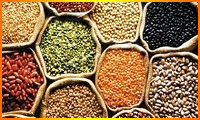
Efforts being made to attain self-sufficiency in pulses by 2027: Munda.
Observing that India has become self-reliant in chickpeas and many other pulse crops, Agriculture Minister Arjun Munda Thursday said 'consistent efforts' are being made to attain self-sufficiency in pulses by 2027.
Addressing the Pulses Convention-2024 organised by the Global Pulses Confederation (GPC) and National Agricultural Cooperative Marketing Federation of India Ltd (NAFED), Munda said, 'The government is also consistently striving towards increasing domestic production of pulses to gradually reduce dependence on imports and move towards self-reliance in the pulse sector.'
'As a result of all the efforts made so far, the production of pulses has increased from the initial level of 16.32 million metric tonnes during the period 2015-16 to 26 million metric tonnes (now)…,' Munda said.
He said, 'India has become self-reliant in chickpeas and many other pulse crops, with only a slight deficiency remaining in pigeon peas and black gram. Consistent efforts are being made to attain self sufficiency in pulses by the year 2027.'
Munda said the Centre is working 'diligently' to improve agriculture production and to raise the living standards of farmers in the country.
Consumer Affairs Minister Piyush Goyal said that in a short span of time, 'Bharat Chana Dal' has captured 25% of India’s market for gram pulses. Goyal said the government has been successful in managing inflation.
'We have today seen 10 years of average inflation ranging between 5-5.5 per cent amongst the lowest decade of inflation that India has seen in its 75 years of Independence,' Goyal said.
Discussing the minimum support price (MSP) Goyal said, 'We also support our farmers through procurement of pulses at MSP, which is determined by an independent body called CACP and the MSP today in India is assured at a price 50% over the actual costs of production of our farmers, thereby giving them a reasonable and attractive rate of return for their farming activities.' Talking about Bharat brand pulses and wheat flour, Consumer Affairs Secretary Rohit Kumar Singh said that for the first time the government has intervened in the retail market. 'Many western economists will tell you that government should not be in the business of doing business. But I beg to differ, if it suits the interests of the citizen of the country and the consumers, the governments must intervene and we should not be left to the mercy of the markets,' Singh said. Singh warned foreign pulse traders not to take advantage of the situation in India.
'Sometime we see that some geographies, I can name Myanmar and some east African countries, where traders will like to take advantage of the situation in India… Please do not indulge in that… If you want to take undue advantage, we will go after you,' Singh said.
Sharing initiatives taken by the government for protecting the interests of farmers, NAFED Managing Director Ritesh Chauhan said, 'In life one may require services of a doctor, lawyer, a policeman, and a preacher. So, keep them close. But I would add that it is the humble farmer who provides us our three meals a day.'
Source: indianexpress.com