15 Feb, 2024
Meeting between Union Agriculture and Farmers Welfare Minister, Shri Arjun Munda and Secretary-General of ASEAN, H.E. Dr. Kao Kim Hourn held today at New Delhi.
A delegation led by H.E. Dr. Kao Kim Hourn, Secretary-General of ASEAN, called on Union Minister for Agriculture and Farmers Welfare, Shri Arjun Munda today at Krishi Bhavan, New Delhi. Union Agriculture Minister extended a warm welcome to the delegation and affirmed that India values its relationship with the Association of Southeast Asian Nations (ASEAN) as a key pillar of its foreign policy in line with India’s Act East Policy. Union Minister emphasized the need to deepen our existing ASEAN-India relations by focusing on cooperation in the field of Agriculture. It was noted that India regularly participates in the ASEAN-India Agriculture Ministers’ Meeting and reaffirmed the commitment that India and ASEAN shall continue to work on issues of mutual interests including food security. In this context recalling successful celebration of ASEAN-India Millets Festival, Union Minister underlined the need of collective efforts towards mainstreaming millets. Union Minister also announced training programmes for ASEAN Member States at various institutions of ICAR including on Post Harvest Agriculture. H.E. Dr. Kao Kim Hourn, ASEAN Secretary General applauded India’s efforts on agriculture cooperation under ASEAN-India framework. He called upon the need to expand work on various sectors such as agriculture products, best practices, exchange programs, climate change, food security etc. He emphasized that India and ASEAN could jointly work towards sustainable Agriculture, promotion of digital technology in the agricultural sector and reduction of harmful agrochemicals to benefit the farming community in ASEAN Member States using India’s expertise and scientific knowledge in addressing these challenges. Union Agriculture and Farmers Affairs Minister reiterated the commitment of India’s continuous support for strengthening and expanding the India-ASEAN partnership in general and cooperation on agriculture in specific.
Source:
pib.gov.in
|
15 Feb, 2024
Modi lays foundation stone of 100,000sqm Bharat Mart in Dubai to boost exports.
The foundation stone of Bharat Mart, which will combine retail, warehousing and logistics facilities at Jebel Ali Free Trade Zone in Dubai, was laid during a virtual ceremony by Prime Minister Narendra Modi and the United Arab Emirates (UAE) vice president, Mohamed bin Rashid Al Maktoum, on Wednesday. Bharat Mart is a joint initiative of DP World, a Dubai-based multinational that specialises in logistics, port terminal operations and maritime services, and India’s commerce ministry that is aimed at boosting exports by Indian small and medium-sized enterprises. The facility, which has been compared to China’s Dragon Mart, will be built by DP World and is expected to be operational by 2025. The facility, set to cover more than 100,000 sq metres, will help cut the cost and time for shipping goods from India to Africa and Europe. Modi and Mohamed bin Rashid, who is also the UAE prime minister and ruler of Dubai, expressed confidence that Bharat Mart will further enhance India-UAE trade by leveraging Jebel Ali Port’s strategic location and strength in logistics, the external affairs ministry said in a statement. Bharat Mart can potentially play a key role in promoting the exports of India’s micro, small and medium sectors by providing them with a platform to reach international buyers in the Gulf, West Asia, Africa and Eurasia, Modi said. Modi also held a bilateral meeting with Mohamed bin Rashid and discussed bilateral cooperation in a range of areas, including trade, investment, technology, space, education and people-to-people ties. They expressed satisfaction at the rapidly growing economic and commercial ties between India and the UAE. In this context, they acknowledged the role of the Comprehensive Economic Partnership Agreement inked by the two countries in 2022 and welcomed the signing of the bilateral investment treaty on Tuesday. Modi thanked Mohammed bin Rashid for his 'graciousness towards the Indian community living in Dubai'. Both leaders acknowledged the contributions of the Indian diaspora to Dubai’s evolution into a global hub for trade, services and tourism. Modi conveyed his deep appreciation to Mohammed bin Rashid for granting land in Dubai for an Indian community hospital that will offer affordable healthcare facilities for Indian blue-collar workers. He also invited the ruler of Dubai to visit India. Modi also met Madagascar President Andry Rajoelina on the margins of the World Governments Summit in Dubai. This was the first meeting between the two leaders, who acknowledged the long-standing friendly relations and ancient geographical ties between the two countries. The leaders discussed ways to advance bilateral ties and appreciated their close cooperation in multilateral forums, including the UN. Modi said India is committed to strengthening the India-Madagascar partnership and to SAGAR or Security and Growth for All in the Region, the policy for Indian Ocean states. Modi said that as a fellow developing country in the Indian Ocean region, India will remain a 'committed partner in the developmental journey of Madagascar'.
Source:
hindustantimes.com
|
14 Feb, 2024
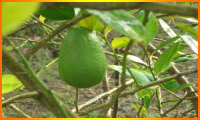
Assam declares 'Kaji Nemu' as state fruit.
The Assam government on Tuesday declared 'Kaji Nemu' (citrus lemon) as the state fruit. 'Kaji Nemu' is known for its unique aroma and health benefits and carries Geographical Indication (GI) tag. Agriculture Minister Atul Bora made the announcement in the state Assembly as per a decision of the Cabinet. 'The Cabinet meeting yesterday has approved the 'Kaji Nemu' as the state fruit of Assam. It is a laudable decision of our government', he said. Bora pointed out that the fruit had received a GI tag in 2016 and has been commercially grown in the state, with it being exported also. 'Commercial plantation of the Kaji Nemu is being done. There is 15.90 hectares of land under its cultivation, with the production at 1.58 metric tonnes. In the last two years, this fruit has been exported to several countries, including to the Middle East', he said. The minister also dwelt on the unique qualities of the Kaji Nemu, especially in boosting immunity and bringing a unique flavour to food. Meanwhile, Chief Minister Himanta Biswa Sarma said the decision to declare Kaji Nemu as the state fruit will help the fruit to attract more prominence globally. 'Our government has decided to declare Kaji Nemu (Citrus Limon) as the State Fruit of Assam. With its unique aroma & antioxidant properties, Assam lemon has enriched our local cuisines,' he wrote on X. With this announcement, it is set to shine on the global fruit map, boosting self-dependency and production, the CM added.
Source:
economictimes.indiatimes.com
|
14 Feb, 2024
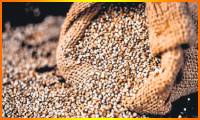
APEDA facilitates Punjab farmer to export millets to Australia, says govt.
The commerce ministry's arm APEDA has facilitated a farmer in Punjab to export 14.3 tonnes of millets and its products worth $45,803 to Australia, an official statement said on Tuesday. The shipment includes ready-to-cook millets derived from Kodo millet, Foxtail millet, Little millet, Browntop millet, and Barnyard millet, the commerce ministry said. 'A farmer from Sangrur, Mr Dilpreet Singh, has transformed into an exporter, marking his first export consignment of 14.3 metric tonnes of millets, and its products valued at $45,803,' it said. It also said that India's millet exports have touched $45.46 million during April-November this fiscal against $75.45 million in 2022-23. 'Millets are gaining popularity in the global market. There is a significant increase in the export of cereal preparation, including value-added millet products. APEDA has facilitated around 500 startups in marketing, and exporting millet-based value-added products,' it said.
Source:
business-standard.com
|
14 Feb, 2024

GI-tagged rice to get HS codes, will boost exports.
Government is is keen to give new ‘harmonised system (HS)’ codes, a numerical classification mandatory for internationally-traded products, to boost exports of GI-tagged rice varieties such as Gobindobhog (West Bangal), Kala Namak (Uttar Pradesh), and Jeeraphool (Chhattisgarh) and Johra (Assam). Govt is discussing this with stakeholders, sources said. The move will ensure exports of such rice varieties in case of any ban or restriction on exports of broken or white rice. At present, there are six HS codes for non-basmati rice and one for basmati rice. There are 28 varieties of rice with GI certification. They are from Kerala, Maharashtra, Odisha, Bihar, Madhya Pradesh and Himachal Pradesh. Govt has put a ban on export of non-basmati white rice to keep rices in the retail market in check. In the wake of imposition of restriction on rice exports, total shipment in the current fiscal is likely to fall by 50-60 lakh tonnes from 220 lakh tonnes in 2022-23, which was a record. Meanwhile, the Agricultural and Processed Food Products Export Development Authority (APEDA) arm of the commerce ministry said on Tuesday that it has facilitated around 500 startups in marketing and exporting millet-based value-added products. It has facilitated a farmer in Punjab to export 14.3 tonnes of millets and its products worth $45,803 to Australia. The shipment includes ready-to-cook millets derived from Kodo, Foxtail, Little, Browntop and Barnyard varieties.
Source:
timesofindia.indiatimes.com
|
14 Feb, 2024

Freight subsidy to promote agri products export from India.
Ministry of Food Processing Industries (MoFPI) has been implementing a Central Sector Scheme- 'Operation Greens (OG)'– A scheme for development of Tomato, Onion and Potato (TOP) value chain since 2018-19. The coverage of the scheme has since been expanded from 3 crops (Tomato, Onion & Potato) to 22 perishables crops which include 10 fruits, 11 vegetables (including TOP) and 1 marine i.e. shrimp as per the Union Budget 2021. The scheme has two pronged strategy of Price Stabilization Measures (short term measure) and Integrated Value Chain Development Projects (long term measure). Under the short term interventions of the scheme, MoFPI provides transportation (including air)/storage subsidy for eligible crop @ 50 % of eligible cost. In case of export, subsidy towards transportation charges is payable only upto Indian borders. Subsidy released under Short Term Interventions of the OG scheme is as below: | FY | Kisan Rail | Subsidy (Short Term) | Total | | 2020-21 | 23.33 | 1.58 | 24.91 | | 2021-22 | 54.46 | 3.74 | 58.20 | | 2022-23 | 0 | 29.99 | 29.99 | | 2023-24 | 0 | 2.00 | 2.00 | | Total | 77.79 | 37.31 | 115.10 | MoFPI through implementation of the Central Sector Scheme, namely, Pradhan Mantri Kisan Sampada Yojana (PMKSY), interalia, helps in creation of modern infrastructure with efficient supply chain management from farm gate to retail outlet across the country. The scheme not only provide a boost to the growth of food processing sector in the country but also helps in, interalia, reducing wastage of agricultural produce, increasing the processing level and enhancing the export of the processed foods. MoFPI is also implementing a Centrally Sponsored Scheme- PM Formalisation of Micro Food Processing Enterprises Scheme (PMFME) for providing technical, financial and business support for setting up/upgradation of 2 lakh Micro Food Processing Enterprises. Production Linked Incentive (PLI) scheme also launched by MoFPI for the period 2021-22 to 2026-27 to create global food champions and improving the visibility of Indian food brands abroad. No State/UT-wise allocation and release of funds is made specifically for promotion of exports, under any of the above three schemes implemented by MoFPI.
Source:
en.krishakjagat.org
|
14 Feb, 2024

India-Peru Trade Pact set to take shape by 2024-end, round 6 of negotiations to start soon.
India and Peru have been seeing a steady growth in their trade relationship and the expectation is it may grow in double digit incrementally every year. In fact Financial Express Online learns that the negotiations for the India-Peru Trade Agreement is likely to be wrapped up this year even as preparations for Round 6 of talks start in full swing. Talks for this pact commenced in 2017 and the fifth round was concluded in August, 2019. On account of Covid, the negotiations came to a pause. Luis Cabello – Trade and Tourism Counsellor of Peru in India is however optimistic as the sixth round of negotiations are set to begin soon, 'The sixth round of negotiations for the trade agreement between Peru and India will start. We expect to wrap it up by end of this year (2024).' As per official data provided by both the Indian and Peruvian officials, the bilateral trade volume reached $3.12 billion in FY2023. India exported goods worth $865.91 million to Peru, and Peru’s total exports to India in 2023 equaled $2.55 billion. Key Indian exports to Peru include motor vehicles/cars, cotton yarn and pharmaceuticals, while Peru primarily exports gold, silver, copper ores and concentrates, industrial metals like aluminium, iron and agri products include blueberries predominantly. Cabello pointed out that what really helps is that 'India and Peru are two complementary economies. We are not competing with each other. So that is why this agreement will be convenient for both economies. This does not just cover goods but also services and movement of people. It also covers investment.' As a result, he is confident of seeing 'at least 10% growth every year in trade volume between Peru and India.'
Source:
financialexpress.com
|
14 Feb, 2024
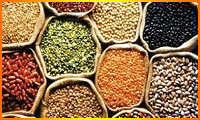
India to host global meet on pulses in Delhi from Feb 15.
The Global Pulse Confederation (GPC)’s three days convention — Pulses 24 — will kickstart in Delhi on February 15 where several dignitaries including ministers, top officials and industry leaders from India and about 40 other countries are slated to discuss issues including strategies by India to achieve self-sufficiency in production. The event, organised by GPC in co-operation with co-operative major Nafed, will amplify the message of pulses as smart crops for a sustainable future and provide a platform for collaboration and innovation to further this mission, GPC said in a statement. 'Pulses are vital in the development of sustainable food systems and key players when it comes to food security and nutrition in India. The time and place of GPC’s New Delhi convention this year couldn’t be more apt as we look at bringing the global pulses industry together to connect and collaborate,' said GPC President Vijay Iyengar. 'The presence of so many high-level government speakers points to the government’s active role in furthering the cause of pulses in the country, underlining the importance of these crops,' Iyengar said. Despite being the world’s largest producer and consumer of pulses, previous annual conferences organised by the GPC have been held in various locations worldwide, including Rio de Janeiro (Brazil), Cesmi (Turkey), Vancouver (Canada), Barcelona (Spain), Singapore, Las Vegas (USA), Colombo (Sri Lanka), Cape Town (South Africa), and Sydney (Australia). Sunil Kumar Singh, additional Managing Director of Nafed, said when he attended a global conference of GPC earlier he realised that it was never held in India and so he proposed the GPC Board to hold it here and it agreed. Apart from providing a platform for the enhancement of the global pulses trade, GPC is committed to positioning pulses as smart crops for a sustainable future, the statement said. It is dedicated to increasing the consumption and production of pulses worldwide to mitigate the impacts of climate change, malnutrition and food insecurity.
Source:
thehindubusinessline.com
|
14 Feb, 2024

India working to develop HSN codes for certain varieties of rice.
India is working to develop new tariff codes, called Harmonised System of Nomenclature or HSN codes in trade parlance, for certain rice varieties to enable exports of those which are traditionally not consumed by the people in the country, officials said Tuesday. At present, all categories of non-basmati white rice are banned for exports. The Agricultural & Processed Food Products Export Development Authority (APEDA), is working on separate HSN codes for rice varieties which are GI (Geographical Indications) tagged such as Red Rice, Black Rice and Kalanamak Rice. Every product that is globally traded, is coded as per the HSN system which describes and classifies all these goods. Rajesh Agarwal, additional secretary in the commerce department, said that there are 40-50 varieties of non-basmati rice and when the government bans the export of that, all the varieties such as Sona Masuri, Govind Bhog, Kalanamak, or normal white non-basmati rice get impacted. He said new HSN code for some other varieties of rice is the demand of the industry and a decision would be taken after a detailed stakeholder consultation. 'We are trying to see whether is there a merit in doing so because as a country on one hand we will not like to impose bans on rice, which we are not worried too much about, but at the same time, we need to see that there is enough incentives for farmers to keep on producing the normal varieties of rice also which is the core staple diet of the country,' he added. Currently, there are six HSN codes for non-basmati rice and one for basmati rice. The move assumes significance as the Red Sea crisis is expected to impact India’s rice exports this year. Due to restrictions on exports of rice, sugar, and wheat, India’s agri-exports may fall 9% but the country has started exports of commodities like water chestnut and makhana (fox nut). He said that in 2022-23, 22 million tones of rice were exported. 'This year we will not be exporting... Non-basmati rice, we are not exporting, because we do not know whether there will be an exportable surplus or not,' he said. The government is likely to come out with revamped guidelines for the National Programme for Organic Production (NPOP) in the next one month. APEDA chairman Abhishek Dev said that India’s export of agricultural products has reached $26.7 billion in 2022-23 from $0.6 billion exports in 1987-88. India has expanded the export basket to over 200 countries and now supplies fresh fruits to 111 countries. The exporters’ body is also planning trial shipments of mangoes, and pomegranates to the US and the EU Union through sea routes.
Source:
economictimes.indiatimes.com
|
14 Feb, 2024
DGFT notifies the Indian Trade Classification (Harmonised System) of Export Items, 2023 Chapter 01-39 of Schedule 2, Export Policy of ITC (HS), 2023.
The DGFT vide Notification No. 60/2023 dated February 13, 2024 notified the ‘Indian Trade Classification (Harmonised System) of Export Items, 2023’ for Chapter 01-39 of Schedule 2. This notification is in accordance with the Foreign Trade (Development & Regulation) Act, 1992, and the Foreign Trade Policy, 2023. The export policy and conditions for items under Chapter 01-39 are specified and available on the DGFT website. The notification is effective immediately. In exercise of the powers conferred by Section 3 read with Section 5 of the Foreign Trade (Development & Regulation) Act, 1992 (No. 22 of 1992), as amended, read with Para 1.02 and 2.01 of the Foreign Trade Policy, 2023, the Central Government hereby notifies Chapter 01-39 of Schedule 2 (Export Policy) of ‘Indian Trade Classification (Harmonised System) of Export Items, 2023’ [Chapter 01-39 of Schedule 2 (Export Policy) of ITC (HS), 2023] as enclosed in the Annexure to this Notification. Chapter 01-39 of Schedule 2 of ITC (HS), 2023 contains current export policy of items indicated alongwith policy conditions to be fulfilled, if any. The same is available on the DGFT Website (www.dgft.gov.in) under heading captioned ‘ITC (HS) based Export Policy (Chapter 01-39)’. This shall come into force with immediate effect. Effect of This Notification: ITC (HS) based Export Policy for Chapter 01-39 of Schedule 2 is notified.
Source:
a2ztaxcorp.com
|