22 Feb, 2024

India-Oman FTA set to be signed after legal vetting.
The proposed India-Oman Free Trade Agreement (FTA), which will boost India’s exports of several items ranging from electronics to textiles and also strengthen its economic and strategic foothold in West Asia, is ready to be signed once the process of legal scrubbing is done, sources have said. 'All issues pertaining to the India-Oman FTA have been sorted out and settled and the pact is almost ready to be signed. Only the legal scrubbing of the document remains which is happening right now. Following that, the top leadership will take a call on its announcement, which can also be done through a virtual event if required,' a source tracking the matter told businessline. The attempt is to sign the pact before India’s general elections, expected to be announced soon, the source added. The pact, officially known as the India-Oman Comprehensive Economic Partnership Agreement (CEPA), is important for India. Oman ranks as the third-largest export market within the Gulf Cooperation Council (GCC) nations and bilateral trade has grown fast and steady. India-Oman trade increased to $12.39 billion in 2022-23 from $5.4 billion in 2020-21. India’s exports were at $4.48 billion in 2022-23, while imports were at around$8 billion. There is a huge potential for further growth as over 80 per cent of India’s exports to the country face a duty of 5 per cent, which can be brought down once the CEPA is in place, according to research body GTRI. Export items that could benefit from duty cuts include motor gasoline, iron, steel and products, electronics, machinery, aluminium oxide, textiles and garments, boneless meat, essential oils, ferro silico manganese, and motor cars ($ 28 million), per the report. India’s merchandise imports from Oman, which mostly comprise petroleum products and urea, but also include items like propylene and ethylene polymers, pet coke, gypsum, organic and inorganic chemicals, iron and steel and unwrought aluminium, also stand to benefit. 'As both sides are gaining from the FTA, negotiations progressed very fast. The formal talks began in November 2023 and many issues were settled in the first two rounds itself that were held close to each other,' the source said. Oman’s ruler, Sultan Haitam bin Tarik’s state visit in December 2023 further pushed the negotiations. 'The two leaders adopted the `India-Oman Joint Vision: A partnership for future’ which complemented the proposed CEPA,' an industry source pointed out. The Commerce Department then sought further inputs from the industry for the last lap of the negotiations in January 2024, following which the deal was sealed, the source added. Apart from economic benefits, the proposed India-Oman FTA could also result in strategic gains for India as Oman is an important member of the GCC, with which India is yet to sign an FTA, and the pact could help it cement its relationship with the Middle East region.
Source:
thehindubusinessline.com
|
21 Feb, 2024

Karnal rice exporters expecting handsome orders in Gulf Food Festival, Dubai.
Haryana farmers producing rice eye rich returns during the coming Gulf Food Festival to start from 19th February 2024 at Dubai. in which nearly 50 countries are participating. Basmati rice produced at Tarawadi in Karnal district, Kurukshetra, Yamunanagar and Kaithal districts in Haryana state is the first choice in export markets. According to information, nearly 60 to 65% Basmati rice exported to160 countries across the world including USA, Europe, Italy, Spain, Thailand, Sri Lanka, China, Africa, Nepal and Khadi countries supplied from Karnal district in the state. Exporters from Haryana state are expecting good orders from countries like Iraq, Iran, United Arab, Amirat and Yaman in the coming Gulf Food Festival. Following a rise in demand, basmati rice export surged to 4.24 lakh MT in April this year, up from 3.19 lakh MT the previous year. Basmati growers and traders are likely to reap a rich harvest over the coming Kharif marketing season as the prices of all aromatic long grained varieties of rice has witnessed an increase in domestic and international market. Haryana farmers and traders are likely to reap a rich harvest over the coming Kharif marketing season. According to reports from rice exporters following a demand in the international market, the prices of Basmati rice have reached to over Rs 90,776 per metric tonne (MT) from Rs 83,068 of the last year. Following a jump in the rice export from the country, the price of basmati rice in the domestic market has reached above Rs 80 to Rs 120 a kg against Rs 70 to Rs 100 of the last year. Information by the Agricultural and Processed Food Products Export Development Authority (APEDA) revealed that in April, 2023-24 India exported 4.24 lakh MT basmati rice against 3.19 lakh MT of the previous year. The rise in export has helped exporters to earn handsome profits as prices in the international market have also witnessed an increase of around Rs 7,000 per MT. They are predicting that the prices may rise further following the increasing demand of Indian rice in the international market. There is also a surge in the export and prices of the parmal or non-basmati rice in the country. It exported a total of 14.2 lakh MT non-basmati rice in 2023 as against 13.52 lakh MT last year. The prices of the non-basmati rice also reached an all-time high of Rs 30,576 per MT last year from Rs 29,265 per MT last year. Former president of All India Rice Exporters Association former president Vijay Setia said that the prices of both basmati and non-basmati rice have witnessed rise following an increase in demand in the international market. Setia, however, demanded the government to lift levy from the procurement of basmati paddy in Haryana mandis and the move will boost the competition and the farmers will earn more. According to information farmers of Haryana and Punjab are the biggest producer of basmati rice and contribute around 80% of the country’s total produce and the benefit from rising prices will increase farmers as well as rice exporters income. While talking to media persons, Setia said that there are nearly 150 Basmati and Non-Basmati rice exporters in the country which include nearly 60 rice export in Karnal district alone because of production of high quality rice in the area.
Source:
thefinancialworld.com
|
21 Feb, 2024

Kerala showcases top food brands at Gulfood 2024 in Dubai.
Presenting the State’s top food brands to a discerning global audience of industry leaders and policymakers, the Kerala Pavilion opened at Gulfood 2024, one of the world’s largest food and beverage sourcing events, in Dubai on Monday. Suman Billa, Principal Secretary, Industries and NoRKA, inaugurated the pavilion set up by the Kerala State Industrial Development Corporation Limited (KSIDC) at the Dubai World Trade Centre, where the five-day 19th edition of Gulfood 2024 is being held. KSIDC Managing Director, and Director, Industries & Commerce, S. Harikishore, and promoters of the 12 co-exhibitors in the Kerala pavilion attended the inaugural function. 'The pavilion showcases the burgeoning opportunities in Kerala’s food sector, telling some of Kerala’s success stories from the segment,' Mr. Billa said. 'The State’s participation in one of the largest food expos is part of its continuous efforts in boosting food tech as a priority sector for the government,' he added. Investor conclave The KSIDC is also holding an investor conclave that focusses on the theme, Kerala - the Spice Capital of India, on February 21 (Wednesday) at the Ritz Carlton Dubai on the sidelines of Gulfood 2024, where delegates from 190 countries are expected to visit. India’s Ambassador to the United Arab Emirates Sunjay Sudhir and Chairman, Food & Beverage Manufacturing Business Group, UAE, Saleh Abdullah Lootah, are among those who will participate in the conclave. 'The investor meet will discuss opportunities in Kerala’s food sector, particularly in the spices sector as well as niche segments such as seafood processing, ready-to-eat food products, coconut, and jackfruit,' Mr. Harikishore said. 'With food and food tech as a priority sunrise sector for development, the government is creating an enabling environment that encourages both domestic and foreign investors to participate in the State’s burgeoning food ecosystem,' he added.
Source:
thehindu.com
|
21 Feb, 2024

India, Sri Lanka take trade pact talks ahead.
India and Sri Lanka are set to take the ongoing discussions on the Economic and Trade Cooperation Agreement (ETCA) forward, with the next two rounds of bilateral talks scheduled later this month and in March. The progress in negotiations is significant for New Delhi and Colombo, as the much-discussed pact was stalled in the past, owing to stiff opposition from some worker unions and hardline Sinhala-nationalist politicians, who saw the agreement as favouring Indian interests predominantly. At least 11 rounds of discussions were held between 2016 and 2019, when the Maithripala Sirisena-Ranil Wickremesinghe administration was in power, but the two signs failed to reach an agreement amid protests in Sri Lanka. President Ranil Wickremesinghe, who assumed charge as President in 2022 in extraordinary circumstances during the island’s economic crisis when a mass uprising that ousted his predecessor Gotabaya Rajapaksa, has emphasised the need for trade pacts to aid the country’s economic recovery. Earlier this month, Sri Lanka inked a free trade pact with Thailand. India, followed by China, are the other two key partners that Mr. Wickremesinghe is keen to have upgraded agreements with, even as Sri Lankans reel under the painful aftermath of a financial meltdown. After talks on the stalled pact resumed under President Wickremesinghe last year, substantial discussions have been held. The Sri Lankan government sees the resumption of ETCA negotiations as 'a significant step towards strengthening the economic partnership between Sri Lanka and India.' According to an official update issued after the Sri Lankan Cabinet met on Monday, the 13th round of discussions on the proposed ETCA was held in New Delhi for 10 days beginning January 8. Nine sub-committees tasked with looking into various aspects such as goods trade, service trade, rules of the origin and customs procedure and easing the trade held deliberations. Official sources familiar with the negotiations said the two sides are exploring ways of linking service trade to investments to ensure there is no threat to local labour. 'Free movement of individual professionals is not anticipated in the agreement,' said a senior official. Wickremesinghe, on Monday, briefed his Cabinet on the talks, and the 14th round of discussions of the proposed agreement is scheduled to be held on the first week of March 2024, the official press release said. India and Sri Lanka first signed a free trade agreement in 1998. While the two sides have since attempted to upgrade it multiple times, the attempts proved unsuccessful. New Delhi and Colombo discussed a Comprehensive Economic Partnership Agreement with former President Mahinda Rajapaksa’s government, but his administration saw the agreement as being redundant at the time. Upcoming elections Now, as both India and Sri Lanka prepare for an election year, the two countries are keen to seal the pact, said sources.
Source:
thehindubusinessline.com
|
21 Feb, 2024
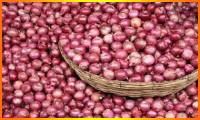
India greenlights onion exports to Bangladesh.
Following a directive from the Indian foreign ministry, the Department of Foreign Trade (DGFT) has sanctioned urgent onion exports to select countries, including Bangladesh, Nepal, Bhutan, Bahrain, and Mauritius, despite the absence of an official announcement. This move, aimed at stabilizing the domestic markets of these nations, marks a significant and unprecedented decision by the Indian government. Concurrently, the Maharashtra government has disclosed approval for exporting 3oo,000 tonnes of onion, highlighting the central government's commitment to regional market stability. During a recent visit to India, Bangladesh's Foreign Minister Hasan Mahmood appealed for the normalization of essential commodity exports, including onions, suggesting a quota system for Bangladesh to alleviate shortages. This comes as Bangladesh grapples with an annual onion demand of 2.2 to 2.5 million tonnes. In anticipation of Ramadan, State Minister for Commerce Ahsanul Islam Titu expressed optimism about securing 50,000 tonnes of onions, following assurances from India, despite ongoing discussions being delayed by the Indian Foreign Minister's commitments abroad. This development is particularly crucial for Bangladesh, heavily reliant on imported onions, and is expected to positively influence market stability and consumer welfare. India's decision to resume limited onion exports, after a halt declared last December to control domestic prices, is a welcome move for the region.
Source:
freshplaza.com
|
21 Feb, 2024

Indian official delegation heads for London for FTA talks.
With the negotiations for the proposed India-UK free trade agreement (FTA) reaching its last leg, a high-level Indian official delegation is heading for London to iron out differences on remaining issues, sources said on Tuesday. The chief negotiators of both the countries would hold negotiations on different issues such as goods, services, and rules of origin. The visit assumes significance as last week, the Prime Minister's Office has reviewed the progress of the talks. Sources said that the attempt of this visit would be to close the remaining issues. So far 13 rounds of talks have been completed. The 14th round was started last month. Talks are also progressing on the proposed bilateral investment treaty (BIT). India and the UK launched the talks for a free-trade agreement (FTA) in January 2022. There are 26 chapters in the agreement, which include goods, services, investments and intellectual property rights. The Indian industry is demanding greater access for its skilled professionals from sectors like IT and healthcare in the UK market, besides market access for several goods at nil customs duty. On the other hand, the UK is seeking a significant cut in import duties on goods such as scotch whiskey, electric vehicles, lamb meat, chocolates and certain confectionary items. Britain is also looking for more opportunities for UK services in Indian markets in segments like telecommunications, legal and financial services (banking and insurance). The bilateral trade between India and the UK increased to USD 20.36 billion in 2022-23 from USD 17.5 billion in 2021-22.
Source:
economictimes.indiatimes.com
|
21 Feb, 2024

India, Asean discuss review of trade agreement.
Eight sub-committees have been constituted under the India-Asean free trade agreement joint committee for undertaking negotiations on different areas related to the review of the pact, an official statement said on Monday. India hosted the third meeting of the committee for undertaking the review here from February 16-19. The AITIGA (Asean-India trade in goods agreement) was signed in 2009. In September 2022, both sides tasked the AITIGA Joint Committee to undertake the review to make the agreement more trade facilitative and mutually beneficial. 'A total of eight sub-committees have been constituted under the AITIGA Joint Committee for undertaking negotiations on different policy areas related to the agreement,' the commerce ministry said. The first two meetings of the joint committee were held in May and August last year. In the meeting, the ministry said, the sub-committees reported the progress and outcome of their discussions related to market access, rules of origin and standards, technical regulations and conformity assessment procedures to the joint committee. India-10-nation bloc ASEAN trade has grown to USD 131.58 billion in 2022-23. Both sides are aiming to conclude the review in 2025. The fourth meeting of AITIGA joint committee is planned to be held in Kuala Lumpur, Malaysia, in May. The review of the AITIGA was a long-standing demand of Indian businesses. India is asking for a review of the agreement with an aim to eliminate barriers and misuse of the trade pact. Asean members include Brunei, Cambodia, Indonesia, Laos, Malaysia, Myanmar, the Philippines, Singapore, Thailand, and Vietnam.
Source:
economictimes.indiatimes.com
|
21 Feb, 2024

Indian Govt delegation visits Singapore to boost trade and collaboration.
An Indian government delegation has visited Singapore to bolster trade relations and attract investment to the country. The delegation, led by Department for Promotion of Industry and Internal Trade (DPIIT) Secretary Rajesh Kumar Singh, engaged in productive discussions with high-ranking government officials in Singapore and participated in investor roundtables on Monday. Singh also addressed the “India-Singapore Trade Roundtable” on the Food and Machinery Sector, organised by the Federation of Indian Chambers of Commerce & Industry (FICCI) and the High Commission of India in Singapore, in partnership with the Singapore Business Federation. The event served as a platform for Indian and Singaporean businesses to explore avenues for enhancing trade, joint ventures, technology exchanges, and partnerships, a FICCI official said on Tuesday. The visit of the delegation was aimed at inviting investors to India and enhancing trade ties between India and Singapore, the official said. Singh also met Beh Swan Gim, Singapore’s Trade and Industry Ministry Permanent Secretary during which they emphasised on the importance of bilateral relations between the two nations. The delegation also attended the Investors roundtable on Renewable Energy and Electronics and Semiconductors. These sessions, organised by Enterprise Singapore and Invest India, opened dialogues with business leaders on the potential for deepening investment ties and collaborative ventures between the two nations. Singapore is India’s 8th largest trade partner. According to the Indian High Commission in Singapore, in the year 2022-23, the bilateral trade reached USD 35.59 billion, registering a growth of 18 per cent over 2021-22.
Source:
dailyexcelsior.com
|
21 Feb, 2024

APEDA promotes exports of ODOP and GI products to newer destinations; More than 27 flag offs organised in FY23-24.
Agricultural and Processed Food Products Export Development Authority (APEDA) has taken a number of steps to ensure that more and more of its Scheduled products are exported to newer destinations. In this regard special emphasis is towards the ODOP and GI products, and also to source these exports from non-traditional areas/states. As on date, APEDA scheduled products are being exported to more than 203 countries/territories, worldwide. To give this a further fillip, more than 27 flag offs were organised in the current financial year. Some of the notable new flagoffs of export shipments were: | Product | Origin | Export destination | | Guava | Baramati, Maharashtra | UAE | | Bananas | Baramati, Maharashtra | Netherlands, Saudi Arabia, Russia | | Potatoes | Purvanchal | UAE | | Khasi Mandarin Orange | Meghalaya | Dubai | | Colocasia | Pakur, Jharkhand | Singapore | | Assam Flat Beans and Lemon | Assam | London | | Water chestnuts | Varanasi | UAE | | Marigold | Varanasi | Sharjah | | Cashew nut | Odisha | Bangladesh, Qatar, Malaysia, USA | | Fresh vegetables | Uttarakhand | Kingdom of Bahrain | | Pongal Hamper | Nilakottai, TN | Abu Dhabi | | Lemon, Mango and Mixed pickles | Karnataka | UAE | | Millets | Punjab | Australia | APEDA is also actively involved in capacity building initiatives for FPOs as they are increasingly recognized as essential aggregators of farm produce, pivotal in streamlining the supply chain and ensuring efficient market access for farmers. With a focus on enabling direct exports, APEDA has transformed 119 FPOs/FPCs into exporters over a period of five years. Through tailored support and guidance, these FPOs have enhanced their capabilities to navigate global markets, amplifying the presence of Indian agricultural products on the international stage. The agri-export promotion body in collaboration with the Central Institute for Subtropical Horticulture (CISH), has embarked on a proactive initiative to develop sea protocols tailored for the export of fresh produce to long-distance markets. This strategic endeavour aims to optimize the export process for promising fresh fruits, facilitating efficient transportation and reducing logistics costs. As part of this initiative, trial shipments of mangoes and pomegranates to the USA and the European Union are being planned. In a significant breakthrough, bananas were successfully shipped by sea to the Netherlands in November and to Russia in January. The implementation of sea protocols is poised to enable a quantum increase in exports of items such as bananas, mangoes, pomegranates, and other fresh fruits and vegetables, further enhancing India's presence in international markets.
Source:
pib.gov.in
|
21 Feb, 2024

India expects record rapeseed output due to bigger area, favourable weather.
India's rapeseed and mustard output is likely to reach a record high in 2024 due to an expansion in the planted area and favourable weather conditions in key producing states, industry officials said. Higher rapeseed output will help the world's biggest vegetable oil importer to cut back on expensive imports of palm oil, soyoil and sunflower oil. 'Farmers have expanded area under rapeseed. Our recent survey is showing the crop is in good condition in almost all states,' B.V. Mehta, executive director of Solvent Extractors' Association of India, told Reuters. Area under rapeseed has risen by around 5% from a year ago to 10 million hectares, Mehta added. India produced 11.5 million metric tons of rapeseed in 2022/23 and in the current year production could rise by 300,000 to 500,000 tons industry officials said. 'The crop is in excellent condition. If things keep rolling smoothly in the next couple of weeks, production of 12 million tons is possible,' said Anil Chatar, a trader based in Jaipur in the north-western state of Rajasthan, the biggest producing state in the country. HEAT WAVE CONCERN Until last week, the weather was favourable but temperatures have started to rise, raising fears of a heatwave that could lead to the early maturity of crops and reduce the size of the seeds, said a New Delhi-based dealer with a global trade house. In the past, higher temperatures in February and March have dashed prospects of high yields, he said. In some districts of Rajasthan, the maximum temperature this week was nearly 6 degrees Celsius above normal, data from the weather department showed. New season supplies would pick up from the next month, said Chatar. Rapeseed prices are trading below the government-fixed floor price of 5,650 rupees per 100 kg, and they could fall further unless the government ramps up procurement, he said. India meets more than 70% of its cooking oil demand through imports of palm oil, soybean oil, and sunflower oil from Malaysia, Indonesia, Brazil, Argentina, Ukraine, and Russia. Rapeseed crushing would pick up from April, and higher supplies of oil would limit imports of vegetable oils, the New Delhi-based dealer said.
Source:
economictimes.indiatimes.com
|