
Jaishankar’s New York Meetings Focus On Trade, Ukraine, Bilateral Ties.
External Affairs Minister S. Jaishankar held a series of meetings with foreign leaders and counterparts in New York, discussing bilateral ties, economic cooperation and major international developments ahead of the United Nations General Assembly’s high-level week. Jaishankar assured Nauru President David Adeang of India’s commitment to the South Pacific nation’s development during their meeting on September 21.
Source: indiawest.com

International Ayurveda Day 2026: Ashwagandha and turmeric lead India’s export push.
This ancient traditional medicine system from India empowers a balanced and personalized approach to healing through specific diets, herbs, yoga, and meditation. Today, Ayurveda Day reaches more than 150 countries, where evidence and sustainability are key focuses. To learn about the integration of Ayurvedic traditions into the modern global nutrition market, Nutrition Insight speaks with Dr. Debjani Roy, executive director of Shellac & Forest Products Export Promotion Council (SHEFEXIL), Ministry of Commerce and Industry, Government of India.
Source: nutritioninsight.com
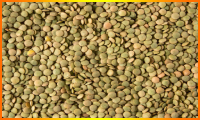
Kazakhstan Exports Lentils to India Through Middle Corridor.
According to the company’s press service, the shipment was sent from Akkol station to India’s Mundra Port using a multimodal route, The Caspian Post reports, citing rail-news.kz. In the first stage, the cargo was transported by rail from Akkol to the Port of Aktau. The containers were then carried across the Caspian Sea to the Port of Alat in Azerbaijan.
Source: caspianpost.com
India, Greenland discuss possible areas of stronger cooperation.
India's Ambassador to Denmark, Manish Prabhat, on Tuesday called on Kim Marius Kielsen, Speaker of the Parliament of Greenland, in Nuuk, with the two sides exploring enhanced collaboration spanning mining investments, professional workforce mobility, and cultural exchanges. 'Ambassador Manish Prabhat called on Hon'ble Kim Marius Kielsen, Speaker of the Parliament of Greenland, in Nuuk. They discussed possible areas of stronger India-Greenland cooperation, particularly in the fields of investment in mining, skilled manpower supply for the healthcare and hospitality sectors and cultural cooperation in areas such as tourism, filmmaking, Yoga and Ayurveda.
Source: economictimes.indiatimes.com
India, Chile working towards CEPA, top official says.
India and Chile are working towards a Comprehensive Economic Partnership Agreement (CEPA) to deepen bilateral trade, investment and economic cooperation, a top official has said. Noting that bilateral trade between the two nations exceeded USD 5.6 billion in 2025, Chile Ambassador to India, Juan Angulo M, said Tamil Nadu's core strengths in automobiles, engineering, IT, healthcare, renewable energy, manufacturing, ports and logistics offer significant opportunities for collaboration with Chilean businesses and institutions.
Source: economictimes.indiatimes.com

India ‘commercial front runner’ for agrifood investment in emerging markets: Report.
The AgTech Investment in Emerging Markets 2025 report, released by AgBase, Briter and ISF Advisors, based on more than $4.39 billion in funding between 2023 and the third quarter of 2025, places India alongside Brazil, Indonesia, Chile and Argentina in its ‘commercial front runners’ segment. These are markets characterised by high commercial maturity and strong underlying enablers for agrifood investment. India alone accounted for $2.1 billion of the funding tracked during the period, the highest among the 17 markets studied.
Source: thehindubusinessline.com

BIRC 2026 to unveil Global Rice Archive featuring 200 rice varieties.
Indian rice exporters are looking to widen the country’s export basket and reach new markets through a first-of-its-kind Global Rice Archive that will bring around 200 commercially relevant Indian and international rice varieties under one roof at the Bharat International Rice Conference (BIRC) 2026. The archive, to be unveiled at Bharat Mandapam in New Delhi during BIRC 2026 from October 23-25, will allow international buyers to compare varieties based on grain characteristics, appearance, processing formats and origin before engaging directly with exporters and producers, according to the Indian Rice Exporters’ Federation (IREF).
Source: thehindubusinessline.com

Global edible oil market likely to be volatile, says Solvent Extractors Association.
The Solvent Extractors’ Association of India (SEA) has highlighted the potential volatility in the global edible oil sector during its meeting with senior government officials in New Delhi recently. In his monthly letter to the members of SEA on Monday, Sanjeev Asthana, President of SEA, said the SEA delegation conveyed the current edible oil stocks and supplies situation to Sanjeev Chopra, Secretary, Department of Food and Public Distribution, during its meeting with him recently.
Source: thehindubusinessline.com

EU has found genetically modified organisms in 5 Chinese products this year.
The European Union has found genetically modified organisms (GMOs) in at least five rice cracker, noodles or flour consignments from China so far this year, according to notifications issued by the EU’s Rapid Alert System for Food and Feed (RASFF). The development comes at a time when China has rejected shipments of Indian rice for alleged presence of GMOs since March this year. Besides, it has turned away consignments from Kazakhstan, Russia, Ukraine and Belarus and Japan, which ban the cultivation of GMO crops. These countries were alleged to have shipped rapeseed oil and wheat flour.
Source: thehindubusinessline.com

Union Minister Shri Piyush Goyal Interacts with Industry Stakeholders on Ease of Doing Business, FTA Opportunities and Trade Reforms Workshop.
The Department for Promotion of Industry and Internal Trade (DPIIT) organised a stakeholder workshop on Ease of Doing Business, Free Trade Agreement opportunities and ongoing trade-related reforms at Bharat Mandapam, New Delhi, today, followed by an interactive session with Union Minister of Commerce and Industry Shri Piyush Goyal and Minister of State for Commerce and Industry Shri Jitin Prasada. During the interaction, Shri Goyal outlined the Government’s approach to strengthening export facilitation through physical and digital mechanisms. He said that instead of establishing separate offices of every department in every location, integrated Commerce and Industry offices are envisaged in major cities to provide businesses with a common point of access to multiple departments and agencies.
Source: pib.gov.in