
Will get duty-free access to India for selected agri products: Switzerland.
Switzerland on Sunday said it will get duty-free access to the Indian market for selected agricultural products after a transition period of up to ten years under the trade agreement signed between India and EFTA.
India on Sunday signed the Trade and Economic Partnership Agreement (TEPA) with the European Free Trade Association (EFTA) under which New Delhi received an investment commitment of USD 100 billion from these four European countries.
EFTA members are Switzerland, Norway, Iceland and Liechtenstein.
'India is now the most populous country in the world. The growing middle class in particular is contributing to major growth potential. However, India currently levies very high import tariffs on most products,' Switzerland said in a statement.
Under the FTA, India will lift or partially remove customs tariffs on 95.3 per cent of industrial imports from Switzerland (excluding gold) either immediately or with transition periods, it added.
Swiss Federal Councillor Guy Parmelin and his counterparts from Iceland, Liechtenstein and Norway signed the agreement with Trade Minister Piyush Goyal here.
'Switzerland will also have tariff-free access to the Indian market for selected agricultural products after a transition period of up to ten years. This will strengthen the competitiveness of Swiss exports to India,' it added.
Switzerland's concessions to India for agricultural products are based on previous free trade agreements and are in line with Swiss agricultural policy.
In addition, the statement said, improvements have been made to intellectual property rights, in particular with regard to legal certainty, patent procedures and the protection of 'Swissness'.
'This will not restrict access to medicines in India. The FTA not only opens up broad market access for Swiss business players but also improves the legal framework, legal certainty and predictability,' it added.
It also said that the agreement contains a comprehensive and legally binding chapter on trade and sustainable development.
'The parliamentary approval process will be initiated immediately so that Switzerland can ratify the agreement by 2025 at the latest,' it said.
Source: business-standard.com

India inks pact with EFTA, gets $100 billion commitment.
India on Sunday signed a trade and economic partnership agreement with the European Free Trade Association (EFTA) - a grouping of Switzerland, Norway, Liechtenstein and Iceland - that includes a binding $100-billion investment commitment.
As part of the Trade and Economic Partnership Agreement (TEPA), EFTA has committed to promote investments to increase the stock of foreign direct investments (FDI) in India by $100 billion in the next 15 years, and to facilitate the generation of one million direct employment in India through such investments, the government said in a statement.
'The global leadership of EFTA countries in innovation and R&D across diverse spheres...will open up new doors of collaboration,' PM Narendra Modi said about the trade agreement.
Commerce and industry minister Piyush Goyal said India is signing an FTA with four developed nations for the first time. It is a 'modern and ambitious' trade agreement with an important economic bloc in Europe, he said.
FDI of $50 billion is expected to flow in the first 10 years, with another $50 billion expected to come in the following five years. 'The investment flow may be larger than we have estimated. We will mutually work out if there is any shortfall in investment,' Goyal said, noting that investment from EFTA has grown at a compounded annual growth rate of 13% in the last decade.
Officials said the agreement gives India the right to rebalance or suspend concessions if the investment value is not realised. They also stated that the deal provides legal certainty in terms of tariff regime and investment relations.
The investments are hinged on the nominal GDP growth of 9%, officials said. Goyal said India has included several elements such as environment, trade, IPR, and gender for the first time in TEPA. 'The free trade agreement balances asymmetries within economies of the EFTA region and Indian economy,' the minister said.
TEPA is the fourth major deal signed by India to promote trade and economic cooperation in the last three years. The others are with Australia, Mauritius and the UAE.
The deal has got a thumbs-up from the industry. 'Improved market access for goods will boost India's export potential to EFTA markets and greatly expand employment opportunities, especially with the historic $100 billion committed investment from the EFTA region,' said Chandrajit Banerjee, director general of the Confederation of Indian Industry (CII).
Cheaper watches, chocolates, machinery
The agreement will increase Indian industry's access to the EU market where the country is looking to sign another FTA. EFTA is offering 92.2% of its tariff lines, which cover 99.6% of India's exports, the commerce and industry ministry said. The agreement also covers tariff concession on processed agricultural products (PAP) from India. India is offering 82.7% of its tariff lines, which covers 95.3% of EFTA exports, nearly 80% of which is in gold.
Swiss watches and chocolates will enjoy the elimination of duty after seven years. The concessions are also expected to help India import machinery at cheaper rates.
Boost for gaming, animation
India has provided concessions on 105 of 156 sub-sectors, including areas like accounting, business, and health within services. On the other hand, EFTA countries have provided concessions in over 110 sub-sectors including accounting, auditing, and legal.
'Services will be one of the key pillars, just like investment and trade,' Goyal said. EFTA is providing commitments in audio-visual services like gaming and animation, and service providers from India will not be differentiated. India exports services worth over $5 billion to EFTA regions.
In the case of visa, India has secured a commitment in three categories: intra-corporate transferee, contractual service supplier, and independent professional.
Source: economictimes.indiatimes.com

Aahar 38th edition concludes with 1600 participants from 12 countries.
The 38th edition of Aahar – the International Food and Hospitality Fair concluded here with a large participation from trade delegates from across the globe.
The five-day event hosted by India Trade Promotion Organisation (ITPO) also witnessed participation of Ministry of Food Processing Industries, Agriculture and Processed Food Products Export Development Authority (APEDA) and apex industry bodies at Bharat Mandapam, New Delhi.
This year, the exhibition was organised in an area of 1,10,000 sq.mtr. as compared to 90,000 sq.mtr. last year which has resulted in an increase in participation from 1,500 to 1,600 participants including participation from overseas companies from 12 countries including China, Germany, Iran, Italy, Japan, Nepal, Russia, Sweden, Taiwan, Turkey, Turkmenistan and the UAE.
Aahar also witnessed product launches. Companies including Cargill, Barry Callebaut, Pansari Group, and Elanpro were amongst who unveiled their new products.
Sanjay Jain, director, Elanpro, said, 'We unveiled our latest innovations in commercial refrigeration space at Aahar. With our new range, we want to help food and beverage businesses reduce their carbon footprint.'
'Our new Reach-in freezer is an industry first. It is for the first time, a Reach-in with energy-saving Inverter Technology Compressor is launched in India. This innovation is expected to save almost 30% of electricity bills. In addition, our new generation of blast freezers, undercounters, vertical coolers, confectionery showcases, softy machines and buffet freezers are expected to set a new standard for efficiency and innovation in food and beverage retail,' said Jain.
Meanwhile, the display profile was segregated into different categories in various halls namely, Foreign Participation and FIFI Pavilion (Hall 1 GF), Confectionery & Bakery Products & Ingredients, ICMA (Hall 2 GF& FF), APEDA Pavilion (Hall 3 GF), Spices, Condiments Ingredients & Agri Produce(Hall 3 FF), Organic, Processed Food, Ingredients, Spices, Farm Produce, Fresh Fruits & Vegetables, Meat Products (Hall 4 GF& 4FF), Organic Processed Food, Ingredients, Spices, Farm Produce, Fresh Fruits & Vegetables, Meat Products, Chocolate Products (Hall 5 GF), Culinary Art India Show by Indian Culinary Forum (Hall 5 FF), Bakery Heavy Machinery Equipment, Tentage & Décor, Packaging, Kitchen & Hotel Equipment (Hall 6, Hall 7 (A-H), Kitchen & Hotel Equipment, Refrigeration (Hall 8-11, 12 & 12A, 14), Hospitality, Décor, Housekeeping Products, Gift Items (Hall 14FF), Hospitality, Décor, Housekeeping Products, Gift Items, Mist Coolers, Coolers & Fans (Open Area).
According to ITPO, this year too, a large number of trade visitors visited the fair.
These include top echelons of the hotel and hospitality industry including CEOs, General Managers, Executive Chefs, Executive House Keepers, Purchase Managers, F&B Managers and so on. Besides, senior representatives from Centre and State Government, catering industry and academic institutions, hotel management professionals also visited the fair.
'Unveiling India’s export potential, the fair assumes tremendous significance especially when there is a focus of the Union Government to promote agri-community as well as MICE (Meeting, Incentive, Conference and Exhibition) sector which complements the hospitality segment,' reads a statement of ITPO.
Source: fnbnews.com
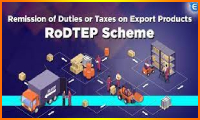
EoUs, SEZs to get RoDTEP sops, till September 30.
The Centre on Friday announced that outbound shipments from Special Economic Zones (SEZs) and Export Oriented Units (EOUs), which account for about a quarter of India’s exports, will now be eligible for tax refunds under the Remission of Duties and Taxes on Exported Products (RoDTEP) Scheme.
Exporting firms who use the Advance Authorisation (AA) scheme, that permits duty-free import of inputs that are physically incorporated in the export product, will also be covered by the RoDTEP scheme, Commerce and Industry Minister Piyush Goyal said.
While the benefits will kick in from March 11 for EoUs and AA holders, SEZs will have to wait till their IT systems are integrated with the automated ICEGATE system of the Customs section. Keeping budgetary allocations in mind, the RoDTEP benefits for these producers will be valid till September 30 for now, the Commerce Ministry said, adding that key sectors like Engineering, Textiles, Chemicals, Pharmaceuticals and Food Processing will gain.
'This decision comes in recognition of the significant contribution these sectors make to India’s Exports, constituting approximately 25% of our exports. Amidst global economic uncertainties and supply chain disruptions, extending RoDTEP to the uncovered sectors such as AA, EOU, and SEZ units will help the exporting community in handling the international headwinds,' Mr. Goyal said.
The RoDTEP scheme, launched in January 2021 to replace an earlier export incentive scheme that was seen as non-compliant with World Trade Organisation (WTO) norms, has a Budget of Rs.15,070 crore in 2024-25, and has so far provided support worth Rs.42,000 crore.
Source: thehindu.com
Aiming to boost local manufacturing, Raj govt set to announce ODOP policy.
The Rajasthan government will soon announce the One District One Product (ODOP) policy, according to sources. A draft has been prepared and views and suggestions are being sought from stakeholders to make the policy more investor-friendly, a state industries department official said.
'Every district offers something new — Jaipur has blue pottery, gems & jewellery, lac bangles, carpets, textiles among others; Jodhpur is rich in handicrafts and woodwork and some areas are rich in agricultural products. The ODOP endeavours to protect and promote this heritage by fostering traditional crafts and practices,' the official said.
The ODOP aims to accelerate economic development within each district by harnessing the potential of local specialities. The policy looks to streamline investments, enhance production capabilities, and increase competitiveness.
According to the draft policy, the primary beneficiaries of the ODOP will be local artisans, farmers, manufacturers, and entrepreneurs engaged in producing and selling district products. Additionally, the policy will extend to associated stakeholders, including workers, traders, and exporters.
Product selection will be data-driven and criteria-based, focusing on uniqueness, scalability, historical significance, and current market presence. Factors such as the geographical indication (GI) status, export potential, and employment generation will also play an important role.
According to the official, incentives and exemptions given under the Rajasthan Investment Promotion Scheme (RIPS 2022) will also be applicable under the ODOP.
Further, to boost investment in ODOP MSMEs, the state also plans to provide a 15 per cent additional investment subsidy to such enterprises.
According to the draft policy, 'marketing help would be provided at achieving fair pricing for the artisans, weavers, entrepreneurs and exporters of the ODOP products. Under the marketing scheme, financial assistance would be provided to participants of national and international fairs, and exhibitions for display and sale of their products. Financial assistance for the same could vary from Rs 50,000 to Rs 2,00,000 for attending national and international fairs and exhibitions.
Source: business-standard.com
Trade game-changer in making? Several countries willing to start trading with India in rupee.
In what could be a 'very game-changing' development for India's trade with the world, many economies big and small have expressed willingness to start trading in rupee with India, Commerce and Industry Minister Piyush Goyal said on March 11. Some of these countries include neighbours like Bangladesh and Sri Lanka as well as nations from the Gulf, the minister said.
While Bangladesh and Sri Lanka are keen us to start immediately, countries in the Gulf region are also seriously looking at the possibility, Goyal informed. At some point, more and more developed countries and countries in the Far East will also join the bandwagon, he said, adding that Singapore is already on board to some extent.
More and more countries are realising the advantages of trading in their own domestic currencies and a shift towards direct transactions between local currencies is gaining traction, Goyal said.
By avoiding the need to convert transactions into a third currency, both parties can significantly reduce transaction costs, the minister said.
The UAE was one of the first economies to accept this mechanism, and it has since gained momentum. India's first-ever payment in rupees for crude was from the UAE.
Many countries are expressing their interest in initiating direct transactions between their local currencies and the Indian Rupee. However, implementing this process might take some time as it requires coordination between the central bankers of both nations and the acceptance of the system by importers and exporters, Goyal said.
Trade using the Indian Rupee is also advantageous because the currency remains stable against most international currencies. This stability has attracted different nations to build trade relations based on rupee trade. Besides, the rupee trade mechanism has proven beneficial for countries experiencing a shortage of US dollars.
India has already commenced trade in rupees with neighboring countries like Nepal and Bhutan. Additionally, the rupee has been included in Sri Lanka's list of designated foreign currencies to facilitate trade. India's push for using the rupee globally began with its first-ever payment in rupees for crude oil purchased from the UAE. This initiative has encouraged the world's third-largest energy consumer to seek similar arrangements with other suppliers.
To support the use of the Indian Rupee in international trade, changes have been made to the Foreign Trade Policy (FTP). These alterations allow for trade settlement in rupees and aim to establish the INR as a global currency. In July 2022, the Reserve Bank of India (RBI) authorised Indian banks to open and maintain special rupee Vostro accounts for partner trading countries' banks. These accounts hold the foreign banks' rupee holdings with their Indian counterparts.
When an Indian trader needs to make a payment to a foreign trader in rupees, the amount is credited to the Vostro account. Similarly, when an Indian trader is owed payment, the amount is deducted from the Vostro account and credited to their regular account. HDFC Bank and UCO Bank are among the banks that have already opened special Vostro accounts to facilitate overseas trade in rupees. Many countries have shown interest in establishing this arrangement for local currency trade.
Source: economictimes.indiatimes.com

Centre setting up e-marketplace for direct farmers-consumers contact.
In a move aimed at further digitalising the process of agri-marketing in the country, the Indian Government is setting up an e-commerce portal to help farmers and agri-entrepreneurs connect with consumers and sell their products directly. The portal, Kisankart.online, is being developed by the Indian Council of Agricultural Research (ICAR)’s Agricultural Technology Application Research Institute (ATARI) in Bengaluru. It is expected to be fully operational around August this year.
Agri and value-added products produced by farmers, entrepreneurs mentored by the Krishi Vigyan Kendras (KVKs) and collectives such as the farmer producer organisations (FPOs) and self-help groups (SHGs) across the country will be made available to retail consumers through the Kisankart portal.
Bypassing middlemen
'The e-commerce platform will help enable farmers and agri-preneurs to expand their market reach, bypass the middlemen and reach the consumers directly. Bypassing the middlemen will help enhance farmers’ income,' said V Venkatasubramanian, Director, ATARI Zone 11, Bengaluru.
Besides eliminating the intermediaries, the creation of a digital agri-marketing system will help encourage local value addition at the farm level thereby reducing post-harvest losses, promote local and special products of various geographies while empowering the small and marginal farmers, Venkatasubramanian said.
The portal, developed by the technology team of ATARI has been launched on a pilot basis and integrated with KVKs such as Pathanamthitta, Gadag and Kolar, showcasing products of local agri- preneurs. Each KVK will have a separate marketplace on the portal showcasing the products and have a payment gateway.
A wide range of products produced by farmers and agri-preneurs such as vegetables, oils, spices, cereals, millets, orchids and value-added food products including those made from various fruits, vegetables and mushrooms among others will be made accessible to consumers through the e-commerce platform. Also, farmers can access inputs such as seeds, bio-formulations, micronutrient formulations, simple hand tool implements through the portal, Venkatasubramanian said.
Uniform brand
All products sold through the e-commerce platform will be under the uniform brand of Kisan Samriddhi, Venkatasubramanian said. Consumers will also have access to products coming out from various farmer centric schemes such as ODOP (One District One Product) and also the Geographical Indication (GI) tagged products through the portal.
There are some 731 KVKs spread across the country. Besides playing a key role in taking the technological interventions to the farmers to boost crop productivity, the KVKs are also engaged in encouraging local value addition through skill building among farmers and promoting agri-entrepreneurship to make farming sustainable and ensuring livelihood security of farm families. Products coming out of the KVKs are largely marketed through local sales counters at the premises.
The proposed e-commerce portal, which will open up a national market for such products, will be the government’s major market linkage initiative for the farmers after the rollout of e-NAM (electronic national agricultural market).
Himanshu Pathak, Secretary, DARE and DG ICAR, is optimistic in making the portal operational pan India benefitting millions of farmers and agri entrepreneurs. This will be a game changer in the process of digitalising the agri marketing.
Venkatasubramanian said ATARI will be leveraging the expertise of Centre for Development of Advance Computing (C-DAC) and the ICAR-IASRI (Indian Agricultural Statistics Research Institute) to upscale and roll out out the e-marketplace. It will also be partnering with entities such as Delhivery and India Post for the logistics and delivery of these products sold online.
Source: thehindubusinessline.com

PH seen to import more rice as harvest may fall short this year.
The Philippines is seen to import more rice than earlier expected this year—remaining as the biggest rice buyer in the global market—amid a likely larger shortfall in local harvest.
This is according to the Foreign Agricultural Service of US Department of Agriculture (USDA), which estimated that the country would import 4.1 million metric tons (MT) of rice this year, up by 200,000 MT or 5.1 percent from the previous estimate of 3.9 million MT in February due to 'smaller crop' from local farms.
If reached, this would be nearly 14 percent more than the 3.6 million MT of rice that entered the archipelago in 2023.
The latest forecast is aligned with the report of the USDA unit that global rice imports would rise to 53.3 million MT from 52.38 million MT mainly due to higher demand from Indonesia and the Philippines.
It also estimated that the country would remain as the leading rice importer worldwide, followed by Indonesia, China and the European Union.
In the first two months of 2024, the country imported 728,254.49 MT of rice, based on a tally from the Bureau of Plant Industry. Like in the past years, Vietnam accounted for the majority of the supply, amounting to 390,997.22 MT.
This was as the USDA lowered its projection on domestic rice production this year to 12.3 million MT from the previous estimate of 12.5 million MT. This is contrary to its outlook that global rice output will increase to 515.4 million MT, due to larger crop expected from India.
Local production
The Philippines produced a total of 20.06 million MT of rice in 2023, up by 1.5 percent, based on data from the Philippine Statistics Authority (PSA). Last year’s output surpassed the previous record output of 19.96 million MT in 2021.
Central Luzon was the leading producer of palay with 3.64 million MT or a share of 18.1 percent, followed by Cagayan Valley and Western Visayas with 3.03 million MT and 2.26 million MT, respectively.
Philippine rice self-sufficiency level declined to 77 percent in 2022 from 81.5 percent in 2021, based on PSA figures.
The DA, through the Masagana program, is aiming for a 97-percent rice self-sufficiency by 2028.
Meanwhile, the United Broiler Raisers Association (Ubra) anticipates poultry production to reach at least 1.8 million kilograms to as much as 1.9 million kg this year, up 2 percent from a year prior.
Ubra chair Elias Jose Inciong said this outlook is 'conservative,' noting that normal growth is 4 to 7 percent a year.
Poultry demand is expected to range between a low of 1.5 million kg and a high of 1.6 million kg, especially in the second quarter, due to the fiesta season.
Source: business.inquirer.net
Farmers will now have the opportunity to improve their crop qualitatively as well as quantitatively: Dr. Singh.
Union Minister of Science & Technology, Dr. Jitendra Singh today inaugurated the first-of- its-kind 'National Speed Breeding Crop Facility' at the premier National Agri-Food Biotechnology Institute (NABI) in Mohali.
Speaking on the occasion as chief guest, Dr. Jitendra Singh said, 'this initiative is in line with Prime Minister Narendra Modi’s priority of doubling the farmer`s Income, ensuring their economic empowerment and promoting Agri-StartUps'. He said, farmers will now have the opportunity to improve their crop qualitatively as well as quantitatively.
Dr. Jitendra Singh said, 'Biotechnology speedy seeds facility will cater to all the States of India but it will especially be useful for the North Indian States like Punjab, Himachal Pradesh, Haryana and the UT of J&K. Adding further he said, 'this facility will augment transformational changes in crop improvement programmes by accelerating the development of advanced crop varieties that could sustain climate change and contribute to the food and nutritional demand of the population with implementation of speed breeding cropping methods'.
The Minister said, 'DBT institute of NABI has developed technology of ‘Climate- resistant crops’, by harnessing these technologies the farmers will not be restrained to cultivate a crop in a particular season rather they will have the liberty to practise farming irrespective of climate conduciveness'.
Dr. Jitendra Singh, while highlighting the recent achievements of institutes under the Ministry of Science & Technology, said, 'Our institutes have specialised technologies in fruit, flowers and crop cultivation through modern genetic means'. He recalled the success of ‘Tulip’ Cultivation by CSIR Palampur, he also recalled the development of ‘108-petal lotus’ by CSIR Lucknow which won an award in the TV series KBC. He further emphasised that application of latest technology in the farming sector will add to the economic growth of the country by supplementing modern Science and Technology tools to the traditional vocation of farming in India.
'Bio-manufacturing and Bio-foundry will drive India’s future bio-economy and promote Green Growth', said Dr. Jitendra Singh. According to him, the Ministry is working with a synergy and integrative approach keeping in view the emphasis of PM Modi on combining Science and Technology with traditional knowledge to supplement India’s economy.
Dr. Jitendra Singh also highlighted the fact that under PM Modi 'India's bio-economy has grown 13 folds in the last 10 years from $10 billion in 2014 to over $130 billion in 2024'.
Addressing the inauguration Dr. Jitendra Singh said, 'In the 3rd consecutive term of Prime Minister Narendra Modi, India has been projected to emerge as the 3rd largest economy of the world and rise to be the largest in coming years. Contribution of the agriculture sector will therefore be crucial for the Indian economy'.
Dr. Jitendra Singh informed that the Modi Government is conscious of the importance of Bio-economy and thus the recent ‘Vote of Account-Budget’ had a provision for a special scheme for Bio-manufacturing.
According to Dr. Jitendra Singh, institutes like NABI will have an important role to enable the transformational progress and value addition in farming sector productivity.
The facility will directly help a) Scientists and Researchers from government institutions, private institutions and leading industries in India engaged in agricultural and biotechnology research and development of improved crop varieties and products, b) Plant Breeders working for crop development and c) Progressive farmers who are contributing to adoption of new varieties with superior yield and nutritional traits.
In his address, Prof. Ashwani Pareek, Executive Director, NABI, said the speed breeding crop facility will be used to develop new varieties such as wheat, rice, soybean, pea, tomato, etc., by using a precisely controlled environment (light, humidity, temperature) to achieve more than four generations of a crop per year.
The NABI institute has significantly contributed to ‘Atal Jai Anusandhan Biotech (UNaTI) Mission (Poshan Abhiyan), and Biotech Kisan Hubs for Jammu & Kashmir, Ladakh, Himachal Pradesh, Punjab, Haryana etc, he said.
Source: pib.gov.in
Central government is using innovations to make farmers self-reliant across the country - Shri Munda.
With the aim of empowering the farmers of the country by equipping them with information, services and facilities using digital technology, Union Minister of Agriculture & Farmers’ Welfare and Tribal Affairs Shri Arjun Munda today inaugurated the Agriculture Integrated Command and Control Center established at Krishi Bhawan, Delhi. On this occasion, Shri Munda said that this is an innovation of the Ministry of Agriculture and Farmers’ Welfare under the leadership of Prime Minister Shri Narendra Modi to make the farmers self-reliant across the country.
Union Minister Shri Munda said that work is being done with the basic mantra of Prime Minister Shri Modi - Minimum Government-Maximum Governance, so that it can be ensured that the life of a common man is not unnecessarily affected and they do their work wholeheartedly, independently and impartially and empower the nation by making themselves self-reliant, capable and empowered. With this aim in the mind, the Agriculture Ministry has today added this new digital dimension for the benefit of common farmers. Shri Munda said that today technology has become an integral part of everyone's life and the government has its own responsibility as a partner while technology further empowers it. He said that it is the government's intention to further support people so that everyone can get benefit from the technology. Shri Munda said that with complete transparency, commitment and goal, the government wants that even a common farmer living in a village can make themselves self-reliant with technology. He said that the Prime Minister always emphasizes on how we can provide better information, services and facilities to the farmers, how we can increase their production capacity and potential by acting as a partner. No matter how proficient we are in any field, agriculture is a particularly important task because humans cannot live without food. That is why; we have given importance to the agricultural sector and called farmers Annadata because it is through them that food grains are stored in the country.
Shri Munda said that the objective of the new initiative is to provide farmers the information about the reality in the farm and also to find out what are the real challenges our agriculture sector is facing. He said that with the availability of real-time data and its analysis, their problems can be resolved and capacity will be expanded and crops will be good, which will ultimately benefit the agriculture sector in the country. Union Minister said that the farmers will also be able to avail the benefits of the government schemes. This digital innovation is an important opportunity to reflect India in the 21st century. He said that trust is a strong foundation in human life and these efforts of the government will establish trust and a safe environment among the farmers.
Shri Munda said that Prime Minister Shri Modi has resolved to make India a developed nation by the year 2047, but such an India should not only be seen but should also be experienced. He said that India should not only become developed, but also a prosperous India should be created and through self-reliance the vision of ‘Ek Bharat Shreshtha Bharat’ should be realized. Then every person will feel proud and respected and our culture will be reflected in itself. Shri Munda said that citizens living in any part of the country are connected to every part of India's soil and our farmers are participating in the development of the country through farms. In this sequence, Agri Stack is an important initiative in digital agriculture. Under this, a digital crop survey has been started, in which the exact details of the crops of the farmers are being ascertained.
While congratulating on the occasion of Women's Day, Union Minister Shri Munda said that the Prime Minister has given a special gift to women by giving subsidy on LPG, while declaring this year as the Year of Women Power on Republic Day, the strength of women of the country has been presented before the world. He said that we can say with pride that India truly respects women. Shri Munda said that the innovations taking place in the agricultural sector can also be truly dedicated to women power.
In the starting of the event, Union Agriculture Secretary Shri Manoj Ahuja also presented his views. Additional Secretary of the Ministry, Shri Pramod Mehrada gave detailed information about the new initiative.
Multifunctional Centre- At the Command Centre, it will be possible to see all the digital innovations being made in the agriculture sector by the Ministry of Agriculture and Farmers’ Welfare on a big screen simultaneously at one place. By seeing plot level data obtained from soil survey, information obtained from crop survey through remote sensing technology, information given by meteorological department, data obtained from digital crop survey, information available on agricultural map, information available on the produce (Upag) portal created for agricultural statistics, at one place, it will be possible to analyze and take accurate decisions based on them, which will be very useful.
Source: pib.gov.in