
Piyush Goyal Launches 'e-Kisan Upaj Nidhi' for Farmers' Fair Prices and Easy Warehousing.
Consumer Affairs, Food and Public Distribution Minister Piyush Goyal today stated that the agriculture sector will be the foundational pillar spearheading the nation towards becoming ‘Viksit Bharat’ by 2047. He was addressing the gathering at the launch ceremony of ‘e-Kisan Upaj Nidhi’ (Digital Gateway) of the Warehousing Development and Regulatory Authority (WDRA) in New Delhi. The Minister said that the ‘e-Kisan Upaj Nidhi’ initiative will ease the farmers’ warehousing logistics with the help of technology and aid the farmers in receiving fair prices for their produce. He said that the initiative with its simplified digital process can ease the procedure of farmers' storage at any registered WDRA warehouse.
Mr. Goyal announced that the security deposit charges at WDRA registered warehouses will soon be reduced to encourage more farmers, especially small farmers, to utilise the warehouses and enhance their income. He said that the farmers stocking their produce at these warehouses would need to pay only one percent security deposit instead of the earlier three percent.
Source: newsonair.gov.in

FTA talks: India begins hard bargain on non-tariff barriers with EU.
In an effort to get non-tariff barriers eliminated in the ongoing free trade agreement negotiations with the European Union, Indian negotiators have prepared an elaborate list of such roadblocks in key sectors such as pharma, engineering, electrical and agri items and have begun taking it up with their European counterparts, two people aware of the developed told The Indian Express.
This comes as India-EU concluded their seventh round of negotiations last month dealing with goods, services, market access, investment protection agreement (IPA) and a separate proposed pact on geographical indications (GIs). India and the EU had relaunched the negotiations in May 2021 after a gap of over nine years, at a time when western firms are looking at India as an alternate supply chain source to China.
The talks on non-tariff barriers (NTB) come in a backdrop of multiple environment and labour regulations brough by EU such as Carbon Border Adjustment Mechanism (CBAM) and Deforestation-free Regulation (EUDR) which is threatening to obstruct about 8 to 10 per cent of the Indian agri, steel and aluminum exports going into the 27-bloc union.
Barring Indian petroleum exports, India’s exports to EU- a key trading partner – have seen little gain over the last five years largely due to a slew of non-tariffs barriers in tea, agriculture, engineering and electronic items. While India has brought up the issues in negotiations, both parties continue to disagree on the definition of non-tariff barrier causing friction in the negotiations.
'The problem is that what we call the non-tariff barriers are referred to by them as non-tariff measures. They say that as a society we have high standards. Sometimes these standards are at par with the World Trade Organization (WTO) and sometimes they are WTO plus. They say that it’s an internal lookout that EU manufacturers are subjected to those high standards and are not meant to target India,' a senior government official said.
'We are not able to meet those standards and it is becoming a barrier to us. So the prism is changing. All that is required is standards and quality consciousness that needs to be there in India. But then comes the challenge of affordability. We are a developing nation with a large population and there is a cost associated with conformity to those high standards.That is the fundamental difference where per capita GDP comes into play. That is where they are able to use the deep pockets and insulate themselves, build and maintain those standards,' the official added.
The official further said that Indian chemicals and fertilizers face major disruption in exports because the domestic industry cannot match it and Indian consumers will not bear the high cost.
'Quality unfortunately [is a concern]..that is the reason why China was able to penetrate the Indian market because …their compliance level is high. So what you call an NTB is a major sticking point. It differs from one economy to another. That is a challenge that we are facing,' the official further added.
Council on Energy, Environment and Water (CEEW) in its report released last year said that the chemical exports from India were met with stringent regulations in the form of Registration,
Evaluation, Authorisation and Restriction of Chemicals (REACH), implemented by the European Union (EU) in 2007. The regulation resulted in approximately 40 per cent of exporters withdrawing from the market.
Moreover, India’s rice exports have suffered due to the imposition of maximum residue level (MRL) limits, which is the highest level of pesticide residue that is legally acceptable in or on food or feed when pesticides are applied following good agricultural practices. In 2017, the European Commission (EC) reduced the MRL limit for a fungicide used in rice cultivation, which led to a sharp drop in rice exports from India. India’s agriculture exports to the EU have declined in the last five years to $3.12 billion in FY23 from $3.36 billion in FY18.
'The European Union has got completely paranoid about maximum residue level (MRL). And they are actually using in the name of food safety, they are using pesticides and MRL laws as a non tariff trade barrier. So, they are setting laws for pesticide, but in the category of pesticide they are including naturally occurring pollutants and hydrocarbons which are in the environment, which are not being sprayed by anyone and they are putting limits for that under the pesticides category,' Chairman of Indian Tea Exporters Association (ITEA) Anshuman Kanoria told The Indian Express.
Notably, Indian tea export to Europe has slid to $166.08 million in FY23, down nearly 6 per cent from $176.47 million in FY18. Indian tea exports already face stiff competition from Sri Lanka and Africa who have been gaining market share globally.
'The other most important thing is they [European Union] has put Indian organic tea in a high risk category, because of which they are requiring a lot of testing and certification. The government is very keen to promote organic cultivation and export but the EU with its tough laws towards India is actually placing roadblocks to the cultivation and export of organic tea. We are losing the market because a lot of people are reluctant to export due to these laws. Lots of tea we know doesn’t pass the laws of tea anymore. Africa and Sri Lanka are exporting but India has its own market in the EU. And what these laws are doing is damaging the market of Indian tea in the EU completely,' Kanoria added.
'There are different kinds of market access barriers for example, the pharmaceutical sector faces the barrier of registration. The registration of drugs is taking enormous time in the European Union because of the huge influence the multinational drug companies have. Secondly, we have challenges in the electrical field, where standards different from what is globally followed is imposed. In agriculture, phytosanitary standards issue and traceability is an issue,' Ajay Sahai, Director General & CEO of the Federation of Indian Export Organisations (FIEO) said.
Sahai stressed that unless the issue of market access is addressed, the FTA will not make much headway because if the items are not freely allowed to be accessed in the country, there’s no point in having a tariff advantage. Globally, Indian exporters are also seeing that non trade issues are emerging and we feel that the environment and labor are the two non trade issues which are going to be extremely vital for global trade in this decade, Sahai added.
'Non trade issues are definitely emerging because probably the advanced economy feels that they have not much to restrict, either through the tariff or through the licensing and they want to regulate it through these non trade issues only,' he further said.
Indian textile exporters said that the problem with textile exports are not only the standards sought by the EU but also the private standards which differ from one multinational company to another. Notably, India’s textile exports to the EU have remained stagnant over the years. India’s textile exports in FY18 stood at $10.84 billion while in FY23 it fell to $10.48 billion.
'The problem in textile is the private standard issues which cannot be brought in negotiations. Each company in the EU has different standards that we need to meet. There are a slew of reporting requirements that are coming in which is becoming a market access issue for us,' Chandrima Chatterjee, Secretary General of Confederation of Indian Textile Industry (CITI) said.
Chatterjee added that the EU has increased reporting norms which are detailed in nature and are not easy to comply with without divulging sensitive information. She added that the government should bring in one reporting standard which the EU accepts.
Source: indianexpress.com

India okays rice exports to Africa in outreach to Global South.
The government has, as part of India's outreach to the Global South, allowed the exports of 1,10,000 tonnes of rice to three African countries to help them meet their food security needs.
According to a notification issued by the Directorate General of Foreign Trade (DGFT), the export of 30,000 tonnes of non-basmati white rice has been allowed to Tanzania while 30,000 tonnes of broken rice have been permitted for export to Djibouti and 50,000 tonne to Guinea Bissau.
Though exports of non-basmati white rice have been banned since July 20, 2023 in order to ensure adequate domestic supplies and control inflation.
However, some exports are being allowed to friendly countries to ensure their food security which has been adversely impacted as supplies have been disrupted due to the ongoing Russia-Ukraine war.
The African countries had sought support from India to meet their needs as they were facing problems due to shortage of food supplies and runaway inflation in its wake.
Source: daijiworld.com
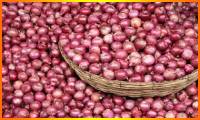
India permits 64,400 tonnes of onion exports to UAE, Bangladesh.
The government has permitted exports of 64,400 tonnes of onion to the UAE and Bangladesh through the National Cooperative Exports Ltd (NCEL), according to notifications of the commerce ministry. While export of 50,000 tonnes of onion is permitted to Bangladesh, shipments of 14,400 tonnes were allowed to the UAE.
'Export of 14,400 tonnes of onions, with a quantity ceiling of 3,600 MT (metric tonnes) quarterly, to UAE through NCEL is notified,' the directorate general of foreign trade (DGFT) said in a notification.
DGFT is an arm of the commerce ministry, which deals with norms related to imports and exports.
For exports to Bangladesh, it said that the modalities for the exports will be worked out by the NCEL in consultation with the department of consumer affairs.
Though onion exports are banned, the government allows specified quantities to friendly nations.
The exports are allowed on the basis of permission granted by the government to other countries based on their request.
On December 8 last year, the government banned exports of onion till March 31 this year with a view to increase domestic availability and to keep prices in check.
Earlier, the Centre in October 2023 had decided to step up the sale of buffer onion stock at a subsidised rate of Rs 25 per kg in retail markets in order to provide relief to consumers.
To control prices, the government has earlier taken several steps. It had imposed a minimum export price (MEP) of USD 800 per tonne on onion exports on October 28 till December 31, 2023.
In August, India had imposed a 40 per cent export duty on onions up to December 31, 2023.
Between April 1, 2023 and August 4, 2023 this fiscal, 9.75 lakh tonnes of onions have been exported from the country. The top three importing countries in value terms are Bangladesh, Malaysia and the UAE.
Onion is a politically-sensitive commodity.
NCEL is a multi-state cooperative society. It is jointly promoted by some of the leading cooperative societies in the country, namely, Gujarat Cooperative Milk Marketing Federation (GCMMF), popularly known as AMUL; Indian Farmers Fertilizer Cooperative Ltd (IFFCO); Krishak Bharati Cooperative Ltd (KRIBHCO); and National Agricultural Cooperative Marketing Federation of India Ltd (NAFED).
Source: economictimes.indiatimes.com

Govt launches mission to boost oilseeds' production, cut imports of cooking oils.
Union Agriculture Minister Arjun Munda on Monday said the government has launched a mission to boost production of oilseeds and reduce imports of cooking oils. The minister virtually inaugurated administrative-cum-academic building, Manas Guest House, Subansiri Girls Hostel and Brahmaputra Boys Hostel at IARI, Dirpai Chapori, Gogamukh, Assam.
Union Minister of State for Agriculture Kailash Choudhary was present at the inaugural event and visited an exhibition stall at the Indian Agricultural Research Institute (IARI), Assam.
According to an official statement, Munda said Prime Minister Narendra Modi has special emphasis on the development of the Northeastern region.
He said the central government has done the work of eliminating the gaps in the development of agriculture in the northeastern states and bringing them into the mainstream.
Munda said the government is working with the resolve to make the country a developed nation by 2047, in which the role of agriculture is very important.
He highlighted that a mission of Rs 11,000 crore is being run to reduce the burden of edible oil imports and become self-reliant in oilseeds.
'We have to work with the thought that in the coming days, we will not import but export,' Munda said.
India imports about 16 million tonnes of edible oils annually to meet domestic demand. In terms of value, India imported edible oils worth about Rs 1.38 lakh crore during 2022-23 (November-October).
The Union agriculture minister also stressed the development of climate-resilient crop varieties.
He emphasised linking agriculture education to livelihood and employment opportunities.
Munda said biodiversity studies also need special attention. He hoped that in a year, this institute would be the most preferred choice for research.
He emphasised that technologies have to be climate-neutral and gender-neutral.
Choudhary urged scientists to exploit the natural diversity that exists in the Northeast Region. He stressed focusing on research related to pulses and oilseeds so that the country does not have to spend too much money on the import of pulses.
Source: economictimes.indiatimes.com
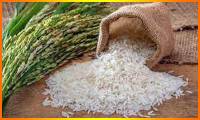
Basmati export price drops but Indian shippers unfazed.
Basmati export prices have dropped in the past couple of months to the level of minimum export price (MEP) of $950/tonne from over $1,050, which some exporters fear could be a loss-making proposition to ship out if the purchase price of Basmati paddy on October-November is taken into account. Some premium Basmati varieties’ prices too have dropped to about $1,200/tonne from $1,300, industry sources said.
However, many exporters said it is not a concern as most of the exports were contracted at higher rates when they were signed amid concerns over global supply disruption due to conflict between Israel and Palestine.
Basmati rice exports have increased by 12.3 per cent at 4.11 million tonnes (mt) during the January 2023-24 fiscal from 3.66 mt in the year-ago period, as per provisional data released by Agricultural and Processed Foods Exports Development Authority (APEDA). In value terms, the growth is an impressive 20.2 per cent at $4.59 billion against $3.82 billion year-ago. The higher growth has been attributed by industry experts on increased demand from countries such as Saudi Arabia and Iraq.
Striking bargains
The average realisation was about $ 1,120/tonne until January, whereas it was nearly $1,045 year-ago, said an exporter. However, the basmati paddy was considerably lower in harvesting period (October-December) of 2022 from the same period in 2023, the exporter said. He said while it is less than 10 per cent increase in the export realisation, paddy prices this year (2023-24) were 20-25 per cent higher.
In Punjab, Pusa Basmati 1509 (paddy) sold at Rs.3,200-3,600/quintal, depending on quality while Pusa Basmati 1718 at about Rs.3,800 in November 2023. On the other hand, traditional Basmati CSR 30 commanded between Rs.6,300 and Rs.6,600/quintal for the farmers. The key Pusa 1121 was sold at Rs.4,300-4,500 per quintal, whereas last year it was Rs.3,600-3,800.
'There is a slowdown in demand from overseas buyers after the Red Sea issue came up as freight cost increased. But, this type of event is normally temporary and hope we see things to normalise in the days ahead,' said Vijay Setia, a former president of All India Rice Exporters Association.
Response to global trade
According to foreign trade policy expert S Chandrasekaran, current basmati export price decline is a response of global trade demand sentiments and pressure from competitive supply. 'However, the export price will recover when domestic and export market finds equilibrium. This will reflect at the end of festival season in the West Asia,' he said.
Further, Chandrasekaran said the local demand and higher price realisation from domestic market brings new trend and trade stability for basmati rice.
Official sources in the Commerce Ministry do not see the fall as a concern and term it as normal market trend on demand-supply issue. The officials said that since more than 90 per cent of the shipments have already gone in the ten months of this fiscal as against 4.56 mt exported during the entire 2022-23, the exports in February and March may also follow the current trend of 10-12 per cent rise.
Source: thehindubusinessline.com
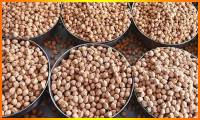
Bangladesh Imports 400 Tonnes of Chickpeas for Ramadan Relief, TCB Announces Subsidized Rates.
In a significant move to ensure food security during Ramadan, Bangladesh has imported 400 tonnes of chickpeas, marking the first batch of a 4,000-tonne import plan by the Trading Corporation of Bangladesh (TCB). The consignment, which arrived at Benapole Port, is part of a broader initiative to provide essential commodities at subsidized rates to ease the financial burden on citizens during the holy month.
Strategic Import for Ramadan
The arrival of chickpeas at Benapole Port on Sunday and their subsequent release after quality checks signify the government's commitment to stabilizing food prices ahead of Ramadan. Imported at Tk 85 per kilogramme, the TCB will offer these chickpeas at a subsidized rate of Tk 55 per kg. This initiative is part of the government's effort, led by Prime Minister Sheikh Hasina, to purchase essentials well in advance to prevent shortages and price hikes during Ramadan. The TCB's comprehensive package for TCB family cardholders also includes soybean or rice bran oil, pulses, and rice at subsidized rates, aiming to support the financially vulnerable segments of society.
Comprehensive Subsidy Program
Under the subsidy program, each TCB family cardholder is eligible to purchase not only chickpeas but also two litres of soybean oil or rice bran oil at Tk 100 per litre, 2 kilograms of pulse at Tk 60 per kg, and 5 kilograms of rice at Tk 30 per kg. This initiative is in line with the government's broader strategy to tame inflation and ensure that the populace can access essential commodities at reasonable prices during the high-demand period of Ramadan. The move also reflects the government's proactive approach to food security, as outlined by the Prime Minister earlier this month.
Implications and Future Prospects
The import of chickpeas and the announcement of subsidized rates for essential commodities are timely interventions that not only address immediate food security concerns but also showcase the government's dedication to public welfare. As Ramadan approaches, these measures are expected to alleviate financial pressures on households, particularly those in lower-income brackets. Moreover, the successful implementation of this initiative could serve as a model for future efforts to stabilize market prices and ensure food availability during critical periods. With the government taking concrete steps to support its citizens, the focus now shifts to the efficient distribution of these commodities to ensure they reach those in need.
Source: bnnbreaking.com

India cuts tariff on Chilean blueberries.
As of 20 February, the tariff on imports of fresh, frozen and dried Chilean blueberries and cranberries has been cut from 30 per cent to 10 per cent. Canned or prepared cranberries will now have a standard tariff rate of 5 per cent, while similarly packaged blueberries will have a tariff of 10 per cent.
'This is very good news for our blueberry exports to India, since the Indian market has a special importance for Chilean exports,' said Iván Marambio, president of Frutas de Chile. 'This lower tariff for our blueberries makes us think about greater opportunities in India, a market that is expected to become the third largest economy in the world by 2030.'
Andrés Armstrong, executive director of the Chilean Blueberry Fruit Committee, said the decision was 'very positive' and would 'undoubtedly help facilitate the entry of this healthy fruit in a country with such great consumption potential as India'.
Despite its potential, India presents many logistical challenges for Chilean shippers. Armstrong said one solution would be for blueberry and cherry exporters to work together by loading both products in the same shipments and establishing joint promotional programmes in India.
According to Frutas de Chile, Chile exported nearly 30,000 tonnes of fresh fruit to India in 2022/23, of which blueberries accounted for nearly 120 tonnes.
Source: fruitnet.com
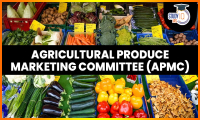
All warehouses be declared as deemed mandis if they comply with State APMC rules: Siraj Hussain panel.
The Siraj Hussain-led panel on the promotion of warehouse-based sale of agricultural produce has recommended that all warehouses, whether registered with WDRA or not, should be declared as deemed market yards (mandis) if they comply with the prescribed norms of State’s APMC Act/Rules. It has also been suggested that the Agriculture Ministry form a steering committee with major States for smooth and faster implementation.
The Expert Committee, headed by the former agriculture secretary, was set up in April 2023, is said to have submitted its report in December, and it was uploaded on the Ministry website on Monday. It has recommended a host of measures to promote warehouse-based sales, with a focus on e-Negotiable Warehouse Receipts (eNWRs) trading through eNAM and other registered e-trading platforms.
One of the key recommendations is the compulsory registration of all warehouses with a capacity of 1,000 tonnes or more with the Warehousing Development and Regulatory Authority (WDRA). It has also asked the government to provide credit at a subsidised interest rate when farmers avail it using eNWRs by extending the Kisan Credit Card (KCC) scheme for this purpose.
'All those warehouses, whether registered with WDRA or not but complying with the prescribed norms for markets set out in the respective State’s APMC Act/Rules, may be declared as deemed market-yards,' the panel also said. Further, it has suggested State governments give preference to WDRA-registered warehouses for declaring those as deemed market-yards, as only such godowns are mandated to issue eNWRs.
Panel to push declaration
'This would not require too much formalities at the level of APMCs/State Agricultural Marketing Boards and the State governments as WDRA has already completed extensive physical inspection of such warehouses before registration,' the panel said.
Suggesting the Department of Agriculture and Farmers’ Welfare to form a 'Steering Committee' with major States to push the declaration of warehouses as deemed market-yards, the panel said there is a need for appropriate legal provisioning in State’s APMC Acts, including the urgent notification of Rules 'The Steering Committee may also monitor and review the progress of the actual declaration or notification of deemed market-yards on the ground by holding regular meetings,' it said.
As it is mandatory for all warehouses under the Food Corporation of India (FCI), both its own and the ones leased out by private sector, to be registered with WDRA, the panel has said States should intensively promote registration of co-operative and private warehouses and undertake awareness programme among warehouse owners to encourage them to register with WDRA.
The committee also recommends making it mandatory that the second instalment of subsidy under any government scheme of Centre and States for warehouse construction be released only after registration with WDRA.
Focus on promoting eNWRs
In the first phase, focus should be on promoting warehouse-based primary trade via eNWRs through eNAM and other registered e-trading platforms, for the success of such trade on a large scale. Subsequently, a mechanism can be established to promote secondary trade, mostly happening from warehouses, via eNWRs through eNAM and other registered e -trading platforms, the panel said.
However, many agri-marketing experts differ on allowing secondary trade on e-NAM, as it will dilute the focus on helping farmers since there are several private sector online platforms already available for facilitating transactions between trader to trader (B2B).
The panel said that allowing secondary trade through eNAM and other registered e-trading platforms would necessitate the formulation of market rules covering trading procedure, payment, transaction charges, dispute settlements, etc.
The panel stated that allowing secondary trade through eNAM and other registered e-trading platforms would necessitate the formulation of market rules covering trading procedures, payments, transaction charges, dispute settlements, etc.
Source: thehindubusinessline.com
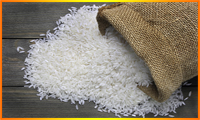
India allows export of 30,000 tonnes of non-basmati white rice to Tanzania
The government has permitted exports of 30,000 tonne of non-basmati white rice to Tanzania and 80,000 tonne of broken rice to Djibouti and Guinea Bissau. The export is permitted through National Cooperative Exports Limited (NCEL), the Directorate General of Foreign Trade (DGFT) has said in a notification.
Though exports of non-basmati white rice have been banned since July 20, 2023 to boost domestic supply, exports are allowed on the basis of permission granted by the government to certain countries to meet their food security needs on request.
Tanzania is an East African nation, while Djibouti is at the northeast coast of the African continent.
Guinea-Bissau is a tropical country in West Africa. According to the notification, exports of 30,000 tonne of broken rice are allowed to Djibouti and 50,000 tonne to Guinea Bissau.
India has earlier also allowed these exports to countries like Nepal, Cameroon, Cote D' Ivore, Guinea, Malaysia, Philippines, and Seychelles.
NCEL is a multi-state cooperative society. It is jointly promoted by some of the leading cooperative societies in the country, namely, Gujarat Cooperative Milk Marketing Federation (GCMMF) popularly known as AMUL, Indian Farmers Fertilizer Cooperative Ltd (IFFCO), Krishak Bharati Cooperative Ltd (KRIBHCO) and National Agricultural Cooperative Marketing Federation of India Ltd (NAFED).
Source: economictimes.indiatimes.com