
India inks pact with EFTA, gets $100 billion commitment.
India on Sunday signed a trade and economic partnership agreement with the European Free Trade Association (EFTA) - a grouping of Switzerland, Norway, Liechtenstein and Iceland - that includes a binding $100-billion investment commitment.
As part of the Trade and Economic Partnership Agreement (TEPA), EFTA has committed to promote investments to increase the stock of foreign direct investments (FDI) in India by $100 billion in the next 15 years, and to facilitate the generation of one million direct employment in India through such investments, the government said in a statement.
'The global leadership of EFTA countries in innovation and R&D across diverse spheres...will open up new doors of collaboration,' PM Narendra Modi said about the trade agreement.
Commerce and industry minister Piyush Goyal said India is signing an FTA with four developed nations for the first time. It is a 'modern and ambitious' trade agreement with an important economic bloc in Europe, he said.
FDI of $50 billion is expected to flow in the first 10 years, with another $50 billion expected to come in the following five years. 'The investment flow may be larger than we have estimated. We will mutually work out if there is any shortfall in investment,' Goyal said, noting that investment from EFTA has grown at a compounded annual growth rate of 13% in the last decade.
Officials said the agreement gives India the right to rebalance or suspend concessions if the investment value is not realised. They also stated that the deal provides legal certainty in terms of tariff regime and investment relations.
The investments are hinged on the nominal GDP growth of 9%, officials said. Goyal said India has included several elements such as environment, trade, IPR, and gender for the first time in TEPA. 'The free trade agreement balances asymmetries within economies of the EFTA region and Indian economy,' the minister said.
TEPA is the fourth major deal signed by India to promote trade and economic cooperation in the last three years. The others are with Australia, Mauritius and the UAE.
The deal has got a thumbs-up from the industry. 'Improved market access for goods will boost India's export potential to EFTA markets and greatly expand employment opportunities, especially with the historic $100 billion committed investment from the EFTA region,' said Chandrajit Banerjee, director general of the Confederation of Indian Industry (CII).
Source: economictimes.indiatimes.com

TEPA: Norway to eliminate customs duties for almost 98 pc of imports from India.
Shortly after New Delhi inked a USD 100 billion free trade pact with a four-member European bloc, Norway on Sunday said it will eliminate customs duties for almost 98 per cent of the imports from India under the framework of the pact. The ambitious trade pact, signed between India and the European Free Trade Association (EFTA) comprising Norway, Switzerland, Iceland and Liechtenstein, aims to expand trade across a range of areas including pharmaceuticals, manufacturing, new technologies and machinery.
After the EEA (European Economic Area) agreement, this could become one of the most important trade agreements Norway has ever entered, said Norwegian Prime Minister Jonas Gahr Stoere.
At a media briefing, Norway's Minister of Trade and Industry Jan Christian Vestre described the Trade and Economic Partnership Agreement (TEPA) as a major result-oriented milestone that would not only boost two-way trade but also promote a rules-based trading system.
'Norwegian businesses that export to India today meet high tariff barriers of up to 40 per cent on certain goods. With this new agreement we have secured zero tariff on almost all Norwegian exports to India,' he said.
'This is a breakthrough that can mean a lot for workplaces throughout Norway,' he said.
Vestre said India is a 'economic and political power house' with an extraordinary economic growth rate that it is set to continue in years to come and Norwegian companies will have a lot of opportunities in the country.
'We will eliminate all customs duties for almost 98 per cent of the imports from India including all important goods and services. For Indian companies, it will be a great opportunity,' he said.
The pact will come into force following completion of the ratification process by the signatories.
'For our companies exporting to India, the customs duties today are between 5 to 40 per cent and 93 per cent of that customs duty will be under zero per cent in 10 years from now,' he said.
Asked about the proposed USD 100 billion investment by the four EFTA countries in India in the next 15 years, Vestre said it will be for the private companies to achieve the goal.
'It is a binding commitment to promote investment and the goal is USD 100 billion and one million jobs. It is up to the private companies and businesses,' he said.
'After 15 years we will sit down and find ways to ensure that it happens,' he said, replying to a question on what the EFTA would do if the goal is not met.
Vestre said the EFTA bloc will set up an office in India to coordinate implementation of the mega trade deal.
'The four EFTA countries all together will mobilise private investments and the goal is to ensure USD 100 billion investment by the next two decades besides one ensuring million jobs,' he said.
At present, around 130 Norwegian companies are operating in different sectors in India including in areas of infrastructure, construction, renewable energy and technology.
A Norwegian readout said the TEPA also includes a reference to human rights.
Human rights are a central part of Norwegian foreign policy. Therefore, it has been important for Norway to include human rights and international environmental conventions as a part of the agreement, said PM Gahr Stoere.
In his remarks, Vestre also referred to geopolitical tensions and how the pact climate ambitions.
In a turbulent world, with geopolitical tensions, it is important to strengthen the ties between India and the West, he said.
The agreement also elevates climate ambitions and will ensure worker's and women's rights, Vestre added.
'The EFTA countries commit to promoting investments and the creation of more jobs in India. A designated office will be established in India to support Norwegian businesses in operating in the Indian market,' the readout said.
It said India will undergo a major green and digital transition, and in this context, Norwegian businesses have a lot to offer, from renewable energy and health technology to green mobility and seafood.
The agreement provides large possibilities for trade and investments in a market that is growing rapidly.
Through investments in India, Norwegian businesses can contribute to sustainable development, said Vestre.
Source: economictimes.indiatimes.com

Government of India notifies extension of Remission of Duties and Taxes on Exported Products support to Advance Authorisation Holders, Export Oriented Units and Special Economic Zones Units.
Union Minister of Commerce & Industry, Consumer Affairs, Food and Public Distribution, and Textiles, Shri Piyush Goyal announced the extension of Remission of Duties and Taxes on Exported Products (RoDTEP) Scheme support to additional export sectors in New Delhi today. The Government of India has announced extension of the RoDTEP Scheme support to additional export sectors i.e. Advance Authorisation (AA) holders, Export Oriented Units (EOU) and Special Economic Zones (SEZ) export units. This decision comes in recognition of the significant contribution these sectors make to India’s Exports, constituting approximately 25% of our exports. Amidst global economic uncertainties and supply chain disruptions, extending RoDTEP to the uncovered sectors such as AA, EOU, and SEZ units will help the exporting community in handling the international headwinds.
The Remission of Duties and Taxes on Exported Products (RoDTEP) Scheme is a key initiative by the Government of India aimed at refunding various embedded taxes and duties on exported products. Since its inception in January 2021, the RoDTEP Scheme has already provided support amounting to Rs.42,000 Crores to more than 10,500 export items at 8-digit ITC HS Code level. In the current financial year, the scheme has a budget of Rs.15,070 Crore with an additional increase of 10% in FY 2024-25.
Keeping budgetary allocation in view, the extension of RODTEP to additional sectors is presently till 30.09.2024. The extension of the RODTEP scheme to these sectors is aimed at enhancing India’s export competitiveness in international markets. Key sectors such as Engineering, Textiles, Chemicals, Pharmaceuticals & Food Processing and many others stand to benefit from the measure.
By providing support to crucial export sectors, the government aims to not only enhance their competitiveness but also create employment opportunities and contribute to overall economic growth, aligning with the vision of building an Aatmanirbhar Bharat. The government is confident that the proactive measures being taken, including efforts to negotiate new FTAs, will further accelerate India’s journey towards achieving USD One trillion merchandise export levels.
Source: pib.gov.in
Government exempts certain exporting units from quality control orders with conditions.
The government on Friday exempted advance authorisation holders and export-oriented units (EOUs) from mandatory quality control orders for imported goods that are used as inputs for exports. It said that the exemption will be with pre-import conditions, and those inputs will be utilised in the manufacturing of the export products.
'Enabling provisions are made for exempting inputs imported by Advance Authorisation holders and EOUs from mandatory Quality Control Orders (QCOs),' the Directorate General of Foreign Trade (DGFT) said in a notification.
The unutilised material will be destroyed in the presence of jurisdictional GST/customs authorities, it added.
Mandatory QCOs help curb the import of sub-standard products, prevent unfair trade practices and ensure the safety and well-being of consumers as well as the environment.
QCOs are applicable for products domestically manufactured as well as imported. Every manufacturing unit in and outside India has to comply with these orders if they want to sell in the domestic market.
The focus of the government is to bring more and more products under the ambit of QCOs for the development of the quality ecosystem in the country and to provide consumers with quality products.
Source: economictimes.indiatimes.com

The 4th Mega Convention by Plant Based Foods Industry Association marks grand opening at Aahar.
The highly anticipated India Plant-Based Foods Show 2024, organised by the Plant Based Food Industry Association (PBFIA), igniting a wave of innovation and collaboration in the food industry, concluded at the prestigious Bharat Mandapam, Pragati Maidan, New Delhi, March 7, 2024. The show was presented on the 1st day of Aahar, by the Ministry of Agriculture & Farmers Welfare, The Agricultural and Processed Food Products Development Authority (APEDA), ICAR- Indian Council of Agricultural Research (ICAR), India Trade Promotion Organisation (ITPO), US Soybean Export Council (USSEC), Indian Chamber of Commerce (ICC), Pall Corporation and ProVeg International, and EY as the Knowledge Partner.
The event was supported by international and national startups and companies like Thryve Plant-Based Venture, Plantaway Foods, Continental Greenbird, Patanjali Foods - Ruchi Soya, Nutricircle Limited, Veganta, DBS Bank, Roundtable on Sustainable Palm Oil (RSPO), Right to Protein, Hello Tempayy, and Acme Group.
The show served as a visionary platform for industry leaders and entrepreneurs across the world, over 40 startups globally and presentations from more than 35 distinguished speakers including Abhishek Dev, chairman of Agricultural and Processed Food Products Export Development Authority (APEDA); Inoshi Sharma, executive director of FSSAI; Dr Sudhanshu, secretary of APEDA; Satyam Shivam Sundaram – partner, Ernst and Young, Valeria Kryntskaya, head Plant-Based venture, Thryve, Dubai; Victor Sonovas, commercial attache, Embassy of Spain and many more.
Sanjay Sethi, executive director of the PBFIA, emphasised the imperative of seizing the challenges confronting the industry by transforming them into opportunities. Among these challenges lies a notable market gap: the demand for high-quality ingredients to combat the locally produced raw material shortage. Addressing this gap, with initiatives such as India’s First Plant Protein Cluster at Bhiwadi, not only facilitates the production of superior products but also plays a pivotal role in enhancing consumer perceptions across various product categories. Moreover, it provides a platform for refining the positioning of plant-based alternatives, ensuring they resonate with evolving consumer preferences for sustainability, health, and taste. By prioritising the sourcing and utilisation of premium ingredients, the industry can fortify its offerings, elevate standards, and cultivate trust and loyalty among discerning consumers.
Dev highlighted the growth of the plant-based foods industry stating the capability of the current global market of $11.3 billion to reach $36 billion by 2033. The Chairman also expounded on the potential of Indian market having a CAGR of 15% and industry estimate of $5 billion dollars by 2033. Asserting APEDA’s support, he said, 'With a target of increasing exports by 100 billion by 2033, we aim to incorporate plant-based foods as a focus product in our export strategy and offer subsidised rates for startups to be part of upcoming conventions, helping them to emerge in the market.'
Sharma said, 'Our perception of the plant-based foods has been a huge challenge, which is mostly due to their presentation in the society. The regulations on the startup industry, especially the classification of soy milk as a beverage is a matter of contention and needs to be addressed.'
In partnership with EY, PBFIA also launched its breakthrough report, ‘Food Tomorrow: Elevating India’s Role in the Plant-Based Revolution’ exploring the potential for plant-based nutrition in India, with a particular emphasis on plant-protein clusters. Satyam Shivam Sundaram, Partner, Ernst and Young affirmed their support for plant-based choices and stated, 'We need to collaborate and lead the way of sustainability and healthy choices. Together, we can achieve more at a lesser cost. As a part of this common goal, we need to facilitate research and developments, offer space for innovation and create holistic ecosystems. Through proper education and awareness, we can have a major shift in the perspective, making plant-based food mainstream instead of it being an alternative.'
Kalpana Das, a renowned human right activist and the wife of chief justice of India, pointed her perspective of consuming milk to be cruelty and advised to adopt soy-based and other plant-based options aiding in the reduction of carbon footprint.
The 4th Mega Convention by PBFIA focused on evincing the limitless possibilities of plant-based foods through an exhibition, followed by demonstrations and panel discussions, highlighting the positive impacts of plant-based foods on the environment and health. Among the highlights of the event was the Startup Pitch Session, where aspiring entrepreneurs presented their ideas to a panel of industry experts and investors. There were stimulating discussions about ways to enhance the customer experience through B2B, B2C and D2C modes involving an insightful panel of Amarjit Singh Ahuja of Purchasing Professional Forums India, Ashu Phakey of ITC and Dhiren Kawar of Keva Flavours.
The session also focused on understanding the need for grooming talent pool for plant-based food industries through a panel discussion led by chef K. Thiru, Principal of Welcome group School of Hotel Management, Manipal University. Following the need for innovation, an erudite panel discussed various ways of replacing conventional dairy and animal products with plant-based alternatives. Closing the forum, Sethi hosted conversations with the founders of various companies, concentrating on the ability of plant-based foods to deliver sustained nutrition.
Source: fnbnews.com

Aahar 38th edition concludes with 1600 participants from 12 countries.
The 38th edition of Aahar – the International Food and Hospitality Fair concluded here with a large participation from trade delegates from across the globe.
The five-day event hosted by India Trade Promotion Organisation (ITPO) also witnessed participation of Ministry of Food Processing Industries, Agriculture and Processed Food Products Export Development Authority (APEDA) and apex industry bodies at Bharat Mandapam, New Delhi.
This year, the exhibition was organised in an area of 1,10,000 sq.mtr. as compared to 90,000 sq.mtr. last year which has resulted in an increase in participation from 1,500 to 1,600 participants including participation from overseas companies from 12 countries including China, Germany, Iran, Italy, Japan, Nepal, Russia, Sweden, Taiwan, Turkey, Turkmenistan and the UAE.
Aahar also witnessed product launches. Companies including Cargill, Barry Callebaut, Pansari Group, and Elanpro were amongst who unveiled their new products.
Sanjay Jain, director, Elanpro, said, 'We unveiled our latest innovations in commercial refrigeration space at Aahar. With our new range, we want to help food and beverage businesses reduce their carbon footprint.'
'Our new Reach-in freezer is an industry first. It is for the first time, a Reach-in with energy-saving Inverter Technology Compressor is launched in India. This innovation is expected to save almost 30% of electricity bills. In addition, our new generation of blast freezers, undercounters, vertical coolers, confectionery showcases, softy machines and buffet freezers are expected to set a new standard for efficiency and innovation in food and beverage retail,' said Jain.
Meanwhile, the display profile was segregated into different categories in various halls namely, Foreign Participation and FIFI Pavilion (Hall 1 GF), Confectionery & Bakery Products & Ingredients, ICMA (Hall 2 GF& FF), APEDA Pavilion (Hall 3 GF), Spices, Condiments Ingredients & Agri Produce(Hall 3 FF), Organic, Processed Food, Ingredients, Spices, Farm Produce, Fresh Fruits & Vegetables, Meat Products (Hall 4 GF& 4FF), Organic Processed Food, Ingredients, Spices, Farm Produce, Fresh Fruits & Vegetables, Meat Products, Chocolate Products (Hall 5 GF), Culinary Art India Show by Indian Culinary Forum (Hall 5 FF), Bakery Heavy Machinery Equipment, Tentage & Décor, Packaging, Kitchen & Hotel Equipment (Hall 6, Hall 7 (A-H), Kitchen & Hotel Equipment, Refrigeration (Hall 8-11, 12 & 12A, 14), Hospitality, Décor, Housekeeping Products, Gift Items (Hall 14FF), Hospitality, Décor, Housekeeping Products, Gift Items, Mist Coolers, Coolers & Fans (Open Area).
According to ITPO, this year too, a large number of trade visitors visited the fair.
These include top echelons of the hotel and hospitality industry including CEOs, General Managers, Executive Chefs, Executive House Keepers, Purchase Managers, F&B Managers and so on. Besides, senior representatives from Centre and State Government, catering industry and academic institutions, hotel management professionals also visited the fair.
'Unveiling India’s export potential, the fair assumes tremendous significance especially when there is a focus of the Union Government to promote agri-community as well as MICE (Meeting, Incentive, Conference and Exhibition) sector which complements the hospitality segment,' reads a statement of ITPO.
Source: fnbnews.com
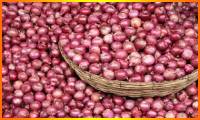
'Centre plans to procure five lakh tonnes of onions this year for buffer stock'.
The government is planning to procure 5 lakh tonnes of onions this year for its buffer stock that can be used to intervene in the market in case of a price rise, according to sources. The food and consumer affairs ministry had created 5 lakh tonnes of buffer stock last year, of which 1 lakh tonne is still available, they added.
Agencies like NCCF and NAFED will procure onion on behalf of the government.
Sources said that the government's decision to sell onions at a subsidised rate from its buffer stock has helped in controlling prices.
The government will take a decision on lifting the ban on onion exports later this month. The ban is till March 31.
The government's plan to create buffer stock comes amid an estimated fall in onion output in 2023-24.
'Production of onion in 2023-24 is expected to be around 254.73 lakh tonnes compared to around 302.08 lakh tonnes last year due to a decrease of 34.31 lakh tonnes in Maharashtra, 9.95 lakh tonnes in Karnataka, 3.54 lakh tonnes in Andhra Pradesh and 3.12 lakh tonnes in Rajasthan,' the agriculture ministry said in a statement on Thursday.
The decline in onion production in 2023-24 is 16 per cent compared to the previous year.
As per the data, onion production stood at 316.87 lakh tonnes in 2021-22.
Source: economictimes.indiatimes.com

Fruit for thought: Farmers turn to cultivation of exotic varieties.
Indian farmers are rapidly adopting the cultivation of exotic and premium fruits like avocados, blueberries, dragon fruit, and kiwis, fuelled by their growing preference in the domestic market and burgeoning exports.
These fruits offer up to 50% higher returns than other local fruits, according to experts. 'Over the last five years, farmers and entrepreneurs have realized the potential for exotic fruits and new varieties for both domestic and international markets,' said Purnima Khandelwal, chief executive of InI Farms, a large exporter of horticulture products.
Khandelwal said this was manifested in initiatives to grow dragon fruit, seedless watermelon, blueberries, red grapes, cantaloupes, avocado and kiwi.
Recognising the market potential, the Ministry of Agriculture and Farmers' Welfare has identified ten globally popular exotic fruit crops of commercial importance - avocado, blueberry, dragon fruit, figs, kiwi, mangosteen, persimmon, passion fruits, rambutans and strawberries, and directed state horticulture departments to expand the area under cultivation of these crops.
In 2023, the total area under cultivation for dragon fruit stood at 3,000 hectares. With increased demand, the government expects this to rise to up to 50,000 hectares in five years under the Mission for Integrated Development of Horticulture (MIDH) program. The total area under kiwi fruit cultivation in India is 5,000 hectares, yielding 16,000 MT production in FY2023, compared to negligible production in 2010, agriculture ministry data showed.
Producers and marketers for exotic fruits in India value the domestic market at an estimated?3,000 crores with core demand emerging from the top four metros, state capitals and tourist spots.
'With so many tourists around, exotic fruits are really popular in tourist spots such as Goa. Delhi, Mumbai are also among the biggest consumers of these items,' Harshit Godha, founder of Indo Israel Avocado, which helps farmers grow avocados.
Experts say India's varied agro-climatic conditions are a major factor driving local production of exotic items. '(With such varied agro-climatic conditions) Northeast is growing kiwi, Himachal Pradesh is growing new varieties of apple, Nashik is growing exotic grapes, Solapur is growing melons, Madhya Pradesh is growing berries, and Andhra Pradesh is growing avocado,' Khandelwal said.
Lucrative export market
Increased production is also propelling exports, albeit at a lower base. India had been exporting primarily to neighbouring countries but has now found markets in the UAE, Austria, and Canada for some of these fruits India's kiwi exports jumped to 528 tonnes in 2023 from just 0.35 tonnes six years ago.
Indo Israel Avocado, which imports avocado plants for farmers, has seen a huge demand for fruit. 'In the last three years, our total imports were 10,000 avocado plants. But in 2024 (calendar year), just the first consignment was 10,000 avocado plants,' said Godha.
Source: economictimes.indiatimes.com

India-EFTA Trade & Economic Partnership Agreement underlines our commitment to boosting economic progress and create opportunities for our youth: PM.
The Prime Minister, Shri Narendra Modi today hailed signing of India-EFTA Trade & Economic Partnership Agreement.
He also shared his message to the signing of the pact.
The Prime Minister replied to the Union Minister Shri Piyush Goel's post on X :
'Delighted by the signing of the India-EFTA Trade & Economic Partnership Agreement. This landmark pact underlines our commitment to boosting economic progress and create opportunities for our youth. The times ahead will bring more prosperity and mutual growth as we strengthen our bonds with EFTA nations.'
Source: pib.gov.in

Free trade pact with EFTA likely to be signed on March 10.
The Union Cabinet Thursday discussed the proposed free trade agreement between India and the four European nation bloc European Free Trade Association (EFTA).
The pact, called Trade and Economic Partnership Agreement (TEPA), is likely to be inked on Sunday, said sources. Iceland, Liechtenstein, Norway, and Switzerland comprise the EFTA, and these are not part of the EU with which India is separately negotiating a trade pact.
The agreement has several chapters, including trade in goods, rules of origin, intellectual property rights, trade in services, investment promotion and cooperation, trade and sustainable development, and trade facilitation. New Delhi has sought $100 billion of committed investments from the grouping and is considering giving quota-based duty concessions on gold imports from Switzerland.
Nod to NE industrial package
The Union Cabinet approved a Rs 10,037-crore new industrial development scheme called Uttar Poorva Transformative Industrialization (UNNATI) scheme, for northeast states to generate gainful employment and for the regions's overall socio-economic development.
Under the scheme, incentives would be provided to investors for setting up new units or undertaking significant expansion of the existing units.
The scheme will be effective from the date of notification and up to March 31, 2034, along with eight years of committed liabilities.
As per a government statement, eligible industrial units will be able to commence their production or operation within four years from the grant of registration. The scheme envisages approximatelyRs 2,180 applications.
Districts have been categorized into Zone A (Industrially Advanced Districts) & Zone B (Industrially Backward Districts) . 60% of the outlay of Part A has been earmarked for the eight northeastern states and the remaining 40% would be allocated on a First-In-First-Out basis.
Source: economictimes.indiatimes.com