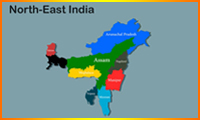
Prime Minister Shri Modi has given a new dimension to the development of the North-Eastern region - Shri Munda
Union Minister Agriculture and Farmers Welfare Shri Arjun Munda Virtually Inaugurated Administrative-cum-academic Building, Manas Guest House, Subansiri Girls Hostel and Brahmaputra Boys Hostel at IARI, Dirpai Chapori, Gogamukh, Assam today. Union Minister of state for Agriculture and Farmers Welfare Shri Kailash Choudhary was present on the inaugural event and visited exhibition stall at Indian Agricultural Research Institute, Assam.
Union Minister Agriculture and Farmers Welfare Shri Arjun Munda said that Prime Minister Shri Narendra Modi has special emphasis on the development of the North-Eastern region. He said that the Central Government has done the work of eliminating the gaps in the development of agriculture in the North-Eastern states and bringing them into the mainstream and the Prime Minister has given a new dimension to the development of the North-Eastern region. He said that the government is working with the resolve to make the country a developed nation by 2047, in which the role of agriculture is very important. Shri Arjun Munda said that a mission of Rs 11 thousand crore is being run to reduce the burden of edible oil imports and become self-reliant in oilseeds. We have to work with the thought that in the coming days we will not import but export. He said that when we work with a vision, we definitely get success.
Shri Arjun Munda also stressed upon the development of climate resilient crop varieties and said that agriculture education to be linked to livelihood and employment opportunities. Shri Munda said that biodiversity studies also need a special attention. He hoped that in a year this institute would be the most preferred choice for research. He emphasized that technologies have to be climate neutral and gender neutral.
MoS Shri Kailash Choudhary urged upon scientists to exploit the natural diversity that exist in North East Region. He also emphasized about the development of the technologies close to nature and while doing so let us link up with organic and natural farming. He stressed upon to focus on research related to pulses and oilseeds, so that country does not have to spend too much money on export of pulses. He said that agricultural research has to be linked with entrepreneurship; and all this is only possible when there is free exchange of ideas between different organizations.
Minister of Education, Welfare of Plain Tribes and Backward Classes, Government of Assam Dr. Ranoj Pegu appreciated the efforts of IARI, Assam. He stressed that research work to be done by IARI, Assam would be helpful in considering plant, animal and fish diversity as well as conserving environment.
Member of Parliament, Lakhimpur Shri Pradan Baruah stated that it was our dream to see that an institute of this stature will come in Assam. We hope that this institute would rise to the expectation of young minds of entire North-East India.
Secretary DARE and DG ICAR, New Delhi Dr. Himansu Pathak virtually addressed the gathering and elaborated the objectives and mandates of IARI, Assam. He emphasized that North-East India has huge potential that need to be explored through research and development. He assured that ICAR will leave no stone unturned to ensure that institute continues to progress leaps and bounce. Opening of this institute marks a red-letter day in the history of ICAR. He congratulated those associated with development of this institute to this status.
Director, IARI Dr. A.K.Singh appreciated all the efforts made by the workers committee of IARI, Assam. Dr. D.K.Singh, Dr. Anil Sirohi, Dr. Manoj Khanna, Dr. Anupam Mishra, Bhargav Sharma, Dr. Y.L.Singh, Dr. K.B.Pun, Shri Ankur Bharali, District commissioner Dhemaji were also present on the occasion.
Source: pib.gov.in

Agriculture to spearhead the nation towards becoming Viksit Bharat by 2047: Shri Piyush Goyal
Union Minister for Consumer Affairs, Food & Public Distribution, Commerce and Industry and Textiles, Shri Piyush Goyal said that the agriculture sector will be the foundational pillar spearheading the nation towards becoming ‘Viksit Bharat’ by 2047. While addressing at the launch ceremony of ‘e-Kisan Upaj Nidhi’ (Digital Gateway) of Warehousing Development and Regulatory Authority (WDRA) today in New Delhi, the Minister thanked the farmers for securing the lives of millions of Indians and said that the ‘e-Kisan Upaj Nidhi’ initiative with the help of technology will ease the farmers’ warehousing logistics and aid the farmers in receiving fair prices for their produce.
Shri Piyush Goyal announced that the security deposit charges at WDRA registered warehouses will soon be reduced to encourage more farmers, especially small farmers, to utilize the warehouses and enhance their income. He said that the farmers stocking their produce at these warehouses would need to pay only 1% security deposit instead of earlier 3%.
“Digital Gateway initiative is an important stepping stone in our effort to make farming attractive”, said Shri Goyal. He noted that ‘e-Kisan Upaj Nidhi’ with its no collateral, extra security deposit policy can prevent distress sale by farmers who often have to sell their entire harvest at cheaper rates due to poor post-harvest storage opportunities.
Shri Piyush Goyal said that the warehouses under WDRA are well monitored, highly rated and are equipped with infrastructure that will protect the farm produce and lead to farmers’ welfare. The Minister pressed for mandatory registration of warehouses utilised by Food Corporation of India (FCI) across the states under WDRA and preparation of a roadmap for state warehouses to be infrastructure-ready.
Elaborating on the 'e-Kisan Upaj Nidhi’ platform, Shri Goyal said that the initiative with its simplified digital process can ease the procedure of farmers' storage at any registered WDRA warehouse for a period of 6 months at 7% interest per annum. The Minister hailed the WDRA initiative of providing an online platform for warehouse registration that has seen significant increase year-on-year and set a target of 1 lakh warehouses to be registered on the portal. He noted that last year 1500 warehouses were registered.
The Minister emphasised that with the ‘e-Kisan Upaj Nidhi’ and e-NAM, farmers will be able to utilise the technology of an interconnected market which benefits them above and beyond selling their produce to the Government at Minimum Support Price (MSP). He said that the Government’s procurement through MSPs has increased 2.5 times over the last decade.
The Minister speaking about the launch of the world's largest cooperative food grain storage scheme urged WDRA to plan a proposal to provide free registration of all the godowns under the cooperative sector. He said that the initiative to aid cooperative sector godowns will further boost farmers to stock their produce in WDRA facilities leading them to get fair price on selling their harvest.
Source: pib.gov.in

Indian vegetable oil import expected to decline to 16.2 mt in 2023-24
According to IVPA, the share of palm oil in total imports is expected to decline from 60% in 2022-23 to 54% due to low spread with soft oils
Indian Vegetable Oil Producers’ Association (IVPA) expects vegetable oil import to be at 16.2 million tonnes (mt) during the 2023-24 (October-September) edible oil season against 17.06 mt in 2022-23.
Presenting a paper on ‘Competitiveness of Palm Oil in Indian Markets’ at the UOB Kay Hian Palm Oil Outlook Seminar in Kuala Lumpur on Monday, Sudhakar Desai, Chief Executive Officer of Emami Agrotech Ltd and President of IVPA, said the share of palm oil in total imports is expected to decline from 60 per cent in 2022-23 to 54 per cent owing to very low spread with soft oils.
Stating that India drastically reduced import of soyabean oil in January-March due to a lack of hedging tool, he said it is expected to increase in April-September as many players attempted to lock the negative forward soyabean oil - palm oil spread. If the soya-palm spread continues to be zero for longer , then palm share can drop to 50 per cent. Soya-palm oil spread was more than $400 a tonne a year ago.
3.3% consumption rise
Consumption is expected to increase by 3.3 per cent due to a price fall and a supportive macro environment in India.
He said soft oils are expected to increase consumption share due to tight spreads. Supply chain disruptions such as the Red Sea issue and the expectation of good soyabean and rapeseed crops in India slowed down soyabean oil imports in the last few months. This helped palm oil prices to be resilient.
Desai estimated crude palm oil (CPO) price outlook at $900-940 a tonne (c&f) for April-June and at $840-900 a tonne (c&f) for July-September. He estimated it at $900-960 a tonne (c&f) for April-September for soyabean oil. For sunflower oil, he estimated it at $890-940 a tonne (c&f) for April-June and $900-950 a tonne (c&f) for July-September.
Globally, demand for oilmeals, energy prices, biodiesel policies in various countries, and geopolitical issues are expected to be the key price drivers. With elections at different origins and destinations, government manifestos would keep adding volatility to the markets, he said.
Mustard oil to the rescue
On palm oil production, Desai estimated that Malaysian production is likely to increase by 2.6 per cent to 19 mt and Indonesian output to be flat at 49.6 mt. The combined carry-out stocks of Indonesia and Malaysia are expected to be tighter by at least 300,000 tonnes in 2024, with March-April being the tightest months, especially in Malaysia, he said.
The IVPA president has projected Indian domestic oil availability at 9.23 mt during 2023-24 against 9.07 mt in 2022-23. He attributed this to the good mustard crop with a sizeable carry-out. He said the mustard crop has shown a remarkable 45 per cent surge during the year.
He said the Government might have to take the right steps if the rapeseed prices trade lower than MSP (minimum support price) levels, either by government procurement or by a general increase in import duties to support domestic oilseed crops.
Indian Industries have been recommending an increase in the duty differential of crude vegetable oils and refined vegetable oils to restrict the high volume of refined palm oil, he added.
Source: thehindubusinessline.com
Govt launches mission to boost oilseeds' production, cut imports of cooking oils
Union Agriculture Minister Arjun Munda on Monday said the government has launched a mission to boost production of oilseeds and reduce imports of cooking oils. The minister virtually inaugurated administrative-cum-academic building, Manas Guest House, Subansiri Girls Hostel and Brahmaputra Boys Hostel at IARI, Dirpai Chapori, Gogamukh, Assam.
Union Minister of State for Agriculture Kailash Choudhary was present at the inaugural event and visited an exhibition stall at the Indian Agricultural Research Institute (IARI), Assam.
According to an official statement, Munda said Prime Minister Narendra Modi has special emphasis on the development of the Northeastern region.
He said the central government has done the work of eliminating the gaps in the development of agriculture in the northeastern states and bringing them into the mainstream.
Munda said the government is working with the resolve to make the country a developed nation by 2047, in which the role of agriculture is very important.
He highlighted that a mission of Rs 11,000 crore is being run to reduce the burden of edible oil imports and become self-reliant in oilseeds.
'We have to work with the thought that in the coming days, we will not import but export,' Munda said.
India imports about 16 million tonnes of edible oils annually to meet domestic demand. In terms of value, India imported edible oils worth about Rs 1.38 lakh crore during 2022-23 (November-October).
The Union agriculture minister also stressed the development of climate-resilient crop varieties.
He emphasised linking agriculture education to livelihood and employment opportunities.
Munda said biodiversity studies also need special attention. He hoped that in a year, this institute would be the most preferred choice for research.
He emphasised that technologies have to be climate-neutral and gender-neutral.
Choudhary urged scientists to exploit the natural diversity that exists in the Northeast Region. He stressed focusing on research related to pulses and oilseeds so that the country does not have to spend too much money on the import of pulses.
Source: economictimes.indiatimes.com
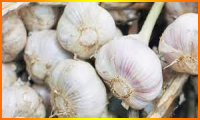
Riyawan garlic from Madhya Pradesh receives GI tag
In Madhya Pradesh, Riyawan garlic, renowned for its distinctive bold flavors and higher oil content, has been granted the Geographical Indication (GI) tag as of March 2. This recognition marks the second GI tag for the region's agricultural produce. The initiative, led by the Riyawan Farm Fresh Producer Company, began in January 2022, culminating in this significant achievement. Cultivated in the Riyawan village of Ratlam district, this variety stands out for its robust flavor, pungent taste, and medicinal properties, making it a preferred choice for culinary uses such as pickles and chutneys.
The successful acquisition of the GI tag was propelled by the efforts of MLA Rajendra Pandey, with support from the Department of Horticulture and Food Processing. Riyawan garlic, characterized by 5-6 cloves per bulb, not only enhances the taste of dishes but also boasts long-term storage capabilities. Its cultivation spans approximately 200 hectares in Riyawan and extends to around 1300 hectares in neighboring areas, involving over 700 farmers in its production.
Source: freshplaza.com

Empowering Agro & Food Processing MSMEs: MoFPI Hosts Millet Expo in Bhubaneswar
The Union Ministry's event in Bhubaneswar spotlights millets and MSME empowerment in the agro sector, showcasing over 250 MSMEs and fostering economic growth.
In a significant move to bolster the agro and food processing sectors, the Union Ministry of Food Processing Industry (MoFPI) organized a groundbreaking exhibition and conference on millets and food processing in Bhubaneswar. The event, managed by the Knowledge Chamber of Commerce and Industry, witnessed participation from over 250 MSMEs, showcasing the government's commitment to nurturing small and medium enterprises in this domain.
Spotlight on Millets and MSME Empowerment
The exhibition cum conference, inaugurated by Union MoFPI secretary Anita Praveen alongside Odisha MSME secretary Saswat Mishra and Knowledge Chamber of Commerce & Industry director Dr. Amit Joshi, served as a platform for more than 20 companies, including micro food processing enterprises, self-help groups, farmer producer organizations, and producer cooperatives. These entities displayed a variety of products, highlighting the innovation and entrepreneurial spirit within the sector.
Government Schemes and Financial Assistance
Anita Praveen emphasized the array of government schemes available to support businesses in the agro and food processing sector. Financial assistance from banks such as SIDBI and NABARD, training at District Industries Centre, and market knowledge from PMFME DRP's are among the key supports offered. She underscored the importance of quality and purity in product manufacturing to ensure effective marketing and transform farmers into entrepreneurs.
Future Prospects and Sector Growth
The initiative underscores the potential of the agro and food processing sector as a cornerstone of economic development and sustainability. With the government's focus on millets and other key areas within the industry, India's food processing sector is poised for substantial growth. The emphasis on innovation, infrastructure development, and collaboration, as highlighted in the referenced article, is crucial for tapping into the full potential of the industry.
This conference not only served as an educational platform but also as a testament to the collaborative efforts between the government and the private sector in fostering a conducive environment for the growth of MSMEs in the agro and food processing industry. The spotlight on millets, in particular, represents a strategic move towards embracing sustainable and nutritious food options, paving the way for a healthier future.
Source: bnnbreaking.com

Danish speaker hopeful of early India- European Union FTA conclusion; hails India-Denmark ties
Visiting Danish Parliament Speaker Soren Gade has expressed hope for an early conclusion of the India-EU Free Trade Agreement (FTA) negotiations.
The EU and India had first launched negotiations for an FTA in 2007, but talks were suspended in 2013. Discussions resumed on June 17, 2022.
'When I was here just after the COVID and met the minister of trade, we discussed this (FTA) because I was representing the European Parliament. I and your minister were optimistic. But after the CBAM (Carbon Border Adjustment Mechanism), non-trade issues have come up in the Free Trade Agreement discussions and it has made it all more difficult,' the Danish speaker said while speaking to ANI on Monday
'India, of course, is a little sceptical on those two issues. After the election and after India has made an agreement with FTA countries, hopefully, there can be a restart of the FTA with Europe. Europe needs India and hopefully, India feels like it needs Europe too,' he said.
Speaking further about the India-Denmark relations, Gade said that despite being a smaller country (60 lakh population) and smaller economy, being considered as friends is 'something special.'
'I'm honoured that India also pays attention to a small country like Denmark. We have had 75 years of friendship and may it continue in decades to come. In a few years, India will be an even bigger economy than it is today, hopefully, we can still be friends. Today India is number five in the world economically, and in one, two, three years, it will be number three... It is something special that we are still considered as friends and I can still, as a representative from a small country, see ministers in India and that's an honour for me and my colleagues from the Danish Parliament,' said the speaker.
Gade went on to underscore the importance of New Delhi and Copenhagen partnership that is needed to take the journey forward.
'Even though I'm from a very small country, we can do a lot on the green deal together. We have to transfer technology to India because we made a lot of mistakes in the past and we will not repeat them in the future... India has a right to be a developed country. On this journey, a lot of technology is needed, especially to reduce climate change. And that is the reason why we are here also to encourage this green partnership', he said.
Lauding India as a democracy, the speaker highlighted further how the two countries are easier to get closer.
'We share values on democracy, freedom of speech and rule of law. That is the reason why not only India and Denmark, but India and the European Union should have closer ties because it's much easier to be friends with countries where you have the same values', said Gade.
'In the world right now, you have wars going on, you have non-democracies trying to say what's right or wrong, then those countries with the same values, as we have, should stick together. Because fewer people in the world today are living in a democratic country than it was 20 years ago', he added.
Gade during his India visit met National President of the Bharatiya Janata Party (BJP), JP Nadda.
The official account of BJP National President JP Nadda shared on X (formerly Twitter), 'Today, BJP National President Shri @JPNadda ji welcomed a Danish delegation led by Speaker Mr. Soren Gade, accompanied by deputy speakers and Amb @svane_freddy. The discussions revolved around India's impending elections, the BJP organization, and the various initiatives of the Modi government.'
Danish Ambassador Freddy Svane also reflected on the discussions, tweeting, 'Engaging and insightful discussion between Party President Nadda and the Speaker of the Danish Parliament, Soeren Gade, along with the deputy speakers.'
Speaker during his visit also met with Minister of Commerce and Industry, Piyush Goyal.
'Discussions focused on the progress of the India-EU Free Trade Agreement (FTA) & new avenues to further strengthen the economic ties between the two countries', said a tweet.
India and Denmark established diplomatic relations in September 1949. Bilateral relations were elevated to the level of 'Green Strategic Partnership' during the Virtual Summit held on September 28, 2020 between Prime Minister Narendra Modi and Prime Minister of Denmark Mette Frederiksen.
The current development of renewed India-Denmark relations has been guided by the 'Green Strategic Partnership'. (ANI)
Source: aninews.in
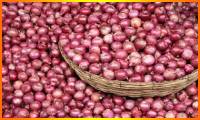
India permits 64,400 tonnes of onion exports to UAE, Bangladesh
The government has permitted exports of 64,400 tonnes of onion to the UAE and Bangladesh through the National Cooperative Exports Ltd (NCEL), according to notifications of the commerce ministry. While export of 50,000 tonnes of onion is permitted to Bangladesh, shipments of 14,400 tonnes were allowed to the UAE.
'Export of 14,400 tonnes of onions, with a quantity ceiling of 3,600 MT (metric tonnes) quarterly, to UAE through NCEL is notified,' the directorate general of foreign trade (DGFT) said in a notification.
DGFT is an arm of the commerce ministry, which deals with norms related to imports and exports.
For exports to Bangladesh, it said that the modalities for the exports will be worked out by the NCEL in consultation with the department of consumer affairs.
Though onion exports are banned, the government allows specified quantities to friendly nations.
The exports are allowed on the basis of permission granted by the government to other countries based on their request.
On December 8 last year, the government banned exports of onion till March 31 this year with a view to increase domestic availability and to keep prices in check.
Earlier, the Centre in October 2023 had decided to step up the sale of buffer onion stock at a subsidised rate of Rs 25 per kg in retail markets in order to provide relief to consumers.
To control prices, the government has earlier taken several steps. It had imposed a minimum export price (MEP) of USD 800 per tonne on onion exports on October 28 till December 31, 2023.
In August, India had imposed a 40 per cent export duty on onions up to December 31, 2023.
Between April 1, 2023 and August 4, 2023 this fiscal, 9.75 lakh tonnes of onions have been exported from the country. The top three importing countries in value terms are Bangladesh, Malaysia and the UAE.
Onion is a politically-sensitive commodity.
NCEL is a multi-state cooperative society. It is jointly promoted by some of the leading cooperative societies in the country, namely, Gujarat Cooperative Milk Marketing Federation (GCMMF), popularly known as AMUL; Indian Farmers Fertilizer Cooperative Ltd (IFFCO); Krishak Bharati Cooperative Ltd (KRIBHCO); and National Agricultural Cooperative Marketing Federation of India Ltd (NAFED).
Source: economictimes.indiatimes.com
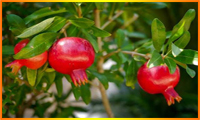
US to savour Maharashtra's 'Sangola Pomegranates', courtesy APEDA
In a significant achievement, the Agriculture Processed Food Products Export Development Authority (APEDA) has facilitated a maiden commercial shipment of Maharashtra pomegranates to the US, an official said here on Friday.
The pomegranates were sourced from Anarnet registered farmers of Sangola in Solapur district, and the first consignment went by the sea route to the Big Apple through the APEDA recognised Inl Farms and the Maharashtra State Agricultural Marketing Board in Navi Mumbai.
APEDA Chairman Abhishek Dev and Ministry of Commerce & Industry Additional Secretary Rajesh Aggarwal flagged off the first shipment comprising 12.6 tonnes of pomegranate in 4,200 boxes, with officials of the US Consulate and others present, and hailed by Union Minister Piyush Goyal.
Significantly, for this export order, the farmers received a premium that is 20 per cent higher compared to other export markets and 35 per cent more than the domestic markets.
An important agri-produce of India, the rich history associated with the pomegranate fruit (known as 'Anaar' locally) and its nutrition value plus health benefits contribute to its huge demand. India produces some of the best pomegranate varieties in terms of quality, soft fleshy seeds, low acidity and an attractive colour.
The 'Bhagwa Pomegranate' is considered among the best varieties globally, and in the past decade, India has seen an increase in the production as well as the cultivation area of the fruit, besides a hike in exports.
In the world pomegranate market, India has a distinct advantage of being able to supply it round-the-year with trained expert farmers cultivating quality fruits.
With production growing healthily at around 20-25 per cent, the major pomegranate growing states are Maharashtra with 50 per cent of the total share, and the rest contributed by Gujarat, Karnataka, Rajasthan and Andhra Pradesh.
In the past, APEDA has facilitated pomegranate exports worth over $58.36 million (2022-2023) to Bahrain, Bangladesh, EU countries, Nepal, The Netherlands, Saudi Arabia, Oman, Sri Lanka, Thailand, the UAE and the UK.
With the consignment to the US, India not only ranks among the largest pomegranate producing countries in the world but also aims to be one of the top exporters of the luscious fruit.
Source: daijiworld.com

We have been able to protect India s interests at WTO: Piyush Goyal.
Commerce and industry minister Piyush Goyal has termed as 'good' the outcome of the WTO’s 13th ministerial conference even though it ended without a decision on India’s key interests of agriculture and fisheries. Goyal said he was going back 'fully satisfied' as the objectives with which he came to Abu Dhabi were largely met. Edited excerpts of an interview with ET:
Are you satisfied with the outcome?
It is a good outcome and we are completely satisfied. Progress was made on several contentious issues and India continues to retain full policy space for the benefit of our farmers and fishermen. We have been able to protect India’s interests.
What were the problematic issues in agriculture and fisheries?
There were no problematic issues in agriculture as we have a peace clause on public stockholding and our procurement of grains for distribution to the poor continues uninterrupted and without hindrance.
On fisheries, we found several ambiguities on the proposals that were on the table, more particularly some of the subsidies that certain countries give were sought to be excluded, definitions were not satisfactory and several areas where deeper consultations and greater degree of flexibility is required to ensure a fair and balanced agreement were not possible in such a short period of time. By and large the objectives with which we had come to Abu Dhabi are largely met and we go back fully satisfied.
Are there any concerns on the ecommerce moratorium getting extended?
We are not necessarily opposed to it fully. We were seeking that they should have discussed in the intervening period between MC12 and MC13 the scope of ecommerce moratorium, areas to be covered and excluded, and study its impact on different economies.
Since the process has not yet been completed, we believe that it is in the best interest that we continue this ecommerce moratorium and ensure that if at all it is found to be necessary, there will be discussions at Geneva to see if there are any areas particularly which need to be covered under the moratorium, otherwise as the decision stands, it will expire at the end of two years or the next ministerial, whichever is earlier.
With the world getting fragmented, is the WTO relevant?
I think it is. The WTO is an important organisation. It does carry the weight of 166 countries and creates equitable rules of trade and gives an opportunity to every country to raise areas of their interests or concerns. Of course, it can work much better and deliver much more.
Is it time for India to have more offensive interests?
As of now, we do not have any offensive interest per se. Our largest interest was to protect our farmers and our fishermen, both of which we are strongly doing, and that is our offensive interest, which we are actively pursuing. We have always stood for least developed countries and developing countries.
Some people have lost interest in the WTO because of the non-functional dispute settlement body…
It is important to get the appellate body back so that the disputes can be escalated to the WTO for resolution. Sadly, without an appellate body, no dispute can be taken to its completion and to that extent people do feel now it is not worth the while to have. The progress has been relatively slow and certain countries are not yet ready to accept the two-tier dispute settlement mechanism that is the hallmark of the WTO.
With India supporting a joint statement initiative on domestic services, does it mean we are gradually shifting our stance on JSIs?
We continue to believe that JSIs are not part of the WTO process and we do not recognise them. This hasn’t come in through the JSI process. It has come in through countries voluntarily deciding whether to join or not, and that’s part of the process approved in WTO.
Non-trade issues have been making their way into the WTO and it doesn’t seem to stop…
We have been successful in making sure that non-trade issues aren't brought into the WTO. For example, an effort was made to begin investment facilitation. Since investment is not part of the WTO, we did not allow it to come in. Similarly, an effort was made to bring industrial policy discussions, again an area that India believes is not a part of the original Marrakesh framework. India has successfully made sure that no non-trade issue is brought before the WTO.
India also tried to reduce the cost of cross-border remittances in MC13. How will we take it forward?
That was India's offer to the world. A large number of countries, particularly less developed and developing countries, are required to use channels for remittances, which makes it extremely expensive. I am given to understand that remittances on an average can cost 4-9% of the transaction value, and India has developed the UPI and a very robust fintech system, which can help bring this down to less than one-eighth or one-fifth of the current amount.
Source: economictimes.indiatimes.com