APEDA Registers 1000+ FPO/FPC Members to Boost Agri Exports.
The Agricultural and Processed Food Products Export Development Authority (APEDA), under the Ministry of Commerce & Industry, Government of India, is actively driving initiatives to enhance the contribution and share of Farmer Producer Organizations (FPOs) / Farmer Producer Companies (FPCs) in the exports of Agri and processed food products and has till date registered more than 1000 FPO/FPC’s as APEDA Members.
APEDA UAE Export Initiative
With a dual aim to unlock export opportunities for agricultural and processed food products from the region and to enhance the contribution of FPO’s/FPC’s in the Agri and Processed food products, APEDA organized an exposure visit for Farmer Producer Organizations (FPOs) to the UAE. The delegation comprised 47 members, representing FPOs from UP, Bihar, and Uttarakhand.
During the visit, FPO's visited the Al-Aweer fruit and vegetable market to explore the possibilities and opportunities for Indian agri products specially grown in UP, Bihar and Uttarakhand. Further the delegation of FPOs visited LuLu Hypermarket to understand the requirements and pattern of purchase at Dubai market. During the visit, the FPO representatives also met with a good number of buyers and pitched their produce for export. As an immediate outcome, an FPO among the delegation finalized an order of fresh turmeric which was also flagged off to the UAE market. The other FPO's have also been able to get promising leads and are currently in negotiation with the buyers. Thus more orders are expected in the near future.
To evaluate the benefits of the visit and disseminate its outcomes among farmers, APEDA conducted a capacity-building and experience-sharing program in Varanasi on 5th March 2024. In the program, the representatives of FPOs who undertook the visit to the UAE, shared their experiences and learnings of the visit among other member farmers. They briefed them about the requirements/regulations to be followed for exporting agri commodities to the UAE market. They also briefly highlighted the potential products which have a significant untapped demand in the UAE market namely Mango, Green Chilly, Okra etc. which could be tapped by the farmers of the region. They also encouraged the farmers to implement good Agricultural practices (GAP), while farming so as to enable their produce to meet the regulatory requirements of the Importing countries.
Notably, the event also marked the flag-off of a consignment of fresh turmeric to Sharjah, UAE, showcasing the region's potential for export. Additionally, fresh fruits were exported from Varanasi's LBSI Airport to the international market, highlighting the region's expanding export capabilities.
Operating through its regional wing in Varanasi, and taking forward the above vision, APEDA has identified the Purvanchal region as a model Agri Export Hub, recognizing its significance in agricultural trade and has enrolled more than 120 FPO’s from the region as its members. Special focus is being given towards enrolment of FPO’s/FPO’s dealing in ODOP/GI products, those which are Women & SC/ST led and those from the NER/Himalayan States and landlocked areas.Taking this theme forward, APEDA officers along with departmental subject experts from the GOI and the State Government sensitized the farmers and other FPOs with the requirements of agri-export supply chain.
Divisional Commissioner, Varanasi Division, Government of Uttar Pradesh, Shri Kaushal Raj Sharma praised APEDA's significant efforts in the Purvanchal region, emphasizing the exposure visit for FPOs as an invaluable opportunity facilitated by APEDA. He highlighted APEDA's role in guiding FPOs towards meeting agricultural export requirements and international standards. He also noted the remarkable progress in agricultural exports, citing an increase from 151 MT in FY 2021-22 to 702 MT in FY 2023-24 (April to December), reflecting the positive outcomes of APEDA's initiatives since 2020.
Chairman APEDA, Shri Abhishek Dev, emphasized the significance of exposure visits in exploring agricultural export opportunities, underlining their potential to boost national foreign exchange earnings and improve farmer incomes. He remarked on the keen interest shown by FPOs in agricultural export, recognizing it as a positive indicator of the region's capacity to meet international market demands. He highlighted Uttar Pradesh's rise as the third-largest agricultural exporting state in India (APEDA Basket), attributing this achievement to the region's deep potential and APEDA’s sustained efforts in enhancing the contribution of land-locked areas in exports.
APEDA's interventions are positively transforming the agri-export landscape in the Purvanchal region, with significant advancements in infrastructure, market linkages, and export promotion activities. This has resulted in growth in agri-exports, positioning UP as the third-largest agri- exporting state in the country (APEDA Basket).
Through targeted capacity-building programs and international buyer-seller meets, APEDA has empowered FPOs and exporters, enabling them to tap into global markets and showcase the region's diverse agricultural products. The success stories of agricultural exports, ranging from fresh fruits and vegetables to rice, demonstrate the region's ability to meet global demand and establish itself as a key player in the agricultural export market.
Source: smestreet.in

APEDA facilitates India s first commercial trial shipment of pomegranates to US.
On February 28, 2024, India successfully flagged off its first commercial trial shipment of pomegranates to US via sea under the aegis of Agricultural Processed Food Products Export Development Authority (APEDA) by InI Farms from IFC facility, MSAMB, Vashi (Navi Mumbai). Rajesh Aggarwal, additional secretary, Ministry of Commerce & Industry and Abhishek Dev, chairman, APEDA flagged off the pomegranate shipment comprising of 4200 boxes (12.6 tons).
The ceremony was graced by dignitaries from the Maharashtra State Agricultural Marketing Board (MSAMB), Regional Plant Quarantine Station (RPQS- MoA&FW), State Agriculture Department (Government of Maharashtra), NRC Pomegranate, US Consulate and InI Farms.
Last year APEDA successfully carried out an air shipment of Pomegranates with irradiation treatmentand static trial in association with ICAR-NRC Pomegranate Solapur as technical partner. Based on the successful result of the static trial, APEDA aimed for a successful sign off for this consignment via sea opening trade relations to potential markets for Indian Pomegranates. India, one of the largest Producers of Pomegranates in the World and is also now aiming to be amongst the top Pomegranate exporting countries in the World. India is a key player growing in the EU, Middle East and Asian Markets.
Source: fnbnews.com

India poised to become largest member of World Trade Centers Association (WTCA): John E. Drew, Chairman of the WTCA.
India is poised to become the largest member of the World Trade Centers Association (WTCA), potentially surpassing China within five years, according to John E. Drew, Chairman of the WTCA, an international trade organisation that connects over 300 World Trade Centres in nearly 100 countries. In a chat with ET’s Vinod Mahanta, Drew talks about the brand’s India plans, rise of India in the global economy, doing business in the era of deglobalisation and dealing with disruptive models like WeWork. Edited excerpts:
How has the World Trade Center (WTC) brand been faring in India, and what are the plans for its expansion and development in the country?
The brand presence in India has been established since nearly the inception of the World Trade Center Association group in Mumbai. Memberships date back to the 1980s, indicating a longstanding and robust relationship. Numerous meetings, primarily sponsored by Mumbai, have taken place, including general assembly meetings and regional forums. This deep connection with India has facilitated interactions with other Indian groups holding World Trade Center licences.
It's worth noting that the association is not new; it has a rich history of fostering economic growth and prosperity through collaboration with Indian developers interested in establishing a distinct brand identity. These developers are increasingly keen on assuming the dual roles of developer and trade services provider. The association's role extends to working with such entities to encourage economic development and forge connections between its members worldwide.
The association positions itself as a trusted advisor, facilitating business discussions and providing background checks on potential partners to ensure credibility and reliability. This aspect is crucial in international business dealings, where making connections is relatively easy, but verifying the authenticity of partners can be challenging.
Moreover, the association's brand carries significant value and recognition in India and globally, enhancing leasing prospects and potentially securing better rates for affiliated buildings. While assuming the responsibility of upholding the brand requires effort, the benefits, both locally and internationally, are substantial.
WTCA has about 40 licensees in India, covering more than 30 Indian cities. Did WTCA have a different strategy for India?
It's quite surprising how several years ago, there was a notable occurrence where a particular company sought multiple sites and was granted them. They operated under a different concept known as a "spoke-and-wheel" model. This approach involved centralised services distributed across a network of buildings, with the services being concentrated in one or two primary trade centers within each city. This experimental approach diverges from the traditional expectation of services being integrated directly within each building by an associated team.
This model has its merits and is being explored, though typically we anticipate that the services will be housed within the building itself, providing a more direct connection. However, this shift in approach may also reflect broader economic dynamics, including the fluctuations in the global and Indian economies. As a developer myself, I understand the importance of market conditions and rates in influencing development decisions.
The development of these trade centers is a focal point for us, and we are committed to expediting their progress. We aim to see every city holding a World Trade Center license actively engaged. Therefore, a significant portion of our staff's efforts are dedicated to activating cities that are still in the developmental phase. While these cities are already members and participate in our meetings, we strive for them to progress further and establish operational capabilities in each city where they have a presence.
What is the selection criteria WTCA uses to select members?
We have a rigorous screening process for potential members, starting with an initial briefing. Subsequently, we guide them through a comprehensive background program to understand their business and expansion plans. Emphasising the importance of securing development sites, we ensure members have detailed plans in place. Our goal is to help them navigate potential challenges and understand market dynamics. We offer guidance on real estate development and enforce timely activation of trade services. Additionally, we provide access to experienced real estate advisors within the association to support strategic planning. This hands-on approach has significantly accelerated our association's growth.
How does the current trend towards deglobalisation, alongside risky geopolitical situations and businesses realigning their supply chains and operations, impact the growth and trajectory of the WTCA brand and business?
It truly does affect our business. In some respects, it's advantageous for us to pivot. Being able to provide consultation services to our members adds value. The intricacies of navigating a complex world are even more pronounced now. Consider the trade service aspect; issues like new tariffs and regulatory controls, once thought to be fading, are resurfacing. This complexity poses challenges for small and midsize businesses. Our association fills the gap by offering practical advice and support. For instance, our team in Ireland assists smaller companies in understanding logistics for international trade. It's essential to balance positivity with factual information. These qualifications reinforce the value of our association. We must address the ongoing changes and offer practical guidance. While we're not solely focused on economics, our hands-on approach to business allows us to speak from the perspective of our members and provide solutions to their challenges in international trade.
So if I am a member in India and I want to understand the business situation in Russia, Europe, or China, how would it work?
In a two-step process, let's say a licensee in Mumbai or Bangalore encounters an issue and wants to delve deeper into understanding Russia or any other country. Here's how we can assist:Firstly, we have resources available at our central office in New York, including our resource center, which we can immediately make accessible to you.
Secondly, we can directly connect you with the World Trade Center in Moscow. We'll share your questions with them, enabling you to communicate directly and obtain answers. They are well-positioned to facilitate this process and provide accurate insights. If they encounter difficulty in addressing your queries, they can redirect you to the appropriate resources.
We see it as a shared responsibility among members to support one another in navigating such challenges. This collaborative approach underscores our commitment to facilitating knowledge exchange and problem-solving. The close ties between the World Trade Center team in Moscow and the government ensure reliable information. Ultimately, our goal is to connect you with the most suitable source for accurate and timely answers.
From your perspective as a business leader with a global outlook, how do you perceive the rise of India's economy over the past few years, considering it is now the fifth-largest economy?
I would say, particularly in the last 10 years, India's presence on the global stage has become increasingly pronounced. While India's growth trajectory has been ongoing, its recognition and active participation in major economic discussions alongside China, the US, Russia, and the EU signify its emergence as a significant player in the global economy. The influx of Indian students studying at universities in the US has notably increased, contributing to India's visibility in international settings. This trend, which was previously unaffordable for many Indian families, has become more accessible over the past two decades. Additionally, the rise of Indian entrepreneurs establishing successful companies in the US, particularly in tech hubs like California and Massachusetts, has further solidified India's influence in global business. This trend is expected to continue, paralleling the trajectory seen with Chinese entrepreneurship.
Do you expect Indo-US trade to increase, given that more US businesses are outsourcing work to Indian global capability centers and setting up more manufacturing units in India?
It's undoubtedly a yes, but I believe the trajectory will be swifter and more intentional this time around. Unlike the scenario with China, where manufacturing was primarily driven by cost considerations, the situation with India is marked by a significant emphasis on intellectual property. India's strength lies not just in its lower costs but also in its intellectual capabilities and educational standards, enabling it to tackle more complex projects adeptly. However, a critical aspect that needs attention is infrastructure development. Outside investment, like ours, must play a role in building necessary infrastructure, such as office buildings and factories, to support the growing economy. This is where external support remains crucial in propelling India's business landscape forward.
China has a large number of WTCAs across cities. Is the China business the largest outside of the US?
It has the largest membership. It’s fascinating to note how our membership, particularly in China, has evolved over time. Initially, CCPIT (China Council for the Promotion of International Trade) played a significant role in sponsoring and overseeing the development of World Trade Centers in China.
Then individual developers came in, often with outside investment.
Lately, there has been a slowdown in financing from Chinese banks for such projects.
Interestingly, our Chinese board members, especially those who operate independently, have found a unique niche within this evolving landscape. They utilise the World Trade Center platform to offer services that complement those provided by the government, catering to individual companies and sponsoring localised events to stimulate business growth. Unlike the CCPIT-led approach, which focused on large-scale exhibitions and conferences, these independent members organise smaller, more targeted events that cater to specific business needs.
While there have been some challenges, such as difficulties faced by members heavily reliant on Chinese bank financing, the overall trajectory in China remains dynamic. However, it's worth noting that India will surpass China in terms of membership numbers in the next five years.
The global economy is showing mixed signals, with the EU and US slowing down and India growing at 6+ percent. What’s your take on the state of the global economy?
I find it very interesting. In the United States, efforts to temper the economy have had some effect, but not as much as anticipated. What we are beginning to see is that interest rates have slowed down housing development, Covid-19 slowed down office development. The US is winding up with surplus office space because of the work-from-home trend.
There's a gradual push to bring employees back for training and socialisation. However, this process is slower than expected. That's affecting us. Spending is down a bit, but it's not showing because prices are up. Although spending is slightly down, rising prices are masking it. Additionally, on the real estate development side, supply chain issues persist. This administration tried to bring manufacturing back to the US, which requires rebuilding infrastructure and addressing concerns about job stability. Addressing these psychological and infrastructure challenges will take time but is feasible.
Looking globally, India shows significant growth potential, but there's pressure to create more opportunities for people and create better jobs. Europe faces demographic challenges with declining native populations and integration issues with immigrants, which could impede progress for the next decade or so. Latin America, Africa, and Southeast Asia are poised for growth, while China grapples with population decline and migration issues. The US needs to address its migration policy to facilitate safe and easier entry for immigrants. Local politics may delay progress, but these issues must be tackled head-on.
Do you see WTCA also adopting a WeWork kind of model sometime?
The WeWork situation is something worth considering in certain regions of the world. For instance, in the United States, there has been a significant downturn in WeWork's fortunes. Upon closer examination, it appears that the company, along with another major player in the market, was cautious about not committing to leases, which led to complications when they couldn't fulfil their lease obligations during the slowdown. This was more of a legal and financial issue than a lack of demand for such shared workspace concepts. In parts of India, however, I believe the WeWork model could potentially thrive and even expand. I think it could work well in North Africa.
What strategies are being employed to identify and connect Indian businesses with those from other member countries within the Global Development Forum?
Essentially, with the Global Development Forum (GDF), our focus is primarily on the business aspect. We're identifying Indian businesses early on and endeavouring to connect them with businesses from our other member countries for potential meetings. Coordinating these meetings involves understanding the interests and preferences of participants. This matchmaking process is a crucial component of our meetings and will increasingly shape how we conduct them in the future. Our team in Bengaluru is doing an excellent job of collaborating with chambers and other organisations to identify Indian companies. Similarly, we aim to replicate this effort in other regions to ensure a diverse representation of companies at our events. This aspect of the GDF is pivotal and warrants attention, as it will play a significant role in our future endeavours.
Source: economictimes.indiatimes.com

Final Estimates of 2022-23 and First Advance Estimates of 2023-24 of Area and Production of Horticultural Crops.
The Department of Agriculture and Farmers’ Welfare has released the Final Estimates of 2022-23 and First Advance Estimates of 2023-24 of Area and Production of various Horticultural Crops compiled on the basis of information received from States/ UTs and other governmental source agencies.
| Total Horticulture | 2021-22 | 2022-23 (Final Estimates) | 2023-2024 |
| Area (in Million Ha) | 28.04 | 28.44 | 28.77 |
| Production (in Million Tonne) | 347.18 | 355.48 | 355.25 |
Highlights of 2022-23 (Final Estimates)
The horticulture production in the country in 2022-23 (Final Estimates) is estimated to be about 355.48 Million Tonnes, an increase of about 8.30 Million Tonnes (2.39%) over 2021-22. An increase in area of 1.41% or 0.40 Million Ha is observed in 2022-23 (Final Estimates) over 2021-22.
The Fruit production is estimated to be 110.21 Million Tonnes in 2022-23 (Final Estimates), mainly due to increases in production of Apple, Banana, Grapes, Mango and Watermelon.
Production of vegetables has increased from 209.14 Million Tonnes in 2021-22 to 212.55 Million Tonnes in 2022-23 (Final Estimates). This is mainly contributed by increase registered in all vegetables except Chillies (Green), Onion, Radish, Tapioca and Tomato.
Onion: Production in 2022-23 (Final Estimates) is estimated to be 302.08 Lakh Tonne compared to 316.87 Lakh Tonne in 2021-22.
Potato: Production in 2022-23 (Final Estimates) is estimated to be around 601.42 Lakh Tonne, compared to 561.76 Lakh Tonne estimated for 2021-22.
Tomato: Production in 2022-23 (Final Estimates) is estimated to be around 204.25 Lakh Tonne, compared to 206.94 Lakh Tonne estimated for 2021-22.
Highlights of 2023-24 (First Advance Estimates)
The horticulture production in the country in 2023-24 (First Advance Estimates) is estimated to be about 355.25 Million Tonnes. An increase in area of 1.15% or 3.27 Lakh Ha is observed in 2023-24 (First Advance Estimates) over 2022-23 (Final Estimates)
The production of Fruits expected to reach 112.08 Million Tonnes, mainly due to increases in production of Banana, Mandarin and Mango.
Production of Vegetables is envisaged to be around 209.39 Million Tonnes. Increase is expected in production of Cabbage, Cauliflower, Pumpkin, Tapioca, Tomato and Other Vegetables.
Tomato: Production of Tomato is expected to be around 208.19 Lakh Tonne compared to around 204.25 Lakh Tonne last year, an increase by 1.93% Lakh Tonne.
Onion: Production of Onion in 2023-24 (First Advance Estimates) is expected to be around 254.73 Lakh Tonne compared to around 302.08 Lakh Tonne last year due to decrease of 34.31Lakh Tonne in Maharashtra, 9.95 Lakh Tonne in Karnataka, 3.54 Lakh Tonne in Andhra Pradesh and 3.12 Lakh Tonne in Rajasthan.
Potato: Production of Potato in 2023-24 (First Advance Estimates) is expected to be around 589.94 Lakh Tonne compared to around 601.42 Lakh Tonne last year, attributed to decrease in West Bengal over the previous year.
Source: pib.gov.in

ICAR-IIHR chillies variety Arka Nihira suitable for processing; fights off pests.
ICAR-Indian Institute of Horticulture Research has developed a variety of chilli, Arka Nihira, which is highly suitable for processing and also can resist the deadly chilli curl leaf disease and Phytophthora root rot.
Even as chilli is a good source of vitamin C, besides, its pungent and medicinal uses, it is vulnerable to various fungal, bacterial and viral diseases which hamper its production and productivity.
The country is the largest producer and consumer of chillies. Andhra Pradesh is the leading producer of spices in the world with around 36% share in global chilli production. In India, the state is the largest producer of chilli with a 57% share in total production. It also accounts for exports of dry chillies globally, which is contributing to the total exports of spices. This generates a foreign exchange earning of a whopping Rs 8,429.92 crore as per the Spice Board data. Also, other leading chilli-growing districts in India are in Tamil Nadu, Karnataka and Maharashtra covering Dharwad, Nagpur, Prakasam, Khammam, Guntur and Warangal.
Chilli is considered as an indispensable condiment consumed in Indian diet because of its nutritional properties. It has to be processed to increase the storage life, because it is highly perishable. Value-added products made of chilli like dehydrated chilli, powder, paste, pickle and sauce obtain higher returns. Real return in chilli comes only from processed products. This provides consumers with an incentive to make purchase. This is where the National Institute of Food Technology, Entrepreneurship and Management under the Ministry of Food Processing Industries encourages chilli processed products.
Going by the unpredictable climate conditions, deadly chilli curl leaf disease and Phytophthora rot affect the crop and are seen to be serious threats.
According to Dr Madhavi Reddy, Principal Scientist, Division of Vegetable Crops, ICAR-IIHR, the salient features of Arka Nihira are that it is suitable for dual thick market segment. It has high yield with length. Its ark green turns into red on maturity.
Phytophthora rot is caused by Phytophthora capsici Leonian, which is a fungal soil-borne destructive pathogen that results in root rot. It is estimated to cause around US$100 million in global losses. Also whiteflies and transmitting begomo viruses have also seen to be devastating in chilli cultivation. Now, going by the way such diseases affect chilli plant loss, farmers have refrained from cultivating this crop.
Source: fnbnews.com
India-US trade likely to top $200 billion this year: Ambassador Garcetti.
The India-United States trade is likely to surpass the previous record of $200 billion this year and huge opportunities exist for the two countries to expand cooperation in defence, space besides critical emerging technologies like semiconductors and artificial intelligence, said American Ambassador Eric Garcetti on Thursday.
The US is proud to be India's No. 1 trading partner with two-way trade reaching nearly $200 billion last year, Garcetti told reporters in Indore. 'I think this year we will break the (previous) record of $200 billion in bilateral trade (between India and the US),' he said.
The envoy asserted that US President Joe Biden in the past had emphasized that trade between India and America should rise to the level of $500 billion given the potential for expansion.
Efforts are on achieve this goal, said the Ambassador who took charge of his new diplomatic assignment last year. Garcetti said huge opportunities exist to further grow Indo-US trade, and for bilateral cooperation in areas such as defence, agriculture, space, climate, energy and health, as well as critical emerging technologies like semiconductors, telecommunications, AI and quantum computing.
He noted transport-related technologies, especially electric vehicles, could be perhaps the biggest area of growth in bilateral trade. 'We would like to see India manufacturing electric vehicles in greater numbers. India can export these vehicles to the US,' Garcetti said.
Meanwhile, on the eve of International Women's Day, the US Ambassador met Indore Mayor Pushyamitra Bhargava and enquired about 'pink buses' run by female drivers for women commuters in the city.
He interacted with women drivers of these electric buses and listened to their experiences in the profession.
The US ambassador said women drivers of the 'pink buses' inspire everyone. 'No country or city in the world can succeed if women don't feel safe and empowered,' Garcetti maintained.
Source: business-standard.com
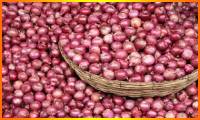
Govt permits 4,750 tonnes of onion exports to Bhutan, Bahrain, Mauritius.
The government on Wednesday permitted exports of 4,750 tonnes of onion to Bhutan, Bahrain, and Mauritius through the National Cooperative Exports Ltd (NCEL).
The Directorate General of Foreign Trade (DGFT) in a notification said that while export of 550 tonnes of onion is permitted to Bhutan; 3,000 tonnes to Bahrain, and 1,200 tonnes to Mauritius.
'Exports of onions' to these three countries 'through NCEL is notified,' it said.
Last week, India allowed exports of 64,400 tonnes of onion to the UAE and Bangladesh.
DGFT is an arm of the commerce ministry, which deals with norms related to imports and exports.
Though onion exports are banned, shipments are allowed on the basis of permission granted by the government to other countries based on their request.
On December 8 last year, the government banned exports of onion till March 31 this year with a view to increase domestic availability and to keep prices in check.
To control prices, the government has earlier taken several steps. It had imposed a minimum export price (MEP) of USD 800 per tonne on onion exports on October 28 till December 31, 2023.
In August, India had imposed a 40 per cent export duty on onions up to December 31, 2023.
Between April 1, 2023, and August 4, 2023, this fiscal, 9.75 lakh tonnes of onions have been exported from the country. The top three importing countries in value terms are Bangladesh, Malaysia and the UAE.
Onion is a politically sensitive commodity.
NCEL is a multi-state cooperative society. It is jointly promoted by some of the leading cooperative societies in the country, namely, Gujarat Cooperative Milk Marketing Federation (GCMMF), popularly known as AMUL; Indian Farmers Fertilizer Cooperative Ltd (IFFCO); Krishak Bharati Cooperative Ltd (KRIBHCO); and National Agricultural Cooperative Marketing Federation of India Ltd (NAFED).
Source: business-standard.com
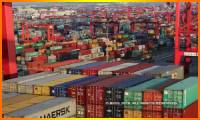
Kazakhstan pushes to increase trade with India via INSTC.
Central Asia's biggest state Kazakhstan is keen to increase trade with India via the International North South Transport Corridor (INSTC).
Kazakhstan’s Prime Minister Olzhas Bektenov travelled to Moscow to attend a meeting on March 4 with the Prime Minister of PM, Mikhail Mishustin.
High on the agenda was INSTC and in particular, the section of railway interlinking Russia, Kazakhstan, Turkmenistan, and Iran. Kazakhstan-Turkmenistan route is the one of the branches of INSTC to connect India with Eurasia.
Russia and Kazakhstan are connected by the longest land border in the world spanning over 7,500 km. Noting that “the most important transit routes in Eurasia run through our countries', the Russian prime minister highlighted the huge potential for cooperation in transport and logistics.
In February, Kazakhstan’s Deputy Minister of Transport, Maksat Kaliakparov reported on plans by the railway administrations of Kazakhstan, Russia, and Turkmenistan to launch a joint venture to improve services and reduce cargo delivery time along the INSTC.
In 2023 the volume of cargo transported via this route amounted to 2.1 million tons; an increase of 4% compared to 2022. By 2027, the transport potential of the entire corridor could increase to between six – 10 million tons per year.
To maintain progress and facilitate transit between the two countries, the Kazakh prime minister stressed the need to speed up work on checkpoints on the Kazakh-Russian border. According to plans, 29 of the 30 checkpoints are due to be modernized by 2027. INSTC will enable Kazakhstan to target markets in India and beyond in ASEAN and Indian Ocean Region.
Kazakhstan is India’s largest trade and investment partner in Central Asia. During Jan-Dec. 2020, bilateral trade is US$ 2.37 bln and during the same period exports from Kazakhstan to India is US$ 1.99 bln and exports from India is US$ 382.9 mln.
Source: economictimes.indiatimes.com

APEDA bolsters Kashi farmers with 16 quintal turmeric export to UAE.
The Agricultural and Processed Food Products Export Development Authority (APEDA), an apex body under the ministry of commerce & industry, organised a capacity-building and experience-sharing programme in Varanasi on Tuesday.
As part of the event, a flag-off ceremony for fresh turmeric took place, marking a significant milestone. For the first time, a consignment of 1,600 kg of turmeric was sent directly from Varanasi to Sharjah, UAE, exported by Banaras Organo Farmer Producer Comp.
Ltd. This achievement came as a result of an order secured during a recent exposure visit to the UAE organised by APEDA.
In the effort to unlock the export potential of agricultural and processed food products from the region, APEDA arranged an exposure visit to Dubai, UAE, from February 26 to March 1. A delegation of 47 members, including 31 representatives from FPOs in Uttar Pradesh, five from Bihar, and one from Uttarakhand, actively participated in the visit.
To evaluate the benefits of the visit and disseminate its message among farmers, APEDA organised the capacity-building and experience-sharing programme, which was attended by the divisional commissioner, Kaushal Raj Sharma, and APEDA chairman Abhishek Dev (virtually). Commissioner Sharma commended APEDA’s efforts in the Purvanchal region, emphasizing that the exposure visit for FPOs was a unique opportunity, facilitated by APEDA’s guidance in meeting agricultural export requirements and international protocols. The region has seen significant growth in agricultural exports, rising from 51 MT in the fiscal year 2021-22 to 702 MT in 2023-24 (April to December), a testament to APEDA’s initiatives since 2020.
APEDA chairman highlighted the importance of exposure visits in exploring agricultural export opportunities, which contribute to national foreign exchange earnings and significant farmer incomes. He noted the keen interest of FPOs in agricultural export as a positive sign for the region, positioning Uttar Pradesh as the third-largest agricultural exporting state in India, following Gujarat and Maharashtra.
India allows export of 64,400 tonnes of onions to UAE, Bangladesh
The government has allowed the export of 64,400 tonnes of onions to the UAE and Bangladesh through NCEL. Despite the ban on onion exports, 14,400 tonnes are permitted to the UAE. India has exported 9.75 lakh tonnes of onions this year, with the top importers being Bangladesh, Malaysia, and the UAE. NCEL is a multi-state cooperative society.
FTA and knowledge sharing with S Korea will boost seafood exports
Woochan Chang emphasizes the importance of stringent standards in maintaining the marine ecosystem. The workshop organized by FAPCCI and ILO highlights South Korea's seafood industry's focus on efficiency, quality, and innovation achieved through cutting-edge technologies and rigorous quality control measures. The Secretary, Dre. N Yuvaraj, stresses the importance of knowledge sharing and collaboration with South Korea.
Electronics exports from Tamil Nadu touch $7.37 billion
Tamil Nadu has emerged as India's top exporter of electronic goods, with exports valued at $7.37 billion, accounting for 32.5% of India's total export of ESDM goods. The state's exports have grown by 37% compared to the previous financial year's $5.37 billion. TRB Rajaa unveiled the Tamil Nadu Semiconductor and Advanced Electronics Policy 2024 to further boost the sector.
Source: timesofindia.indiatimes.com

Shift to natural farming can turn out to be revolutionary change, says ICRIER study.
A shift to natural farming can turn out to be a revolutionary change, policy advocacy group ICRIER (Indian Council for Research on International Economic Relations) said in a report citing instances of Andhra Pradesh where yields ‘seemed’ to have improved. However, to balance the findings, it also warned that 'if the yield and production plummet' the implications for food security can be severe.
In a report titled 'Zero Budget Natural Farming — Implications for Sustainability, Profitability, and Food Security', commissioned by NABARD and released last week, ICRIER said: 'The sheer disparity in the outcomes of the two experiments conducted by CESS-IDSAP and ICAR-IIFSR suggests the importance of long-term experimentation before declaring this as a nationwide agriculture practice. If the yield and production plummet, as the ICAR and IIFSR findings advocate, the implications for food security can be severe.
'Naturally obtained inputs like cow dung, cow urine, leaves, etc. are without any reservation sustainable alternatives to the chemical inputs which have destroyed nature’s inherent ability to rejuvenate the soil. If the yields improve as they seem to have in Andhra Pradesh, then a shift to natural farming can turn out to be a revolutionary change,' the study said.
Financial aid
According to NITI Aayog member Ramesh Chand, natural farming can cover in 25-30 per cent of the total area of 140 million hectares under cultivation as there are several places where there is hardly any use of chemical fertilizers and pesticides. The government has never proposed natural farming to replace current practices in every land, but its emphasis is only in an overall reduction to save soil.
Authored by Sandip Das, Mahima Khurana and Ashok Gulati, the report said farmers be given financial support directly into their bank accounts on per hectare basis and the prices of chemical fertilizers be determined by free play of markets. 'Let farmers choose the crops and farming practices that suit them most. That way, those who want to practice ZBNF will not be discriminated against,' it said.
Currently, chemical fertilizers are excessively subsidised leading to their imbalanced use, and therefore adverse impact on environment. 'Much of this can be reduced/eliminated by creating crop-neutral incentive structures,' it said.
'While organic farming and related practices like natural farming are successful in niche markets where a premium price can compensate for the returns from lower yields, a complete switch to organic approaches can hamper national food production. Resilient supply chain networks for the farm inputs required in natural farming are a prerequisite to transitioning towards natural farming,' the authors concluded.
Source: thehindubusinessline.com