
Albania ready to be India s gateway to Western Balkans: Foreign Minister Igli Hasani.
Albania, a country in the Western Balkans with a rising economy and famous for Mother Teresa, is pitching itself to emerge as India’s gateway to the region where countries are in negotiations to join the European Union (EU), according to Igli Hasani, Minister for Europe and Foreign Affairs of Albania.
Hasani who was on a visit to India to participate in Raisina Dialogue told ET about the immense opportunity to deepen and strengthen the relationship with India with a focus on economy and people to people ties. 'Albania offers Mediterranean culture and with its mountains and seas and affordable tourism infrastructure has emerged as the most attractive European tourist destination,' Hasani said, adding, '50,000 Indians visited Albania last year. A total of 10 million tourists visited Albania in 2023 and the country with a population of three million, this is a big achievement.'
'Albania is at the crossroads between the European Union and the East. Albania is a part of many corridors that go through possible routes of goods that link India with the European Union. With Albania today emerging as one of the fastest growing European economic realities in the last year, we are moving rapidly to foster stronger economic ties with India. Six countries in the region including Albania are in negotiations to join the EU and we are ready to be a gateway for India in the region.'
Albania also provides opportunities for Indian investors in IT, agriculture and manufacturing.
Hasani said 'I’m glad to know the plans of the Indian Government to open a representation in Tirana and we are also planning to open an Embassy very soon in New Delhi, India.'
Honorary Consul General of Albania in India, Dikshu Kukreja said, 'Albanian language traces its roots in Sanskrit and has a strong connection with India. The beauty of the country and peace-loving nature of Albanians go hand-in-hand.'
Albania, which was close to China during the Cold War period does not have a major Chinese economic presence in the country and is not under any debt burden, Hasani pointed out.
Source: economictimes.indiatimes.com
India's trade pacts with UK, Oman, EFTA bloc positive signal of economic integration with world: GTRI.
Successful conclusion of India's proposed trade agreements with the UK, Oman and four European nation bloc EFTA will reflect its commitment to trade liberalisation and economic integration at a time when the whole world is turning protectionist, according to a report. Economic think tank Global Trade Research Initiative (GTRI) said the free trade agreements (FTAs) have become pivotal instruments for India's economic expansion and integration into the world market.
These nations and the bloc are eager to finalize these agreements before the upcoming general elections, GTRI said, adding the talks are on the verge of conclusion.
Signing of these three agreements will take India's FTA tally from 13 to 16.
Number of countries with comprehensive FTAs will go up from 22 to 28. In addition India has six small scope PTAs (preferential trade agreements).
Last pact was signed with Australia in March 2022.
'Everyone wants to do an FTA with India. The main reason for this is India's high import duties, which make it difficult for these countries to access India's large and rapidly growing market,' the report said.
It added that these three pacts with the UK, Oman, and the European Free Trade Association (EFTA) also reflect a shift in India's focus from east to west in terms of preferential trade partnerships.
India's most important FTAs are with countries located in the east of India: ASEAN, Japan, South Korea, and Australia.
It said that in all the new FTAs, India is negotiating many non-trade areas such as sustainable development, digital, IPR, labour, gender, MSME, government procurement, and competition.
'India is reluctantly changing its earlier approach to focus only on traditional market access subjects like merchandise and services trade to also include new issues. Most new issues restrict policy space for domestic regulations by forcing adoption of developed country regulations,' GTRI Founder Ajay Srivastava said.
EFTA members are Iceland, Liechtenstein, Norway, and Switzerland.
He said that the negotiations for the trade pact with EFTA were initiated in January 2008. After 20 rounds of talks, the negotiations are reaching towards conclusion.
India has a large trade deficit with EFTA, especially with Switzerland. In FY'2023, India's imports from EFTA were significantly higher than its exports, leading to a trade deficit of USD 14.8 billion, he added.
It also said that gold, accounting for 80 per cent of India's imports from Switzerland, is a critical factor in this agreement.
'The complexities surrounding the inclusion of gold in the FTA and its compliance with Rules of Origin conditions pose a significant challenge.
EFTA's demand for TRIPS-plus (trade related aspects of intellectual property rights) protection for strengthening intellectual property rights in India could conflict with India's domestic regulations and interests,' it said.
With Oman, the report said that over 6,000 India-Oman joint ventures exist in Oman with an estimated investment of over USD 7.5 billion.
Indian companies are leading investors at Sohar and Salalah Free Zones of Oman.
Srivastava said that India can hope to radically increase its exports post FTA as currently over 80 per cent of its goods enter Oman at average 5 per cent import duties, and there are not many trade barriers.
Oman's import duty ranges from 0 to 100 per cent along with the existence of specific duties. 100 per cent duty is applicable on specific meats, wines and tobacco products.
'Government procurement is one of the limited policy tools still available to the government to incentivise domestic producers. India should not agree to stop preferential treatment to domestic suppliers in the government procurement chapter,' it said.
Further, it said that India's trade agreement with the UK would have a positive impact on domestic export sectors such as silver, metal scrap, petroleum products, alcohol, machinery and medicine.
'India may reduce, but not eliminate, tariffs on automobiles and Scotch whiskey from the UK. For luxury cars like those from JLR, Bentley, Rolls-Royce, and Aston Martin, the UK might want zero tariffs, but India could reduce them from 100 per cent to 50 per cent. India might also consider allowing a few thousand units at a 25 per cent tariff,' he added.
India could also reduce tariffs from 150 per cent to 50 per cent over a few years, similar to what it did for Australian wines, the report said, adding that these sectors in India have had high tariff protection, even more than agricultural products.
'Significant tariff cuts, especially for wines, will help the Indian market grow,' it said, adding, 'In UK too, India may face challenges in obtaining a large number of short-duration business visas for its professionals, as the UK erroneously associates it with immigration, a sensitive issue since Brexit.'
Source: economictimes.indiatimes.com
ICAR develops 150 biofortified varieties under NARI programme.
ICAR has developed 150 biofortified varieties, including 132 field crop and 18 horticultural crop varieties, which are nutritionally-rich, under the Nutri-Sensitive Agricultural Resources and Innovations (NARI) Programme.
According to ministry of Agriculture and Farmers Welfare, on-farm trials,
technology demonstrations on nutri rich biofortified varieties, trainings and various extensions have been conducted in 75 villages identified as Nutri Smart Villages across the country.
The Ministry told Parliament that Under the Scheme 'Support to State Extension Programs for Extension Reforms' state
governments' efforts in this regards are supported and Food and Agriculture Organisation (FAO) has collaborated with government agencies, training institutions, and other partners in India to advance the agenda of nutrition- sensitive agriculture and agrifood systems in the country.
Meanwhile, to support chemical-free farming, 4.09 lakh ha area has been sanctioned and Rs 70.13 crore have been released for natural farming in eight states under Bhartiya Prakritik Krishi Paddhati scheme across the country.
Besides, area of 1.48 lakh ha has also been sanctioned for promotion of natural farming along the Ganga Corridor.
'To motivate farmers to adopt natural farming and to enhance the reach of natural farming, the Government has formulated National Mission on Natural Farming (NMNF) as a separate and independent scheme by upscaling the BPKP,' the Ministry told Parliament.
Source: fnbnews.com
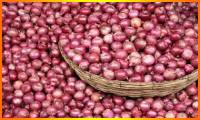
India exempts Bangladesh from onion export ban, to ship 50,000 tonnes before Eid.
India will export 50,000 tonnes of onions to Bangladesh ahead of Eid, three senior officials aware of the development said.
Source: livemint.com
Another land port opening marks new era in India-Bangladesh trade relations.
If all proceeds according to plan, a state-of-the-art Integrated Checkpost (ICP) is poised for inauguration at Sabroom in Tripura on the Indian side, and in Ramgarh Upazila in Bandarban on the Bangladesh side, on Saturday, marking a significant milestone in border relations between the two countries.
Top government officials in Delhi have hinted that both Prime Ministers, Sheikh Hasina and Shri Narendra Modi, will virtually attend the inauguration ceremony on Saturday morning.
An ICP serves as a modern terminal and logistics hub located at international borders, facilitating the seamless movement of goods and passengers between two countries. It consolidates various systems, including customs, immigration, container transshipment, and warehousing, all under one roof, thereby streamlining trade and travel processes.
The launch of this ICP signifies the commencement of another modern land port between India and Bangladesh at the border town of Sabroom in Tripura.
Currently, the largest ICP between the two countries is situated on the Petrapole-Benapole border. However, experts anticipate that the volume of trade and passenger traffic on the Sabroom-Ramgarh route may even surpass that in the coming days.
Several factors contribute to this anticipation. Sabroom is located less than 80km from the commercial capital of Bangladesh, Chittagong, by road.
India has long been granted permission to use the Chittagong port, further enhancing Sabroom’s potential to become the primary gateway for goods movement in the Northeast region of India.
Additionally, it is within 100km from the Matarbari deep-sea port, currently under construction in Bangladesh. When Matarbari becomes operational in three years, traffic through Sabroom is expected to increase significantly.
Furthermore, the construction of the 1.9km long Maitri Setu bridge over the Feni River at the India-Bangladesh border in Sabroom, jointly inaugurated by Narendra Modi and Sheikh Hasina on March 21, 2021, will further enhance connectivity.
The bridge’s utilization was pending until the completion of the ICP. With the launch of the ICP, the traffic on this friendship bridge is expected to soar.
Railway connectivity to Sabroom has also been established, with a broad-gauge rail link connecting it to the rest of India.
In essence, Sabroom is poised for a transformative change with the imminent launch of the ICP, promising to open up new horizons in bilateral trade and people-to-people contacts between India and Bangladesh.
Aditya Mishra, Chairman of the Land Ports Authority of India (LPAI), along with other top officials, visited Sabroom last month to assess the progress of the ICP’s construction on the ground.
The visit was aimed at ensuring that all necessary preparations were in place for the inauguration. Following the visit, rapid progress was made in completing the remaining 10% of the ICP’s construction and the associated road infrastructure connecting Sabroom to Bangladesh.
A meeting between delegations from India and Bangladesh was held on January 22 on the No Man’s Land of the friendship bridge over the Feni River to finalize plans for the inauguration of the ICP.
The Indian delegation, led by LPAI Chairman Aditya Mishra, and the Bangladesh delegation, led by Ramgarh Port Authority Director Sarwar Alam, along with other officials, discussed the final preparations for the event.
At the groundbreaking ceremony of the ICP in Sabroom three years ago, Prime Minister Shri Narendra Modi emphasized that enhancing connectivity between India and Bangladesh was not only about fostering friendship but also about creating new trade and traffic corridors.
Spread over 49 acres of land, the Sabroom Integrated Checkpost between Bangladesh and India’s Northeast is poised to achieve precisely that.
Source: indiashippingnews.com

First ever yak milk product, Arunachal Pradesh Yak Churpi, gets GI tag.
Churpi is prepared from the milk of Arunachali yak, which is a unique yak breed found in West Kameng and Tawang districts of Arunachal Pradesh. Yak Churpi, a naturally fermented milk product made from yak milk, has been given recognition as a Geographical Indication (GI) of Arunachal Pradesh.
Dr Mihir Sarkar, Director, ICAR- National Research Centre on Yak said it is a major boost to the pastoral production systems and yak rearing in the country.
Churpi is an excellent source of proteins and is frequently used as a substitute for vegetables by tribal yak herders in the vegetation-starved cold and hilly mountainous regions of the state. It is also mixed in vegetable or meat curry and is eaten with rice as a staple food in tribal households. It is considered an integral part of the tangible cultural and tribal heritage of Arunachal Pradesh- says Sarkar.
Arunachali yak breed is reared by tribal yak pastoralists known as Brokpas who migrate along with their yaks to higher reaches (at an altitude of 10,000 ft and higher) during summers and descent to mid-altitude mountainous regions during winters. Since the product is prepared at such a high altitude, it is also expected to provide benefits to the tribal herders against cold and hypoxia besides providing enriched nutrition, Dr Vijay Paul, Principal Scientist of NRC-Yak who was associated with the GI application process informed.
ICAR-National Research Centre on Yak, Dirang applied for registration of this unique yak product. The institute is closely working with the Brokpas rearing Arunachali yaks and is helping them through research and extension support. The services rendered by the institute assume greater significance in the light of the fact that yak population throughout the country has been declining at a fast pace due to enormous hardships and dwindling gains associated with pastoral yak rearing. The registration of yak Churpi of Arunachal Pradesh as a GI is going to serve the cause of yak conservation and yak pastoralists’ socio-economic upliftment.
Source: icar.org.in
NABARD focusses on the prospects of value chain in floriculture and coffee in Assam.
National Bank for Agriculture and Rural Development (NABARD) conducted a meeting of the Regional Advisory Group (RAG) on Farm Sector Development for the Financial Year 2023-24 at the Assam Regional Office.
The theme of the meeting was ‘Prospects of Value Chain in Floriculture & Coffee Plantations in Assam.’ NABARD through its various interventions, Micro Enterprise Development Programme (MEDP), Farm Sector Promotion Fund (FSPF) has provided opportunities to the famers and SHGs for promotion of production, value chain creation and credit linkage through banks in the floricultures sector.
The delegates of the meeting included Member representative, Assam Agriculture Commission; Principal Scientist, Horticulture Research Station; Deputy Director, National Horticulture Board; Senior Liaison Officer, Coffee Board, Director (Open & Distance Learning), Assam Agricultural University; Regional Head, APEDA; MD, NERAMAC; DGM, NEDFi, Chief Manager, SLBC, SBI along with other government officials, banking partners, farmers and entrepreneurs.
The deliberations emphasized on the importance of floriculture market in Assam and the need to look for the scope of value-creation in this segment.
Nabin Kumar Roy, General Manger & OIC, NABARD, Assam RO said that there is a dire need for awareness and mobilization of farmers in line with the Floriculture Mission of the State Government for doing away with the huge imports in the state by area expansion of flowers and thus, contributing to the state’s economy.
With regards to the feasibility of promoting coffee plantations in Assam, he expressed having close coordination with Coffee Board of India for promoting Coffee in the state. He exhorted the members to come forward with ideas, initiatives and guidance for taking the issues forward and for development of a comprehensive strategy in convergence for promoting the ethos of ‘Gaanv Badhe toh Desh Badhe’ in Assam.
As a part of Natural Resources Management, NABARD has been supporting the implementation of various Projects like Integrated Watershed Dev. with Climate Proofing Interventions (IWDCPIs), Integrated Tribal Dev. Programmes (ITDPs), UPNRM & Climate Change Projects, etc.
Accordingly, NABARD Assam RO has recently sanctioned the Full Implementation Phase (FIP) of its first Watershed Project in the State. The FIP will be implemented at Derapathar villages in Lumding Development Block of Hojai district.
Under the FIP, NABARD would support creation of 485 major/ minor structures like Check Dams, Percolation Tanks, Water Harvesting Structures, Control Bunds, Earthen Bunds, Farm Ponds, Staggered Contour Trenches etc. in the fields of 332 identified beneficiaries in a cluster of four villages in and around Derapathar with a grant assistance of Rs 2.30 crore. Further, in addition to undertaking measures pertaining to Area & Drainage Line treatments, NABARD would also support Climate Proofing interventions like installation of remote sensing Automated Wireless Weather Stations, Soil Moisture Sensors, Solar Pumps, Micro/ Drip Irrigation systems etc. The Project also envisages livelihood & women development trainings on activities including Vermicomposting, Agarbatthi making, Livestock rearing, Tailoring & Embroidery, Handloom Design Development etc.
Source: economictimes.indiatimes.com

India does not rush into trade negotiations, follows careful and calibrated approach: Sh. Piyush Goyal.
Union Minister of Commerce & Industry, Consumer Affairs, Food and Public Distribution, and Textiles, Shri Piyush Goyal said that the government does not rush to conclude trade negotiations because Free Trade Agreements (FTAs) impact the country for several years and follows a careful and calibrated approach. During an interaction at the Raisina Dialogue 2024, the Minister said that extensive stakeholder consultations, inter-ministerial meetings, etc. are conducted during FTA negotiations to ensure that FTAs are fair, equitable and balanced.
For the upcoming WTO Ministerial Conference 13 (MC13) to be held next week in Abu Dhabi, UAE, Shri Goyal said that there are attempts to include issues in the WTO that are not part of world trade and India will try to ensure that the guiding principles of WTO are maintained. The Minister highlighted India’s role in the past at the WTO MCs and expressed strong support for making the organisation stronger with the necessary reforms. Shri Goyal said that WTO is important for a fair and robust multilateral trading system.
On the Carbon Border Adjustment Mechanism (CBAM) issue, Shri Goyal said that India is concerned by the tax imposition of the European Union (EU) and will take up the issue within the rules of World Trade Organisation (WTO) and will also look to address the issue bilaterally with the EU. Further, the Minister assured the stakeholders that the government is conscious of the challenges and will work towards turning this challenge into an opportunity.
Shri Goyal emphasised that India is willing to engage with the world and be competitive by embracing global value chains and becoming self-reliant. He said that the large domestic market coupled with the nation’s ability to innovate will make India the best destination for investments. The Minister stated that the government undertook initiatives to perform, reform and transform the economy to ensure that India becomes a developed nation with strong macroeconomic fundamentals. Shri Goyal said that the aim of the welfare schemes is to reach the beneficiaries at the last mile.
Shri Goyal said that the government under the leadership of the Prime Minister, Shri Narendra Modi has undertaken initiatives for food security, healthcare, education, housing, infrastructure, etc. for public welfare. The Minister cited multiple initiatives like Make in India, Startup India, Digital India, Production-Linked Incentive (PLI) schemes, etc. that have transformed India into the fastest developing large economy. He noted that these initiatives encourage private and public investment in infrastructure and manufacturing which will help India become a developed economy by 2047.
Source: pib.gov.in
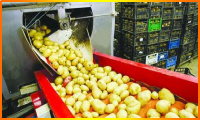
Secretary, Food Processing Industries chairs the meeting with stakeholders about the Ministry's action plan for World Food India 2024 to exploring potential areas of collaboration.
The Secretary, Ministry of Food Processing Industries (FPI), Smt. Anita Praveen chaired the roundtable interaction with industry at Invest India here yesterday. The primary focus of the meeting was to brief the industry on the next edition of World Food India 2024 to be organized from 19th-22nd September 2024. The meeting deliberated on the involvement and expectations from the industry in the event and marked a continuation of a series of discussions aimed at informing stakeholders about the Ministry's action plan for World Food India 2024 and exploring potential areas of collaboration. Notably, senior representatives from key agri-food companies actively participated in this roundtable session.
In her keynote address, Secretary, MoFPI mentioned about the growth and vast opportunities present in the food-processing sector. She added that the ministry is organizing the 3rd edition of the highly anticipated World Food India event, envisioning an even larger scale compared to the previous 2023 edition. The Secretary extended a heartfelt invitation to all companies to participate in the event with great enthusiasm in the Mega Food Event scheduled to take place from September 19th to 22nd 2024 in New Delhi.
Additionally, the participating companies enthusiastically expressed their interest in joining World Food India-2024, demonstrating their readiness to exhibit their products and technologies in dedicated stall spaces. Additionally, the participating companies demonstrated strong interest in collaborating with the Ministry of Food Processing Industries for the planned event sessions. Noteworthy suggestions and feedback were received and discussed.
The Secretary, Food Processing Industries (FPI) concluded her remarks by urging all stakeholders to come together and collaborate to ensure the success of the event. She emphasized the significance of harnessing individual strengths and providing supplementary support to foster robust partnerships and engagement from a diverse range of stakeholders.
Furthermore, the Investment Facilitation Cell (Invest India) received instructions to stay in touch with the companies to firm up the participation details.
Source: pib.gov.in
India will work to maintain WTO guiding principles, says Piyush Goyal.
India will ensure that the guiding principles of the World Trade Organisation are maintained at the Abu Dhabi meeting next week, union commerce and industry minister Piyush Goyal said on Friday.
The country will also raise the issue of the European Union's Carbon Border Adjustment Mechanism (CBAM) at the WTO and bilaterally with the EU, Goyal said at the Raisina Dialogue 2024 here.
'There are attempts to include issues in the WTO that are not part of world trade, and India will try to ensure that the guiding principles of WTO are maintained,' he said.
Delegates from 164 countries will discuss agriculture, fisheries and the moratorium on imposing customs duty on ecommerce trade among other issues at the 13th WTO Ministerial Conference (MC13) in Abu Dhabi from February 26 to 29.
'WTO is important for a fair and robust multilateral trading system,' Goyal said, noting that the intergovernmental organisation needs to be made stronger with reforms.
The minister especially highlighted the issue of CBAM, which the EU will introduce in 2026 as a mechanism to prevent 'carbon leakage', assuring stakeholders that the government was conscious of the challenges.
According to experts, the EU's carbon border tax is expected to increase costs and reduce competitiveness. 'The implementation of CBAM is poised to have an adverse effect on the economic performance of enterprises operating within India's energy-intensive and trade-exposed (EITE) industries,' research organisation CSEP highlighted in a working paper, assessing a 2.9% reduction in export earnings for steel and iron industry last year.
Goyal also emphasised the need for India to become part of global value chains and become self-reliant. A large domestic market coupled with the nation's ability to innovate will make India the best destination for investments, he said.
The minister made a call for bringing various issues, especially the dispute resolution mechanism, to a conclusion.
Source: economictimes.indiatimes.com