
Many countries want to start rupee trade with India: FM Nirmala Sitharaman.
Finance Minister Nirmala Sitharaman on Friday said many countries are negotiating to start trade in rupee as the country's fundamentals are strong and the Indian unit has been 'mostly stable' against most of the international currencies. Addressing the Pandit Hriday Nath Kunzru Memorial Lectures 2024 at JNU, Sitharaman also said India has opened up every sector for private investments and will extend fiscal and policy support to sunrise sectors like artificial intelligence, semiconductors and manufacturing using innovative tools.
'Indian Rupee being mostly stable against most of the international currencies except for the US dollar, where it had volatility. But even in that case, compared to many other currencies, the Indian rupee has been far more stable even against the US dollar.
'And therefore, you find countries today wanting to have trade relations built on rupee trade,' said Sitharaman while addressing students and professors at her alma mater.
'As a central university, JNU provided me with all India exposure that has helped me grow as a student. A nostalgic visit,' Sitharaman said in a post on X.
She had completed her MA and M Phil from the School of Social Sciences and School of International Studies at JNU, respectively.
Observing that rupee trade could have 'teething problems', Sitharaman said it is, however, helping many of the countries, which has dollar shortages.
'We have evolved to a stage where we recognise that the Indian rupee, in some regions at least, is used as an instrument of trading currencies. Your macroeconomic stability tells you that,' Sitharaman said.
India has started trade in the rupee with neighbouring countries, including Nepal and Bhutan. The rupee trade mechanism has been initiated to facilitate trade in national currency with Russia, while Sri Lanka has included the rupee in its list of designated foreign currencies.
India has a huge market size and has a population of middle class with purchasing power for whom they can produce. And that number of middle class by 2047 could be anywhere between 102 crore, Sitharaman added.
'India is being taken seriously only because the economy is a lot more stable now. Taxation policies are a lot more predictable, and systems are a lot more transparent... We have received the highest FDI beyond USD 600 billion and our reserves are also matching... Economic fundamentals being absolutely stable and strong, which gives us the position that people take us seriously, want to engage with us and we are willing to listen to the suggestions given by India,' she noted.
The minister said that the global fora, be it the G20 or the UN, are all now focusing on India's solutions in reforming institutions, which will help in building a better 21st Century for all. It reflects on India's important role in the evolving global landscape.
Sitharaman said India was able to meet the challenges of COVID-19 and other economic issues because of the 'responsive government'.
'A government, which was ready to listen to the people, to those affected, to observers, to experts and sieve through all the suggestions to come up with solutions and relief measures,' she said.
She said India has opened up every sector for investments and space, deep sea, rare earths, and sunrise sectors -- are all going to be the priority areas.
'Artificial intelligence, semiconductors, manufacturing in India with innovative and newer tools are all going to be priority areas where policy and fiscal supports will be extended,' she said.
Referring to the management term 'VUCA' principle, which speaks about the volatility, uncertainties and complexities, Sitharaman said VUCA has become a default setup in contemporary times.
'With all these uncertainties, it is the instrument of adaptability that is being infused into the system to prepare us for any eventuality,' she said.
Source: economictimes.indiatimes.com
APEDA facilitates India s first commercial trial shipment of Sangola pomegranates to the US via sea.
On 28th February, 2024, India successfully flagged off its first commercial trial shipment of Pomegranates to the US via sea under the aegis of Agricultural Processed Food Products Export Development Authority (APEDA) by InI Farms from IFC facility, MSAMB, Vashi (Navi Mumbai). Shri Rajesh Aggarwal, Additional Secretary, Ministry of Commerce & Industry and Shri, Abhishek Dev, Chairman, APEDA flagged off the Pomegranate shipment comprising of 4200 boxes (12.6 tons).
The ceremony was graced by dignitaries from the Maharashtra State Agricultural Marketing Board (MSAMB), Regional Plant Quarantine Station (RPQS- MoA&FW), State Agriculture Department (Govt of Maharashtra), NRC Pomegranate, US Consulate and InI Farms.
Last year APEDA successfully carried out an air shipment of Pomegranates with irradiation treatmentand static trial in association with ICAR-NRC Pomegranate Solapur as technical partner. Based on the successful result of the static trial, APEDA aimed for a successful sign off for this consignment via sea opening trade relations to potential markets for Indian Pomegranates. India, one of the largest Producers of Pomegranates in the World and is also now aiming to be amongst the top Pomegranate exporting countries in the World. India is a key player growing in the EU, Middle East and Asian Markets.
Source: pib.gov.in
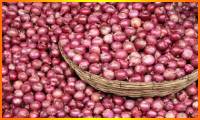
India permitting onion exports to Bahrain, Mauritius upsetting major international markets, say traders.
The Indian government’s recent decision to permit onion exports to Bahrain and Mauritius has stirred controversy within the exporting industry. Despite these countries’ limited historical imports of Indian onions, the government’s move has left larger importers feeling neglected and frustrated, according to the industry players.
Critics within the industry argue that the government’s favouritism towards smaller countries such as Bahrain and Mauritius could harm India’s trade relationships with larger importers. They suggest that exports should be opened in a measured way for all countries or not at all, to avoid appearing biased.
The decision to export to Bahrain, in particular, has raised eyebrows. Despite Bahrain’s minimal onion requirements, some selected exporters have capitalised on its strategic location, with access to Saudi Arabia and the UAE by land. Some exporters are reportedly planning to import to Bahrain and then transport onions by road to neighboring countries to maximize profits. This would help exporters earn significant profits.
Critics question the rationale behind supporting such countries, which import from other sources like the Netherlands and Egypt. They argue that these countries have not supported India in times of surplus, and therefore, India should reconsider its export strategy to ensure fairness and reciprocity in trade relationships.
Rubbing the wrong way
According to industry reports, some countries, including Indonesia, have refused to open their quotas for Indian onions, citing India’s export ban. This could potentially halt exports to Indonesia until March 2025.
'Countries like Malaysia and UAE, which have an average import share of 10 per cent, have not utilized their quotas in the current year,' said one of the industry players. 'It would be more ethical to support these larger importers.'
The industry has also expressed disappointment with some countries which refused to request onions from India through official channels.
Despite a ban on onion exports, India allowed the sale of 54,760 tonnes to Bangladesh, Mauritius, Bahrain, and Bhutan last month.
However, onion exporters and farmers in Maharashtra are still waiting for the export notification. The Onion Traders Association in Nashik has urged the government not to delay the notification, warning that any further delay will adversely affect farmers and exporters who have already suffered due to the export ban.
Source: thehindubusinessline.com
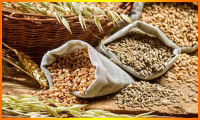
Centre meets State food secretaries to discuss procurement during rabi marketing season.
The Department of Food and Public Distribution (DFPD), Ministry of Consumer Affairs, Food and Public Distribution, Government of India, organised a meeting of State food secretaries on February 28, 2024, at New Delhi to discuss the procurement arrangements for rabi crops in rabi marketing season (RMS) 2024-25 and in kharif marketing season (KMS) 2023-24. The secretary, DFPD, Government of India, chaired the meeting.
Various factors impacting procurement such as forecast of weather conditions, production estimates, and readiness of States were reviewed. After deliberations, the estimates for wheat procurement during ensuing RMS 2024-25 were fixed in the range of 300-320 LMT. Similarly, the estimates for paddy procurement in term of rice during KMS 2023-24 rabi crop were fixed in the range of 90 - 100 LMT.
A quantity of around 6.00 LMT of coarse grains /millets has also been estimated for procurement by the States during the KMS 2023-24 (Rabi crop). States/UTs were advised to focus on procurement of millets for diversification of crops and enhanced nutrition in dietary patterns.
Besides, State Government of Telangana shared the good practices adopted in respect of Supply Chain Optimisation and an indicated a saving of Rs 16 crore annually through this environment friendly initiative by Government of India. Government of Uttar Pradesh shared the successful initiative regarding linking of e-PoS with electronic weighing scale which has effectively ensured supply of foodgrains to the beneficiaries as per their entitled quantity.
Ministry of Agriculture & Farmers Welfare presented their evaluation study on Digital Maturity of State MSP procurement applications. State Governments were advised to adopt or improvise their existing applications in line with the standard and core features of AgriStack portal, for bringing about transparency and efficiency in the procurement system, before start of KMS 2024-25.
During the meeting, issues relating to Supply Chain Optimisation for transportation of foodgrains from designated depots to Fair Price Shops, improving infrastructure in Procurement Centres, Good Milling Practices and On-boarding Fair Price Shops on Open Network for Digital Commerce (ONDC) were also discussed.
Chairman & Managing Director, FCI, Principal Secretary/Secretary (Food) of States, officers from Indian Metrological Department, Department of Agriculture & Farmers Welfare, National Agricultural Cooperative Marketing Federation of India Ltd. and National Cooperative Consumers' Federation of India Ltd. attended the meeting.
Source: fnbnews.com

India-Nepal enhance financial cooperation; digital payment to be inaugurated soon.
Nepal's Ambassador to India, Shankar Sharma on Saturday appreciated the new guidelines of the Reserve Bank of India, which allow multiple financial services between the people of India and Nepal.
He said that now Nepal citizens can send Rs 2 lakh per transaction to Nepal and walk-in customers can remit Rs 50,000 per transaction.
The Nepal envoy also said that Unified Payment Interface-Nepal Clearing House Ltd, which is to be inaugurated soon, will further eliminate any inconvenience of carrying cash.
'RBI's updated regulation allows Nepali account holders to send Rs 2 lakhs per transaction (without any limit) to. Walk-in customers can remit Rs. 50,000 per transaction (12 per yr). The soon-to-be-inaugurated UPI/NCHL mechanism will eliminate inconvenience of carrying cash,' Sharma posted on X on Saturday.
RBI's updated regulation allows Nepali account holders to send IRs 2 lakhs per transaction (without any limit) to.
Walk-in customers can remit Rs. 50,000 per transaction (12 per yr).
The soon-to-be-inaugurated UPI/NCHL mechanism will eliminate inconvenience of carrying cash. pic.twitter.com/MHnCNWY6Rn
- Dr. Shankar P Sharma (@DrShankarSharma) March 2, 2024
Last December, Indian Ambassador to Nepal, Naveen Srivastava, announced that the digital payment gateway between India and Nepal is expected to start in the first phase at the end of February 2024.
In June 2023, the NPCI International Payments Limited (NIPL) and Nepal Clearing House Limited (NCHL) joined hands to facilitate cross-border digital payments between India and Nepal by integrating the Unified Payments Interface (UPI) of India and the National Payments Interface (NPI) of Nepal.
During Nepal PM Pushpa Kamal Dahal's visit to India, an MoU was exchanged between NIPL and NCHL. As per the MoU, both bodies intend to establish cross-border connectivity for financial transactions between the two countries to ease fund transfers and merchant payments by users.
The initial engagement was for inward and outward transfers between the banks in India and Nepal, which will be achieved by integration between the UPI of India and the NPI of Nepal to enable existing instruments for cross-border transactions, which will be subsequently extended for other merchant payments.
Designated by the Nepal government, the Nepal Clearing House Limited (NCHL) has a 10 per cent investment from Nepal Rastra Bank -- the Central Bank of Nepal and 90 per cent from other different commercial banks.
Source: economictimes.indiatimes.com
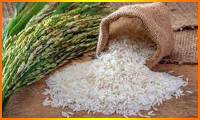
India's Basmati Rice Exports Hit $3.54 Billion, IARI Introduces Disease-Resistant Varieties.
In the fiscal year 2021-22, India marked a significant achievement in its agricultural exports by shipping 3.9 million tonnes of Basmati rice, valued at $3.54 billion. Over 81% of these exports were directed to major markets including Iran, Saudi Arabia, Iraq, the UAE, the US, Yemen, Kuwait, the UK, Oman, and Qatar. To further boost export opportunities and reduce pesticide reliance, the Indian Agricultural Research Institute (IARI) has launched three innovative basmati rice varieties with inherent disease resistance during this kharif season.
Innovative Varieties to Transform Basmati Cultivation
Positioned to revolutionize basmati rice cultivation, the PB1847, PB1885, and PB1886 cultivars distributed by IARI exhibit resistance to bacterial blight and blast diseases. These new varieties are expected to gradually replace the dominant PB1121, PB1509, and PB6 cultivars, which currently account for over 90% of the basmati rice cultivation area. The Director of IARI, AK Singh, highlighted the problem of existing varieties developing resistance to diseases, leading to increased pesticide use and subsequent export rejections due to pesticide residue.
Reducing Pesticide Dependency
Field trials have shown promising results for the new basmati varieties, with seeds now being distributed to farmers for further multiplication. This move is especially significant in Punjab, Haryana, and western Uttar Pradesh, pivotal regions in basmati cultivation. By introducing these disease-resistant varieties, India aims to curb the unsustainable practice of relying on antibiotics and fungicides, subsequently reducing instances of export rejections. Former president of the All India Rice Exporters Association, Vijay Setia, expressed optimism about the potential of these new varieties to lessen pesticide use and improve rice quality.
Implications for the Future
The introduction of these new basmati rice varieties could herald a new era in Indian agriculture, with significant implications for export earnings, farmer income, and sustainable farming practices. An analysis by IARI between 2010 and 2019 showed that the PB1121 and PB1509 varieties contributed significantly to export earnings and domestic sales, benefiting approximately 1 million farmers. As India continues to dominate the global basmati rice trade, these innovative cultivation practices could further solidify its position while addressing critical environmental and health concerns.
Source: bnnbreaking.com

India aiming to achieve one-third of the global milk production by 2030: Official.
The National Dairy Development Board (NDDB) is working to increase productivity so that India can account for one-third of the global milk production by 2030, its chairman Meenesh Shah said. He said breeding, nutrition and health of animals are the main focus areas for achieving the target.
'Currently, India accounts for 24 per cent or one-fourth of total world milk production. This contributes to 4-5 per cent of our GDP. Our plan is to increase the share globally to 30 per cent or one-third of world milk production by 2030,' he said.
Increasing the productivity of animals is crucial to achieving it, Shah said, pointing out that though India is the largest producer of milk, animal productivity is less than in developed countries.
'The Government of India and NDDB are working together on its mission to increase productivity. Breeding, nutrition and health of animals are the crucial areas in this regard,' he added.
'Our milk production has been growing at 6 per cent per annum for the last five-six years, while the global growth rate is 2 per cent. We have to maintain it,' Shah said.
In Assam, the NDDB has formed a joint venture company with the state government to work for holistic development of the dairy sector, he said.
'In the next seven years, the plan is to increase procurement of milk and bring more farmers under the cooperative movement,' he said.
The installed capacity of West Assam Milk Producers Cooperative Society (WAMUL), which operates the popular brand Purabi, is being also increased with the opening of a new plant, Shah, who is also the chairman of WAMUL, said.
The NDDB is also working on using more solar and renewable energy sources, he said.
Source: economictimes.indiatimes.com

Govt says 5,000 Farmer Producer Organizations onboarded on ONDC.
The government on Friday said almost 5,000 out of 8,000 registered Farmer Producer Organizations (FPOs) have been onboarded on the Open Network for Digital Commerce (ONDC) portal for selling the produce online to consumers across the country. Around 8,000 FPOs have been registered against the government's target of 10,000 under a central scheme launched in 2020 with a budgetary provision of Rs 6,865 crore. FPOs facilitate farmers with access to improved technology, credit, better input and more markets to incentivise them to produce better quality commodities.
'Almost 5,000 out of 8,000 registered FPOs have been registered on the ONDC portal...,' the agriculture ministry said in a statement.
The onboarding of FPOs on ONDC to reach out to their buyers in any part of the country is in line with the Central government's objective of providing growers with better market access, it said.
The move aims to empower FPOs with direct access to digital marketing, online payment, business-to-business and business-to-consumer transactions.
The ministry said the formation and promotion of FPOs is the first step for converting 'Krishi into Atmanirbhar (self-reliant) Krishi.' The initiative enhances cost-effective production and productivity and higher net incomes for the members of the FPO.
It also improves the rural economy and creates job opportunities for rural youths in villages itself. This was the major step towards improving farmers' income substantially, it added.
Under the central scheme, FPOs are provided with financial assistance of up to Rs 18 lakh per FPO for a period of three years. In addition, a provision has been made for matching equity grants of up to Rs 2,000 per farmer member of FPO with a limit of Rs 15 lakh per FPO and a credit guarantee facility of up to Rs 2 crore of project loan per FPO from the eligible lending institution to ensure institutional credit accessibility to FPOs.
So far, the credit guarantee has been issued to 1,101 FPOs worth guaranteed coverage of Rs 246 crore covering more than 10.2 lakh farmers. Matching equity grant amounting to Rs 145.1 crore has been transferred directly to the bank account of the eligible 3,187 FPOs, the ministry added.
Source: economictimes.indiatimes.com

Grapes exports will likely rise 10% this year despite high freight costs.
India’s fresh grape exports are seen rising by over a tenth in the 2023-24 season on strong demand from Europe, its main market. The increase in shipments is notwithstanding the higher freight costs, which have more than doubled to the region on account of disruptions in the Red Sea region. Supply issues from South Africa have helped push up demand for Indian grapes in Europe, exporters said.
Vilas Shinde, Chairman and Managing Director, Sahayadri Farms, the country’s largest grape exporter, said shipments in volume terms have been up around 20 per cent till now when compared to the same period last year. The export season started early, by about three weeks this year, as we had an early harvest. 'Despite higher freight rates, the market in Europe, our major major destination has been good and the prices are also good,' Shinde said
India exports grapes mainly during January-March. 'Grapes production has been good this season, so far. There were some rains during November-end and early December, which might have some impact on quality in March. The shipment volumes have been good. Volumes are up by about a tenth over the same period last year. The demand for Indian grapes has been strong in Europe. This is mainly on account of some issues in the South African production,' said Pankaj Khandelwal, Co-CEO, INI Farms, part of the AgroStar Group.
Large markets for India
Khandelwal said the market in Europe was able to absorb the higher cost as the demand was good. Freight costs have more than doubled to Europe due to disruptions in the Red Sea region. Also, air freight rates have gone up, he said.
'Grapes shipments have held up despite higher costs and freight. The cost is high, freight is high, and thankfully, demand is also high this year,' Khandelwal added. 'So far, the shipments have been good during January–February, as the volumes have been strong. Our shipments peak in March. We will have to see how the season eventually pans out,' he said.
India exported 2.67 lakh tonnes of grapes valued at $313.69 million during 2022-23. The Netherlands is the biggest buyer of Indian grapes, accounting for close to 40 per cent of the overall shipments. Other large markets for Indian grapes are Bangladesh, the United Arab Emirates, the United Kingdom, and Russia, among others.
USDA forecast
The USDA in a recent report said world table grapes production for 2023-24 is forecast up 490,000 tonnes to 28.4 million on improved China supplies. India’s production is anticipated to improve slightly, up 100,000 tonnes to 3.0 million tonnes, as good rainfall and favorable growing conditions boost yield and improve fruit quality. The supply gains are expected to boost exports by 13,000 tonnes to 295,000 tonnes, especially to the top-market European Union, the USDA said.
Source: thehindubusinessline.com

India-UK FTA: Goyal, Badenoch meet to decide future course of action.
Commerce and Industry Minister Piyush Goyal and his British counterpart Kemi Badenoch will make another attempt to iron out differences and decide the future course of action on the much-awaited free trade agreement (FTA) between the two countries before the general elections.
The ministers are expected to hold bilateral talks on the sidelines of the World Trade Organization’s four-day summit – the 13th Ministerial Conference -- in Abu Dhabi.
The meeting between Goyal and Badenoch will take place a week after a delegation headed by commerce secretary Sunil Barthwal was sent to London to seal the deal.
'The bilateral between Piyush Goyal and his UK counterpart at the sidelines of the WTO meet (MC13) holds the key for the future course of action,' a person aware of the matter told Business Standard.
This is an indication that the ball is now in the courts of respective political leaders to announce the signing of the FTA deal as most of the issues have been closed at the negotiators' level.
'Certain issues can only be resolved after a final political call is taken to sign the deal,' the person cited above said.
India and the UK have been negotiating a trade deal for over two years now. Both sides already missed the Diwali deadline in 2022, set by former UK Prime Minister Boris Johnson.
A year later, both sides were aiming to finalise the deal by October in the presence of Prime Minister Narendra Modi and his British counterpart Rishi Sunak in New Delhi. However, continued differences have delayed the deal.
The latest meeting also assumes significance as both sides are trying to arrive at a consensus ahead of the general elections in India.
Before Barthwal’s visit, the Prime Minister’s Office also reviewed the progress of the proposed deal.
Last month, a UK delegation led by Sunak’s chief economic adviser Douglas McNeill was in New Delhi to discuss the proposed FTA and an investment treaty.
To date, 14 rounds of negotiations have taken place.
Some of the contentious issues include the UK's demands for lower tariffs on whisky, automobiles, and electric vehicles, as well as its attempt to seek more opportunities in telecommunications, legal, and financial services in the Indian markets.
Other tricky areas included chapters on the rules of origin and intellectual property rights. Similarly, India is bargaining hard to seek a resolution on London's plan to roll out the carbon border tax on its imported goods from 2027 and an inclusion of the social security agreement.
Source: business-standard.com