
Bangladesh moves beyond dollar to settle trade with India in rupee.
Bangladesh is all set to settle trade with India in Rupee from Tuesday, a move to cut their reliance on the American currency, which was involved in nearly 90 per cent of global forex transactions in 2022, The Daily Star reported.
Bangladesh Bank and the Indian High Commission are expected to announce the news regarding the Indian currency at an event at Le Meridien Hotel in Dhaka tomorrow.
The central bank governor and the Indian high commissioner will also join, a Bangladesh Bank (BB) official said.
The BB has already given permission to three banks - Sonali Bank, Eastern Bank and State Bank of India (SBI) in Bangladesh - to open nostro accounts with their counterparts in the neighbouring country.
The nostro account is an account that a bank holds with a foreign bank in the currency of the country where the funds are held. It is used to facilitate foreign exchange and international trade transactions involving foreign currencies.
This new move will open the letters of credit in the rupee to source a portion of the products from the neighbouring country and thus cutting the use of the US dollar to some extent, according to The Daily Star.
The government has toughened import rules due to the shortage of American greenback, driven by higher import bills, with a view to stopping further depletion of the foreign currency reserve, which has fallen by nearly 30 per cent from a year ago.
The private commercial bank, Eastern Bank and the country office of SBI have already opened nostro accounts with Indian ICICI Bank and SBI, the BB official said, adding that state-run Sonali Bank will open the account in the quickest possible time.
Both the BB and the Reserve Bank of India (the central bank of India) have given permission to the two Indian banks to start settling the bilateral trade in the Indian rupee (INR), he added.
The new arrangement will allow Bangladesh to perform foreign trade with India to the tune of USD 2 billion, equivalent to its current annual export receipts from the country. Last month, BB Governor Abdur Rouf Talukder said that if the trades through the unofficial channel are added then the imports can go up to USD 27 billion, as per The Daily Star.
As per plans, ICICI Bank and SBI will settle imports with Bangladesh in the rupee. And the amount will be deposited with the Bangladeshi banks' nostro accounts with the two.
In the second phase, the Bangladeshi banks will settle the import payments on behalf of the local importers by using the rupee deposited with the counterparts.
The dominance of the US Dollar is declining in the last few decades. At the ASEAN finance ministers and central banks meeting in Indonesia in March, policymakers also discussed the idea of cutting their reliance on the USD, the Japanese yen and the euro and 'moving to settlements in local currencies' instead.
The dollar accounted for more than 70 per cent of global reserves at the turn of the century. The share declined to 59 per cent in 2011 and 58 per cent last year, International Monetary Fund data showed, reported The Daily Star.
Source: economictimes.indiatimes.com

India, Tanzania agree to explore new areas of cooperation to boost bilateral ties.
India and Tanzania have agreed on a roadmap to further boost their time-tested ties by identifying new areas of cooperation in sectors like trade, investment, agriculture, defence and education, the Foreign Ministers of the two countries said.
External Affairs Minister S. Jaishankar on Saturday met Tanzania’s Minister of Foreign Affairs and East African Cooperation Stergomena Tax at the 10th India-Tanzania Joint Commission Meeting n Dar es Salaam.
Mr. Jaishankar said the two sides had a very productive round of the Joint Commission.
'This gave us an opportunity to do a stocktaking of our relationship to discuss what are the new areas that we need to move forward. Also, to agree on how to deepen our cooperation in the areas that we have been working on for many years,' he said.
Among the domains that the two sides looked at was their economic cooperation, and how to increase trade and investment. The two sides also discussed how to promote stronger collaboration in ICT (Information and Communications Technology) and technology.
'We spoke about expanding training and exchanges within us. And we looked at areas like health, agriculture, defence and education as new domains to go between India and Tanzania,' he told reporters.
He said India and Tanzania have a very strong and time-tested relationship which is based on solidarity and camaraderie which comes from a shared struggle for independence during the colonial times.
'And from the very beginning of our independence, we’ve always had a very good understanding. Today, that is reflected in a very robust economic engagement. We have a trade of almost six and a half billion dollars annually,' Mr. Jaishankar said.
He said India has significant Indian investment in Tanzania, which is the country’s key trade partner in Africa.
Talking about their bilateral development partnership, Mr. Jaishankar said India is proud of the water partnership between the two nations.
'Water Partnership which involves soft loans of almost a billion dollars, which when the projects are completed, will bring safe drinking water to 8 million Tanzanians. I think it will cover 28 towns in this country. And for us, it’s a great privilege to be associated with such a major transformational development initiative,' he said.
Mr. Jaishankar said during his visit, the two sides agreed on a new flagship project — the establishment of a campus of the Indian Institute of Technology — that would underline the deep friendship between the two nations.
'...for the first time ever, the IIT is going abroad and we are very very pleased that this should take place in Zanzibar, because in many ways, Zanzibar is a meeting point of African and Indian cultures,' he said.
So overall, it has been a very productive visit, he said.
'I would like to end by emphasising that Prime Minister [Narendra] Modi believes that the deep solidarity between India and Africa must be expressed in very practical terms in a way in which we share experiences, we share capabilities, we contribute to each other’s understanding of the world.
'And today, this joint commission meeting and the roadmap that we have put forward is a way of doing it because Prime Minister Modi deeply believes that partnerships are made by recognising the priorities of partners,' he said.
Mr. Tax said the two sides noted with satisfaction the milestones in various areas including politics, trade and investment, energy, education, water, health, ICT and defence and agreed to reinforce cooperation in these areas.
The decision to establish the first Indian Institute of Technology in Zanzibar will contribute to the efforts of Tanzania in enhancing capacity in technology and innovation.
Tanzania remains committed to continue partnering and cooperating with India, she said.
During his stay here, Mr. Jaishankar also called on Tanzanian President Samia Hassan of Tanzania and discussed bilateral ties in defence and security, maritime cooperation and capacity building.
He also conveyed the personal greetings of President Droupadi Murmu and Prime Minister Modi to President Samia.
Source: thehindu.com
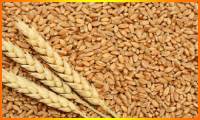
World Food India roundtable interaction - Participation by leading processing cos.
With regard to the upcoming World Food India-2023, an investor roundtable interaction was co-chaired by the Secretary, Department for Promotion of Industry and Internal Trade (DPIIT), and the Secretary, Ministry of Food Processing Industries, with agri-food processing companies in New Delhi, recently. The roundtable witnessed participation from the leading global and Indian food processing companies. During the interaction, the future plans of the participating companies and their prospects of partnerships with MoFPI for the WFI-2023, being organised from November 3-5, 2023, at Pragati Maidan, New Delhi, were discussed.
In his special address, Secretary, DPIIT, emphasised on the importance of manufacturing sector in the growing Indian GDP. He also mentioned the favourable agro-climatic zones in India which are not just suitable for production of a wide variety of agri-commodities like cereals, pulses, fruits and vegetables but also to process them in large quantities.
In her keynote address, Secretary, MoFPI, mentioned about the growth and vast opportunities present in the food processing sector. She added that the ministry is organising the second edition of the highly anticipated World Food India event, envisioning an even larger scale compared to the previous 2017 edition. The Secretary extended a heartfelt invitation to all companies to participate in the event with great enthusiasm.
During the roundtable, the participating companies expressed their optimistic outlook on the Indian market and lauded the various initiatives taken by the Government of India to improve the business environment, including the favourable policies such as the Production Linked Incentive Scheme and the flagship Pradhan Mantri Kisan Sampada Yojana initiated by MoFPI. The companies also expressed their interest in participating in World Food India-2023 and affirmed their willingness to sponsor the event and showcase their products and technologies through dedicated stall spaces. Many companies also showed keen interest on partnering with MoFPI for the sessions that are being planned as part of the event.
In his closing remarks, Additional Secretary, MoFPI, mentioned that the Investment Facilitation Cell (Invest India) and event partner FICCI will stay in touch with the companies to firm up the participation details. EY is roped in as the knowledge partner for the event.
Source: fnbnews.com
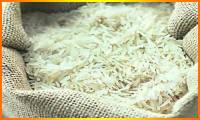
Bangladesh: Govt to cut tender submission time for rice import.
The government is going to cut the tender submission period for the import of rice in a bid to ensure food security in the country.
The Ministry of Food has sent a proposal to the Cabinet Committee on Economic Affairs to shorten the period from existing 42 days to 15 days.
According to sources in the ministry, 500,000 metric tons of rice will be procured from international sources in the current financial year by reducing the import period. A proposal in this regard from the Ministry of Food will be presented in the next meeting of the Cabinet Committee on Economic Affairs for approval.
To ensure food security in the country, the government has set a target to collect 24 lakh 61 thousand metric tons of rice in the current financial year 2023-2024. Out of this, 19 lakh 61 thousand metric tons of rice will be purchased from domestic sources and 5 lakh metric tons of rice from international sources. Among international sources, there is a plan to import 3 lakh metric tons of rice from the Government-to-Government (G-to-G) level and 2 lakh metric tons through international tenders.
Source: risingbd.com
India will set its own standards on sweeteners: FSSAI.
The Indian government will set its own standards on artificial sweeteners such as aspartame and does not have to do what international agencies say, a top official of the Food Safety and Standards Authority of India (FSSAI) said.
'We don't have to follow the West or East as India is in a powerful situation..we are working on what the effect of consuming aspartame or other sweeteners can have on the Indian population,' FSSAI Advisor HS Oberoi said on Thursday, while addressing a conclave by the Indian Beverages Association (IBA), which represents Coca-Cola, PepsiCo, Red Bull and Dabur among other beverage companies.
Last week, Reuters reported that the World Health Organisation (WHO)'s cancer research arm, the International Agency for Research on Cancer (IARC), will publish a report that aspartame could be declared a possible cancer risk to humans. Aspartame, an artificial sweetener, is used by soft drinks like Diet Coke, ice-cream and chewing gum. The IARC report is expected to be made available together on July 14, a potential development that could have a cascading impact on the consumption of low-sugar and diet beverages and foods.
Oberoi said the FSSAI will define guidelines and thresholds of usage of artificial sweeteners based on its own risk assessment studies and in consultation with all stakeholders, including foods and beverages companies, scientists and government agencies.
'We don't have to go by what the world says..our regulation will be based on what our scientists feel is good for the Indian population, based on risk assessment studies and in consultation with all stakeholders,' he said.
Two months back too, the WHO released conditional guidelines which said that non-sugar sweeteners like aspartame and stevia do not help in weight loss and can increase risk of type 2 diabetes and cardiovascular diseases. The WHO had said replacing free sugars with non-sugar sweeteners (NSS) does not help with weight control in the long term, adding that these are not essential dietary factors and have no nutritional value.
Source: economictimes.indiatimes.com

Cereal Production Poised to Shatter Records in 2023/24, Predicts FAO.
The Food and Agriculture Organization of the United Nations (FAO) released its latest Cereal Supply and Demand Brief, predicting a record-breaking global cereal production for the year 2023/24. The report indicates that cereal production is projected to reach 2,819 million tonnes, representing a 1.1 percent increase from the previous year.
The improved forecast primarily stems from a positive outlook for global wheat production, which is now estimated at 783.3 million tonnes. Several countries, including Canada, Kazakhstan, and Turkiye, are expected to contribute to this boost in production. However, it is worth noting that global wheat production is still anticipated to be 2.3 percent lower than the previous season's output.
The forecast also reveals a growth of 2.9 percent in global coarse grain output, expected to reach 1,512 million tonnes in 2023/24 compared to 2022. Additionally, world rice production is predicted to rise by 1.2 percent, reaching 523.7 million tonnes, surpassing the reduced level of the previous year. The upcoming season is expected to witness a 0.9 percent expansion in world cereal utilization, reaching 2,805 million tonnes. This increase is primarily driven by the anticipated higher consumption of coarse grains, especially maize, for animal feed.
FAO has revised its forecast for global cereal stocks at the end of the 2023/24 seasons, estimating them to be 878 million tonnes, a 2.3 percent increase from the previous season. With this level of stocks, the global cereal stocks-to-use ratio is expected to remain steady at 30.6 percent, indicating comfortable supply prospects for the new season.
Regarding world trade in cereals, FAO's forecast for 2023/24 suggests a potential 0.9 percent contraction compared to 2022/23, with wheat volumes expected to decline from the record levels previously witnessed. The global situation is not without challenges, as high food prices, economic downturns, conflicts, droughts, and the looming threat of El Niño weather patterns in various regions continue to worsen food security concerns. The latest Crop Prospects and Food Situation report, a quarterly publication by FAO's Global Information and Early Warning System (GIEWS), reveals that a total of 45 countries require external assistance for food.
The report highlights that high domestic food prices, which deviate from the FAO Food Price Index, are contributing to alarming levels of hunger in most of these 45 countries. Among them, 33 are located in Africa, 9 in Asia, and Haiti, Ukraine, and Venezuela.
Although global cereal production is projected to expand by 1.1 percent in 2023 compared to the previous year, the report warns of a contraction in the group of 44 Low-Income Food-Deficit Countries (LIFDCs). This contraction will increase their import needs to meet domestic food requirements.
The quarterly report by FAO not only offers detailed information about food insecurity and price trends on the ground in affected countries but also provides an in-depth assessment of regional production and trade prospects worldwide.
Source: krishijagran.com
India to hold trade deal talks with UK, European nations on July 10-11.
India's trade minister will hold talks in the UK on a free trade deal with Britain and meet ministers from the European Free Trade Association from July 10 to 11, the Ministry of Commerce and Industry said on Sunday.
Trade minister Piyush Goyal will meet with his UK counterpart, Kemi Badenoch, as well as representatives from British industry, the ministry said in a statement.
The talks offer an opportunity to discuss the main priorities of a free trade agreement 'with a focus on addressing trade barriers, promoting investments, and fostering greater cooperation in areas such as technology, innovation, and intellectual property rights,' the statement said.
Differences have emerged between India and the UK on some key tariff lines and investment protection rules, including disagreement over concessions on duties levied by India on car and liquor imports.
Goyal will also meet ministers and officials from the European Free Trade Association, which comprises Switzerland, Norway, Iceland, and Liechtenstein, to assess progress toward reaching a Trade and Economic Partnership Agreement with them.
Source: reuters.com
Modi's visit marks end of six WTO disputes for US and India.
During the recent visit of Indian Prime Minister Narendra Modi to the United States of America, major announcements related to resolution on key trade issues were made by the US and it was agreed upon to terminate six WTO disputes related to retaliatory tariffs.
During the visit of Indian PM, United States Trade Representative Katherine Tai announced that the United States and the Republic of India have agreed to terminate six outstanding disputes at the World Trade Organization and India also agreed to remove retaliatory tariffs, which it had imposed in response to the U.S. Section 232 national security measures on steel and aluminium, on certain U.S. products, including chickpeas, lentils, almonds, walnuts, apples, boric acid, and diagnostic reagents.
'These tariff cuts will restore and expand market opportunities for U.S. agricultural producers and manufacturers. The resolution also maintains the integrity of the U.S. Section 232 measures,' reads the statement issued by the Office of the US Trade Representative.
The statement added that the agreement represents the culmination of intensified bilateral engagement over the last two years, including through the U.S.-India Trade Policy Forum, to deepen economic and trade ties and 'As a result of our work, U.S. agricultural producers and manufacturers will now enjoy renewed access to a critical global market.'
The six World Trade Organization disputes that will be terminated include three disputes initiated by India and three disputes initiated by the United States.
United States – Countervailing Measures on Certain Hot-Rolled Carbon Steel Flat Products from India (DS436);
India – Certain Measures Relating to Solar Cells and Solar Modules (DS456);
United States – Certain Measures Relating to the Renewable Energy Sector (DS510);
India – Export Related Measures (DS541);
United States – Certain Measures on Steel and Aluminium Products (DS547); and
India – Additional Duties on Certain Products from the United States (DS585).
Meanwhile, Tai has also written to the Indian Commerce and Industries Minister Piyush Goyal, asking for withdrawal of retaliatory tariffs, as agreed.
The letter says that India shall rescind the additional duties on U.S. origin products on the tariff lines imposed in response to U.S. measures of March 8, 2018, under Section 232 of the Trade Expansion Act of 1962, as amended (Section 232) and revert to the current applied most-favoured-nation (MFN) rate for these tariff lines.
India shall rescind these duties within 90 days of the receipt of this letter. India shall notify the United States upon rescinding the additional duties and shall provide a copy of the relevant legal instruments.
Source: fnbnews.com
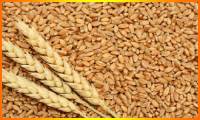
India will continue to export food grains to vulnerable countries.
The grain diplomacy will help position India as a key player in global food security space, which currently is facing acute challenges due the shifts in geopolitics and the Russia-Ukraine war.
India has also sent food grains to other countries such as Sri Lanka, Bangladesh, Maldives, Israel, Indonesia, Malaysia among others.
With monsoons now covering almost the entire country, concerns over a possible El Nino situation have somewhat eased. However, the delay has led to significant rise in food prices in India. Challenges related to climate change have been rising not just in India and South Asia but the world over. This has also caused worries over global food supplies.
More than 60 per cent of the rice sowing in India, which supplies about 40 per cent of the global rice requirement, takes place during the Kharif season which commences with the onset of the monsoon and harvested around November. The remaining production of rice takes place during the Rabi cycle in the winter months.
Last month Prime Minister Narendra Modi addressing the G20 Agriculture Ministers’ summit said that India will not only be the voice of the Global South but was ready to play a crucial role in maintaining global food security amid rising climate risks while taking a lead role in charting out new dynamics.
India, the largest exporter of rice in the world, has been actively providing food grains to several vulnerable countries as part of its humanitarian assistance programme.
In the July to June period of 2022-23– the country’s crop year, food grain production rose 5 per cent to a record 330.53 million tonnes driven by increased output of rice and wheat.
Source: indianarrative.com
Resolution of WTO disputes will strengthen India-US trade.
THE office of the United States Trade Representative (USTR) announced recently that the US and India had reached an agreement to terminate ongoing disputes at the World Trade Organisation (WTO), including a fight over the then President Donald Trump’s tariffs on steel and aluminium and India’s retaliatory duties. India agreed to remove retaliatory tariffs implemented against certain US products in response to America’s institution of tariffs on steel and aluminium in 2018 under Section 232 of the 1962 Trade Expansion Act.
The six WTO disputes to be terminated are: from the US side — countervailing measures on certain hot-rolled carbon steel flat products from India, measures related to renewable energy sector, measures on steel and aluminium products; and from India’s side — measures related to solar cells and solar modules, export-related measures and additional duties on certain products from the US.
However, while the countries have agreed to terminate the outstanding disputes at the WTO, the US did not take the next step of exempting India from Section 232 tariffs. Indeed, the USTR statement highlighted the success of the negotiations while explicitly stating, 'The resolution maintains the integrity of the US 232 measures.' According to the terms of the resolution, the US will continue to monitor the efficacy of the Section 232 tariffs against India and keep processing exemptions to the tariffs, consistent with past practices.
'We have decided to resolve long-pending trade-related issues and make a new beginning,' Prime Minister Narendra Modi said at a joint news conference with President Joe Biden following their White House meeting.
The agreements are a surprising development after National Security Council spokesperson John Kirby told mediapersons at a press briefing earlier not to expect 'a specific resolution on trade issues coming out of these next few days'.
In fact, India has agreed to remove retaliatory tariffs on certain US products, including chickpeas, lentils, almonds, walnuts, apples, boric acid and diagnostic reagents, which it imposed after Trump slapped duties on steel and aluminium imports.
'Today’s agreement represents the culmination of intensified bilateral engagement over the last two years, including through the US-India Trade Policy Forum, to deepen our economic and trade ties,' US Trade Representative Katherine Tai said in a statement. 'As a result of our work, US agricultural producers and manufacturers will now enjoy renewed access to a critical global market, and we will strengthen our trade relationship with one of our closest partners,' she added.
The USTR remark on maintaining the integrity of the Section 232 measures means that India agreed to lift its trade retaliation without the US altering the steel and aluminium tariffs that Trump imposed, a USTR spokesperson said.
In addition to the two cases related to Trump’s tariffs, both nations also agreed to terminate four other WTO disputes — two each had been filed by India and the US. That still leaves one filed by the US in 2012 challenging India’s poultry trade barriers. However, a former US trade official said talks on that issue were continuing and a deal was still possible.
The two other cases terminated by the US are a 2018 complaint against Indian export subsidies and a 2013 complaint against Indian domestic content requirements for solar cells.
India terminated a 2016 complaint against state-level subsidies and domestic content requirements for renewable energy and a 2012 complaint over US countervailing duties on certain steel products.
The statement issued by Biden and Modi also highlighted India’s interest in being reinstated in the US Generalised System of Preferences (GSP) programme, which waives US import duties on thousands of goods from developing countries.
Trump kicked India out of the programme in 2019, saying that New Delhi did not provide sufficient market access to American goods. Biden and Modi agreed to intensify work on issues related to India’s eligibility criteria, the joint statement said.
The leaders also welcomed the initiation of talks on government procurement issues. That could lead to India’s designation as a ‘Trade Agreements Act’ country, which would help its companies compete for US government procurement contracts.
In another trade area, Biden reiterated his administration’s commitment to work with the US Congress to lower barriers to the export of high-performance computing technology and source code to India.
Biden also invited Modi to attend as a guest the annual Asia-Pacific Economic Cooperation summit, which the US is hosting in San Francisco in November. India is not a member of the 21-economy group, but had expressed interest in joining it in the past. Biden is expected to travel to India in September for the G20 leaders’ summit, which New Delhi is hosting.
Politico had reported that there could be a package of agreements to resolve the WTO disputes. But Kirby dismissed that possibility. 'That’s not what this is about,' he said of Modi’s White House visit. 'This is really about the strategic nature of the relationship and driving it forward.'
That ran against a previous pledge by Tai and Indian Commerce Minister Piyush Goyal, issued in January, to try to resolve the WTO disagreements in the coming months. Tai and Goyal recently held a virtual meeting to discuss bilateral trade concerns.
In future also, there is no need to knock the door of the WTO to resolve trade disputes between the two countries. Both can amicably resolve their trade disputes because the mutual understanding between them has enhanced bilateral trust.
Source: tribuneindia.com