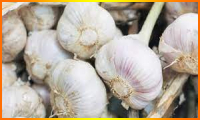
Indian garlic exports rose 159% on year to 57,346 ton in 2022-23.
India's export of spices in the year ended March declined 8.3% on year to 1.4 million ton, according to data from the Spices Board India. However, in value terms, exports rose 4.7% to Rs 317.6 billion in 2022-23. While exports of most spices fell, those that registered a rise included turmeric, garlic and coriander.
Garlic exports rose 159% on year to 57,346 ton in 2022-23. Exports of cumin declined 14% on year to 186,509 ton in 2022- 23, while turmeric exports rose 11% on year to 170,085 ton. India exported 54,482 ton of coriander in 2022-23, up 12%, the data showed.
Exports of small cardamom declined 30% on year to 7,352 ton and large cardamom fell 5% on year to 1,884 tn. Exports of chilli in 2022-23 declined 7% on year at 516,185 ton, while pepper fell 18% to 17,958 ton.
Source: freshplaza.com
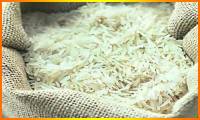
India s FCI sells 170 lt rice as recycled PDS rice rules cheaper.
Food Corporation of India (FCI) has sold only 170 tonnes or 0.04 per cent of 3.86 lakh tonnes of rice offered in the first auction under the open market sale scheme (OMSS). On the other hand, 32 per cent offtake has been reported in the case of wheat in the second round, up from 21 per cent in the first round.
The average selling price of wheat in the auction was Rs.2,137.33 per quintal, against a reserve price of Rs.2,125/ quintal for the URS variety and Rs.2,150/quintal for the FAQ variety. There were 1,337 successful bidders, sources said. The pan-India average selling price was Rs.2,136/quintal in the first round.
Rice was sold at an average Rs.3,175.35/ quintal, higher than its reserve price of Rs.3,100/quintal.
Karnataka’s Shri Gouri Shankar Trading Company purchased 40 tonnes of rice at Rs.3,183/quintal, whereas four other buyers got it at Rs.3,173/quintal. Gujarat’s Shree Padmavati Rice Pulse and Oil Mills and Maharashtra’s Akshay Agro Sales Corporation have bought 50 tonnes each.
Sadguru Trading Company, also from Maharashtra, has bought 20 tonnes and Meghalaya’s Bothra Trading Company 10 tonnes, the sources said.
'The rice that FCI has offered under OMSS is available at around Rs.2,600/ quintal, which is much below the reserve price. The recycled rice from the public distribution system is sold at lower rates compared to 'normal' varieties,' a rice miller in Punjab said. Asked why there were no takers in Punjab for FCI rice, as a maximum of 1.5 lt was offered in the state, he said there was no demand in Punjab as it could not be sold elsewhere.
On wheat offtake, a miller in Madhya Pradesh said most buyers are re-selling their grain to big buyers at marginally lower than market rates since the FCI’s offer is the cheapest. Most buyers are bidding around the reserve price, as they know there is no competition due to the government’s cap of 100 tonnes.
'If the government wants prices to cool down, the maximum quantity should be raised to 500 tonnes from one depot, and one entity should be allowed to buy from at least five-six places. It will create competition, as well as higher lifting, that will result in increased availability,' said the roller flour miller from MP.
Source: thehindubusinessline.com

Indian Institute of Horticultural Research identifies third unique farmer s jackfruit variety for promotion.
Enthused by the massive response to two farmers’ varieties of jackfruit — iddu and Shankara — which were promoted by it, the Bengaluru-based Indian Institute of Horticultural Research (IIHR) has identified one more variety of jackfruit being grown by a farmer for promotion.
Its unique characteristic is that it is not only tasty and nutritious but also suitable for commercial processing for making products like jam, squash and fruit bar, said IIHR Director Sanjay Singh.
Unlike the earlier two varieties, whose fruits were small, the new one weighs 25 to 32 kg.
Unlike the earlier two varieties, whose fruits were small, the new one weighs 25 to 32 kg.
Heavier fruit
Unlike the earlier two, whose fruits were small, the new one weighs 25 to 32 kg, he said. It has been identified in the field of Nagaraj in Hessarghatta on Bengaluru’s outskirts. Presently there is only one such tree in his field.
Dr. Singh said IIHR scientists, who have been observing the tree for the last three years to study its characteristics, conducted tests to ascertain the nutritious value of the fruits from this variety.
It also gives fruit during the off season (August to October) which is a rare trait for jackfruit.
The new variety was identified in the field of Nagaraj in Hessarghatta on Bengaluru’s outskirts. Presently there is only one such tree in his field.
The new variety was identified in the field of Nagaraj in Hessarghatta on Bengaluru’s outskirts. Presently there is only one such tree in his field.
Registering the variety
The IIHR is helping the farmer to register his variety with the Protection of Plant Varieties and Farmers’ Rights Authority so that he will get exclusive rights over it. The farmer will become the custodian of this variety. After the completion of this process, the institution will enter into an MoU with the farmer to multiply the variety. This arrangement will bring financial benefits to the farmer as the IIHR will sell the saplings under its banner and provide 70% of proceeds to the farmer.
'This particular tree was planted 43 years ago by my father. Though we did not know its technical details, we knew it was attractive as there was a huge demand for its fruits, and people were willing to pay a premium to get this fruit,' said Mr. Nagaraj, who is an innovative farmer.
Fruit profiled
This fruit was noticed by scientist K.N. Jagadish, who is a subject specialist at the IIHR’s Krishi Vigyan Kendra in Hirehalli, Tumakuru. The IIHR scientists then conducted biochemical profile of the fruit.
The first such experiment by the IIHR to promote farmers’ variety by choosing the Siddu jackfruit was a success as the farmer has got a huge demand for its saplings which is helping him to earn handsome profits of over a crore just from a single tree.
Source: thehindu.com
Bogura yogurt, Chapainawabganj's Langra, Ashwina get GI tag.
In addition, the Aman variety of the fragrant Tulshimala rice from Sherpur has also acquired the GI tag, Md Zillur Rahman, deputy registrar (Trade Marks) of the Department of Patents, Designs and Trademarks (DPDT), said.
The department under the industries ministry issued GI certificates to the four products on 25 June.
With this, 15 Bangladeshi products, including Jamdani, Ilish, Muslin, Rajshahi silk, Rangpur's Shatranji, Kataribhog rice of Dinajpur and Fazli mango of Rajshahi and Chapainawabganj, have been recognised as GI products so far.
Bogura, often dubbed as the capital of yogurt, produces an average of 50 tonnes of yogurt per day in around 400 factories of various sizes. Demand for the fermented dairy product doubles during festivals like Eid.
Nurul Bashar Chandan of Asia Sweets, a leading name for yogurt in Bogura at present that produces around 1,000kg of yogurt per day, sees the GI certification as a great opportunity to boost the yogurt market.
'With GI recognition, we will get multifarious benefits in terms of exporting yogurt. But if the yogurt is to be taken to the world market, the cooperation of the government is very much needed,' he said.
'The GI recognition has established a distinct identity for Bogura yogurt in the world,' said Hasan Ali, chairman of reputed sweets and yogurts manufacturer Akbaria Group.
'Bogura city and Sherpur Upazila together sell at least one lakh pieces of yogurt, worth Tk1 crore, per day. The country can generate more revenue by exporting the product,' he added.
Source: tbsnews.net
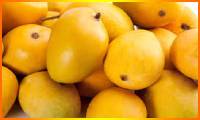
Valsad s Iconic Alphonso Mangoes Poised To Receive Geographical Indication Tag.
Valsad, in south Gujarat, is the mango capital of India, and its famed Alphonso mangoes, also called Valsadi Hapus, are on the brink of receiving the coveted Geographical Indication (GI) label, which is great news for mango fans and farmers.
This recognition will make Valsadi Hapus the second mango variety in Gujarat to receive the GI tag, following the famous Kesar mangoes cultivated in the foothills of Girnar mountains in Junagadh district. Nationally, Valsadi Hapus will be the third mango variety in India to receive GI registration, joining the ranks of ‘Gir Kesar’ and Dussheri mangoes.
The lush mango orchards surrounding Valsad district are well-known for their delectable Alphonso mangoes, which exude a captivating aroma and unmatched flavor. The Geographical Indications Registry of the Central government, based in Chennai, will bestow the GI tag upon Valsadi Hapus, thereby conferring a distinct identity to these mangoes in both the domestic and international markets.
DK Sharma, an official at the Navsari Agriculture University (NAU) in Pariya, Valsad, shared that the process for obtaining the GI registration of Valsadi Hapus is currently underway and is expected to be finalized within the next three months. The NAU’s Pariya campus has diligently addressed approximately 28 objections raised at the Chennai-based GI registry, demonstrating their commitment to securing this prestigious recognition from the Central Government.
In 2023, the southern region of Gujarat has emerged as the leading cultivator of mangoes among the state’s seven districts, surpassing Central and North Gujarat, Saurashtra, and Kutch. The mango cultivation area in South Gujarat spans approximately 98,672 hectares, with an impressive production volume of 5.73 lakh metric tonnes.
The GI tag serves as a testament to the unique characteristics and qualities of Valsadi Hapus mangoes, attributing their exceptional taste and aroma to the region’s specific environmental and geographical conditions. This recognition will not only enhance the mangoes’ market value but also protect them from imitations and counterfeits.
The GI-tagged Valsadi Hapus mangoes will offer consumers the assurance of authenticity and quality, boosting their demand in domestic and international markets. The recognition will also provide a significant boost to the local economy and contribute to the preservation of traditional agricultural practices in Valsad.
'The impending GI tag for Valsadi Hapus mangoes is a moment of pride for the farmers, traders, and mango enthusiasts who have long recognized the exceptional nature of these fruits. It is a testament to the rich agricultural heritage of Valsad and reaffirms the region’s status as a prime producer of superior mango varieties' said an Alphonso farmer in Vapi.
Source: theblunttimes.in
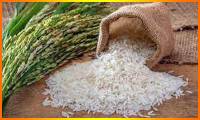
Indian rice exports up 10% in April-May as basmati shipments gain 21%.
Indian rice exports were off to a good start in the current financial year with volume of shipments increasing by about a tenth in the first two months to over 3.67 million tonnes (mt) compared with 3.36 mt in the same period a year ago on strong demand for basmati rice.
Basmati rice shipments during this period were up 21 per cent at 8.30 lakh tonnes (lt) against 6.85 lt a year ago. Similarly, non-basmati rice shipments, despite curbs on broken rice and export duty, were up by 6 per cent at 2.84 mt against 2.67 mt.
Basmati shipments to West Asia, the main market for the aromatic rice registered an increase of 13 per cent at 6.15 lt against 5.43 lt a year ago on higher demand from countries such as Iran, Iraq, Kuwait, Qatar and United Arab Emirates. However, shipments to countries such as Saudi Arabia and Yemen declined. Exports in dollar terms to West Asia were up 22 per cent at $665 million ($545 million in the year-ago period).
Gain in other geographies
To other geographies such as European Union and Asian countries, basmati shipments more than doubled during these two months. Shipment volumes to the European Union were up 154 per cent at 41,644 tonnes (16,407 tonnes) on demand from the Netherlands, Germany, Italy and Belgium. The basmati export value to the EU during April-May was up 196 per cent at $52.61 million ($17.74 million). In Asia, countries such as Bangladesh, Bhutan and Nepal among others stepped up the purchase of the aromatic rice with volumes rising to 15,339 tonnes (6,995 tonnes).
Similarly, in the case of non-basmati rice, shipments to Africa during April-May were up at 20.96 lt (15.49 lt), while exports to West Asia recorded a 24 per cent growth at 2.20 lt (1.77 lt). 'There is a good demand. Despite certain restrictions, shipments are growing,' said B.V. Krishna Rao, President, The Rice Exporters Association. India has placed curbs on exports of 100 per cent broken rice and has levied a duty of 20 per cent on white and brown rice exports since September 8, 2022.
Source: thehindubusinessline.com
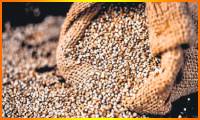
Government of India and Government of Kenya will be co-hosting India-Africa International Millet Conference in Kenya on 30-31 August 2023.
To celebrate the International Year of Millets, Ministry of Agriculture and Famers Welfare, Government of India and the Ministry of Agriculture and Livestock Development, Government of Kenya will be co-hosting the ‘India-Africa International Millet Conference’ in Kenya with support of International Crops Research Institute for the Semi-Arid Tropics (ICRISAT). The international conference scheduled for 30-31 August 2023, will witness participation from government leaders, researchers, farmers, entrepreneurs and industry associations etc, from around the globe.
The official curtain raiser for ‘India-Africa International Millet Conference’ was held at Nairobi, Kenya on Thursday, giving the audience a glimpse of what to expect.
The event was graced by the High Commissioner of India to Kenya, Joint Secretary (Crops), Government of India, Principal Secretary, Government of Kenya and Director General, ICRISAT. Officials from the agricultural sector of Kenya, members of the diplomatic community, international agricultural research leaders, farmers and representatives from the private sector also attended.
Through the international conference, the Government of India and Kenya aim to raise public awareness about millets as the ‘world’s emerging smart food. Additionally, the global event would also help highlight the South-South exchange and collaboration opportunities within the realm of millets.
With high levels of minerals such as iron, calcium, zinc and other vital nutrients, Millets are a treasure trove of health benefits. Additionally, they are also drought-resistant, pest-resilient, climate-friendly crops that can boost income opportunities and livelihoods of smallholder farmers, especially in sub-Saharan Africa and Asia.
The Curtain Raiser event commenced with Dr. Jacqueline Hughes, DG ICRISAT, briefing the audience about the agenda of the event. While enumerating the multiple benefits of millets, she spoke about the growing discourse around mechanization, seed systems, digital agriculture and value addition in millets. 'We need to strengthen the value chains of millets to ensure consumer demand which will then assure farmers of profitable markets', Dr. Hughes noted.
In her inaugural address, Ms. Shubha Thakur, JS (Crops), Department of Agriculture and Farmers Welfare, Government of India, noted how the conference would help highlight actionable strategies by leaders, investors, institutions and individuals, while serving as a medium for joint ventures, collaborations, and tech transfer among key stakeholders.'The Government of India, in collaboration with the Indian Institute of Millets Research, has been addressing concerns related to millet farming since 2018, when India celebrated its National Year of Millets. Acting on India’s proposal, the United Nations General Assembly declared the year 2023 as the ‘International Year of Millets’, giving these ancient grains a global platform. Our focus has been on ensuring sustainable agricultural practices and enhancing the commercial viability of millet cultivation. 'Ms. Shubha Thakur added.
In her welcome address, HE Namgya Khampa, the High Commissioner of India to Kenya, highlighted the importance of millets in addressing the issues of malnutrition and global hunger. Speaking about the significance of South-South cooperation in agriculture, HE Namgya Khampa also stated, 'We believe that collaboration between the global South in agriculture is crucial for maintaining food sufficiency in our countries.'
Following his remarks, Mr. Phillip Kello Harsama, Principal Secretary for Agriculture, Government of Kenya, further emphasized the significance of millets in the economic advancement of smallholder farmers. Since millets require minimal inputs and can be grown in relatively shorter duration, Kenyan farmers can benefit immensely from these wonder grains and add to their income, he noted.
One of the key highlights of the Curtain Raiser event was the unveiling of the logo and website of the India-Africa International Millet Conference. The website will enable participants to register for the conference and learn more about the global event and Millets in general.
The unveiling was followed by an insightful panel discussion on ‘Promoting Millets in Africa and India’ moderated by Dr. Rebbie Harawa, Regional Director & Country Representative, Kenya at ICRISAT. Distinguished panelists included the Director General of Kenya Agriculture and Livestock Research Organization (KALRO), the President of the Alliance for a Green Revolution in Africa (AGRA), and representatives from the UN Food and Agriculture Organization (FAO) and World Food Programme (WFP) and private sector.
The event concluded with a round of interaction with the media, and remarks by the Deputy High Commissioner, Kenya.
Source: pib.gov.in
World Food India-2023: Roundtable interaction co-chaired by Secretary, DPIIT, and Secretary, MoFPI with agri-food processing companies in New Delhi.
With regard to the upcoming World Food India-2023, an investor roundtable interaction was co-chaired by the Secretary, Department for Promotion of Industry and Internal Trade (DPIIT), and the Secretary, Ministry of Food Processing Industries with agri-food processing companies in New Delhi, yesterday. The roundtable witnessed participation from the leading global and Indian food processing companies. During the interaction, the future plans of the participating companies and their prospects of partnerships with MoFPI for the WFI-2023, being organized from 3-5 November, 2023 at Pragati Maidan, New Delhi, were discussed.
In his special address, Secretary, DPIIT emphasized on the importance of manufacturing sector in the growing Indian GDP. He also mentioned the favourable agro-climatic zones in India which are not just suitable for production of a wide variety of agri-commodities like cereals, pulses, fruits, vegetables etc., but also to process them in large quantities.
In her keynote address, Secretary, MoFPI mentioned about the growth and vast opportunities present in the food-processing sector. She added that the ministry is organizing the 2nd edition of the highly anticipated World Food India event, envisioning an even larger scale compared to the previous 2017 edition. The Secretary extended a heartfelt invitation to all companies to participate in the event with great enthusiasm.
During the roundtable, the participating companies expressed their optimistic outlook on the Indian market and lauded the various initiatives taken by the Government of India to improve the business environment, including the favourable policies such as the Production Linked Incentive Scheme and the flagship Pradhan Mantri Kisan Sampada Yojana initiated by MoFPI. The companies also expressed their interest in participating in World Food India-2023 and affirmed their willingness to sponsor the event and showcase their products and technologies through dedicated stall spaces. Many companies also showed keen interest on partnering with MoFPI for the sessions that are being planned as part of the event.
In his closing remarks, Additional Secretary, MoFPI mentioned that the Investment Facilitation Cell (Invest India) and event partner FICCI will stay in touch with the companies to firm up the participation details. EY is roped in as the knowledge partner for the event.
Source: pib.gov.in

No evidence suggesting slowdown in Indian economy: Finance ministry.
The Indian economy has carried the momentum from the past year into the current fiscal year and there has been no evidence by far that suggests a slowdown in the current financial year 2023-24, said the Department of Economic Affairs under Ministry of Finance in its monthly review report.
According to the provisional estimates released by the National Statistical Office (NSO) recently, real GDP growth for 2022-23 stood at 7.2 per cent, higher than the 7 per cent as was projected earlier. An upward revision in the 2022-23 GDP numbers is expected going forward.
For 2023-24, the central government sees growth at about 6.5 per cent.
'A strong final quarter performance pushed the GDP growth for the full year to 7.2 per cent, higher than the 7 per cent estimated in February. This upside to the growth estimate takes the growth momentum deep into the current year,' said the finance ministry report.
Several forecasting agencies also share optimism as they have upwardly revised their growth estimates for India for 2023-24.
'The latest evidence also does not indicate any slowing of activity in the first two months of the current year. India is the fastest-growing major economy, is now no longer only a statistical fact,' it added.
The finance ministry stated that what has been clearly working for India's economy is the strength of its domestic demand.
'High-frequency indicators paint a healthy picture of the state of the economy. Urban demand conditions remain resilient, with higher growth in auto sales, fuel consumption and UPI transactions. Rural demand is also on its path to recovery, with robust growth in two and three wheelers sales.'
Goods and Services tax collection, Purchasing Managers' Index (PMI) for the manufacturing and services sector continues to expand, it noted.
Further, for the agricultural sector, it said the forecast of a normal monsoon despite the prevalence of El Nino, adequate availability of seeds and fertilisers and sufficient water in key reservoirs augur well for a healthy kharif season.
India has three cropping seasons -- summer, kharif, and rabi.
Crops sown during June-July and harvested in October-November are kharif. Crops that are sown during October-November and the produce harvested from January-March depending on maturity is Rabi. Crops produced after rabi but ahead of kharif are summer crops.
Farmers have meanwhile started sowing their Kharif crops. Paddy, moong, bajra, maize, groundnut, soybean, and cotton are some of the major Kharif crops.
Source: economictimes.indiatimes.com

Report of the Expert Committee on Market Yard of National Importance platform.
Government of India has always been supporting the idea of strengthening Agricultural Produce Markey Committees (APMCs) and making them more transparent and competitive with the advent of new edge digital technologies through improving infrastructure and services offering to the farmers.
e-NAM (National Agriculture Market) has come a long way since its launched in April 2016. So far, 1361 Mandis of 23 States and 04 UTs have been integrated to e-NAM platform. As on 03rd July 2023, more than 1.75 Crore Farmers & 2.45 Lakh traders have been registered on e-NAM portal. Total volume of 7.97 Crore MT & 25.82 Crore numbers (bamboo, betel leaves, coconut, lemon & sweet corn) collectively worth approximately Rs. 2.79 lakh crore of trade has been recorded on e-NAM platform.
Achievement of e-NAM has been path breaking in Agri-marketing sector. Though 1361 regulated markets have become a part of the e-NAM platform, a need has been felt that for obtaining a competitive price especially for surplus farmer produce inter-mandi and more importantly, inter-State trade is crucial and it is essential that a more concerted intervention is needed for creating a larger reach for the farmer’s surplus produce through an efficient and seamless marketing system across India by promoting quality based trading with a transparent price discovery mechanism for inter-mandi and inter-State trade.
Taking a stride of policy reforms to the next level and with a vision to enhance the share of the producers in the end consumer price, Government of India had constituted a high-level Expert Committee on 21st April, 2023, to promote inter-mandi & inter-State trade through conceptualization and implementation of Market Yard of National Importance (MNI). The said expert committee was chaired by Dr. Manoj Rajan, Special Secretary (Agriculture), Government of Karnataka with the members from State Agri Marketing Boards of Uttar Pradesh, Karnataka, Rajasthan, Telangana, Odisha & Bihar. Apart from State representative, Director (Agriculture Marketing), DA&FW, GoI, Deputy AMA, DMI, representative from SFAC and Strategic Partner for e-NAM were also the members of the said committee. The Committee has been assigned the task of recommending the framework for implementation of MNI.
On 4th July, 2023, Chairperson of the Expert Committee has submitted a report of the Expert Committee on MNI platform. Aforesaid committee has recommended the implementation framework of MNI-P platform, legal framework & inter-state reciprocity of license and movement, dispute resolution mechanism, rollout strategy etc. This platform will provide an opportunity to farmers of the participating states to sell their surplus produce beyond its state boundaries. This platform would enable to create digital ecosystems that leverage the expertise of various segments of agriculture value chain.
Source: pib.gov.in