Sh Piyush Goyal appreciates efforts of States and UTs at the National Conference of Food Ministers; highlights need to work collectively to serve the people.
Union Minister of Consumer Affairs, Food & Public Distribution, Commerce & Industry and Textiles, Shri Piyush Goyal today appreciated the efforts of the State and UT governements for procuring and distribution of foodgrains and said that all the States/UTs should work together with the Government of India in the spirit of cooperative federalism. He said this while chairing the ‘National Conference of Food Ministers of States/UTs’ organized by the Department of Food and Public Distribution (DFPD), in New Delhi today. The Minister requested all States/UTs to submit their pending claims on dues with the union government expeditiously so that they can be settled at the earliest.
The conference was graced by Union Ministers of State for Consumer Affairs, Food & Public Distribution Ms. Sadhvi Niranjan Jyoti and Shri Ashwini Kumar Choubey, 17 Food Ministers and officials from 35 States/UTs and officials of the Department of Food and Public Distribution, Govt of India.
In the presentation, the Department highlighted the scale of, and reforms in, procurement process of foodgrains which is key to providing food security and stability to domestic prices of foodgrains.
During the conference, Shri Piyush Goyal also launched a new Sugar-Ethanol portal.
A demonstration of the Automated Multi-Commodity Grain Dispensing Machine - ‘Annapurti’ developed by the UN World Food Programme (UN-WFP) and Automatic Grain Analyzers developed for automated quality checking of grains was conducted as part of the Conference. In addition, a millet exhibition showcasing various millet products was held on the side-lines of the Conference.
During the first half of the Conference, a comprehensive strategy to increase the procurement of coarse grains was discussed and formulated. This strategic focus on coarse grains/millets reflects a broader objective to strengthen the nutritional security of the beneficiaries. It is projected that a total of 26.14 Lakh Metric Tonnes (LMT) of coarse grains would be procured in Kharif Marketing Season (KMS) 2023-2024, while the expected distribution would be 22.31 LMT.
Some of the other key topics that were discussed extensively during the conference included grading of procurement centres to ensure uniformity and quality, effective implementation of Pradhan Mantri Garib Kalyan Anna Yojana (PMGKAY), implementation of the SMART–PDS scheme for end-to-end computerization of procurement and distribution of foodgrains, transformation of Fair Price Shops (FPS), action plan for the implementation of Route Optimization study to bring down the distance involved in intra-State distribution, diversification of food basket through distribution of coarse grains/millets, among others.
Additionally, best practices of States/UTs were showcased to foster cross-learning on various topics including construction of Model FPS through MGNREGA funds by Uttar Pradesh, e-KYC & de-duplication of ration cards by Assam, Supply Chain Automation by Gujarat and quality assurance of Rice fortification by Andhra Pradesh.
Source: pib.gov.in

Commerce & industry ministry prepares plan to promote trade, investment; identifies 12 priority countries.
The commerce and industry ministry has worked out a detailed plan to promote trade and investment and identified 12 countries including the US and UK for priority action, an official said. The plan was formulated by a task force comprising officials from the department of commerce, department for promotion of industry and internal trade, Indian missions abroad and Invest India.
Under the plan, the task force has identified calender of activities for these 12 priority nations -- US, Brazil, Canada, UAE, Saudi Arabia, UK, Germany, Sweden, Japan, Taiwan, South Korea and Russia, said the official who did not wish to be named.
The plan was prepared after an in-depth analysis of export-import trends. outbound investments trends and strategic engagements with over 20 countries.
As part of the plan, the ministry will organise road shows in different countries, which will encompass investment and trade promotion engagements.
Industry and exporters are also encouraged to organise world-level exhibitions in India and participate in fairs being organised in these 12 countries.
'The exercise is part of a concerted effort of both the departments to promote trade and investments,' another official said.
Last month Commerce Secretary Sunil Barthwal has stated that the ministry is working on a trade strategy to promote exports.
As part of that, the Department of Commerce, Department for Promotion of Industry and Internal Trade (DPIIT), Invest India and Indian missions abroad would focus on priority countries.
There would be a focus on promoting exports along with catering to the needs of the domestic market, he had said, adding both departments were kind of forging an alliance in terms of promoting investments and exports and for that, both were working on a trade and investment strategy.
Under the strategy, they will also participate in some major exhibitions abroad, where teams from these departments would also go and do buyer-seller meets.
Source: economictimes.indiatimes.com
Commerce Ministry, MEA Should Work Together To Achieve India's Export Targets: Official.
The commerce ministry and external affairs ministry should work together to achieve India's export targets, said Prafulla Chandra Mishra, Statistical Advisor, Directorate General of Foreign Trade under the Ministry of Commerce and Industry on Wednesday
While speaking at an event of PHD Chamber, he said that PM Modi has proposed a 3T strategy focusing on trade, tourism and technology to strengthen Indian economic diplomacy.
'This can be done by utilising India’s overseas missions and embassies,' Mishra added. He further explained the methodology of export targeting.
Notably, India is aiming to achieve exports of USD 1 trillion each in merchandise and services by 2030. 'It is important to achieve an overall compounded annual growth rate (CAGR) of 14.47 per cent including a merchandise CAGR of 12.05 per cent and services CAGR of 17.39 per cent,' Mishra stated.
Sanjay Aggarwal, Former President, PHDCCI called for reducing the gap between exports and imports. He observed that India has been importing on a higher side and exporting less which needs to be addressed. All MSMEs must explore the favourable export destinations on the back competitive infrastructure provided by the government.
Aggarwal also called for rationalisation in customs duties for facilitating exports.
Manoj Pant, Chair, Foreign Trade and Investment Committee shared that trade policy and investment policies form the backbone to enhance the growth trajectory of any economy. Pant called for a focus on skilling and imparting relevant skills to enable MSMEs to focus on producing quality products for promoting exports of indigenous products.
Meanwhile, Vishal Dhingra, Co-chair, Foreign Trade and Investment Committee mentioned exports have witnessed exponential growth in the past few years. There is a need to build capacity and train people.
Dhingra mentioned that free trade agreements (FTAs) between India and other national economies and the production linked incentive (PLI) scheme will drive export growth in India. With phenomenal investment in infrastructure by the government, India can expect a multiplier effect in the growth of exports in the coming years.
Source: businessworld.in

IBA to organise National Beverage Conclave 2023 in New Delhi today.
The Indian Beverage Association (IBA) is organising the National Beverage Conclave 2023, in New Delhi on July 6 and will focus on the theme of 'Sustainable Food Systems: Redefining the Beverage Industry.'
According to IBA, the conclave aims to showcase and reinforce the non-alcoholic beverages industry as a driver of job creation, export-oriented supply chains, and investments in food processing aligned with national priorities.
'To support India’s ambition to move from food security to nutrition security, the conclave will highlight the industry's potential in environmental sustainability (water conservation, plastic reduction), economic and fiscal sustainability (investment and incentives), and social sustainability (healthier diets, improved welfare),' reads the statement by the IBA.
The event is expected to bring together key stakeholders including policy makers, regulatory bodies, food scientists, Indian and international organisations such as the WHO, ICMR-NIN, industry, startups, thinktanks as well as influencers and key opinion leaders.
IBA remarked that with a market value of approximately Rs 58,000 crore in 2022, according to the Indian Council for Research on International Economics Research’s (ICRIER) 2022 study on the ‘Contribution of Non-alcoholic Beverage Sector to Indian Economic Growth’, the non-alcoholic beverages industry has experienced remarkable average growth rate of approximately 20% over the previous decade.
Meanwhile, experts feel that despite this impressive growth, the sector faces challenges including high GST and rates not aligned with FSSAI Regulations, unfair competition from the informal sector, counterfeit products, negative public perceptions, value/supply chain constraints, and the unavailability of quality local raw materials.
JP Meena, secretary-general, IBA, commented, 'A multi-stakeholder engagement and public-private partnership are important to address many of these local challenges. IBA is committed to driving a sustainable food system and having a meaningful impact on the economic progress of the country while also addressing many of the social, economic and environmental challenges.'
The conclave will also lay the future roadmap for making India a global beverage processing hub by 2030. It will explore best practices, provide recommendations for government policies, and focus on creating an ecosystem that supports export-oriented growth, innovation, and international collaboration. The idea is to shape the future of the non-alcoholic beverage industry and contribute to India's journey towards a 5 trillion-dollar economy.
Source: fnbnews.com
India-UK FTA: Half the chapters in pact agreed on; working to complete deal early, says UK International Trade Minister.
The United Kingdom is keen that free trade pact being negotiated with India is completed at the earliest as it re-focuses its attention of the growing markets of the Indo-Pacific, however the financial powerhouse is not setting any deadlines for the agreements which will include deals on service sector and investments.
UK's Minister for International Trade, Nigel Huddleston, in an exclusive interview to PTI said that half the chapters in the deal have already been concluded and work is on to complete the negotiations as soon as possible.
'We have made good progress on the FTA ... we have concluded negotiations on half the chapters in the pact. We want a comprehensive agreement on both goods and services. It (the pact with India) is going to be very important as part of our shift towards the Indo-Pacific,' the UK Minister said.
'We are particularly keen to get this FTA with India as we have strong historic ties,' he added.
British Prime Minister Rishi Sunak had earlier last week indicated that both countries were aiming for a 'truly ambitious trade deal.' The FTA which has been in the works for some years now is expected to be a comprehensive pact covering not only goods and services trade but also in investments.
Huddleston pointed out that 80 per cent of Great Britain's economy was dependant on services and the chapters on services are therefore an important part of the deal being negotiated for both the countries.
Britin which has an USD 3.1 trillion economy according to World bank data, has long been a service sector powerhouse. The city of London, which is one the world's biggest financial markets, has also long attracted Indian companies seeking to raise funds from the global market.
'It's a negotiation, so I really can't reveal our hand,' he said with a smile when asked about sticking points in the agreement.
The Minister also said the pact, which would include chapters on investments from both countries, would take care to see that not only big business but small and medium enterprises from both countries gained by the agreement.
Speaking on sub-deals on trade in whiskey, automobiles, etc., the Minister said, 'we would like to see tariffs come down ... (However) our pacts are not just about tariff but also a lot about non-tariff barriers.'
He pointed out that the way forward for promoting ease of doing trade would be to reduce 'paperwork and increase digital signatures.'
Nigel Huddleston who was appointed Minister for International Trade in February this year with charge of all global trade netotiations, has been an important Tory leader in the UK and has been Government Whip (Lord Commissioner of HM Treasury) before this.
Huddleston told PTI that temporary business visas and inter-company transfer of people 'was part of the conversation' to make it easier for businessmen and highly skilled professionals to travel between the two countries.
UK companies have invested about USD 33,87 billion in the Indian market while some 900 Indian firms operating in the UK are believed to generate USD 68 billion in turnover, according to Invest India.
Source: economictimes.indiatimes.com
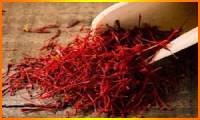
From India's crown, a flavour worth a fortune.
Kashmir saffron is now about five times costlier than silver.
A 10 gm packet of saffron costs as much as 47 gm of silver - about Rs.3,250. Saffron prices in the Kashmir valley have skyrocketed to Rs.3.25 lakh per kg, from Rs.2 lakh per kg last year, after the precious crop from the Valley got the Geographical Indication (GI) tag. A GI tag is a sign used on products that have a specific geographical origin and possess qualities or a reputation due to that origin. The tag has helped the domestic spice fight off competition in global markets from Iranian saffron, as the Kashmiri crop is clearly seen as the genuine article.
The golden crop, which brings colour, flavour and aroma to biryani and many other dishes, is scripting a revival. Its per-hectare production has increased manifold, bringing cheer to growers who had been seeing a constant decline.
'Kashmir saffron is the only GI-tagged saffron in the world. Now buyers from the US, Canada and Europe have started picking up saffron from Kashmir,' said Choudhary Mohammad Iqbal, agriculture director, Kashmir. 'Farmers are getting good prices for their crop and traders too are making good money.'
Rehman Ahmed, owner of Dalijheel Saffron Co in Kashmir's saffron centre of Pampore, agrees. 'The GI tag has really helped saffron planters,' he said. 'Earlier, saffron farmers were getting Rs.1.30-1.5 lakh per kg. Now, that has shot up to Rs.1.8-2 lakh per kg.'
'Iranian saffron sold as Indian'
Farmers sometimes fail to take measures to rejuvenate their crop, which brings down productivity, said Irfan Kungwani, owner of Data Kesar. But Kashmir's farmers have been able to overcome the challenge from the Iranian product, especially that posing as the real thing. 'Saffron from Iran has been creating a lot of trouble in the global markets for Indian saffron,' said Kungwani. 'It was being sold as saffron from Kashmir. The GI tag, however, has been beneficial to stop the selling of Iranian saffron as Indian saffron.' Kashmir produces 18 tonnes of saffron annually. The agriculture director said the ultimate goal is to take saffron production to 25-27 tonnes in the years to come. 'After introduction of the National Saffron Mission to revive the crop, production started going up from 1.8 kg gradually, and has now reached close to 5 kg per hectare,' said Iqbal.
Source: economictimes.indiatimes.com
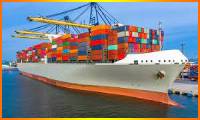
Russia turning towards Asia post Ukraine conflict, trade with India improved: EAM Jaishankar.
Union Minister of External Affairs, S Jaishankar, on Monday said Russia is turning more towards Asia after the Ukraine conflict.
Addressing the students' dialogue at the National Institute of Technology, the EAM also highlighted the growth in the economic partnership between India and Russia and said Russia's trade with India was USD 40 billion last year, far ahead of the figure before the Ukraine conflict.
'Till last year, Russia's main economic partner was the Western countries. However, that route was closed after the Ukraine conflict. So, Russia is turning more towards Asia,' EAM Jaishankar said.
'Our trade with Russia before the Ukraine conflict was around 12-14 billion dollars, our trade last year was 40 billion dollars,' the EAM added.
At the event, Jaishankar also spoke about the growing participation of Asian economies in the world and said, 'China is the biggest Asian economy and it will show a path there. I think we should not be worried about what they are doing with other countries, we should keep our own relations going and see how the interest of Indian people is best served.'
Later, the minister also discussed the impact of foreign policies and said, 'The decisions we make on foreign policy affect our lives every day. How much the price of petrol you pay is decided whether we do a good foreign policy or not. If we had not done a good foreign policy, your petrol price would have been much higher...'
'Today, what we do with other foreign partners actually impacts your life,' he added.
Last year, a new S&P Global Market Intelligence report stated that India has emerged as a strong trade partner of Russia and is expected to remain so in 2023.
The report highlighted the anticipated shifts in trade due to the Russia-Ukraine conflict as well as a positive outlook for containerized trade in 2023 despite a mere 0.7 per cent year-on-year (y/y) growth in 2022 led by the estimated slowdown in the second half.
Source: indiatoday.in

For substantive ties : Taiwan plans to set up representative office in Mumbai.
Taiwan on Wednesday announced plans to enhance its official presence in India by setting up a new representative office in the financial hub of Mumbai, taking the number of such facilities in the country to three.
India and Taiwan, which don’t have formal diplomatic relations, first established representative offices in each other’s capitals in 1995. Besides the Taipei Economic and Cultural Center (TECC) in New Delhi, Taiwan set up an office in Chennai in December 2012.
India currently has the India-Taipei Association (ITA) office in Taipei. These facilities on both sides function as de facto missions and are responsible for promoting cooperation in trade, investment, tourism, education, and science and technology.
Taiwan’s foreign ministry said in a statement that the establishment of a TECC in Mumbai is aimed at further advancing 'substantive ties' with India and deepening exchanges and cooperation.
'In recent years, cooperation between [Taiwan] and the Republic of India has witnessed significant progress in numerous domains, including economics and trade, science and technology, critical supply chains, culture, education, and traditional medicine,' the statement said.
Taiwan’s move comes at a time when India’s ties with China have been taken to their lowest point in six decades by the three-year-old military standoff on the Line of Actual Control (LAC). In recent years, the Indian side has sought to woo Taiwan’s semiconductor majors as part of efforts to create chip manufacturing capabilities.
People familiar with the matter said Taiwan had raised the issue of setting up an office in Mumbai more than two years ago following a significant increase in trade ties in central India. Taiwan’s announcement was unlikely to have been made without the concurrence of the Indian side, they said.
The office in Mumbai is expected to begin functioning by the final quarter of 2023 as Taiwan needs to find suitable premises and hire local staff, the people said.
Since the TECC in Chennai was set up in 2012, nearly 60% of all Taiwanese businesses investing and opening factories in India have chosen to develop operations in the southern part of the country, Taiwan’s foreign ministry said. Chennai and its surrounding areas have benefited from investments by Taiwanese manufacturing industries and the new TECC in Mumbai is 'expected to have a similar effect in western India', the statement said.
'The TECC in Mumbai will help expand mutually beneficial trade and investment opportunities between Taiwan and India. Under Taiwan’s New Southbound Policy, it will also promote exchanges and cooperation in science and technology, education, culture, and people-to-people ties...,' the statement added.
The office in Mumbai will provide visa services, document authentication and emergency assistance to businesspeople, tourists and Taiwanese nationals in the states of Maharashtra, Goa, Gujarat and Madhya Pradesh and the union territory of Dadra and Nagar Haveli and Daman and Diu.
Taiwan’s foreign ministry also pointed to India’s emergence as a major investment destination for global enterprises and noted that many countries have a diplomatic presence in Mumbai.
China has traditionally bristled at Taiwan’s activities in India, and the Chinese embassy in New Delhi once even issued guidelines for Indian journalists regarding reporting on Taiwan’s national day. The Chinese side had sought a reaffirmation of India’s adherence to the 'One China' policy when tensions peaked in the Taiwan Strait in August 2022 following former US speaker Nancy Pelosi’s visit to Taipei.
At the time, the external affairs ministry avoided any mention of the 'One China' policy while opposing unilateral actions to change the status quo in the Taiwan Strait. India stopped referring to the policy in official documents around 2010 in response to China’s insistence on issuing stapled visas to residents of Jammu and Kashmir and Arunachal Pradesh.
Source: hindustantimes.com

Report of the Expert Committee on Market Yard of National Importance platform.
Government of India has always been supporting the idea of strengthening Agricultural Produce Markey Committees (APMCs) and making them more transparent and competitive with the advent of new edge digital technologies through improving infrastructure and services offering to the farmers.
e-NAM (National Agriculture Market) has come a long way since its launched in April 2016. So far, 1361 Mandis of 23 States and 04 UTs have been integrated to e-NAM platform. As on 03rd July 2023, more than 1.75 Crore Farmers & 2.45 Lakh traders have been registered on e-NAM portal. Total volume of 7.97 Crore MT & 25.82 Crore numbers (bamboo, betel leaves, coconut, lemon & sweet corn) collectively worth approximately Rs. 2.79 lakh crore of trade has been recorded on e-NAM platform.
Achievement of e-NAM has been path breaking in Agri-marketing sector. Though 1361 regulated markets have become a part of the e-NAM platform, a need has been felt that for obtaining a competitive price especially for surplus farmer produce inter-mandi and more importantly, inter-State trade is crucial and it is essential that a more concerted intervention is needed for creating a larger reach for the farmer’s surplus produce through an efficient and seamless marketing system across India by promoting quality based trading with a transparent price discovery mechanism for inter-mandi and inter-State trade.
Taking a stride of policy reforms to the next level and with a vision to enhance the share of the producers in the end consumer price, Government of India had constituted a high-level Expert Committee on 21st April, 2023, to promote inter-mandi & inter-State trade through conceptualization and implementation of Market Yard of National Importance (MNI). The said expert committee was chaired by Dr. Manoj Rajan, Special Secretary (Agriculture), Government of Karnataka with the members from State Agri Marketing Boards of Uttar Pradesh, Karnataka, Rajasthan, Telangana, Odisha & Bihar. Apart from State representative, Director (Agriculture Marketing), DA&FW, GoI, Deputy AMA, DMI, representative from SFAC and Strategic Partner for e-NAM were also the members of the said committee. The Committee has been assigned the task of recommending the framework for implementation of MNI.
On 4th July, 2023, Chairperson of the Expert Committee has submitted a report of the Expert Committee on MNI platform. Aforesaid committee has recommended the implementation framework of MNI-P platform, legal framework & inter-state reciprocity of license and movement, dispute resolution mechanism, rollout strategy etc. This platform will provide an opportunity to farmers of the participating states to sell their surplus produce beyond its state boundaries. This platform would enable to create digital ecosystems that leverage the expertise of various segments of agriculture value chain.
Source: pib.gov.in
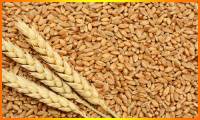
Jowar can emerge as India s sustainable alternative to wheat, says study.
Climate experts have been warning that an increase in temperatures due to climate change could adversely impact the yield of wheat, causing concern among wheat-growing countries such as India.
Worst fears have come true with a multi-national research team finding wheat highly sensitive to increases in maximum daily temperature during multiple stages of its growth in the post-monsoon and dry winter season.
The team, however, said not all is lost. It said jowar (sorghum) can step in as a viable alternative. 'Jowar is able to handle increases in temperature with far less impact on yields. There is an additional advantage too. Wheat requires 1.4 times more water than jowar owing to the extension of its growth cycle into summer,' the study said.
Wheat’s sensitivity
The study was carried out by researchers from Columbia University, USA; Chinese Academy of Agricultural Sciences, China; Indian School of Business; and Indian Institute of Technology, Bombay.
The paper titled 'Climate resilience of dry season cereals in India' was published in Nature’s Scientific Reports. It examined the sensitivity of wheat and jowar yields to increases in temperature and compared water requirements under different scenarios.
The paper said the wheat yields are likely to decrease by 5 per cent coupled with a significant increase in water footprint by 2040. Jowar, in that case, is India’s best bet with its meagre 4 per cent increase in water footprint with the same climatic projections, it argued.
Top wheat producer
The paper said India is the world’s second-largest producer of wheat, which recorded a whopping 40 per cent increase in production since the early 2000s.
'We have reached a critical turning point in India’s agricultural landscape. Our research highlights the urgent need for climate-smart agriculture interventions, particularly in the rabi season,' Ashwini Chhatre, co-author of the study and Executive Director of Bharti Institute of Public Policy at the ISB, said.
'The traditionally grown sorghum or jowar emerges as a game-changer, offering resilience to projected climate changes and requiring significantly less water than wheat,' he said.
The total wheat production in the country has gone up since the turn of the century due both to increases in yield (26 per cent) and increases in area (17 per cent). The production of jowar, on the other hand, declined by 5 per cent in the same time period. This decline is despite a 37 per cent increase in yields and is attributed to a 21 per cent loss in the area under production.
Caution
Agriculture scientists have been advocating against the trends in India towards the expansion of wheat cultivation from the North into hotter parts of the country.
The study indicates a strong need to consider climate-resilient strategies for cereals grown in the rabi season and amplifies calls by scientists and activists for diversifying kharif cereals away from a concentration in paddy. 'In addition to sorghum (jowar), we can explore millet crops such as pearl millet (bajra), finger millet (ragi), foxtail millet, barnyard millet, etc., as a suitable replacement for rice or wheat,' Arabinda Padhee, Principal Secretary- Agriculture, Govt of Odisha, has said.
Source: thehindubusinessline.com