
Gujarat ranks first in export performance pillar in EPI.
Gujarat has achieved significant recognition in the Export Preparedness Index (EPI) for 2021-22. The state ranked first in the export performance pillar and second in the policy pillar. With merchandise exports totalling over $126 billion (Rs 10,33,694 crore approx.) in FY 2021-22, Gujarat led India in this aspect, accounting for 30% of the country's total merchandise exports. Notably, Gujarat doubled its export value compared to the previous year, which stood at $63 billion (Rs 5,16,847 crore approx.) in FY 2020-21. Overall, Gujarat achieved a score of 73.22, placing it in the fourth position when considering all pillars.
The EPI is a comprehensive framework used to assess the export preparedness of states and union territories. It evaluates four key pillars: policy, business ecosystem, export ecosystem, and export performance. The evaluation for EPI 2022 was conducted for FY 2021-22 and was announced by the Niti Aayog on July 17, 2023.
Merchandise exports contribute 35% to Gujarat's Gross State Domestic Product (GSDP) — the highest percentage among all states. Additionally, Gujarat experienced the highest increase in the number of exporters, with 4,234 new exporters in FY 2021-22, surpassing all other states and UTs. According to the EPI 2022 report, Gujarat has four districts among the top 10 in India and eight districts among the top 25 in terms of exports — the highest among all states. Notably, Jamnagar, Surat, Bharuch, and Ahmedabad, the top four districts in Gujarat, contribute more than one-fifth of India's total merchandise exports. Jamnagar alone accounts for the largest share, 12.18% of India's total merchandise exports, which is equivalent to the combined contribution of Andhra Pradesh, Odisha, and Haryana.
Source: timesofindia.indiatimes.com

India, US inform WTO of mutual resolution of all six disputes.
India and the US have informed the World Trade Organization (WTO) on the mutual resolution all the six trade disputes, in line with the commitment they made last month.
In five separate notifications to the WTO on Tuesday, they asked the multilateral trade watchdog to terminate these disputes. The US and India had initiated three disputes each.
The notification for the mutually agreed solution to the dispute on retaliatory duties on certain products imported from Washington, was made on Monday.
The disputes include the US’ countervailing measures on certain hot-rolled carbon steel flat products from India which New Delhi won. India also won the dispute on the US’ measures relating to the renewable energy sector. However, it lost the dispute on its
measures related to solar cells and solar modules and its export related schemes such as SEZ, EOU and MEIS schemes.
Panel report on two cases-US’ duties on steel, aluminium products, and India’s retaliatory duties on US almonds, lentils, etc-are expected by year end.
The two sides, had last month, agreed to end six disputes at the WTO after a meeting between Prime Minister Narendra Modi and US President Joe Biden.
Source: economictimes.indiatimes.com
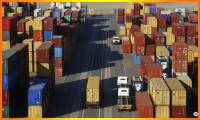
India-GCC Buyers Sellers Meet at Dubai on Food and Beverages Boosts Trade Relations and Showcases Innovation.
India- GCC Buyers Sellers Meet on Food and Beverages is being held at Dubai today, showcasing Indian products to the wider market of the Gulf Cooperation Council. Organized with the goal of facilitating fruitful collaborations, with thirty-eight Indian Companies and 140 importers from the Gulf Cooperation Council (GCC) countries, the event is expected to attract prominent buyers and sellers from both regions. With a focus on the dynamic F&B industry, this meet offers a prime opportunity for Indian exporters to showcase their diverse range of products and establish valuable business connections. The event is being organized by the Trade Promotion Council of India.
The event holds immense importance against the backdrop of the robust trade relationship between India and the GCC countries, with the trade volume recently crossing noteworthy milestones. The annual India-GCC Buyers Sellers Meet plays a pivotal role in further strengthening these ties and creating a conducive environment for increased trade activity.
One of the key factors that contribute to the event’s success is the presence of Dubai, a recognized hub for re-export. The strategic location of Dubai provides an ideal setting for facilitating trade flows and attracting global participants. With its well-established infrastructure and efficient distribution networks, Dubai serves as a gateway for Indian exporters to reach a wider market within the GCC region.
Furthermore, the Comprehensive Economic Partnership Agreement (CEPA) between India and the GCC countries acts as a catalyst for fostering economic cooperation and facilitating trade. This agreement streamlines trade procedures, reduces barriers, and encourages mutual investments, thereby creating a favorable environment for businesses to thrive.
At the India-GCC Buyers Sellers Meet, participants can expect a showcase of innovative food and beverage products from India. From traditional delicacies to health-conscious offerings and cutting-edge creations, the event will present a diverse range of options for buyers to explore and source. This platform enables exhibitors to engage in fruitful discussions
Source: ddnews.gov.in
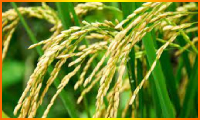
India s kharif sowing of pulses, paddy will catch up, says Farm Minister NS Tomar.
Union Agriculture Minister Narendra Singh Tomar has expressed confidence that the deficit in sowing areas under some crops could be set right in the coming days as the monsoon is in an active phase and there are surplus rains in many parts of the country. The assertion of a normal acreage in the current kharif season on Tuesday assumes significance amid concerns about patchy rains this year.
'The government is aware of the sowing deficit in paddy and some pulses. There is no cause of concern as the monsoon is active. Hopefully, the acreage (deficit) will be recovered in the coming days,' Tomar said on the sidelines of a function organised by the Indian Council of Agricultural Research (ICAR).
The kharif sowing in the current monsoon season was 1.6 per cent lower at 598.43 lakh hectares (lh) as of July 14 from 607.98 lh a year ago, the Agriculture Ministry said on Tuesday. But, the area under paddy has declined by 6.1 per cent to 123.18 lh and pulses area has dropped 13.2 per cent to 66.93 lh. Among pulses, the area under tur (pigeon pea) has declined by 38.2 per cent to 17.04 lh, the Ministry data showed.
On the other hand, the total area under all oilseeds increased 1.7 per cent to 139.25 lh, thanks to the higher area under groundnut. But the main kharif oilseed soyabean has dipped 1.8 per cent to 99.46 lh. The area under cotton also reported a fall of 11.7 per cent at 96.26 lh.
Bajra crop up
The sowing of bajra (pearl millet) has increased by 48.8 per cent to 53.85 lh and that of jowar (sorghum) by 23.3 per cent to 9.22 lh. Total area under coarse cereals (including nutri cereals) was up by 18.1 per cent at 110.66 lh.
Separately, Himanshu Pathak, Director-General of ICAR said that several climate-resilient varieties of crops have been released in the last few years, as many as 250 during 2022-23 alone. These varieties are enough to sustain any disruption in weather, be it no rainfall or excess precipitation for a few days, he added.
On the current crop situation, he said so far no adverse field reports have been received from any parts. Specifically on pulses, he said that the acreage might pick up in the weeks ahead.
According to India Meteorological Department, the monsoon rainfall has been 100 per cent of normal during the current season until Tuesday while the precipitation during July 1-18 was 10 per cent above its long period average. After the month of June had a deficit of 10 per cent, all eyes are on IMD’s prediction of more than 100 per cent rainfall during July, which is the crucial month for sowing season.
Source: thehindubusinessline.com
Commerce ministry looking at fixing export target in a range for this fiscal.
With the increasing global economic uncertainties, the commerce ministry is looking at fixing this fiscal year's export target in a range instead of a single figure, an official said. To set the target range, a detailed study on 200 countries and 31 commodity groups is in the process, the official said.
The target range would depend on parameters such as the USD 1 trillion merchandise exports target by 2030; import to GDP ratio of importing countries; export to GDP ratio of India that will tell the potential and past trends.
'We are not fixing any export target as a figure. In fact, my team has done an exercise, where we are saying that let us talk in terms of range. In the best scenario, the exports can be this much and in the worst scenario, it can be this much,' the official said.
For a monitoring purpose of exports every month, the official said a fixed number would be required and that could be a mid-value or an average may be accepted.
The ministry has though fixed an internal target which has been to export promotion councils and Indian missions abroad.
'But we will take some more time before we will come up with our exports targets because based on the current trends, it can not be right on our part to fix those targets as of now, so we are waiting and watching,' the official added.
A trade expert said that in 2022-23, India's merchandise exports were USD 450 billion, so the lower band of new target range could be USD 451 and even if one assumes a 10 per cent growth in 2023-24, then the upper band of the range could be around USD 495 billion.
In April this year, apex exporters body Federation of Indian Export Organisations (FIEO) said that they are targeting to take the shipments to USD 500-510 billion during the current financial year.
India's exports contracted by 22 per cent, the steepest decline in the last three years, to USD 32.97 billion in June on account of global demand slowdown, especially in the Western markets like the US and Europe.
Cumulatively, exports dipped by 15.13 per cent to USD 102.68 billion during April-June this fiscal.
Source: economictimes.indiatimes.com
MoD & FSSAI sign MoU to promote use of millets & healthy eating practices.
In a significant step towards promoting the use of millets and healthy eating practices among the armed forces and ensure availability of safe and nutritious food, a Memorandum of Understanding (MoU) was signed between the Ministry of Defence (MoD) and the Food Safety and Standards Authority of India (FSSAI) in the presence of Defence Minister Rajnath Singh and Union Health Minister Dr Mansukh Mandaviya here recently. Both ministers also unveiled a book titled ‘Healthy Recipes for Defence’ to promote the consumption of Shree Anna (millets) and its health benefits.
The MoU was signed by Lt. Gen. Preet Mohindera Singh, Director-General (Supplies and Transport) on behalf of Ministry of Defence (MoD) and G Kamala Vardhana Rao, CEO, FSSAI. It aims to create awareness about the nutritional benefits of diet diversity and millet-based food products among the personnel. The MoU will also pave the way for the introduction of millet-based menus in mess, canteens and other food outlets under the MoD.
This collaboration will also ensure training of food handlers & chefs of mess, canteens of the Armed Forces and other food outlets on food safety and hygiene as per the Food Safety and Standards Act, 2006. It signifies a shared commitment to the health and well-being of the Armed Forces to enable them to remain strong & resilient in their service to the nation. The MoU will also encourage the families of the Armed Forces and the community at large to adopt nutritious diets, make healthy food choices and maintain food safety.
The book ‘Healthy Recipes for Defence’, developed by FSSAI, includes a range of millet-based dishes. It will serve as a valuable resource for different canteens and food outlets under the MoD. Given the challenging terrains and varied climatic conditions faced by the defence personnel, the significance of variety in diet assumes great importance. Millets are known for their nutritional value and can contribute to a well-balanced and diverse diet.
Chief of Defence Staff & Secretary, Department of Military Affairs General Anil Chauhan, Defence Secretary Giridhar Aramane, Union Health Secretary Rajesh Bhushan, CEO FSSAI G Kamala Vardhana Rao and other senior officials of MoD and MoHFW were present on the occasion.
Source: fnbnews.com

Two more rounds of talks likely for IPEF to conclude: Sources.
India expects two more rounds of negotiations for the conclusion of the Indo-Pacific Economic Framework (IPEF) by the end of the year.
While the legal scrubbing of the Supply Chain Agreement - which was finalised in May - is on, discussions are moving fast on the clean economy and fair economy pillars, said people aware of the matter.
The fourth round of IPEF negotiations took place from July 9-15 in South Korea. India is yet to take a call on joining the trade pillar of the IPEF.
'There are two more rounds to go before it gets concluded. Discussions are on for pillars 3 and 4,' said one of the persons, who did not wish to be identified.
Pillar 3 in the IPEF relates to a clean economy while Pillar 4 deals with a fair economy.
Source: economictimes.indiatimes.com
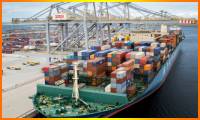
Govt eases norms for exporters to avail benefits under advance.
The government on Monday simplified norms for exporters to avail benefits of an advance authorisation scheme under which free imports of input materials are allowed.
The Directorate General of Foreign Trade (DGFT) implements this scheme under the Foreign Trade Policy.
The eligibility of inputs is determined by sector-specific norms committees based on input-output norms.
To make the norms fixation process more efficient, the DGFT said that it has created a user-friendly and searchable database of ad-hoc norms fixed in the previous years.
These norms can be used by any exporter without approaching the norms committee, it added.
The database is hosted on the DGFT website (https://dgft.gov.in) and allows users to search using export or import item descriptions, technical characteristics, or Indian tariff classification codes.
'This trade facilitation measure simplifies the advance authorisation and norms fixation process, resulting in shorter turnaround times for exporters, improved ease of doing business, and reduced compliance burden,' it added.
Explaining the process, the directorate stated that to access the database, an exporter or public can visit the DGFT website and if an ad-hoc norm matches the item description, the applicant can apply for the scheme under the 'No-Norm Repeat' basis.
This option, it said, allows users to obtain an advance authorisation without approaching the committee again, reducing the workload and enabling faster processing.
The commerce ministry is taking a series of measures to promote ease of doing business for exporters, which are hit by global demand slowdown and war between Russia and Ukraine.
India's exports contracted by 22 per cent, the steepest decline in the last three years, to USD 32.97 billion in June on account of global demand slowdown, especially in the Western markets like the US and Europe.
Source: economictimes.indiatimes.com
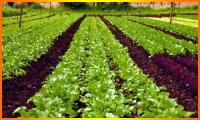
Trichy to promote organic farming on 580 hectares.
Trichy district administration has set a target of 580 hectares of organic cultivation under Paramparagat Krishi Vikas Yojana (PKVY) for 2023-2024.
According to the government manual, PKVY aims at supporting and promoting organic farming, in turn resulting in improvement of soil health. The objective is to produce agricultural products free of chemicals and pesticides residues by adopting eco-friendly, low-cost technologies. The key thrust areas of PKVY include promoting organic farming among rural youth, farmers, consumers and traders. It also aims to disseminate latest technologies in organic farming, utilize services of experts from public agricultural research system in India, and organize a minimum of one cluster demonstration in a village.
Taking it forward, the district administration and the agriculture department have planned to implement the scheme on 580 hectares including 400 hectares for groups and 180 hectares for individuals, said district collector M Pradeep Kumar.
Under the scheme, 20 farmers in a village or two to three nearby villages will form a cluster and get involved effectively in organic farming.
The scheme provides a subsidy of Rs 50,000 a hectare in three instalments including Rs 16,500 for the first year, 17,000 for the second year and Rs 16,500 for the third year.
Not only new farmers but also those already involved in organic farming can get Rs 6,000 subsidy per hectare for three years. Interested farmers can login to http://tnagrisnet.tn.gov.in or Uzhavan mobile application for registration, or contact the assistant director of agriculture department.
Source: timesofindia.indiatimes.com

G-20 Global Food Regulators Summit To Be Held In Delhi This Week.
The Global Food Regulators Summit 2023 is set to be organised in Delhi for the first time, as a G-20 event.
The summit is being organised by the Food Safety and Standards Authority of India (FSSAI) on 20-21 July 2023 here at Manekshaw Auditorium.
Food Regulators from over 40 countries will participate along with representatives from 30 International Organisations and 25 International Research Institutes/Universities.
Mansukh Mandaviya, Union Minister of Health and Family Welfare (MoHFW) unveiled the logo of the Summit today in the presence of Minister of State for Health and Family Welfare, Prof SP Singh Baghel.
'This is the first time the summit is being held outside Rome, Italy. The Global Food Regulators Summit will focus on the crucial aspect of food safety, which needs as much attention as food security', he stated.
The Union Minister further expressed his confidence that through collective efforts, the summit would lead to the harmonisation of global food safety standards, improved regulatory frameworks, and the provision of safe and high-quality food for consumers worldwide.
Prof SP Singh Baghel, Union Minister of State for Health and Family Welfare calling the Global Food Regulators Summit both important and relevant said, 'This summit aligns with the theme of India’s G20 Presidency- One Earth, One Family, One Future. Indian tradition has always been about Sarve Bhavantu Sukhinah, and this summit is a step in that direction.'
The Summit will witness the launch of a Common Digital Dashboard—a unified IT portal providing comprehensive information on standards, regulations, notifications, advisories, guidelines, contamination limits, and the latest developments by Food Regulators in India.
The Summit will witness the launch of several groundbreaking initiatives that will revolutionize the accessibility and sharing of food safety information. Among these initiatives is the release of Food-o-Copoeia, a comprehensive collection of food category-wise monographs, serving as a single-point reference for all applicable standards for specific product categories.
Another remarkable initiative is the common regulator's platform 'SaNGRAH' (Safe Food for Nations: Global Food Regulatory Authorities Handbook).
It is a comprehensive database of Food Regulatory Authorities from 76 countries worldwide, presenting their mandates, food safety ecosystems, food testing facilities, contact details for food authorities, and information related to SPS/TBT/Codex/ WAHO. SaNGRAH is available not only in Hindi and English but also in six Indian languages—Gujarati, Marathi, Tamil, Telugu, Kannada, and Malayalam.
Additionally, the Summit will witness the launch of a Common Digital Dashboard—a unified IT portal providing comprehensive information on standards, regulations, notifications, advisories, guidelines, contamination limits, and the latest developments by Food Regulators in India.
G Kamala Vardhana Rao, CEO, of FSSAI, said, 'Over the course of two days, the summit will feature a diverse range of activities, including keynote addresses by international organizations and scientists, technical and plenary sessions with food regulators, interactive sessions with national and international stakeholders, and bilateral and multilateral meetings to address current and emerging challenges.'
Source: businessworld.in