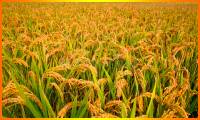
Government revises the Crop Residue Management guidelines enabling efficient ex-situ management of paddy straw generated in the States of Punjab, Haryana, UP and Delhi.
The Government has revised the Crop Residue Management guidelines enabling efficient ex-situ management of paddy straw generated in the States of Punjab, Haryana, UP and Delhi.
As per the revised guidelines, techno-commercial pilot projects for Paddy Straw Supply Chain will be established under the bilateral agreement between the Beneficiary/Aggregator (Farmers, rural entrepreneurs, Cooperative Societies of Farmers, Farmers Producer Organizations (FPOs) and Panchayats) and Industries utilizing the paddy straw.
Govt shall provide financial assistance on the capital cost of machinery and equipment. The required working capital may be financed either by the Industry and Beneficiary jointly or utilizing the Agriculture Infrastructure Fund (AIF), NABARD Financial or Financing from the Financial Institutions by the beneficiary. The land for storage of the collected paddy straw will be arranged and prepared by the beneficiary as may be guided by the end use industry.
Project proposal based financial assistance will be extended for machines and equipments such as Higher HP Tractor, Cutters, Tedder, Medium to Large Balers, Rakers, Loaders, Grabbers and Telehandlers which are essentially required for establishment of paddy straw supply chain.
State Governments shall approve these projects through project sanctioning committee.
Government (jointly by Central and State Governments) will provide financial support of @ 65% of the project cost, Industry as primary promoter of the project will contribute 25% and will act as the Primary consumer of the feedstock collected and Farmer or group of Farmers or Rural Entrepreneurs or Cooperative Societies of Farmers or Farmers Producer Organizations (FPOs), or Panchayats will be the direct Beneficiary of the project and will contribute the balance 10%.
The Outcomes of the above interventions are :
The initiative will supplement the efforts of paddy straw management through in-situ options
During the three-year tenure of the interventions, 1.5 million metric tonnes of surplus paddy straw are expected to be collected which would otherwise have been burnt in fields.
About 333 biomass collection depots of capacity 4500 MT will be built in the States of Punjab, Haryana, Uttar Pradesh and Madhya Pradesh.
Air pollution caused by stubble burning will be considerably reduced.
It would generate employment opportunities of about 9,00,000 man days.
The interventions will encourage a robust supply chain management of paddy straw which shall further help in making paddy straw available for various end uses i.e., power generation, heat generation, bio- CNG, etc. by Power/bio-CNG/bio-ethanol producers
Establishment of supply chain would result in new investments in Biomass to biofuel and energy sectors.
Source: pib.gov.in

Pure-veg meat: An export frontier for India to conquer.
BBQ Jack isn't what it sounds. It is actually jackfruit impersonating as meat. It was one of the items in India's largest shipment of plant-based meat sent to the US recently. Wakao Foods' shipment of jackfruit products, weighing 13 tonnes, is the first of two containers being sent to the USA. The shipment includes, besides BBQ Jack, Raw Jack, Indian Gravy, Continental Jack burger patties, Jack Supreme burger patties, American herbs sausages, hot and spicy sausages, and Teriyaki Jack.
Plant-based meat, a trend that caught on in the West in the past decade, has also reached India in the past few years. And Indians are now eyeing Western markets. Last year in September, India sent its first shipment of plant-based meat products to the US. The consignment of manufacturers Greenest and Wholesome Foods included momos, mini samosas, patties, nuggets, spring rolls, burgers, etc.
Plant-based meat is made of soya, mushrooms, peas, jackfruit, tempeh, lentils, chickpeas, millets, wheat, rice, etc. It imitates the texture, taste, looks and smell of actual meat. People who want to cut down on meat consumption or give it up completely, and vegetarians who want to increase protein intake are the target customers of manufacturers of plant-based meat.
The export potential for plant-based meat in India by 2030 is projected from Rs 2,194 crore to Rs 6,824 crore, according to a report by The Good Food Institute (GFI) India and Deloitte India. The number range for plant-based dairy is Rs 459 crore to Rs 1,889 crore. The export potential for plant-based eggs in 2030 is between Rs 266 crore to Rs 631 crore
A United States Department of Agriculture report says a large vegetarian population and greater demand for healthy foods are fueling the rapid expansion of plant-based meat substitutes in India which offers opportunities for American exporters in both consumer-oriented products and raw materials to support local manufacturers. However, Indian companies are eying the American market because they have several advantages over American companies.
In the case of lab-grown and cultured meats, Indian companies cannot compete with Americans because India lacks the required technology. But plant-based meat is different. Indian exporters can leverage India's strong tradition of plant-based foods. Traditionally, Indians know how to make vegetarian food tasty.
India has a large and growing workforce, low wages, and abundant raw materials, which together help to keep the cost of plant-based food production low compared to other countries. Food technology in India is already developed enough to create the best quality plant-based meat that tastes, looks and smells like real meat. India's indigenous crops such as millets can be used to make plant-based food. Even traditional crops such as chickpeas are available aplenty.
Pulses are powering the plant-based protein industry, according to the GFI . Of the variety of crops grown around the world, pulses’ high protein content make them some of the most promising for use in plant-based meat, egg, and dairy products, says a GFI report. While pulses are commonly consumed as a whole food, the global trend toward plant-based eating provides an exciting growth opportunity. Demand for alternative protein products — and the growing need for more sustainable protein production methods — is creating new market possibilities for pulses and ingredients derived from them.
'For plant-based products, millets and other indigenous Indian crops provide an excellent opportunity to diversify the global inputs for plant-based meats, eggs, and dairy. Using these crops would create lucrative markets for farmers and strengthen value chains into which the government is already pouring significant investment,' says a GFI report.
Another factor that favours Indian exporters is a growing domestic market. It's easier for companies to reach scale in India since India has a very large population of vegetarians and even those who eat meat could be willing to try plant-based options. A strong domestic market boosts exports too as it helps innovation in quality, design and range of products.
India's apex export promotion body, Agricultural and Processed Food Products Export Authority (APEDA), is trying to add more plant-based meat products in its export basket, without disturbing the conventional animal-based meat export market. It has planned to promote a variety of products to Australia, Israel and New Zealand. APEDA Chairman Rajesh Agrawal says India's growing market for plant-based meat alternatives presents an opportunity to leverage the country's crop biodiversity.
India's growing domestic market
Plant-based meat is catching on fast in India. Last year, coffee chain Tata Starbucks tied up with plant-based food company Imagine Meats to sell its products. Imagine Meats was launched by Bollywood celebrities Ritesh and Genelia Deshmukh in 2020. Blue Tribe, another plant-based meat company, is funded by cricketer Virat Kohli and his wife, actor Anushka Sharma. Dozens of companies have sprung up in the plant-based meat segment in the past few years such as Good Dot, Shaka Harry, Urban Platter and Vegeta Gold,
While so far plant-based meat is largely a Western trend where it is promoted for environmental and ethical reasons, India is a natural market for it due to nearly 30 percent of its population being vegetarian. Even meat-eaters are willing to try the plant-based option sometimes to reduce meat consumption or for religious reasons. That's why there is a sudden growth in this segment.
Researchers from the University of Bath, the Good Food Institute, and the Center for Long Term Priorities collaborated on the first quantitative comparison of consumer attitudes towards plant-based and cultivated meat across China, India, and the US. They found that 33 percent of U.S. consumers, 62 percent of Chinese consumers, and 63 percent of Indian consumers were 'very or extremely likely to purchase plant-based meat regularly.' Cultivated meat clocked in at 30, 59, and 56 percent, respectively.
Not just startups and small companies, even the big ones are stepping into the plant-based meat sector.
Last year, online meat retailer Licious entered the plant-based meat business with a new brand called Uncrave. Unlike typical mock-meat brands that sell to vegan customers, Licious planned to offer Uncrave to its core meat-consuming customers as an alternative for occasions when they abstain from eating meat, such as Navaratri.
Tata Consumer Product Ltd too announced its entry into the plant-based meat products category last year, under a new brand 'Tata Simply Better' and introduced four variants: Nuggets, Burger Patty, Awadhi Seekh Kebab and Spicy Finger. Beyond Meat, a leading player in the US for plant-based meat, entered India last through a partnership with Allana Consumer Products.
India’s market for plant-based meat is estimated to increase dramatically, from a current estimate of $30-40 million to $500 million, according to a recent Assocham report. The plant-based dairy sector is expected to see a rise from $21 million to $63.9 million by 2024, with a compound annual growth rate of 20.7%. The overall vegan food market is expected to have a compound annual growth rate of 11.32% between 2022 and 2027.
The challenges
The biggest challenge for exporters as well as domestic companies is high prices of plant-based meat products. Often, the price of such a product is more than double the price of the real meat product. This problem can be solved with the expansion of the market. Low prices can give a sharp edge to India's exports.
Another challenge is taste. Consumers in the West can be lured to try plant-based meat only if it tastes like real meat. Indian companies will have to invest in technology to achieve similarity in taste, texture and appearance to real meat. Wakao Food, which has sent a consignment to the US recently, worked for eight months to decode the taste and palate of the US market and develop specifically suitable products.
The American market for plant-based food has slowed down in recent years due to various factors such as supply chain issues. Many also say that plant-based meat was just a fad which is now wearing off.
But a Bloomberg Intelligence report in 2021 painted an optimistic future for the plant-based proteins. The plant-based foods market could make up to 7.7% of the global protein market by 2030, with a value of over $162 billion, up from $29.4 billion in 2020, said the report.
However, it says, the Asia-Pacific region will grow more than the West. It is particularly vulnerable to limited food supply, with an expected population of 4.6 billion by 2030. As a result, the region is likely to dominate the plant-based protein market reaching $64.8 billion by 2030, up from $13.5 billion in 2020. The majority share of that market in Asia-Pacific will be of alternative dairy products, at 57% by 2030. Comparatively, Europe and North America will see roughly $40 billion in sales, with Africa, the Middle East and Latin America all seeing between $8-9 billion each.
Source: m.economictimes.com
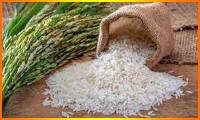
500 farmers sensitised to produce pesticide residue free basmati.
Around 500 farmers on Thursday took part in a workshop aimed to produce pesticide residue free basmati to enhance the export of the aromatic rice.
The event was organized by the Agricultural and Processed Food Products Export Development Authority (APEDA) under the ministry of commerce in coordination with All India Rice Exporter Association (AIREA) at Kotkapura in Faridkot district.
Dr Ritesh Sharma, principal scientist, APEDA, said that India earns maximum foreign revenue by export of rice and 'the quality of the basmati produced in Kotkapura is excellent.'
'We earned Rs.38,542 crore by the export of Basmati during 2022-23 in 150 countries. We have very good demand from the globe, but due to excessive use of pesticides, the residue defected in basmati consignment affect the export. We are providing training to the farmers to produce pesticide residue free basmati with the support of the state governments,' Sharma said.
Dr Brajendra, principal scientist from Indian Institute of Rice Research, Hyderabad, spoke about the soil health. He has demonstrated a rapid soil testing kit developed by him and trained the farmers for soil testing in Kotkapura.
Vinod Kaul, executive director, AIREA, explained about the export scenario and challenges in basmati export. He asked the farmers to use pesticides only after consultation with scientists. 'Right dose, right time and right pesticide need to be sprayed only when it recommended,' Kaul said.
Source: hindustantimes.com

Taiwan has 'enormous appetite' to expand ties with India: Taiwanese Foreign Minister Wu.
Taiwan has an 'enormous appetite' to expand ties with India and firming up the proposed free trade agreement between the two sides will be a 'big encouragement' for Taiwanese companies to set up manufacturing bases in India, Taiwan's Foreign Minister Jaushieh Joseph Wu has said.
Wu said Taiwan has been encouraging its companies that no longer find the Chinese market profitable to shift their production facilities to India as it is now a 'rising power' and has been witnessing rapid economic growth.
In an interaction with an international media group, he said an FTA between India and Taiwan will remove barriers to greater trade and investment ties and it will help Taiwanese companies to set up manufacturing hubs without paying high tariffs for various equipment and raw materials.
Taiwan produces over close to 70 per cent of the world's semiconductors and over 90 per cent of the most advanced chips that are required for almost all electronic equipment such as smartphones, car components, data centres, fighter jets and AI technologies.
India has been very keen on having a manufacturing facility for Taiwan Semiconductor Manufacturing Corporation (TSMC), the world's largest chipmaker whose clients included Apple.
The Taiwanese foreign minister said Taipei has conveyed to New Delhi that the time has come for launching the FTA negotiations. The two sides have already conducted studies for the FTA and held preliminary discussions for the pact.
The FTA will be a 'big encouragement' for our companies to set up manufacturing bases in India as the trade pact would provide relief on tariffs on various aspects including on bringing various equipment and related materials to the country, Wu said.
'Our trade relations have been picking up steam. The Taiwanese investors are hungry for India and the semiconductor cooperation between Taiwan and India is being blessed by the top leadership of the two countries,' he said.
The foreign minister said Taipei will continue to encourage Taiwanese businessmen, who no longer find the Chinese market profitable, to invest in India.
'What we see is a very prosperous future bilateral relations between India and Taiwan and we will continue to work hard to strengthen it further,' he said.
Wu said Taiwan wants to be able to stand up to the threat of the Chinese military and Beijing's economic coercion, adding Taipei needs international support for it.
'We will continue to engage with the world to draw more global support, especially from federal democracies. Our relations with India have been picking up steam in the last few years,' Wu added.
'India is a rising power, it is rising rapidly. It can not be ignored especially with its demographic dividend and very diligent entrepreneurs. India has its economic strengths for the future. It is going to be very powerful. And of course, we hope we will continue to have good ties with India,' he said.
The Taiwanese foreign minister said Taiwan's ties with India in areas of trade and investment, people-to-people connections and cultural ties have witnessed a significant upswing in the last few years.
He said Indian movies are 'fascinating' to the Taiwanese people.
'We will continue to strengthen our relations with India. There is enormous appetite on our part for closer cooperation with India and we would try each and every area to see what will materialise,' he added.
Complimenting India on its success in the space sector, Wu said Taipei is seeking cooperation with New Delhi on it.
'I want to congratulate India for its G20 presidency and wish the upcoming G20 summit a great success. As a friend of India, we want India to be successful in major international events like G20,' Wu said.
On new areas of cooperation, the Taiwanese foreign minister identified parliamentary engagement between the two sides as a priority for Taipei.
'We hope there is more government-to-government interaction with each other. So far there are limited interactions. We hope that we can break some barriers in order to have better political ties with each other,' he said.
'It should work for the benefit of our bilateral relations. We also want more investment in India. India is interested in the semiconductor industries to be operating in India. And we have more intention to work with the Indian government and materialise the FTA,' he said.
China has been maintaining that Taiwan is a breakaway province that must be reunified with the mainland, and if necessary by force. China has been regularly sending fighter jets into Taiwan's air defence zone and deploying warships close to the self-governed island.
India does not have formal diplomatic ties with Taiwan but both sides have trade and people-to-people relations.
Following the eastern Ladakh border row with China, some experts in India have been pushing for upgrading New Delhi's ties with Taipei, especially in the trade and investment sectors.
Source: economictimes.indiatimes.com
250 Naga farmers authorised to use GI tag.
North Eastern Regional Agricultural Marketing Corporation (NERAMAC), under the Ministry of DoNER, has authorised 250 Naga Sweet Cucumber and Tree Tomato farmers in Nagaland to use NERAMAC processed Geographical Identification (GI) certification during a GI awareness programme held at Kohima on Wednesday. GI initiative is part of the Government of India’s broader efforts to promote sustainable agriculture, protect the rights of farmers and enhanced the country’s agricultural exports.
Speaking at the programme, managing director (retired), NARAMAC commodore, Rajiv Ashok, said that GI initiative was a significant step towards promoting and protecting the traditional agricultural practices and products of the North Eastern Region.
He said GI tagging of Naga Tree Tomato and Naga Sweet Cucumber would provide recognition to the unique qualities and reputation of the two products and protect them from misuse and imitation. Ashok explained that GI authorization would enhance the competitiveness of the produce in domestic and international markets and create opportunities for increased income and livelihood.
A short presentation was also made about the work being undertaken by NERAMAC in the North Eastern Region in general and Nagaland in particular. About 100 Naga Tree Tomato and Naga Sweet Cucumber farmers attended the seminar.
NABARD Kohima general manager, Tiakala Ao, said GI is a form of intellectual property rights that identifies a product originating from a specific geographical location, possessing qualities, reputation or characteristics that are attributable to that location. Therefore, she said GI protection can play a significant role in promoting and safeguarding the traditional and unique products of a region.
Tiakala informed that at present the GI tagged products in Nagaland include: Naga Mircha (King Chilli); Naga Tree Tomato; Naga Sweet Cucumber and Chakhesang Shawl.
Horticulture department director, Meyasashi, give a presentation on Naga Tree Tomato and Naga Cucumber, explaining about the advantages of these products.
Agriculture department deputy director, James Chawang, requested NERAMAC to collaborate with the state departments of Agriculture and horticulture for processing and marketing.
The event was also graced by senior official and GI Expert from Department for Promotion of Industry and Internal Trade, Ministry of Commerce & Industry, who spoke about the importance of North Eastern Region-specific GI products and emphasized the need for a comprehensive approach to promote the region-specific GI products.
Source: nagalandpost.com

Kashi becomes hub of agriculture exports in East UP, witnesses 420% growth.
Before chief minister Yogi Adityanath flags off the first consignment of mango and green chilli packed at Kashi's Integrated Pack House (IPH) for export to Gulf countries, the figures of export of agriculture and horticulture products reveal that east UP has emerged as a major hub of agri export.
Since the time IPH became functional after inauguration by PM Narendra Modi on March 24, Varanasi's export has risen from 4 metric tonnes in 2020-21 to 561 MT in 2022-23, ensuring growth of 420%. Lucknow, which had export figure of 111.47 MT in 2020-21 had exported 703.30 MT of agri products in 2022-23 and its growth percentage was 6%.
Busy in preparations for the flagging off ceremony at IPH in Karkhiyao area on Sunday, the Agricultural and Processed Food Products Export Development Authority (APEDA) deputy general manager CB Singh said, 'After IPH's inauguration by the PM, process to operationalise it has been intensified in Varanasi in order to achieve the goal of developing east UP as a hub of export of agriculture and horticulture products.'
He said, 'With flagging off by the CM, the IPH Varanasi packed first consignments of mango and green chilli will leave for markets of Gulf, including Dubai and Doha via air and sea routes, respectively.'
Recalling the journey of ma king East UP region a hub of agri export, Singh said, 'Till 2019, there was nil export of agri cargo from Varanasi airport and negligible export from Lucknow airport. Now, flights are fully loaded with agri air cargo at Varanasi and Lucknow.'
Highlighting the trend of growth in export of agri products from international airports of UP, he said, 'In 2019-20 Lucknow had exported 99 MT of green vegetables and mangos while export from Varanasi was nil. In 2020-21 Lucknow exported 111.47 MT while only four MT vegetables were exportedfrom Varanasi. I n 2021-22 export of these agri and horticulture produces from Lucknow was 661.50 MT and Varanasi exported 157 MT. In 2022-23 Lucknow’s export was recorded as 703.30 MT while Varanasi’s export figures jumped to 561 MT.'
'The growth percentage of agri export from Varanasi airport in 2022-23 was 420% compared to 2021-22 figures while this growth at Lucknow airport was 6%', said Singh adding that between April and Jun this year Varanasi’s export figure was 120.5 MT while Lucknow has exported 169.9 MT of agri products. He also referred the measures initiated to achieve the goal of developing East UP as an export hub by making Varanasi its centre. The IPH established here fulfils requirements of international standard, which i s a must, especially for exporting agri products to European Union, Japan and Korea.
Source: timesofindia.indiatimes.com

India, Israel to boost ties in agriculture.
India and Israel are planning a slew of initiatives to bolster their cooperation in agriculture, said Ohad Nakash Kaynar, Deputy Chief of Mission at Israel’s Embassy in New Delhi. The two countries are planning to push high-level agricultural technology cooperation between Israeli institutions and the Indian Council of Agricultural Research (ICAR). In recent years, both sides have worked closely on water reuse, fertigation, soil management, drip irrigation, desalination, advanced filtration, advanced water leakage detection, soilless agriculture, rainwater collection and treatment systems and water security technologies.
Israel also plans to dramatically step up its presence in the country.
Representatives of Israel in India keep visiting universities and all 14 ICAR centres across the country and provide technology-based courses for students and farmers. 'Last year, we trained about 170,000 students and farmers about our technological solutions on greenhouse, drip irrigation, canopy irrigation and mulch,' said Israel Agriculture Attache Yair Eshel.
Mulch is one of the effective technologies that is benefitting Indian farmers in saving water and protecting crops from weeds, so that they can save on chemicals and reduce weeds, while ensuring more moisture and increasing productivity and quality.
Mulch is very cheap and recyclable. This can be used for 2-3 years if you maintain it properly. 'We introduce the idea of the technology to farmers, and they can adopt it by purchasing it from anywhere they want or find it cheap,' said Kaynar.
'The yield of crops may increase up to 30-35% by using all tools, including drip irrigation, canopy irrigation and mulch,' Kaynar added.
With the Israeli technological intervention in the greenhouse segment, sustainability can be achieved as those are recyclable. 'We have the simplest greenhouse technology of several different greenhouses across the globe. It is not because it is cheap but it benefits farmers,' Eshel said. 'We have a total of 72 plans to improve yields of flowers, vegetables and fruits.'
Additionally, Israel plans to expand its Villages of Excellence Programme. The programme, which was announced in 2022, aims to convert 150 villages into model villages through Israeli technical support on key agri-technologies.
According to Eshel, Israel hopes to expand the number of villages to 270 by next year. Eventually, the number of villages is expected to grow to around 1,500 by 2026.
Israel may also expand the number of its Centres of Excellence for agriculture, which stand at around 30 at present. The Israeli Centre of Excellence, an Indo-Israel Agriculture Project, seeks to bring best practices and useful agricultural technologies to Indian farmers.
These centres are spread across the country, with a strong presence in Haryana and Maharashtra.
Over 50% of the aid budget of Mashav, Israel’s development cooperation agency, comes to India, and they are willing to set up as many Centres of Excellence as India requires. India and Israel are also in the 'very late stages' of work on a new framework agreement on agricultural cooperation between the two countries. The agreement is pending before the Israeli Cabinet and should be signed after approval is given, said Ohad Kaynar, the Israeli DCM. India and Israel currently cooperate under the aegis of the Indo-Israel Agricultural Project, which is based on a Memorandum of Understanding signed in 2006.
Source: livemint.com

Govt. is committed to fostering a conducive business environment and accelerating growth in Production Linked Incentive sectors: Union Commerce and Industry Minister Shri Piyush Goyal.
Union Minister of Commerce and Industry and Consumer Affairs, Food & Public Distribution and Textiles, Shri Piyush Goyal said that the Government is committed to fostering a conducive business environment and accelerating growth in Production Linked Incentive (PLI) sectors. While delivering the keynote address at a Workshop on 'PLI Schemes' organized by the Department for Promotion of Industry and Internal Trade (DPIIT), Ministry of Commerce and Industry yesterday, the Minister encouraged industry’s feedback and collaborative engagement to shape the policies, procedures and effectiveness of the PLI scheme.
Shri Goyal emphasized on the importance of the industry's concentration on producing high-quality products that cater to both the industry's requirements and the consumers' needs. He also urged PLI beneficiaries to take up any procedural challenges/ issues with respective implementing Ministry/ Department so that positive reforms can be brought about and PLI scheme can be made more efficient and effective. The Minister further added that the Government officials of the implementing Ministry/ Department must hold regular consultation and roundtables with their respective PLI beneficiary so that the issues may be resolved promptly.
Shri Piyush Goyal urged all stakeholders to work together on creating an environment that fosters growth, innovation, and competitiveness in our industries. The objective of the Workshop was aimed to bring all the key stakeholders on a single platform and create a sense of ownership, so that they could exchange their knowledge and experiences to ensure an effective implementation of PLI Schemes under 14 key sectors. The workshop was organised In line with the vision of the Prime Minister, Shri Narendra Modi, to make India a global hub for manufacturing.
The Workshop witnessed participation from 10 implementing Central Departments, Companies/ PLI beneficiaries under 14 key sectors, various Project Management Agencies (PMAs) viz. IFCI, SIDBI, MECON, IREDA & SECI, select Industry Associations (CII, FICCI, ASSOCHAM & PHDCCI) & relevant Export Promotion Councils namely FIEO, EEPC & TEPC.
Attendees included a group of distinguished companies such as Wistron, Foxconn, Samsung, Dell, Wipro GE, Dr. Reddy’s, Tata Motors, Mahindra & Mahindra, Nokia Solutions, ITC, & Dabur, JSW, and Reliance among others. Their presence ensured a diverse range of perspectives and fostered an environment of knowledge-sharing and networking. Key executives from these companies, along with Government officials, were actively involved in a collaborative open discussion, interactive session, and presentations throughout the workshop.
The workshop provided a unique forum for industry leaders, experts, and Government officials to engage in insightful discussion and exchange valuable insights on the impact of PLI Schemes. The event aimed to facilitate a comprehensive understanding of the schemes, their objectives, and their potential to revolutionize the manufacturing sector.
The workshop agenda covered various aspects related to PLI Schemes, including their scope, eligibility criteria, incentives, and the roadmap for successful implementation including grievance redressal mechanism provided by concerned central Departments & PMAs. Participants engaged in productive discussions that focused on leveraging these schemes to enhance competitiveness, boost production, and foster innovation. Key topics included factors/ policy nuances contributing to Schemes’ success, enhancing domestic value addition, and capitalizing on emerging technologies.
The workshop culminated in a collective commitment from all attendees to actively participate in the PLI Schemes and leverage the available incentives to their fullest potential.
Overall achievement of PLI Schemes was discussed during the workshop. Actual investment of Rs. 62,500 crore have been realized (till March’23) which has resulted in incremental production/ sales of over Rs. 6.75 lakh crore and employment generation of around 3,25,000. Exports boosted by Rs. 2.56 lakh crore till FY 2022-23. Incentive amount of around Rs. 2,900 crore disbursed in FY 2022-23 under PLI Schemes.
PLI Schemes have played a significant role in promoting domestic value addition (DVA) in various sectors. It has led to increased value addition in the electronics sector and in smartphone manufacturing, 23% and 20% respectively, from negligible in 2014-15. Up to 80% DVA has been reported in various products under Pharmaceuticals. Import substitution of 60% has been achieved in the Telecom sector and India has become almost self–reliant in several networking products. DVA up to 50% is envisaged under Automobiles & Auto component sectors.
Source: pib.gov.in

Want to strike truly ambitious trade deal with India, says UK PM Rishi Sunak.
British Prime Minister Rishi Sunak has reaffirmed his commitment to a 'truly ambitious' free trade agreement (FTA) with India and indicated his plans to visit New Delhi for the G20 Summit in September.
Hosting a special reception to celebrate India Global Forum’s UK-India Week 2023 in the garden of 10 Downing Street in London, Sunak said Prime Minister Narendra Modi and he agrees that there is a huge potential to step up bilateral trade ties.
The 43-year-old British Indian leader interacted with business leaders and celebrities, including boxing champion Mary Kom, musicians Shankar Mahadevan and Zakir Hussain, Bollywood stars Sonam Kapoor and Vivek Oberoi, on Wednesday evening as part of what he dubbed as a 'big moment' in the bilateral calendar and the start of an Indian summer for the UK.
'Prime Minister Modiji and I agree there’s huge potential here. We’re making great progress together on the 2030 Roadmap and we want to strike a truly ambitious trade deal that benefits both our nations, bringing tremendous opportunities to businesses and consumers, both in India and here at home,' said Sunak.
'It’s not just UK-India Week, but a whole Indian summer. And I don’t just mean the hot weather we’re having, I mean that over the next few weeks, the eyes of the world will be on India. There’s the G20 in New Delhi, I can’t wait to be there,' he said.
India and the UK recently concluded the tenth round of FTA negotiations and an 11th round is set to begin in the next few weeks.
At the UK-India Week reception, the British Prime Minister was joined by his wife Akshata Murty and joked that the garden party was also in honour of his mother-in-law Sudha Murty, who is visiting from India.
'There is so much to celebrate. The links between our two countries are closer than ever. Just look at the Coronation of His Majesty the King. On that most historic day, people of Indian heritage were at the heart of proceedings, presenting the Coronation regalia and as part of the delegation of faith leaders,' he said.
'It shows the depth of the bonds we share, the living bridge between our two nations, the thriving business links, and the flow of ideas and investments, all stronger than ever. But of course, we want to do more,' he said.
'Here we are, in Downing Street, with a Prime Minister of Indian heritage, with all of you at the top of your game, leaders in your fields showing that anything is possible. So, let’s keep raising our sights and let’s keep scoring boundaries as we build this partnership,' added Sunak, using a cricketing metaphor as he also referenced the cricket World Cup to be hosted by India later this year as the 'biggest event of all'.
The India Global Forum’s (IGF) fifth annual UK-India Week, which runs until Friday, brings together ministers, business leaders and policymakers to deliberate on the key sectors of focus within the bilateral relationship.
'We are all here, from such diverse backgrounds, experiences and journeys, yet what unites us is our passion and contribution to enhancing what I describe as the winning partnership between the UK and India,' said IGF founder Manoj Ladwa.
Source: indianexpress.com

Milk processing at Varanasi Milk Union jumps to 1 lakh litres per day: NDDB Chief.
In a revival for cooperative dairies in Uttar Pradesh, an intervention by the National Dairy Development Board (NDDB) has drastically lifted the milk processing of Varanasi Milk Union. The capacity utilisation of the union’s dairy plant has increased from less than 5 per cent to about 50 per cent now.
In a statement on Wednesday, Meenesh Shah, Chairman, NDDB, said, 'When we took over the Varanasi Milk Union’s 2 lakh litres per day capacity dairy plant, just more than a year ago, it was operating merely at 6,000 to 7,000 litres, which is now operating at more than one lakh litre per day.'
The dairy development body, the National Dairy Development Board (NDDB), has set up a roadmap for the revival of the Pradesh Cooperative Dairy Federation, popularly known as Parag Dairy, and discussions are on to bring its idle capacities to better utilisation
'This reinforces that by providing better services to milk producers and bringing about professionalism and efficiencies in operations, the dairy cooperatives can be revived in Uttar Pradesh. However, revival of the dairy sector in Uttar Pradesh through cooperative strategies would require the joint efforts of Dairy Cooperatives and Milk Producers’ Organizations,' Shah said, adding that NDDB is committed to the development of the dairy sector in Uttar Pradesh, for which it is working with the Government of Uttar Pradesh.
Shah informed that major initiatives have been taken by NDDB in Uttar Pradesh to support dairy cooperatives, including Milk Producer organisations in Banaras, Gorakhpur, and Raebareli, among others.
Acknowledging the need for better availability of feed and fodder, for which milk producers spend about 70 per cent of the producer price, Shah said that NDDB has taken major initiatives in this regard, which include the promotion of certified fodder seeds under the National Livestock Mission as well as the formation of Fodder Plus FPOs.
Other initiatives that are being undertaken include silage making, securing crop residue, total mixed ration, etc
Source: thehindubusinessline.com