
India elected as Vice-Chair at the 12th session of FAO s Intergovernmental Technical Working Group (ITWG) on Animal Genetic Resources (AnGR) for Food and Agriculture.
In the recently concluded 12th Session of the Intergovernmental Technical Working Group (ITWG) on Animal Genetic Resources (AnGR) at Rome during 18 -20 January 2023, India was elected as Vice-Chair and represented Asia & Pacific region. Dr B N Tripathi, Deputy Director General (Animal Sciences), ICAR, and the National Coordinator, vice-chaired the Session and also act as Rapporteur.
The Working Group, established by the FAO’s Commission on Genetic Resources for Food and Agriculture (CGRFA), functions to review technical issues, advise and make recommendations to the Commission and further implement the Commission's programme related to AnGR at global level.
In the 12th Session of ITWG, implementation of the Global Plan of Action for Animal Genetic Resources, monitoring of AnGR diversity and preparing 3rd Country Report were reviewed. Further agenda points on role of microorganisms relevant to ruminant digestion, role of genetic resources in mitigating and adapting to climate change; access and benefit-sharing for AnGR; digital sequence information and potential implications for the conservation and sustainable use of genetic resources were discussed.
Earlier to the ITWG Session, the Global National Coordinators’ Workshop was held at FAO Head Quarter, from 16-17th January, 2023. In the Workshop, Dr B N Tripathi shared the country’s experience in updating data in Domestic Animal Diversity – Information System (DAD-IS) and presented framework for cataloguing native populations including breed registration, notification system etc. National priorities for germplasm cryopreservation and documenting non-descript AnGR to fulfil SDG indicators were appreciated by the members.
Source: pib.gov.in

Indian delegation visits Nigeria for taking South-South Cooperation on millets to next stage.
A high-level Indian delegation led by the Additional Secretary, Ministry of Agriculture and Farmers Welfare, Government of India, Abhilaksh Likhi has arrived in Abuja, the capital of Nigeria today for taking South-South Collaboration and Cooperation on Millets to the next higher stage.
In a departure statement to Nigeria for a four-day ‘Millet-Specific Visit’ from 26th to 29th January 2023, Likhi said, it comes in the wake of India kick-starting the International Year of Millets 2023 on the very first day of this year with focused activities being undertaken by Central ministries, state governments, union territories and Indian Embassies.
Nigeria is the 2nd richest and most populous country of the 54 nations in the African continent and it could become a model of South-South Cooperation on Millets along with other Indian important partners like Egypt, South Africa, Algeria, Morocco, Ethiopia, Kenya, Angola, Ghana and Sudan to address the ‘lack of food security’, which remains one of the most formidable challenges facing the African continent. India and Africa’s complementary sectoral priorities and similar roles in the evolving global food markets present numerous opportunities for cooperation on millets production and promotion.
The government of India sponsored the proposal for International Year of Millets (IYM) 2023 which was accepted by the United Nations General Assembly (UNGA). The declaration has been instrumental for the Government of India to be at the forefront in celebrating the IYM. Prime Minister Narendra Modi has also shared his vision to make IYM 2023 a ‘People’s Movement’ alongside positioning India as the ‘Global Hub for Millets’.
It may be recalled that Food and Agriculture Organization of the United Nations (FAO), organised an opening ceremony for the International Year of Millets – 2023 (IYM2023) in Rome, Italy. An Indian delegation led by Shobha Karandlaje, Minister of State for Agriculture & Farmers Welfare along with Shubha Thakur, Joint Secretary (Crops), DA&FW and other senior officials were present at the opening ceremony. During the event, India’s ceremonial message by Prime Minister Narendra Modi was conveyed by Shobha Karandlaje.
It may be underlined that embassies of India across more than 140 countries will be participating in celebration of IYM during 2023 by conducting side events on IYM involving the Indian diaspora through exhibitions, seminars, talks, panel discussions along with the participation of local chambers, food bloggers, importers of food items and local restaurants.
Dwelling on his Nigeria visit, Likhi said, the High Commission of India in Abuja and Consulate General of India in Lagos, as part of the promotion of IYM, have planned a Millets Food Festival and a Millets Food preparation competition during this high-level visit to Nigeria. The Millets Food Festival will be held at the High Commission premises and provide stalls for preparation with invitees including both Nigerian dignitaries and the Indian community.
Likhi said, Union Agriculture and Farmers Welfare Minister, Narendra Singh Tomar delivering a valedictory address on 24th January 2023 at India International Science Festival in Bhopal pointed out that IYM-23 is happening at a time when India has assumed the G-20 presidency when we will be showcasing India’s prowess, not only in agriculture and allied sectors, fisheries, animal husbandry and dairying but in every sector including universally recognise India’s soft power to the world. The spirit of the ‘Whole of Government’ and ‘Whole of Society’ approach is truly being seen in the celebrations of the International Year of Millets 2023, Likhi pointed out.
It may also be recalled that the President of the Cooperative Republic of Guyana, Dr. Mohamed Irfaan Ali met Narendra Singh Tomar on 12th January 2023 during his week-long visit to India and offered 200 acres of land in his country for exclusive cultivation and production of millets for the private sector in honour of the United Nations declaring the year 2023 as the International Year of Millet (IYM).
Dr Irfaan Ali also asked Tomar if he would be truly honoured, if Prime Minister Narendra Modi would agree to address the Conference of Heads of Government of the Caribbean Community (CARICOM) scheduled in February 2023 to present India’s vision on agriculture and food security. He said, even a virtual address by Modi to 17 heads of states will go a long way in promoting and popularising millets in the Caribbean community. He also offered to have a session with Indian agriculture minister for a talk on millets.
Source: agriculturepost.com
Lok Sabha Speaker Shri Om Birla inaugurates the two-day Agriculture Festival-Exhibition and Training Program at Kota, Rajasthan.
The Ministry of Agriculture and Farmers Welfare, Government of India, in collaboration with the Government of Rajasthan, has organized a two-day Agriculture Festival-Exhibition and Training at Dussehra Ground in Kota, Rajasthan on 24th-25th January 2023 to make Kota Division an advanced and a leading player in the field of agriculture and rural development. The exhibition was inaugurated by Lok Sabha Speaker Shri Om Birla and Minister of State for Agriculture and Farmers Welfare, Government of India, Shri Kailash Chowdhary.
Shri Lalchand Kataria, Minister of Agriculture and Animal Husbandry, Government of Rajasthan and Shri Udayalal Anjana, Minister of State, Cooperation Department, Government of Rajasthan were also present at the inauguration ceremony. Apart from them senior officials from Central Government, State Government and Indian Council of Agricultural Research and around 15,000 farmers, agri startups, corporates bankers, extension workers and employees of private agricultural institutions participated in the first day of the event.
Shri Samuel Praveen Kumar, Joint Secretary (Extension), Department of Agriculture & Farmers Welfare, Government of India delivered the welcome address. Shri Dinesh Kumar, Principal Secretary (Agriculture), Government of Rajasthan shared the details of the programme.
Lok Sabha Speaker Shri Om Birla said that India is an agricultural country. Our country is at the forefront in food production. In the changing agricultural landscape, we should resolve to use contemporary practices, and using innovation, we should aim to become a frontline country in the world. He said that AatmaNirbhar Bharat (self-reliant India) will be realized when our farmers use new agricultural practices, innovation, value addition, more crop per drop etc. Shri Om Birla stressed on the use of horticulture, startups and drones. He said that through Startups, we have worked to bring down production cost in some instances, and in other cases we have increased production, at some places we have set up food processing units and at other places we have achieved value addition.
Minister of State for Agriculture and Farmers Welfare, Government of India, Shri Kailash Chowdhary, while addressing the farmers, said that keeping in view the global scenario of the agriculture sector, the Department of Agriculture and Farmers Welfare has implemented several important schemes for the progress of Indian agriculture. This is a proof of dedication towards farmers and efforts being made to increase their income. An unprecedented increase has been made in the budgetary allocation of the Ministry of Agriculture and Farmers Welfare. The combined budget allocation of the Ministry of Agriculture and Fisheries, Animal Husbandry and Dairying in the year 2013-14 was Rs 30,223.88 crore, which has been hiked by more than 4.59 times to Rs 1,38,920.93 crore in the year 2022-23.
Shri Lalchand Kataria, Agriculture and Animal Husbandry Minister, Government of Rajasthan said that to improve the financial condition of the farmer, there is a need for new technology, innovation, animal husbandry, traditional farming, all of which has been displayed here. Through the startups, farmers will get information about how to store, how to do farming with less water, how to plough the field with less cost.
Shri Udayalal Anjana, Minister of State, Cooperative Department, Government of Rajasthan said that both Agriculture Department and Cooperative Department are complementary to each other. Farmers should be educated by organizing such fairs, which will strengthen their economic condition. Lok Sabha Speaker Shri Om Birla and Minister of State for Agriculture and Farmers Welfare, Government of India, Shri Kailash Choudhary also inaugurated the drone demonstration by flying the drone themselves.
In this exhibition, 150 stalls have been set up to provide farmers with updated information related to agriculture. Keeping in view the important role of startups in the field of agriculture, 75 stalls of Startups have been set up in this exhibition, which is one of the main features of the exhibition. Information about the schemes being run by the Central and State Governments for the farmers is being provided through the various stalls set up in the exhibition. Along with this, private sector companies / organizations related to the supply of various inputs for agriculture have also displayed their products.
After the formal inauguration of the two-day agriculture festival, exhibition and training programme, parallel farmer training sessions were organized in three training rooms on modern and scientific agricultural techniques on the subjects of agriculture, horticulture, animal husbandry and dairying. Two training programmes each were organized in all the three auditoriums this afternoon. Farmers were taught the nuances of remunerative farming by various subject experts. Six training programmes were organized on contribution of Quality Seeds in crop production, advanced cultivation of guava and amla in Farmers Producer Organization Kisan Bazar, Kota division, Climate Smart Farming Practices, Sheep Farming for additional income and importance and use of Nano Urea in Sustainable Farming etc.
Vote of thanks was delivered by Smt. S. Rukmani, Joint Secretary (M&T), Ministry of Agriculture & Farmers, Government of India.
Source: pib.gov.in
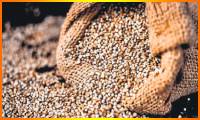
Millets Mahotsav - Two-day Millets Conclave organised at Vizianagaram, Andhra Pradesh to bring all the stakeholders of the food processing sector with special focus on millets, on a common platform.
In the wake of the United Nations General Assembly declaring 2023 as the International Year of Millets, the Ministry of Food Processing Industries is hosting Millets Mahotsav across 20 States and 30 Districts in the country with the aim of creating awareness about the nutritional benefits, value addition, consumption and export potential of Millets. The districts include Mandla (Madhya Pradesh), Vizianagaram (Andhra Pradesh), Bhojpur (Bihar), Mahbubnagar (Telangana), Dharmapuri (Tamil Nadu), Agra (Uttar Pradesh), Karbi Anglong (Assam), Virudhunagar (Tamil Nadu), Dang (Gujarat) , Parvathipuram Manyam (Andhra Pradesh), Komaram Bheem (Telangana), Almora (Uttarakhand), Nuapada (Odisha), Bathinda (Punjab), Palakkad (Kerala), Davangere (Karnataka), Tapi (Gujarat), Barmar (Rajasthan), Kullu (Himachal Pradesh), Tumkur (Karnataka), Bhind (Madhya Pradesh), Nandurbar (Maharashtra), Jodhpur (Rajasthan), Sukma (Chhattisgarh), Mahendragarh (Haryana), Aligarh (Uttar Pradesh), Kalimpong (West Bengal), Khunti (Jharkhand) and Jamui (Bihar).The series of events are being hosted under the PMFME Scheme of the Ministry under ‘Millets Mahotsav’ which commenced from Mandla, Madhya Pradesh on 21-22 January 2023 followed by the event in Vizianagaram in Andhra Pradesh on 22-23 January, 2023.
The series of events are being hosted under the PMFME Scheme of the Ministry under ‘Millets Mahotsav’ which commenced from Mandla, Madhya Pradesh on 21-22 January 2023 followed by the event in Vizianagaram in Andhra Pradesh on 22-23 January, 2023.
The event was inaugurated by Shri Kolagatla Veerabhadra Swamy, Hon'ble Deputy Speaker, Government of Andhra Pradesh in the presence of Shri Praveen Kumar Director, Ministry of Food Processing Industries, Shri Majji Srinivasa Rao, ZP Chairman, Vizianagaram, Smt. Vempadapu Vijayalakshmi, Mayor, Vizianagaram Municipal Corporation, Shri. Bellana Chandra Sekhar, Hon'ble Member of Parliament, Vizianagaram, Shri Indukuri Raghuraju, Hon'ble Member of Legislative Council and Government of Andhra Pradesh at Vizianagaram, Andhra Pradesh today. During his inaugural address, Shri Kolagatla Veerabhadra Swamy touched upon the importance of millets and the immense market potential for millet-based value-added products. He informed the stakeholders about the various initiatives undertaken by the Government of India to support the food processing sector and cited the role of the PMFME (Pradhan Mantri Formalization of Micro Food Processing Enterprises Scheme in empowering micro-food processing enterprises by providing financial, technical and business support across the value chain.
The two-day event was aimed at bringing all the stakeholders of the food processing sector with special focus on millets, on a common platform and encompassed a wide range of activities like exhibition and sale of various millet-based products, informative sessions on millet processing, interactive sessions between industry experts and micro food processing enterprises, SHGs, FPOs engaged in food processing, Buyer Seller Meet where the leading industry players participated and networked with the food processing Micro Entrepreneurs followed by a cultural program by indigenous groups, Book Launch showcasing 75 Millet recipes and cash prizes awarded to the millet recipe contest winners. The event witnessed an overwhelming response with around 1000 participants attending the two day event including micro food processing enterprises, self-help groups, farmer producer organizations, producer cooperatives, etc.
The exhibition focused on various Millet-based products such as flour, pasta, vermicelli, suji, ready-to-eat snacks along with showcasing processing machinery. The products were also open for sale, providing a great opportunity for the micro-entrepreneurs of Andhra Pradesh to not only participate in technical sessions but also generate revenue and forge partnerships for stronger market reach.
In addition to the Millets Mahotsav, a mega-food event is also being organized by the Ministry from 3rd to 5th Nov 2023 in New Delhi to provide a unique platform to all stakeholders i.e. producers, food processors, equipment manufacturers, logistics players, cold chain players, technology providers, academia, start-up & innovators, food retailers, etc. to interact and have a dialogue. The event is slated to be the biggest-ever congregation of dignitaries, global investors and business leaders of major global and domestic food companies which would put India firmly on the global food landscape.
Being grown in more than 130 countries, Millets are considered traditional food for more than half a billion people across Asia and Africa. Millets are important by the virtue of their mammoth potential to generate livelihoods, increase farmers’ income and ensure food & nutritional security all over the world. India is one of the leading producers of millets in the world with an estimated share of around 41 percent in global production. Recognizing the enormous potential of Millets, which also aligns with several UN Sustainable Development Goals (SDGs), the Government of India (GoI) has prioritized Millets. Spearheaded by the Honourable Prime Minister, the Government of India’s proposal for International Year of Millets (IYoM) 2023 was accepted by the United Nations General Assembly (UNGA). The declaration has been instrumental for the Government of India to be at the forefront of celebrating IYoM.
Source: pib.gov.in

Agricultural cooperation: India, Israel inaugurate 30th Centre of Excellence.
Under India-Israel agricultural cooperation, 30th Indo-Israel Centre of Excellence (CoE) was inaugurated in Gignow, Bhiwani, Haryana on 22 January 2023. This coincides with India and Israel nearing the completion of 30 years of full diplomatic relations.
Jai Parkash Dalal, Minister of Agriculture, Government of Haryana; Kamal Patel, Minister of Agriculture, Government of Madhya Pradesh and Ambassador of Israel to India, Naor Gilon jointly inaugurated the centre.
This centre, established as part of the Indo-Israel Agricultural Project (IIAP), is dedicated to semi-arid horticultural crops. Israel, which is famous for 'making the desert bloom', is a pioneer in developing sustainable technologies and solutions for all agricultural sectors. For many decades, Israel has successfully overcome harsh climatic conditions and knows how to maximise resources in an arid environment.
Speaking on this occasion, Ambassador Naor Gilon said, 'This is a significant milestone in the agricultural cooperation between Israel and India. It is extraordinary as this is the 30th Centre of Excellence inaugurated as our countries are nearing the completion of 30 years of full diplomatic relations. With this inauguration, we now have 30 fully-active Centres of Excellence in different states across India. More such centres are in the pipeline. These centres are increasing farmers’ yield and productivity while diversifying local crops and improving the quality of produce.'
The establishment of the centres has been possible due to the coordinated efforts of the Government of India, state governments and MASHAV (Israel’s Agency for International Development Cooperation) at Israel’s Ministry of Foreign Affairs.
These centres provide a suitable platform for a rapid transfer of technology to Indian farmers. New agricultural technologies such as protected cultivation, drip irrigation and fertigation are demonstrated here. The methods and technologies are adapted to the local conditions and requirements of the Indian farmers, with the intent of significantly increasing their income.
Every year, the centres produce more than 40 million premium-quality vegetable seedlings, and over 500 thousand high-quality fruit plants, and train more than 120 thousand Indian farmers.
MASHAV also brings many Israeli experts to India and trains the trainers at these centres throughout the year. Similarly, Indian agricultural officers heading these centres receive training in Israel. For example, over 60 Indian government officials visited Israel to receive training last year.
The Israel-India agricultural cooperation has deepened and widened since full diplomatic relations were established in 1992. During the initial period of the establishment of the Centres of Excellence, the newest technologies in a range of agricultural fields were brought from Israel and implemented at these centres. Over the years, the agricultural cooperation between the two countries has further expanded. Now Israeli technologies and know-how are being transferred and manufactured in India, further boosting the ‘Make in India’ initiative and benefiting the entire world. The newly inaugurated centre is one such example, which will demonstrate Israel-based agricultural technologies produced in India such as drip irrigation, mulching, and greenhouses among other solutions.
Source: agriculturepost.com

UAE-India trade to reach $100bn in next 5 years.
Economic ties between the UAE and India were under the spotlight at a summit showcasing the historic and future links between the two nations.
Dubai Chambers hosted the India-UAE Partnership Summit and ministers and officials revealed the scale of trade between countries.
More than 30% of the start-up community in Dubai is represented by Indians, while Indian companies and NRI-owned entities have generated around 1 million jobs in the UAE.
UAE-India trade
Piyush Goyal, India’s Minister of Commerce and Industry, inaugurated the summit with an opening keynote where he highlighted that the UAE-India Comprehensive Economic Partnership Agreement (CEPA) has given a natural boost to key sectors such as food and agriculture products as well as gems and jewellery.
The CEPA Agreement signed in 2022 by the UAE and India will increase trade exchange by 120 per cent, from $45bn to $100bn and services trade to $15bn in the next five years.
Goyal said: 'India and the UAE are both pursuing dynamic trade and investment policies. India hopes to see its exports touch $1tn in the near to medium term.
'Our growing bilateral trade will play an integral role in the UAE’s efforts to double the size of its economy by 2030. The destinies of the UAE and India have been inextricably intertwined for centuries.
'A closer collaboration, trust and the spirit of entrepreneurship will create limitless opportunities for our economies, our industries, our cities, and our people, now and for generations to come. This is the vision that CEPA aims to turn into reality.'
He also highlighted the various cooperation prospects which include the rupee-dirham trade, the virtual trade corridor, the food corridor and leveraging UAE and India’s start-up ecosystems.
Sectors such as textiles, green energy (wind, solar and hydro), connectivity infrastructure (airports, ports and roads) as well as waste management, were also among the areas of opportunity for both countries.
During his keynote address, Mohammad Ali Rashid Lootah, President and CEO of Dubai Chambers, revealed that the number of new Indian companies that joined Dubai Chamber of Commerce in 2022 exceeded 11,000, bringing the total number of Indian companies registered with the Chamber to more than 83,000.
This reflects the strength of economic, investment and trade links between the two countries and the importance of economic partnerships in promoting future bilateral relations.
Lootah pointed out that the international office of Dubai International Chamber, one of the three chambers operating under the Dubai Chambers, in Mumbai plays an important role in developing mutual relations and attracting more Indian start-ups and SMEs to the emirate.
He confirmed that this year will see expansion in the Chamber’s Mumbai office activities to keep pace with the growing momentum in bilateral relations.
He added: 'Our international offices, including our office in India, work in line with the Dubai Global initiative announced by Sheikh Hamdan bin Mohammed bin Rashid Al Maktoum, Crown Prince of Dubai and Chairman of the Executive Council, to cement the emirate’s position as a business and investment hub that attracts international investment and supports the expansion of local businesses to overseas markets.'
Organised by the International Business Linkage Forum (IBLF) in partnership with Dubai International Chamber the summit highlights the two nations’ bilateral relations with a focus on opportunities in manufacturing and start-ups, agritech and food processing, the future of health, and fintech and investment.
Dubai International Chamber seeks to attract multinational companies based in India and expand the Dubai’s trade ties with the India market.
Through the IBLF exclusive network of prominent personalities globally, the summit offers the chance to explore synergies, growth areas and sectors where both nations might work together for mutual benefit.
As both economies predict strong growth in 2023, the summit calls for exploring opportunities in new sectors, moving away from the current trading patterns to new areas, reflecting both nations’ desire to develop significant digital economies and ignite greater innovation.
Rajiv Podar, Chairman IBLF said: 'The bilateral trade is set to touch $88bn in 2022-23. Traditionally food and energy securities has been the prime focus between the UAE and India, however CEPA focuses also on the SME sector opening a flood of opportunities across the sectors.'
Dinesh Joshi, President IBLF and Chairman of SatyaGiri Group of Companies, said: 'The visionary leadership of India and the UAE has reinforced our existing relations which will have a long-lasting impact in the coming times.
'The signing of the CEPA in 88 days shows the commitment from both nations. The India UAE Partnership Summit aims to bring the stakeholders from both sides to develop strong synergies.'
While petroleum products and jewellery remain the most exported goods from India to Dubai, the summit serves to underline India’s growing expertise in fields including technology, healthcare and finance.
Source: arabianbusiness.com
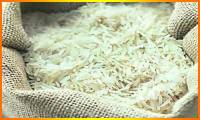
Indian rice export prices soar to near 2-1/2-year high.
Export prices of Indian white rice have increased by over 10 per cent over the past fortnight to nearly a 30-month high. The surge in prices is in view of the Food Corporation of India (FCI) procuring more rice for the central pool and global currency movements, exporters and traders said.
The Centre’s decision to end the distribution of free grains under Prime Minister Garib Kalyan Anna Yojana (PMGKAY), which is in addition to the normal supply under various welfare schemes, has also resulted in the prices rising, they said.
This is because those who were getting rice under the scheme are now seeking rice from the open market.
Near MSP levels
'Exporters have to compete with the FCI to get rice. This has pushed up rice prices. Once it ends procurement, we could see some correction,' said New Delhi-based exporter Rajesh Paharia Jain.
FCI procurement of kharif rice is 20 per cent higher year-on-year, he said.
'Parboiled prices have increased by 30 per cent in the past couple of weeks to Rs.29,000 a tonne from Rs.22,000. Talks of Bangladesh buying rice under a government-to-government deal have pushed up the price,' said VR Vidya Sagar, Director, Bulk Logix.
According to data from the Agmarknet portal, a unit of the Agriculture Ministry, paddy prices were up at Rs.2,419.46 a quintal last week compared with Rs.2,054 a year ago. This year, the MSP for paddy has been fixed at Rs.2,040 for the current crop year to June.
Data from the Consumers Affairs Ministry show that the average wholesale price of rice is currently Rs.3,328.43 a quintal, up 9.12 per cent year-on-year.
Most of the rise in the price happened in the past week, he said.
'Rice prices have increased to near minimum support price (MSP) levels and this has resulted in export prices surging,' said BV Krishna Rao, President, The Rice Exporters Association.
Still competitive
According to the Thai Rice Exporters Association, India’s 5 per cent broken white rice price has increased by $40 a tonne since the third week of December to $443-47 a tonne. The price of 25 per cent broken white rice has gone up by $50 to $428-32.
Only parboiled rice has not witnessed such a rise, though its prices have risen by $15 to $388-92 a tonne. Despite the surge in prices, Indian rice is still the most competitive. However, the Indian cereal currently holds only a $15/tonne advantage over Vietnam.
'Indian white rice prices will top $450 in a week’s time once the markets open up abroad after the Chinese lunar New Year. We have to see how the Vietnam market opens on February 1,' said Bulk Logix’s Sagar.
Good for sector
Exports to Africa are taking place, though there is a general shortage of supplies in the market, he said.
TREA’s Rao said the increase in rice prices is good for the industry since only 'actual millers' are buying in the domestic market. 'Various States such as Tamil Nadu are buying rice from the open market, pushing up prices,' he said.
'Prices have increased despite the arrival of new crop in West Bengal. We are exporting rejected grains from parboiled sortex,' said M Madan Prakash, President of the Agricultural Commodities Exporters Association.
Even prices of such grains have increased to nearly $320 free-on-board (f.o.b).
Set to cool
However, the current trend may not hold for long since 'the surge' is not sustainable, said Sagar.
'Prices are likely to correct once the Vietnam market opens,' he said.
'The market is caught between two rice seasons in Thailand. Once the new crop arrives there, prices will cool down,' said Rao.
'Once FCI ends its procurement, it will be only traders in the market. It will bring down prices,' said Jain.
But a trade analyst, who did not wish to be identified, was sceptical saying, 'the market sentiments are based on physical supplies. Looks like the data on production may not be right.'
Rice prices are up since the production during the kharif season has been estimated lower at 104.99 million tonnes (mt) this year compared with 111.76 mt last year. This was because paddy sowing was affected by deficient rains in West Bengal, Odisha, Jharkhand, Bihar and eastern Uttar Pradesh.
According to data from FCI, rice stocks are at an 8-year low of 12.35 mt as of January 1 but unmilled paddy stocks are at a record high of 47.62 mt (31.9 mt of rice).
Source: thehindubusinessline.com

Warehousing, an essential tool in creating value for customers.
Food and beverages consumption and demand is increasing every day. In today’s times, when both husband and wife are working, the eating habits have changed and people depend more on frozen food.
Warehousing plays a pivotal role in managing and storage of food and beverages, and agriculture and food security market. As any business grows and expands, they look for more reliable and effectively organised supply chain management and warehousing services. Some people might see it as an unnecessary expense, but it saves a lot of money and boosts productivity. Depending on the type of product - dry or frozen, a warehouse has different method and technique of storing it.
Most companies produce goods in bulk which need to be stored and prevent them from any damages. Storing your products in warehouses reduces the risk of spoilage and contamination. Warehousing is a great way to store goods that are not needed immediately. With quality and quantity, it also looks after availability of products for the customers.
Businesses, therefore, consider warehousing as an essential tool in creating value for customers. Here are some key reasons to know why warehousing is crucial for your businesses.
Easy Distribution
It becomes difficult for factories to manufacture as well as store the product. When factories being far away from city and the place of consumption, the product may not get delivered on time or may be spoiled. Therefore, storing product in cold storages of warehouse near the cities helps to reduce the delivery time. Nowadays warehouses provide the service of supply too which reduces cost. Whether it is a raw material or a finished product, it comes convenient for manufacturer to deliver it to the customer fresh.
Inventory and cost reduction
A well-managed warehouse can provide you with a centralised tracking system for your inventory. Having an efficient warehouse system helps you in managing and fulfilling orders while reducing the order cycle time. It is therefore designed in a way that can handle all your warehouse activities with utmost precision and full-proof security. Having a just-in-time inventory increases efficiency. The cost of inventory is reduced by storing only the quantity desired to keep the inventory full. This way companies can reduce costs as well as manage the delivery of goods without hassle. With sustainable inventory management and advanced storage planning, you can store food and agricultural crops and distribute items more efficiently.
Solving seasonal crises
During the harvest season a lot of agricultural products are cultivated. With demand, it gets supplied but during off season the demand is high but product is not available, because of storing products in warehouse will keep the product available for a season and the problem gets solved. It makes the seasonal product available for entire year.
Safety standard
Food products require special handling. Warehouses follow safety standards and maintain hygiene for the products. Warehouse provides facility at each step from how the product is stored till it reaches its destination.
Protected packaging is used for a smooth and safe journey on the road. Generally, companies do not have in-house storage facilities. They outsource services for advanced packaging and carrying out timely deliveries.
Cold storage
India is the first in fruit and second in vegetable production in the world. Having a cold goods store is the best method for preventing food damage. The storage and distribution of these fruits and vegetables is carried out in a manner where the temperature is monitored to keep them fresh and edible for a longer period of time.
Better customer experience
Warehousing is an important part of your customer buying experience. It ensures that the products ordered are in stock, fresh and the customers get what they have ordered. Your inventory is well managed with warehousing. With increase in online sale, customer expects fast delivery. If a customer demands goods, then warehousing ensures that the product is available for quick delivery, and also prevent product from getting lost and stolen during handling. Therefore, it can increase productivity and leave a great customer experience.
Security is priority
You look for security first, wherever you go. It’s the same for running a business. Warehousing protects your goods. It offers services that will store your goods at the right temperature preventing it from any spoilage. They are supervised by specialists and firefighting personnel. Products stored in warehouses are also typically insured. It ensures higher chances to receive compensation from the insurance company in case of damage, fire or theft.
Advancement in technology
With the help of latest warehousing technology, product can be stored in by various ways and makes it easy to identify and know their expiry date. When kept in warehouse, the shelf life of the product also increases. It provides you with the information of your product’s expiry date, which helps you to strategise your business plan before you face any loss.
Vision 2030
India’s population is expected to rise to 1.515 billion in 2030. With the rise of population, the demand for fruits and vegetables will also rise. And as India is one of the leading countries in production of fruits and vegetables, for the supply to work and fulfil the demands smoothly, logistics and warehousing needs to be upgraded. Warehousing will nearly become a billion-dollar industry in the future. The demand is not only in metro cities but also in tier-II and tier-III cities. India will see enhanced growth in the coming years for warehousing services.
Conclusion
Warehousing is the most important component of supply chain management. With effective inventory and risk management and advanced technology, increase your business productivity in time. Food warehouses which are managing fresh food are now becoming vibrant, efficient centre for manufacturers. Fruits, vegetables and other agricultural products often have a short shelf life which is why they need to be transported with speed. Hence, it is one of the few industries that rely heavily on warehousing services.
Source: fnbnews.com

Union Agriculture Minister Shri Narendra Singh Tomar addressed the valedictory function of India International Science Festival in Bhopal.
The India International Science Festival concluded today in Bhopal, Madhya Pradesh. On this occasion, the Union Agriculture and Farmers Welfare Minister, Shri Narendra Singh Tomar said that science and technology are developing rapidly in the country under the leadership of Prime Minister Shri Narendra Modi. The application of Science and Technology has increased in every field. This sector is one of the priorities for the Central Government.
Union Minister Shri Tomar said that Vigyan Bharti, State Government and Central Government together provided an efficient platform for students, scientists and start-ups from across the country through this event. A large number of students and youth were invited to the festival. He said that our country is a young country. Youth energy is the biggest strength of our country. As Prime Minister Shri Narendra Modi has termed it, - our country is going through Amritkaal. This is the time when the country can fulfill the biggest expectations and goals, drawing on the strength of the young population. For this, the Government of India is promoting science and technology. Shri Tomar said that when we came into Government, the budget for Science & Technology was around Rs 2,000 crore, which Prime Minister Shri Modi increased to more than Rs 6,000 crore. The priority of the government can also be understood from the fact that the then former Prime Minister Shri Lal Bahadur Shastri had given the slogan of Jai Jawan-Jai Kisan, and later Prime Minister Shri Atal Bihari Vajpayee included Science and given the slogan Jai Jawan-Jai Kisan-Jai Vigyan, now Prime Minister Shri Modi has included Anusandhan and now it has become Jai Jawan-Jai Kisan-Jai Vigyan and Jai Anusandhan.
Shri Tomar said that science has a great impact upon our lives. Today its utility can be felt all over the world including in our country. India also has the ability to achieve a position in today's competitive world, but to reach there and be able to go ahead, we should know the scientific importance of even the smallest thing. Only then we will be able to go ahead in the world competition.
Shri Tomar said that today no field is untouched by science and technology. In the agriculture sector too, due to technology, work has become easier, losses are being reduced and time is being saved. The use of drone technology is being made accessible to farmers. Farmers will get huge benefits through Digital Agriculture Mission, he said. Based on the way research is being done in the agriculture sector, we can say that in the coming days, India will increase its production and productivity by using technology. Along with fulfilling the country’s needs, we will also be successful in discharging our responsibilities toward the world.
Madhya Pradesh' Science and Technology Minister Shri Omprakash Saklecha also addressed the function. On this occasion, Union Science and Technology Secretary Dr. Chandrashekhar, Secretary, Department of Space, Shri S.K. Somnath, Vigyan Bharti General Secretary Shri Sudhir Bhadauria, Madhya Pradesh Secretary Shri ikunj Srivastava, Dr. Sudhanshu Vritti and Dr. Anil Kothari were among dignitaries present.
Source: pib.gov.in

We are a 24-hour government available to our business community .
In 2022, India managed to seal two major free trade agreements, one with Australia and the other with the UAE, increasing the probability of some more being finalised in 2023. In an interaction with businessline, Commerce & Industry Minister Piyush Goyal discusses the trade land-scape for 2023 and the importance of FTAs. Excerpts:
Q
Can exporters expect some handholding from the government in these difficult times when world trade growth is shrinking?
We are all the time available to support and help our exporters and that’s a continuous process. As issues get flagged off, the government does its inter ministerial consultation and, wherever possible, takes proactive measures to support Indian industry. So we are a 24 hour government available to our business community, particularly the exporters for any problem that they may face.
Just now, I spent three hours on a video conference (VC) with all the export promotion councils. We made copious notes on what steps we can take (to increase exports). All of them have committed to me that they will be pushing in this quarter for maintaining this momentum to the best of their ability.
The Production Linked Incentive (PLI) schemes are all recent. All are in the phase of being developed. But some have also started enjoying the fruits. Bluestar MD Vir Advani just came and said his company was one of the first to start air conditioning facility unit under PLI for white goods and they are already exporting.
Q
India will soon host the next Indo Pacific Economic Forum (IPEF) meet. Do you think there could be some pressure on India to get into the trade pillar of the negotiation?
You think Prime Minister Modi can be pressured? This country protects its own interests? We have, at the moment, opted out of the trade pillar because we don’t know the final contours. We don’t know whether there are any binding commitments or some restrictions which can hurt our manufacturing or economy.
So, until we see exactly the contours and the benefits, we have said we will observe.
If we find that it is in India’s interest, we’ll be happy to join. We have not walked out or not stopped it like we walked out of RCEP. It is just that we have not yet opted for it. In the other three pillars we are there.
Q
How does India plan to resolve the tough issues it faces in its FTA negotiations with the UK? Is an early harvest pact still being considered?
Our approach (in the India-UK FTA) is to focus on what is acceptable to both countries and not allow the sensitive issues to scuttle our discussions. But with Canada we are looking at an early harvest. It’s called an early progress trade agreement, in which we are hoping to capture the low hanging fruits so that businesses can start enjoying the fruits faster.
Q
How soon can the FTA with Canada be finalised? Wasn’t the proposed deadline December 2022?
We have never had any deadlines. Those could be estimates. But there are a lot of issues in the ministerial consultations. Please bear in mind Australia, UAE both are non manufacturing countries. They don’t have a big manufacturing base. So the businesses complement each other. Whereas with Canada, while they are also not much of a manufacturing base, with them we have to go into more details.
The UK is a country manufacturing many products. So we have to do it very carefully. Every item has to be seen with great detail.
Q
How are the FTA talks with Gulf Cooperation Council (GCC) progressing?
Unfortunately, the term of the GCC’s Secretary General is over and the new one has not yet been appointed. Once he comes in, we will have to finalise a few elements of the terms of reference (ToR).
Source: thehindubusinessline.com