Farmers Must Explore Export Opportunities: Union Minister Shobha Karandlaje Inaugurates Seminar At Suttur.
Union Minister of State for Agriculture and Farmers Welfare Shobha Karandlaje has given a clarion call to farmers to explore the possibilities of starting micro industries by utilising 50 percent subsidy given by the Centre to start micro industries. The farmers should open millet processing units and export the products to foreign countries.
She was addressing the gathering after inaugurating a Seminar on ‘Agriculture,’ organised as part of Adi Jagadguru Sri Shivarathreeshwara Shivayogigala Jatra Mahotsava, at Suttur Srikshetra in Nanjangud taluk yesterday.
'India has contributed best practices like Yoga and Ayurveda to the world. By announcing the year 2023 as International Year of Millets, a step has been taken towards gifting millets to the world. Prime Minister Narendra Modi has aided farmers by expanding the size of agriculture budget which was restricted to Rs. 23,000 crore from the last 75 years to Rs. 1.32 lakh crore. Under Krishi Vikasa Yojane, Rs. 1.2 crore has been set aside for the processing of agricultural produces and development of production units. The funds are earmarked for setting up cold storage units at every districts to store every agricultural produces and laboratories,' said Union Minister Shobha Karandlaje.
The other countries in the world are ready to buy quality seeds, millets and millet based products. The small farmers should come together and set up production centres and export the products. The farmers can also export their products through Agricultural & Processed Food Products Export Development Authority (APEDA) and should make use of the opportunity, said Shobha Karandlaje.
MLA G. T. Devegowda, Managing Director of Artha 360 Eco Ventures M.N. Dinesh Kumar, progressive farmer Honnur Prakash and senior journalist H.R. Ranganath also spoke on the occasion.
Suttur Seer Sri Shivarathri Deshikendra Swamiji, HiriyurAdi Jambava Peetha’s Sri Shadaksharamuni Deshikendra Swamiji and Kaginele Gurupeetha’s Sri Niranjananandapuri Swamiji graced the occasion.
Source: starofmysore.com
Centre to institute special awards to promote natural farming, said MoS Kailash Choudhary.
The central government has decided to institute special awards to promote natural farming in the country, announced Kailash Choudhary, Minister of State for Agriculture, while speaking at a function in Pune.
'The awards will be given in three categories which will include award for individual farmer for best natural farming, award for agricultural scientists for research on natural farming and award for the Krishi Vigyan Kendra for promotion of natural farming,' said Choudhary.
He was speaking at a conference on natural farming and millets at Pune.
Choudhary said that henceforth, the agricultural scientists will have to do research on natural farming. 'So far, the research on natural farming has been done only by the farmers. The scientists now need to take forward the research done by the farmers. They should not have any confusion about natural farming in their mind. Agricultural scientists will now have to do research on natural farming. They will also have to take training about natural farming,' said Choudhary.
The United Nations has declared 2023 as the International Year of Millets and India is leading the global awareness campaign about millets. 'If millets can reach the plate of each person, then it can reduce the number of hospitals to a certain extent in the world. We have requested the five star and the seven star hotels to keep millets in their menu. People can contribute to spreading awareness about millets by keeping millet items on the menu at marriages,' said Choudhary.
Source: economictimes.indiatimes.com

Union Agriculture Minister Shri Narendra Singh Tomar visits the International Trade Fair on Millets and Organic Products, in Bengaluru.
Union Minister of Agriculture and Farmers Welfare, Shri Narendra Singh Tomar said that the Prime Minister Shri Narendra Modi is very sensitive towards the small farmers of the country. Shri Modi, with foresight, raised the issue of Millets in the United Nations, where the resolution of the Government of India was adopted with the support of 72 countries and as per the United Nations declaration, the year 2023 is now being celebrated under the leadership of India as the International Year of Millets. Behind this, the main objective of the government is to increase the production and productivity, processing and exports of millets, which will ultimately help the farmers of the country.
Union Minister Shri Tomar said this in Bengaluru today as the chief guest at the closing ceremony of the International Trade Fair on Millets and Organic Products. Shri Tomar said that Millets crops can be grown in less water. Millets also help in increasing the income of farmers. With the increase in the production and consumption of millets in the country, its export will also increase, which will benefit a large number of farmers. He lauded the efforts of Karnataka Government to increase the production and consumption of millets and termed the signing of MoUs worth Rs. 201 crore rupees as an important milestone. He also praised the incentives provided to the farmers of the state.
Shri Tomar said that the Center and the State Governments are running many important schemes for the welfare of the farmers including increasing their income. Farmers are being given an annual income aid of Rs. 6,000 through the Prime Minister Kisan Samman Nidhi (PM-Kisan) Scheme. Besides, farmers in Karnataka are being given an additional annual income support of Rs. 4,000 each. With the aim of increasing the potential of majority of small farmers, the Prime Minister Shri Modi has initiated setting up of 10,000 new Farmer Producer Organizations (FPOs) in the country, on which the Government of India is spending Rs. 6,865 crore. He appreciated the enthusiastic contribution in formation of new FPOs across the country as well as in Karnataka. Shri Tomar said that many programmes have been launched by the Center to make agriculture advanced and the farmers prosperous.
On the occasion, Shri Tomar gave away awards in various categories. The Union Minister of State for Chemicals & Fertilizers and New and Renewable Energy, Shri Bhagwanth Khuba, Agriculture Minister of Uttar Pradesh, Shri Surya Pratap Singh Shahi and state Horticulture Minister Shri Dinesh Pratap Singh, besides Agriculture Minister of Karnataka, Shri B.C. Patil were present at the function.
Source: pib.gov.in

Supply chain innovation to help Indian farmers access newer, distant markets.
Last year, Maharashtra mango farmers had much to rejoice, as their produce successfully reached US shores in the summer. The consignment marked the first successful shipment of mangoes to the US via sea. Mangoes from India have sporadically found their way to the US, but only via air. The aforementioned shipment in question was a much-needed inflection point in the export of fresh fruits and vegetables from India.
As one of the world’s largest producers of agricultural and food products, India occupies a leading position in the global trade of marine products. Yet, its total agri-export basket accounts for little over 2.5 percent of world agri-trade. This points to a glaring gap in realizing the true export potential of India’s Agrarian economy.
A study mandated by APEDA some years ago revealed many challenges in the country’s agri exports and supply chain, especially in the case of fresh fruits and vegetables. It included an inefficient and unorganized backward integration model with our farmers. That resulted in quality and longevity issues of the produce, not to mention the stricter norms enforced by importing nations concerning production standards/traceability to farms, etc.
As a result of the sustained efforts of the Department of Commerce and bodies such as APEDA, activation of clusters such as the Varanasi cluster for fresh vegetables, Nagpur cluster for oranges and Krishna and Chitoor clusters in Andhra Pradesh for mangoes, have solved transportation/logistics issues of these land-locked production areas. Exports took place from many clusters like these for the first time, with produce finding their way from farms to supermarkets in the Middle East and even South Korea. This was a contributing factor to India’s unprecedented growth in exports in 2020-21.
Source: freshplaza.com

'UAE, India in talks to settle non-oil trade in rupees'.
The United Arab Emirates is in early discussions with India to trade non-oil commodities in Indian rupees, Emirati Minister for Foreign Trade Dr Thani Al Zeyoudi said on Thursday. The UAE signed a wide-ranging free trade agreement last year with India, which, along with China, is among the biggest trade partners for Gulf Arab oil and gas producers, most of whose currencies are pegged to the US dollar.
Al Zeyoudi, asked by Reuters whether trade in rupees with India was on the table, replied 'yes, we are in discussion with the Indians'. The talks are related to non-oil commodities, he added. 'They are in the early stages,' he said in an interview on the sidelines of the World Economic Forum in Davos.
The UAE's trade deal with India aims to increase bilateral non-oil trade to $100 billion in the next five years.
Source: economictimes.indiatimes.com
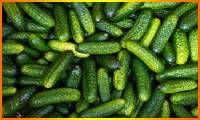
As demand improves, Indian gherkin exporters grapple to supply overseas.
Indian gherkin producers are unable to meet demand from the West, where offtake of the pickled cucumber has increased even as supplies have shrunk from regions such as Ukraine and other parts of Europe.
'We are in a sellers market. There’s a rebound in demand and we are unable to meet it as the supply is low and inventories have dried up,' said Pradeep Pooviah, Vice-President, Indian Gherkin Exporters Association. He estimates the shortfall in demand-supply to be around 20 per cent.
Improved pricing
Pooviah said the shortfall in supply has led to improved pricing even as exporters-producers grapple to fulfil the order backlog. 'We are trying to meet the built up demand of last four months,' he added.
Gherkins are a type of small cucumbers grown by farmers in parts of south India are processed and shipped in brine solution by exporters to overseas markets in the West, where they are consumed as pickle.
The production of gherkins takes place under the contract farming model, where exporters decide on the quantity based on the projected demand. It is estimated that around 60,000 acres is under gherkin cultivation in States such as Karnataka, Tamil Nadu and Andhra. Close to one lakh farmers are engaged in the production of the gherkins, which are mainly exported overseas to markets in the US, Russia and Europe among other countries.
The current shortfall in gherkin supply is attributed to the trimming of production by the exporters, who operated at a capacity of around 60 per cent. In the previous year, the exporters had faced challenges such as lower prices and higher logistics costs impacting realisations and profitability.
'We produced about 40 per cent less during the April-December, which helped reduce the inventory in the market,' Pooviah said. Also, the prices paid to farmers saw a marginal increase, resulting in lower output. Now the production is getting back to normal and there is backlog to be fulfilled, he said.
Sources said the reduction in supplies from the war-torn Ukraine and the drought affected Europe has also contributed to the increased demand for Indian gherkins. India exports gherkins round the year, unlike other producers such as Ukraine and Mexico, while the production takes place in about nine months a year. In the year-ended March 2022, India’s gherkin exports fell by around 11 per cent in value terms to $199.46 million over previous year’s $223.04 million. In quantity, the exports were down at 2.175 lakh tonnes over previous year’s 2.235 lakh tonnes.
In the current financial year, the exports of processed vegetables, under which gherkins are clubbed, are up at $325 million for the April-November period over same period last year’s $275 million.
Source: thehindubusinessline.com

2023 will be a year for Indian economy to strengthen its position on global stage, says RBI.
This will be a year for the Indian economy to strengthen its position on the global stage while the rest of the world grapples with an impending recession, war and inflation, the Reserve Bank of India (RBI) said in its report on the state of the economy.
The distinction of being the most populated country with a sixth of the world's working population could only lift the prospects for the economy to surpass Germany and Japan by 2027, the central bank said, citing a forecast by the International Monetary Fund.
'In closing, 2023 may well be the opening ajar of a window in which India’s time on the world stage is arriving,' the RBI said in its commentary, which is a part of the bank's monthly bulletin.
In April 2023, India’s population will be the largest in the world, projected at 1.4 billion. 'With a median age of 28, this is India’s chance to seize the demographic dividend and herald its emergence as an economic powerhouse of the future,' the RBI said.
India will be a $3.7 trillion economy in 2023, maintaining its lead over the UK as the fifth largest economy of the world.
'Even diehard disparagers acknowledge that ‘India has a compelling story – a vibrant IT-services industry, a burgeoning domestic tech economy, an increasingly attractive location for global manufacturers, and strong economic growth’,' said the report, prepared by the central bank’s economic research department.
The RBI, however, said that the views expressed in the report are of its authors and not of the bank.
India’s macroeconomic stability is getting stronger with inflation, measured by the consumer price index, remaining below the 6% upper tolerance band for the last two months. Lead indicators also suggest that the current account deficit is on course to narrow through the rest of the 2023.
India is also striving to build a global manufacturing hub and become a preferred habitat for companies to shift their production bases.
'Amid the ongoing megatrends, India would have a significant advantage owing to strong domestic demand, digitalisation, largest talent pool globally, financial inclusion, global competitiveness and sustainability transition,' EY, one of the leading professional services organisations, had said earlier this week.
The RBI report said that the objective during 2023 would be to tether inflation and fiscal consolidation at both central and sub-national levels.
Source: economictimes.indiatimes.com

Shri Manoj Ahuja, Secretary (Agriculture) inaugurates one-day India Cold Chain Conclave.
Ministry of Agriculture and Farmers Welfare, along with PHD Chamber of Commerce & Industry (PHDCCI) in association with National Centre for Cold Chain Development (NCCD) as a knowledge partner, organised a one-day exhibition and conference as 'India Cold Chain Conclave' in New Delhi today. The conference was organised with the objective to bring together all the stakeholders on one common platform where they can contribute thoughts and ideas for the growth of industry in a sustainable manner and to explore ways of reducing post-harvest losses with relevant technologies. An exhibition was also organised concurrently to demonstrate Innovations and Excellence in Cold Chain Sector by industry leaders.
The Conclave and exhibition was inaugurated by Shri Manoj Ahuja, Secretary, Department of Agriculture and Farmers Welfare. He said that Ministry of Agriculture recognizes the importance of the cold chain industry in ensuring food safety, reducing food waste and increasing the shelf life of perishable products and ministry has set up an extensive outlay of policies and programmes to give strength to this sector. Technological innovation is crucial for the growth and development of the Indian Cold Chain industry. With the advent of advanced refrigeration and cooling systems, the industry is now able to store and transport goods at much lower temperatures, which helps to extend the shelf life of perishable products. This has led to an increase in the export of perishable goods from India, as the products can now reach international markets in better condition.
During the Conclave, approval of the product specific horticulture clusters in various parts of the country under the Horticulture Cluster Development Programme of MoA&FW was accorded. On this occasion, Shri Ahuja handed over the letter of acceptance to the five Cluster Development Agencies and Implementing Agencies for respective Clusters viz. Apple in Shopian (J&K), Banana in Ananthapur (Andhra Pradesh), Grape in Nasik (Maharashtra), Mango in Mahbubnagar (Telangana) and Turmeric in West Jaintia Hills (Meghalaya), out of 12 selected clusters for pilot phase. The respective Implementing Agencies include FIL Industries Pvt. Ltd., Desai Agrifoods Pvt.Ltd., Sahayadri Farms Post-Harvest Care Limited, Prasad Seeds Pvt. Ltd. and Meghalaya Basin Management Agency through their Cluster Development Agencies namely JK HPMC, Andhra Pradesh Horticulture Development Agency, Maharashtra State Horticulture and Medicinal Board, Telangana State Horticulture Development Corporation Limited and Meghalaya State Agricultural Marketing Board. It was also announced that the applications for 7 other pilot clusters namely Mango for Kutch and Lucknow, Pomegranate for Solapur & Chitradurga, Banana for Theni, Apple for Kinnaur and Pineapple for Sepahijala are under process.
Dr. Abhilaksh Likhi, Additional Secretary (DA&FW) said that the Indian Cold Chain industry is expected to experience significant growth in the coming years. The increasing demand for perishable goods such as fruits, vegetables, and meat products, as well as the rise in e-commerce and online grocery sales, are driving this growth. As the demand for these goods continues to grow in India, the government recognizes the need to support the development of the cold chain industry in order to ensure food security and public health.
Shri Priya Ranjan, Joint Secretary (Horticulture) said that the Agriculture Ministry, under the dynamic leadership of Agriculture Minister, is working fast in understanding the new needs which are emerging on the cold chain front and we are progressing ahead with various programmes initiated to bring new developments in the cold chain sector.
During technical sessions, various issues relating to Logistics and cluster development to unlock Cold chain development prospects, Cold chain energy efficiency, Refrigeration technology and Importance of Internet of Things in Cold-chain etc were deliberated in detail by the delegates with the objectives to bring improvement of the development of cold-chain industry in sustainable manner.
The event was attended by other senior officers from the Ministry of Agriculture, Ministry of Food Processing Industries, APEDA, Bureau of Energy Efficiency etc. The conclave was also attended by over 250 participants/delegates belonging to Various Government Departments, Corporates, Technology Providers, Traders, Exporters, Researchers and other stakeholders from various parts of the country.
Source: pib.gov.in

New national export cooperative to be established with initial capital of Rs 500 crore; Amul, NAFED among promoters.
The proposed national multi-state cooperative export society, to be established under the Multi State Cooperative Societies (MSCS) Act, 2002, will have a paid-up capital of Rs 2,000 crore, a top official at the Union Ministry of Cooperation said Thursday.
The official said the proposed export cooperative will have five promoters — Gujarat Cooperative Milk Marketing Federation (GCMMF), the Amul brand’s promoter; National Agricultural Cooperative Marketing Federation of India Ltd (NAFED); National Cooperative Development Corporation (NCDC); Indian Farmers Fertiliser Cooperative Limited (IFFCO); and Krishak Bharati Co-operative Limited (KRIBHCO). Initially, these five promoters will invest Rs 100 crore each, the official said.
This will be the largest of the three proposed national cooperative societies to be established under the MSCS Act. The Union cabinet Wednesday gave its nod to establish the three three national-level multi-state cooperatives under the Multi State Cooperative Societies (MSCS) Act 2002. These are national multi-state cooperative export society; national multi-state cooperative organic society; and national level multi-state seed cooperative.
The proposed national multi-state seed cooperative will have an authorised share capital of Rs 500 crore. However, it will be established with an initial paid-up share capital of Rs 250 crore. It will have five promoters. These include three national cooperatives —IFFCO, KRIBHCO and NAFED — and two statutory bodies — National Dairy Development Board (NDDB) and the NCDC.
The proposed national-level cooperative society for organic products will have an authorised share capital of Rs 500 crore, an official said. Five cooperative bodies — GCMMF; NAFED; and National Cooperative Consumers’ Federation of India Limited (NCCF); NDDB; and NCDC — have come forward to take the initiative of the ministry to set up an organic cooperative society. The society will have an authorised share capital of Rs 500 crore. It will have an initial paid-up share capital of Rs 100 crore.
Source: indianexpress.com
Govt to take call on increasing sugar export quota next month after assessing demand-supply: Food Secretary.
The government will take a decision next month on increasing the sugar export quota from current 60 lakh tonnes after assessing the domestic production and internal demand, Food Secretary Sanjeev Chopra said on Thursday. The food ministry has allowed 60 lakh tonnes of sugar exports for the current 2022-23 marketing year (October-September). India exported around 110 lakh tonnes of sugar -- an all-time high -- in the previous year.
In the current marketing year so far, the mills have dispatched 30 lakh tonnes of sugar for exports and out of that 18 lakh tonnes have already been shipped. The food ministry said the entire 60 lakh tonnes will get exported by May.
Asked about increasing the exports quota, Chopra told reporters: 'We are open to revisiting the export quota. Depending on the domestic production and internal requirement, we will take a fresh call in the next month or so.'
The secretary said that there are divergent views on production estimates among different sugar associations for the current 2022-23 marketing year and a clear picture would emerge by the end of this month or early next month.
Subodh Singh, Additional Secretary in the food department, said: 'We will have a meeting with cane commissioners of all the sugar-producing states next month. We will reassess production estimates and then we will decide how much sugar can be reasonably exported.'
He said the production would not be lower than 340-345 lakh tonnes. 'So we will have the potential of some additional quantity of exports,' Singh said.
Earlier this week, Indian Sugar Mills Association (ISMA) said that sugar mills have entered into contracts to export 55 lakh tonnes of sweetener so far in the current marketing year ending September.
Sugar production till January 15, 2023, in the current marketing year is 156.8 lakh tonnes as against 150.8 lakh tonnes in the corresponding period of the previous year.
Source: economictimes.indiatimes.com