
Shri Manoj Ahuja, Secretary (Agriculture) inaugurates one-day India Cold Chain Conclave.
Ministry of Agriculture and Farmers Welfare, along with PHD Chamber of Commerce & Industry (PHDCCI) in association with National Centre for Cold Chain Development (NCCD) as a knowledge partner, organised a one-day exhibition and conference as 'India Cold Chain Conclave' in New Delhi today. The conference was organised with the objective to bring together all the stakeholders on one common platform where they can contribute thoughts and ideas for the growth of industry in a sustainable manner and to explore ways of reducing post-harvest losses with relevant technologies. An exhibition was also organised concurrently to demonstrate Innovations and Excellence in Cold Chain Sector by industry leaders.
The Conclave and exhibition was inaugurated by Shri Manoj Ahuja, Secretary, Department of Agriculture and Farmers Welfare. He said that Ministry of Agriculture recognizes the importance of the cold chain industry in ensuring food safety, reducing food waste and increasing the shelf life of perishable products and ministry has set up an extensive outlay of policies and programmes to give strength to this sector. Technological innovation is crucial for the growth and development of the Indian Cold Chain industry. With the advent of advanced refrigeration and cooling systems, the industry is now able to store and transport goods at much lower temperatures, which helps to extend the shelf life of perishable products. This has led to an increase in the export of perishable goods from India, as the products can now reach international markets in better condition.
During the Conclave, approval of the product specific horticulture clusters in various parts of the country under the Horticulture Cluster Development Programme of MoA&FW was accorded. On this occasion, Shri Ahuja handed over the letter of acceptance to the five Cluster Development Agencies and Implementing Agencies for respective Clusters viz. Apple in Shopian (J&K), Banana in Ananthapur (Andhra Pradesh), Grape in Nasik (Maharashtra), Mango in Mahbubnagar (Telangana) and Turmeric in West Jaintia Hills (Meghalaya), out of 12 selected clusters for pilot phase. The respective Implementing Agencies include FIL Industries Pvt. Ltd., Desai Agrifoods Pvt.Ltd., Sahayadri Farms Post-Harvest Care Limited, Prasad Seeds Pvt. Ltd. and Meghalaya Basin Management Agency through their Cluster Development Agencies namely JK HPMC, Andhra Pradesh Horticulture Development Agency, Maharashtra State Horticulture and Medicinal Board, Telangana State Horticulture Development Corporation Limited and Meghalaya State Agricultural Marketing Board. It was also announced that the applications for 7 other pilot clusters namely Mango for Kutch and Lucknow, Pomegranate for Solapur & Chitradurga, Banana for Theni, Apple for Kinnaur and Pineapple for Sepahijala are under process.
Dr. Abhilaksh Likhi, Additional Secretary (DA&FW) said that the Indian Cold Chain industry is expected to experience significant growth in the coming years. The increasing demand for perishable goods such as fruits, vegetables, and meat products, as well as the rise in e-commerce and online grocery sales, are driving this growth. As the demand for these goods continues to grow in India, the government recognizes the need to support the development of the cold chain industry in order to ensure food security and public health.
Shri Priya Ranjan, Joint Secretary (Horticulture) said that the Agriculture Ministry, under the dynamic leadership of Agriculture Minister, is working fast in understanding the new needs which are emerging on the cold chain front and we are progressing ahead with various programmes initiated to bring new developments in the cold chain sector.
During technical sessions, various issues relating to Logistics and cluster development to unlock Cold chain development prospects, Cold chain energy efficiency, Refrigeration technology and Importance of Internet of Things in Cold-chain etc were deliberated in detail by the delegates with the objectives to bring improvement of the development of cold-chain industry in sustainable manner.
The event was attended by other senior officers from the Ministry of Agriculture, Ministry of Food Processing Industries, APEDA, Bureau of Energy Efficiency etc. The conclave was also attended by over 250 participants/delegates belonging to Various Government Departments, Corporates, Technology Providers, Traders, Exporters, Researchers and other stakeholders from various parts of the country.
Source: pib.gov.in

FCI to undertake open market sale for 2-3 MT wheat.
The Food Corporation of India (FCI) is likely to start open market sale of wheat this month to curb abnormally high prices of the cereal.
'The FCI will likely undertake open market sale of 2-3 million tonnes (MT) of wheat to bulk buyers such as flour millers by the end of January,' said a senior official, who did not wish to be identified.
Wheat prices in the Delhi market touched a record Rs 3,070 per quintal this week, said traders.
Till last year, the Centre used to sell excess wheat held by government agencies in the open market through tendering. It used to maintain continuous availability of the wheat in the market and also regulate prices during the lean season.
This year, however, the government’s wheat procurement fell to 18.79 million tonnes in the 2022-23 marketing year from 43.44 million tonnes due to a fall in domestic output and aggressive purchase by private parties. After having initially encouraged exports at the beginning of the 2022-23 wheat season, India had to ban the outbound shipments as a severe heat wave reduced the country’s production.
After clubbing the free ration scheme under the Pradhan Mantri Garib Kalyan Anna Yojana with the National Food Security Act, it will be left with wheat which can be allocated for the open market sale scheme.
The current stock of wheat with the FCI stands at 17.170 MT, down from 33.012 MT a year ago.
In the current season, area under wheat has increased to 33.7 million hectares from 33.2 million hectares last year, as per the data released by the agriculture ministry last week.
Wheat is a key rabi or winter crop and is mostly grown in Punjab, Haryana, Rajasthan, Uttar Pradesh and Rajasthan.
This year, farmers have used new seeds – such as such as DBW 187, DBW 303, DBW 222, DBW 327 and DBW 332 – which have better tolerance to heat and are high yielding.
Source: economictimes.indiatimes.com
New national export cooperative to be established with initial capital of Rs 500 crore; Amul, NAFED among promoters.
The proposed national multi-state cooperative export society, to be established under the Multi State Cooperative Societies (MSCS) Act, 2002, will have a paid-up capital of Rs 2,000 crore, a top official at the Union Ministry of Cooperation said Thursday.
The official said the proposed export cooperative will have five promoters — Gujarat Cooperative Milk Marketing Federation (GCMMF), the Amul brand’s promoter; National Agricultural Cooperative Marketing Federation of India Ltd (NAFED); National Cooperative Development Corporation (NCDC); Indian Farmers Fertiliser Cooperative Limited (IFFCO); and Krishak Bharati Co-operative Limited (KRIBHCO). Initially, these five promoters will invest Rs 100 crore each, the official said.
This will be the largest of the three proposed national cooperative societies to be established under the MSCS Act. The Union cabinet Wednesday gave its nod to establish the three three national-level multi-state cooperatives under the Multi State Cooperative Societies (MSCS) Act 2002. These are national multi-state cooperative export society; national multi-state cooperative organic society; and national level multi-state seed cooperative.
The proposed national multi-state seed cooperative will have an authorised share capital of Rs 500 crore. However, it will be established with an initial paid-up share capital of Rs 250 crore. It will have five promoters. These include three national cooperatives —IFFCO, KRIBHCO and NAFED — and two statutory bodies — National Dairy Development Board (NDDB) and the NCDC.
The proposed national-level cooperative society for organic products will have an authorised share capital of Rs 500 crore, an official said. Five cooperative bodies — GCMMF; NAFED; and National Cooperative Consumers’ Federation of India Limited (NCCF); NDDB; and NCDC — have come forward to take the initiative of the ministry to set up an organic cooperative society. The society will have an authorised share capital of Rs 500 crore. It will have an initial paid-up share capital of Rs 100 crore.
Source: indianexpress.com
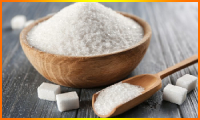
Govt to take call on increasing sugar export quota next month after assessing demand-supply: Food Secretary.
The government will take a decision next month on increasing the sugar export quota from current 60 lakh tonnes after assessing the domestic production and internal demand, Food Secretary Sanjeev Chopra said on Thursday. The food ministry has allowed 60 lakh tonnes of sugar exports for the current 2022-23 marketing year (October-September). India exported around 110 lakh tonnes of sugar -- an all-time high -- in the previous year.
In the current marketing year so far, the mills have dispatched 30 lakh tonnes of sugar for exports and out of that 18 lakh tonnes have already been shipped. The food ministry said the entire 60 lakh tonnes will get exported by May.
Asked about increasing the exports quota, Chopra told reporters: 'We are open to revisiting the export quota. Depending on the domestic production and internal requirement, we will take a fresh call in the next month or so.'
The secretary said that there are divergent views on production estimates among different sugar associations for the current 2022-23 marketing year and a clear picture would emerge by the end of this month or early next month.
Subodh Singh, Additional Secretary in the food department, said: 'We will have a meeting with cane commissioners of all the sugar-producing states next month. We will reassess production estimates and then we will decide how much sugar can be reasonably exported.'
He said the production would not be lower than 340-345 lakh tonnes. 'So we will have the potential of some additional quantity of exports,' Singh said.
Earlier this week, Indian Sugar Mills Association (ISMA) said that sugar mills have entered into contracts to export 55 lakh tonnes of sweetener so far in the current marketing year ending September.
Sugar production till January 15, 2023, in the current marketing year is 156.8 lakh tonnes as against 150.8 lakh tonnes in the corresponding period of the previous year.
Source: economictimes.indiatimes.com

Govt Plans to Market Organic Farm Products Under One Roof Through Cooperatives.
On January 11, the Union Cabinet, chaired by Prime Minister Narendra Modi, approved the setting up of a national-level cooperative society for organic products under the Multi State Cooperative Societies (MSCS) Act, 2002, with support from relevant ministries following the principle of 'Whole of the Government Approach'. To capitalize on their comparative advantage, the government believes cooperatives must think globally and act locally.
'We have market, we have demand from consumers in terms of its health benefits. Cooperatives are critical if you want benefits to reach farmers directly,' he said on Monday at a meeting with various stakeholders. He went on to say that the difference in prices between organic and regular wheat is about Rs 20-25, and that this is where cooperatives come in to help farmers get more value for their produce.
The cooperative society will manage various activities related to the organic farming sector, such as providing certified and authentic organic products, unlocking the demand and consumption potential of such products in India and abroad, branding and marketing through facilitation, testing, and certification at a low cost, and other related aspects.
The cooperative is named National Cooperative Organics Limited and has five promoters — Gujarat Cooperative Milk Marketing Federation (which sells its products under brand Amul), National Agricultural Cooperative Marketing Federation of India (NAFED), National Consumers Federation of India (NCCF), National Dairy Development Board (NDDB), and National Cooperative Development Corporation (NCDC), the secretary said. The primary promoter is NDDB.
The cooperative society will have an authorised capital of Rs 500 crore, but it will begin with Rs 100 crore (Rs 20 crore by each promoter). Its registered office will initially be at NDDB's head office in Anand, Gujarat. The global organic produce market is estimated to be worth Rs 10 lakh crore, with India accounting for Rs 27,000 crore.
Organic product demand is increasing all over the world, and India has everything it needs to expand exponentially. The United States, Canada, Germany, and China are among the top consumers. It is estimated that this sector has the potential to grow at a 15% annual rate globally. It is approximately 20-25% in India.
Australia has the most area under organic cultivation, followed by Argentina and India. The largest single source of pollution, according to the World Health Organization, is sewage. On what the government intends to do to increase the area and productivity of organic crops in India, the secretary stated that he believes the entire ecosystem will evolve as proper marketing improves.
Source: krishijagran.com

Karnataka s organic food display to bring innovative ready-to-eat and -serve products to fore.
Karnataka’s Department of Agriculture, which is hosting the fourth edition of the ‘Millets and Organics-International Trade Fair’ between January 20 and 22, 2023, at the Tripura Vasini Palace Grounds is expected to see a slew of novel ready-to-eat and -serve products. This is in an effort to accelerate the pace of cultivation and consumption of millets in the daily diet of people as part of the International Year of Millets.
Millets are the most common organically cultivated grain. Most organic products are millet based. The fair will feature an exhibition of around 300 stalls of more than 110 companies and an international pavilion with organisations from various countries. There will also be farmer workshops, conferences and food courts featuring millets and organic food.
There will be free stalls provided for start-ups and a 50% discount offered for women entrepreneurs. The international pavilion will include participants from South Korea, Germany, Uganda, the UK, Malaysia and the Netherlands. Additionally, there will be stalls featuring produce from Kerala, Maharashtra, Bihar, and Andhra Pradesh.
Source: fnbnews.com

Directorate General of Foreign Trade (DGFT) simplifies Composition Fee for Export Obligation Extension under Advance Authorization Scheme.
The Directorate General of Foreign Trade (DGFT) has notified the amended rules for calculation of Composition Fee for extending Export Obligation under Advance Authorization Scheme by amending Para 4.42 of Handbook of Procedures (2015-20) vide Public Notice No.52/2015-20 dated 18th January, 2023.
The simplification of calculations for Composition Fee helps in automation and faster service delivery by making the process more efficient and easier to understand. The previous formula for Composition Fee was convoluted and difficult to understand, which made the process more tedious and strenuous for exporters. However, the revised Composition Fee formula, which is based on a specific rate for different levels of the 'CIF value of Authorisation', is more straightforward and easier to calculate.
This will help automate the entire Export Obligation extension process with minimal human intervention, further eliminating the risk of errors and misconceptions.
Automation of the process will reduce the need for manual calculations and paperwork, which will ultimately lead to faster service delivery. This will be beneficial to exporters as it will reduce the time and effort required to complete the Export Obligation extension process.
Additionally, automation will also reduce the risk of errors and misconceptions, which will further improve the efficiency of the process. The process of automation is being taken up under the IT-revamp project of DGFT and shall be notified separately. Simplification of calculations also helps in the 'Ease of Doing Business' objective by reducing the complexity and making the process more straightforward for exporters.
By simplifying the calculations for Composition Fee, the DGFT is working towards this objective by making the process more efficient and easier to understand for exporters. This will ultimately lead to trade facilitation and ease of doing business.
Source: pib.gov.in

Commerce ministry issues draft guidelines for certification of halal meat products.
All meat and its products to be exported as 'halal certified' only if it is produced, processed and packed under a valid certificate issued by a certification body accredited by a board of the Quality Council of India, according to the commerce ministry's draft guidelines on the subject. With the aim of streamlining the halal certification process for export of meat and meat products from India, the draft guidelines on halal certification for export of meat and its products are proposed by the directorate general of foreign trade (DGFT).
The guidelines said that the certification bodies would follow the procedure laid down as per the Indian conformity assessment scheme (i-CAS) - halal.
It added that the Agricultural and Processed Food Products Export Development Authority (APEDA) would be designated as the overall monitoring agency for this purpose.
'All meat and meat products to be exported as 'halal certified' only if it is produced, processed and packed under a valid certificate issued by a certification body duly accredited by the National Accreditation Board for Certification Bodies (NABCB), Quality Council of India,' the draft guidelines said.
These draft guidelines are being circulated for the public/industry comments and feedback. The views can be sent by February 17 for compilation and to prepare the final guidelines.
With an objective to streamline the certification of meat and meat products as halal from the country, a scheme titled 'India Conformity Assessment Scheme (i-CAS)' has been developed.
There is no mandatory halal certification system in India regulated by the government as India does not have a national regulation for the certification. However, certification is undertaken in India through private organisations which have been accredited/recognised by the importing countries.
'As the monitoring body for halal meat and meat products, APEDA shall have the mechanism to ensure that the certification and export of halal products has followed the i-CAS requirements,' it said.
The global halal food market reached a value of USD 1978 billion in 2021. Looking forward, the market is projected to reach USD 3,907.7 billion by 2027.
It said that India's large Muslim population represents huge opportunities for halal-based entrepreneurs.
However, in India, the country's halal industry is still in its infancy. There are no specific labelling requirements for halal food products imported into India.
In India, FSSAI (Food Safety and Standards Authority of India) certification can be seen on almost all the processed foods but the government neither mandates halal certification nor does it provide a unifying regulatory law hence it is important to have halal regulations in place in India.
Halal certification is given by many private companies in India which marks the food or products permissible. The major halal certifying organisations in India include Halal India Pvt Ltd and Jamiat Ulama-i-Hind Halal Trust.
The International Halal Accreditation Forum (IHAF) is an international network of accreditation bodies mandated to enforce halal standards in their economies.
It added that all the major importer countries for halal products have their own regulations for importing halal products.
Countries across the globe including Indonesia, Malaysia, Thailand, Philippines, UAE, Pakistan and others have their own halal standards; however, so far there has been no global halal standards.
The rapid growth of halal industry has not only led to the halal technologies and innovations but also the halal related laws and regulations which is still not harmonised globally, it said.
'In India certification bodies who are certifying the halal trade being impanelled in the country of export but halal monitoring is still a subject of discussion in absence of authority, regulation and monitoring of products under halal certification,' it added.
Due to changed consumer perception, the halal market not only attracts muslim population but also non-muslim consumers, it said.
'The issues and challenges in halal trade in India are lack of authoritative control, regulation, regular monitoring, enforcement, awareness of the industries, changed consumer perception, cost, market competitiveness, and supply chain management,' it added.
By outlining these problems, it is hoped that this guideline will give thought to discuss suggestions and identify solutions for the problems that have been raised so that food business operators in India have solid platforms to implement the halal concept in their businesses, it said.
Source: economictimes.indiatimes.com

Indian farmers need to shift from rice to millet cultivation to reduce high water consumption, says Amitabh Kant.
Indian farmers need to shift from rice to millet cultivation to reduce high water consumption, India's G20 Sherpa Amitabh Kant on Wednesday said, adding that only millets should be given in the Centre's flagship Poshan Abhiyan. Addressing an event organised by industry body CII, Kant said millets are nutritious and rich in micronutrients, particularly protein, and the challenge is to push the consumption of millets to a higher level in India.
'India needs to move away more and more from rice and wheat cultivation, and produce and export more and more millets.
'Cultivation of millets will also help save water,' he said.
Kant noted that the private sector needs to play a key role in making millet the superfood of India.
'All Poshan Abhiyan schemes should only give millets,' former Niti Aayog CEO said.
In 2018, the Centre launched its flagship programme, the Poshan (Prime Minister's Overarching Scheme for Holistic Nourishment) Abhiyaan to draw national attention to and take action against malnutrition in a mission mode.
Also, speaking at the event, Manoj Ahuja, Secretary, the Ministry of Agriculture and Farmers Welfare, said that millets are the traditional food of India and can be grown in very difficult regions also.
'We are also looking at an international audience to sell our millet-based products. Recently, 5-6 Indian companies exhibited their millet-based products in an exhibition in Brussels,' he said.
Food Safety and Standards Authority of India (FSSAI) CEO G Kamala Vardhana Rao said that the ministry of health has written to states, saying millets should be served in jails also.
Rao said millets melas will be organised in 100 cities.
'We have planned to start health clubs in schools also,' he added.
Source: economictimes.indiatimes.com

Need to increase production, processing of millet: Tomar.
Agriculture Minister Narendra Singh Tomar on Wednesday stressed the need to increase productivity, production and processing of millets and said an adequate quantity of millets should be consumed for meeting nutritional requirements. The minister was addressing industry chamber CII's National Conference on Millets: Ensuring Climate Adaptation, Nutrition and Food Security.
The United Nations has declared 2023 as the International Year of Millet (IYM) on the proposal of the Indian government.
'Millets is an Indian grain and it is full of nutritional value,' Tomar said.
However, he said, wheat and rice have occupied more space in our food plate.
Now, Tomar said, the time has come that there is adequate availability of millet in the food plate as this would help in meeting the nutritional requirement of people.
The IYM 2023 has provided a great opportunity to create awareness about the benefits of millets, he said, adding that the Centre has been taking steps in this direction for the last few years.
Tomar stressed that people should also eat millet frequently so that the challenge of nutritional deficiency could be addressed.
The minister highlighted that the government is focusing on increasing farmers' income.
He also said that the Centre in the last eight years has launched various programmes, such as PM-KISAN and the crop insurance scheme Pradhan Mantri Fasal Bima Yojana, to boost farmers' income.
The government has also set an agriculture credit target of Rs 18 lakh crore for this fiscal year and it is also promoting the use of technology and cluster farming.
The UN declaration has been instrumental for the government to be at the forefront of celebrating the International Year of Millet. Prime Minister Narendra Modi has also shared his vision to make IYM 2023 a 'People's Movement' alongside positioning India as the 'Global Hub for Millets'.
In India, millets are primarily a kharif crop, requiring less water and agricultural inputs than other similar staples. Millets are important as it has the potential to generate livelihoods, increase farmers' income and ensure food & nutritional security all over the world.
Source: economictimes.indiatimes.com