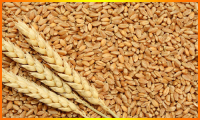
Thailand issues tenders for up to 135,000 tonnes feed wheat -traders.
A group of importers in Thailand has issued an international tender to purchase up to 135,000 tonnes of animal feed wheat, European traders said on Wednesday.
The deadline for submission of price offers in the tender is also Wednesday, Jan 18.
One consignment of about 75,000 tonnes is sought for shipment between Feb. 15 and March 15, while another 60,000 tonne-consignment is sought for shipment between July 1 and July 31.
The wheat can be sourced from country worldwide, except Pakistan, Ukraine and Russia.
In the last reported purchase by Thailand on Jan. 4, an importer group bought about 75,000 tonnes of feed wheat expected to have been sourced from optional origins.
Source: hellenicshippingnews.com

FTA will act as catalyst to fulfill huge trade potential with India: Israel.
The newly-elected President of the Israel-Asia Chamber of Commerce, Anat Bernstein-Reich, who has worked to promote Indo-Israel bilateral trade for more than two decades, has said the Free Trade Agreement (FTA) between Israel and India will act as a catalyst in fulfilling the huge trade potential.
The first woman to be elected President of the prestigious body since its establishment in 1984, Bernstein-Reich would be replacing Matan Vilnai, who in the past has served as the Ambassador of Israel in China, the Deputy Chief of Staff of the Israeli Army, and a Minister in the Israeli government.
Vilnai served as the President of the Chambers for the past six years and will now serve as its honorary President.
'India and Israel trade relations have reached new heights but have still not fulfilled their potential. The long-awaited Free Trade Agreement will be a catalyst for the same', Bernstein-Reich told PTI.
'I call upon the two sides to break the current deadlock in discussions over FTA. I was recently in India and during my meetings with officials there have also requested to look into ways to move the process forward to boost bilateral trade', she said.
Bernstein-Reich was elected the new President of the prestigious commercial body last week by the Chamber's General Assembly that opened for 2023 recently.
The meeting was attended by representatives of the Israeli ministries and economic organisations.
Among those that participated in the General Assembly included Jonatan Zadka, former Consul General of Israel in Bangalore, and Shai Mozes, former Economic Attach in Bangalore and today Head of the Asia Pacific Desk at the Ministry of Economy.
Bernstein-Reich, who also holds the position of Chairperson of the Israel-India and Sri Lanka Chambers within the Israel-Asia Chamber, will continue in that role.
An investment banker and lawyer, Bernstein-Reich has been operating in India for the past 24 years and has been involved in dozens of transactions on the Israel-India axis, including the establishment of the Agribator, the centre for Israeli agricultural technologies in New Delhi.
In 2018, she managed the Israel-India Bridge for Innovation Program for the Israeli Innovation Authority. The Bridge was a joint initiative of Prime Ministers Benjamin Netanyahu and Narendra Modi that assisted Israeli and Indian start-ups to access each other's markets.
She received the 'Friend of India Award' from WeSchool for her contribution to the advancement of the Indian economy in 2020 and in 2022 received an honorary doctorate from Jharkhand Rai University.
Dubbed by several local business persons as the 'Maharani of India', Bernstein-Reich, emphasised that the current figure of over 7 billion US Dollars in bilateral trade, not including defence, doesn't 'really present the right picture'.
'Indo-Israel bilateral trade has diversified so much over the past decades and continues to add new sectors into it. Recent collaborations in health tech, energy, water management etc. continues to provide new impetus to growing bilateral trade ties. The potential is huge and all efforts need to be made to close the Free Trade Agreement that will give a further boost to it', she stressed.
'Our chamber has signed MOUs for collaboration with the leading Indian chambers of commerce including FICCI, CII, ASSOCHAM, and SICCI (SOUTH INDIA)', she noted.
In a new initiative, Bernstein-Reich pointed out that together with FICCI Ladies League, her organisation has also formed the IIBWF- Israel-India Business Women Forum to promote women-led businesses collaborations.
Bernstein-Reich received the Woman of the Decade award as part of the Women Economic Forum (WEF) that convened in New Delhi in December 2022.
A graduate of the Faculty of Law at Tel Aviv University and an MBA in Finance from the University of San Francisco, she also holds a teaching position in Haifa University's Asian Studies department.
The Israel-Asia Chamber of Commerce is a multinational chamber of commerce that promotes trade between Israel and 15 countries in Asia, including countries with which there are no diplomatic relations such as Indonesia and Malaysia.
India and China are the most prominent countries in the activities of the commercial body.
The chamber is part of 48 bi-national chambers of commerce that operate in Israel.
The Israel-Asia Chamber of Commerce was established in 1984 by the Israeli government and the economic organizations to promote trade with Asia which was, at that time, in its nascent stage.
Following the establishment of full-fledged diplomatic relations with India and China in 1992, Israel's trade with Asia has grown tens fold in the past 30 years.
The role of the President of the Israel-Asia Chamber of Commerce has been held by prominent public figures since its inception.
Ambassador Amir Hayek, the Israeli ambassador to the United Arab Emirates, also served as its President between 2005 and 2010.
Vilnai, in his farewell speech, was quoted in a press release as saying that 'today Asia accounts for 60 per cent of the world's population and includes the largest economies, creating a global power shift towards the East with India and China being major players in the world arena'.
Bernstein-Reich also serves as CEO of the Israel-India Investment Banking Company in the BDO Group Israel.
Source: business-standard.com
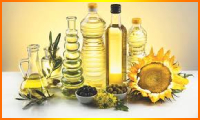
Call to focus on making India self-reliant in oilseed cultivation.
Mangala Rai, former secretary Department of Agricultural Research and Education and Director General of Indian Council for Agricultural Research (ICAR) stressed the need for human resource development and technology development for boosting secondary agriculture.
He was speaking after inaugurating a five-day international conference on Vegetable Oils at PJTSAU University auditorium here on Tuesday. Welcoming the gathering, ADG (Oilseeds & Pulses), ICAR, Sanjeev Gupta recalled how technology mission on oilseeds has ushered yellow revolution in oilseeds and tripled the oilseed production in the country.
Member of Parliament and Chairman Karnataka Oilseeds Federation Annasaheb Shankar Jolle, Chairman of the NDDB Meenesh Shah, Vice Chancellor of Sri Konda Laxman Horticultural University Neeraja Prabhakar, Director of ICAR-Indian Institute of Oilseeds Research R.K. Mathur and managing director of Fare Labs Dwijendra Mathur participated in the programme.
Mr. Annasaheb Shankar Jolle called for development of short duration and high yielding oilseed varieties to make India Atma Nirbhar in oilseeds. Dr. Mathur pointed out that there is huge potential for micro edible oils from micro algae as a healthy alternative.
Mr. Meenesh Shah said production of quality oilseeds, effective extension, support from oil cooperatives and forward linkages in oilseeds are the major steps required for boosting the oilseed production. Ms. Neeraja Prabhakar reiterated that for a given area, oil palm yields more oil when compared to other oilseed crops. Research, trade and policy strategies will be deliberated and a road map will be prepared for increasing oilseed production in the country.
Source: thehindu.com

Moldova enters Indian apple market, exports first consignment.
Apples from Moldova, an east European nation, will now be available in India taking on the likes from the US, New Zealand, Turkey, Iran, Chile, Italy and other such exporting nations.
'We have brought 100 tonnes of Moldovan apples for the first time to India on a trial basis through Chennai and Mumbai ports. Once the government gives the go-ahead after these trial imports, we will be getting more from that country,' said Nishanth Yeddanapalli, Managing Director of Chennai-based Purecrop Agro Pvt Ltd.
Trial shipments
Purecrop Agro Pvt Ltd is an arm of the 85-year-old Vaduvammal Group that has diversified business ranging from steel to metal recycling to chemicals to agriculture.
Moldova, a part of the erstwhile Soviet Union, got permission to ship its apples to India in 2018 on a trial basis. It was given a five-year window to complete the trial shipments. 'Our first shipment failed in 2018 as we did not know how to meet Indian regulations. We are better prepared now with many agencies coming forward to help us,' said Ana Taban, ambassador-at-large for economic diplomacy, Moldovian Ministry of Foreign Affairs and European Integration.
Competitors
'Once we decided to bring apples from Moldova, it took less than 40 days to get them to India,' said Yeddanapalli, adding that the fruit will be competitively priced. 'Moldovan apples are sweet and will compete with those from Turkey, Italy and Poland,' he said.
Currently, the wholesale price of imported apples is ?2,500-600 for an 18-kg box. In the domestic market, apples, grown in Kashmir and Himachal Pradesh, now cost between ?80 and ?100 a kg.
Modern cultivation
Ion Tulei, Commercial Director, Moldova’s FarmProd Ltd, said his country produces nearly 5.5 lakh tonnes of apples and exported 2.45 lakh tonnes during the August 2021-July 22 marketing season.
Andrei Cumpanici, food safety, quality and sustainability manager, said Moldovan producers implement good agricultural practices to meet global quality standards, particularly since they export to Europe.
The agricultural practices meet the integrated farm assurance standard, the most widely used food safety certification for fresh produce across the world.
Cumpanici said apples are cultivated using modern techniques and it helps orchards get a yield of 55-70 tonnes a hectare. 'We grow Gala, Golden Delicious, Red Delicious, Jonagold and Granny Smith varieties,' he said.
Tulei said most of the varieties are of Italian origin but the erstwhile Soviet Union member’s better soil gives Moldova an advantage.
Ukraine War impact
Taban said the Ukraine war has forced Moldova to look at other markets. 'Russia imports over 90 per cent of our apples. In August, it announced an embargo on our apples. It has been lifted but you never know. So, we are looking at other markets,' she said.
The war has deprived apple growers of access to the nearby Odesa Port which is hardly 60 km from their orchards. 'We now take our produce to Romania’s Constanta Port which is 600 km away,' said Obrejanu.
The Indian Ministry of External Affairs, Moldova’s Foreign Ministry and its Agriculture Ministry came together to ensure the current shipments. 'We have never had any diplomatic relations till now. But we will use trade to build our relations. The first step is to export apples. We would like to import pharmaceuticals from India,' the ambassador-at-large said.
The Centre’s decision to impose a 75 per cent Customs duty on apples from the US as part of its measure to retaliate against Washington’s move to impose a higher duty on Indian steel will likely give Moldovian apples an edge. For apples from other countries, the import duty is 50 per cent.
Moldova is trying to become a member of the European Union. 'We have to meet at least nine norms. The EU will see if we have met these norms at the end of this year. Then, the process to make an EU member will begin,' Taban said.
Source: thehindubusinessline.com
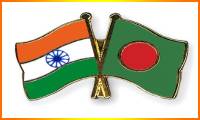
Bangladesh: Committee formed to revise quota for importing rice, wheat from India.
The committee headed by Noor Md Mahbubul Haque, additional secretary (FTA) of the ministry, is scheduled to submit the assessment report to the ministry within the next 10 days, said Senior Secretary Tapan Kanti Ghosh after a meeting with the senior officials of different ministries, departments and agencies of the government on Tuesday.
The other members of the committee are senior representatives from the foreign affairs ministry, food ministry, agriculture ministry and the tariff commission, Tapan told journalists at his Secretariat office in Dhaka after the meeting.
The committee will mainly analyse the annual demand, local production, and import quantity – particularly from India – over the last 10 years, for the food items.
Upon submission of the new report from the committee, the commerce ministry will revise the quota of three essentials and send it to India so the country can assure guaranteed supply of those items even during the crisis moment stemmed from the severe fallouts of the Russia-Ukraine war.
During his visit to India last month, Commerce Minister Tipu Munshi demanded assured export of seven essentials to Bangladesh under a quota that India provides for Nepal, considering the tough time of Russia-Ukraine war.
The seven items were wheat, rice, sugar, onion, garlic, ginger and lentil. Of the seven items, the current import trend of three items – onion, garlic and ginger – is okay for the country. The Indian government declined to assure the export of lentil to Bangladesh as India itself is one of the major consumers of lentil.
'So, we are mainly working on three essentials so that India can assure a guaranteed supply for Bangladesh,' Tapan Kanti Ghosh said.
India has suggested that Bangladesh review the proposed import quota on seven food items as the neighbouring nation believes the quantity sought as a guaranteed supply is too high.
For example, Bangladesh has proposed that India guarantee a supply of up to 45 lakh tonnes of wheat each year.
However, India believes the quantity is too high given that its overall exports of the grain to Bangladesh stands at an annual average of about seven lakh tonnes, according to Commerce Minister Tipu Munshi.
Bangladesh annually imports nearly 65 lakh tonnes of wheat from different sources, particularly Russia and Ukraine, to meet local demand.
But following Russia's invasion of Ukraine, the price of wheat increased worldwide as availability of the grain became uncertain due to ensuing volatility in the global supply chain. The commerce minister paid a two-day visit to India on 22-23 December last year to this end.
Apart from wheat, Bangladesh asked for a secured supply of seven lakh tonnes of onion, 30,000 tonnes of lentil, 20 lakh tonnes of rice, 15 lakh tonnes of sugar, 10,000 tonnes of garlic and 1.25 lakh tonnes of ginger each year.
In response, India said all the proposed quotas were too high as it found that annual exports of these items to Bangladesh were far less than that being demanded, Tipu Munshi told journalists at a press conference at the commerce ministry in Dhaka recently.
During the discussion with the journalists yesterday, Ghosh said the formal negotiation for signing the mega trade deal with India – Comprehensive Economic Partnership Agreement (CEPA) – may start with the commerce secretary level meeting scheduled to be held in Dhaka in March this year.
Earlier, during her visit to India in September last year, Prime Minister Sheikh Hasina and Indian Prime Minister Narendra Modi agreed to start negotiations for signing the CEPA by the end of 2022.
However, the negotiation was delayed because India demanded two more months for studying the joint study report on the CEPA, Tapan said.
Source: tbsnews.net
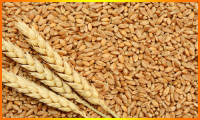
Algeria buys milling wheat in tender - traders.
Algeria’s state grains agency OAIC has bought milling wheat in an international tender which closed on Tuesday, European traders said in initial assessments.
Initial purchases reported were around $334.50 a tonne cost and freight (c&f) included, they said. Estimates of tonnage bought ranged between 510,000 tonnes to 600,000 tonnes.
Traders said a large part of the volume was expected to be sourced from the Black Sea region.
More detailed assessments prices and tonnage bought are expected later.
The wheat is sought for shipment in two periods from the main supply regions including Europe: March 1-15 and March 15-31. If sourced from South America or Australia, shipment is one month earlier.
Algeria is a vital customer for wheat from the European Union, especially France. Algeria does not release results of its tenders and reports are based on trade estimates.
Source: nasdaq.com
Saudi Arabia Open to Talks on Trade in Currencies Besides Dollar.
Saudi Arabia is open to discussions about trade in currencies other than the US dollar, according to the kingdom’s finance minister.
'There are no issues with discussing how we settle our trade arrangements, whether it is in the US dollar, whether it is the euro, whether it is the Saudi riyal,' Mohammed Al-Jadaan told Bloomberg TV on Tuesday in an interview in Davos.
'I don’t think we are waving away or ruling out any discussion that will help improve the trade around the world,' Al-Jadaan said.
The world’s largest oil exporter, which has maintained a currency peg to the dollar for decades, is seeking to strengthen its relations with crucial trade partners including China. The kingdom is a pillar a petrodollar system established in the 1970s that relies on pricing crude exports in the US currency.
During President Xi Jinping’s visit to Riyadh last year, the two countries agreed to boost coordination on energy policy and exploration. During that trip Xi said that China would make efforts to buy more oil from the Middle East and also wanted to settle that trade in the yuan.
Read: Xi Visit to Saudi Arabia Brings Pledge of More Oil Trade
'We enjoy a very strategic relationship with China and we enjoy that same strategic relationship with other nations including the US and we want to develop that with Europe and other countries who are willing and able to work with us,' Al-Jadaan said.
Saudi Arabia is also working with multilateral institutions to provide support to Pakistan, Turkey and Egypt, as part of the kingdom’s largesse to nations it deems 'vulnerable,' Al-Jadaan said.
'We are investing heavily in these countries and will continue to look for opportunities to invest,' Al Jadaan said. 'It’s very important to bring stability.'
Read: Saudi Arabia to Support Pakistan, Eyes Deals in Egypt and Turkey
The minister said his country is looking to invest $10 billion in Pakistan. It already extended the term of a $3 billion deposit to boost its foreign-currency reserves late last year, and Saudi Arabia is now exploring the possibility of increasing the amount.
'We are providing even oil and derivatives to support their energy needs,' Al Jadaan said. 'So there is a lot of efforts, but we wanted this to be conducted.'
The kingdom is also discussing with the World Bank and other institutions how can it be 'more creative to provide that support' to Pakistan, the minister said.
Saudi Arabia is also 'providing a lot of support to Egypt and we’ll continue to — not directly through just grants and deposits, but also through investments,' Al-Jadaan said.
Source: bnnbloomberg.ca
FSSAI notifies comprehensive regulatory standards for basmati rice.
For the first time in the country, Food Safety and Standards Authority of India (FSSAI), has specified the identity standards for basmati rice (including brown basmati rice, milled basmati rice, parboiled brown basmati rice and milled parboiled basmati rice) vide Food Safety and Standards (Food Products Standards and Food Additives), First Amendment Regulations, 2023 notified in the Gazette of India.
As per these standards, basmati rice shall possess natural fragrance characteristic of basmati rice and be free from artificial colouring, polishing agents and artificial fragrances. These standards also specify various identity and quality parameters for basmati rice such as average size of grains and their elongation ratio after cooking; maximum limits of moisture, amylose content, uric acid, defective/damaged grains and incidental presence of other non-basmati rice.
The standards are aimed at establishing fair practices in the trade of basmati rice and protect consumer interest, both domestically and globally. These standards will be enforced w.e.f August 1, 2023.
Basmati rice is a premium variety of rice cultivated in the Himalayan foothills of the Indian sub-continent and is universally known for its long grain size, fluffy texture and unique inherent aroma and flavour. Agroclimatic conditions of the specific geographical areas where basmati rice is grown; as well as the method of harvesting, processing and ageing of the rice contributes to the uniqueness of basmati rice. Due to its unique quality attributes, basmati is a widely consumed variety of rice both domestically and globally and India accounts for two thirds of its global supply.
Being a premium quality rice and fetching a price higher than the non-basmati varieties, basmati rice is prone to various types of adulteration for economic gains which may include, among others, undeclared blending of other non-basmati varieties of rice.
Therefore, in order to ensure supply of standardised genuine basmati rice in domestic and export markets, FSSAI has notified regulatory standards for basmati rice that have been framed through extensive consultations with the concerned Government departments / agencies and other stakeholders as well.
Source: fnbnews.com

Kerala native's Malayali beer tastes massive success in Poland.
One pint of a beer, known as Malayali, is helping to close the distance between Kerala's Palakkad and Poland. Malayali, a beer created by Chandramohan Nallur using Indian rice and European hops, is gradually displacing other beers on Polish bar shelves.
As per a report by The New Indian Express, when Palakkad native Chandramohan Nallur got the idea of creating a beer, he didn’t have an iota of doubt about the name.
The beer's name, according to the 38-year-old, is a reflection of his love for fellow Malayalis. He is the first Malayali director of the Chamber of Commerce in Poland. The beverage was created out of necessity, and the Russia-Ukraine war played a role in its development.
According to the report, Nallur's father was having difficulty selling five containers of rice flakes that he had purchased before Russia invaded Ukraine.
'I was trying to find different ways to help an African friend who was struggling to sell five containers of rice flakes he had bought before the invasion. As the conflict escalated, there was nothing we could do to save the rice flakes,' he told the newspaper.
'Because of the lack of storage facilities, we decided to convert them into pet food, but the plan was scrapped. We read about Komban beer, which was produced outside India. This was our inspiration to find use for the flakes,' Nallur recalled.
But Nallur isn't the only one making global waves. Komban, a beer created by Kochi native Vivek Pillai, is extremely popular in the United Kingdom. Nallur hopes to replicate its success in Poland, where Malayali was launched in November.
He had already sold 50,000 bottles of the beer after two months. In the coming days, he will deliver more than 5,000 litres of Malayali beer.
According to Nallur, beer was created before they decided on a name. He and his partner, Sargheve Sukumaran, experienced numerous failures during the protracted process of developing the beverage before tasting success.
'Making a new brew was never an easy task, and we faced failures on the way. It was on the third try that the ingredients all fell in place,' Nallur recounted.
He stated that a Polish restaurant approached them about brewing the craft beer, which gradually gained popularity. He claimed that the smoothness of the beer impressed customers.
'The next question before us was a name for the beer. We started looking for unique names that could connect us to where we belong. Without much ado, the name Malayali stuck and we applied for a trademark,' added Nallur.
In future, the Kerala native hopes to expand his business to other European countries.
Source: businesstoday.in

National Co-operative Exports to deal with agriculture, textile and handicrafts.
The newly-approved National Co-operative Exports Limited (NCEL) will cover agriculture and allied activities as well as handloom and handicrafts items by enrolling a large number of co-operatives under its fold with a target to double its revenue by 2025 from the current level of about Rs.2,160 crore among 10 major co-operatives that will be its members.
NCEL will have an authorised share capital of Rs.2,000 crore in which the initial paid-up share capital will be Rs.500 crore to be contributed equally by Indian Farmers Fertilizer Cooperative (IFFCO), Krishak Bharati Cooperative (KRIBHCO), National Agricultural Cooperative Marketing Federation of India (NAFED), Gujarat Cooperative Milk Marketing Federation (GCMMF) and National Cooperative Development Corporation (NCDC), sources said. The Cabinet last week approved its creation.
Source: thehindubusinessline.com