
US to work closely with India to deepen bilateral ties, says State Department official after PM Modi's 'very successful' visit.
A senior American official on Wednesday stated that Prime Minister Narendra Modi's maiden state visit to the United States was very successful and the Biden administration will continue to work closely with partners in India to deepen and strengthen this very important bilateral relationship.
At the invitation of US President Joe Biden and First Lady Jill Biden, PM Modi visited the US from June 20-24. Modi was accorded a red-carpet welcome at the White House by President Biden. On June 22, the two leaders held a historic summit, followed by Modi's address to the Congress and a state dinner hosted at the White House by the Bidens in his honour.
Vedant Patel, the principal deputy spokesperson for the US Department of State, said, 'This is not about just a moment in time. What this is about is steps and efforts to deepen and strengthen our relationship and our partnership with India. And we believe that last week's visit was very successful.'
'There were a number of announcements made between our two countries, including steps to strengthen semiconductor supply chains. You also saw the President and the Prime Minister and our two countries speak about engine co-production as well as university research partnerships,' Patel said, as per news agency PTI.
Patel also added that the US will continue to work closely with its partners in India to further deepen, and strengthen this very important bilateral relationship.
Earlier, a joint statement issued after a meeting between PM Modi and US President Joe Biden, said that the two countries have taken steps towards deepening bilateral cooperation to strengthen economic relationship, including trade ties.
'The US-India trade and investment partnership is an engine for global growth, with bilateral trade exceeding USD 191 billion in 2022, nearly doubling from 2014,' it said.
'The leaders support continued for active engagement between the US Treasury Department and the Indian Ministry of Finance under the Economic and Financial Partnership dialogue,' the joint statement said.
Prime Minister Modi and President Biden have committed their administrations to promoting policies and adapting regulations that facilitate greater technology sharing, co-development, and co-production opportunities between the US and Indian industry, government, and academic institutions, the statement said.
Source: businesstoday.in
FSSAI directs laboratories to strengthen testing infrastructure for organic products.
The Government has decided to promote organic products in India by encouraging and strengthening cooperative societies. The success of this depends on reliable testing to ensure the authenticity of the organic products. Therefore, all food testing laboratories need to optimize their facilities and procedures to handle organic testing efficiently and accurately.
FSSAI has directed laboratories under sections 43(1) and 43(2) of the FSS Act 2006 for Organic testing to review their current capabilities and take the necessary steps to enhance the infrastructure and scope of the testing for organic products. All the testing facilities to make an application to APEDA for recognition of the laboratory for testing organic products.
FSSAI has also asked them to apply to the National Referral Laboratory of APEDA for participation in proficiency testing as a pre-requisite to qualify for pre-export testing of organic products.
Source: foodtechbiz.com
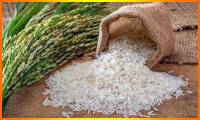
Demand surge pushes basmati rice rates up, Haryana farmers eye rich returns.
Basmati growers and traders are likely to reap a rich harvest over the coming Kharif marketing season 2023-24, as the prices of all aromatic long grained varieties of rice witnessed an increase in domestic and international market.
As per reports from rice exporters following a demand in the international market, the prices of Basmati rice have reached to above Rs.90,776 per metric tonne (MT) from Rs.83,068 of the last year.
Following a jump in the rice export from the country, the price of basmati rice in the domestic market has reached above Rs.80 to Rs.120 a kg against Rs.70 to Rs.100 of the last year.
Figures released by the Agricultural and Processed Food Products Export Development Authority (APEDA) revealed that in April, 2023-24 India has exported 4.24 lakh MT basmati rice against 3.19 lakh MT of the last year, thus India’s total rice export has reached to Rs.8,204 crore including Rs.3,855 crore of Basmati, in April 2023-24 against Rs.6,144 crore during the same period in 2022-23.
The rise in export has helped traders earn handsome profits as prices in the international market have also witnessed an increase of around Rs.7,000 per MT. Traders are predicting that the prices may rise further following the increasing demand of Indian rice in the international market.
There is also a surge in the export and prices of the parmal or non-basmati rice as India has exported a total of 14.2 lakh MT non-basmati rice this year against 13.52 lakh MT last year. The prices of the non-basmati rice also reached an all-time high of Rs.30,576 per MT in April this year, up from Rs.29,265 per MT last year.
All India Rice Exporters Association (AIREA) former president Vijay Setia termed it a great sign in the interest of farmers and traders saying, 'Yes the prices of both basmati and non-basmati rice have increased following a surge in demand in the international market. Even India’s Basmati rice export has increased and there is a strong possibility that the farmers will get a good price for their produce this year.'
Setia, however, demanded the government to lift levy from the procurement of basmati paddy in mandis of Haryana as the move will boost the competition and the farmers will benefit from it.
Since farmers of Haryana and Punjab are the biggest producer of basmati rice and contribute around 80% of the country’s total produce,the benefit from rising prices will benefit them most.
Traders said the basmati prices are likely to remain above Rs.3,000 per quintal again this year, thus helping the farmers to reap a good harvest for the second consecutive year.
Even the arrival of super early sowing varieties of paddy has already started in mandis of Haryana’s Karnal as farmers from Uttar Pradesh have started harvesting of early sown paddy. 'PUSA 1509 is being sold for around Rs.3,000 a quintal and there is a strong possibility that the price may increase further with the arrival set to pick up in the next couple of days,' Ahrtia Association Karnal president Rajneesh Chaudhary.
Wheat export slides
On the other hand, India’s wheat export has declined drastically, falling to a paltry 1,631 MTs in April 2023-24 against 14.72 lakh MTs for the corresponding period last year. The same comes amid a drop in the wheat production in the country and corresponding ride in demand.
According to AIREA, at 130.5 MT, India is the second largest producer of rice in the world after China. The country produces around 9 MT of paddy from around 17 lakh hectares of land, with around 7 lakh hectares of area being under Basmati cultivation. Haryana’s share in total basmati production remains around 42%, followed by Punjab’s 36% and Uttar Pradesh’s 17%.
Source: hindustantimes.com
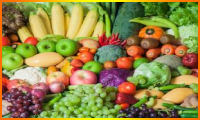
Healthy numbers. Horticulture production in 2022-23 estimated at record 351 million tonnes.
India’s horticulture output is likely to have reached a record 350.87 million tonnes (mt) in the current crop year (July 2022-June 2023) as production of fruits, vegetables, spices and plantation crops increased significantly.
However, among the key essential items, onion and tomato production has been estimated a tad lower but potato output has been pegged higher. The output of all the horticulture products was 347.18 mt in 2021-22.
Releasing the first advance estimates of area and production for 2022-23 and final estimates of 2021-22, Union Agriculture Ministry on Monday said data have been compiled on the basis of information received from States and other government agencies.
Agriculture Minister Narendra Singh Tomar credited the hard work of farmers and expertise of agriculture scientists as well as the Centre’s policies for the record production.
According to data from the Agriculture Ministry, the area under horticulture has been rising and reached 28.28 million hectares (mh) in 2022-23 from 28.04 mh last year.
Upward revision
Experts said the gap is marginal in the first estimate compared with last year’s final estimate and there could be an upward revision in production in subsequent updates.
Onion production is estimated to be 31.1 mt this year, down from 31.69 mt in 2021-22, while tomato production is likely to be 20.62 mt against 20.69 mt. Potato output is expected to be higher at 59.74 mt compared with 56.18 mt last year.
Total production of vegetables has been pegged at 212.53 mt compared with 209.14 mt. Fruits production is seen at 107.75 mt this year as against 107.51 mt in 2021-22.
Source: thehindubusinessline.com

Assam Launches Rs 250 Crore Agriculture Fund to Boost Agribusiness.
Assam has launched a Rs 250 crore agricultural fund to boost agribusiness. In a bid to promote small and medium-sized units in the agriculture sector, multiple stakeholders, including the World Bank, have come together to create a fund worth Rs 250 crore in Assam, according to officials. The venture capital fund, Caspian Impact Investment Adviser, has partnered with the Assam Rural Infrastructure and Agricultural Services (ARIAS) Society to establish the Assam Agribusiness Investment Fund (AAIF).
The AAIF, with a corpus of Rs 250 crore, aims to provide a unique sector-specific fund that focuses on enhancing agricultural productivity and generating employment opportunities in the state. Its primary objective is to invest in small and medium enterprises operating in the agribusiness and allied sectors to foster accelerated growth. ARIAS has been designated as the anchor investor for the AAIF, while Caspian Equity will act as the fund manager.
Saurabh Johri, Executive Director and CEO of Caspian Impact Investment Adviser, expressed his delight at collaborating with ARIAS and their shared mission to catalyze the economic development of Assam's rural communities. By leveraging their investment expertise in conjunction with ARIAS' extensive knowledge and experience, the aim is to make a sustainable impact and empower individuals to thrive.
The fund will be led by Ravi Narasimham, Investment Director at Caspian, as the company looks forward to forging a strong partnership with ARIAS, with the ultimate goal of creating a prosperous and empowered rural community. Ashish Kumar Bhutani, Chairman of ARIAS Society, highlighted the uniqueness of the AAIF as a state-led initiative that seeks to address critical gaps in value chain finance within the agriculture and allied sectors while also increasing farmers' income.
The chairman expressed optimism that the fund would contribute to supporting high-growth and high-impact agribusiness SMEs, fostering vibrant and resilient agri-food value chains in Assam. Toshiaki Ono, Finance Sector Specialist at the World Bank Group, emphasized the crucial role of agribusiness SMEs in the transformation of the agriculture sector. However, he noted that external finance, particularly long-term and patient capital for their growth, remains limited.
Ono expressed confidence that the newly established fund would support these SMEs, facilitating their development and contributing to the establishment of vibrant and resilient agri-food value chains in Assam.
Source: krishijagran.com
FSSAI extends last date for filing annual returns for fiscal 2022-23.
The FSSAI has extended the last date for filing annual returns for the fiscal 2022-23. The food authority has issued a direction in this regard stating that the last date for submission of annual returns, as per condition of licence, has been extended till June 30, 2023.
The FSSAI has also reiterated that only online annual returns submitted through FoSCoS will be accepted.
Meanwhile, welcoming the move, Confederation of All India Traders (CAIT) has said that the move would help traders.
Shankar Thakkar, state general secretary, CAIT Maharashtra, has said that the traders would be relieved from fear of losing the FSSAI licence due to extension of the date, as pendency of annual returns would result into cancellation of the licence. And consequently, the packaging with old FSSAI licence would have been wasted.
'Therefore, we had demanded that the food regulator to extend the date for filing of annual returns,' said Thakkar.
It is pertinent to note that food manufacturers, repackers, re-labellers, packers and producers, needed to file annual returns to FSSAI through D1 form by May 31, 2023.
According to CAIT, many traders could not file the annual returns and they appealed to the FSSAI for an extension.
Subsequently, FSSAI extended the dates for the fiscal 2022-23 until June 30.
Source: fnbnews.com

Govt assures PLI beneficiaries of timely resolution of issues, next high level meet in Sept end.
Commerce and industry minister Piyush Goyal on Tuesday chaired the first cross- sectoral workshop on the 14 production-linked incentive (PLI) schemes to take feedback on the ambitious programme. Issues related to low disbursement and fund utilisation were also taken up, sources said.
Representatives from Dell, Foxconn, Nokia, sienna helathcare, biocon, Cipla, Tata motors, Mahindra & Mahindra, Samsung, ITC, Dabur and Tata Steel, among others attended the meeting besides Niti Aayog and various line ministries.
'Companies raised policy related issues and technical problems which the various departments clarified. Various line ministries were asked to resolve the issues of the beneficiaries of the scheme. The government will take them up at the appropriate levels,' said an official.
More than 150 people attended the meeting and there were five beneficiaries from each of the PLI scheme sectors.
The government took feedback from industry and other government departments on the challenges being faced by PLI beneficiaries.
'The next meeting is likely next quarter, in September end,' the official added.
While large scale electronics, telecom, pharmaceuticals, food processing, white goods, and auto and auto components have picked up, High Efficiency Solar PV Modules, Advance Chemistry Cell (ACC) Battery, Textile Products, and Specialty steel are lagging behind.
As per the Department for Promotion of Industry and Internal Trade (DPIIT), the government has paid Rs 2,874 crore to beneficiaries in eight sectors.
The five project-monitoring agencies (PMAs) -- Industrial Finance Corporation of India (IFCI), Small Industries Development Bank of India (Sidbi), Metallurgical and Engineering Consultants (MECON), Indian Renewable Energy Development Agency (IREDA), and Solar Energy Corporation of India (SECI) and various industry associations and export promotion councils also participated.
The Centre has allocated Rs 1.97 lakh crore for the 14 sectors, including telecom, textile, automobile, white goods, and pharmaceutical drugs.
Source: economictimes.indiatimes.com
Limited int l flights major challenge for agri exporters in East UP: APEDA
As the export of fresh fruits, vegetables and cereals from East UP has started booming with a record growth of 420% in 2022-23, the exporters as well as Agricultural and Processed Food Products Export Development Authority (APEDA) find that many challenges, especially of transportation, should be tackled on priority to maintain the tempo as the region has great potential for further increase in it.
'International flight is limited with freight capacity of 3 metric ton to 4 MT per day. This freight capacity is being fully utilised now hence, further increase in demand as well as production for exports will start posing serious challenges', APEDA deputy general manager CB Singh told TOI on the possibilities of further increase in export of agri products, especially green vegetable and fruits, from LBSI airport of Varanasi.
Only one Sharjah bound direct international flight operates per day from here. Only this flight gives direct connectivity to Gulf market while for London and other international markets the Farmer Producers Organisations (FPO) and exporters from east UP region are bound to opt transshipment in which domestic flights take freight to Delhi or Mumbai for further transportation.
Singh admitted, 'Currently less number of airlines have transshipment bond for international cargo. Airlines like Indigo and Air India Express have taken the transshipment bond while other airlines like Air India, Vistara etc have not applied for transshipment bond.'
To send the shipments to the Gulf and EU via sea route taking horticulture and agriculture products of east UP region to Mumbai port is a compulsion. The inland transportation cost from Varanasi or Lucknow, which are landlocked territory, is very high as compared to the transportation cost borne by FPOs and exporters sending from centres like Nasik, said Singh adding, due the same UP exporters are getting very tough competition.
The issue of transportation has emerged as a major cause of concern for the FPOs, exporters as well as APEDA because the East UP, which had nil export of agriculture and horticulture products from LBSI airport till year 2019 had exported only four MT of vegetables in 2020. But, in 2021-22 the export grew to 157 MT and in 2022-23 it jumped to 561 MT, recording a growth of 420%. In four years only around 20 FPOs got them registered as exporters and eight of them are exporting actively. Cultivators are also switching fast on export oriented farming and the production is increasing accordingly.
Basic infrastructure for supply chain- Integrated Pack House that was formally inaugurated by Prime Minister Narendra Modi on March 24, is also available now, said Singh, mentioning that these developments are going to give a mega boost to exports due to which now the focus is on tackling the same challenges on priority. Chief Minister Yogi Adityanath flagged off the consignments of mango and green chilly packed at this IPH on Monday.
Source: timesofindia.indiatimes.com

Very optimistic about FTA with India, says UK Investment Minister Lord Dominic Johnson.
An India-UK free trade agreement (FTA) is really important for both nations and it is for businesses on both sides to help drive that agenda, UK Minister for Investment Lord Dominic Johnson said in London on Tuesday. Addressing a UK-India Infrastructure Summit hosted by the City of London Corporation as part of the India Global Forum UK-India Week, Johnson said he is 'very optimistic' about an FTA even as he declined to put a timeframe to it.
India and the UK recently concluded their tenth round of FTA negotiations and an 11th round is set to begin in the next few weeks towards a comprehensive agreement expected to significantly enhance the bilateral trading relationship worth an estimated 34 billion pounds in 2022.
'I'm very optimistic about a free trade deal with India,' said Johnson.
'It is hugely important for India if it wants to get the capital flows it needs to take itself to the next step, which is to become a global hyperpower economically. And it's very good for the UK if we're going to ensure that we've got the investment coming from India,' he said.
The minister went on to make a clarion call for representatives of business and industry gathered at the summit to be more vocal about voicing their support for such an FTA.
'It's really important for businesses to express their support for such a deal because it's about allowing businesses to function more effectively with greater profits, wealth and security for the world,' he said.
Describing the India-UK relationship as the 'most symbiotic partnership', the minister also backed a City of London suggestion for a new UK-India Green Finance Partnership to promote greater two-way green investment flows.
'I truly believe India has reached escape velocity as an economy. And, I truly believe that the UK is literally India's best friend, and the best placed country to take advantage of what is such a mutually beneficial long-term financial partnership,' he added.
Under the theme of 'Financing a Sustainable Future', the summit highlighted the immense scope and potential for investment in sustainable infrastructure development in India, and London's expertise in meeting India's growing demand for green finance.
'The UK, particularly the City of London, has excellent capabilities in structuring and funnelling finance where it is needed. The UK has demonstrated technological capabilities while India is at the frontiers of innovation. Combining technology with financing would enhance the cooperation,' said BVR Subrahmanyam, CEO of NITI Aayog.
'I would argue that your interests are best served in aligning with us in making sure that the transformation of India happens in a way that does not replicate any of the faults of the past,' noted Vikram Doraiswami, the Indian High Commissioner to the UK.
The summit, which forms part of a six-day series of events running until Friday as part of UK-India Week, opened with a keynote address by the Lord Mayor of the City of London Nicholas Lyon.
'Sustainable infrastructure is critical for India's economic trajectory and to meet the needs of its fast-growing population, while fulfilling its ambition to reach net zero by 2070. With strong government backing and unparalleled global expertise in sustainable finance and infrastructure financing solutions, the City of London and the UK can help India to access one of the largest and diversified global capital pools on the best possible terms,' he said.
'As the fastest growing major economy in the world, and the most populous, India has huge aspirations and equally huge responsibilities. The rapid building of high quality sustainable physical and digital infrastructure will be critical to achieving India's growth trajectory, as well as balancing its net zero commitments,' added Manoj Ladwa of India Global Forum, organisers of UK-India Week.
Source: economictimes.indiatimes.com
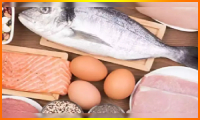
India ranks 3rd in Egg Production and 8th in meat production in the world: Shri Parshottam Rupala.
India has vast resource of livestock and poultry, which play a vital role in improving the socio-economic conditions of rural masses. Livestock forms an important livelihood activity, supplementing incomes, offering employment opportunities. Agriculture diversification through animal husbandry is one of the primary drivers of growth in rural incomes.
Union Minister Shri Parshottam Rupala said while addressing media that the Department of Animal Husbandry and Dairying has taken several important initiatives during the last nine years for improvement of per animal productivity. Increase in productivity will help in production of more Milk, meat and livestock products for the domestic market and export market. Department is implementing several programs for complete control and eradication of major livestock diseases and Infrastructure Development. The Department is also dovetailing and synergizing efforts with other Ministries and stakeholders especially in the context of common objective of helping the farmers increase their income through the livestock sector.
The Department of Animal Husbandry and Dairying stands committed to work with all the stakeholders and will provide maximum support for delivering the Quality Services at Farmers’ Doorstep.
Key achievements and initiatives of the Department of Animal Husbandry and Dairying under various Schemes, Programmes are as follows:
Livestock Sector
Livestock Sector is an important subsector of agriculture in the Indian economy. It grew at a Compound annual growth rate (CAGR) of 7.93 per cent during 2014-15 to 2020-21 (at constant prices). The contribution of livestock in total agriculture and allied sector Gross v12:11:5027-06-2023alue added (GVA) (at constant prices) has increased from 24.38 per cent (2014-15) to 30.87 per cent (2020-21). Livestock sector contributed 6.2 per cent of total GVA in 2020-21.
Livestock Population
There are about 303.76 million bovines (cattle, buffalo, mithun and yak), 74.26 million sheep, 148.88 million goats, 9.06 million pigs and about 851.81 million poultry as per 20th Livestock Census in the country.
Dairy Sector
Dairy is the single largest agricultural commodity contributing 5 per cent of the national economy and employing more than 8 crore farmers directly. India is ranked 1st in milk production contributing 23 percent of global milk production. Milk production has increased by 51.05% over the past 8 years from 146.3 million tonnes during 2014-15 to 221.06 million tonnes during 2021-22. Milk production is growing at the annual growth rate (CAGR) of 6.1% over the past 8 years whereas world milk production is growing at 1.2% per annum. The per capita availability of milk is 444 grams per day in 2021-22 as against the world average of 394 grams per day during 2021.
Egg and Meat Production
According to Food and Agriculture Organization Corporate Statistical Database (FAOSTAT) production data (2020), India ranks 3rd in Egg Production and 8th in meat production in the world. Egg production in the country has increased from 78.48 billion in 2014-15 to 129.60 billion Nos. in 2021-22. Egg production in the country is growing at the rate (CAGR) of 7.4% per annum. The per capita availability of egg is at 95 eggs per annum in 2021-22. Meat production in the country has increased from 6.69 million tonnes in 2014-15 to 9.29 million tonnes in 2021-22.
Animal Husbandry and Dairying Schemes
RASHTRIYA GOKUL MISSION: For development and conservation of indigenous bovine breeds
Major Achievements/Interventions of Rashtriya Gokul Mission
Nationwide Artificial Insemination Programme- Delivery of Artificial Insemination Services at Farmers Doorstep: As on date, 5.71 crore animals have been covered, 7.10 crore Artificial Insemination have been performed and 3.74 crore farmers benefitted under the programme.
Promotion of IVF Technology in the country: So far, 19248 viable embryos produced, 8661 viable embryos transferred and 1343 calves are born under the programme.
Sex sorted semen production: Sex sorted semen production has been introduced in the country for production of only female calves upto 90% accuracy. Under the programme, subsidy of Rs 750 or 50% of the cost of sorted semen on assured pregnancy is available to farmers.
DNA based Genomic selection: National Dairy Development Board has developed INDUSCHIP for selection of elite animals of indigenous breeds and 25000 animals have been genotyped using the chip for creating referral population. For the first time in the World, BUFFCHIP has been developed for genomic selection of buffaloes and so far, 8000 buffaloes have been genotyped for creating referral population.
Animal Identification and traceability: 53.5 crore animals (cattle, buffalo, sheep, goats and pigs) are being identified and registered using polyurethane tags with 12 digit UID No.
Progeny testing and Pedigree selection: Progeny Testing Programme has been implemented for Gir, Shaiwal indigenous breed of cattle and Murrah, Mehsana indigenous breed of buffalo.
National Digital Livestock Mission: Department of Animal Husbandry & Dairying, Government of India has taken up a digital mission, 'National Digital Livestock Mission (NDLM) with NDDB. This will help in improving the productivity of the animals, control diseases that affect both animals and humans, ensure quality livestock and livestock both for domestic and export markets.
Breed Multiplication Farms: Subsidy of 50% (up to Rs 2 crore per farm) on capital cost (excluding land cost) is provided to private entrepreneurs under this scheme for establishment of breed multiplication farms. Till date, 76 applications has been approved by DAHD and an amount of Rs. 14.22 crore has been released to NDDB as subsidy.
NATIONAL PROGRAMME FOR DAIRY DEVELOPMENT: To create and strengthen infrastructure for quality milk including cold chain infrastructure linking the farmer to the consumer. 185 projects in 28 States and 2 Union Territory have been approved with the total cost of Rs. 3015.35 crore (Central Share Rs. 2297.25 crore) from 2014-15 to 2022-23 (20.06.2023). A total sum of Rs. 1769.29 crore has been released for implementation of new projects approved under the scheme up to 20.06.2023. An amount of Rs. 1314.42 crore has been utilized under the projects approved.
SUPPORTING DAIRY COOPERATIVES AND FARMER PRODUCER ORGANIZATIONS ENGAGED IN DAIRY ACTIVITIES: To assist the Cooperative Societies and farmer producer organizations engaged in dairy activities by providing soft working capital loan to tide over the crisis on account of severely adverse market conditions or natural calamities. As on 30.04.2023, since 2020-21, NDDB has conveyed sanction of Interest Subvention amount of Rs 513.62 crore against working capital loan amount of Rs 37,008.89 Cr @ 2% p.a for 60 milk unions across the country and released Rs 373.30 Cr (Rs 201.45 Cr as regular interest subvention and Rs 171.85 Cr as additional interest subvention amount).
DAIRY PROCESSING & INFRASTRUCTURE DEVELOPMENT FUND (DIDF): To create/ modernize the milk processing, chilling and value addition infrastructure towards components Milk processing, Chilling and Value added Products facilities, etc. Under DIDF, as on 31.05.2023, 37 projects are approved with total outlay of Rs. 6776.86 Crore and Rs. 2353.20 Crore loan has been disbursed against loan of Rs. 4575.73 Crore. An amount of Rs. 88.11 Crore has been released as interest subvention to NABARD.
NATIONAL LIVESTOCK MISSION: The focus of the scheme is towards employment generation, entrepreneurship development; increase in per animal productivity and thus targeting increased production of meat, goat milk, egg and wool. Under National Livestock Mission, for the first time, the Central Government is providing direct 50% subsidies to the Individuals, SHGs, JLGs, FPOs, Section 8 Companies, FCOs to establish Poultry Farms with Hatcheries and brooder mother units, sheep and goat breed multiplication farm, piggery farm and feed and fodder units. Till date, 661 applications have been approved by DAHD and Rs 50.96 Crore has been released as subsidy to 236 beneficiaries.
ANIMAL HUSBANDRY INFRASTRUCTURE DEVELOPMENT FUND: For incentivizing investments by individual entrepreneurs, private companies, MSME, Farmers Producers Organizations (FPOs) and Section 8 companies to establish (i) the dairy processing and value addition infrastructure, (ii) meat processing and value addition infrastructure and (iii) Animal Feed Plant.(iv) Breed improvement Technology and Breed Multiplications farms for Cattle/ Buffalo/Sheep/Goat/ Pig and technologically assisted Poultry farms. So far, 309 Projects sanctioned by banks with total project cost is Rs. 7867.65 crore and out of the total project cost Rs. 5137.09 crore is term loan. An amount of Rs. 58.55 Cr. has been released as Interest Subvention.
LIVESTOCK HEALTH AND DISEASE CONTROL PROGRAMME: For prevention, control and containment of animal diseases of economic and zoonotic importance by vaccination. Till date, total number of animals ear tagged are nearly 25.04 crores. So far, 24.18 crore animals have been vaccinated in second round of FMD. Round III of FMD vaccination is going on and so far, 4.66 crore animals are vaccinated. So far, 2.19 crore animals have been vaccinated against Brucella. 1960 Mobile Veterinary Units (MVUs) have been flagged off in 16 States/ UTs. Out of which, 1181 MVUs are operational in 10 States.
LIVESTOCK CENSUS & INTEGRATED SAMPLE SURVEY SCHEME:
Integrated Sample Survey:To bring out estimates of Major Livestock Products (MLP) such as Milk, Egg, Meat and Wool. The estimates are published in Annual Publication of Basic Animal Husbandry Statistics (BAHS) of the Department. Recently, the Basic Animal Husbandry Statistics (BAHS)-2022 for the period 2021-22 is published.
Livestock Census: To provide information on livestock population, species-wise and breed-wise along with age, sex-composition etc. up to household level in rural and urban areas. Recently, 20th Livestock Census has been completed in the year 2019 with the participation of Animal Husbandry Department of all the States/UTs. The All-India report namely '20th Livestock Census-2019' containing Species-wise and State-wise population of livestock has been published. In addition to the above, the Department has also Published Breed-wise report on Livestock and Poultry (based on 20th livestock Census).
KISAN CREDIT CARDS (KCC) FOR DAIRY FARMERS OF MILK COOPERATIVES AND MILK PRODUCER COMPANIES: So far, more than 27.65 lakh fresh KCCs were sanctioned for AHD Farmers.
Source: pib.gov.in