2 varieties of brinjals from Malda in race for GI tag.
Two varieties of brinjals grown in Nababgunj and Ashapur in Malda are vying for the prestigious Geographical Indication (GI) tag. This year, the West Bengal National University of Juridical Sciences (WBNUJS) requested for GI tag for 11 goods, including these Malda vegetables. These brinjals are already well-known in the area for their distinct flavour and quality and are cultivated solely in the district for topographical reasons.
Samanta Layek, deputy director of district Horticulture department, said: 'This year, the WBNUJS applied to tag 11 goods, including the brinjals of Nababgunj and Ashapur. If the brinjals are awarded the tag, the district’s agriculture may do better in the future.'
The vegetable’s brand value is expected to rise after it receives the tag. Once these species have earned GI recognition, efforts will be made to preserve and promote them.
The brinjals are popular among the people of Malda, specially in winter when these varieties are available in the market.
Nababgunj brinjals are comparable to the size of a calabash and become extremely soft after frying, cooking, or baking. The round-shaped Ashapur brinjals have a distinct flavour and are popular in Malda and neighbouring regions.
WBNUJS is taking steps to protect and commercialise many of the state’s heritage items.
Malda is well-known for its mango and silk, and efforts are currently being undertaken to obtain GI tags for other products from the district.
Source: millenniumpost.in

First Trade-Tech meet significant milestone in India-EU ties: Jaishankar.
The first meeting of the India-EU Trade and Technology Council (TTC) in Brussels marks a significant milestone in the strategic partnership between India and the European Union due to its focus on critical domains, External Affairs Minister S. Jaishankar said on Tuesday.
The meeting, co-chaired on the Indian side by the EAM, Commerce and Industry Minister Piyush Goyal and Communications, Electronics and IT Minister Rajeev Chandrasekhar, covered key focus areas of strategic technologies, digital governance and green energy technologies. The EAM highlighted that India has a crucial role to play in all aspects and also with regard to its impact on the global talent pool.
This first meeting of the Trade and Technology Council is a significant milestone in the strategic partnership between India and the European Union, Jaishankar said in his address.
We are obviously important partners for each other but what the TTC represents is a focus on key domains that are critical to both the global economy and global security. Today the challenge is to address simultaneously the dual requirements of responsible growth and de-risking global economy. This means promoting resilient and reliable supply chains and additional drivers of global production and growth, he said.
The minister stressed on the importance of ensuring trust and transparency in the digital domain, including cross-border flows, which would involve embracing low-carbon growth while ensuring that this did not create critical vulnerabilities.
In each of the focus areas of the TTC strategic technologies, digital governance and connectivity, clean and green energy technologies, and resilient value chains, India has experiences to share in terms of innovation, production and deployment. We are also an important factor in regard to the global talent pool that has been discussed this morning, he noted.
It is our expectation that TTC would become the crucial platform for the exchanges in this regard so that we arrive at both policy and business decisions in the relevant domains, he added.
The TTC was launched by Prime Minister Narendra Modi and the President of the European Commission, Ursula von der Leyen, during her visit to India in April last year.
It led to the creation of three Working Groups under the TTC: Working Group on Strategic Technologies, Digital Governance and Digital Connectivity; Working Group on Green and Clean Energy Technologies; and Working Group on Trade, Investment and Resilient Value Chains.
'Began the day in Brussels with a Digital & Clean Energy Stakeholder Event. Thank European Commission Executive VP @vestager for convening the meeting. In this Techade, TTC can promote Trusted Collaboration so essential to Re-Globalisation. Stakeholders are key to delivery,' Jaishankar tweeted earlier on Tuesday.
With Belgium, the EAM concludes a three-nation tour which began in Bangladesh last week and also covered Sweden for the EU Indo-Pacific Ministerial Forum (EIPMF) in Stockholm.
Source: business-standard.com

Since 2014, Prime Minister Shri Modi has given priority to the agriculture sector Shri Tomar.
The closing ceremony of the four-day long Uttarakhand Shree Anna (Millets) Festival took place today in Dehradun under the chief hospitality of the Union Agriculture and Farmers’ Welfare Minister, Shri Narendra Singh Tomar. Shri Tomar said that Shree Anna has only benefits, especially our small farmers are greatly benefited by it. With the increase in their income from Shree Anna, the country's economy will get a boost.
Union Minister Shri Tomar said that consumption of Shree Anna is the means to stay healthy. Shree Anna is full of nutrition, which costs less to the farmers to grow, it does not require fertilizer, it can be cultivated easily even in low rainfall. In order to increase the income of small farmers, to keep people healthy and to give a respectable place to food grains in the country and the world, Prime Minister Shri Narendra Modi proposed it on the global stage through the United Nations, which was supported by 72 countries and the UN declared 2023 as the International Year of Millets. The importance of Shri Anna is being spread through this year's event under the guidance of Prime Minister Shri Modi. Agri-startups will increase with Shree Anna, employment opportunities will increase, production and productivity will increase, as well as processing and exports will also increase, which will boost the country's economy. Thus, Shree Anna has many dimensions.
Shri Tomar said that Prime Minister Shri. Modi has a vision to bring a radical change in the standard of living of the poor including making toilets in their homes, providing electricity, building Pradhanmantri Awas, progress of poor women through self-help groups. The country's economy should increase, development should increase, industries should increase, Make in India, Startup India, Skill India and our country should not only be powerful, but should become such a superpower that people are forced to accept India's iron in the whole world. This type of multidimensional thinking belongs to the Prime Minister. Shri Tomar said that as a result of Prime Minister's efficiency, vision and hard work, India's reputation is increasing in the whole world. Regardless of whether someone agrees with us or not, when it is discussed on any global platform, when it comes to the economy, then the economists of the world are forced to say that in the coming tomorrow, the world is going to move forward rapidly. If there is any economy, then it is India. It is a matter of great fortune and pride for us.
Shri Tomar said that the Prime Minister has left no stone unturned to make the specialty of India to the specialty of the world. Yoga is the ancient method of India, which was gradually becoming extinct, which Swami Ramdev campaigned to make it a place in every house, while Prime Minister Shri Modi propounded the characteristics of Yoga in the United Nations and urged the whole world to celebrate Yoga Day, through which the Indian Yoga style has resonated all over the world today. Yoga is necessary to stay healthy. Mr. Tomar said that ever since the formation of the government at the Center under the leadership of Mr. Modi, he has consistently given priority to the agriculture sector. In the year 2014, the budget of agriculture was about 21 thousand crore rupees, which has increased about 1.25 lakh crore rupees today. That is, there has been an increase of more than five times. For income support to small farmers, the Center has deposited Rs 2.40 lakh crore in the bank accounts of crores of farmers through the PM-Kisan scheme. Similarly, the Ministry of Agriculture has taken steps and increased the allocation of funds in every direction, including the protection cover for the farmers insured by the Pradhan Mantri Fasal Bima Yojana, increase in food grain productivity, emphasis on organic and natural farming. Shri Tomar said that the Devbhoomi of Uttarakhand covered with diverse climate is very favorable for agriculture. For the last five years, the Government of Uttarakhand is playing a leading role in the proper implementation of the schemes of the Ministry of Agriculture in Uttarakhand and in making their benefits available to the farmers. May Uttarakhand move forward in every field of agriculture, wherever the central government is needed, the Government of India including the Prime Minister will always stand shoulder to shoulder with the Devbhoomi.
Source: pib.gov.in

Shri Piyush Goyal discusses modalities of engagement for working towards a comprehensive TEPA with EFTA representatives.
Following is the text of Press Communique issued at the conclusion of talks between Shri Piyush Goyal, Union Minister of Commerce & Industry, Consumer Affairs & Food & Public Distribution and Textiles, Government of India and leaders of European Free Trade Association:
'India and the European Free Trade Association (EFTA) States (Iceland, Liechtenstein, Norway, and Switzerland) have taken a significant stride forward in their quest for a Trade and Economic Partnership Agreement (TEPA). In a Ministerial meeting held in Brussels today, Shri Piyush Goyal, Minister of Commerce & Industry, Consumer Affairs & Food & Public Distribution and Textiles of India; Guy Parmelin, Swiss Federal Councillor and Head of the Federal Department of Economic Affairs, Education and Research; Einar Gunnarsson, Ambassador, Permanent Representative at the Permanent Mission of Iceland in Geneva; Kurt Jäger, Ambassador, Permanent Representative at the Permanent Mission of Liechtenstein to EFTA, WTO and the UN in Geneva, and Erik Andreas Underland, Specialist Director at the Norwegian Ministry of Trade, Industry, and Fisheries, discussed the modalities of engagement for working towards a comprehensive TEPA. This second Ministerial gathering followed a series of expert meetings that took place online the previous week.
The Ministerial meeting marked a significant milestone in taking forward the negotiations on a TEPA between India and EFTA. Both sides emphasised the importance of building their discussions on principles of trust and respect for each other's sensitivities to achieve a fair, equitable and balanced agreement. Indeed, a TEPA between EFTA and India could bring significant economic benefits, such as integrated and resilient supply chains and new opportunities for businesses and individuals on both sides leading to increased trade and investment flows, job creation, and economic growth.
The delegations agreed to ramp up their efforts and continue their discussions at a steady pace, with several more meetings planned over the coming months, to arrive at a common understanding on critical issues pertaining to TEPA.'
Source: pib.gov.in
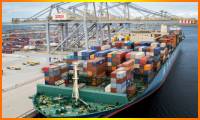
India s overall exports in 2022-23 rose 14.7 pc to record USD 775.87 bln.
India’s overall exports in the just concluded financial year 2022-2023 were worth USD 775.87 billion, a growth of over 14 per cent and almost USD 100 billion more than last year’s figures, official data released by commerce ministry showed on Monday. In 2021-22, the overall exports were at USD 676.53 billion.
In 2022-23, India’s merchandise and services exports rose 6.74 per cent and 27.86 per cent to USD 450.43 billion and USD 325.44 billion, respectively.
Among various steps the government took was to launch a Production Linked Incentive (PLI) scheme in varied sectors, including electronic goods, to make Indian manufacturers globally competitive, attract investments, enhance exports, integrate India into the global supply chain and reduce dependency on imports. These seemed to have reaped dividends.
Coming to April 2023-24, overall exports were a little higher year-on-year at USD 65.02 billion, up from USD 63.75 billion in the same month last year.
India’s merchandise imports in April declined by 14 per cent to USD 49.90 billion as against USD 58.06 billion. April’s merchandise imports were the lowest in the last 21 months.
India’s imports from China in April were 5.56 per cent lower at USD 7.5 billion.
Similarly, imports declined from UAE, USA, and Saudi Arabia. The decline from these Middle east countries is mainly on account of cooling crude oil prices.
Source: theprint.in

America emerges as India's biggest export market for organic honey.
The Agricultural and Processed Food Products Export Development Authority (APEDA) has released data indicating that the United States has become the largest market for organic honey exported from India. The data shows that 80% of India's organic honey exports are sent to the United States.
Until February of FY 2022/23, the manufacturers earned around Rs 1,293.96 crore by exporting 58,471.80 tons of honey to America. Besides America, UAE (Rs 69.72 cr), Saudi Arabia (Rs 30.63 cr), Libya and Morocco are other favourable export destinations for organic honey from India.
Meanwhile, recent years witnessed a growing appeal for organic honey produced in the country, with an export of 73,51.97 tons and a 25 per cent increase in revenue generation recorded last financial year. Uttar Pradesh, West Bengal, Punjab and Bihar are the largest producers of honey in the country.
Source: english.mathrubhumi.com
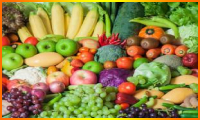
Growing for the future Discussing the untapped potential of India's horticulture sector.
The Economic Times, in association with Bayer and Knowledge Partner Grant Thornton Bharat, conducted the India Horticulture Future Forum 2023. Herein, subject matter experts, policymakers, industry leaders and representatives of multi-lateral development organisations, as well as farmer representatives in horticulture, deliberated on a range of necessary interventions in the sector. A summary of the event is captured below:
In the Indian agricultural and allied sector, over three crore farmers grow horticulture crops for at least one season a year on over 30 million hectares of land. Evidently, there is a scope to greatly enhance production, given the importance of horticulture in terms of nutritional security, enhancing farmers' income and increasing the contribution of the overall agriculture sector to the gross national product (GNP).
India is the second-largest producer of horticultural products but enjoys a share of less than 2% as compared to the related world trade. Even today, India is a net importer of fruits and vegetables. Thus, there is scope for India to ramp up horticulture production, targeting increased domestic demand as well as global demand. Many horticulture commodities are protected by tariff walls of up to 40%. There is a need to convert seasonal comparative advantage to year-round competitive advantage. Moreover, production and productivity, post-harvest and processing, market intelligence, marketing and logistics and export-related constraints require to be redressed.
Some of the critical constraints confronting the horticulture sector and necessary interventions may be viewed as follows:
Production: Farming practices since the green revolution have affected soil and water health. There is less focus on soil health management due to the urea-centric production approach, which also leads to nutrition deficiency. India uses 66% more fertiliser per hectare compared to the USA. The use of bio-stimulants is also barely two kg per hectare or 4% of that in Brazil, which has demonstrated commodity-export-led growth. In addition, the dearth of adequate inputs like seeds and planting materials and crop protection products has affected yield. Furthermore, irrigation and credit constraints affecting the application of technology in farming, including in mechanisation, are other smallholder farmers’ limitations. Moreover, the scale of government intervention is marginal compared to the needs of the sector. In this context, private sector participation is vital. For instance, the private sector can play a huge role in improving the availability of quality planting material and help in digitisation and agtech services. It can also provide solutions to farmers around crop advisory, purchase of inputs and mechanisation and fulfilment of credit needs at scale. Propagation of micro irrigation and watershed management systems is also key. Farmer producer organisations (FPOs) may also serve as facilitator platforms for the widespread delivery of services.
Post-harvest and processing: There is a limited post-harvest facility in India, and cold storage is limited mostly to potatoes. Though presently, significant commitment and investment are made by the Government of India in developing storage infrastructure through a range of schemes. With new agtech, automation of activities in warehousing and logistics is also taking place.
There is a research and development (R&D) shortfall in processable horticulture varieties. Presently, the capacity utilisation of processing facilities in the country is also only to the tune of 25 to 30%. Supply-related security of processable varieties throughout the year is required to encourage investment in processing facilities and infrastructure. This implies that in order to extend storage life, post-harvest infrastructure is key. The packaging ecosystem needs to be developed, and post-harvest nutrition losses also need to be targeted.
Market intelligence: India is constantly facing gluts and scarcity of horticultural crops every other year. Market intelligence in advance on supply, demand and prices is critical for production planning by farmers, and related systems need to be developed as well. FPOs may also be developed as aggregation platforms.
Exports: Indian horticulture products are facing tariff walls in developed countries, along with non-tariff, phytosanitary requirement-related barriers. Quality produce, conformance, aptly exploiting free trade agreements (FTAs), sea protocols and traceability systems are important to promote fruits and vegetables in the international market. Development of post-harvest and logistics infrastructure to facilitate the evacuation of marketable surplus is also key to helping farmers avoid resorting to distress sales during harvest.
Agtech: The supply and demand side of agtech services needs to be developed. These range from drones to financial services providing platforms. Other emerging technologies are irrigation management through Internet of Things (IoT) devices and pest, disease and soil management through artificial intelligence (AI) models.
The forum concluded with a resolution to evolve an Indian horticulture consortium representing leading stakeholders. Six working groups are to be constituted addressing:
Inputs: Availability and access to quality planting material, crop protection solutions, farm mechanisation, etc.
Digitech: Advisory services, traceability, etc.
Logistics: Supply chain effectiveness systems and market-linked post-harvest storage
Finance: Access to credit and insurance
Marketing and exports: Orienting FTAs, market intelligence and ensuring conformance
Processing: Incentivising value-addition
A cluster value-chain-based approach is being progressively adopted by the government, which will be adopted to take Indian horticulture to its deserving world market leadership position.
Source: economictimes.indiatimes.com
Tripura s pineapple and 12 other produces get GI tag.
The Queen pineapple of Tripura has got a geographical indication (GI) tag with the initiative of North Eastern Regional Agricultural Marketing Corporation (NERAMAC) along with 12 other fruits and vegetables of Northeast, said officials here on Monday.
The officials stated Ministry of DoNER ministry, has facilitated the process of GI tagging and authorized about 800 farmers in the region to get the advantage of exclusive claims of a specific geographical origin and qualities under Intellectual Property Rights across the globe.
After NERAMAC, authorized these farmers, working in groups, to use its certifications, the decision
is expected to boost the promotion of these unique products of the northeast in the international and domestic markets, officials stated.
Besides Queen pineapple of Tripura, Arunachal Orange, Mizo Chilli, Kachai Lemon, Khasi Mandarin, Tezpur Litchi, Sikkim Large Cardamom, Karbi Anglong Ginger, Naga Tree Tomato, 'Chak-Hao' Black Rice, Memang Narang, Dalle Khursani and Naga Sweet Cucumber have also got the GI tag.
With a huge demand in Middle East countries and Europe besides, the big cities of India. Tripura government plans to open an auction market for pineapples in New Delhi, the harvesting of which
will be started in a week. The pineapple used to sell at Rs 1-2 per piece and during pick season pineapples were dumped on the street, as there were no buyers.
However, the situation has changed in five years, and even during Covid19 pandemic, pineapple from Tripura was exported. To promote pineapple, the agriculture department is in talks with the Ministry of Agriculture to host a marketplace of pineapple in New Delhi that will help the traders to reach out to international buyers, officials stated.
Tripura is producing the world-renowned Queen Pineapple - spiny, golden yellow in colour, with a distinctive aroma, and has high juice content, tanginess, and sweetness that sets it apart from the pineapples grown in the other Northeast states. The northern parts of Tripura are also producing the Kew verity pineapple, which is also juicy and sweet in taste but bigger in size till the middle of the monsoon.
Source: uniindia.com
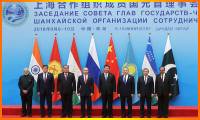
8th meeting of SCO agriculture ministers chaired by Narendra Singh Tomar.
The 8th meeting of Agriculture Ministers of Shanghai Cooperation Organisation (SCO) member countries was held on Saturday via video conferencing under the chairmanship of Union Agriculture and Farmers Welfare Minister Narendra Singh Tomar.
Russia, Uzbekistan, Kazakhstan, Kyrgyzstan, Tajikistan, China and Pakistan participated in it, along with India.
Tomar said Prime Minister Narendra Modi’s emphasis is on the overall development of agriculture in the country through technology.
Tomar said in order to maintain the normal functioning of the food supply chain in the present conditions, there is a need for close contact and cooperation between various countries for food and nutrition security.
He added that India is the largest employer globally in the agriculture sector, where more than half of our population is engaged in agriculture and allied sectors, while India also represents an important economic activity for many countries.
Tomar said India’s public distribution system and price support system for farmers are unique in the world, adding it is the good result of the foresight of our policy-makers, efficiency of agricultural scientists and tireless hard work of farmers that today India is self-sufficient in food grains.
India is a leading producer of many commodities like cereals, fruits, vegetables, milk, eggs, and fish.
Tomar also apprised SCO member-countries participating in the meeting about India’s direct transfer benefits initiatives, credit facilities, promoting natural and organic farming, and promoting farmer-producer organisations (FPOs).
Source: theprint.in
CSIR-CFTRI, Mysuru, sees Short Term Training Programmes to keep entrepreneurs skilled for latest developments.
CSIR-Central Food Technological Research Institute (CFTRI), Mysuru, sees that regular training programmes are much needed for skill development for entrepreneurs and students among others.
Training programmes allow participants to keep pace with the technology advances as food entrepreneurs and industry workforce need to align with the changes in the area of advances in knowledge and skilling required.
In this regard, CSIR-CFTRI is organising around 25 regular training programmes/Skill Development Programmes/Short Term Courses in this financial year under CSIR Integrated Skill Initiative, encompassing all the major areas in food science and technology. These courses are of short duration, but intensive and packed with lectures and demonstrations. The faculty members for the courses have vast experience in specific areas of food science and technology. These courses will be held from 3rd Week of May 2023 onwards and will end during third week of January 2024 in different time intervals.
The demonstrations and practical classes are conducted in the state-of-the-art laboratories and pilot plants of CSIR-CFTRI. Training includes theory and hands-on practical sessions on: Food Safety Issues; Paddy and Rice Processing; Animal Cell Culture; Liquid Chromatography - Mass Spectrometry (LC -MS); Flour Milling Baking and Confectionary Technology; Fumigation and Pest Management; Rodent Management; Electrical Safety in Food Processing Industry; Molecular Biology; Post- Harvest Technologies for Fruits and Vegetables; Grain Processing; Spice Processing; Sensory Analysis; Probiotic Dairy Product Development; Food Analysis; Food Packaging; Edible Oil Extraction.
Successful participants will be given participation certificate at the end of the course. Due to its short duration and condensed, focused and capsulated syllabus, the short-term courses are well received by students, academicians, employed and entrepreneurs who are unable to spare more time. At the same time, these programmes are extremely beneficial for unemployed youth or entrepreneurial aspirants to establish their startup venture based on food processing.
The Institute is a Training Partner (TP) for conducting Skill Development Programs (SDPs) aligned with National Skill Development Corporation (NSDC) under Skill India Mission of Government of India for the skills like Baking Technician/Operative (FIC/Q5005), Food Microbiologist (FIC/Q7603) and Spice Processing Technician (FIC/Q8502).
Academic Institutions/Government Departments/Industry/FPOs can contact CFTRI for custom made programmes exclusively designed for their students/staff/sponsored-participants in the area of food processing.
CSIR-CFTRI has trained nearly 2,800 personnel in 2022-23 under various training streams such as Pradhan Mantri Formalisation of Micro Food Processing Enterprises (PMFME) Scheme, farmer-centric training programmes, SDPs aligned with NSDC and short-term courses.
Source: fnbnews.com