
Andhra Pradesh: Natural farming needs to be encouraged to tackle climate change, says NITI Aayog Member.
National Institution for Transforming India (NITI Aayog) Member and Agriculture Economist Ramesh Chand on Friday stated that natural farming should be encouraged to tackle climate change and to improve production quality.
In his convocation address during the fifth convocation of Dr. Y.S.R. Horticultural University here in West Godavari district, Prof. Ramesh Chand said that the scientists and students encourage and promote natural farming.
Governor S. Abdul Nazeer, who presided over the convocation, stated that horticultural crops would assume greater significance in the context of nutritional security.
Justice Adbul Nazeer said, 'India is emerging as the food basket of the world. The production of horticultural crops has already surpassed agricultural production in India. The total horticulture production is 320 billion tonnes (2023).'
'In the agriculture sector, horticulture provides 14% employment, of which 42% are women in India,' he said.
Referring to Andhra Pradesh, Justice Abdul Nazeer has stated; 'The State is emerging as one of the major horticulture hubs in the country. The State has registered a record growth in the production and research in horticulture, which spreads in 17.84 lakh hectares with an annual production of 312.34 lakh metric tonnes.'
He said that it is a celebrating moment that Dr.Y.S.R. Agricultural University was encouraging drone and robotic technologies in horticulture in the State.
Prof. Ramesh Chand and Governor S. Abdul Nazeer presented the Ph.D. Awards and gold medals to the scientists and students. University Vice-Chancellor T. Janakiram, Registrar B. Srinivas and professors were present.
Source: thehindu.com
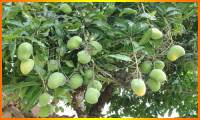
Gujarat mango exports set to scale new heights.
The love for mangoes in summers isn't just limited to Gujaratis and Indians but the Americans too! With increased demand from the US, exports of mangoes from Gujarat are expected to scale new heights and grow by at least 45%, suggest estimates by Gujarat Agro Industries Corporation Limited (GAICL).
The sweet, succulent, tropical burst of flavours packed in Gujarat's mangoes are in high demand in the international market too.
For instance, Gujarat recorded direct exports of 445 metric tonne (MT) mangoes to the United Kingdom and Middle East in 2022-23, according to GAICL. However, an additional demand coming from the US with orders pouring in huge volumes has already led Gujarat's mango cultivators to export 65 MT to the USA alone. This accounts for a lion's share of 55% of the total mango exports from Gujarat at 114 MT so far, according to GAICL. Exports are expected to increase as the season progresses.
The United States Department of Agriculture-Animal and Plant Health Inspection Service (USDA-APHIS) has approved the Gujarat Agro Radiation Processing Facility (GARPF) in July 2022. This gives Gujarat's mango farmers and exporters an added advantage with additional demand pouring from the US.
'With good demand, the exports are expected to surpass the 2021-22 level of 608 MT this year. By far we have already exported 65 MT and the new Cargo facility developed by GAICL near Ahmedabad will further give a boost to exports. Till date, Kesar and Alphonso mango varieties which are the pride of Gujarat were exported through Maharashtra,' said DH Shah, managing director, GAICL.
'Retail outlets in UK, Canada placing orders'
The Gujarat Agro Radiation Processing Facility (GARPF) will in fact, boost demand for Kesar varieties from Gir and Kutch regions of the state. 'This year exports are better than last year because crops are better and prices are almost the same as last year. There is good demand from the UK, Middle East and Canada as well. Retail outlets in these countries are placing good orders this year,' said Darshil Shah, an Ahmedabad based mango exporter.
Gujarat is expected to see record direct exports this year, according to exporters. 'The direct access to the US market has opened up newer avenues for exporters . The air freight rates have also come down from Rs 240 per kg to Rs 140 per kg in a year. If the government supports exporters by lowering the 18% GST rate on mango exports, overall demand in the international market may further grow.'
Source: timesofindia.indiatimes.com
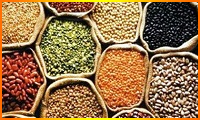
Cropping season. Area under pulses, coarse cereals gain in India s summer planting.
Pulses such as green gram (moong) and coarse cereals such as bajra and jowar continued to gain acreage in the ongoing summer cropping season. However, paddy and oilseeds acreages trail last year’s levels, so far. Overall, the area under the summer crops is marginally lower at 69.20 lakh hectares (lh) as of May 12 compared with 70.39 lh in the same period a year ago, latest data from Agriculture Ministry show.
The area under pulses crop stood higher at 19.61 lh, an increase of 6.3 per cent over 18.44 lh a year ago. Farmers are seen planting more area under green gram as the acreage is up by 8 per cent at 16.14 lh against 14.97 lh a year ago.The aArea planted under urad was marginally up at 3.24 lh (3.20 lh in same period a year ago).
Bajra gains, maize trails
The overall area under coarse cereals was up at 11.73 lh (11.30 lh). The area under bajra is up at 4.69 lh (3.98 lh), while maize is trailing marginally lower at 6.65 lh(6.94 lh). Jowar acreage was marginally higher at 0.25 lh (0.18 lh), while ragi was lower at 0.14 lh (0.20 lh).
The acreage under paddy as on May 12 was lower at 27.89 lh against 29.80 lh a year ago. The overall acreage under oilseeds crops also trailed at 9.96 lh (10.85 lakh ha). The area under groundnut was down at 4.78 lh (5.35 lh), while sunflower was flat at 0.31 lh. The area under sesamum was higher at 4.58 lh (4.47 lh). The acreage under other oilseeds was down at 0.29 lh (0.73 lh).
Higher pre-monsoon rainfall
As of May 4, the live storage of 146 reservoirs was 61.81 billion cubic metres (35 per cent) of the total live capacity of 178.19 BCM.
Meanwhile, the country as a whole has received 24 per cent more rainfall in the pre-monsoon, so far. From March 1 till May 12, the country has received 111.9 mm of rains against a normal 90.2 mm, as per IMD data. At least 21 sub-divisions accounting for 69 per cent of the country’s area, have received excess rains, so far. Nine sub-divisions accounting for 22 per cent of the area have received normal to excess rains, while six sub divisions, accounting for 9 per cent of the area, have received deficient rains.
Source: thehindubusinessline.com

America emerges as India's biggest export market for organic honey.
The Agricultural and Processed Food Products Export Development Authority (APEDA) has released data indicating that the United States has become the largest market for organic honey exported from India. The data shows that 80% of India's organic honey exports are sent to the United States.
Until February of FY 2022/23, the manufacturers earned around Rs 1,293.96 crore by exporting 58,471.80 tons of honey to America. Besides America, UAE (Rs 69.72 cr), Saudi Arabia (Rs 30.63 cr), Libya and Morocco are other favourable export destinations for organic honey from India.
Meanwhile, recent years witnessed a growing appeal for organic honey produced in the country, with an export of 73,51.97 tons and a 25 per cent increase in revenue generation recorded last financial year. Uttar Pradesh, West Bengal, Punjab and Bihar are the largest producers of honey in the country.
Source: english.mathrubhumi.com
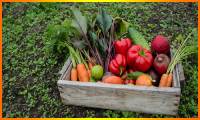
Food industry is the focus area of Govt. and businesses as it directly impacts agriculture and brings better life for the farming families: Sh. Goyal.
Shri Piyush Goyal, Union Minister of Commerce & Industry, Consumer Affairs, Food & Public Distribution, and Textiles, Government of India said that business is not just about numbers but about building relationships, partnership, collaborating, learning, technology and innovation. During the Trade and Investment Promotion Event for the Agricultural and Food Processing sector with Indian companies and Canadian importers on the sidelines of SIAL-2023, Toronto, Canada yesterday, the Minister said that focus has to be on shared prosperity for people across the world making all stakeholders in the value chain prosperous.
Sh. Goyal said that this is an opportunity to celebrate the Canada-India partnership and there is a huge potential of growth in the expansion of business and engagement between the two countries. He said that value addition of food products is a priority area. Sh. Goyal stressed that Indian businesses must focus on quality, scale, design, packaging, etc. to earn the confidence and trust of consumers and businesses in Canada.
The Minister appreciated the participation by Indian businesses at SIAL 2023 as it showcased India to the world. He said that the challenge ahead is to organize a larger and bigger trade show in the food industry in India or abroad showcasing the best we have to offer across continents. Sh. Piyush Goyal said that SIAL 2023 offered an opportunity to hone product quality and marketing skills of the food industry. Sh. Goyal said that 'World Food India' in November 2023 can serve as the platform that can showcase the best of India & collaborate with businesses across the world. He said that as a part of outreach as G20 President, Government and businesses need to put their best efforts in this respect.
The Minister said that the food industry is a high profile, high profits and high growth sunrise sector. He said that it is a focus area of Government and businesses as it directly impacts agriculture in India by adding value to the products of farmers and encouraging diversification of crops, fruits, vegetables. Sh. Goyal said that this industry’s contribution to the growth story of India is immense and valuable as it brings better life for the families engaged in farming and agriculture related sources of livelihood.
The Minister highlighted that there is multifold growth potential in the bilateral trade of India-Canada in this sector. Sh. Goyal said that the food industry has been able to bring the best of India into Canada and promised encouragement by the government in expansion of their businesses in Canada. He said that the export of agri-based products, foodstuffs, food products, marine products, etc. from India is rising but there is huge potential for more exports of these products.
Sh. Goyal said that millets are becoming popular amongst consumers in India and the world, it is important to highlight the nutritional and health benefits of millets especially among the youth who need high energy and high protein food intake. He said that millets can be a game changer in promotion of the Indian food industry. The Minister praised the serving of millets at the event.
In another meeting with Canadian companies inToronto, Canada earlier yesterday, Sh. Piyush Goyal invited the people and businesses from Canada to visit India. He said that the India that they will visit now is truly a New India. The Minister also invited them to join the B20 Sessions and sectoral engagements being organized across the country under India’s G20 Presidency. He also encouraged the Canadian companies to hold Board meetings in India.
Sh. Goyal said that India is not only the fastest growing large economy but also a consistently growing economy. He said that as India grows as an economy in the next 25 years, he invited Canadian businesses to be a part of India’s growth journey.
Source: pib.gov.in
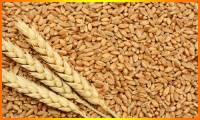
Wheat procurement may touch 27 million tonnes, 8.5 mt more than annual requirement.
Daily wheat procurement has dropped to 0.2 million tonnes (mt) since Wednesday May 10 from about 0.5 mt on May 2 with arrivals of the grain declining at agricultural produce marketing committee (APMC) yards and procurement centres. Despite this development, the government hopes to procure around 27 mt of wheat this year, which is about 8.5 mt more than the annual demand under the food security law and other welfare schemes.
Though it (27 mt) is lower than estimated procurement (34.15 mt), it is much more than the requirement (18.4 mt), Food Corporation of India Chairman Ashok K Meena told businessline. He said, for the first time, there was no distress call from any quarter to ensure procurement as farmers this year were getting either minimum support price (MSP) or more.
'As much as 85 per cent of arrivals in Uttar Pradesh are purchased by the private sector, who are offering more than MSP. The arrivals will henceforth dwindle slowly as those who wanted to sell to the government have already done,' Meena said. 'It is a good situation that while farmers are getting good prices for their wheat, the government is also able to buy more than its requirement,' he said.
Up from 15-year low
Asked if the surplus leaves scope to make provision for open market sale scheme (OMSS), he said 'Of course, there will be some quantity for it.'
Wheat procurement in the on-going season has surged 42.8 per cent to 25.41 mt as of May 10 in the ongoing season (April-June) against 17.8 mt a year ago, according to the latest official data. The official purchases in the country dropped to a 15-year low of 18.79 mt in the 2022-23, prompting the government to ban export that still continues.
Also read: India argues at WTO in favour of its MSP scheme for foodgrain
Out of 28.7 mt targetted from three States — 13.2 mt in Punjab, 8 mt in MP, and 7.5 mt in Haryana — almost 87 per cent has been achieved, so far.
Punjab has shown a 26 per cent increase in purchases at 11.93 mt as of May 10 from the year-ago level of 9.47 mt, Haryana has reported a 53.3 per cent jump at 6.24 mt from 4.07 mt a year ago, and in Madhya Pradesh, wheat purchase is up by 67.7 per cent at 6.76 mt, from 4.03 mt.
Procurement in Uttar Pradesh, the largest wheat producer, reported a 16.9 per cent fall to 0.18 mt from 0.21 mt, official data show. But Rajasthan contributed 0.3 mt to the Central Pool stock so far, against only 758 tonnes in the year-ago period.
M.P. offers scope
Punjab, which had a share of over 70 per cent in total daily arrivals of wheat a week ago, has reported a 20 per cent share on May 10, whereas, on the same day, 55 per cent of total arrivals was reported from Madhya Pradesh. Since Uttar Pradesh and Rajasthan have little scope amid the private sector’s aggressive buying and near exhaustion of stocks in Punjab and Haryana, only MP offers some scope, experts said.
'Now you will see reduced procurement every day because maximum wheat, which could have come from the farmers of Punjab and Haryana has already been purchased by FCI and State agencies,' said Navneet Chitlangia, senior vice-president of the Roller Flour Millers Federation of India. As farmers are getting better prices than MSP in UP and Rajasthan, they are showing the least interest to sell their wheat to the government, he said.
'Mills in the Southern States are procuring wheat from MP. So, the government will end up at 27-28 mt this year,' Chitlangia said.
Source: www.thehindubusinessline.com
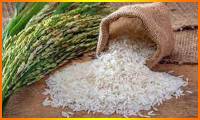
Basmati exports up Rs. 12k cr in 2022-23 from previous fiscal.
India exported basmati rice worth about Rs 38,524 crore (nearly $ 4.79 billion) in the 2022-23 fiscal (April-March, a jump of about Rs 12,109 crore from 2021-22, as per the data from the Kolkata-based Directorate General of Commercial Intelligence and Statistics (DGCIS). In terms of value in rupees, Indian exports of the long-grained aromatic rice were about 45.84% higher in 2022-23 than the previous fiscal.
According to the DGCIS data, India exported about 39.47 lakh metric tonnes (LMT) basmati rice, valued at Rs 26,415 ($ 3.47 billion) in 2021-22. The country exported about 45.61 lakh metric tonnes of basmati rice in 2022-23, about 6.14 LMT (15.55%) more than 2021-22.
As per the DGCIS data, India had exported basmati rice to 149 countries in 2022-23 while in 2021-22 the country had sold the commodity to 153 countries.
Iran was the biggest importer of the Indian basmati rice in quantity at about 9.98 LMT followed by Saudi Arabia at 9.54 LMT and Iraq, a distant third at 3.64 LMT.
Other big importers include United Arab Emirates (3.15 LMT), Yemen Republic (2.89 LMT), United States of America (2.04 LMT), Kuwait (1.56 LMT), United Kingdom (1.43 LMT), Oman (1.12 LMT) and Jordan (1.05 LMT).
In terms of value in rupees, Saudi Arabia was the biggest buyer, paying Rs 8,362.25 crore for the Indian basmati rice followed by Iran (Rs 7,838 crore), Iraq Rs 3,032 crore), UAE (Rs 2,689.1 crore) and Yemen Republic (Rs 2,473 crore).
Other big buyers of the basmati rice in terms of value include US (Rs 1,920 crore), Kuwait (Rs 1,276 crore), United Kingdom (Rs 1,109 crore), Oman (Rs 1,013 crore) and Jordan (Rs 934 crore).
Source: timesofindia.indiatimes.com
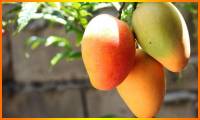
Huge demand for mangoes - 100 tons of fruit get ready to get exported from Karnataka.
More than 100 tons of Alphonso, Mallika, Banganapalli and Badami varieties of the Mango fruit that are grown in the state are being exported to countries like Bangladesh, US and a few other countries.
Decks are being cleared under the aegis of Karnataka State Mango Development and Marketing Corporation to begin exports of mangoes for which a pack house has been established near Chintamani.
Due to the Covid-19 pandemic, there were no exports of the fruit for the last two-three years.
This year, however, mangoes are getting ready to be exported to countries such as Singapore, UK, US, Bangladesh, Gulf and many others by the Corporation.
Besides, a pack house has been set up by the Karnataka State Agricultural Produce Processing & Export Corporation Limited (KAPPEC) in Pujanahalli to store tons of mangoes and export the fruit. The KAPPEC has already constituted a team of technical experts to oversee the packaging of mangoes in the pack house. The market is likely to get a good produce of the mangoes by the first or second week of May and exports are likely to commence soon, according to the KAPPEC officials.
C G Nagaraj, managing director of Karnataka State Mango Development and Marketing Corporation, says 'We had sent a sample of 400 kilos of mangoes to France last month. Now, there is a demand for more than 100 tons of mangoes from other countries. The fruit will be lifted from the Maadikere pack house near Chintamani and exported. Badami, Mallika, Banganapalli and other varieties of mangoes are being exported.'
Lower mango yield
This year, the yield of mangoes has been considerably lower than expected due to the unseasonal rainfall received in some parts of mango growing areas due to which mango flowers have either fallen off or withered away.
Although a few fruit-bearing flowers have become fruits due to the sunlight some of them have also fallen off. The prices of mangoes are likely to go up this year as a result of lower yield, Nagaraj said.
Currently, mangoes are grown in 1.9 lac hectares of land in Karnataka. On average, the state produces 12-15 lac tons of the fruit. But, due to unseasonal rainfall, the yield this year is likely to fall to 7-8 lac tons. Mainly, there are three mango growing zones in the state. Kolar, Chikkaballapur, Bengaluru Urban and Bengaluru Rural, Tumakuru and Ramanagara districts are identified as one zone where 75% of the mangoes that are exported are being grown. Belagavi, Dharwad, Hubballi are Haveri form the second zone which constitute 20% of the produce. Koppal, Bagalkot, Chitradurga, Ranebennur and Davanagere form the third zone where 5% of the mango crop is grown.
Source: www.daijiworld.com

800 farmers, entrepreneurs authorised to use GI tag for 13 NE products.
The GI-specific products not only protect the unique identity and quality of these products but also create employment opportunities for local communities.
A central government agency has authorised 800 farmers and entrepreneurs to use the Geographical Indication (GI) tag for 13 agricultural products of the northeastern region, an official said.
The 13 produces are Arunachal Orange, Tezpur Litchi and Karbi Anglong Ginger of Assam, Kachai Lemon and Chak-Hao' Black Rice of Manipur, Khasi Mandarin orange and Memang Narang orange of Meghalaya, Mizo Chilli of Mizoram, Naga Tree Tomato and Naga Sweet Cucumber of Nagaland, Queen Pineapple of Tripura and Sikkim Large Cardamom and Dalle Khursani chilli of Sikkim.
The North Eastern Regional Agricultural Marketing Corporation (NERAMAC), under the DoNER Ministry, will forward the 800 user authorisation applications for usage of these products from the eight NE states to the Geographical Indication Registry, Chennai.
NERAMAC Managing Director Commodore Rajiv Ashok (Retd) said on Thursday that the initiative is a significant step towards promoting and protecting the traditional agricultural practices and products of the NER region.
The initiative will provide recognition to the unique qualities and reputation of NER agricultural products and protect them from misuse and imitation, he said.
The authorisation process of farmers will enhance the competitiveness of the farmers in domestic and international markets and create opportunities for increased income and livelihood, he said.
Renowned GI expert Dr Rajni Kant Dwivedi has also pointed out the importance of Northeastern Region (NER) specific GI products and emphasised the need for a comprehensive approach to promote these.
The GI-specific products not only protect the unique identity and quality of these products but also create employment opportunities for local communities, he said.
Source: www.business-standard.com

As Myanmar trade holds back tur, India warns of looking at G2G deal.
Amid talk of hoarding of pulses such as tur (pigeon pea) and urad (black matpe) by the private trade in Myanmar, India on Wednesday warned the exporters in the neighbouring country that it may look at importing these items on a government-to-government (G2G) basis if supplies are not eased. It is understood that the exporters of these pulses from Myanmar, a large supplier, are taking advantage of the scarcity in India, which has led to a firm price trend in recent months.
Trade sources, who attended the virtual meeting convened by the Consumer Affairs Secretary Rohit Kumar Singh on Wednesday to take stock of the situation on the availability of these two varieties of pulses, confirmed the development.
Ban on private trade
'The government has warned the exporters of Myanmar that if they are taking advantage of the of the scarcity in India, then we will impose a ban on private trade and will buy on a G2G basis. The Consumer Affairs Secretary has given them a friendly warning. In fact, the Myanmar trade association president assured that they are not hoarding the cargo and will augment the supplies,' said Bimal Kothari, President, India Pulses and Grains Association (IPGA).
To manage the current scarce situation of tur, Kothari said IPGA has suggested certain measures to the government including the promotion of other alternate pulses like chana dal and masur dal, which are available in abundance and at minimum support prices.
'Also we advised them that government agencies should not buy tur in any of tenders of various schemes such as mid-day meals or ICDS among others. We have suggested that tur be replaced with chana dal or masur dal or yellow peas, which are in abundant supply and are a cheaper and good source of protein,' Kothari said. He said about half a million tonnes of tur are purchased through government tenders annually for various schemes.
Boosting supplies
The Indian government has been taking steps to ensure that the supplies of these two pulses are eased through imports so that prices are kept under a check. The imports of tur and urad are kept open till March 2024 to boost the supplies as the domestic output of these pulses was impacted due to erratic weather pattern. In the recent past, following a firming trend in prices of tur and urad, the Centre had directed the pulses importers to declare stock availability in a routine transparent manner.
Rahul Chauhan of IGrain India said the prices of tur have moved up in Myanmar in tandem with the domestic prices. Tur lemon, which was quoting at around $835 per tonne as on March 1, 2022, has now moved up to $1,080 . Also, African exporters have raised their quotes by $50 for the upcoming crop, he said.
As per the second advance estimate, production of tur, a kharif crop, has dropped to 36.66 lakh tonnes in the 2022-23 crop year to June against 42.20 lakh tonnes a year ago, while urad output for both kharif and rabi season has been estimated lower at 26.82 lakh tonnes against 27.76 lakh tonnes a year ago on account of excess rains.
Source: www.thehindubusinessline.com