India and Bangladesh have immense scope to cooperate in R&D initiatives related to millets- High Commissioner Pranay Verma.
High Commissioner of India to Bangladesh Pranay Verma has said that India and Bangladesh have immense scope to cooperate in the exchange of knowledge, sharing of best practices, and in the research and development initiatives related to millets. Speaking at the inauguration of the exhibition on ‘Food Security and Importance of Millets’ organised by the High Commission of India in Dhaka on Sunday, High Commissioner Verma highlighted the important role of millets in ensuring food security, popularising nutritional diet, promoting sustainable agriculture, and securing financial empowerment of farmers.
The three-day-long exhibition is being organized as part of the events to celebrate the International Year of Millets 2023.
Food Minister of Bangladesh Sadhan Chandra Majumder, was the chief guest at the occasion. Representative of the Food and Agriculture Organization (FAO) in Bangladesh Robert D. Simpson was the special guest. Renowned agricultural expert of Bangladesh, Dr. Mirza Hasannuzzaman, Professor, Department of Agronomy, Sher-e-Bangla Agriculture University, delivered the expert remarks as the guest speaker on the occasion.
Food Minister Sadhan Chandra Majumder appreciated the initiative taken by the High Commission of India in organising the event. He also highlighted the steps being taken by Bangladesh to transform its agricultural sector and increase the production and consumption of millets.
Millets have been an integral part of our diet for centuries. In addition to a plethora of health benefits, millets are also good for the environment with lower water and input requirements. With the aim to create awareness, and to increase production and consumption of millets across the world, the United Nations, at the behest of the Government of India, declared 2023 as the International Year of Millets.
Agricultural cooperation is an important component of the India-Bangladesh partnership. Both India and Bangladesh can lead the way in harnessing the power of millets to build a brighter and more prosperous future for our two countries, said a press release of the High Commission of India in Bangladesh.
Source: ddnews.gov.in
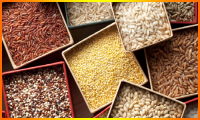
India to ship grains to Indonesia, Nepal, Senegal, Gambia.
India will despatch around 1.05 million tonnes of food grains to Nepal, Indonesia, Senegal and Gambia as part of its economic diplomacy in the current financial year, waiving curbs on exports.
India banned wheat and broken rice exports and imposed a 20% export duty on non-basmati rice varieties last year to keep prices down.
In what is likely to add heft to India’s role in providing food security on the global stage, the department of food and public distribution has allowed exports of 300,000 tonnes wheat to Nepal; 200,000 tonnes of broken rice to Indonesia; 500,000 tonnes broken rice to Senegal, and 50,000 tonnes of broken rice to Gambia on a request by external affairs ministry. This comes despite low domestic wheat stocks.
The Food Corp of India (FCI) so far has procured a little over 26 MT wheat in the 2023-24 (October-March) rabi marketing year against a target of 34.5 MT. A hot February and heavy rains in March and April lowered wheat production to below the agriculture ministry’s second estimate of 112.2 MT. As per government officials, the amount procured so far will be enough to meet wheat requirement for the public distribution system (PDS). After ensuring 18.5 MT for PDS, there will be 8.7 MT available in the central pool, which will be more than sufficient for the open market sale scheme if required. Hence, there is no cause for concern, the government claims.
In the case of rice, the government had 26.5 MT rice in its central pool as of 1 May. Up to 21 May, FCI had procured 77.2 MT paddy in the ongoing 2022-23 (April-September) kharif marketing season and 3.2 MT paddy in the current 2023-24 rabi marketing season against an estimated target of 15.7 MT.
In response to Mint’s query, the Department of Food and Public Distribution said it deals with the 'import and export of only wheat and non-basmati rice from central pool stocks available with FCI. WTO norms inter-alia restrict the export of foodgrains from public stocks procured for domestic consumption through welfare schemes.
However, humanitarian assistance, fully in grant form under the reference of the Ministry of External Affairs, to the deserving countries, is only allowed. During the 2022-23 financial year, no quantity of wheat and rice was supplied or exported to any foreign countries from the department’s central pool stocks,' the official said. Queries sent to the external affairs ministry remained unanswered.
Wheat and non-basmati rice exported as humanitarian assistance from central pool stocks during FY15 to FY22 to countries like Sri Lanka, Afghanistan, Zimbabwe, Bhutan, Myanmar, Mozambique among others was 256,427 tonnes, the official disclosed.
'In the past two years, foodgrains have been provided to some countries as humanitarian aid on the recommendation of Ministry of External Affairs by DGFT. The data will be available with MEA or DGFT,' the official notified.
Emails sent to MEA, Embassy of Nepal on Friday containing queries remain unanswered till press time.
Last year, until 22 June of FY23, India shipped 1.8 MT wheat, including 33,000 tonnes of 50,000 tonnes committed to Afghanistan as part of humanitarian assistance, said then Food Secretary Sudhanshu Pandey. Other than Afghanistan, India also exported food grains to Bangladesh, Bhutan, Israel, Indonesia, Malaysia, Nepal, Oman, Philippines, Qatar, South Korea, Sri Lanka, Sudan, Switzerland, Thailand, UAE, Vietnam and Yemen during last financial year.
Source: livemint.com
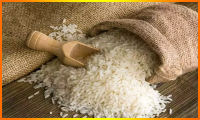
India allows broken rice exports to meet other nations food security needs.
The government on Wednesday allowed the exports of broken rice on the basis of permission given by the government for shipments to other countries for meeting their food security needs, though the export of broken rice is banned in general.
'The export policy of broken rice is prohibited, however, export will be allowed on the basis of permission granted by the Government of India to other countries to meet their food security needs and based on the request of their government,' the Directorate General of Foreign Trade (DGFT) said in a notification.
India had banned the exports of broken rice and imposed a 20% duty on exports of various grades in September.
In December last year, it allowed the exports of organic non-Basmati rice including organic non-Basmati broken rice.
China is the largest importer of Indian broken rice at $418.29 million in FY23 followed by Senegal, Indonesia and Vietnam.
Source: economictimes.indiatimes.com

Additional 30,000 acre under natural farming Himachal s target.
Ahead of the Kharif season, Prakritik Kheti Khushhal Kisan Yojana (PK3Y) in a bid to expansion is targeting to bring additional 30,000 Acre under natural farming in 2023-24 in Himachal Pradesh.
Agriculture Secretary Rakesh Kanwar on Wednesday asked the officials to engage with farmers to work on area expansion under natural farming ahead of Kharif season.
He said this should primarily include the existing farmers practicing natural farming, whose number has risen to 1.59 lakh farmers in the state.
'The total area under natural farming in the state is around 50,000 Acre so far. The target is to bring additional 30,000 Acre under natural farming in 2023-24,' he said.
Chairing the review meeting of the Prakritik Kheti Khushhal Kisan Yojana here, Rakesh Kanwar asked the officials to reach out to the farmers with millet production plan as well for the kharif season and said they must do necessary arrangements for the same, including timely availability of seeds of millets to the farmers.
The officials must organize regular interaction of trained farmers with new farmers for experience sharing for awareness on the natural farming technique, he added.
He said the ATMA officials should identify some areas, where people are willing to go for natural farming on their own, and work out a strategy to declare them a natural village, panchayat or at any level.
The Secretary said the PK3Y should aim at assessing the production of the natural apples so that it could be well advertised in advance to see the response among buyers.
'This would add to the marketing linkages for the natural produce,' he said.
State Project Director, PK3Y Naresh Thakur said around 52,000 farmers have so far been certified for natural produce through a self certification method devised under PK3Y.
He said there was a target to certify all the existing farmers.
Thakur asked the officials to devise a method so that the NGOs or Farmer Producer Organisations can also be brought under certification for agriculture and horticulture produce.
'A mechanism should also be there to certify the processed products like ghee of a desi cow, fruit jam etc for better marketing,' he said.
Source: thestatesman.com
India, Australia Working On Comprehensive Trade Pact: PM Modi.
Prime Minister Narendra Modi on Tuesday said India and Australia are working on a Comprehensive Economic Cooperation Agreement (CECA), and exuded confidence that the bilateral trade will more than double in five years.
The two countries have already signed India-Australia Economic Cooperation and Trade Agreement (ECTA), he said expressing hope the pact will help in doubling the two-way commerce in the next five years.
Addressing a community event at Sydney's Qudos Bank Arena, the Prime Minister said the two countries are now working on CECA.
'We are building a resilient and reliable supply chain. This will strengthen the business of both countries,' he said.
PM Modi, who is visiting Australia as a guest of the Australian government, said the air connectivity between India and Australia has increased and the number of flights would go up further in the coming days.
Australia was the 13th largest trading partner of India in 2022-23. While exports stood at USD 6.95 billion, imports from that country in the last fiscal aggregated at USD 19 billion.
India is Australia's largest export market for gold and chickpeas, the second-largest market for coal and copper ores and the third-largest market for lead and wool.
The India-Australia ECTA is the first trade agreement of India with a developed country after more than a decade. ECTA provides for an institutional mechanism to encourage and improve trade between the two countries.
During April 2000 and December 2022, India received USD 1.07 billion in investments from Australia, according to government data.
Earlier in the day, PM Modi met business leaders of top Australian companies here and called for enhancing cooperation with the Indian industry in areas such as technology, skilling, and clean energy.
He held bilateral meetings with Hancock Prospecting Executive Chairman Gina Rinehart, Fortescue Future Industry Executive Chairman Andrew Forrest, and Australia Super CEO Paul Schroder.
Source: ndtv.com
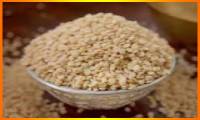
India exploring importing urad from Brazil.
India is in advanced talks with Brazil for the import of urad to boost the domestic supply and keep prices under control, Consumer Affairs Secretary Rohit Kumar Singh said on Tuesday. The country imports 7-7.5 lakh tonne of urad annually depending on the demand-supply gap, out of which 74 per cent is imported from Myanmar, he said.
'The agro-climatic condition in Brazil is suitable for producing urad. We are seriously exploring imports of urad from Brazil. The talks are in an advanced stage,' the Secretary told reporters.
About 2 lakh tonne of urad has been imported from Myanmar so far in the current calendar year, he said.
India is exploring other destinations for sourcing urad in order to reduce its dependency on Myanmar.
Recently, the consumer affairs department warned exporters of pulses from Myanmar against hoarding the commodity as it impacts domestic supplies.
The Agriculture Ministry has estimated urad production at 2.68 million tonnes for 2022-23 (July-June), lower than 2.77 million tonnes from the previous year.
Source: economictimes.indiatimes.com
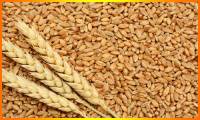
Export ban on wheat to continue in the current year.
The ban on export of wheat and wheat products will continue in the current year, a senior government official said on Tuesday.
The ban had been imposed in May last year due to reduced wheat output.
'We will not allow exports of wheat,' said Subodh K Singh, additional secretary, department of food, adding that the country is not a primary wheat exporter and has exported wheat only when there's been a surplus.
The Centre's procurement of wheat, crucial for keeping its wholesale rates under control, is much below the target of 34 million tonnes despite prices continuing to increase.
The procurement by Food Corporation of India (FCI), which purchases wheat on behalf of the government, stood at 26.14 million tonnes on May 21, and is expected to touch 27 million tonnes by the time government procurement and the harvest season draw to an end.
The government will be left with 8.5-9 million tonnes for open market interventions, said Singh.
The procurement in Uttar Pradesh, the largest producer of the grain, has dropped to 2.09 million tonnes from the estimated 3.5 million tonnes.
The prices of wheat have increased by ?160 per kilo in May as compared with April, said traders.
Source: economictimes.indiatimes.com
UP exports rise by Rs 10,000 crore in comparison to 2021-22: FIEO.
The latest data with the Federation of India Exports Organisation (FIEO) shows that Uttar Pradesh's exports have gone up by Rs 10,000 crore in the past year.
Noida, which is among the most industrialised areas in the state, has topped as the district with most exports at Rs 74,000 crore.
FIEO says that the government's subsidies to counter the high costs of transportation in view of UP's landlocked status and push to the one district-one product scheme, have helped in taking the exports up.
As per the data, the total quantum of exports from UP in 2021-22 was Rs 1.57 lakh crore while from April 2022 to February 2023, it touched Rs 1.59 lakh crore. Sources said that with the input from March 2023, it was expected to touch around Rs 1.67 lakh crore.
Compared to other states, UP still has massive potential for improvement.
In 2021-22, Gujarat topped all states with exports of Rs 9.46 lakh crore, followed by Maharashtra with Rs 5.45 lakh crore. UP is fifth on the list, behind Tamil Nadu and Karnataka.
UP is prominently exporting to the USA, UAE, Germany, United Kingdom, Nepal, France, Spain, Vietnam, Saudi Arabia and Bangladesh. Among the products which are driving up the state's exports are telecom instruments, buffalo meat, RMG Cotton including accessories, RMG manmade fibre, leather footwear, saddlery and harness, aluminum and aluminum products, silk and handmade carpets, machinery and engineering goods, wheat, rice, sugar, iron and steel, handicrafts etc.
As per FIEO's assessment, the reasons for UP's growth have been the export promotion schemes of the state government. Financial assistance is also being offered on transportation, which helps to regulate the cost of exports from UP, a landlocked state. This includes subsidies on freight and on export cargo sent by air.
Source: timesofindia.indiatimes.com

India to host 20th Congress of International Agricultural Museums in October.
The 20th edition of the Congress of International Agricultural Museums will be hosted in India — the first time that the global event is being held in the country — from October 13-18, the organisers said.
The congress is a triennial event in the calendar of the International Association of Agricultural Museums (AIMA), a forum for organisations dedicated to promoting interest in the impact of agriculture on human society through the ages.
It travels to different countries every three years to discover diverse and unique agricultural, environmental and museographic realities that provide new ideas, experiences and projects that can resonate in other regions and countries, the organisers said in a statement.
The 20th Congress of International Agricultural Museums (CIMA) is being held in Asia, and in India for the first time, between October 13-18, it said.
The host institutions are Shoolini University (Solan, Himachal Pradesh) and The Heritage Foundation (New Delhi), according to the AIMA website.
The event will also include museum and field visits.
Punjab Agricultural University, Ludhiana, and the Delhi-based Indian National Trust for Art and Cultural Heritage are also among the partnering institutions, the organisers said.
The South Asian region has a long history of agricultural practice and associated traditions. Agriculture remains central to the Indic civilisation and its many achievements.
'The CIMA 2023 Congress draws attention to and re-examines agricultural traditions, especially the current living adaptations of tradition, to help understand unique requirements of farming and describes the search for alternatives to address local problems of agriculture, food and nutrition,' the statement said.
The AIMA was founded in 1966. Congresses were held every three years throughout the Cold War, alternately in the East and the West, providing one of the very rare opportunities for people to exchange their professional and personal experiences, it said.
It promotes research and encourages collaboration among professionals working in agriculture and rural museums around the world.
Source: theprint.in
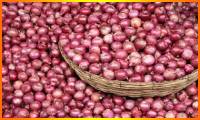
India s onion exports up 64% to 6-year high in FY23 on robust demand.
Onion exports jumped 64 per cent in volumes to hit a six year high at 25.25 lakh tonnes during 2022-23 on strong overseas demand and higher supplies. In value terms, onion shipments were up 22 per cent at $561 million over the previous year.
Shipments rose on higher purchases by large buyers such as Bangladesh, Malaysia, United Arab Emirates and Sri Lanka.
'Lack of competition over the past few months coupled with higher overseas demand helped India export more onions during 2022-23,' said Ajit Shah, President, Horticulture Produce Exporters Association. 'However, we couldn’t take the full advantage of the global situation as countries such as the Philippines did not open up its market for India, while preferring to buy the Chinese produce,' he said.
Shah said exports prospects for the current year look good. However, due to the unseasonal rains, there is a lot of damage to the cargo, he said. 'Onion is available in plenty, but the good quality produce is less. Presently, the market is down because of the higher availability of poor grades and rain damaged produce in the market. How much of this can be exported, we have to wait and see.' Shah said.
Pakistan competition
The new crop in Pakistan, mainly from the Baluchistan, is also seen entering the global market and the Indian exporters are likely to face some competition from the neighbouring country considering that their currency has weakened considerably against the dollar.
'We have a good crop. We have to see how the quality will remain after one month, especially after the unseasonal rains in April -May and the heat waves. Further pricing will depend on the quality of the crop going forward,' Shah said.
In 2022-23, Bangladesh continued to be the largest buyer of Indian onions at over 6.7 lakh tonnes, followed by United Arab Emirates at 4.03 lakh tonnes, Malaysia at 3.93 lakh tonnes and Sri Lanka at over 2.7 lakh tonnes.
Malaysia has more than doubled its purchase of onions while the shipments rose about three times to UAE during the year. In 2021-22, Malaysia’s imports of Indian onions stood at 1.70 lakh tonnes, while UAE had imported 1.22 lakh tonnes. 'Demand continues to remain good for the Indian onions and we expect to sustain the shipment volumes' Shah said.
As per the Agriculture Ministry data as on May 8, rabi onion has been planted on 11.08 lakh hectares, higher than the targeted area of 10.76 lakh hectares, but less than the previous year’s 11.67 lakh hectares. As per the third advance estimates for 2021-22, onion production is projected at 31.27 million tonnes, up from previous year’s 26.64 m t.
Source: thehindubusinessline.com