
G20 summit Updates: India promotes Shree Anna millet at G20 in Srinagar.
Union territory of Jammu and Kashmir became a host to the 3rd G20 Tourism Working Group (TWG) meeting on Monday under India's G20 Presidency. The Day 1 of the G20 tourism meet happened despite a boycott from China and Pakistan. The G20 delegations arrived at Sheikh-ul Alam International Airport in Srinagar as the mega event began. The G20 delegates at the convention centre of Dal Lake will hold discussions on green tourism, destination management, ecotourism, and the use of films to promote tourist destinations.
Source: livemint.com
FSSAI issues draft on stds of mead, craft beer, Indian liquor, country liquor.
The food authority has issued a draft notification on Food Safety and Standards (Alcoholic Beverages) Amendment Regulations, 2023, related to standards of mead (honey wine), craft beer, Indian liquors and definition of low alcoholic beverages/ RTD, wine-based beverages and country liquors.
Under these regulations, the FSSAI has defined the 'Ready-to-drink/ Low alcoholic beverages', which shall be low alcoholic, flavoured beverages having more than 0.5 to 8.0% of alcohol ABV.
The draft lays down, 'made from spirit or the mixture of: spirit or any alcoholic beverage other than wine and beer as base by adding natural/nature identical/artificial flavours and/or food additives permitted under the FSS (FPS&FA) Regulations 2011; and/or fruit/vegetable juice with or without added sugar/salt and with or without carbonation. In case of carbonated ready-to-drink (RTD) /low alcoholic beverages, they shall be carbonated with carbon dioxide. However, the carbonated RTD /low alcoholic beverages shall have a minimum of one volume of carbon dioxide.'
The draft added that it shall conform to the requirements as prescribed under these regulations.
The FSSAI has asked the stakeholders to send their comments on the draft to the food authority.
Source: fnbnews.com

Agriculture minister Tomar virtually inaugurates honey testing labs across India.
The Union Minister of Agriculture and Farmers Welfare Narendra Singh Tomar on Saturday virtually launched the honey testing labs at multiple locations across India.
The agriculture minister inaugurated a regional testing lab- IIHR in Bengaluru and New Delhi. A mini honey testing lab was launched in Kupwara, in J&K and at Damoh in Madhya Pradesh. He also inaugurated a lab in Gujarat, Arunachal Pradesh and Haryana.
As per reports, the minister also inaugurated a Bee box Manufacturing Units- Honey & Other Beehive Products Collection centres, Trading, Branding and Marketing units at Uttarakhand, Chhattisgarh & Uttar Pradesh.
On the occasion of the World Bee Day on 20th May, 2023, Union Minister Tomar graced an event at the Raja Bhoj Agriculture College, Waraseoni Balaghat, Madhya Pradesh.
Addressing the occasion, he said, 'Under the '10,000 FPO Scheme' of the Government of India, in order to strengthen the beekeepers in the country by developing the institutional framework for collective development, 100 bee keepers / honey producers FPOs have been allocated under NBHM for which TRIFED, NAFED and NDDB have been selected.'
'In this sequence, a total of 80 FPOs of bee keepers /honey producers have been registered. Further he stated that there is huge potential for honey production in this area which must be utilized for increasing farmer’s income,' he said.
During the World Bee Day celebration, an exhibition with over 100 stalls were set up by beekeepers, processors and different stake holders of beekeeping sector to showcase the diverse varieties of honey bee and different products in beekeeping sector.
The event was attended by Kamal Patel, Agriculture Minister, Govt. of Madhya Pradesh along with the Chairman, OBC Welfare Commission and Chairman, NDDB.
Source: knnindia.co.in
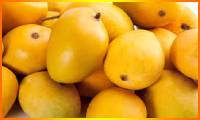
Andhra Pradesh aims to export 4,000 tonnes of mangoes this season.
Andhra Pradesh has set an ambitious target of 4,000 tonnes of exports of mangoes to various countries this season.
Claiming to be India’s largest mango producer this target is more than double the quantity exported last year.
Fruit exporters said that the mango export season is from May to June.
This year, the export commenced in the first week of May. Last year, about 1,800 tonnes of mangoes were exported from the state.
Most of the mango growers in the state cultivated Banginapalli, China Rasalu, Pedda Rasalu, Totapuri, Neelam and Suvarnarekha varieties.
Source: knnindia.co.in

G20: Trade and Investment Working Group meeting in Bengaluru from today.
The second Trade and Investment Working Group meeting, under India's G20 Presidency, will begin in Bengaluru on Tuesday.
During this three-day meeting, over 100 delegates from G20 member countries, invitee countries, regional groupings and international organizations will deliberate on reforming the multilateral trading system, integrating the Ministry of Micro, Small and Medium Enterprises (MSME) in global trade, making trade work for growth and prosperity and efficient logistics for trade.
According to the Ministry of Commerce and Industry, a seminar on trade and technology will be organized on the first day. Themes, such as technology reshaping trade and the role of technology in driving inclusive growth will be deliberated in two-panel discussions, featuring domain experts, academicians and practitioners.
The seminar will be followed by a guided city tour, a cultural program and Gala Dinner for the G20 delegates.
The subject of World Trade Organization (WTO) Reform, which is one of the priorities pursued by the Indian Presidency will be taken up for discussion in a technical session on May 24, 2023.
On the second and third days, presentations will be made on the deliverables related to the digitalization of paper documents, such as Bills of Lading and Certificate of Origin that are critical for cross-border trade, and on developing an action plan to create Meta Information Portal for MSMEs, a framework for mapping GVCs, a compendium of best practices on Mutual Recognition Agreements (MRAs) and on G20 Regulatory Dialogue. These deliverables have emerged from deliberations that took place during the first meeting held in Mumbai in March.
The aim of India's G20 Presidency is to build a shared understanding of the challenges faced in accelerating global trade and investment, and leveraging existing opportunities to make growth inclusive and transparent.
Source: hindustantimes.com
FSSAI re-operationalises stds for crude corn (maize) oil under additives norms.
The Food Authority, FSSAI, has re-operationalised the standards for crude corn (maize) oil under the provisions for solvent extracted crude vegetable oil in the FSS (Food Product Standards and Food Additives) Regulations.
The FSSAI has already notified the draft in this regard for public comments and according to the food authority, it was done to allow the food businesses to import the crude corn (maize) oil.
'FSS (Food Product Standards and Food Additives) Regulations is already notified on FSSAI website on 31.05.2022 for public comments. Meanwhile, to allow the FBOs to import the crude corn (maize) oil, it has been decided to re-operationalise the provisions of proposed draft with effect from 20.12.2022,' reads the notice issued by the FSSAI.
The draft lays to amend the sub regulation 2.2.9 relating to solvent extracted crude vegetable oils (not direct human consumption).
According to the draft, the solvent extracted crude corn (maize) oil need to follow parameters including moisture and insoluble impurities (% by mass max) -0.25, refractive index at 40% -1.4637-1.4675, saponification value range 187-195, iodine value at 103-128, acid value max at 8, unsaponifiable matter (% by mass) -2.5 and flashpoint penskey martens (closed up method) at 100 degree centigrade.
Source: fnbnews.com
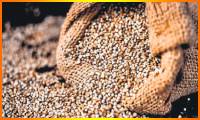
Spread cultivation of millets in newer ares of Andhra Pradesh: Governor.
Andhra Pradesh Governor S Abdul Nazeer on Monday called for an action plan to ensure cultivation of millets is taken up in different parts of the state.
The Governor made these remarks while presiding over the 55th convocation of Acharya N G Ranga Agicultural University (ANGRAU) at Bapatla.
'The Sustainable Development Goal 2 (SDG 2) of the United Nations has set a target to achieve food security, end hunger, improve nutrition, and promote sustainable agriculture by 2030,' said the Governor in a press release shared by the Raj Bhavan.
In this effort, Nazeer noted that millets should be brought into cultivation in newer areas in collaboration with the Agriculture department.
As millets are a rich source of nutrition, besides being climate resilient, he said India is promoting a diet based on this rich source.
According to the Governor, under Prime Minister Narendra Modi's initiative, 2023 has been declared as the 'International Year of Millets' by the United Nations General Assembly with a goal to increase millet consumption.
Source: business-standard.com
Banarasi paan: Savour the flavour of the GI-tagged mouth freshener.
Every region in India has its own version of paan and almost everyone in India eats, if not loves, it. But there is something about Banarasi paan that sets it apart. Is it the leaf, the ingredients, or is it the preparation? It is hard to pick but one thing is clear, there is no paan that tastes like Banarasi paan.
While across the country paan is evolving into new avatars — think chocolate, butterscotch paan, and even blueberry strawberry paan, in addition to the social media-friendly ‘fire paan’ — in Varanasi it is still preferred the classic way. Eaten with kattha (catechu) which is an extract from the Acacia tree, chuna (limestone paste), supari (betel nut), and in some cases tobacco, it is the quintessential old fashioned paan that lets you enjoy the subtle nuances of each ingredient.
The story of Banarasi paan
'Paan is considered auspicious in Varanasi. Belief is that the first-ever seed of paan was planted by Shiva and Parvati at Mount Kailash from where they brought it to Kashi. Since this is the city of Shiva, it became a part of life here,' says Rajeev Manhar, vice president Brij Hotels, who lives and works in Varanasi.
Folklore here also connects paan to the Ramayana. 'It is said that when Hanuman visited Sita in Ashok Vatika and she had nothing to give him as a gesture of affection, she plucked paan leaves and quickly made a garland of it. And so, even today paan is offered to Hanuman, especially in Varanasi,' adds Rajeev.
'Paan is a way of life in Varanasi,' says Anubhav Sapra, the founder of Delhi Food Walks who has been travelling to Varanasi for many years to research and chronicle the street food. 'I have tasted paan from across the country, but I haven’t eaten anything like Banarasi paan.' The paan here, according to him, is much beyond a snack, a mouth freshner or a condiment. It is an emotion.
It’s all in the leaf
Every region has its preferred betel leaf. 'It is the way the leaf is treated in Varanasi (in a process called pakana which literally translates to cooking but means ripening of the leaf) that makes it softer than any other, which is why Banarasi paan melts in your mouth,' explains Anubhav.
Interestingly, the leaf that gives the Banarasi paan its identity is not grown in Varanasi: it is from Bihar, Bengal or Odisha.
'Of the 90 varieties of the betel leaf that grow across the world about 45 are found in India. A lot of it also comes from Bangladesh which has perfect climatic conditions for its farming,' says Rajeev. While Bengal and Bangladesh are known for the volume of production of the leaf, it is the Bihari Maghai or Odiya Jagannathi leaf that is popular in Varanasi. The Maghai leaf is used from December to May, Jagannathi is used from June to November.
Cultural significance
Apart from its taste and finesse, Banarasi paan is also popular for its cultural significance. In Varanasi, paan shops can be found at every corner, and also by the Ganges. Everyone has their favourite stall, and each panwari (paan maker) has his own style. 'The Banarasi paan became popular when Bachchan ji sang a song about it. But recently with Modi ji talking about it too it has gained even more popularity,' says Rajan Chaurasia, the second generation owner of Ramchandra Chaurasia Tambul Bhandar.
According to Rajan what makes the Banarasi paan most special is the process of ripening it. 'The leaves are smoked in a dark room with special coal and wood and checked frequently. This not just bleaches the leaf, especially Maghai, but also makes it so soft that it melts in your mouth.'
There are four varieties of paan that are commonly made in Banaras. The sada or plain which is made just with supari, kattha and lime, meetha or sweet — simple sada paan in which the leaf is sweeter and gulkand ka meetha which is a paan made with hira-moti chutney (a sweet mix) and zarda which is made with tobacco.
Over time these stalls have become community spaces where locals converge. 'Paan shops are places where locals hang out and discuss local politics, ongoings in the city, and comment on matters of universal importance. It is a common thread that binds the people here,' says Rajeev.
And does the GI tag matter to the public? 'Most people in Banaras will not even know that we now have a GI tag,' says Rajeev. For the common man, he adds, paan has been a way of life since the beginning of Varanasi and a tag will not change anything. For the rest of the world though the recognition will help people understand the nuances of paan in this city.
Source: thehindu.com
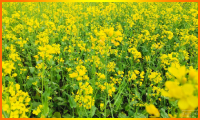
SEA pegs mustard production at 111.83 lakh tonnes.
The Solvent Extractors’ Association of India (SEA) expects the production of mustard at 111.83 lakh tonnes (lt) for the 2022-23 season.
In his monthly letter to the members of the SEA of India on Monday, Ajay Jhunjhunwala, President of SEA, said the RMSI Cropanalytics Pvt Ltd, which had carried out rape-mustard estimate for 2022-23 in March, had estimated total crop 115.25 lt. Stating that the unseasonal rain during March impacted the crop, he said the revised and final yield of the crop production has been estimated at 111.83 lt.
Prices below MSP
Expressing concerns over mustard prices ruling below the MSP (minimum support price), he said the mustard price is currently ruling at Rs.5,100 a quintal in the agricultural produce marketing committee (APMC) yards. However, the farmers receive only Rs.4,600-Rs.4,700 a quintal on hand after deducting APMC yard tax and other charges. APMC yard prices of mustard continue to rule below the MSP of Rs.5,450 a quintal for the season despite the government’s move to procure the oilseeds from the farmers.
Stating that the government is aiming to increase mustard production in the country to 200 lt by 2025-26, he said the Centre has increased mustard MSP by over Rs.1,000 a quintal over the last four years. Additionally, high crop prices during sowing period encouraged farmers to expand the area under mustard. 'Unfortunately, at the time of harvesting, price has fallen much below the MSP. The farmers are reluctant to sell at such low prices and are greatly discouraged. This may lead to a lower area under soyabean in the ensuing kharif season and mustard in the rabi season,' Jhunjhunwala said.
He hoped that the government agencies such as Nafed and Hafed step up their procurement of mustard seed at MSP and create a buffer stock for any likely eventuality due to El Nino affecting the oilseed crop.
El Nino chances
India Meteorological Department (IMD) has forecasted a moderate El Nino lowering monsoon rainfall in India this year. The Climate Prediction Centre of US has predicted that there is a 60 per cent chance of El Nino setting in during May-July and increasing to 70 per cent during June-August. He said this may affect maize, soyabean and rice production in India.
On the castor crop survey, he said AgriWatch conducted castor crop survey on behalf of the association. The first estimate of 19.63 lt was arrived at during January-end, and it was presented at the Castor Conference. The estimate was revised downward to 19.06 lt in March.
Stating that AgriWatch has submitted the final report, he said the total all-India castor crop has been estimated at 18.81 lt for 2022-23 against 16.94 lt in the previous year.
Source: thehindubusinessline.com

PM Modi, Brazilian President Lula discuss ways to further deepen bilateral strategic partnership.
Prime Minister Narendra Modi on Sunday held productive and wide-ranging talks with Brazilian President Inacio Lula da Silva during which they discussed ways to further deepen the bilateral strategic partnership, especially in sectors of defence production, trade and renewable energy. Modi and Lula met on the sidelines of the summit of the G7 advanced economies here in Hiroshima.
'The talks with President @LulaOficial were productive and wide-ranging. India and Brazil will keep working together to deepen trade ties. We also discussed diversifying cooperation in sectors like agriculture, defence and more,' Prime Minister Modi tweeted.
'Cementing bonds of friendship. PM @narendramodi met President @LulaOficial of Brazil in Hiroshima. Discussed ways to further deepen the India-Brazil Strategic Partnership, especially in sectors of defence production, trade, pharmaceuticals, agriculture, dairy & animal husbandry and renewable energy,' the Ministry of External Affairs tweeted.
They also exchanged views on regional developments and cooperation in multilateral platforms, it said.
Source: economictimes.indiatimes.com