
Telangana to soon launch agriculture data exchange.
An Agriculture Data Exchange (ADEx) platform using artificial intelligence (AI) processes will be set up by the Telangana government soon.
The project in collaboration with the World Economic Forum (WEF) and the Indian Institute of Science (IISC), Bengaluru, aims to provide quality and transparent agriculture data easily to give an impetus to research and innovation in the sector.
'Whenever we tried to come up with new technology solutions for farmers, researchers and technology companies pointed out the limitations of data availability. This can include large-scale produce, rainfall, water facilities or farmers and demographic information.
But data is available on various platforms, ranging from government departments to agricultural and horticulture academic institutions and research centres. We have now decided to make it available on a single platform by gathering data from various agriculture information providers (AIPs),' said Rama Devi Lanka, director of emerging technologies.
The difference between a regular dashboard and this massive platform is that data from all AIPs is stored on it. When agriculture information users such as start-ups, individuals and researchers require data, they will approach this algorithm-based platform and sign an agreement. The application will then be routed to the original AIP who will decide whether or not to provide data.
Farmer credit/finance, electronic farm records, soil health-based advisory, pest prediction and advisory, and farm equipments are among the data sets being developed, officials said.
Jayesh Ranjan, IT and industries principal secretary, told TOI that Telangana government is keen on implementing technological solutions, particularly those based on AI platforms.
'The core idea is that whatever innovations we try to promote should benefit the ordinary people by improving their lives and livelihoods. Secondly, we take these new solutions from local tech entrepreneurs and finally, we try to collaborate with academic and other relevant institutions to create an ecosystem for innovations,' he said.
Source: timesofindia.indiatimes.com
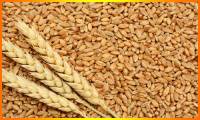
252 Lakh Metric Ton (MT) wheat procurement done so far.
Nearly 252 Lac Metric Ton (MT) procurement of wheat has been done till 9th May, 2023 during ongoing Rabi Marketing Season (RMS) 2023-24. This figure is 75 Lakh MT higher than the corresponding date during RMS 2022-23.
The current procurement (of 252 LMT) has already surpassed the total procurement of 188 Lac MT wheat during entire RMS 2022-23. Food Corporation of India along with other State Agencies are engaged in the Procurement operations and the procurement is continuing smoothly in all the procuring States across the country.
About 20 Lakh farmers have already been benefitted so far from the ongoing wheat procurement operations, with payment of more than Rs. 47,000 crores (at MSP) directly credited to their Bank Accounts. More farmers are yet to be benefitted since the procurement is continuing; and on daily average, more than 2 Lakh MT wheat is still being procured. Major contribution in the procurement has come from three wheat procuring states of Punjab, Haryana and Madhya Pradesh with procurement of 118.68 LMT, 62.18 LMT and 66.50 LMT respectively.
One of the major factors, contributing the progressive procurement this year, is the relaxation in quality specifications of wheat being procured, extended by Govt. of India. This has been granted in view of untimely rains leading to luster loss. This will reduce the hardship of farmers and check any distress sale.
The Government of India has also allowed all the states to open procurement centres at villages/ panchayat level and to carry out the procurement through Co-operative Societies/ Gram Panchayats/ Arhatias etc. also, in addition to already existing designated procurement centres, for better outreach.
The rice procurement is also progressing smoothly. A quantity of 366 LMT of rice has been procured till 09.05.2023 during kharif crop of KMS 2022-23 with another 140 LMT yet to be procured. Further, a quantity of 106 LMT rice has been estimated to be procured during the Rabi crop of KMS 2022-23.
The combined stock position of wheat and rice in the Central Pool, has reached 580 LMT (Wheat 310 LMT and Rice 270 LMT) which puts the country in a comfortable position to meet its requirements of food grains. With the ongoing procurement of wheat and rice, the food grains stock levels are on rise in Government granaries ensuring Food Security to entire nation.
Source: pib.gov.in
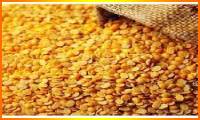
As Myanmar trade holds back tur, India warns of looking at G2G deal.
Amid talk of hoarding of pulses such as tur (pigeon pea) and urad (black matpe) by the private trade in Myanmar, India on Wednesday warned the exporters in the neighbouring country that it may look at importing these items on a government-to-government (G2G) basis if supplies are not eased. It is understood that the exporters of these pulses from Myanmar, a large supplier, are taking advantage of the scarcity in India, which has led to a firm price trend in recent months.
Trade sources, who attended the virtual meeting convened by the Consumer Affairs Secretary Rohit Kumar Singh on Wednesday to take stock of the situation on the availability of these two varieties of pulses, confirmed the development.
Ban on private trade
'The government has warned the exporters of Myanmar that if they are taking advantage of the of the scarcity in India, then we will impose a ban on private trade and will buy on a G2G basis. The Consumer Affairs Secretary has given them a friendly warning. In fact, the Myanmar trade association president assured that they are not hoarding the cargo and will augment the supplies,' said Bimal Kothari, President, India Pulses and Grains Association (IPGA).
To manage the current scarce situation of tur, Kothari said IPGA has suggested certain measures to the government including the promotion of other alternate pulses like chana dal and masur dal, which are available in abundance and at minimum support prices.
'Also we advised them that government agencies should not buy tur in any of tenders of various schemes such as mid-day meals or ICDS among others. We have suggested that tur be replaced with chana dal or masur dal or yellow peas, which are in abundant supply and are a cheaper and good source of protein,' Kothari said. He said about half a million tonnes of tur are purchased through government tenders annually for various schemes.
Boosting supplies
The Indian government has been taking steps to ensure that the supplies of these two pulses are eased through imports so that prices are kept under a check. The imports of tur and urad are kept open till March 2024 to boost the supplies as the domestic output of these pulses was impacted due to erratic weather pattern. In the recent past, following a firming trend in prices of tur and urad, the Centre had directed the pulses importers to declare stock availability in a routine transparent manner.
Rahul Chauhan of IGrain India said the prices of tur have moved up in Myanmar in tandem with the domestic prices. Tur lemon, which was quoting at around $835 per tonne as on March 1, 2022, has now moved up to $1,080 . Also, African exporters have raised their quotes by $50 for the upcoming crop, he said.
As per the second advance estimate, production of tur, a kharif crop, has dropped to 36.66 lakh tonnes in the 2022-23 crop year to June against 42.20 lakh tonnes a year ago, while urad output for both kharif and rabi season has been estimated lower at 26.82 lakh tonnes against 27.76 lakh tonnes a year ago on account of excess rains.
Source: thehindubusinessline.com
Rajasthan Exports Promotion Council collaborates with FORTI to explore scope for exports in East Africa.
Rajasthan’s exports surged 36% from around Rs 49,000 crore in 2020-21 to Rs 72,000 crore in 2021-22, but the state’s contribution to the country’s share improved negligibly from 2.28% to 2.29%. Its position in the pecking order among the states improved by two notches, from 13th to 11th.
While the data does not capture indirect exports like manufacturers from the state supplying to exporters based out of Delhi, Mumbai, Gujarat and other places, the state government feels that there is lot of room to improve the situation. Launching the drive ‘Be Exporters’ and creating Rajasthan Exports Promotion Council (REPC) and identifying potential products are some of the initiatives undertaken in past 18 months.
Now, REPC has joined hands with the Federation of Rajasthan Trade and Industry (FORTI) to expand the export basket. FORTI is taking a business delegation of 150 entrepreneurs to Kenya that has huge export potential.
Rajiv Arora, chairman of REPC and Rajasthan Small Industries Corporation, said, 'Finding new markets is an important way to boost exports. When FORTI approached us for strategic support, we agreed immediately. East African countries including Kenya offer many opportunities for our businessmen in the state. This will be a win-win situation for all – FORTI, REPC and the people of the state.'
He said the state industries department has issued import-export codes to 10,000 entrepreneurs though the ‘be exporters’ drive. 'We have helped the manufacturers understand the processes to become exporters and now it is our duty to help them find new markets. That’s why we have joined hands with FORTI,' added Arora.
Speaking on the delegation which is scheduled to be in Kenya for Indo-East Africa Expo from July 5-7, 2023, Suresh Agarwal, president of FORTI, said, 'Keyna depends on imports of 70% of what they need. It’s a very friendly country and a lot of Rajasthanis are there. For businessmen in Rajasthan, it is a great opportunity.'
He said the visit of the delegation has been planned in a way they can explore various business and trade opportunities in Kenya and other East African countries there.
Source: timesofindia.indiatimes.com
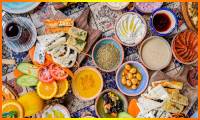
Food Safety Works gears to organise India Food Safety Conclave 2023 on June 23.
Food Safety Works, a leading Food Safety consulting company with a robust footing of 12 plus years of consulting experience and conceived the India Food Safety Conclave. This is an effort towards building an ecosystem around ensuring better food safety in the country.
The conclave to be held on June 23 at the Hotel Royal Orchid, Airport Road, Domlur, Bengaluru. There will be industry participants, academicians, regulators and service providers meeting to discuss the issues, challenges, learnings and the future direction.
With the goal of connecting all these dots for safer food and a safer future for India, the first edition of this conclave will be taking place in Bengaluru. This conclave will serve as an exclusive platform for practitioners, solution providers, government representatives, academicians, and thought leaders from organisations like FSSAI, CFTRI, and others in the food safety domain.
The conclave will be held under the mentorship of Dr Lalitha Gowda, retired chief scientist CSIR, Mysuru, Dr Shashikant Kunigal from CFTRI, Mysore and ex Corporate Head, Britannia) and Dr Balkumar Marthi from Delaware, ex Unilever and present dean for Innovation and Entrepreneurship at GITAM). The inaugural address will be delivered by Dr Sridevi Annapurna Singh (director, CFTRI, Mysuru).
The one-day conclave will include a range of live discussions covering Food Safety Management Systems - Stepping Stone to a Good Food Safety Culture, Innovations in Packaging - Approaches to Improved Food Safety, Testing, validation, and verification besides Food Regulations and Labelling.
The organisers expect around 125 plus delegates attending the conclave. They will the opportunity to build a network. Food Safety Works has planned extensive outreach to about 1 lakh plus food professionals through its network. This programme is open to all and interested participants can register themselves at https://conclave.foodsafetyworks.com/ or by contacting Food Safety Works directly, said the organisers.
Source: fnbnews.com

Shri Piyush Goyal invites Canadian businesspersons to participate in the journey of growth of Indian economy.
Shri Piyush Goyal, Union Minister of Commerce & Industry, Consumer Affairs, Food & Public Distribution, and Textiles, Government of India invited the Canadian businesspersons to participate in the journey of growth of the Indian economy which is aimed to bring prosperity for the man and woman at the bottom of the pyramid during the Round Table of Indian and Canadian CEOs in Toronto, Canada yesterday. He said that India is focusing not only on high-quality standards in goods and services but also on high-quality delivery of goods and services. The Minister said that this focus on high quality is attractive for Canadian business persons and their investments.
Sh. Goyal said that the growth in Canada will be driven by the use of significant pools of capital, innovation, new technologies, and Research and Development (R&D) in big markets achieving economies of scale and making products affordable. The Minister said that Canadian businesses can prosper in the safe and conducive business environment of the Indian economy.
Sh. Goyal praised Hon'ble Mary Ng, Minister of International Trade, Export Promotion, Small Business and Economic Development, Government of Canada for her leadership and involvement in taking the Canada-India partnership to the next level. He appreciated the pace of negotiations for the Early Progress Trade Agreement (EPTA), as a transitional step towards the re-launched India-Canada Comprehensive Economic Partnership Agreement (CEPA) negotiations. The Minister lauded the work being done by negotiating teams of both countries and their focus on big outcomes from the Agreement in the future.
The Minister said that there is a huge potential in the Canada-India partnership as they are amongst the fastest growing large economies and will continue to be in the coming years. Sh. Piyush Goyal said that the macroeconomic fundamentals of India is at its peak under the visionary leadership of Prime Minister, Sh. Narendra Modi and India is not an oil based economy, it can prosper despite emerging challenges across the world. Sh. Goyal said that inflation has been under control in India over the last 9 years of the government under the leadership of the Prime Minister. He highlighted the huge foreign exchange reserves of India and the significant rise in overall exports of India from around US$ 500 Billion two years ago to US$ 770 Billion in FY 2022-23. He mentioned the target of achieving the overall exports target of US$ 2 Trillion by 2030 and said that is an ambitious target but is achievable given the rapid growth of the economy.
Sh. Piyush Goyal said that the two economies complement each other and there is not much of conflict between them. He said that there is certainly some competition but no conflict of interest between the two economies. The Minister said that Canada is focusing on natural resources given its huge reserves and investments. He also said that in comparison to the Manufacturing sector, Canada is more interested in the Services sector. He said that every country has certain specific strengths and for India the investable surplus is the pool of management and technical talent and skills. Sh. Goyal emphasized the importance of the young demography of India and the production of the highest number of ‘Science, Technology, Engineering and Mathematics’ (STEM) graduates today anywhere in the world.
Sh. Goyal said that this century is an important one for India as it is expected to have the world’s youngest population for the next 30 to 40 years resulting in a significant portion of the population in the working age. He mentioned that dual degrees, mutual recognition of our educational qualification throughout professional bodies, etc. were discussed in the meetings with Ms. Mary Ng. Sh. Goyal also said that the setting up of campuses in each other’s country was also deliberated upon so that youth of both countries can contribute to economic development.
Sh. Goyal mentioned that the Indian rupee as a currency has also been relatively stable over the last nine years of the government and said that a strong Indian rupee is beneficial for the economy, countrymen and the exporters as well. He said that India has never defaulted on its international obligations and India’s debt-to-GDP ratio is relatively amongst the lowest in the developing world and certainly far lower than the USA, Japan and many other rich countries.
The Minister said that India offers a stable business environment with decisive and popular leadership. He said that the Prime Minister has been recognised internationally as a leader who is contributing significantly to face the challenges of the world and the G20 Presidency reflects his vision. He said that the theme of 'Vasudhaiva Kutumbakam' underlines the initiatives and efforts of India at the global level to encourage sustainable development and preserve Earth as a better planet for the future generations.
Source: pib.gov.in
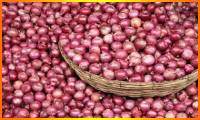
India: Nafed will likely start onion procurement on May 15.
The Central agency National Agricultural Co-operative Marketing Federation of India (Nafed) is likely to start onion procurement on May 15, hoping to create a buffer stock. Last year, the agency started the procurement in the second half of April.
The average wholesale prices of summer onions have declined to Rs 700 per 100 kgs this year due to a rise in supply. Nafed officials said they would procure 80% of the total 150,000 tons summer onions from Nashik district and the remaining from Ahmednagar and other pockets in Maharashtra.
The federal government has set a target of creating a buffer stock of 250,000 tons of onions through its two central agencies.
Source: freshplaza.com

Big relief for Kashmir fruit growers Govt of India bans import of apples costing below Rs 50 per kilogram.
In a big relief for apple growers of Kashmir, the central government has prohibited the import of apples where the CIF (Cost, Insurance, and Freight) import price is less than or equal to Rs 50 per kilogram.
The central government has changed its import policy for apples and created a Minimum Import Price (MIP), which is an import price ceiling, to safeguard the interests of the country's apple growers. This is a significant step that is sure to cheer up Kashmir's apple farmers.
This decision came after Iranian apple imports during the last two years have hit the rates of Kashmiri apples.
Fruit growers were claiming that the decreasing prices of apples are forcing many to switch their apple orchards for non-agricultural purposes.
However, an exception has been granted under this amendment in Apple's import policy. As per the Directorate General of Foreign Trade under the Ministry of Commerce and Industry, India’s neighbour Bhutan is kept out of the new restrictions.
The import policy remains 'Free' for those apples costing above Rs 50 per kilogram.
The DGFT did not specify any reason in its notification as to why the amendment in Apple's import policy was needed.
The decision has, however, put a smile on the faces of apple producers who were negatively impacted by the cheap import of apples that was dumped into Indian markets and eating away at their market share.
Apple growers would benefit from the decision, according to Bashir Ahmad Basheer, chairman of the All Kashmir Fruit Growers Dealers Union.
The drop in apple pricing caused losses for local producers, he said, adding that this ceiling would now ensure that our product will obtain a higher market share. 'From previous many years we are criticising how cheap apples were imported via Afghanistan led to a decline in apple prices.'
Over 35 lakh people, or around 7 lakh agricultural households, work in the horticultural industry directly or indirectly. In Jammu and Kashmir, apples account for around 8% of the country's GDP. More than Over 3.37 lakh hectares of land is being used for the production of fresh and dry fruits, and more area is added each year. In the Valley, pears are cultivated on 14,161 hectares of land, whereas apples are grown on 1.68 lakh hectares of land all by themselves.
Source: greaterkashmir.com

Initial gains from India-UAE trade pact start accruing: DPIIT secretary.
The initial gains from the India-UAE Comprehensive Economic Partnership Agreement (CEPA) have already started accruing with bilateral trade growing around 20% and touching an all-time high of around $84 billion in FY23, Rajesh Kumar Singh, secretary, Department for Promotion of Industry and Internal Trade (DPIIT) said at a business gathering in Dubai.
The agreement came into force on May 1 last year.
Singh, along with Juma Mohammed Al-Kait, Assistant Undersecretary for International Trade, Ministry of Economy, UAE and Sunjay Sudhir, Ambassador of India to the UAE, inaugurated the International Jewellery Exposition Centre in Dubai in which around 100 companies from India and the UAE, participated.
'Singh had also held one-on-one meetings with senior representatives of Abu Dhabi Investment Authority and Mubadala Investment Company – sovereign wealth funds of the UAE,' the commerce and industry ministry said in a statement.
The two-day visit to the UAE of the Indian delegation led by the DPIIT secretary concluded on May 9.
Source: economictimes.indiatimes.com
800 farmers get nod to use GI tag for NE products.
In a landmark initiative, the North Eastern Regional Agricultural Marketing Corporation (NERAMAC) under the Union DoNER ministry has authorised 800 farmers from the northeast to use the GI tag of 13 fruits and vegetables over which it had exclusive GI rights under Intellectual Property Rights.
A GI tag offers a guarantee of origin and specific characteristics of the commodities that helps build global reputation for the products. After NERAMAC on Tuesday authorised these farmers, working in groups, to use its certifications, it is expected to boost promotion of these unique products of the northeast in the international and domestic markets.
In continuation to NERAMAC's endeavours towards GI initiatives, a GI awareness seminar-cum-exhibition was held on Tuesday, where the authorisation was handed to the farmers. These commodities are: Arunachal Orange, Mizo Chilli, Kachai Lemon, Tripura Queen Pineapple, Khasi Mandarin, Tezpur Litchi, Sikkim Large Cardamom, Karbi Anglong Ginger, Naga Tree Tomato, 'Chak-Hao' Black Rice, Memang Narang, Dalle Khursani and Naga Sweet Cucumber.
'The initiative will provide recognition to the unique qualities and reputation of NER agricultural products and protect them from misuse and imitation,' said Commodore Rajiv Ashok (Retd), managing director, NERAMAC. 'The GI initiative is a significant step towards promoting and protecting the traditional agricultural practices and products of the NER region.'
Source: timesofindia.indiatimes.com