Govt support needed in undertaking overseas marketing initiatives to boost exports: FIEO.
Apex exporters body FIEO has urged the government to support domestic exporters in undertaking overseas marketing initiatives with a view to boost outbound shipments. Federation of Indian Export Organisations (FIEO) President A Sakthivel said that Indian exporters lack in marketing and small exporters 'hardly' have resources to market aggressively overseas.
'Government support and encouragement for aggressive marketing will push exports and will yield the desired results. We need to set up state-of-the-art exposition centers in important business centers abroad. Many countries have done it successfully,' he said.
Sakthivel also said that the country's exports are growing at a healthy pace and USD 2 trillion target by 2030 would be achieved before time.
The country's goods and services exports have reached an all-time high of USD 773 billion in 2022-23.
'The export sector added USD 218 billion in the last two financial years,' he added.
Sakthivel was addressing an award function of FIEO here on Wednesday.
Commerce and Industry Minister Piyush Goyal gave Niryat Shree and Niryat Bandhu awards to the outstanding exporters and service providers based on their export performance.
FIEO Director General Ajay Sahai said the share of exports in the country's GDP is around 22 per cent.
'In 2021-22, out of overall incremental GDP in the financial year, over 50 per cent was contributed by exports alone. In 2022-23, despite global headwinds, exports accounted for over 40 per cent of the incremental GDP,' Sahai said.
Source: economictimes.indiatimes.com

District-level laboratories in the offing to efficiently test agricultural produce as per export standards.
The directorate of industries has proposed to set up district level laboratories for certification of agriculture produce to promote exports from those districts.
A senior official from the directorate of industries said that the laboratories would certify agriculture produce with respect to standards required from the countries where the exports are intended.
'The laboratories are proposed to help farmers get certification of mostly major agriculture produce of the districts based on the parameters of presence of chemicals specified by destination countries. There is no common test for the produce as each country has a different set of parameters set by their governments,' said the officer.
The exercise is part of the measures taken to boost the locals towards exporting their produce. The department has decided to increase the exports to at least twice the current volume. Currently, farmers have to look for laboratories to get certified, which is a tedious process involving money and time. 'The laboratories to be set up on public private participation mode will certify the products and thus simplify the testing procedure. This will effect in faster turnaround time,' the officer said.
Source: timesofindia.indiatimes.com

Agri exports rise 9% to $26.3 bn in FY23.
Exports of agricultural and processed food products rose by 9% to $26.3 billion in 2022-23 as compared to FY22, driven by a spike in shipment of rice, fruits and vegetables, livestock and dairy products.
The shipment of products under the agricultural and processed food products exports development authority (Apeda) basket surpassed the target of $23.56 billion for FY23.
According to the Directorate General of Commercial Intelligence and Statistics, the value of rice exports in FY23 rose by more than 15% year-on-year to a record $11.1 billion from $9.6 billion in the previous fiscal. In terms of volume, rice shipment grew by 5% to 22.34 million tonne (MT) last fiscal year-on-year.
The increased realisation in rice exports has been achieved despite India last year banning broken rice shipment and imposition of exports tax of 20% on white rice.
Officials attribute the spike in rice exports to factors such as robust global demand especially from West Asian countries, Africa and Europe and floods in Pakistan, a major grain exporter which had hugely impacted a large chunk of paddy crop.
India has been the world’s largest exporter of rice in the last decade and currently has 45% share in global grain trade.
The United States Department of Agriculture (USDA), in its April 2023 crop outlook, stated 'India’s prices are the most competitive among global suppliers and its total supply of rice is near-record high'.
'Robust global demand and competitive pricing have ensured a surge in rice exports in the current fiscal and adherence to quality parameters has resulted in sharp increase in demand for Indian rice with the grain being shipped to more than 75 countries,' an official told FE.
Fresh and processed fruits and vegetables reported export growth of 18.8% to $3.8 billion in the last fiscal year. The shipment of cereals, preparations and processed food products rose by 20% $4.3 billion in FY23.
Export of meat, dairy and poultry products declined marginally compared to last year at $4 billion last fiscal compared to previous year.
However exports realisation, in terms of rupees, rose by 4% to Rs 32,334 crore last fiscal.
Exports of products under Apeda basket was $ 25.6 billion in 2021-22, which was around 51% of the country’s total agricultural goods exports of more than $50 billion. Rest of agricultural products exports include marine, tobacco, coffee and tea.
Commerce ministry officials attribute the rise in the export of agricultural and processed food products because of the government’s initiatives such as organising B2B exhibitions in various countries, tie ups with global hypermarket chains, exploring new markets through product-specific marketing campaigns by the active involvement of Indian missions.
Source: financialexpress.com
India, US looking at four-fold rise in trade: Piyush Goyal.
Commerce and industry minister Piyush Goyal on Thursday said he wants to see a greater presence of American aircraft and aerospace major Boeing in India as it has recently received a large order of planes from the Tata group-owned Air India.
At the 31st annual general meeting of the American Chamber of Commerce in India (AMCHAM), he also said the India-US bilateral trade is increasing at a healthy rate and both sides are looking to expand the trade four-fold to 'touch $500 billion target by 2030'.
In February, Air India announced its plan to buy 470 planes from Airbus and Boeing, in one of the largest aircraft orders by an airline, valued at $80 billion.
'Boeing has received a very large order from the Tatas and I am given to understand that similar sized orders are in the pipeline... I want to see greater presence of Boeing in India, we would love to see you expand your local supply chains... and have more MRO (maintenance, repair and operations) activity here, which will serve the entire region,' Goyal said.
On Ajay Banga's appointment as the World Bank president, Goyal said: 'I am sure he will be able to bring the developing world perspective and a much more sensitive approach to the way World Bank operates and works'.
Banga is the first-ever Indian-American to head the global financial institution.
Goyal said there are huge opportunities to enhance cooperation in sectors such as defence, pharma, textiles, engineering, auto components, agri products, electricals, and that Alphonso mangoes are going to the US 'in a big way'.
He encouraged American companies to establish their base in India.
Source: economictimes.indiatimes.com
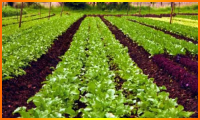
Organic Farming: A solution towards sustainable agriculture.
India being a land of agriculture contributed to a major proportion of the country’s economy. While in the past decades, urbanisation and globalisation have reduced the agricultural output with chemical fertilisers, the country is again leading towards organic farming.
In the world’s organic agricultural land tally, India ranks fifth and has topped in terms of the total number of organic producers. The Centre is continuously putting relentless efforts in establishing organic farming as a major practice among farmers by providing subsidies and schemes. It is pushing initiatives such as the National Programme for Organic Production involving the accreditation of certification bodies, formulating standards for organic production, promotion and marketing of organic farming under Agricultural and Processed Food Products Export Development Authority (APEDA).
Burden of fertiliser subsidy
Such accreditation fosters international recognition of organic products produced in India. Moreover, there is an extensive burden on the governments to provide subsidies to farmers on the purchase of chemical fertilisers which has increased manifolds in the last decade. In order to tackle this challenge, organic farming is the only way out.
It can emerge as an effective substitute for chemical fertilisers, for which heavy prices are paid by importing them and causing detrimental effects on the climate as well as the health of the country’s citizens. Added to this, private players are also significantly contributing to advocating organic farming. All these efforts are being propelled to position organic farming as a solution and way towards sustainable agriculture.
Organic farming is the most sustainable method of farming which can fetter the use of chemically infused fertilizers and pesticides and foster the usage of naturally grown food products. In simple terms, it can replace synthetic fertilizers.
Mitigating climate change
Organic farming is beneficial for the environment as its practices include a focus on maintaining soil health, conserving water, and promoting biodiversity. Undoubtedly, the use of synthetic chemicals and fertilizers is already having negative impacts on the ecosystem resulting in rapid climate changes but it can be reversed by boosting organic farming. The adverse effects of chemical fertilizers include soil degradation, water pollution, and harm to wildlife. Therefore, by using natural methods such as crop rotation, composting, and biological pest control, organic farming ensures that the soil remains fertile and healthy, while also reducing the impact on the environment.
Reduces carbon footprint and greenhouse gases emission
Organic farming is key to reducing emissions from greenhouse gases and lowering the carbon footprint because it does not allow any chemical consumption. Many studies have shown that compared to conventional farming, organic farming practices consume approximately 45 per cent less energy and fumigant pesticides, likely used on strawberry fields that can emit very harmful nitrous oxide resulting in poor climate conditions. However, this can be averted by implementing organic farming methods and steeply decreasing the use of chemical fertilizers.
Supports Sustainable Development Goals
Organic farming has immense potential to support and boost sustainable development goals identified by United Nations and participating countries across the globe. These sustainable development goals have significantly emphasized the dire need for climate action and good health and well-being. To achieve the target of completing SDGs by 2030, organic farming can play a pivotal role in numerous ways but most importantly it can pave the path for the elimination of the vast usage of chemical fertilizers, providing naturally grown food to consumers, extending support to sustainable development goals.
Farmer-friendly
. Firstly, it minimizes the cost of synthetic chemicals and fertilizers because only organically produced manure or bio-fertilizers are cast into the soil. Organic farming prevents the overuse of these chemicals resulting in soil degradation and reduced crop yields, ultimately becoming financially devastating for farmers. Organic farming practices are more cost-effective in the long run, as they rely on natural methods that are less expensive and help maintain soil fertility. Furthermore, organic farming provides farmers with a stable income, as the demand for organic produce continues to grow.
Adding extra years to human life
Various research has shown that the chemicals used in conventional farming have been linked to a range of health problems, including cancer, birth defects, and respiratory illnesses resulting in reduced healthy years of human life. That’s where organic farming steps in to add an extra year to human life. Because organic farming practices do not involve the use of synthetic chemicals, making the food produced through this method is much safer for consumption. Besides, organic produce is also richer in nutrients and antioxidants than conventionally grown produce.
Organic farming has emerged as a game changer for agriculture in India and has disrupted the continuous intrusion of chemical fertilisers effectively. Certainly, this has immense potential to transform the agricultural industry as it is well-suited to India’s climate and soil conditions, further helping farmers in improving their yields while simultaneously protecting the ecosystem. Benefiting the environment, health, and farmers and promoting healthy soil, plants, and animals, organic farming can pave the path for sustainable agriculture.
Source: thehindubusinessline.com
FSSAI reconsidering plan to introduce front-of-pack Health Star Rating for packaged food items.
India’s apex food safety regulator, the Food Safety and Standards Authority of India (FSSAI), is reconsidering its plans to introduce a mandatory Health Star Rating (HSR) on all packaged food items, ThePrint has learnt. HSR is a front-of-pack labelling system that rates the overall nutritional profile of packaged food.
The development comes a month after social media influencer Revant Himatsingka in a video criticised the endorsement of Cadbury Bournvita as a 'health drink' and claimed that the brand had 'miscommunicated' the product’s 'nutritional value' and sugar content on its packaging.
While Bournvita owner Mondelez India had dismissed Himatsingka’s claims, and the influencer deleted the video saying he had received a legal notice, the matter led to calls for greater accountability in the processed and packaged food industry.
Highly-placed sources at FSSAI told ThePrint that although the decision is not directly linked with the Bournvita controversy, the episode could have spurred the regulator into calling a fresh meeting with stakeholders later this month for deliberations.
'After coming up with the draft proposal on HSR, we have received over 10,000 comments from different stakeholders and are currently going through them,' a senior FSSAI official told ThePrint. 'However, deliberation is also still on and a meeting is being planned soon on whether health star rating or pictorial warning labels on processed food would be a better idea. We will also actively take the Union health ministry’s view on the issue.'
If the FSSAI does decide to go ahead with its decision, it would be the first time that a health star rating is introduced in the country.
ThePrint reached G. Kamala Vardhana Rao, the chief executive officer (CEO) of FSSAI, via email for comment. This report will be updated if and when a response is received.
Source: theprint.in

WTO needs to look at farm subsidy issue with open mind: Nirmala Sitharaman.
The World Trade Organisation (WTO) should look at the issue of farm subsidies with an open mind as it impacts the food security needs of emerging economies in the backdrop of Covid pandemic and the Russia-Ukraine war, finance minister Nirmala Sitharaman said on Wednesday. Speaking at the Asian Development Bank (ADB) Governor's seminar on 'Policies to support Asia's rebound', Sitharaman said sooner a solution is found out by the WTO, the better it would be for the world.
'Since WTO was founded, there has been a grievance with respect to the export of agricultural products and generally in trade, the voice of the Global South and emerging markets has not been heard at par with that of the developed countries,' she said.
The 'Global South' largely refers to countries in Asia, Africa and South America.
Subsidies for agriculture and poor farmers in developing countries were not counted at all and were frozen, she said, adding that in context of Covid and Russia-Ukraine war, food and fertilizer security have become important.
'We will all have to talk again (about food and fertiliser security) at the WTO with an open mind,' the minister said.
'There is better food security in the developed world compared to developing countries. Trade agreements have come about in a lopsided way, for which solutions have to be found,' Sitharaman said.
Under global trade norms, a WTO member country's food subsidy bill should not breach the limit of 10 per cent of the value of production based on the reference price of 1986-88.
As part of permanent solution, India has asked for measures like amendments in the formula to calculate the food subsidy cap and inclusion of programmes implemented after 2013 under the ambit of 'Peace Clause'.
As an interim measure, the WTO members at the Bali ministerial meeting in December 2013 had agreed to put in place a mechanism popularly called 'Peace Clause' and committed to negotiating an agreement for a permanent solution.
Under Peace Clause, WTO members agreed to refrain from challenging any breach in prescribed ceiling by a developing nation at the dispute settlement forum of the WTO.
This clause will stay till a permanent solution is found to the food stockpiling issue.
Source: economictimes.indiatimes.com
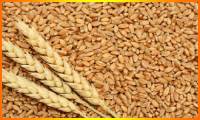
India sets record foodgrain output target of 332 mt for next crop year.
The Indian government has fixed a target of 332 million tonnes (mt) of foodgrain production, including 29.25 mt of pulses, during the 2023-24 crop year (July-June).
Releasing the target at a conference of State officials for the preparation of strategies amid the forecast of El Nino, the Agriculture Ministry said the aim is also to ensure 44 mt of oilseed production and 17 mt of Shri Anna (millets). 'The strategy would be to increase area through inter-cropping and crop diversification and productivity enhancement through the introduction of high yielding varieties, and adoption of suitable agronomic practices in low yielding regions,' the ministry said in a statement.
As per the second advance estimate for the current crop year, the production of foodgrains in the country is estimated at 323.5 mt, up 7.9 mt from last crop year. Record production has been estimated for rice, maize, gram, pulses, mustard, oilseeds, and sugarcane.
Robust growth
Agriculture Minister Narendra Singh Tomar, who inaugurated the conference, said the agriculture sector has been witnessing robust growth, with an average annual growth rate of 4.6 per cent over the last six years. This has enabled the agriculture and allied activities sectors to contribute significantly to the overall economic growth of the country.
The priority of the government is agro-ecological-based crop planning for diversion of land from excess commodities like rice and wheat to deficit commodities like oilseeds and pulses and high-value export-earning crops, the ministry said.
Addressing the conference, Minister of State for Agriculture Kailash Choudhary said global demand for millets is set to rise, consequent to the celebration of the year 2023 as the International Year of Millets (IYM). 'This will provide us a unique opportunity to increase production, ensure efficient processing and consumption, promote better utilisation of crop rotations, and encourage better connectivity throughout food systems to promote millets as a key component of the food basket,' Choudhary said.
He said though there has been a significant increase in oilseeds and pulses production in the past few years, more stress should be given to further increase their output. The agri- and allied exports have increased from $41.86 billion in 2020–21 to $50.24 billion in 2021–22, he said.
Source: thehindubusinessline.com
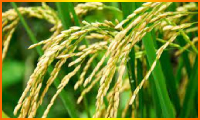
Union Agriculture Minister inaugurates Kharif Campaign for 2023-24 with focus on making country Aatmanirbhar.
Union Agriculture Minister, Shri Narendra Singh Tomar inaugurated National Conference on Agriculture for Kharif Campaign 2023-24 on 03-05-2023 at NASC Complex, New Delhi. Addressing Conference, he emphasized that agriculture remains prime pulse of the Indian economy and is at the core of the socio-economic development of the country. It accounts for around 19 per cent of the GDP and about two-thirds of the population is dependent on the sector.
Shri Tomar expressed happiness that India’s agriculture sector has been witnessing robust growth with an average annual growth rate of 4.6 per cent over the last six years. This has enabled agriculture and allied activities sector to contribute significantly towards country overall growth, development and food security. As per 2nd Advance Estimates (2022-23), production of foodgrains in the country is estimated at 3235 lakh tonnes which is higher by 79 lakh tonnes than the production of foodgrains during 2021-22. Record production is estimated of rice, maize, gram, pulses, rapeseed and mustard, oilseeds and sugarcane. Total production of sugarcane in the country during 2022-23 is estimated at record 4688 lakh tonnes which is higher by 1553 lakh tonnes than the average sugarcane production. As per the 3rd Advance Estimates of Horticulture, a record 3423.3 lakh tonnes of horticultural production are estimated in 2021-22 which is 77.30 lakh tonnes higher over production of 2020-21.
The objective of this conference was to review and assess the crop performance during the preceding crop seasons and fix crop-wise targets for Kharif season in consultation with State Governments, ensure supply of critical inputs and facilitate adoption of innovative technologies with a view to enhance production and productivity of the crops. The priority of government is agro-ecological based crop planning for diversion of land from excess commodities like rice and wheat to deficit commodities like oilseeds and pulses and high value export earning crops. Special Mustard programme was initiated during rabi 2020-21 that has brought most spectacular results. Mustard production has jumped by 40% from 91.24 to 128.18 lakh tonnes in last 3 years. The productivity saw 11% increase from 1331 to 1447 kg/ha. The area under rapeseed & mustard enhanced by 29% from 68.56 lakh ha in 2019-20 to 88.58 lakh ha in 2022-23. Timely action by central and state government made this remarkable achievement possible.
The Minister shared that India organized The Global Millets (Shree Anna) Conference at IARI campus, PUSA, New Delhi on 18th of March 2023 as part of major celebration of International Year of Millets. Dedicating to the International Year of Millets (IYM) 2023, the Hon’ble Prime Minister unveiled commemorative coin and stamp celebrating IYM followed by digital launch of a book of millets (Shree Anna) standards. The Prime Minister declared ICAR-IIMR as Global Centre of Excellence which was followed by screening of a short film on Shree Anna & IYM 2023. Ministry of Agriculture and Farmers Welfare is ensuring that IYM is celebrated in a structured way throughout the year by organizing regular meetings (In person/ video conferencing) with all the stakeholders. Expert Institutes such as ICAR-IIMR, APEDA, ICRISAT and others are also involved to encourage R&D, productivity and value addition.
The Conference set the national targets for production of foodgrains and other commodities. National targets for total food grains production set at 3320 lakh tonnes for the year 2023-24. Target for production of pulses have been fixed at 292.5 lakh tonnes compared to 278.1 lakh tonnes this year and oilseeds production will be increased from 400 to 440 lakh tonnes in 2023-24. Total Shree Anna production has to be increased from 159.1 lakh tonnes in 2022-23 to 170.0 lakh tonnes in 2023-24. The strategy would be to increase area through inter-cropping and crop diversification and productivity enhancement through introduction of HYVs and adoption of suitable agronomic practices in low yielding regions.
Addressing the Conference, Sh. Kailash Choudhary, MoS (Agriculture and Farmers Welfare) hoped that global demand for millets is set to rise, consequent to the celebration of the year 2023 as the International Year of Millets (IYM), This will provide us a unique opportunity to increase production, ensure efficient processing and consumption, promote a better utilization of crop rotations, and encourage better connectivity throughout food systems to promote millets as a key component of the food basket. Due to its multi-functionality, millets hold considerable potential to contribute to economic and ecological diversification, climate resilience, and food & nutritional security. Widely recognized as “Smart Food” or “Nutri-Cereals”, millets play a crucial role in transforming agri-food systems, across the globe. India is set to become International Hub for millets.
In his deliberation he said that there is significant increase in oilseeds and pulses still more stress should be given for further increase in the production of seeds and pulses. For the all the government facilities, schemes and information of agriculture must be given through FPO for its effective implementation.
Shri Manoj Ahuja, Secretary (Agriculture & Farmers Welfare), said that the country is maintaining an increasing trend in food grain production since 2015-16. The government has taken measures to augment crop and livestock productivity, ensure certainty of returns to the farmers through price support (Minimum Support Price), promote crop diversification and has made focused interventions to enhance credit availability, facilitate mechanization and boost horticulture and organic farming. As a result, agriculture exports touched a historic high growth in 2021-22. As compared to previous year 2020-21, the agri and allied export has increased from 41.86 billion USD in 2020-21 to 50.24 billion USD in 2021-22 i.e. an increase of 19.99%. For modernization of agriculture and facilitate farmer, government launched the SATHI (Seed Traceability, Authentication and Holistic Inventory) Portal and Mobile App, a Centralized Online System for seed traceability, authentication and inventory designed to deal with the challenges of seed production, quality seed identification and seed certification.
Further he stated that to combat the adverse weather conditions the single window advisory system should be adopted for issuing the weather-related issues to the farmers. For the improvement of the soil health card system this year new initiative will be in place for which agriculture graduates will be given an opportunity to work on implementation of SHC.
Shri Arun Baroka Secretary (Fertilizers) assured timely supply of fertilizers for forthcoming kharif season. The government also announced to convert more than 3.25 lakh fertilizer shops across the country as Pradhan Mantri Kisan Samruddhi Kendras. These will be centres where farmers can buy not only fertilizers and seeds but also implement soil testing and avail useful information about farming techniques. Further, he provided the information about Integrated fertilizer management system (IFMS) for the detail information about the fertilizer and related issues. In his deliberation he has given the information on the PM PRANAM and PM Kisan Samridhi Kendra he advised farmer should use organic inputs.
Dr. Himanshu Pathak, Secretary (DARE) and Director General, ICAR shared recent technological advances made in the agriculture for the benefits of the states and preparing plan of development accordingly. He stressed on using bio-fortified and climate resilient varieties to fulfill dream of food and nutritional security for all. Further in his deliberation he has highlighted for the improvement of varieties which are climate resilient and newly released and bio fortifies varieties should be used.
Detailed presentations were made on status of fertilizer supply by Additional Secretary (fertilizers), on agri stack for digitization in agriculture by Additional Secretary (Agriculture) on financial issues on released by additional secretary and financial advisor. JS (Crops) made a presentation on prospects and strategies for ensuing Kharif season. The state principal secretaries Maharashtra, Jharkhand and Odisha presented their strategies for Kharif preparedness and implementation. Presentation on Pradhan Mantri Fasal Bima Yojana was made by CEO of PMFBY, thereafter on Drought Management, Annual Action Plan of RKVY and Digital Extension plans were shared in details by respective Joint Secretaries.
Additional Secretary (Agriculture) and senior officers from DA&FW, ICAR and officers of different State Governments participated in the National Conference. This was followed by an interaction session with Agriculture Production Commissioners and Principal Secretaries of all the States to raise issues concerning their states for increasing area coverage, production and productivity during Kharif season 2023.
Source: pib.gov.in

India introduces 115 new quality control orders covering 493 products to increase exports.
Union Minister for Commerce and Industry Piyush Goyal on Wednesday said that a total of 115 Quality Control Orders (QCOs) covering 493 products have been notified for compulsory BIS certification by the Union Government.
The centre hopes that through the issuance of QCOs, the notified products shall conform to the requirements of the relevant Indian Standard and the manufacturers of these products have to compulsorily obtain certification from BIS.
'Till May 2014, only 14 TR/QCOs covering 106 products were notified for compulsory BIS certification and implementation of Indian Standards. After May 2014, a further 101 QCOs covering 387 products have been notified,' he said.
Source: cnbctv18.com