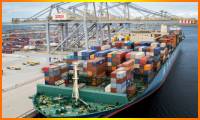
India, Canada trade ministers to review progress in talks on free trade agreement.
Trade ministers of India and Canada will review the progress in talks on the proposed free trade agreement between the two countries besides discussing ways to strengthen economic ties, an official statement said on Monday.
Commerce and Industry Minister Piyush Goyal and Mary Ng, Minister of International Trade, Export Promotion, Small Business and Economic Development, Government of Canada, will co-chair the discussions for the sixth India-Canada Ministerial Dialogue on Trade and Investment (MDTI) on Monday in Ottawa.
MDTI is a bilateral mechanism which provides institutional mechanisms to discuss a broad spectrum of trade and investment related issues and cooperation areas.
The discussions will focus on various themes including strengthening the bilateral trade relationship, investment promotion, green transition - including critical minerals, it said.
'The ministers will also review India-Canada CEPA (Comprehensive Economic Partnership Agreement) negotiations,' it added.
At the last MDTI meeting in March 2022, both ministers launched the CEPA negotiations with a possibility to have an interim agreement or EPTA (Early Progress Trade Agreement).
Since then, seven rounds of negotiations have been held. In such agreements, two countries significantly reduce or eliminate custom duties on the maximum number of goods traded between them. They also liberalise norms for promoting trade in services and attract investments.
Further, Goyal will also be visiting Toronto from May 9 - 10, where he will have various engagements to promote trade and investment.
'These engagements will include meetings with CEOs of key Canadian companies, Round Table of Indian and Canadian CEOs, interaction with Canadian and Indian companies based in Canada and Financial Sector Round table,' the commerce and industry ministry said.
The minister is accompanied by a delegation of Indian CEOs.
He would also inaugurate the Indian Pavilion at SIAL CANADA-2023, which is the largest food innovation trade show in North America with participation of more than 1,000 national and international exhibitors from 50 countries.
Indian companies that have presence in Canada include Tata, Aditya Birla, Reliance, Wipro, Infosys, and TCS. Similarly Canadian firms such as Bombardier, SNC Lavalin, and CAE have a presence in India.
India attracted USD 3.2 billion foreign direct investment during April 2000 and December 2022.
India's exports to Canada stood at USD 3.8 billion during April-February 2022-23 as against USD 3.76 billion in 2021-022. Imports from Canada stood at USD 3.77 billion during the 11-month period lat year as against USD 3.2 billion in 2021-22.
Major items of Indian exports include medicines, garments, diamonds, chemicals, gems and jewellery, petroleum oils, made-up, sea food, engineering goods, marble and granite, rice, electric equipment, and plastic products.
Imports included pulses, fertilizers, newsprint, aircraft and aviation equipment, diamonds, copper ores and concentrates, bituminous coal, wood pulp, nickel, unwrought aluminum, asbestos, and cameras.
Source: economictimes.indiatimes.com

Path-breaking India-UAE CEPA negotiated in just 88 days: DPIIT Secy.
Sh. Rajesh Kumar Singh, Secretary, Department for Promotion of Industry and Internal Trade (DPIIT) and H.E Thani bin Ahmed Al Zeoudi, UAE Minister of State for Foreign Trade, jointly inaugurated the events to commemorate the first anniversary of the entry into force of the Comprehensive Economic Partnership Agreement (CEPA) between India and the UAE. Speaking at the event, Sh. Rajesh Kumar Singh highlighted how the path-breaking India-UAE CEPA, which was negotiated in just 88 days, has become a significant turning point in the bilateral economic relations between the two countries.
For India, the CEPA with UAE is the first in the region and for UAE, it is their first ever CEPA. Since the entry into force of CEPA, bilateral trade between India and UAE has witnessed tremendous growth of 20% when compared to the previous year. India’s exports to the UAE also recorded a remarkable growth of 12%, reaching US $ 31.3 billion in 2022-2023.
As part of the CEPA celebrations, Sh. Rajesh Kumar Singh inaugurated the Kerala Pavilion today at the Annual Investment Meeting in Abu Dhabi. He held meetings with the senior leadership of Abu Dhabi Investment Authority and Mubadala, the top UAE investors in India. Welcoming the surge in investments from the UAE to India, Sh. Rajesh Kumar Singh invited both companies to explore new sectors for investing in India, especially the renewable and digital sectors. The UAE is currently the seventh largest investor in India with an estimated investment of US$ 18 billion.
Secretary, DPIIT will be inaugurating the International Jewellery Exposition Centre in Dubai tomorrow. He will also be the Chief Guest for a multi-sectoral B-2-B event in Dubai organised by the Gems and Jewellery Export Promotion Council (GJEPC) tomorrow, in which around 100 companies from India and UAE, including representatives of various Export Promotion Councils (EPCs) are expected to participate.
The 'CEPA – Beyond Trade' commemorative event included food and fashion pavilions, sharing of the success stories of the historic trade bonds between India and the UAE and panel discussions on future areas of cooperation.
The visit of Secretary, DPIIT to UAE is his first official trip abroad since assumption of office in April 2023, indicating the significance India attaches to close relationship with UAE.
Source: pib.gov.in

Indore looks to set in motion trade ties with Kathmandu.
Manufacturers of packaged processed food, processed forms of millets, spices and fertilisers have fetched encouraging enquiries from traders of Nepal with some products likely to make its way to Kathmandu.
Industries of Madhya Pradesh are hoping to clock some deals with Nepal following a meeting with a delegation of industrialists and traders from Federation of Nepalese Chambers of Commerce and Industry.
Rajkumar Sabu, director of a manufacturer and exporter of unprocessed food products in Indore said, 'There were a lot of enquiries for millets, spices, processed food and ready to eat items from Nepal. We hope to strike some deals as the business delegation took many samples of products manufactured in Indore. We already have trade relations with Nepal as we export sabudana and poha. Now we are hoping to strike some new deals.'
Exports from Madhya Pradesh to Nepal are meager with only a handful items like fertilisers and agricultural products, according to Federation of Nepalese Chambers of Commerce and Industry.
Industry players from food, textile, pharmaceuticals, chemicals, fertilizer, ayurvedic medicines, automobiles and engineering showcased their products and food items to the delegation from Nepal.
Deepak Bhandari, president, Global forum for industrial development said, 'Industries from Nepal were in Indore to explore business opportunities and expand export ties. Indore is a hub for several products that are manufactured locally and have good demand in the international market.'
A delegation of around 30 traders and industrialists from Madhya Pradesh is likely to visit Nepal in last week of May.
Sagar Katwal, member of the Nepal delegation said, 'We see a lot of trade potential with Madhya Pradesh as the state lies in the centre of the country. We saw a good demand for Indian fertilisers, processed food and agricultural products in Nepal.'
The federation also urged for direct air connectivity between Indore and Kathmandu to give a fillip to trade from Madhya Pradesh.
Katwal said, 'We also hope to connect with Madhya Pradesh to create a spiritual circuit between Mahakal temple in Ujjain to Pashupatinath temple in Kathmandu.'
Source: timesofindia.indiatimes.com

India to moot SWIFT-like transactions at G20 meet.
India will propose a SWIFT-like system used in international banking at the G20 meet to facilitate similar paperless transactions for cross-border trade.
The system will be based on an electronic bill of lading in the form of an interoperable digital document that is expected to boost trade and investment.
'Such a system can greatly facilitate global trade and also provide end-to-end visibility to all stakeholders including the authorities,' a government official told ET.
An interoperable digital document allows data and information flow across systems, applications, or components accessible across countries.
The official said just like SWIFT in which cross-border financial systems talk to each other, there is a need for a similar mechanism for cross-border trade.
The Society for Worldwide Interbank Financial Telecommunications (SWIFT) is a vast messaging network used by financial institutions to quickly, accurately, and securely send and receive information to facilitate global money transfers.
'The idea is to eliminate paper for cross-border transactions,' the official said, adding that seamless paperless trade can be a complete game-changer for global trade.
This would need shipping liners, insurance companies, and banking entities to have a single common interface, the official said, adding that the effort is to work on a template that can be easily adopted by any country.
A bill of lading is a document that provides proof of ownership of goods and forms the basis for the release of payment.
New Delhi is of the view that such a system will make global trade paperless, reduce transaction costs substantially, and boost trade.
The template also includes standardised certificates and mutually recognised standards to bring about meaningful simplification and ease in trade, another senior government official said.
The standardisation will allow one country's infrastructure to speak to another country's infrastructure, bringing down the time taken in a transaction and the release of payment.
Indian customs have already introduced paperless customs clearances for imports and the country is showcasing its impact on the ground to make its case at the G20 discussion. New Delhi assumed the G20 presidency in December.
India could also use the template provided by the United Kingdom, which introduced a draft electronic trade documents legislation, based on the United Nations Commission on International Trade Law or UNCITRAL Model Law on Electronic Transferable Records. It allows the legal use of electronic transferable records both domestically and across borders.
'This could be a starting point,' the first official said, adding that even standardisation and adoption of common certification will help trade, especially in the developing world.
India, which sees itself as a voice of the global south, is of the view that mutual recognition of standards and common standards can ease trade for developing and least developed countries.
Source: economictimes.indiatimes.com
District-Level Agricultural Laboratories to Boost Export Standards.
The directorate of industries has offered to set up district level laboratories for the certification of agricultural yield to encourage exports from the districts.
According to a senior official from the directorate of industries, the laboratories will certify agricultural produce in accordance with the requirements set by the nations to whom the exports are destined.
The Officers said that the laboratories are suggested to assist farmers get the certification of most of the major agricultural yields of the districts based on the parameters of the presence of chemicals defined by the destination countries. There is no common test for yield as each country has a distinct set of guidelines set by their governments.
The task is part of the steps taken to augment the locals towards exporting their yield. The department has decided to maximize the exports at least twice the current volume.
Presently, have to look for laboratories to get certified, which is a monotonous procedure including time and money. The officer said that the laboratories to be set up in public private participation mode will certify the products and thus simplify the testing process. This will impact in quick turnaround time.'
Regarding the value of the laboratories, the officer said that was yet to be determined by adding that since the government will also be in control, the end user will have to pay reasonably for the services.
Such laboratories will also be benefitted from the exports of one district one product (ODOP) and the Geographical Indication (GI) tagged products.
Out of 72 ODOPs that have been identified 50 are agro-based products. Also, the industries department is tying up with the technical universities for the ODOP marketing projects which include designing, packaging, branding, and promotion of the products.
Already, Maharashtra has 34 GI products. And, 16 potential GI products have been identified too.
Source: krishijagran.com
WTO farm talks. India warns developed nations against junking Bali interim decision on food subsidy caps.
India warned developed nations that there was no escape from either a permanent solution on food security or text-based negotiations on public stock holding and MSP ceilings at the WTO, as some members, such as the US, the UK, the EU and Japan, attempted to junk the Bali interim decision that gave developing nations immunity against penal action for breach of food subsidy caps.
New Delhi’s intervention was at a meeting of the WTO Committee on Agriculture in Geneva this week where discussions began on the possible outcomes on food and agriculture at the upcoming 13th Ministerial Conference (MC13) in February 2024 in Abu Dhabi.
'India emphasised on three nos– no escape from a permanent solution (on food security), no escape from text-based negotiations, and no excuse for (a tight) timeline. It criticised non-proponents (of its proposal on food security) for their lack of will to show flexibility,' a Geneva-based official privy to the CoA meeting told businessline.
It is crucial for India, and many other developing countries who support their poor farmers through MSP or other similar programmes, to get a permanent solution on public stockholding as under the WTO rules a country can be penalised by another if the subsidy for procurement of any crop exceeds 10 per cent of the production value.
The Bali interim agreement, reached in 2013, provides a peace clause that insulates developing countries against action if their subsidy breaches the given limit but it is subject to onerous conditions including submission of copious data and subjective clauses such as the subsidies not harming the food security of another country.
A large number of developing countries, which includes the African Group, the African, Caribbean and Pacific Group, and G33 Group, which has India as a member, sought immediate commencement of text-based negotiations on public stockholding, with their joint submission serving as the basis for discussion, to help address severe food security issues.
Indirectly referring to India invoking the Bali peace clause to allow its MSP bill for rice to breach the ceiling limit, the US said that the Bali interim decision had enabled one member to take advantage of unlimited levels of trade-distorting domestic support. The US alleged that ``this member’’ had been able to significantly increase its exports of that one commodity to now account for more than 40 per cent of global exports in that commodity.
'Such allegations are baseless as India’s MSP programme has nothing to do with its rice exports. The variety India exports is premium and is not procured by the government,' a source tracking the matter said.
Japan, the UK and the EU stressed that it was important to maintain transparency in public stock holding programmes and insisted that the Bali interim decision could not serve as a model for formulating a permanent solution on the matter.
India called for a permanent solution based on proposal submitted by developing nations and dismissed arguments for alternative food security solutions beyond public stock holding and special safeguard measures.
Source: thehindubusinessline.com
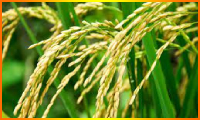
National Kharif Conference 2023: Agriculture Ministry sets production target of 332 million tonnes.
Union Agriculture Minister, Mr. Narendra Singh Tomar inaugurated the National Conference on Agriculture for Kharif Campaign 2023-24 yesterday at NASC Complex, New Delhi. Addressing Conference, he emphasized that agriculture remains the prime pulse of the Indian economy and is at the core of the socio-economic development of the country. It accounts for around 19 percent of the GDP and about two-thirds of the population is dependent on the sector.
Mr. Tomar expressed happiness that India’s agriculture sector has been witnessing robust growth with an average annual growth rate of 4.6 percent over the last six years. This has enabled the agriculture and allied activities sector to contribute significantly towards the country’s overall growth, development, and food security.
Crop-wise target for Kharif 2023
The objective of this conference was to review and assess the crop performance during the preceding crop seasons and fix crop-wise targets for the Kharif season in consultation with State Governments, ensure the supply of critical inputs, and facilitate the adoption of innovative technologies to enhance production and productivity of the crops.
The national target for total food grains production is set at 3320 lakh tonnes for the year 2023-24. The target for production of pulses has been fixed at 292.5 lakh tonnes compared to 278.1 lakh tonnes this year and oilseeds production will be increased from 400 to 440 lakh tonnes in 2023-24. Total Shree Anna production has to be increased from 159.1 lakh tonnes in 2022-23 to 170.0 lakh tonnes in 2023-24. The strategy would be to increase area through inter-cropping and crop diversification and productivity enhancement through the introduction of HYVs and the adoption of suitable agronomic practices in low-yielding regions.
The priority of the government is agro-ecological based crop planning for the diversion of land from excess commodities like rice and wheat to deficit commodities like oilseeds and pulses and high-value export-earning crops. The special Mustard program was initiated during Rabi 2020-21 that has brought the most spectacular results. Mustard production has jumped by 40% from 91.24 to 128.18 lakh tonnes in the last 3 years. The productivity saw an 11% increase from 1331 to 1447 kg/ha. The area under rapeseed & mustard enhanced by 29% from 68.56 lakh ha in 2019-20 to 88.58 lakh ha in 2022-23.
Foodgrain Production Estimates
As per 2nd Advance Estimates (2022-23), the production of foodgrains in the country is estimated at 3235 lakh tonnes which is higher by 79 lakh tonnes than the production of foodgrains during 2021-22. Record production is estimated of rice, maize, gram, pulses, rapeseed and mustard, oilseeds, and sugarcane.
The total production of sugarcane in the country during 2022-23 is estimated at record 4688 lakh tonnes which is higher by 1553 lakh tonnes than the average sugarcane production. As per the 3rd Advance Estimates of Horticulture, a record 3423.3 lakh tonnes of horticultural production are estimated in 2021-22 which is 77.30 lakh tonnes higher than production of 2020-21.
Mr. Manoj Ahuja, Secretary of the Department of Agriculture & Farmers’ Welfare, said that the country is maintaining an increasing trend in food grain production since 2015-16. The government has taken measures to augment crop and livestock productivity, ensure certainty of returns to the farmers through price support (Minimum Support Price), promote crop diversification, and made focused interventions to enhance credit availability, facilitate mechanization, and boost horticulture and organic farming. As a result, agriculture exports touched a historic high growth in 2021-22. As compared to the previous year 2020-21, the agri and allied export has increased from 41.86 billion USD in 2020-21 to 50.24 billion USD in 2021-22 i.e. an increase of 19.99%.
For the modernization of agriculture and to facilitate farmers, the government launched the SATHI (Seed Traceability, Authentication, and Holistic Inventory) Portal and Mobile App, a Centralized Online System for seed traceability, authentication, and inventory designed to deal with the challenges of seed production, quality seed identification, and seed certification.
Mr. Arun Baroka Secretary (Fertilizers) assured a timely supply of fertilizers for the forthcoming Kharif season. The government also announced to convert more than 3.25 lakh fertilizer shops across the country as Pradhan Mantri Kisan Samruddhi Kendras. These will be centers where farmers can buy not only fertilizers and seeds but also implement soil testing and avail useful information about farming techniques. Further, he provided the information about Integrated fertilizer management system (IFMS) for detailed information about fertilizer and related issues. In his deliberation he has given the information on the PM PRANAM and PM Kisan Samridhi Kendra he advised farmers should use organic inputs.
Dr. Himanshu Pathak, Secretary (DARE) and Director General, ICAR shared recent technological advances made in agriculture for the benefit of the states and prepared a plan of development accordingly. He stressed on using bio-fortified and climate-resilient varieties to fulfill the dream of food and nutritional security for all. Further in his deliberation, he has highlighted the improvement of varieties that are climate resilient, and newly released and biofortified varieties should be used.
Source: en.krishakjagat.org
FSSAI s FoSTaC programme organised by HRAWI in Khandala a resounding success.
The Hotel and Restaurant Association of Western India (HRAWI), in collaboration with the Food Safety and Standards Authority of India (FSSAI), conducted its latest Food Safety Supervisor Training in Advance Catering (FoSTaC) programme on April 27 at The Dukes Retreat, Chalet Group Hotel, in Khandala.
The inaugural for the training was done by Stephen Dsouza - the cluster general manager, Rakeshwar Guleria - the general manager, Rushikesh Sanap - HR manager, and Ashutosh Balodhi – executive chef of The Dukes Retreat. Attended by 38 participants, the training conducted by Divya Bhaskaran was a resounding success. Through the initiative, FSSAI and HRAWI aim to promote safe and healthy food practices in the hospitality industry.
FoSTaC is a crucial initiative aimed at improving the quality and safety of food practices in the F&B industry. The programme equips hospitality professionals with the necessary skills and knowledge to identify and mitigate potential food safety risks, ensuring that customers are served safe and healthy food.
'The importance of this training programme cannot be overstated. As consumers become more health-conscious and aware of food safety issues, it is crucial for the hospitality industry to stay ahead of the curve and provide safe and healthy food options. By investing in the training and certification of employees, hospitality establishments not only improve their reputation but also provide a better customer experience, leading to increased customer loyalty and business growth. This collaboration between FSSAI and HRAWI is a valuable initiative that highlights the commitment of both organisations towards promoting safe and healthy food practices in the hospitality industry. We are thrilled with the success of this initiative and are proud to have trained and certified over 2,500 hospitality professionals across the Western region. We look forward to continuing our efforts in this direction,' says Pradeep Shetty, president, HRAWI.
The training programme covers a range of topics including food handling and preparation, hygiene and sanitation and waste management. By learning about these key areas, hospitality professionals are trained to develop a deep understanding of food safety practices and implement them in their daily operations. HRAWI has successfully trained and certified 2,575 hospitality professionals across India’s western region in FoSTaC and FSSAI's Management Training Program.
Source: fnbnews.com
India's exports likely to touch $900 billion in FY24.
India's exports of goods and services could touch $900 billion in the current financial year, up from $770 billion in the previous year, keeping resilient despite global headwinds, a top official of a grouping of exporters said.
Merchandise exports could expand to between $495 billion and $500 billion, while services exports could touch $400 billion in the year ending March 2024, said Ajay Sahai, director general of the Federation of Indian Export Organisations (FIEO).
Overseas demand remains strong in many markets, he added.
Trade Minister Piyush Goyal urged exporters to explore new markets, however, in view of the possible impact of war in Ukraine and a global slowdown.
'The times ahead are going to be very, very tough,' Goyal said speaking at a industry event late on Wednesday, while warning of the fallout from the conflict.
Prime Minister Narendra Modi's government has set an export target of $2 trillion by 2030, offering benefits to boost exports of electronics, engineering, pharmaceutical, and other goods.
India's exports have increased by more than $200 billion in the last two years, led by a surge in exports of software, mobile exports, and agricultural and petroleum products.
Exports of engineering, gems, and jewellery goods have slowed in the last few months, however.
Exports of agricultural, petroleum, and electronic goods remained strong in the Western markets due to pricing factors while exports to Asian and Middle east countries have grown substantially, exporters said.
Sahai, who was part of a 50-member business delegation to Russia last week, said there was a huge demand for Indian goods, particularly food, after the Western sanctions imposed over the Ukraine war.
'Indian exporters are hopeful that both countries would soon work out a mechanism allowing payments in local currencies that would facilitate the shipments of Indian goods to Russia,' Sahai said.
But Indian officials have said Russia was reluctant to accept payments in the rupee currency for its oil exports.
India has not explicitly condemned Russia's February 2022 invasion of Ukraine and has called for dialogue to resolve hostilities.
Source: economictimes.indiatimes.com
Trading in Indian rupees will strengthen ties between India and South Africa, says CII-IBF (SA) President.
Trading in Indian rupees rather than the dollar or euro as has been traditionally done for decades is likely to encourage trade and promote economic growth and development between India and South Africa, a prominent business leader has said. Praveer Tripathi, the president of the Confederation of Indian Industry-India Business Forum (CII-IBF) in South Africa, made the remarks in his keynote address at the KwaZulu Natal International Business Association (KIBA) Gala Dinner hosted in Durban on Saturday.
'International trade settlement in Indian rupees, if implemented, will enable a trader in South Africa to import goods by paying in Indian rupees. Settling of trade in Indian rupees will not only eliminate the need for a third currency, such as the US dollar or Euro – it will result in lower transaction cost and reduce currency exchange risks,' Tripathi said. He said it will also create new avenues for investment and trade between the two countries and it will promote the use of local currencies which will benefit both countries’ economies.
Tripathi said settling trade in Indian rupees would also create new opportunities for businesses in South Africa and India to enter each other’s markets. This would encourage more bilateral trade and investment and promote economic growth and development in both countries.'Settling trade in Indian rupees would strengthen the ties between India and South Africa and promote long-term trade relationships. By promoting trade settlement in their respective currencies, both countries can demonstrate their commitment to fostering economic cooperation and partnerships,' Tripathi said.
'The IBF in South Africa recognises the potential of direct trade in rupees between our two countries and is committed to exploring this avenue,' Tripathi said as he called on KIBA to work with his organisation to promote direct trade between their two countries, especially for the benefits that it could bring to the small and medium business sectors. 'There are 18 countries, including some African countries, that have already agreed to transact in Indian rupees, so with your help, we want to get this started in South Africa – the sooner the better,' Tripathi concluded.
At the event, a Memorandum of Understanding (M0U) was also signed between KIBA and the Delhi-based Progress, Harmony and Development Chamber of Commerce and Industry. KIBA President Omie Singh described the signing of the M0U as historic since the 118-year-old organisation has not had a footprint in South Africa until now. 'This MoU will open the door to 160 other organisations throughout the world, be it in Germany, London, China, Russia, or Brazil. KIBA will have access to do business with all those organisations throughout the world,' Singh said, adding that this would benefit not only the province but South Africa as a whole.
Source: financialexpress.com