Kerala Farmer Promotes Medicinal Rice Varieties with Unique Tambo Artwork.
Nayanan C.C. has taken a unique approach to farming and is making headlines with his tambo artwork. The paddy fields of Alappuzha, a district in the southern state of Kerala, come to life every year during the 'puncha' or first crop season. Vast stretches of green fields blanket the region as farmers work tirelessly to grow rice.
Nayanan C.C. is a Health department employee and paddy farmer from Thirumala ward in Alappuzha municipality. He has turned a small portion of his 110-acre Kombankuzhy pada sekharam (paddy field) into a canvas to promote organic farming and popularize traditional and medicinal rice varieties. His latest creation is a rice paddy artwork featuring the Chief Minister Pinarayi Vijayan, made by planting different colored varieties of rice in an intricate pattern.
The portrait was created using three varieties of rice – rakthashali, black rice, and nazar bath. Rakthashali and nazar baths were used to create the subject, while black rice was used in the space surrounding the subject. The artwork is designed to be viewed from above and was created to encourage others to take up organic farming and grow traditional and medicinal rice varieties. Nayanan hopes that his work will help conserve indigenous rice types, considering their health benefits.
To create the artwork, Nayanan was helped by artist E.D. Reji from Wayanad in drawing the design. He planted the saplings on December 24 last year, and the harvest is planned for April. His other rice paddy artwork is an image of a snake boat created in 2021.
Nayanan has been doing paddy farming for several years, but he began cultivating rice varieties with medicinal properties only after he started doing research on the problems and coping strategies of cancer patients and their families in Kuttanad. This season, he is growing different varieties of paddy on 4.5 acres of leased land at Kombankuzhy pada sekharam.
As an external research scholar at the Department of Sociology and Social Work at Annamalai University, Nayanan's work on organic farming and conservation of indigenous rice types has been widely recognized. He believes that organic farming and the use of traditional and medicinal rice varieties will not only benefit the health of the people but also contribute to the conservation of the environment.
Rice paddy art is not new in Kerala. In recent years, it has gained popularity in the region as an eco-friendly and unique way to promote farming and attract tourists. The art form is a traditional method of land use that has been used in Japan and other countries for centuries. It involves creating intricate designs by planting different colored varieties of rice in a paddy field.
Nayanan's rice paddy artwork is an example of how traditional and modern practices can come together to promote farming, conserve indigenous rice types, and preserve the environment. His unique approach to farming has not only made him a local celebrity but also an inspiration to many others who wish to promote organic farming and conserve traditional and medicinal rice varieties.
Source: krishijagran.com
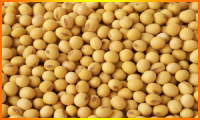
Record growth. India s oilmeals exports rise 167% in January.
An increase in the export of rapeseed meal and the revival of the export of soyabean meal helped India to register a growth of 167 per cent in the overall exports of oilmeals during January. The overall exports of oilmeals recorded a growth of 69.6 per cent during the first 10 months of FY23.
Data available with Solvent Extractors’ Association (SEA) of India showed that India exported 4.72 lakh tonnes (lt) of oilmeals in January 2023 against 1.76 lt in January 2022. India’s export of oilmeals increased to 32.97 lt during April-January of 2022-23 from 19.44 lt in the corresponding period of 2021-22.
BV Mehta, Executive Director of SEA of India, said the export of rapeseed meal has set a new record in the first 10 months of 2022-23, and broke the earlier highest record export of 12.48 lt in 2011-12. India exported 19.10 lt of rapeseed meal during April-January of 2022-23 against 7.29 lt in the corresponding period of 2021-22, recording a growth of 161.73 per cent.
He said India is the most competitive supplier of rapeseed meal to South Korea, Vietnam, Thailand and other Far East countries at $250 a tonne FOB India, while rapeseed meal (Hamburg ex-mill) is quoted at $428 a tonne.
He said the better realisation from rapeseed (mustard) oil and export of rapeseed meal not only supported domestic price of mustard seed, but also encouraged larger sowing area under mustard crop.
Soyameal
Export of soyabean meal from India increased to 5.57 lt during April-January of 2022-23 from 3.15 lt in the corresponding period of 2021-22, recording a growth of 77 per cent.
Mehta said the fall in the local soyabean price to level of ?4700 a quintal from the highest level of ?7640 a quintal in April 2022 encouraged larger crushing of the crop and better price parity. This made export of soyabean meal attractive.
As on February 17, Argentina soyabean meal price (ex-Rotterdam) was quoted at $619 a tonne while Indian soyabean meal (ex-Kandla) was quoted at $585 a tonne. The major consumers of Indian soyabean meal are South East Asian countries. India has a logistic advantage and also can supply in small lots, he said.
Being non-GMO, Indian soyabean meal has an advantage. It is being preferred by certain European countries and the US. He said the rupee depreciation is also pushing the overall export.
All these factors helped India to revive the export of soyabean meal from the new crop. Giving details of the last three months export figures, he said India shipped 3.95 lt of soyabean meal during November-January of 2022-23 against 1.38 lt in the corresponding period of the previous year, recording a growth of 184.9 per cent.
Export destinations
South Korea imported 8.06 lt of oilmeals from India during the first 10 months of 2022-23 (5.09 lt during April-January of 2021-22). This included 5.51 lt of rapeseed meal, 2.24 lt of castorseed meal, and 30,687 tonnes of soyabean meal.
India exported 7.52 lt of oilmeals to Vietnam during April-January of 2022-23 (4.78 lt). This included 3.37lt of ricebran extraction, 2.18 lt of rapeseed meal, 1.91 lt of soyabean meal, and 5,009 tonnes of groundnut meal.
Thailand imported 6.26 lt of oilmeals from India during the first 10 months of 2022-23 (1.44 lt). This included 5.98 lt of rapeseed meal, 21,261 tonnes of soyabean meal, 4,038 tonnes of groundnut meal, 1,794 tonnes of ricebran extraction, and 798 tonnes of castorseed meal.
India exported 3.60 lt of oilmeals to Bangladesh during April-January of 2022-23 (2.90 lt). This included 76,751 tonnes of ricebran extractions, 2.44 lt of rapeseed meal, and 39,214 tonnes of soyabean meal.
Taiwan imported 1.15 lt of oilmeals from India during the first 10 months of 2022-23 (78,167 tonnes). This included 69,029 tonnes of castorseed meal, 36,267 tonnes of rapeseed meal, 7,180 tonnes of groundnut meal, and 2,670 tonnes of soyabean meal.
Source: thehindubusinessline.com
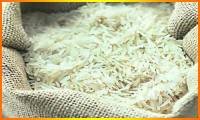
Rice exporters see surge in demand from global buyers.
After a lull of three months since the imposition of 20% export duty on rice, India's rice exporters are witnessing a surge in demand from the global markets and international buyers are willing to pay a price of $400 per tonne, as compared to $330 per tonne before the imposition of the export duty.
The government had imposed the duty on September 9 last year to contain the domestic price rise. Area under kharif fell 5.62% to 38.39 million hectares in last year's season due to poor rains in some states including UP, Bihar, Jharkhand, West Bengal. Buyers are absorbing the export duty, despite which Indian rice is cheaper than rice from Thailand which is commanding a price of $500 per tonne in the international market.
'The upswing in global demand will help India to achieve 15.5 million tonnes of non-basmati rice exports, which are only 10% lower compared to last year even though earlier it was thought exports would come down to 12-13 mt following the imposition of export duty,' said BV Krishna Rao, president, Rice Exporters Association of India.
Source: economictimes.indiatimes.com

Trade in local currency: India may ink pacts with UAE, Nigeria, Malaysia.
India may ink pacts with the United Arab Emirates (UAE), Malaysia, and Nigeria to facilitate settlement of international trade in local currencies as early as next month.
Source: business-standard.com
MoU signed between APEDA, Ministry of Commerce and Lulu Group at Dubai.
On February 21, 2023, Agricultural and Processed Food Products Export Development Authority (APEDA) signed a Memorandum of Understanding (MoU) at Dubai, with Lulu Hypermarket LLC for the promotion of millets in GCC countries. The MoU was signed In the presence of Ambassador of India to UAE.
H. E. Sunjay Sudhir, Dr. M Angamuthu, Chairman, APEDA, Dr. Aman Puri, Consul General of India, Mr. M. A. Yusuff Ali, Chairman & Managing Director of LuLu Group International (LLC), and other officers of the Mission, CGI & APEDA, The MoU was signed by Dr. Tarun Bajaj, Director, APEDA and Mr. Saleem for Lulu group.In order to popularise millet products and value added products around the world during the International Year of Millet 2023, APEDA is collaborating with Lulu Group, an international retail hypermarket chain with locations in several countries, to promote Indian nutritional millets and value added products in West Asia.
This will facilitate promotional activities for millet products and allow the country to display millets and their value-added products, ready-to-eat products in international retail chains sourced from FPOs/FPCs/SC/ST/Women entrepreneurs/Start-ups/new entrepreneurs, and so on, providing these products with a platform for publicity in importing countries.
APEDA will assist manufacturers in sending various Millet Product samples to Lulu Hypermarkets. Lulu will make it easier to showcase various millet-based products in its hypermarkets, including Ready to Eat and Ready to Serve millet products.
Source: newsonair.com
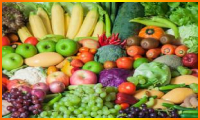
Nurturing care. Indian horticulture body develops new low-cost structures to boost vertical farming.
The ICAR-Indian Institute of Horticulture Research (IIHR) has developed a new vertical farming structure for 'protected' cultivation of crops such as cabbage and cauliflower, besides flowers like lilium and gerbera.
The new structure, which can be as high as 12 feet, leads to effective space utilisation in a poly-house. This can result in productivity rising by up to six times compared with the conventional farming on a per unit area basis, scientists claimed.
The low-cost vertical farming structures consist of vertically stacked layers of around 11 tiers and have inbuilt wick-based drip irrigation in which the crops can be grown in bags containing soil-less substrate mix comprising coco-peat, vermicompost, paddy husk and spent mushroom, said C Aswath, Principal Scientist, IIHR.
With multiple stacked layers allowing increased utilisation of the unit area available in the poly-house by 5-6 times, and through higher planting density, the yield and productivity can be increased six times, Aswath said.
Planning to patent
The cost of setting up each of these structures which is one metre in width and three metres in breadth and about 12 feet in height comes around to Rs.25,000, Aswath said. IIHR has proposed a subsidy of 50 per cent under the Mission for Integrated Development of Horticulture for the wider adoption of the new structures by farmers practising poly-house cultivation in urban and semi-urban areas, he said.
IIHR has set up these new vertical farming structures at the Centre of Excellence on Protected Cultivation of Horticultural Crops at its premises in Hessarghatta, Bengaluru, to demonstrate the cultivation of high-value floriculture crops like lilium and high-value vegetables such as broccoli and purple cabbage. Safeena SA, Senior Scientist, IIHR, said the institute was looking at patenting the new vertical farming structure design.
At the upcoming National Horticulture Fair starting Wednesday (February 22), IIHR will provide training to the farmers on the vertical farming techniques.
With shrinking land resources, vertical farming, which helps produce more crops from small areas throughout the year, is seen as an innovative solution to help address the growing food demand.
This distinctive method of farming aims at higher productivity in smaller spaces making efficient use of the available vertical space and uses soil-less farming methods.
Other vegetable crops such as beans, cauliflower, various leafy vegetables, fruits like strawberries and flowers such as gerbera, gypsophilia, gladiolus can be grown under the vertical farming method, Aswath said.
Source: thehindubusinessline.com
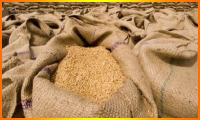
New wheat crop arrivals start in many states.
The arrival of the newly harvested wheat crop has started in the mandis in states such as Gujarat, Madhya Pradesh, Uttar Pradesh and Maharashtra, according to traders. Wheat prices have been in the range of Rs2,300-2,500 per quintal against the minimum support price (MSP) of Rs2,125 per quintal for the 2023-24 marketing season.
'The prices in the mandis have corrected with the arrival of the new crop and the government's decision to offload wheat from its own stock,' said Mohit Upadhyay, managing partner, HMV Agro.
The daily arrival of wheat in the mandis has ranged between 300-500 bags and is expected to increase in the next fortnight. The total arrival of wheat in the mandis from February 1-16 was 358,897 kg, 19% higher than 302,720 kg a year ago. 'The arrivals have increased as the wheat sowing started early this year compared with last year and the increase in day temperatures resulted in early maturity of the crop,' said Rajiv Yadav, senior V-P, Origo Commodities, an agri commodity firm.
Source: economictimes.indiatimes.com
ICAR develops wheat that can beat the heat.
On Monday, the Union Agriculture Ministry announced that it had set up a committee to monitor the situation arising from the increase in temperatures and its impact, if any, on the current wheat crop.
This comes even as cereal inflation soared to a record 16.12 per cent year-on-year in January – driven primarily by wheat and atta (flour), whose consumer prices registered an annual increase of 25.05 per cent. The situation has been rendered worse by wheat stocks in government godowns: These, at 154.44 lakh tonnes on February 1, were the lowest in six years for the same date.
However, a bigger source of uncertainty has to do with the wheat now in farmers’ fields, due for harvesting only in April. Last year, a spike in March temperatures singed the crop just when the grains were accumulating starch and proteins, leading to a significant drop in output as well as government procurement.
There are fears of a repeat this time, with both maximum and minimum temperatures already 3-5 degrees Celsius above normal in many wheat-growing areas. But whether or not March 2022 will happen again, climate change – specifically, the tendency for the early onset of summer with hardly any spring break – has definitely made India’s wheat crop vulnerable to terminal heat stress during the final grain formation and filling stages.
Is there a way out? One 'beat-the-heat' solution put forth by scientists at the Indian Council of Agricultural Research (ICAR) is to advance the time of sowing.
Wheat is a typically a 140-145 days crop planted mostly in November – before the middle of the month in Punjab, Haryana, Rajasthan and Madhya Pradesh (post the harvesting of paddy, cotton and soyabean) and the second half and beyond in Uttar Pradesh and Bihar (after sugarcane and paddy). If sowing can be preponed and taken up from around October 20, the crop isn’t exposed to terminal heat, with much of the grain-filling being completed by around the third week of March. It can, then, be comfortably harvested by the month-end.
But the solution is easier said than done – for the simple reason that the wheat sown before early-November is also prone to premature flowering.
'The crop seeded in the first half of November normally takes 80-95 days to come to heading (i.e. for the ‘baali’, or earheads bearing the flowers and eventually grain, to fully emerge from the wheat tillers). But if you sow in October, heading is cut short by 10-20 days and occurs in 70-75 days. This affects yields, as the crop does not get enough time for vegetative growth (of roots, stems and leaves),' explained Rajbir Yadav, principal scientist and wheat breeder at the ICAR’s New Delhi-based Indian Agricultural Research Institute (IARI).
To get around the problem, IARI scientists have bred wheat varieties with what is termed 'mild vernalisation requirement' or the need for a certain minimum period of low winter temperatures for initiation of flowering. In this case, the crop, when sown in October 20-25, will come to heading only in 100-110 days. Adding another 4-5 days for pollination, it leaves a long window from mid-February for grain formation and filling.
Maximum temperatures should ideally be in the early-thirty degrees range during the 30-40 days when the kernels are formed, take in nutrients from the stems and leaves, and ripen after hardening and drying. The early-sown IARI varieties not only have a longer window for grain development, but also for vegetative stage growth between germination and flowering. 'By not heading early despite early sowing, the new varieties are able to accumulate more biomass along with grain weight,' Yadav pointed out. And they can beat the heat.
The IARI scientists have developed three varieties, all of them incorporating genes that are responsible for the mild vernalisation requirement preventing premature flowering and early heading.
The first, HDCSW-18, was released and officially notified in 2016. Although having a potential wheat yield of over 7 tonnes per hectare – as against 6-6.5 tonnes for existing popular varieties such HD-2967 and HD-3086 – its plants grew to 105-110 cm. Being tall, compared to 90-95 cm for normal high-yielding varieties, made them prone to lodging or bending over when their earheads were heavy with well-filled grains.
The second variety HD-3410, released in 2022, has higher yield potential (7.5 tonnes/hectare) with lower plant height (100-105 cm).
But it’s the third one, HD-3385, which looks most promising. With the same yields as HD-3410, plant height of just 95 cm and strong stems, it is least lodging-prone and most amenable for early sowing. This variety, sown this time at IARI’s trial fields on October 22, has reached pollination stage – while the emergence of the earheads is yet to start for the wheat that was planted in the normal time.
IARI has registered HD-3385 with the Protection of Plant Varieties and Farmers’ Rights Authority (PPVFRA). It has also licenced the variety to the DCM Shriram Ltd-owned Bioseed for undertaking multi-location trials and seed multiplication. 'This is our first ever such public-private partnership experiment. By registering the variety with PPVFRA, we are ensuring full protection of our intellectual property rights,' said IARI’s director A.K. Singh.
The director-general of ICAR Himanshu Pathak told The Indian Express that involving the private sector in commercialisation of publicly-bred crop varieties will benefit farmers through faster adoption and diffusion of technology. 'It is also beneficial for ICAR because our institutes will earn royalty on every kg of seed sold by the licensee, which they can plough back into research. And the country gains through higher production from climate-smart varieties,' he added.
Source: indianexpress.com
FSSAI to grant approval for renewal of licences or regn sans scrutiny.
The FSSAI has decided to grant approval for renewal of licences/ registration of food business operators without requiring the scrutiny of the concerned authority.
The food authority has issued an order, in this regard, and stated that it was done to streamline the process of licensing/registration and its renewal by the food authority while this order shall be applicable on the applications submitted on or after Jan 12, 2023.
However, the FSSAI has also specified the conditions for such ‘grant of approval’ to the food businesses for renewal of licences/registration.
According to the FSSAI, the FBOs were required to meet ‘conditions’ to be able to avail the instant renewal benefit of the licences that include ‘No change in the existing details of the licence/registration shall be allowed, validity in case of licence shall be for one year only. The FBOs whose licence/registration was cancelled or suspended, will not be allowed to renew.'
These conditions along with a declaration is also sought from the FBO regarding permissions from Central Ground Water Authority, if applicable, along with declaration that the FBO does not hold more than one active licence/registration to any other food business(s) at the same premises.
The order added that the validity of the new licence is now restricted to only one year instead of the existing provision which states that licences granted shall be valid for a period of 1-5 years as chosen by the FBO.
For registration, the validity will continue to remain as per existing provision , i.e., 1-5 years as chosen by the FBO.
Inoshi Sharma, Executive Director, Compliance Strategies, FSSAI, stated that now as the grant of renewal of licence and registration is instant and without the scrutiny of licensing and registration authority, there shall be no late fee of Rs 100 per day levied if the renewal application is filed in the last 30 days of prior to expiry.
'However, the penalties levied for applying renewal of expired licence/ registration upto 180 days after the date of expiry shall continue,' she stated and added that ‘as the window for renewal of licence and registration' is available as early as 180 days prior to expiry date, FBOs are advised to apply for renewal as early as possible to avoid eventual penalty.
Source: www.fnbnews.com

'We should target 1 billion USD organic product export by 2030': Piyush Goyal.
The central government has decided to set up a high-quality modern organic testing laboratory in Sikkim to promote the state's organic produce, Union Minister for Commerce and Industry, Consumer Affairs, Food and Public Distribution and Textiles, Piyush Goyal, said on Saturday.
Apart from announcing the setting up of the laboratory, this enabling farm-to-lab traceability check, the Union minister also insisted on using the existing infrastructure in the state for upscaling economic activities.
'We should try to take the export of organic goods from the present 1 million USD to 1 billion USD by 2030. I'm 100 per cent sure that it's achievable. We'll set up a quality-based Organic Testing Lab here on behalf of Centre,' said Goyal while addressing an interactive event with members of the Sikkim Chamber of Commerce and Industry.
He said Sikkim has the potential to become a sustainable and organic state, adding that reaching such milestones will only help the state boost and leverage its tourism potential.
The Union minister also called on the local youth to work at design and packaging facilities as well.
'The Centre is willing to set up a National Institute of Design and National Institute of Packaging Campus in Sikkim, if the required land is made available by the state government,' said Goyal.
He also chaired a review meeting with government officials at the Conference hall of Tashiling Secretariat in Gangtok on Sunday. The meeting was attended by Sikkim's chief secretary, Vijay Bhushan Pathak and DC Gangtok, Tushar Nikhare, among several other officers.
He also reviewed the state's rubber plantation and production for agriculture and farmer's welfare, and mechanisms for organic states such as Testing Facilities, Blockchain and Export facilities.
He said production of large cardamom, spices, as well as homestay and organic farming should be the focus areas for the administration to help the youth become self-employed.
During his three-day visit to Sikkim, the Union minister will also be meeting with government officials and stakeholders in the Commerce and Industries sector.
Source: economictimes.indiatimes.com