
Fresh produce shortage in UK may open up opportunities for Indian exporters.
As the United Kingdom faces a shortage of vegetables and fruits due to disruption in supplies from traditional suppliers such as Spain and Morocco due to bad weather, the Indian exporters see an opportunity to ship more fresh produce to the European Union.
Trade sources said there is a shortage of vegetables and fruits in the UK, especially tomatoes, capsicum, cucumber, coriander, bitter gourd, chilli and banana among other produce. It is reported that supermarkets such as TESCO and ASDA among others are limiting the sale of some fruits and vegetables.
'It is definitely an opportunity for Indian exporters,' said Sunil Awari, Senior Vice-President, International Business at Namdhari Seeds Pvt Ltd, a large exporter of babycorn and chilli peppers to Europe.
Shipping unviable
While demand for the vegetables have picked up in UK, the vegetables such as tomatoes and capsicum, lettuce are not exported from India. These products are locally grown or sourced from neighbouring countries and that’s why India does not compete with them commercially as it is not viable to ship the low value produce. However, India can avail the opportunity for increasing the exports to UK, experts said.
'Definitely this is a window of opportunity and we will explore it to strengthen it. UK and Europe is important export destination for Indian Agricultural and Food Products.' said M Angamuthu, Chairman, Agricultural and Processed Foods Export Development Authority (APEDA).
Angamuthu said APEDA will facilitate and promote Indian horticultural and processed food products in a big way. 'We will also promote Indian GI and millets products,' he said.
India’s exports of fresh fruits and vegetables to the European Union in quantitative terms were up by 15.46 per cent at 23,671 tonnes during April-December 2022-23 compared with 20,501 tonnes in the same period a year ago. In value terms, the exports of fresh fruits and vegetables to EU were higher by 11 per cent at $35.15 million over $31.5 million a year ago.
The growth in shipments was largely on account of higher exports of fresh grapes. Shipments of fresh vegetables during the period were marginally down at 2,388 tonnes over 2,434 tonnes a year ago.
Namdhari’s Awari said due to high inflation, people in Europe are trying to cut down on exotic foodstuff. Due to the proximity to Europe, the African suppliers from countries such as Kenya, Ghana and Gambia are better placed than the Indian counterparts to take advantage of the current situation.
Source: thehindubusinessline.com
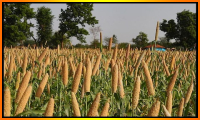
FSSAI notifies comprehensive group standards for millets.
The Food Safety and Standards Authority of India (FSSAI) has specified a comprehensive group standard for millets. It has notified Food Safety and Standards (Food Products Standards and Food Additives) Second Amendment Regulations, 2023. The standards will be enforced on September 1, an official statement added.
So far, individual standards for only a few millets like jowar, ragi, bajra and Amaranth are prescribed in the Food Safety and Standards (Food Product Standards and Food Additives) Regulations, 2011.
'FSSAI has now framed a comprehensive group standard for 15 types of millets specifying 8 quality parameters i.e., maximum limits for moisture content, uric acid content, extraneous matter, other edible grains, defects, weevilled grains, and immature and shriveled grains, so as to ensure availability of good quality (standardized) millets in domestic and global markets,' the official statement added.
The group standard is applicable to barnyard millet, Amaranthus, Buckwheat, Finger Millet, Foxtail Millet, Pearl Millet, Fonio, Little Millet and Sorghum among others.
This comes at a time when the International Year of Millets 2023 provided an opportunity to increase global production, efficient processing and better use of crop rotation and promote millets as a major component of the food basket.
Millets are a group of small-grained cereal food crops that are highly tolerant to drought and other extreme weather conditions and require low chemical inputs such as fertilizers and pesticides. Most millet crops are native to India and provide most of the nutrients required for normal functioning of the human body, the statement added.
Source: thehindubusinessline.com

More Asian countries interested in Rupee trade: Central bank executive.
More Asian countries, such as Indonesia and the United Arab Emirates, are showing interest in using the Rupee as a trading unit, potentially reducing dependence on the world's reserve currency for cross-border exchange of goods and services.
'The world can trade two ways - in one currency and the second option is to trade in other currencies. The second one is obviously less risky,'' said a central bank executive on the sidelines of the G20 meeting of finance ministers and central bankers.
The Reserve Bank of India (RBI) last July introduced Rupee payments for global trade, especially with Russia that was forced out of the global payments network following its invasion of Ukraine. It permitted the opening of vostro accounts by Indian banks to facilitate settlement of transactions in Rupee.
The move has made a circumspect start, but many banks have opened such accounts, prompting enquiries from other countries looking for an alternative to reduce risks. India's regulator backed National Payments Corp., which has evolved a strong payments railroad, is widening its presence and the government plans to exploit the advantage.
India and Singapore launched the cross-border linkage that used respective payment systems - Unified Payments Interface (UPI) and PayNow - for transaction settlement.
'The linkage of Unified Payments Interface (UPI) and PayNow is a new milestone in India-Singapore relations and its launch is a gift to the citizens of the two countries,' Prime Minister Narendra Modi said at the launch earlier this week.
India is also pushing a central bank-backed digital currency.
'Our focus is to ensure that transactions are flawless,'' said the executive.
Source: economictimes.indiatimes.com

European Union FTA may take longer: Union commerce minister Piyush Goyal.
Union commerce minister Piyush Goyal on Friday said a free trade agreement with the European Union (EU) will take longer as negotiations with the 27-country bloc will be prolonged. Active negotiations for the FTAs (free trade agreements) are ongoing with two-three countries and the EU, Goyal said speaking at the Technotex event organised by Ficci.
He said there will soon be some 'good news', the pact with the EU may take longer.
'EU will take a longer time, because there are 27 countries which have to come on the same page,' the minister said.
Last year, India signed FTAs with Australia and UAE. Reports had suggested that the country is in talks with other countries including the UK, Israel and Canada. Goyal said the government is mulling to come out with a production linked incentive scheme for the finished goods sector.
He said the government has received applications for only Rs.250 crore for research and development purposes in textiles, despite allocating Rs.1,400 crore fund for the same under the technical textiles research mission, and urged the industry to up its efforts.
Source: economictimes.indiatimes.com
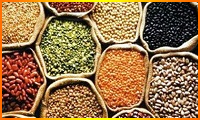
Centre working to increase production of oil seeds and pulses, reduce import dependence, says Prime Minister Modi.
As part of the series of Budget webinars being conducted by the government, the Prime Minister on Friday talked about the country's agricultural sector, and the Centre's efforts to reduce dependence on imports of oil seeds and pulses.
'The government is working on mission mode to increase production of oil seeds and pulses to reduce import dependence,' said Prime Minister Narendra Modi.
Modi also talked of the Union Budget's focus on agri-tech and creating funding avenues for entrepreneurs in the agriculture sector.
'The number of agri-startups in India has increased from negligible in 2014 to over 3,000 now,' he added.
The Prime Minister also pointed to the co-op movement in the country, calling it a 'new revolution' taking place in the sector.
Source: economictimes.indiatimes.com

Germany's Scholz committed for Free Trade deal between India, EU.
German Chancellor Olaf Scholz said on Saturday that he and India's Prime Minister Narendra Modi were committed to sealing a free trade deal between India and the European Union (EU).
'It's an important topic and I'll get personally involved,' Scholz said after his meeting with Modi in New Delhi.
The EU and India revived negotiations to forge a free trade agreement last year with the aim of completing talks by the end of 2023.
For the EU, a free trade agreement with India would fit its strategy of increasing engagement with the Indo-Pacific region, where the bloc is targeting bilateral deals to take advantage of expected higher economic growth. The deal could also act as a counterbalance to China's growing influence in the region.
Scholz met Modi a day after the first anniversary of Russia's invasion of Ukraine. His visit along with a large business delegation highlighted Delhi's growing importance to Western powers seeking backing for their opposition to Moscow's war.
'The war has been going on a full year now. It's a horrible war with much destruction... It is a big catastrophe,' he said.
'The world is suffering from this aggression... but we will do everything we can so that the world remains a good place,' he said adding that cooperation between India and Germany was 'very, very important'.
Modi has been seeking to steer an ongoing Group of 20 meeting away from discussion of the war in Ukraine. His government has not openly criticised Moscow for the invasion and instead called for dialogue and diplomacy to end the war.
India has also sharply raised its purchases of oil from Russia, its biggest supplier of defence hardware, although prices have fallen.
Modi said India and Germany were committed to realising their untapped potential in sectors such as security and defence cooperation.
Scholz is also set to push hard for a $5.2 billion deal to sell India six conventional submarines, though this latest attempt by a Western military manufacturing power to wean New Delhi away from its dependence on Russia for military hardware is not expected to yield an immediate result.
Germany's pivot to India is particularly stark, given that close economic ties to China, the main buyer of German machine tools, and Russia, its key energy supplier, have played in German prosperity over the past 15 years.
While one of the stated goals of the lightning trip is to improve economic ties, officials are mindful of the need to press what will soon be the world's most populous country into opposing Russia's invasion, even if a severing of India's economic ties with Moscow is not on the table.
'I’m convinced that our countries are closely linked, that we have common views, especially when it has to do with democracy,' said Scholz.
Many in the Global South see Western complaints about the invasion as hypocrisy, given their long history of military interventions around the world, and fear disrupted supply chains and inflation will cause hunger and famine.
Scholz last met Modi at a June summit of the Group of Seven industrial powers, to which he invited the Indian leader as part of outreach efforts that have become more urgent as concerns grow that China may step up its political support for Russia.
While China is one of Germany's most important trading partners, the invasion brought home to many in Germany's business community the lack of diversification in the supply chains on which they rely, lending new urgency to efforts to boost exposure to a huge potential market.
Scholz said the investments of the 1,800 German companies already in India should be increased.
Despite the interest, regulation and trade barriers make India a tough market for German companies to crack.
The two leaders also discussed climate change and members of the business delegation signed agreements in wind, solar energy and green hydrogen sector.
Source: economictimes.indiatimes.com
FSSAI keeps in abeyance compliance of quality parameters in bajra, jowar flour.
The FSSAI has issued a direction for keeping in abeyance the compliance of quality parameters related to ‘Alcoholic Acidity’ and ‘Total Dietary Fiber’ in bajra flour (pearl millet flour), jowar flour (sorghum flour), multigrain flour (atta) and mixed millet flour.
'As data submitted by stakeholders is under examination, the date of enforcement of provision (alcoholic acidity and total dietary fibre) in the direction dated 27.07.2022 is further extended for a period of 6 months till 30.06.2023,' reads the direction issued by FSSAI.
The FSSAI has notified regulations prescribing standards for bajra flour (pearl millet flour), jowar flour (sorghum flour), multigrain flour (atta), mixed millet flour in 2021 and food businesses were required to comply with the amendment regulations.
However, the compliance with the standard related to ‘alcoholic acidity; for bajra flour (pearl millet flour), jowar flour (sorghum flour), multigrain flour (atta), mixed millet flour and ‘total dietary fibre’ for mixed millet flour were kept in abeyance till December 2022 after the request made by the stakeholders.
Also, the FSSAI had later revised the max limit of moisture content in mixed millet flour to 13% in July 2022 and was operationalised with immediate effect. The same has been re-operationalised from January 27, 2023.
Source: fnbnews.com
India, UK finance ministers agree to make further progress on FTA.
India and the UK have agreed to make further progress on the ongoing negotiations for a free trade agreement (FTA) and also to swiftly organise the next bilateral Economic and Financial Dialogue soon, the British government said on Saturday. At the conclusion of UK Chancellor Jeremy Hunt's India visit for the G20 Finance Ministers and Central Bank Governors meeting, held under India's 2023 Presidency, the UK's Treasury department said the finance minister held talks with Indian counterpart Nirmala Sitharaman with a focus on deepening bilateral economic and financial ties.
'At a meeting with Indian Finance Minister Nirmala Sitharaman, both sides agreed to make further progress on the UK-India Free Trade Agreement and deepen bilateral economic and financial ties,' the Treasury department said in a statement.
'They agreed to make swift progress on setting up the next UK-India Economic and Financial Dialogue,' it said.
Hunt, on his first international visit as UK Chancellor, also met with business leaders in Bengaluru and visited the offices of tech multinational Wipro which employs over 4,000 people in the UK.
'Meeting fellow Finance Ministers face to face is an excellent opportunity to make real progress on the key global economic issues of our time,' said Hunt.
'I first visited India 38 years ago, and it's been fascinating to see how much the country has changed in this time - there are positive lessons to be learnt from their successful rapid development.
'It's been great to hear from Indian technology business leaders here in Bengaluru how they are pushing the country's economy forward, and I look forward to further collaboration between India and the UK as we continue to trade and create jobs - delivering on the government's plan to grow the economy,' he said.
The Chancellor, alongside Bank of England Governor Andrew Bailey, attended a meeting of G7 Finance Ministers and Central Bank Governors on Thursday. They were joined virtually by Ukrainian Finance Minister Serhiy Marchenko.
'Their statement sent a strong message of condemnation for Russia's war of aggression against Ukraine, announced an increase of financial support for the Ukrainian government to a total of USD 39 billion in 2023 and committed to continue supporting vulnerable countries hardest hit by the economic impact of the war,' the Treasury said.
On Friday, the UK announced a fresh wave of internationally coordinated sanctions and trade measures, to 'further restrict Russia's capability to wage war in Ukraine both now and in the future'.
At the first G20 Finance Ministers and Central Bank Governors meeting under the Indian Presidency, Hunt condemned 'Russia's brutal acts' in the strongest terms, emphasising that securing peace was the most important action for global growth.
According to the UK government, the senior Cabinet minister also underscored the need for bilateral official creditors and private sector to urgently help address low and middle-income country debt vulnerabilities in developing countries.
The minister emphasised the importance of multilateral development banks boosting lending from their existing balance sheets and called on the G20 to fulfil its pledge to channel USD 100 billion of IMF Special Drawing Rights in support of developing countries.
'The Indian Presidency issued a Chair's statement at the end of the meeting which highlighted, among other things, the continued need to fight inflation, and the importance of supply-side policies, especially those that increase labour supply, boost growth and alleviate price pressures.
'There was also G20 consensus, including China, on the need for swift resolution of existing debt restructuring cases and to work on the impacts of food and energy insecurity on the global economy,' the Treasury said.
While in Bengaluru, the UK Chancellor is also said to have had 'productive bilateral meetings' with US Treasury Secretary Janet Yellen, Federal Reserve Chairman Jerome Powell, French Minister of Economy and Finance Bruno Le Maire and Kristalina Georgieva, Managing Director of the International Monetary Fund (IMF). He also met with Australian Treasurer Jim Chalmers.
While speaking at the meetings, the Chancellor is said to have set out the UK government's intention to protect the most vulnerable from cost-of-living pressures, whilst maintaining fiscal sustainability with debt falling and not adding to inflationary pressure.
He added that the upcoming Spring Budget of the Rishi Sunak-led government on March 15 will 'drive economic growth, focusing on skills, business and infrastructure investment and research and innovation, as well as reviewing regulations of the UK's key growth industries'.
Source: economictimes.indiatimes.com
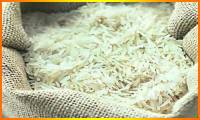
European nations, Egypt eye buying Indian rice as demand rises.
Indian rice continues to get good enquiries from the global market with European nations and Egypt joining the list of nations looking for the cereal from the sub-continent, traders say.
Reports from Cairo said Egypt’s General Authority for Supply Commodities (GASC) floated a global tender to import 25,000 tonnes of white rice and three of the four bidders offered Indian rice.
'European nations have emerged as new buyers of Indian parboiled rice. Enquiries are coming in from countries such as France,' said VR Vidya Sagar, Director, Bulk Logix.
Rise despite export tax
The demand for Indian rice is despite its offer prices ruling firm and Thailand cutting its rates by over $40 a tonne in the past month. Exports continue to be good despite the Indian government imposing a 20 per cent duty on shipments of white rice.
'We are seeing demand re-emerging for Indian rice after witnessing a slump in the past three months. Demand is for both white (raw) and parboiled (boiled) rice,' said BV Krishna Rao, President, The Rice Exporters Association of India (TREA).
'The Indian kharif rice crop is good. The Food Corporation of India (FCI) is set to meet its procurement target this year. Our exports of non-basmati rice should be able to top 18 million tonnes (mt) easily this year,' said New Delhi-based exporter Rajesh Paharia Jain.
Pak, Thailand gain
Despite the Indian government imposing a duty on exports of white rice and banning shipments of fully broken rice, rice exports, including Basmati, were estimated to have been 21.9 mt in 2022.
Pakistan and Thailand, whose exports jumped 22 per cent in 2022 to 7.69 mt from 6.3 mt in 2021, gained from the Indian curbs on rice shipments imposed from September 8.
Islamabad gained more from shipping rice, including broken rice to China. Earlier this week, the Thai Rice Exporters Association fixed an export target of 7.5 mt for 2023 despite the rise in exports.
Last week, the Ministry of Agriculture estimated rice production at a record high of 130.83 mt despite kharif production being projected lower by nearly 3 mt. On the other hand, the Food Corporation of India has procured 47 mt of wheat against the government’s target of 52.1 mt.
'Rice production has been made up by Telangana,' said Bulk Logix’s Sagar.
Still competitive
'Rice prices have stabilised of late, but there could be a further rise in prices as there is a supply shortage. Currently, prices have stabilised as Thailand’s new crop has entered the market and it has cut prices,' said a New Delhi-based trade analyst.
Despite Thailand cutting prices by nearly 10 per cent over the past month, Indian rice is still competitive, said Jain. 'We will still be the number 1 exporter despite curbs on shipments. We are seeing demand from African nations, but the movement of white rice is less,' said Sagar.
'The Centre is also gaining from exports as it gets the duty on shipments,' said Rao, adding that despite cutting prices, Thailand did not pose any problem to Indian rice.
M Madan Prakash, President, Agri Commodities Exporters Association, said supply was slow to ports, especially on the western coast. 'There are issues with Customs in sending feed quality,' he said.
Rao said Thailand was willing to lower its parboiled rice price to $460, while Sagar said Indian parboiled is quoted at $390-410 a tonne.
According to the Agricultural and Processed Food Products Export Development Authority, non-basmati exports in the first nine months of the current fiscal were 13.17 mt valued at $4.66 billion compared with 12.59 mt valued at $4.51 billion a year ago.
Rice prices have increased in the global market on projections of the lower crop in India, Pakistan, China and Bangladesh. On the other hand, Indonesia and the Philippines have begun buying significant volume in the market.
Source: thehindubusinessline.com
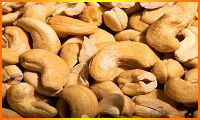
Centre exempts cashew EoUs and SEZ units from MIP, irks industry.
The Centre has amended the import policy for raw cashew nuts exempting export-oriented units and processing units operating from the Special Economic Zones (SEZ) from the minimum import price (MIP) norm. Reacting to this the industry opined that the policy amendment would be detrimental to the domestic players as it would open up imports from cheaper producers.
The Director-General of Foreign Trade (DGFT), in a notification issued on Tuesday, said the MIP on cashew kernel brokens and whole nuts will not be applicable for imports by 100 per cent export-oriented units and units in the SEZs, subject to the condition that the imported cashew kernels are not sold in the domestic tariff area (DTA).
Cashew kernels and brokens imports are in the prohibited category list However, the imports are free if the cost, insurance and freight (CIF) value is above Rs.680 per kg for cashew kernel brokens and above Rs.720 per kg for cashew kernel whole. The MIP conditions, however, shall not be applicable for imports by 100 per cent EoUs and units in the SEZ. The SEZs and EoU units shall not be allowed to sell the imported cashew kernels in the domestic tariff area (DTA), the DGFT notification said.
Flooding of produce
P Sundaram, Chairman, Cashew Export Promotion Council of India (CEPCI), said the domestic market will be flooded with produce from competing countries which may finally lead to the closure of cashew processing units in the country. Already, the domestic industry is facing a subdued demand and the MIP notification will further hit the market, Sundaram said.
RK Bhoodes, former chairman CEPCI, said the decision would be detrimental to the domestic cashew industry as it paves the way for under-valued imports through SEZs.
'With the current notification, the MIP is again made not applicable to SEZ, which in other words makes import of broken kernels through SEZ and its subsequent sales in the Indian market made easy. SEZ units can now import kernels at much lower prices than the Indian prices and export it at relatively lower prices even after value-addition under the Indian label. A genuine exporter from India cannot compete with such SEZ exports,' he said.
Threat of ‘job work’
He pointed out that it was with great efforts that the industry could get MIP imposed on imports of cashew kernels, which almost curbed the unethical and under-valued import of kernels. Later, the sector could increase the MIP to Rs.720/680 for wholes/ brokens respectively.
There are widespread reports that SEZ units import large volumes of broken kernels a mix of high percentage brokens with less wholes and misdeclares them wholes kernels. The SEZ Act permits movement of such imported goods to domestic tariff area for job work. Under the guise of job work, the imported broken are moved out of SEZ and sold in the domestic market. In lieu of that wholes cashews brought from domestic markets are exported to fulfil export obligation, Bhoodes said.
If MIP is made applicable to SEZ units, they have to import at a price above Rs.720 per kg and should export with value addition of 20 per cent which is not practically possible. Now with no MIP, they can import broken at low prices and it enables them to export wholes at market prices. This will, in turn, increase mis-declared imports of broken kernels into the country. Initially when MIP was introduced in cashew kernels, SEZs and EOUs were covered, he said.
The export of cashew kernel in the first nine months of the current fiscal was down 37 per cent at 38,305 tonnes compared with 60,843 tonnes in the same period last year.
In rupee value terms, exports were down by 22 per cent at Rs.1,987 crore compared with Rs.2,537 crore in the year-ago period. Shipments were valued at $249 million for the April-December 2022-23, down 27 per cent over $341 million in the year-ago period.
Source: thehindubusinessline.com