
Lulu Group Inks MoU Worth $500 Million With UP.
The Lulu Group will now be exporting fruits and vegetables from Uttar Pradesh across its hypermarkets. The group signed an MoU worth USD 500 million with the Uttar Pradesh government at the Gulf Food 2023 expo. The MoU was signed in the presence of UP’s Horticulture minister Dinesh Pratap Singh.
According to official information, the MoU was signed by Yogesh Kumar, Special Secretary, Department of Horticulture and Food Processing UP and Director of Lulu Group Salim MA. As per the MoU, Lulu Group will purchase and export vegetables and fruits worth USD 500 million from all over Uttar Pradesh through its hypermarkets. This will directly benefit the farmers cultivating vegetables and fruits.
Talking about the MoU, the state minister Dinesh Pratap Singh said that with this MoU, agricultural and horticultural products of the state will get a boost and it will be easier to export globally in large quantities. Through this MoU, the economic condition of the farmers will improve, especially those involved in horticulture. He said that the state government is also providing various types of financial assistance to the farmers through various schemes.
Singh also informed that the Lulu Group currently has hypermarkets and shopping malls in 10 countries, with a good presence in India too. Apart from retail business, Lulu Group has operations in Uttar Pradesh, Delhi, Haryana, Punjab, Maharashtra, Jammu & Kashmir, Tamil Nadu, Karnataka and Kerala and is one of India's largest food processing and food exporting companies. It exports food and agri-products worth USD 1 billion (Rs 8,000 crore) from India to the Middle East every year.
Speaking on the occasion Yusuf Ali, Chairman, Lulu Group said that they are very happy and excited to sign the MoU with the Government of UP and this will further boost the exports from India and also help the agriculture sector and farmers.
'We will set up our own processing and packaging centre in Uttar Pradesh for value addition of vegetables and fruits for international markets. In the main agricultural produce imported from Uttar Pradesh, mangoes, seasonal vegetables and fruits will be bought from farmers at reasonable prices and sold through our hypermarkets,' said Ali.
He informed that Lulu Group will organise a special UP Mango Festival in the month of June and July in the Middle East region to promote the mango products of Uttar Pradesh.
Source: businessworld.in

India's exports may see tepid growth in 2023: Govt.
India's exports may see tepid growth this year as the country's major export markets are forecast to decline sharply in 2023, the government said.
Growth of global trade fell in 2022, 'and is expected to be still lower in 2023 with a further decline in volume and value of trade on the back of slowing global output,' India's Ministry of Finance said in monthly economic report.
High frequency indicators suggest monetary tightening has started weakening global demand, the report said.
'This may continue in 2023 as various agencies have forecasted a decline in global growth,' it added.
Besides monetary tightening, uncertainties from the lingering pandemic and ongoing conflict in Europe may further dampen global growth, said the monthly economic report released on Thursday.
While inflation risks look set to diminish in 2023/24, geopolitical tensions and consequent supply chain disruptions may not, it added.
Despite the prospect of tepid export growth, the International Monetary Fund (IMF) and the World Bank project India to be the fastest-growing major economy in 2023, the report said.
The IMF projects India will grow at 6.1% in 2023 while the World Bank estimates the country's growth for next year at 6.6%.
The report said that, if El Nino predictions are accurate, monsoon rains in India could be deficient leading to lower agricultural output and higher prices.
The Reserve Bank of India is mandated to keep retail inflation within its tolerance band of 2%-6%. Data released last week showed India's annual retail inflation in January rose above the central bank's upper threshold for the first time in three months to 6.52% from 5.72% in December.
Source: economictimes.indiatimes.com

More Asian countries interested in Rupee trade: Central bank executive.
More Asian countries, such as Indonesia and the United Arab Emirates, are showing interest in using the Rupee as a trading unit, potentially reducing dependence on the world's reserve currency for cross-border exchange of goods and services.
'The world can trade two ways - in one currency and the second option is to trade in other currencies. The second one is obviously less risky,'' said a central bank executive on the sidelines of the G20 meeting of finance ministers and central bankers.
The Reserve Bank of India (RBI) last July introduced Rupee payments for global trade, especially with Russia that was forced out of the global payments network following its invasion of Ukraine. It permitted the opening of vostro accounts by Indian banks to facilitate settlement of transactions in Rupee.
The move has made a circumspect start, but many banks have opened such accounts, prompting enquiries from other countries looking for an alternative to reduce risks. India's regulator backed National Payments Corp., which has evolved a strong payments railroad, is widening its presence and the government plans to exploit the advantage.
India and Singapore launched the cross-border linkage that used respective payment systems - Unified Payments Interface (UPI) and PayNow - for transaction settlement.
'The linkage of Unified Payments Interface (UPI) and PayNow is a new milestone in India-Singapore relations and its launch is a gift to the citizens of the two countries,' Prime Minister Narendra Modi said at the launch earlier this week.
India is also pushing a central bank-backed digital currency.
'Our focus is to ensure that transactions are flawless,'' said the executive.
Source: economictimes.indiatimes.com
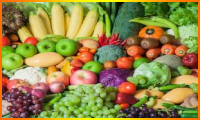
Productivity of horticulture crops up 38% in 15 years: minister Narendra Singh Tomar.
Productivity of horticultural crops in the country has gone up by 38% in the last 15 years. This was revealed by Narendra Singh Tomar, Union minister for agriculture and farmers' welfare, on Wednesday.
Speaking at the virtual inauguration of the National Horticultural Fair-2023 at the Indian Institute of Horticultural Research at Hesaraghatta, on the outskirts of Bengaluru, Tomar said the horticultural sector not only helps double farmers' earnings, but also ensures the nation's nutritional security.
NHF-2023 is showcasing a special variety of chilli that is resistant to the leaf curl virus disease, a Carotene-rich marigold variety and new varieties of a rose for import substitution, apart from other horticultural innovations.
The four-day fair on the theme 'Innovative horticulture for self-reliance' is expected to be attended by thousands of farmers and horticulture enthusiasts from various parts of India.
The Union minister further said the rapid increase in production and availability of horticultural crops will bridge the gap between nutritional security vis-a-vis the global average.
'The Union budget has made special allocation for Atmanirbhar Clean Plant Programme aimed at boosting the availability of disease-free, quality planting material for high-value horticultural crops,' Tomar pointed out.
Dr AK Singh, deputy director-general of horticultural sciences, Indian Council of Agricultural Research (ICAR), explained the recent IIHR initiatives such as the seed portal, centre of excellence for protected cultivation, vertical farming, sophisticated analytical instrument facilities and the Food Safety Referral Laboratory.
Source: timesofindia.indiatimes.com

Workshop on horticulture organised.
The Himachal Pradesh Sub-tropical Horticulture Irrigation and Value Addition (SHIVA) project will improve economy of farmers in the lower regions of the state and educate them on the benefits of crop diversification.
Dr Sanjeev Chauhan, Director of Research, Nauni University in Solan, said this while addressing a workshop of stakeholders at the College of Horticulture and Forestry at Neri near here today.
He said Asian Development Bank (ADB) had sanctioned a loan of Rs 1,292 crore to the state for the development of horticulture. Dr Som Dev Sharma, Dean, College of Horticulture and Forestry at Neri, emphasised on the need for the adoption of modern and scientific techniques in farming. He said farmers and scientists should come up with ways to improve quality and quantity of crops to improve the production. He added that awareness about government programmes was important to attract more farmers to the project.
Besides farmers, Dr RS Parmar, Deputy Director of Horticulture (DDH), Hamirpur; Dr Maya Sharma, DDH, Bilaspur; Dr SK Bakshi DDH Una; Dr VK Rana; Dr Rakesh Sharma; Dr SK Banyal; Dr AK Banyal; Dr Kumud Jarial; Dr Kamal Sharma; and Dr KS Pant attended the event.
Source: tribuneindia.com

FSSAI notifies comprehensive group standards for millets.
The Food Safety and Standards Authority of India (FSSAI) has specified a comprehensive group standard for millets. It has notified Food Safety and Standards (Food Products Standards and Food Additives) Second Amendment Regulations, 2023. The standards will be enforced on September 1, an official statement added.
So far, individual standards for only a few millets like jowar, ragi, bajra and Amaranth are prescribed in the Food Safety and Standards (Food Product Standards and Food Additives) Regulations, 2011.
'FSSAI has now framed a comprehensive group standard for 15 types of millets specifying 8 quality parameters i.e., maximum limits for moisture content, uric acid content, extraneous matter, other edible grains, defects, weevilled grains, and immature and shriveled grains, so as to ensure availability of good quality (standardized) millets in domestic and global markets,' the official statement added.
The group standard is applicable to barnyard millet, Amaranthus, Buckwheat, Finger Millet, Foxtail Millet, Pearl Millet, Fonio, Little Millet and Sorghum among others.
This comes at a time when the International Year of Millets 2023 provided an opportunity to increase global production, efficient processing and better use of crop rotation and promote millets as a major component of the food basket.
Millets are a group of small-grained cereal food crops that are highly tolerant to drought and other extreme weather conditions and require low chemical inputs such as fertilizers and pesticides. Most millet crops are native to India and provide most of the nutrients required for normal functioning of the human body, the statement added.
Source: thehindubusinessline.com
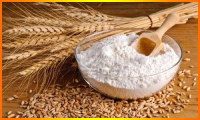
Flour millers import 14,000 tonnes wheat so far to re-export as atta.
Flour millers have, so far, imported about 14,000 tonnes of wheat under the advance authorisation scheme for processing into wheat flour ( atta) since November 2022 when flour export, otherwise banned, was allowed under the scheme, according to official sources.
Small-scale millers and traders argue that this is a small amount compared to the demand for wheat flour from the expat community, as only large players, with adequate infrastructure, have been in a position to benefit from the advance authorisation scheme.
Some have made a case for opening up of exports of wheat flour, so that all millers can benefit from it, with adequate restrictions to ensure there was no domestic shortage or price rise.
Favouring big firms
'The advance authorisation scheme may help a couple of big companies, such as ITC, who have the infrastructure to import wheat, process it and re-export in the form of atta. But the process is so cumbersome that normal traders are not interested,' a Delhi-based miller, who did not wish to be named, told businessline.
Official sources confirmed that most of the import under the advance authorisation scheme for the export of wheat flour had been done by a handful of players and the amount was lower than anticipated.
India banned the export of wheat in May 2022 and wheat flour and semolina three months later as it feared a shortage in the domestic market due to crop loss.
However, in November, the government allowed wheat flour to be exported under the advanced authorisation scheme which allows export only on pre-import of wheat by the exporter to be used as input. 'The government should allow wheat products export, particularly atta, as the Indian diaspora needs its badly. Atta cannot be found anywhere else,' said Pramod Kumar, president of the Roller Flour Millers’ Federation of India.
He said millers were not averse to any quantitative restrictions placed by the government on exports or setting of a minimum export price for shipment of atta to ensure adequate domestic availability. 'The Indian diaspora are not getting atta to make their rotis and this needs to be looked into. The government can allow small packs of 10 kg atta,' he said.
Source: thehindubusinessline.com

Govt to extend rice export curbs to ensure domestic price stability, supply.
India does not plan to lift a ban on broken rice exports and cut a 20% tax on overseas shipments of white rice as the world's biggest exporter of the grain tries to keep a lid on domestic prices, two government sources said on Thursday.
New Delhi's rice export curbs will force buyers, especially in Asia and Africa, to pay more for the staple that has become expensive in the last few weeks.
India banned overseas shipments of broken rice and imposed a 20% duty on exports of various other grades in September 2022 amid concerns over production due to below-average monsoon rainfall in key growing states.
'Rice exports didn't slow down despite the 20% export duty, and that's why we believe that there is no reason to reduce or scrap the duty,' said a senior government official, who declined to be named in line with official rules.
India's rice exports rose 3.5% to a record 22.26 million tonnes in 2022. That was more than the combined shipments of the next four largest exporters: Thailand, Vietnam, Pakistan and the United States.
'We can't resume broken rice exports just because somebody in China or any other country wants it as a raw material to make ethanol or cattle feed. We'll rather prefer our domestic industry consuming it,' the official said.
China was the biggest buyer of India's broken rice, with purchases of 1.1 million tonnes in 2021.
India will also extend its rice export curbs due to apprehensions that the El Nino weather phenomenon might hit this year's monsoon rains.
'We don't want to take a chance. We've limited wheat stocks but ample rice stocks, which we can use if the weather throws any big surprise,' the official said.
Indian farmers plant rice, the most water-thirsty crop, in June and July, when monsoon rains lash the country.
'Our restrictions have not deprived the world of rice, and at the same time, we've been able to maintain adequate stocks,' said another government source directly involved in decision-making. 'We'd like to continue with the same arrangement.'
Source: economictimes.indiatimes.com

Indian economy expected to contribute more than 15% of global growth: IMF MD.
The emerging markets and developing economies are expected to account for around 80 per cent of the global growth this year and the next. Of this, India alone is expected to contribute over 15 per cent, said the International Monetary Fund’s Managing Director Kristalina Georgieva on Wednesday.
Terming India’s strong economic performance a ‘bright spot’, Georgieva said that beyond being the global growth engine, India is uniquely positioned to bring countries together.
'At a time of heightened uncertainties for the global economy, India’s strong performance remains a bright spot. So, it’s fitting that Group of Twenty finance ministers and central bank governors will gather in Bengaluru this week,' she said.
The Second Finance and Central Bank Deputies Meeting under India's G20 Presidency began Wednesday. Finance ministers and central bank chiefs from G20 nations will join the meeting on Friday.
The meeting in the Nandi Hills summer retreat is the first major event of India's G20 presidency and the war in Ukraine is likely to feature prominently during the proceedings.
Russia’s military operation on neighbour Ukraine dominated headlines for most of 2022, with global growth, already marred by inflationary pressures, taking a hit.
The IMF said that while this will be another challenging year, it could represent a turning point with inflation declining and growth bottoming out.
'Indeed, while our latest projections show global growth slowing to 2.9 per cent this year, we anticipate a modest rebound to 3.1 per cent in 2024,' Georgieva said.
The First G20 Finance Ministers and Central Bank Governors (FMCBG) meeting under the G20 Indian Presidency scheduled later this week is expected to address some of the key global economic issues.
It is expected to cover issues such as strengthening multilateral development banks to address shared global challenges of the 21st century, financing for resilient, inclusive, and sustainable 'cities of tomorrow,' and leveraging Digital Public Infrastructure (DPI) for advancing financial inclusion and productivity gains.
The sessions will also cover issues related to global economy, healthcare, and international taxation.
The discussions in the G20 FMCBG meeting scheduled on February 24 and 25, to be jointly chaired by Union Finance Minister Nirmala Sitharaman and RBI Governor Shaktikanta Das are intended to provide a clear mandate for the various work streams of the G20 Finance Track in 2023.
To further the cause of debt restructuring, the IMF, World Bank, and India’s G20 presidency are convening a new Global Sovereign Debt Roundtable.
'This week in Bengaluru, we will meet in-person for the first time—and pave the way for creditors, both public and private, and debtor countries to work together, assess the existing shortcomings and best ways to tackle them,' she said.
Source: economictimes.com

African nations looks to buy small corn consignments from India.
India’s corn (maize) exports have slowed down a tad over the last few days but new demand has now emerged with a few African countries scouting for the coarse cereal, trade sources said.
'African countries, particularly in the east, are looking to source corn from India in view of low freight charges,' said a New Delhi-based trade analyst, without wishing to identify.
These countries, however, are seeking smaller lots, another area where India has an advantage since it can ship such consignments at a competitive price. Corn is sought for both food and feed purposes.
‘No direct enquiry’
'We have heard African countries are looking for Indian corn but we have not got any direct enquiry,' said New Delhi-based exporter Rajesh Paharia Jain.
'Usually, Dubai-based traders export to Africa. We hear the Africans want but no direct order has come to us,' said Mumbai-based MuBala Agro Director Mukesh Singh.
Though demand for Indian corn is good, deals have slowed down this week, traders said. 'Last week, we got good orders from Vietnam. This week, movement is slow,' said M Madan Prakash, Agri Commodities Exporters Association (ACEA) President.
Higher than MSP
This year, Indian corn has met with good demand from South-East Asia and Gulf countries in view of freight charges dropping. This has now encouraged African countries to source their needs from India. 'It makes sense to ship in containers as their charges have declined in view of a slowdown in the West,' said the analyst.
Indian corn is quoted at $308-311 a tonne to South-East Asia, while exporters are getting the commodity delivered at ports at Rs.23,000-24,000 a tonne.
The weighted average price of corn is Rs.2,163.77 a quintal currently against Rs.2,222.3 a week ago and Rs.1,921.76 during the same period a year ago. Prices are higher than the minimum support price of Rs.1,962 a quintal fixed for this crop year to June.
On the Chicago Board of Trade, corn ended at 680 cents a bushel ($266.7 a tonne) for delivery in May on Tuesday. Corn prices have gained over two per cent in February.
Record high output
'Prices have dropped for delivery at Tuticorin port as the crop harvested in Tamil Nadu has begun arriving,' said Prakash.
'Corn is a crop that is available round the year with harvest taking place in one State or the other. However, trade is flat in view of demand being slack now,' said Jain.
'Corn demand has been good for two months now. Some are still busy fulfilling the demand. With kharif arrivals almost over, some are doing with old stocks,' said Singh.
A record high kharif corn production, estimated at 34.61 million tonnes (mt) by the Ministry of Agriculture, has aided exports of the coarse cereal.
Lower global production
According to the International Grains Council (IGC), Argentina is quoting corn at $314 and Brazil at $310, while the US is offering at $300 (all free-on-board).
The IGC has forecast this year’s global corn production at 1,153 mt against 1,220 mt a year ago. The Food and Agriculture Organization has estimated it at 1,153 mt versus 1,211.8 mt. Production is lower this year as the crop has been affected in Europe, Russia and the US.
During the current fiscal, 19.53 lakh tonnes (lt) valued at $653.36 million have been exported during the April-November period of the current fiscal. In 2021–22, 36.90 lt were exported at a value of $1.02 billion.
Bangladesh is the largest importer of Indian corn during the period, buying 11.5 lt, while Nepal purchased 2.7 lt and Vietnam 2.3 lt during the period.
Source: thehindubusinessline.com