
Mango exports to US to get boost.
With the setting up of the fourth irradiation facility at Ahmedabad, India’s exports of mangoes varieties Kesar, Alphonso and Banganappale to the United States is expected to give a boost in the coming season (April-July).
Trades sources said while India exported around 1000 tonne of mangoes to the US last year while varieties such as that of Alphonso and Kesar mangoes have been sold in the US market at a premium of $ 9 /a kg and $ 7 / a kg respectively last year compared to $ 3 to $ 4 a kg realized from mangoes sourced from other countries.
India is aiming to expand its footprint in mango exports to high value markets including the United States, Japan, South Korea and European countries.
Currently mangoes exported to the US undergo an irradiation process, where fruit is exposed to gamma radiation, which kills insects or pesticides inside the fruit while countries such Japan and South Korea seek imports of fruits which have undergone vapour heat treatment and hot water treatment for eliminating presence of pests.
Officials said that the irradiation facility at Gujarat Agro Industries Corporation Limited, Ahmedabad along with similar facilities at Vashi (Navi Mumbai), Nasik and Bengaluru will help expand mango exports to a high value market as the United States.
The exports of mangoes were halted in 2020 and 2021 as inspectors from the United States department of agriculture (USDA) could not visit India for inspection of irradiation facilities due to travel restrictions because of Covid19.
Last year, India exported mangoes to Japan for the first time this season while shipment to South Korea resumed after two years.
The Agricultural and Processed Food Products Development Authority (APEDA) has assisted state government agencies in setting up vapour heat treatment facilities in Saharanpur (Uttar Pradesh), Vashi (Maharashtra), Nuzvid and Tirupati (Andhra Pradesh).
'We have identified more than 50 countries to promote and facilitate mango exports of unique and Geographically Identified (GI) identified varieties,' M Angamuthu, Chairman, APEDA, told FE.
India is the world’s largest producer of mangoes, followed by China. However, it exports less than one per cent mainly because of lack of sea container protocol and air freights are expensive. Uniqueness of Indian mangoes is its sweetness and smaller size.
For mangoes exports, APEDA has identified 15 clusters in Maharashtra (Ratnagiri and Sindhudurg), Gujarat (Junagarh, Valsad, Kutch and Navsari), Uttar Pradesh (Saharanpur, Meerut and Lucknow), Telangana (Rangareddy, Mehboobnagar and Warangal) and Andhra Pradesh (Krishna, Chittoor and Kurnool).
In 2021-22, the United Arab Emirates (44%), United Kingdom (22%), Qatar (7%), Oman (6%), Kuwait (5%), had 84% share in India’s value of fresh mango exports.
Source: financialexpress.com

Students and youth should contribute to make Agriculture more remunerative and make villages more prosperous Shri Tomar.
The fourth convocation ceremony of the Post Graduate Diploma in Agri Business Management of the Chaudhary Charan Singh National Institute of Agricultural Marketing (CCS-NIAM), Jaipur and the Agri Innovation and Incubation Center was inaugurated today by the chief guest, - the Union Agriculture and Farmers Welfare Minister Shri Narendra Singh Tomar. Union Minister of State for Agriculture, Shri Kailash Choudhary was the special guest. On this occasion, Shri Tomar said that under the leadership of Prime Minister Shri Narendra Modi, the Government is continuously making efforts through various schemes for the betterment of the Agriculture sector. To bring more benefits to the Agriculture sector in the country and to make the villages more prosperous, the students and youth associated with Agriculture should also contribute. Shri Tomar also announced to add 60 seats in NIAM and abolish the provision of compulsory stay in hostel.
Union Minister Shri Tomar said that the Agriculture sector is important, in which everyone's interest should increase, youth should also be attracted towards it, it is the responsibility of all of us. There is livelihood in the Agriculture sector, but there is also the patriotism of the farmers, that is because everything will come to a halt without agriculture production. There are many challenges in the Agriculture sector, which the Central Government, by using technology, is successfully moving ahead to solve with the cooperation of the States. Many challenges like moving towards remunerative crops, crop diversification, elimination of middlemen in the sale of produce are being dealt with in a planned manner. Shri Tomar said that scientists have done a lot of work in the Agriculture sector, while, along with the untiring hard work of the farmers, there has been unprecedented progress in Agriculture due to the farmer-friendly policies of the Government. In terms of most of the agricultural produce, India is at Number One or Second rank in the world today, which we all together should aim to make it a leader. The world has a lot of expectations regarding food grains from India, which we are fulfilling and will continue to do so in the future. Agricultural research is a work of continuity, while there is no let up in the hard work of the farmers and the efforts of the government. Jobs are necessary for livelihood, but at the same time it is also necessary to improve the Agriculture sector, because 56 percent of the country's population is dependent on it.
Shri Tomar said that Prime Minister Modi constantly emphasizes that we should not only make the present beautiful, but also make India a developed nation by the time we celebrate the centenary of India’s Independence, this is a golden and historic opportunity for India. It is the responsibility of the new generation to take advantage of it. The future of the country in 2047 should be such that India becomes the torchlight to the world. In this direction, programs and schemes are being continuously evolved under the leadership of Prime Minister Shri Modi. The Union Minister said that it is futile to wait for tomorrow, we should do the work now that can be done today. Appreciating the Agri Startups, Shri Tomar said that very good experiments have been done in the country. In the year 2014, when we came to power, there were 32 Startups in all sectors taken together. Startups in the country have been continuously encouraged by Prime Minister Shri Modi, due to which the number of Agri Startups alone has now increased to 2,000, whereas, including other sectors, more than 10,000 Startups are working. On their strength, India will become world guru in the future.
Union Minister of State for Agriculture, Shri Choudhary also addressed the gathering. Members of Parliament, Shri Ramcharan Bohra and Colonel Rajyavardhan Singh Rathore and Principal Secretary of Rajasthan, Shri Dinesh Kumar were among the dignitaries present. Dr. Vijayalakshmi Nadendla, Joint Secretary- Marketing and Director General of Regulation, delivered the welcome address. Dr. Ramesh Mittal, Director, NIAM proposed the vote of thanks.
During the convocation, Shri Tomar gave away diplomas to the students of Post Graduate Diploma-Agri Business Management and medals to the meritorious students. Shri Tomar also launched the products of Startups, trained and funded by NIAM and distributed cheques for grants. Startup exhibition and products display was also organized, in which startups trained and funded by NIAM participated.
On the occasion, awards were distributed to NIAM's partner institutions based on their performance in startup training and funding, including Platinum Award to Shri Karan Narendra Agricultural University, Jobner, Diamond Award to National Rice Research Institute, Cuttack (Odisha) and Bihar Agricultural University, Sabour was honored with the Gold Award. Shri Tomar also launched the website of Agri Innovation and Incubation Center, besides inaugurating the Farmer Producer Organization Business School and Smart Class Room and was provided with the status report of the Indo-German project. Nine publications of NIAM were also released during the ceremony.
Source: pib.gov.in

A high quality modern organic testing lab will be set up in Sikkim to promote organic produce of the State- Shri Piyush Goyal.
Sikkim being a fully organic state, Centre has decided to set up a high quality modern organic testing lab in the State to promote organic produce of the State, said the Union Minister of Commerce and Industry, Consumer Affairs, Food and Public distribution and Textiles, Shri Piyush Goyal. He was addressing an interaction programme with Sikkim Chamber of Commerce & Industry representatives organised by FICCI at Gangtok today. He also urged to set a target to export $ 1 billion dollar organic product by 2030 from existing $1million dollar organic produce in Sikkim. The Minister also suggested for organic, sustainable and clean renewable energy. He suggested lab for organic testing in the State- farm to lab - traceability check. He also insisted to use existing infrastructure for up scaling economic activities.
He said that Sikkim has potential to become a sustainable State and an Organic State. He apprised that such achievements will give more value and leverage to boost tourism in the State. He stressed on local youth to work on design and packaging facility as well. He informed, Centre is ready to set up National Institute of Design and National Institute of Packaging Campus in Sikkim if lands are provided by the State Government.
In the afternoon, Shri Piyush Goyal, chaired a review meeting with Government Officials here at the Conference hall of Tashiling Secretariat in Gangtok today. The meeting was attended by the Chief Secretary, Government of Sikkim, Shri Vijay Bhushan Pathak and DC Gangtok, Shri Tushar Nikhare and several other officers.
Shir Piyush Goyal begin his tour today with an interactive meeting with the HoDs and Officers from various line departments on issues such as implementation of programmes and policies of Central Ministries such as Progress of PM Gatishakti, National Oil Palm Mission, Expenditure of MoCI, CAFPD and Textiles under GBD.
He also reviewed Rubber plantation and production for Agriculture and Farmers Welfare, and mechanisms for Organic State such as Testing Facility, Blockchain and Exporting facility. Further, he said that large cardamom, spices, homestay and organic farming should be focused which will help the youth to become self-employed.
The Minister is on a three-day visits to Sikkim and will be meeting with Government Officials and stakeholders related to Commerce and Industries.
Source: pib.gov.in

India-UAE Free Trade deal has deepened bilateral ties: PM Modi.
Prime Minister Narendra Modi said on Sunday that the India-UAE free trade deal signed a year ago has given a boost to Indian entrepreneurs and also deepened bilateral ties with the Gulf nation.
'CEPA with UAE has given a boost to Indian entrepreneurs and has also deepened our ties with UAE,' Prime Minister Modi said in a tweet.
The India-UAE Comprehensive Economic Partnership Agreement (CEPA) was signed on February 18, 2022 during a virtual summit between Prime Minister Modi and President of the UAE Sheikh Mohamed bin Zayed Al Nahyan.
Commerce Minister Piyush Goyal, in a tweet, said that it is one year since the two sides inked the India-UAE CEPA. He also attached an article jointly written with UAE Minister of State for Foreign Trade Thani bin Ahmed Al Zeyoudi highlighting 'how the deal is a turning point in our economic ties and a model for cross-border collaboration'.
On Friday, a Special Business Event was organised in Dubai by the Federation of Indian Chambers of Commerce & Industry (FICCI) in association with the Embassy of India, Abu Dhabi, Consulate General of India, Dubai and Dubai Chambers on Friday, to mark a successful year of the CEPA signing.
The event was attended by more than 200 leading businesses from India and the UAE.
UAE Minister of State for Foreign Trade Thani bin Ahmed Al Zeyoudi, speaking on the occasion, said that with CEPA, India and the UAE are offering a platform for a possible wider global cooperation.
Since the agreement was signed a year ago, UAE and India have launched several initiatives, including the I2U2 programme and a recent trilateral agreement with France to promote collaboration in energy and climate change mitigation. These partnerships create new access to economic opportunities for both countries. The I2U2 group — comprising Israel, India, the US and United Arab Emirates — is emerging as a new coalition in the Middle East.
'The CEPA deal was concluded to reflect our ambitions by reducing tariffs on more than 80 per cent of product-lines and creating new opportunities for service exports and investment flows,' said Thani Al Zeyoudi at an event to mark the first anniversary of the signing of the Comprehensive Economic Partnership Agreement.
Under the agreement, duties on more than 10,000 tariff lines will be removed within 10 years.
Sunjay Sudhir, Ambassador of India in Abu Dhabi, UAE said: 'It's a glorious way forward. We have figures already for the April to November 2022 period. We've already seen an increase in bilateral trade of about 30 per cent. India's exports have increased by about 19-20 per cent. ..As the awareness grows about the benefits, we're also seeing a steep rise in the number of certificates of origin being issued on both sides. This means more and more trade. As trade increases more and more awareness increases, greater numbers of exporters on both sides join in creating a lot of new opportunities. ..Some companies have started exporting a lot of manufactured goods from the UAE to India, which they never used to do before CEPA. So, it's giving rise to new opportunities and unexplored avenues,' he said, according to a UAE daily.
He added: 'We’ve already seen an increase in startups. CEPA also talks about the digital world and a lot of start ups are in the digital space. In the last several months there has been a huge influx of Indian startups into Abu Dhabi and Dubai.'
'From the moment we commenced our mission, it was clear that we share the same vision, the same unity of purpose,' said Minister Thani Al Zeyoudi. 'We understood that our future was better served through closer integration, greater market access, and enhanced private-sector collaboration, particularly in high-growth sectors such as advanced technology, renewable energy, logistics, food security, and many others.'
Trade between the UAE and India has increased by 10 per cent in the year after both sides agreed to the major economic treaty, setting the stage for greater co-operation throughout the Middle East and Asia.
Non-oil trade rose to nearly $50 billion since the CEPA was signed a year ago today. India’s non-oil exports to the UAE grew 5 per cent to $15.2 billion during the June-January period, compared to a 3.4 per cent contraction of such exports to the rest of the world. Non-oil imports during the same period increased 3 per cent to $16.8 billion. India exported goods worth $285.9 billion during the June-January period, up 3.1 per cent, and exports to the UAE jumped 11.4 per cent during the same time at $20.4 billion.
'There is no better model of international cooperation than the UAE-India CEPA,' said Minister Al Zeyoudi. 'And I’m looking forward to working to realize its full potential.'
On Friday, the UAE India Business Council - UAE Chapter (UIBC-UC) was launched in Dubai by UAE Minister Thani bin Ahmed Al Zeyoudi, in the presence of Indian Ambassador Sunjay Sudhir, Consul General of India in Dubai Aman Puri and founding members of the UBIC-UC.
It will operate under the supervision of the Federation of UAE Chambers of Commerce & Industry and has been registered as a legal and financial entity with the Dubai Chamber of Commerce.
Membership to the council will be by invitation only, and institutional members will be included over time.
The UIBC-UC will be the counterpart to the UIBC India Chapter, which was established in New Delhi in 2015. The council's focus will be to identify significant strategic projects that both countries can undertake, including investments in large infrastructure ventures in India, advances in manufacturing and technology, and providing Indian manufacturers with the ability to use the UAE as a base for their global expansion.
Faizal Kottikollon, Chairman of KEF Holdings, has been appointed as the Chairman of UIBC-UC, and the founding members of the council include Mubadala, Wizz Financial, DP World, Emaar, Emirates Airlines, Emirates NBD Bank, TATA, Reliance, Adani, OLA, Zerodha, Udaan, EaseMyTrip, KEF Holdings, Buimerc Corporation, Apparel Group, EFS, and Lulu Financial.
Recently, a UAE delegation went to India for the opening of Ducab’s office in Bengaluru, where it reviewed $3 billion in investments into renewable energy, logistics, retail, and food processing projects, all of which have the potential to create 20,000 jobs in India. They follow other joint initiatives launched in 2022, such as the 300MW hybrid energy projects in Gujarat, the Dubai incubator center, and the Technology Accelerator platform set up by DP World in partnership with Invest India and the Startup Kerala mission.
On the sidelines of CEPA anniversary, LuLu Group and FICCI signed an MoU to further accelerate exports from India to UAE. According to the agreement, Lulu Group will work closely with FICCI to support and promote new Indian companies and products in UAE.
'As one of the largest retailers, currently Lulu group imports close to Dh3.5 billion worth of food & non-food products from India for our 247 hypermarkets & supermarkets in the region, and this will further grow as a result of this new MOU as well as the CEPA initiatives,' said Saifee Rupawala, CEO of LULU Group International.
Nirankar Saxena, Dy. Secretary General of FICCI said, 'This MoU provides a huge opportunity to the MSMEs and start-ups in India as they reach out to UAE to expand their business.'
The CEPA entered into force on May 1, 2022. The agreement has been operating smoothly for over 10 months now.
Three sectors that have seen significant growth are the gems and jewellery sector, the agricultural sector as well as the engineering goods sector.
Source: uniindia.com

India-UK FTA talks progress encouraging, says British industry expert.
At the conclusion of the seventh round of India-UK free trade agreement (FTA) negotiations and ahead of the eighth round scheduled in New Delhi next month, a senior industry expert in the UK believes there are encouraging signs of appetite on both sides to agree a deal and fully utilise its benefits. Syma Cullasy-Aldridge is the Chief Campaigns Director at the Confederation of British Industry (CBI) and has just returned after leading the group's first-ever business delegation to New Delhi and Mumbai aimed at unlocking opportunities of a potential FTA.
The Indian-origin campaigns chief for the industry body, which speaks on behalf of 190,000 UK businesses of all sizes and sectors, described the visit as 'really, really brilliant' in highlighting the immense scope for partnership and collaboration across key sectors.
'What really struck me was the opportunity and appetite on both sides for collaboration and partnership around key sectors like green finance, innovation and new technology - areas where there are skills and education on both sides,' said Cullasy-Aldridge.
'The seventh round was on here while we were in India. It's encouraging to see negotiations progressing and also encouraging to see appetite on both sides to make sure that we do agree [a trade deal] and then utilise it well,' she said.
The last round of talks concluded on February 10.
Cullasy-Aldridge highlighted a recent Cabinet mini-shuffle by British Prime Minister Rishi Sunak which brought the government's trade and business departments together under Secretary of State Kemi Badenoch and termed it a 'really good thing'.
'It means that you're looking at trade from a business perspective, having business working hand in hand with trade. That is a good thing because then you have better outcomes,' she said.
'We have an opportunity [post-Brexit] to forge our own trading relationships. There's a big global Britain ambition and India is the fastest growing economy in the world. There's opportunity for the UK to partner with India on that growth story,' she added.
According to the CBI, an India-UK FTA could boost trade with India by 28 billion pounds a year by 2035 and increase wages across the UK by 3 billion pounds. Its trade delegation earlier this month was very much focussed on the utilisation aspect of such a potential pact by businesses.
'The UK is obviously looking to take advantage in a post Brexit world of new trading opportunities and one thing that COVID taught us was that you need to diversify your supply chains, and everybody around the world knows that now,' said the executive, who has previously worked within the UK government's business department.
'Supply chains are incredibly complicated things and so, of course, it will take time. Meanwhile, we're very much up for working with the government to help with trade agreement utilisation because these shifts will happen more effectively through engagement with business,' she said.
She pointed to opportunities over India's G20 presidency and the corresponding B20 - or business segment - being led by the Confederation of Indian Industry (CII).
Asked about hurdles that CBI foresees in the way of an FTA which has already missed a Diwali 2022 deadline for completion due to political upheavals in the UK, Cullasy-Aldridge said there would always be some hurdles in any trade negotiation, asserting that they are 'incredibly complicated legal documents'.
'So, it's important to take the time to get them right. But I'm actually more interested in utilisation - how companies will use the trade deal once it is in place. And that's why things like trade delegations are so important, because it's about businesses on both sides understanding the opportunities so they know how they can make the most of it,' she said.
Official UK government data pegs India-UK bilateral trade at around 29.6 billion pounds a year, a figure expected to receive a major boost with an FTA both sides hope can be concluded this year.
Source: economictimes.indiatimes.com
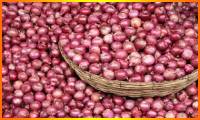
Onion exports speed up, demand from Gulf countries heats up markets.
After plateauing for two years, onion exports have accelerated thanks to the demand from West Asia. In the 2022-23 fiscal, India has so far exported 15.19 lakh tonnes of the bulb, as compared to the 15.38 lakh tonnes it had exported during the whole 2021-22 fiscal.
Exports account for around 10-15 per cent of the total onion produced in the country, with Maharashtra, Karnataka and Gujarat being the leaders. Kharif, late kharif and rabi onions are exported, and Indian onions have demand mainly from West Asia, Sri Lanka, Bangladesh, Malaysia and Nepal.
Suresh Deshmukh, a commission agent operating out of the Dindori’s wholesale market, said export orders have started pouring in, right from the start of the current fiscal. Indian onions at export markets are now trading at Rs 15-16/kg FOB, while the bulb is trading at Rs 10-11/kg in the domestic market. 'Quality-wise, we have no problem, and thus the demand for onions is good in the international markets,' he said.
While the Sri Lankan market has suffered from the economic collapse of the nation, demand from other countries has been picking up. Thanks to the back-to-back bumper crops, domestic and export-quality onions have been readily available. Over the last three fiscals, exports have been around 15-16 lakh tonnes.
Meanwhile, farmer organisations have asked for price stabilisation funds to ensure wholesale markets do not see a complete collapse of onion prices.
Maharashtra is the leader in the production of rabi onion, and farmers from Nashik take the production lead. Deshmukh talked about a possible collapse of prices once the new or summer onion hits the markets. This onion, which is transplanted in December-January, is harvested post-March. Thanks to the lower moisture content in the bulb, this onion is malleable for storage. Farmers generally store onions in their on-field storage structures to protect them from moisture and sprouting.
Deshmukh said thanks to the good rains, rabi acreage is at an all-time high, and the crop condition is also good. 'There are some reports of the corp being affected due to fungal diseases in some pockets, but that would not have much effect on the product,' he said.
Source: indianexpress.com

A year after signing India-UAE Comprehensive Economic Partnership Agreement, bilateral trade grew by 27.5%.
The historical India-UAE Comprehensive Economic Partnership Agreement (CEPA) was signed on February 18, 2022 during the virtual summit attended by Indian Prime Minister Narendra Modi and President of the UAE Sheikh Mohamed bin Zayed Al Nahyan.
Marking a successful year of CEPA signing, a Special Business Event was organised by the Federation of Indian Chambers of Commerce & Industry (FICCI) in association with the Embassy of India, Abu Dhabi, Consulate General of India, Dubai and Dubai Chambers on Friday here.
The event was attended by more than 200 leading businesses from India and the UAE.
Addressing the gathering, Thani Al Zeyoudi, UAE Minister of State for Foreign Trade, spoke about the immense opportunities and advantages offered by CEPA.
Ambassador Sunjay Sudhir in his remarks mentioned that the business from both India and UAE have already started leveraging upon the duty waivers and enhanced market access offered under the CEPA.
The historical India-UAE CEPA is the first bilateral trade accord concluded by the UAE and India's first bilateral trade agreement in the MENA region. India-UAE CEPA is a wide-ranging agreement, covering all aspects of India's economic engagement with the UAE including Trade, Investments, Healthcare, Digital Trade Government Procurement, IPR etc.
CEPA has unleashed new opportunities in bilateral trade and it is expected to increase the bilateral trade in goods to $100 billion within five years and trade in services to $15 billion.
The impressive overall growth in bilateral trade is a true reflection of the early gains accruing from the agreement. During the first eight months from April-November 2022 of the current financial year, the bilateral trade between the two countries has grown to $57.8 billion from $45.3 billion same period last year, recording an impressive growth of 27.5 per cent in percentage terms and a notable increase of $12.5 billion in value terms.
During the same period, India's exports to the UAE saw a remarkable growth of 19.32 per cent, reaching $20.8 billion from $17.45 billion, an increase of $3.35 billion in value terms.
Besides, several other significant partnerships have been launched since May 2022 related to energy, food security, education and healthcare.
Talking to IANS, Chandu Siroya, Vice Chairman of Dubai Gold & Jewellery Group and owner of Siroya Jewellers, said that 'after CEPA it is very easy for us to source jewellery from India and sell to other countries, for example, if a customer was coming from any other country and they wanted to go to India they could not carry gold to India so they had to make the orders'.
'From the Indian perspective, as India is a huge country and the jewellery markets are all expanded in different states, now we can easily bring them in the gold souq and exhibit them to international clients. We at Siroya Jewellers completed 100 shipments in the last 9 months and we have imported about $85.6 million worth of jewellery, it's 2028 kilos after the CEPA agreement. I was the first who received the first shipment under the CEPA agreement from India to UAE,' he added.
Indian Ambassador Sunjay Sudhir said that this CEPA is helping to business groups in an exceptional manner. Business houses are the pillars of the success of the CEPA agreement. We have seen growth in bilateral trade and exports. New industries and approaching the UAE market after CEPA as tariff lines coverage is up to 95 per cent, which is an attraction for all. As UAE is the gate of the world, more investments are expected from both sides.
After CEPA many Indian big business giants are expanding their operations in UAE and TATA group is one of them.
Talking to IANS, Ankur Gupta (Head of corporate affairs & Growth, MENA region), said: 'I think CEPA has been extremely beneficial, I think over the last 5-6 years, in any case, the relationship between India and UAE had certainly enhanced a cross commercial business trade diplomatic and strategic ties as well. This is also reflected in the way the TATA group has been present in the UN and grown up.
'In 2013-14 we had 13 TATA companies, who were operating in the UAE, today we have 26 other companies and divisions that operate here. Today we have of upwards 5,000 employees here which is a large base across our infrastructure hospitality retail aviation businesses. Post CEPA TATA group enhanced its jewellery business, automotive, steel business and fashion brands.
'We are now looking at new areas like FMCG, aviation and insurance business here. In the jewellery business before CEPA we had 2 stores, now we have 6 stores and many others are in pipeline.'
The CEPA entered into force on May 1, 2022.
The agreement has been operating smoothly for over 10 months now. The businesses from both nations have already started leveraging upon the tremendous potential offered under the CEPA.
Source: economictimes.indiatimes.com

India s exports to UAE may cross $31 billion this fiscal.
The country’s exports to the UAE, with which India has implemented a free trade agreement on May 1 last year, is expected to cross USD 31 billion during the current fiscal on account of healthy demand for sectors such as gems and jewellery, machinery and auto, an official said on Friday.
The government official said that the agreement is helping India to promote its outbound shipments to the UAE.
During June 2022-January 2023, India’s non-oil exports rose by 5 per cent to USD 15.2 billion as against USD 14.5 billion in the same period previous year. Imports during the period increased by 3 per cent to USD 16.8 billion.
As many as 6,057 certificates of origin have been issued in January to exporters to avail concessional duty advantage under the trade pact.
Certificate of origin is a key document required for exports to those countries with which India has trade agreements. An exporter has to submit the certificate at the landing port of the importing country. The document is important to claim duty concessions under free trade agreements. This certificate is essential to prove where the goods come from.
During June 2022-January 2023, gems and jewellery and electrical machinery exports to UAE rose by 16 per cent and 29 per cent to USD 3.8 billion and USD 2.6 billion respectively. During the period, automobiles shipments grew by 38 per cent to USD 475 million.
Other sectors which record healthy growth in exports include coffee, tea, spices, sugar, man-made staple fibres and edible vegetables.
On the possibility of rupee-dirham trade between the countries, the official said central banks of both the countries are discussing the matter and technical teams are working on the modalities.
Source: indianexpress.com
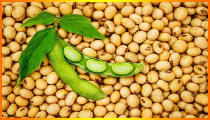
India s soymeal exports to soar as drought trims Argentine supply.
Soymeal exports from India are increasing sharply as drought has hit output from top exporter Argentina, with 500,000 tonnes likely to be shipped from the South Asian country in February and March combined, three exporters said.
The drop in Argentina’s output has driven up the South American producer’s prices, making Indian soymeal more competitive.
India’s exports in the first four months of the 2022/23 marketing year, which began on Oct. 1, surged 65% to 631,000 tonnes, nearly matching the 644,000 tonnes exported in the whole of the previous year, according to trade body the Soybean Processors Association of India (SOPA).
'Exports have gained momentum and would remain there until at least mid-April,' Hemant Bansal, vice president, oilseed crushing and refining at Patanjali Foods Ltd., told Reuters.
The revival in exports of the animal feed has boosted soybean crushing in India and the availability of soyoil, which could reduce the need for imports of soyoil and palm oil by the world’s biggest buyer in coming months, exporters said.
Bangladesh, Vietnam and Nepal are buying Indian soymeal as it is cheaper than supplies from South America, and they are also saving on freight costs, Bansal said.
Indian soymeal is being offered for around $580 to $585 per tonne on a free-on-board (FOB) basis for March shipments, compared to $598 offered by Argentina, exporters said.
'If global prices sustain at the current level, then India could easily export more than 2 million tonnes in 2022/23,' said an exporter based at Indore in the state of Madhya Pradesh.
That would be more than triple the volume exported in the 2021/22 marketing year.
Its crop numbers are continuously being revised downward, supporting soymeal prices, said the Indore-based exporter, who declined to be named as he is not authorised to speak to media.
Oil mills have increased soybean crushing to fulfil meal export orders, which should reduce import needs in coming months, said a Mumbai-based exporter, who also declined to be named.
Source: hellenicshippingnews.com
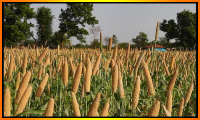
India Organises Special Exhibition On Millets At UN Headquarters.
India has organised a special exhibition on the millets at the UN headquarters in New York to commemorate the 'International Year of Millets 2023'.
The focus of the exhibition launched on Tuesday by India's Permanent Mission to the UN was on the different kinds of millets grown in India, their nutritional value and health benefits, including information on calorific content.
The exhibition was attended by over a hundred delegates from the UN member states and senior UN officials. In her brief remarks, India’s Permanent Representative to the United Nations Ruchira Kamboj shared the reasons why India pursued making 2023 the International Year of Millets (IYM) and how millets were an important solution in the collective march towards the Sustainable Development Goals (SDGs).
This was followed by a launch video on the IYM and a special address by Deputy Secretary-General Amina Mohammed. The Co-Founder and Director of MRIDA Group, Arun Nagpal, shared his experiences on his journey with millets from the farm to the table. This was followed by a special address by the Chef de Cabinet of the UN Secretary-General Earle Courtenay Rattray, after which the exhibition was officially opened.
Millet-based savouries were the other attraction for the guests to taste, while millet grains were also placed on display. The United Nations was treated to a sensory blend of seeing, touching, tasting, and learning about millets.
The millet exhibition will be on display at the United Nations General Assembly Delegates Entrance Exhibition area from 14-17 February 2023, a media release said. The year 2023 has been designated as the 'International Year of Millets' after a proposal for it was brought forward by India and endorsed by Members of the UN’s Food and Agriculture Organization (FAO) Governing Bodies, as well as by the 75th Session of the UN General Assembly.
Millets were among the first crops to be domesticated in India with several evidence of its consumption during the Indus valley civilization. Being grown in more than 130 countries at present, millet is considered traditional food for more than half a billion people across Asia and Africa.
In India, millets are primarily a Kharif crop, requiring less water and agricultural inputs than other similar staples. Millets are important by virtue of their mammoth potential to generate livelihoods, increase farmers’ income and ensure food and nutritional security all over the world.
Source: outlookindia.com