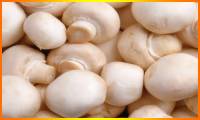
Rs 42 crore project set to revolutionize mushroom cultivation in Jammu and Kashmir.
Agricultural diversification is key to reducing the risk in farming activities and the J&K Government is constantly employing the latest technological interventions to diversify the agriculture sector across Jammu and Kashmir.
Mushroom cultivation is one important tool in not only enhancing the agricultural income of the farming community but also securing it against rising changes in climate and soil resources.
With this in mind, the Government of J&K is implementing a full-fledged project on ‘Promotion of Round the Year Mushroom Cultivation’ (PRYMC) across the UT. The project to be implemented at a cost of around Rs 42 Cr over the next three years by the Agriculture Production Department of J&K will increase the production of Mushrooms by 3.5 times and revolutionise Mushroom Cultivation here, an official statement said.
The project will also increase employment generation by 3 times and more than 768 new enterprises are also being created in the process to ensure the sustainability of the interventions.
“Mushroom farming generates revenue and helps to reduce poverty. The production of mushrooms creates a significant amount of direct and indirect employment opportunities in the fields of cultivation and marketing, as well as providing opportunities for processing businesses and labour-intensive management,” said Additional Chief Secretary, Agriculture Production Department, Atal Dulloo.
He added that Mushroom farming requires little capital and little technical expertise, and it is even possible to grow mushrooms indoors on a small scale and easily earn a high return on investment. He further said that women can grow mushrooms in their homes with little investment and as a result, mushroom farming not only gives rural women more power but also fights poverty at its source.
‘Promotion of Round the Year Mushroom Cultivation’ is one among the 29 projects, which were approved by the Jammu and Kashmir administration after being recommended by the UT Level Apex Committee for holistic development of Agriculture and Allied Sectors in UT of J&K.
The prestigious committee is headed by Dr Mangala Rai, Former DG ICAR and has other luminaries in the field of Agriculture, Planning, Statistics & Administration like Shri Ashok Dalwai, CEO NRAA, Dr P. K Joshi, Secretary, NAAS, Dr Prabhat Kumar, Horticulture Commissioner MOA & FW, Dr H. S Gupta, Former Director, IARI, Sh. Atal Dulloo IAS, Financial Commissioner (Addl Chief Secretary) APD apart from the Vice Chancellors of the twin Agriculture Universities of the UT.
“Mushroom is an important cottage industry in rural areas. It leads to the economic betterment of small & marginal farmers, landless labourers, and women. Being a cash crop it is a good means of generating employment opportunities for the youth of the UT”, said Director of Agriculture & Farmers Welfare Jammu, K.K Sharma, who is implementing the project in collaboration with SKUAST.
He added that the lack of availability of pasteurized compost & unorganized market were the major constraints in mushroom production and this project is going to address them in a significant way.
Under the project 26 pasteurized compost-making units, 10 spawn production labs and 72 controlled conditioned cropping rooms (2000 bags capacity), will be established in the span of three years. For the promotion of mushroom cultivation in non-traditional areas, 1.5 lakh subsidized pasteurised compost bags will be distributed among mushroom growers. Women empowerment through the establishment of 300 women Self Help Groups (WSHGs) will be undertaken.
The project also focuses on the value addition of the perishable commodity through the creation of four canning units and the distribution of 60 solar dryers among mushroom growers. In addition to this, an amount of Rs 2.1 Crs has been earmarked for research and development.
Under this emphasis will also be laid on the promotion of medicinal mushrooms and the introduction of new strains of mushrooms. It will also have a specific emphasis on the standardization of locally available substrates and documentation of conditions for their optimal growth.
The mushroom sector in J&K is about to witness a resurgence in the form of unprecedented institutional and capital support which will boost production, productivity as well as export of mushrooms from the UT.
This information was provided by the Department of information and public relations J&K.
Source: theprint.in
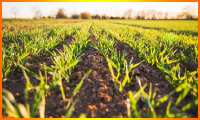
Agriculture accorded top priority in Telangana .
The State government has been according top priority to agriculture and as many as 33 district agriculture officers in place of nine officers was a testimony to that, remarked Agriculture Minister S.Niranjan Reddy and Finance Minister T. Harish Rao.
The ministers inaugurated Telangana Agriculture Officers’ Association calendar and diary here on Wednesday and addressed the gathering. “Soon after formation of Telangana State, Chief Minister K.Chandrasekhar Rao took the suggestions of agriculture officers and designed polices based on that. Extension officers were appointed in large numbers. The government is ready to offer promotions to the employees within a week, provided that the unions come forward without any conditions,” said Mr. Harish Rao while addressing the gathering.
Stating that the production of paddy has increased from 68 lakh MT in 2014 to 2.49 crore MT in 2022, Mr. Harish Rao said that Telangana was the only State offering investment support (Rythu Bandhu) to farmers and so far, Rs.65,000 crore was credited to the accounts of farmers.
Informing that power infrastructure was developed with an investment of Rs.36,000 crore and round-the-clock power for farm sector is being extended by spending Rs.10,500 crore a year, the Minister said that the Kaleshwaram project has changed the face of Telangana for the better and the State was able to export rice to neighbouring states.
Mr. Niranjan Reddy stressed the need for protecting soil health, and pointed out that many people educated and settled abroad were returning here to take up farming as the conditions in the State had significantly improved. He informed that new clusters would be established shortly.
Source: thehindu.com
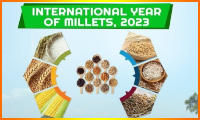
International trade fair on millets and organics to kick off from January 20.
The fourth edition of the Millets & Organics – International Trade Fair 2023 is all set to kick off from January 20. The two-day fair scheduled to take place at Tripuravasini Palace Ground is organised by the department of agriculture in collaboration with Karnataka State Agricultural Produce Processing and Export Corporation Limited (KAPPEC) and International Competence Centre for Organic Agriculture (ICCOA).
During a press conference Thursday, B C Patil, minister of agriculture, unveiled the website for the fourth edition of the international trade fair. The fair will feature an exhibition with over 300 stalls of more than 110 companies and an international pavilion with organisations from various countries.
Further, there will be an international conference on ‘Millets, Organic and Natural Farming: Opportunities Amidst Challenges’. The fair will also host a workshop to get farmers introduced to beneficial scientific developments in the organics, millets and natural farming sectors, the minister said.
Source: indianexpress.com
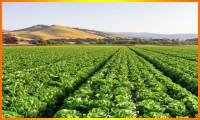
North East Krishi Kumbha-2023: Tomar Calls NE as country's Heaven; Need to Adopt New Farming Techniques.
'The northeast is extremely important. It is a melting pot of cultures. It has abundant natural resources and a pleasant climate. Northeast is our country's heaven, and Meghalaya's geographical scenario is such that we can develop it if we try with all our efforts,' said the Union Minister later that day at the ICAR Research Complex for NEH Region, Umiam, while addressing the North East Krishi Kumbha - 2023 and 49th Foundation Day.
Tomar expressed happiness that agriculture has become a priority. 'With the passage of time, there is a need to adapt to new technologies. It is critical that these technologies reach every farmer in India, in Meghalaya, and help them increase their income,' he said.
'Under Prime Minister Narendra Modi's leadership, every aspect of agriculture has been addressed. Under his leadership, initiatives such as PM-Kisan, Fasal Bima Yojana, promotion of digital agriculture, infrastructure development fund in agriculture sector, and providing easy loans to farmers across the country have been facilitated,' said the Union Minister, emphasizing the government's efforts to improve the sector.
Farmers, according to the minister, should always be treated with dignity. 'A farmer not only provides for his family but also contributes to the agricultural economy of the country, and our government's priority has always been to ensure farmer prosperity and agricultural development,' the minister added.
While claiming that India is now not only a food producer but also an exporter, the Minister emphasized the importance of quality production over quantity. Earlier, the Minister emphasized the importance of Agri-startups and stated that the Agriculture University's College of Agriculture would play a significant role in developing modern agricultural methods for increased productivity.
'I am pleased that organic farming can be found in the Northeast. In recent days, the Northeast Region has had the highest share of agricultural exports of organic products,' he said. The Minister went on to say that, despite its challenges, the Northeast can harness its resources and contribute to livelihood generation, natural farming, and much more.
Source: krishijagran.com
India asks Indonesia to import buffalo meat through Medan port instead of Jakarta; here s why.
India has requested Indonesia to permit the import of buffalo meat through the port of Medan on its northern coast rather than Jakarta, owing to its physical proximity to the country. As explained by the officials, the shipment would significantly increase if exports of bovine meat were allowed through Medan port, which is situated in the north of Indonesia instead of Jakarta, which is located in the south. The cost of transportation could also be decreased. The distance between the ports of Medan and Jakarta is approximately 1,500 kilometres. Furthermore, India has urged Indonesia to subsequently increase the yearly import quota for bovine meat, which is now set at about 0.1 million tonnes (MT).
M Angamuthu, chairman of the Agricultural and Processed Food Products Export Development Authority (APEDA) said to the Financial Express, “We have asked Indonesia to open the Medan port for the import of bovine meat to make it more affordable and boost exports vastly. Apart from increasing the volume of imports, we have also requested to release the export quota on time.'
Presently, 29 meat processing facilities in Uttar Pradesh, Maharashtra, Telangana, Punjab, Bihar, and Kerala have been given the go-ahead by Indonesia to export buffalo meat from India. A group from APEDA recently travelled to Indonesia to discuss more effective ways to boost the shipment of bovine meat.
Following Brazil, India is the second-largest exporter of meat worldwide. The World Organization for Animal Health (OIE) standards for risk mitigation are followed while processing and exporting buffalo meat, which has led to an increase in demand for Indian bovine meat over the past ten years due to its quality, nutritional value, and risk-free reputation.
There are 89 buffalo meat processing facilities in the country, including six slaughterhouses that are permitted to export buffalo meat. India exported $ 2.1 billion worth of buffalo meat from April to November in the current fiscal year, 4 percent less than it exported during the same period in 2021–2022. A total of 1.1 MT of buffalo meat was shipped throughout the previous fiscal year.
India sends buffalo meat to almost 70 different nations. The main markets for Indian buffalo meat exports are Vietnam, Malaysia, Egypt, Indonesia, Iraq, Saudi Arabia, and the United Arab Emirates. Vietnam (9 percent), Malaysia (8.7 percent), Egypt (8.1 percent), Indonesia (6.6 percent), and Iraq (3.9 percent) are the top five exporters of meat, contributing $3.3 billion in 2021–2022.
Source: firstpost.com

Sweden s EU Council presidency can be favourable for India-EU Free Trade Agreement.
Sweden will take over the Presidency of the Council of the European Union on 1 January 2023 at a transformational inflection point in European and global politics. The change of guard in the Council presidency has implications for the EU and its ties with other countries across the globe including India.
In recent years, India’s relations with Europe have qualitatively strengthened, with volatile international dynamics, including simultaneous tensions with China and the need for greater cooperation in the Indo-Pacific region, adding a renewed strategic element to the partnership. Despite differing positions on Russia’s war in Ukraine with India maintaining neutrality and Europe imposing nine packages of sanctions to punish Russia, differences are being well-managed through effective communication and a better understanding of each other’s strategic compulsions, without hijacking the entire relationship.
Beyond closer ties with the EU and traditional European powers like France, India has also creatively enhanced its ties with smaller European states with significant engagement to expand its presence throughout Europe. In this context, the Nordic region comprising Sweden, Denmark, Finland, Norway, and Iceland has emerged amongst the brightest spots in India’s ties with Europe. Two bilateral India-Nordic summits, with the United States being the only other country that has a summit-level collaboration with the region, have taken place resulting in continued collective engagement.
Amongst the Nordics, ties with Sweden are progressing most rapidly, with immense bilateral collaboration in the realms of trade, innovation, and energy transition. In 2018, Sweden hosted the first India-Nordic summit under PM Lufven’s leadership with PM Modi being the first Indian leader to visit Sweden in 30 years. In 2019, the Swedish King visited India. The momentum has carried forward towards the second India-Nordic summit in 2022 despite the backdrop of difficult global circumstances of post-pandemic economic recovery and the war in Ukraine. On the question of India’s increased oil purchases from Russia, Sweden’s Minister for International Development and Foreign Trade Johan Forssell referred to this as India’s ‘internal policy’, stating that Sweden would not interfere. Given how relations between the two countries are already progressing rapidly, the Swedish presidency comes at an favourable juncture for India.
The role of the rotating six-month presidency of the Council of the EU has often made a definitive and positive impact on Europe’s ties with India. During the French presidency in January 2022, France prioritised European cooperation in the Indo-Pacific region and held the Indo-Pacific Ministerial Forum in Paris, coinciding with India’s interest to ensure an equitable distribution of power in the region. The subsequent Czech presidency in mid-2022 put cooperation with Taiwan on the EU agenda, as European tensions with China coincided with increasing tensions in the Taiwan Strait tension, again aligning with India’s interest in balancing China. Most importantly, during the Portuguese presidency in January 2021, when relations with India were labelled a top priority, the historic EU-India Leaders Meeting was held in a 27+1 format previously extended only to the United States. This led to the much-needed relaunch of the India-EU Free Trade Agreement negotiations that were stalled for almost a decade since 2013. Thus, the efforts of the Portuguese put the India-EU FTA firmly back on the table, with three rounds of negotiations taking place since the revival of talks in June 2022.
As Europe battles soaring inflation and an energy crisis, the Swedish Council presidency could not have arrived at a better time. Given their successful state models that combine high levels of economic growth with social welfare, the wealthy Nordic nations, out of which Sweden has the highest GDP, exert sizeable sway at the EU level. Sweden is amongst the world’s most pro-free trade nations, largely depending on exports for its prosperity. Thus, it is no surprise that Sweden has highlighted the need to strengthen Europe’s economic competitiveness amongst its top priorities during the presidency, with progress on the EU’s impending trade deals with India, Australia, Indonesia, and Latin American countries high on the agenda. This is in refreshing contrast to the protectionist French presidency, which was good for India through a security lens, but where trade deals were frozen given their potential impact on farmers and other voter constituencies ahead of the French presidential election in April.
Source: theprint.in
Bangladesh seeks WTO's net food importer status.
Bangladesh seeks WTO-recognised Net Food Importing Developing Country (NFIDC) status to continue providing agricultural export-credit subsidy even after its LDC graduation, as its current edible imports outweigh exports.
As the graduation process is on stream, the Ministry of Commerce has applied to the World Trade Organization for inclusion of Bangladesh in the NFIDC list, or else a global accord will bar it from handing out such subsidy.
According to data sent to the WTO by the commerce ministry, Bangladesh imported different edible food products worth around $10.60 billion in the fiscal year (FY) 2021-22 to meet high demand amid a global dearth.
Of the items, U$ 2.5331 billion, U$ 2.064 billion, U$ 1.5972 billion, U$ 1.18 billion, U$ 717 million, U$ 568.90 million and U$ 546.20 million went for import of edible oils, wheat, oilseeds, sugar, pulses, maize and rice respectively.
On the other hand, Bangladesh exported only U$ 796 million worth of such food items in the same fiscal.
Bangladesh has to send its export and import data of different food and agricultural items for successive three years to prove its eligibility for the status.
Accordingly, it has officially submitted the information on export and import of such products for the first time under the three-year proviso to the WTO committee on Agriculture.
A country can be recognised as a net food-importing developing country as per the WTO provision if it surpasses its imports of different edible products, especially agricultural and food items, its export turnover in three-year trade out of five recent years.
Currently, the government provides up to 20-percent cash subsidy/assistance on different agricultural and food products against export.
Contacted, Additional Secretary (Director General of WTO wing) under the ministry Md. Hafizur Rahman said, 'We expect that we will able to get ourselves included in the list of NFIDC before graduation from LDC category as we have already provided the import and export info of some food items for the first year out of three years.
'If Bangladesh is included in the list of NFIDC, it will be able to provide subsidy/cash assistance on various edible products, including agricultural and food exports, until 2030 next and it will also get some facilities in importing such food items.'
The initiative has been taken considering the graduation from LDC to guard against any possible external shock to the export earnings as many developed countries would not provide duty-free facility or trade preferences to Bangladesh after its graduation from LDC in 2026, says a senior official.
Presently, 64 developing countries are eligible as beneficiaries of the NFIDC Decision on the basis of a list established by the WTO Committee on Agriculture.
The list comprises the 48 least-developed developing countries as recognized by the UN Economic and Social Council plus the following 16 developing-country WTO members which notified their request to be listed and have submitted relevant statistical data concerning their status as net importers of basic foodstuffs during a representative period.
The 16 countries are Barbados, Côte d'Ivoire, Dominican Republic, Egypt, Honduras, Jamaica, Kenya, Mauritius, Morocco, Peru, Saint Lucia, Senegal, Sri Lanka, Trinidad and Tobago, Tunisia and Venezuela.
At its meeting of 21 November 1995, the Committee on Agriculture adopted a decision on establishment of a WTO list of net food-importing developing countries eligible as beneficiaries in respect of measures provided for in the NFIDC Decision, according to Article 16 of the Agreement on Agriculture (AoA).
'Any developing-country member of the WTO which was a net importer of basic foodstuffs in any three years of the most recent five-year period for which data are available and which notifies the Committee of its decision can be listed as a Net Food-Importing Developing Country…,' it states.
In the course of the Uruguay Round negotiations on agriculture, a group of net food-importing developing countries raised concerns that the benefits of agricultural-trade liberalization and reform could be diminished or outweighed in the short to medium term as structural surpluses in many developed countries declined and world-market prices recovered from the artificially low levels that had prevailed as a result of dumping and extensive use of export subsidies, according to a document of the WTO.
In response to these concerns, and as an integral part of the Uruguay Round outcome, Ministers at Marrakesh in April 1994 adopted a Decision on Measures Concerning the Possible Negative Effects of the Reform Programme on Least-Developed and Net Food-Importing Developing Countries (the NFIDC Decision), the document reads.
Experts say as per the Agreement on Agriculture Bangladesh can no more provide export-credit subsidy and will need to comply with a number of obligations under the Agreement as a developing-country member.
The recent increased food prices across the globe would benefit NFIDCs in the long term because substituting imports with local produce would be cheap, thus causing local production to increase, they add.
Centre for Policy Dialogue (CPD) distinguished fellow Prof Mustafizur Rahman says if Bangladesh can convince WTO members that it is a net food-importing developing country (NFIDC), which it is, it will be allowed to continue with many of the flexibilities which LDCs are eligible for.
The economist says Bangladesh will get some facilities, like various types of trade support and food assistance, during the current food crisis across the world if it is put on this list.
Besides, it will be allowed to carry on necessary subsidies on the export of different food products.
Under the WTO's SCM agreement, LDCs and Members with a GNP per capita of less than $1,000 per year are exempt from the prohibition on export subsidies. Currently, per-capita income of Bangladesh is far above the US$1000 mark.
Source: thefinancialexpress.com.bd
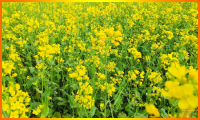
Mustard output may be higher by 6% as acreage rises.
A higher area and an expected increase in productivity may push up mustard production in the country this year and exceed the annual demand for the first time since the country became dependent on edible oil imports. Production may reach around 125 lakh tonnes (lt), up over 6 per cent from last year if the weather remains conducive for next one month.
'So far the crop is good and there are no reports of any major pest attack from anywhere. Flowering is completed everywhere and at the pod formation stage in places where the crop was sown early. Hopefully, the first crop will start arriving from the first week of next month,' said PK Rai, director of the Bharatpur-based Directorate of Rapeseed Mustard Research (DRMR) under the Indian Council of Agricultural Research (ICAR). At least 125 lt production can be expected under current conditions, he said.
Mustard production has jumped by 29 per cent to 117.46 lt from 91.24 lt in the last two years. The productivity saw a 10 per cent jump to 1,458 kg/ha from 1,331 kg and the sowing area surged 17 per cent to 80.58 lakh hectares (lh) in 2021-22 from 68.56 lh in 2019-20. The annual demand for mustard is estimated at about 120 lt.
Data reconciliation
In the current rabi sowing season, the acreage under mustard and toria has increased 9 per cent to 94.22 lh until December 30. However, the area may be slightly lower in the final data reconciliation. Still, if a 10 lh additional area comes under mustard this year, it may increase the production by 15 lt, official sources said.
Rajasthan, the biggest producer of mustard with nearly 50 per cent share in country’s total output of the Rabi-grown oilseed, has reported 38.52 lh as on December 30, which is 5 lh more than year-ago. In Bharatpur division, mustard acreage is yet to reach targetted 9.5 lh whereas in Bikaner division it is 1 lh more than the target of 4.10 lh. 'Farmers in other areas are shifting to mustard due to higher rates while traditional growing districts are stagnant,' said an official.
Agriculture scientists have been suggesting on bridging the yield gap between different regions to increase the output as much as 35 per cent. If yield gap (between States and varieties) is breached, there is potential to achieve it, they said. Lower yield is caused by several factors like weather impact (temperature increase), non-availability of seeds and fertiliser in time and production technology.
According to industry estimates, the yield in Rajasthan is about 1.5 tonnes per hectare as against 0.74-0.79 tonnes per hectare in eastern States of West Bengal, Assam and Odisha.
Source: thehindubusinessline.com
Egypt scraps requirement for letters of credit for imports.
The Central Bank of Egypt (CBE) abolished a February 2022 circular requiring the use of letters of credit for imports, and allowed the use of collection documents instead, Arab Finance reports.
The CBE in a late December circular scrapped the letter of credit which provides an irrevocable guarantee to the exporter that the importer’s bank has to remit the dues to the exporter.
The requirement is deemed too demanding because it incurs a higher cost and longer time, with payments taking place in advance.
In a documentary collection transaction, the importer’s bank holds no such responsibility, as it allows direct transactions between importers and exporters with the bank only acting as an intermediary.
Under the CBE’s regulations, Arab Finance notes, importers’ collection documents were not accepted by banks starting March 1st, 2022, and only letters of credit were approved for imported shipments.
Importers however are given waivers on the imports of wheat medicines, vaccines, and their raw ingredients.
The waiver also covered imports of tea, meat, poultry, fish, oil, powder milk, baby formula, fava beans, lentils, butter, and corn.
Source: northafricapost.com
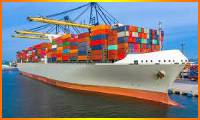
Vietnam is importing better and more affordable produce from China and India.
Vietnam spent US$2.1 billion importing vegetables and fruits in the first 11 months of this year, up 35.2% year-on-year. According to the Vietnam Fruit and Vegetable Association, this was the highest ratio in three years. Of Vietnam’s 10 import markets, China led the surge with an 83% increase, followed by India (67%), South Africa (54%) and Cambodia (33%).
Imports from China reached $765 million to make it the biggest fruit and vegetable exporter to Vietnam, accounting for nearly 41% of the market.
China’s high-quality red grapes with seeds are selling in the southern hub for VND80,000-100,000 ($3.39-4.24) per kg, a price equivalent to their Vietnamese counterparts. Chinese peony grapes are on sale in HCMC for VND170,000-200,000 per kg, which is only a tenth of the cost for similar products from Japan. Indian red pomegranates cost only VND60,000-70,000 per kilogram, a third of those from the U.S. and Taiwan.
Source: freshplaza.com