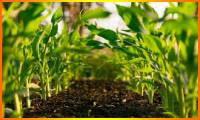
'Livestock Plays Crucial Role in Organic Farming': Narendra Singh Tomar
While addressing the international seminar on ‘Sufalam Prithvi Tatva’ on Sunday, Union Agriculture and Farmers Welfare Minister, Narendra Singh Tomar said that now is the time when the government and society should come to work together in order to stop the negative impacts on the soil and planet earth.
At present, the entire globe is debating on the significant issue of climate change and its negative effects, for which humans are to be blamed, he added.
The initiative for corrective measures will need to fall to someone. Our Prime Minister Narendra Modi is working to educate the world about the conservation of the five elements of earth, water, fire, wind, and space as well as the Indian philosophy of 'Vasudhaiva Kutumbakam' (the world is a family), he noted.
He further said that it is true that the country produces an abundance of food grains now, but we also need to improve ourselves so that the future is secure and there is harmony with nature. According to Tomar, who also stated that PM Modi is directing the nation toward natural farming, livestock plays a crucial role in organic farming.
Tomar further emphasized that similar to yoga, PM Modi also helped bring awareness to millets' significance across the world. He said that the United Nations had declared 2023 to be the International Year of Millets, with India serving as its chairman, in order to promote nutritional grains throughout the nation and the world.
The fact that India is hosting the G20 this year is also a source of pride for the country, according to Tomar, who also said that this will encourage people throughout the world to consider the concept of 'one earth, one family, one future'.
The Institute of Agriculture Science, Banaras Hindu University, Bhaurao Devras Trust, Bhartiya Kisan Sangh, and Akshya Krishi Parivar collaborated to host Sufalam Prithvi Tatva on Sunday in the Shatabdi auditorium at the BHU campus.
Bhaiyyaji Joshi, a member of the Rashtiya Swayamsevak Sangh’s (RSS) national leadership, emphasized the custom of respecting the five elements—earth, water, fire, wind, and space—and discussed the scientific facets of Indian ideology in his remarks at the ceremony.
The life of the soil and the ground must likewise be remembered by the world, he asserted, saying that India always keeps its doors open to ideas from throughout the world for solutions to the world's problems, which must be given priority.
Various such seminars were held across the country from January 7-8 wherein models, posters, and documentaries were used to showcase the key components of the earth element.
Director of Environment and Sustainable Development Institute, Prof. AS Raghuvanshi, National Organization Minister of Bharatiya Kisan Sangh K Dinesh Dattatreya Kulkarni, All India Gau Sewa Chief Ajit Prasad Mohapatra, Suflam Secretary Prof. Rakesh Singh along with many agricultural scientists and office bearers of farmer's organization were present at the event.
Source: krishijagran.com
MoFPI okays 57 proposals received under cold chain scheme.
The Ministry of Food Processing Industries (MoFPI) has approved 57 proposals received against expression of interest dated June 21, 2022, under the scheme for integrated cold chain & value addition infrastructure. However only 24 proposals will be getting funds due to limited funds availability with the ministry.
According to the MoFPI in response to the EoI, the Ministry had received 73 proposals (including 1 proposal withdrawn by the applicant) on SAMPADA Portal of MoFPI. Technical Committee (TC) evaluated all the 73 proposals and recommended 57 proposals as per scheme guidelines.
The projects were approved by the PAC (Project Approval Committee) headed by the Cabinet Minister MoFPI. However, the PAC observed that the budget available with the Ministry under the scheme was not sufficient for approval of all the recommended proposals as eligible, which were found proper by PAC. Hence PAC decided that the proposals based on merit of eligible proposals for general category shall be made wherein 24 proposals were approved.
Further, it was also observed by the PAC that the eligible proposals amongst the proposals which are lower in the merit list may be considered for approval by the Ministry later on if funds become available with the Ministry under relevant budget head of the scheme while the eligibility of the proposals and decision taken in their respect do not confer any legal right to the respective applicants to claim grants-in-aid from the Ministry without the issuance of formal approval letters in respect of their individual proposals.
Source: fnbnews.com

Growth of plant-based could contribute to govt s Vision 2030.
Plant-based meats (i.e., products which have the properties of animal-based items but are sourced purely from plants) and plant-based dairy products (i.e.,products using plant-based alternatives to derive the whole range of dairy products from milk, yogurt, cheese, paneer and so on) have been the rage all across – particularly the Western world over the last couple of years. India was not far behind; we, Indians, have been introduced to this category of food products by a number of startups that entered this arena. A lot of influence has been added using Bollywood and cricket stars, who have taken up promoting this category to the masses. In addition, major QSR brand Dominos introduced a plant-based option as part of their pizza range and ITC introduced an SKU or two as part of their frozen range. Albeit with little success.
Plant-based alternatives started to make deeper inroads during the pandemic when there was a concern for health, well-being and hygiene, and, moreover, a lot of consumption was limited to indoors, with out-of-home consumption severely impaired. Furthermore, the talk of how strong an environmental impact plant-based options have over real meat was an added selling point, particularly to the younger generation of consumers who are environmentally-conscious to a greater degree. This gave plant-based alternatives the necessary fillip with a lot of media bites and also became a strong conversation piece across all forms of media.
However, the situation in more developed markets, which saw the rapid rise in the introduction, consumption, and acceptance of plant-based alternatives,seems to be flattening out over the last two quarters. For instance, Beyond Meat Inc., a Los Angeles–based producer of plant-based meat substitutes listed on NASDAQ, lost over 75% of its share value in 2022. Particularly so with the retail-focused D2C brands in this segment. About two-thirds of the plant-based meat products are in the frozen category and the rest are in the chilled section.
Additionally,apart from the largely funded startups in this space, we have also witnessed the entry of large CPG behemoths such as Unilever, Nestle, and more, who have acquired some of the challenger brands and entered this category. Subsequently, all leading QSR brands such as Domino’s, McDonald's, Burger King and Starbucks have all been adding plant-based meat options to their menus. Ikea, which is amongst the top 10 food chains globally, has introduced a lot of plant-based options in its stores and is targeting a 50% switch to plant-based options over the next 3 to 5 years. Thus, what we can infer is that the foodservice channel is continuing its efforts to introduce the consumer to different plant-based options,with possibly a large number of trials being initiated. Notably, any major food trend initially starts off first in the out-of-home setting and then only gravitates inwards into the house kitchen or refrigerator.
Plant-based meat is made from proteins isolated from plant sources, including soy and peas, and dairy-product alternatives are derived primarily from oats, almonds, rice, and soy. Mimicking the taste and texture of what meat products actually taste like requires a whole lot of scientific engineering, processing, the addition of taste-maskers and enhancers, a whole range of chemical additives, colour, flavour, taste-enhancers and so on.
Source: fnbnews.com
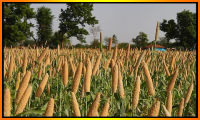
Making the most of millets.
In sync with the G-20 theme of ‘Recover Together, Recover Stronger’ in the International Year of Millets (IYoM) 2023, India is set to make the world a healthier place with an increased emphasis on its export of nutritional millets. The traditionally grown, healthy cereal group is fast becoming the new identity of India as it is a sustainable commodity. Bajra, ragi, jowar, and buckwheat are now going to be globally-enjoyed cereals.
The Covid-19 pandemic, climate change, growing awareness on calorific intake have nudged the globe towards this smart food and its nutritional benefits. India—the largest producer of millets with a 19% share—has taken up the responsibility of ushering in the millet revolution and bringing about a revolutionary change in its exports, targeting global millet trade with the Agricultural and Processed Food Products Export Development Authority’s (APEDA’s) marketing strategy.
As a part of the Millets Export Promotion Strategy, a Millet Conclave was organsied to take India ahead and create awareness among the top 100 trading nations, displaying a wide range of value-added, innovative millet products and inviting buyers to experience the unique products that India has to offer. This was to ultimately secure a space for Indian millets in every diet and every meal across the globe. APEDA, which works under the ministry of commerce and industry, has plans to achieve a $100 million target by 2025. A global marketing campaign is being prepared, after assessing India’s potential. Accordingly, an e-catalogue of 30 importing countries and 21 millet-producing states has been prepared, and a virtual trade fair platform was launched to give the impetus for the export of millets as well as its value-added products.
As the world is moving towards nutritional security, there is a decadal rise in international imports of millets—5.4% in terms of value and 14% in terms of quantity. Millets have grabbed global attention due to their exceptional quality attributes—they are gluten-free, high in protein, and high in fibre. As a rice/wheat substitute, millets are potentially beneficial in diabetes management, weight management, anaemia control, management of blood pressure and other cardiovascular disorders.
In all aspects, millets are considered superior to wheat, rice, and maize. If India moves ahead with the agenda of disease eradication with millets, this can replace upto one-third of the recommended cereal diet of diabetics and anemic women. This, in turn, will yield an opportunity for 100 grams of millet intake per capita per day. This will, without doubt, help India achieve the target of 'Millets, a staple food in every diet' in the IyoM.
For the promotion of Indian millet exports, the Centre is in the process of facilitating participation of exporters, FPOs/FPCs, traders in various international events by organising Buyer-Seller Meets at more than 16 International Trade Fairs. India has already promoted millets and their value-added products at an event to celebrate IYoM 2023 that was organised by the FAO at its HQ in Rome, Italy and at Buyer-Seller Meets in Jakarta and Medan, Indonesia, in association with the Indian embassies in these countries. Plans are in place to facilitate participation in the international trade fairs, such as at Gulfood 2023, Dubai, Foodex, Japan, Fine Food, Australia, Anuga Food Fair, Germany, etc, to promote millets.
Leading importers and departmental store/super-market/hyper-market chains would be roped in through the embassies to promote millets, and food sampling and tasting campaigns will be organised. There would be branding/ publicity of Indian millets in the targeted countries and market in association with the IBEF, and through promotion campaigns in social media.
India’s top five millet-producing states are Rajasthan, Maharashtra, Karnataka, Gujarat, and Madhya Pradesh. There are 16 major varieties of millet, including sorghum (jowar), pearl millet (bajra), finger millet (ragi), minor millets (kangani), proso millet (cheena), kodo millet (kodo), barnyard millet (sawa/sanwa/ jhangora), little millet (kutki), pseudo millets (buckwheat/kuttu), Amaranthus (chaulai), and brown top millet.
Exports of millets from India are mainly whole-grain, and the export of value-added products of millets is negligible. The government is also mobilising start-ups for export promotion of value-added products in the ready-to-eat (RTE) and ready-to-serve (RTS) categories, such as noodles, pasta, breakfast cereals mix, biscuits, cookies, snacks, sweets, etc.
Countries of major millert exports from India are the UAE, Nepal, Saudi Arabia, Libya, Oman, Egypt, Tunisia, Yemen, the UK, and the US. The varieties of millets exported by India include bajra, ragi, kangani, jowar, and buckwheat. The US stands at the top for unit price realisation in exports of sorghum, kangani, bajra, and ragi, whereas Saudi Arabia gave better returns on buckwheat and exports of other millets. In general, buckwheat fetched far higher prices than sorghum and other millets. The major millet importing countries in the world are Indonesia, Belgium, Japan, Germany, Mexico, Italy, the US, the UK, Brazil and Netherlands.
India is moving ahead in promoting millets across the world to reform millet as part of staple food in every diet.
Source: financialexpress.com
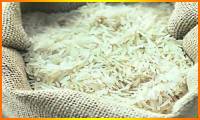
Liberia: President Weah Suspends Import Tariff On Rice.
The President of the Republic, H.E. Dr. George Manneh Weah, has issued two Executive Orders affecting critical national issues germane to the security and wellbeing of citizens. On Friday, January 6, the President issued Executive Order #113 suspending the import tariff on rice and Executive Order #114 establishing the West African Police Information System (WAPIS).
Executive Order #113 is in consideration of the expiration of Executive Order #105 and the government's commitment to ensuring that the prices of certain basic commodities on the market are affordable and do not impose an unnecessary burden on the citizens.
'Now, therefore, the government of Liberia, in its desire to continue bringing relief to the public, hereby issues this Executive Order #113, suspending the import tariff on rice as classified under tariff nos. 1005.30.00 (in packing of more than 5kg or in bulk); 1006.30.00 (in packing of at least 5kg); and 1006.40.00 (broken rice) under the Revenue Code of Liberia Act with immediate effect,' asserts the President.
President Weah further indicated that Executive Order #113 is issued against the backdrop of an assessment and evaluation conducted by the government on the causes of increases in the price of various strategic commodities, including rice, with an intent to ameliorate the situation.
According to President Weah, based on the findings of the assessment, the government has seen the need to curb 'the continuous increase in the price of rice, in order to make it affordable to the public for purchase.'
The Liberian Leader also insists that there exists a need for what he calls 'exigent measures to achieve the desired objectives of easing the economic burden on the citizens and residents to enable access to rice, the staple food, and such measures can't await long legislative processes.'
Regarding Executive Order #114 establishing the WAPIS program, President Weah said the decision aligns with an ECOWAS mandate of December 12, 2017 that all member states endorse the West African Police Information System (WAPIS) program.
He said it's also against the backdrop that Liberia is a member of International Criminal Police Investigation and implementer of the WAPIS program in the sub-region.
The Executive Order opines: 'Whereas, the government of Liberia desires the establishment of a national electronic police information system to be shared by the national law enforcement agencies in Liberia as part of the WAPIS program.'
The organic objective of the WAPIS program is to strengthen information exchange and coordination among regional law enforcement agencies.
The Executive Order is accordingly consistent with the MOU signed on December 17, 2018 between the government of Liberia and the International Criminal Police Investigation (INTERPOOL), coupled with the fact that actions and activities leading to the establishment of the program have not been enacted by the appropriate Status to enable to operationalize the WAPIS program in Liberia.
As per Executive Order #114, a National Steering Committee, or WANACO, has been established to administer the affairs of the WAPIS program, which falls under the Executive Branch of Government and is directly overseen by the Minister of Justice and Attorney General.
The Executive Order states that WAPIS will be headquartered in Monrovia at the edifice of the Liberia National Police.
Source: allafrica.com

Switzerland, India working to create innovation platform; seeks to accelerate bilateral ties: Swiss Ambassador.
Switzerland is keen to accelerate bilateral ties with India by tapping more trade and investment opportunities, and both countries are also working to create an innovation platform, according to Swiss Ambassador to India Ralf Heckner.
Emphasising that his 'expectations are very high', he said innovation and a free trade agreement can take the bilateral relations to the next level.
In an interview with PTI here, Heckner said he sees a lot of convergence between both countries when it comes to innovation.
'Switzerland being the most innovative country and more innovations (are) being created in India, what I would like to see is the most strategic innovation relationship. We are working with the Indian government to create an innovation platform that will bring the best universities, IITs and federal institutes of technology in Switzerland together with very innovative Swiss and Indian businesses,' he said.
The idea of creating an innovation platform is at an initial stage, and in this regard, a pilot project that is focused on anti-microbial resistance is in progress.
'By the end of the year, we will be presenting our first results when it comes to the pilot project,' the Ambassador said, adding that there is also convergence in terms of Intellectual Property Rights (IPR).
'The more innovative India becomes, India will have an interest in IPR. Switzerland attaches a lot of importance to IPR and I see India moving into that space. That will also open up quite some interesting cooperation,' he noted.
In the Global Innovation Index 2022, India’s ranking improved to the 40th position and the list was topped by Switzerland.
On the trade front, negotiations between India and the European Free Trade Association (EFTA) have been going on for some time. EFTA is an inter-governmental organisation of Iceland, Liechtenstein, Norway and Switzerland.
Against the backdrop of India recently concluding trade deals with Australia and the UAE, Heckner said that he would like to see the negotiations on a free trade agreement between India and EFTA moving forward at a quick pace.
'I feel that the Indian government is now open for trade deals…The proof of the pudding is already there, because of trade deals that India has signed with Australia and the UAE.
'The next important visit will be that of the State Secretary for Economic Affairs to Delhi in the beginning of February. If we are able to move our negotiations forward, that would take our relations to the next level,' he said.
In 2020 to 2021, bilateral trade between Switzerland and India stood at around 11 billion Swiss francs.
'In 2023, I would like to see our bilateral relations accelerating… we are not only celebrating 75 years of India’s independence but also 75 years of friendship.
'It is so important that countries that are friendly work together. So, we would like to celebrate our friendship, and we expect high-level visits to India and from India also,' Heckner said.
Source: theprint.in

Structural reforms taken in last 8 years will help India emerge among the top three economies in the world : Shri Goyal.
Union Minister for Commerce and Industry, Consumer Affairs, Food and Public Distribution and Textiles, Shri Piyush Goyal today expressed confidence that the structural reforms taken by the Government in last 8 years will help India emerge among the top three developed economies in the world. He was interacting on the occasion of 27th edition of Wharton India Economic Forum via VC. The theme of today’s event was India leading innovation in the age of uncertainty.
Speaking on the most impactful economic reforms that will pave the way for India’s growth story in coming years, Shri Goyal said a lot of structural changes that have taken place in the last eight years have had a significant impact on the way the Indian economy is poised to take off. He spoke of GST as one of the important reforms and highlighted that despite the challenging global scenario recent GST collections have been very robust. He also mentioned that India is now a more honest, transparent economy and people are now getting used to paying their taxes. He said Insolvency and Bankruptcy Code (IBC) is also an important reform measure that has resulted in robust banking systems in India. These banks have been able to provide the resources for industry to grow. He also mentioned reforms such as privatisation, digitization of the economy, particularly the financial sector, decriminalisation of laws, simplification of compliances to enable ease of doing business.
Responding to a question of which sectors are strategic priorities for the government, Shri Goyal said that infrastructure, Semiconductor, Domestic manufacturing are some of the priority sectors. He also pointed out that Prime Minister Narendra Modi's focus is on building a robust infrastructure in India. Private sector is also contributing in this endeavour. Shri Goyal said Semiconductor is another critical sector for the Indian economy. Another important area is domestic manufacturing, and the government has introduced PLI schemes to kickstart Indian manufacturing in over 14 sectors. The Minister mentioned the Government is also encouraging the Private sector/ industry associations to determine themselves what support in what areas it needs from the Government.
Sharing his views on the current geopolitical environment in relation to tensions between Russia and the West, Shri Goyal reiterated Prime Minister Narendra Modi’s belief that today's era must not be an era of war. He further said India believes that dialogue and diplomacy is the only way forward to resolve the crisis and called for quickly resolving the conflict. He also highlighted that Prime Minister Modi has had several conversations with world leaders on this issue. India played a critical role in trying to get consensus at the G 20 meeting in Bali. Minister said due to Prime Minister Modi's intervention, world economies were able to come to an outcome at G 20 and hoped that it would set the path forward to finding solutions to the Russia Ukraine war. Shri Goyal said, in India, the Government has been focussed on meeting the needs of the common man, ensuring availability of sufficient foodstocks, energy needs, adequate seeds, adequate fertilisers.
Speaking on India’s renewed focus in signing free trade agreements in the past five years, Shri Goyal emphasised that India today has emerged out of the shadows of the past. India has recognized that multilateral engagements often lead to economic partnerships which may not be in the best interests of all the stakeholders. He cited the example of India walking out of Regional Comprehensive Economic Partnership (RCEP) bcos it was a very unfair, unbalanced agreement. He said India's interest is to enter into bilateral free trade agreements that are balanced, in the best interests of both countries. We are engaging with like minded countries particularly countries with a rules based order, transparent economic systems and entering into agreements which are a win win for both sides.
Speaking on lessons learnt from the covid pandemic, Shri Goyal said upgradation and expansion of our health infrastructure is the topmost priority. He highlighted that the Government has improved the quality of hospital infrastructure, expanded ICU beds and oxygen capacity many fold, almost doubled the number of medical colleges in the country. He also mentioned that focus is on skill development training of healthcare workers. He also spoke of India’s free health care program, world’s largest, wherein 500 million people are eligible for free health care in India through a government sponsored program.
He said another learning has been recognizing the importance of resilient supply chains. He recalled the nation’s struggle for critical equipment like PPEs during covid pandemic despite the best efforts. He said that the Government is now focusing on strengthening India's capabilities in all these areas. He highlighted that these challenges were converted into opportunities for India's future India's growth story. Our Indian industry truly rose to the occasion, and India is now the manufacturer of personal protective equipment. He said that in the last few years, India has been focused on building enabling infrastructure, environment, to attract investors who believe in a robust, rules based system. He said focus is on structural reforms, massive infrastructure development, digitization, and the huge talent that India is offering to the world, which is helping rewrite India's future.
Speaking on challenges and opportunities for the next 25 years, Shri Goyal said one of the biggest challenges is going to be changing the mindset of the nation to recognize and value the importance of quality. He termed this as the defining factor for the future of India. He said the Government will continue to support manufacturing to create jobs for a large number of people, focusing on digitization, making India a knowledge based economy. He mentioned that India did over 74 billion financial transactions digitally, which is more than Europe, US and China combined. He said the challenge is to get the mindset of the nation to work towards being a high quality, high technology, high service oriented, which can meet the needs of the rest of the world.
Source: pib.gov.in
Indian Bank to hold special rupee vostro A/cs of Sri Lanka banks.
Indian Bank, which has had a long presence in Sri Lanka, has received the regulatory go ahead to hold special rupee vostro accounts of three banks from the South Asian island nation which is struggling to tide over a serious foreign exchange crunch.
The Chennai-headquartered public sector bank is expected to activate the special accounts in about a week.
A vostro account in local currency would enable Lanka to import from India without dipping into its dwindling dollar supply. The INR vostro facility is part of a special trade settlement mechanism which was finalized by the Reserve Bank of India (RBI) in July 2022. The arrangement allows Indian importers to deposit rupees in vostro accounts that overseas banks open with banks in India and clearing of dues to Indian exporters from the surplus balances in the vostro accounts.
'RBI has given permission for three vostros..The accounts are expected to be functional any day now,' a person aware of the clearance told ET.
The INR vostro account --- a product of war and economic turbulence --- is considered as a tool to either overcome restrictions in the wake of US sanctions on Russian banks or continue cross-border trades amid a hard currency crisis.
'The vostro accounts would also help Lanka to utilize the rupee lines extended by India. It would contribute towards stabilizing the Lankan economy,' said a banker.
Sri Lanka President Ranil Wickremesinghe recently said 2023 would be a 'critical year' for the troubled country. Last year’s balance of payments crisis had boiled over into a political turmoil in Sri Lanka.
For Sri Lankan institutions, Indian Bank, which had set up shop in the island nine decades ago, may be an obvious choice. The bank had opened its first overseas branch in Colombo in 1932. Since a decade it has had operations in Jaffna as well. Till now, State of India (SBI) is the other domestic institution with which a Lankan bank has opened a vostro account.
India's annual exports to Lanka is about $5 bn with oil, pharmaceutical products, sugar, ships, iron and steel, cotton and machinery being the main cargoes.
As the currency market in Lanka ran out of dollars, early last year most banks in India virtually stopped discounting letters of credit (LC) --- the basic trade finance instrument --- issued by banks in Lanka. Banks feared that when payments for its imports fall due, there would not be enough dollars in Sri Lanka.
'What we hear is that the government would pursue a similar vostro mechanism with banks in Bangladesh, and it may prefer to have it in place before the Bangladesh general elections in 2024,' said another banker. Bangladesh has been badly hit by a trade deficit and depleting forex reserves.
While the Ukraine war and the sanctions on Russia paved the way for the special vostro accounts, the mechanism can be used to settle trade in rupees with any country. For instance, several banks in Belarus, a close ally of Russia, are keen to enter into a similar deal with India. 'A meeting between Indian and Belarusian banks is scheduled this month. The volume of trade with Belarus is much smaller compared to Russia though the country is an import supplier of fertilizer. We can sense the interest of Indian banks after the meeting,' said an industry official.
In giving greater flexibility to the vostro facility, RBI last November clarified that the rupee balances lying in the accounts can be hedged so that foreign companies can minimize their losses from foreign exchange fluctuations. Also, the central bank has allowed the transfer of balance in one special rupee vostro account to a similar account of another bank from the same country.
Source: economictimes.indiatimes.com
FSSAI issues draft to amend labelling and display regulations.
The FSSAI has issued a draft to amend the labelling and display regulations and sought comments from the stakeholders. The draft called Food Safety and Standards (Labelling & Display) Amendment Regulations, 2022, aims at certain clarification with respect to nutritional info and unprocessed products comprising single ingredient, amongst others.
In the proposed regulation, the unprocessed products now have been defined as ‘raw agricultural minimally processed products such as wheat, rice, cereals, pulses, fruits and vegetables and/or products that comprise a single ingredient governed under the labelling requirement'.
According to the FSSAI, the minimally processed foods are the ones that are slightly altered for the main purpose of preservation but which do not substantially change the nutritional content of the food. This may involve cleaning and removing inedible or unwanted parts, grinding, refrigeration, pasteurisation, fermentation, freezing, and vacuum-packaging.
Also, the draft proposes that per serve percentage (%) contribution to RDA (Recommended Dietary Allowance) and number of servings per pack may not be given for Infant Nutrition products as defined under Food Safety and Standards (Foods for Infant Nutrition) Regulations, 2020.
Further, it lays down that the compliance to the quantity of declared nutrients on the label shall have the tolerance of ± 20 per cent of the value for that nutrient declared on the label at any point in time within declared shelf life of the product.
Source: fnbnews.com
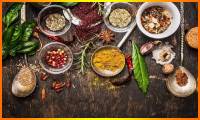
Indusfood, largest integrated F&B trade show in South Asia, to be held in Hyd.
Indusfood, the largest integrated F&B trade show in South Asia, comes to Hyderabad. The 6th edition in the row and first in Telangana will be held at Hitex from January 8 to 10, 2023.
The who’s who of the F&B industry in India and all over the globe is to participate in the show. It ?will be? organised by the Trade Promotion Council of India (TPCI), an apex trade and investment promotion organisation notified in the Foreign Trade Policy. TPCI is also recognised and supported by the Department of Commerce, Government of India.
The show’s highlights include 1,200+ world class buyers from 80 plus countries interfacing with 550+ Indian exhibitors. It will be spread over an exhibition area covering 26,000 sq feet. It takes the lead in commemorating the International Year of Millets, 2023, with a special showcase of millets in its 6th Edition. Unprecedented number of start-ups to exhibit. It will have a special focus on Indian market opportunities with buyers representing modern trade, e-commerce QSRs, airlines and so on.
An export business of US$1 billion is expected to be closed at the show.
The show has grown rapidly to become the largest integrated F&B trade show in South Asia over the past five years. Speaking at the event, Mohit Singla, founder chairman, TPCI, said, 'Indusfood has provided a dedicated and powerful platform for the Indian F&B industry to promote its strengths and expand its horizons in the international market. Over the past five years, it has become the sole catalyst for robust growth in India’s processed food exports, by ensuring direct linkages with global buyers.'
India’s F&B exports were recorded at US$42 billion in 2021, growing at a CAGR of 6.7% YoY since 2017. Correspondingly, processed food exports have grown at a particularly robust pace of over 20% during the period to reach US$8 billion in 2021. During January-October, 2022, processed food product exports have further accelerated by 32% YoY to reach US$8.6 billion. 'We are positive that Indusfood 2023 will play a catalytic role in building on this strong growth momentum both internationally and in the domestic market,' Singla added.
Source: fnbnews.com