
India suspends duty-free import of soyabean oil for FY24.
The Union Commerce Ministry has suspended duty-free imports of soyabean oil under the tariff rate quota (TRQ) regime for the 2023-24 fiscal in a notification issued late on Wednesday evening.
However, duty-free imports of sunflower oil under the TRQ regime will continue. In the case of soyabean oil, imports under TRQ will continue until June 30, the notification said.
On May 24 last year, the Directorate-General of Foreign Trade issued a notification announcing the TRQ allowing duty-free imports of soyabean and sunflower oil until March 2024. The Centre decided to permit 20 lakh tonnes of both soft oils each for the current and next fiscal.
Taming inflation
The measure was undertaken in a bid to control soaring edible oil prices in the domestic market and to tame inflation.
Now, the Centre has suspended duty-free imports of soyabean oil under the TRQ regime as edible oil prices across the globe have cooled down and Indian soyabean farmers are holding huge inventory.
This is a measure to counter any adverse reaction to the Indian government extending the suspension on derivatives trading of soyabean and its products.
According to the Solvent Extractors Association of India, prices of palm group of oils have declined by about 30 per cent year-on-year, while soybean oil rates have dropped 10 per cent. Sunflower oil prices have slid by 7 per cent.
Source: thehindubusinessline.com

US Commerce Secretary Raimondo to visit India in March for trade talks.
US Commerce Secretary Gina Raimondo will visit India in March this year accompanied by a high-powered delegation of global CEOs, Union Commerce and Industry Piyush Goyal said on Wednesday.
He made this announcement after the conclusion of the 13th India-US Trade Policy Forum in Washington.
'I have had a chance to spend time with US Commerce Secretary Gina Raimondo. We have finalised the dates of the next commercial dialogue and the CEO Forum meeting in India around 9th-10th March,' Union Commerce Minister said during a press conference in Washington DC.
'She will be accompanied by a very high-powered delegation of global CEOs of large multinational companies,' he added.
Besides this, trade talks between the US and India also featured issues concerning resilient supply chains, resolving WTO trade disputes and sustainable finance in connection with clean technology.
During the press conference, Goyal also announced the setting up of the Trade Policy Forum Working Group on Resilient Trade to help create sustainable trade relationships between India and US.
'We have a shared objective of deepening and broadening a US-India trade relationship. And therefore this new Trade Policy Forum Working Group on Resilient Trade will enable both sides to deepen our dialogue on a range of issues which can help us enhance the resilient supply chains and also help us create sustainable trade relationships,' he said.
Addressing the press briefing alongside the Indian ambassador to the US, Taranjit Singh Sandhu, Goyal said a discussion was also held for re-starting Wild Caught Shrimp exports from India to the US.
'This was an area that was banned by the US because of the concerns around turtles in the areas where Wild Caught Shrimp was being fished in India. A turtle-excluded device has been designed with the technical support of the NOAA (National Oceanic and Atmospheric Administration) from the US and that design has been accepted by the two countries as a collaborative effort,' he added.
Goyal said that Wild Caught Shrimp was a product of good acceptance in the US market, and it has good potential for trade between the two countries.
India and US are natural partners and have trade complementarities, long-standing strategic and economic relationships, people to people contact, and both are vibrant democracies too, according to an earlier Union Commerce Ministry release.
The two countries are also collaborating under the QUAD, I2U2 (India-Israel/ UAE-USA) and IPEF (Indo-Pacific Economic Framework).
Regular exchanges at the leadership level have been an integral element of the expanding bilateral engagement. The outcomes emerging from these visits have been instrumental in further strengthening the multifaceted ties between the two countries.
The 12th TPF Ministerial meeting was held on November 23, 2021, after a gap of four years in New Delhi. Working groups were re-activated after the last ministerial. TPF is a platform for continuous engagement between two countries in the area of trade and to further the trade and investment relations between the two countries.
Both countries are looking forward to the meeting and confident of making progress on the trade issues. The TPF is chaired by Commerce and Industry Minister from Indian side and USTR from the US side.
Source: business-standard.com

India invites Israeli PM Netanyahu to India at an early date .
Prime Minister Narendra Modi on Wednesday had a telephone conversation with the newly elected Israeli Prime Minister Benjamin Netanyahu and invited him to visit India 'at an early date'.
'Prime Minister conveyed his warm congratulations to H.E. Mr. Netanyahu for his election as the Prime Minister of Israel for a sixth time and wished him a very successful tenure,' the Ministry of External Affairs (MEA) said in a statement.
Mr. Netanyahu paid a six-day visit to India in January 2018, when he was welcomed by Mr. Modi at the Indira Gandhi International Airport here. The Israeli leader was then accompanied by a 130-member business delegation. Mr. Modi had visited Israel in 2017, when Mr. Netanyahu had welcomed him at the Ben Gurion airport.
'The two leaders expressed satisfaction at the rapid progress in the India-Israel Strategic Partnership in recent years, and agreed on the potential for further strengthening strategic cooperation in a variety of areas. Prime Minister invited H. E. Mr Netanyahu to visit India at an early date,' the MEA said.
India and Israel joined the U.S. and the United Arab Emirates to form the I2U2 — a new regional initiative — in July 2022. The initiative is aimed at increasing cooperation in areas like digital connectivity, agriculture, infrastructure, trade and clean energy.
Mr. Netanyahu was sworn-in on December 29, 2022 when he also won a vote of confidence in the Israeli Parliament, the Knesset. Israel’s Ambassador to India Naor Gilon had informed the media in December 2022 of the possibility of the visit by the Israeli leadership to New Delhi.
Days after Mr. Netanyahu’s swearing-in, the National Security Minister of his far-right government, Itamar Ben Gvir, walked into the Temple Mount for a brief period on the morning of January 3. Under a status quo formula, the religious location is administered by the Jordanian Islamic Waqf while the Israeli police maintains security at the premises. Mr. Gvir’s visit to the venerated site was criticised by Palestinian groups like the Hamas as well as the U.S. administration.
The religious space which is called Temple Mount by the Jewish side and Haram al Sharif by the Muslim community is a sensitive zone, and has been at the centre of competing claims from both sides in the past. The shrine is considered holy by all the Abrahamic faiths but non-Muslims are forbidden from praying at the location that they can visit only as tourists at designated hours.
The site which triggered the first controversy of the Mr. Netanyahu sixth term came under Israeli control after the Arab-Israel war of 1967.
Source: thehindu.com

Bangladesh to buy rice from Indian govt traders at higher rate.
The ministry of food in Bangladesh has started the process of importing 300,000 tonnes of parboiled rice from India. The government will purchase two-thirds of the rice directly from the Indian government in a government-to-government (G2G) transaction. The remaining 100,000 tonnes of rice will be bought through a global import tender.
The ministry will procure the rice from four Indian companies and the import process is in its final stage. However, Bangladesh is spending nearly US $40 more per tonne when buying from government-run Indian companies compared to the private traders.
A number of Indian media outlets have already ran stories on the discrepancy of the price between government and private companies.
A source at the food ministry said the rice the two private companies in India are selling at $393 and $397 per tonne is priced at $433.6 and $436.5 by the two government-run companies.
Bangladesh will buy 100,000 tonnes of rice each from the government-run companies and 50,000 tonnes from each of the two private companies. The food ministry and cabinet committee on public procurement has already approved the import order.
Food ministry secretary Mohammad Ismail Hossain told Prothom Alo, 'The cost of rice fluctuates in every country. The talks to purchase rice through a governmental transaction began in last October. The talks were finalised in mid-December. The rate was fixed according to the export prices at the time. The global import tender was issued last December. By then, the price of rice had fallen. That’s why we could purchase rice at a lower price.'
In December last year, a six-member team led by food minister Sadhan Chandra Majumder and Mohammad Ismail Hossain toured Thailand, Vietnam and Cambodia to seek traders to import rice at a lower rate. But the team couldn’t secure a deal to import the requisite amount. So, the food ministry resumed the process of importing rice from India.
A source at the food ministry said that very soon the ministry will sign a deal with India’s National Co-operative Consumer Federation (NCCF) and their central reserves to purchase 100,000 tonnes of rice from each.
The directorate general of food issued a letter of intent (LoI) to both the companies on 21 December. Around 70 per cent of the imported rice will be brought via the Chattogram and Mongla ports. The remaining rice will come in trains. The companies are contractually obligated to deliver the rice within 70 days of the signing the agreement.
In the global import tender, the two Indian private companies proposed the lowest quotations and were given the contract. The companies are the Singapore-based Agro-Crop International Limited and Bagadiya Brothers.
Business Line, a newspaper owned by Indian media house the Hindu group, ran a report on 21 December on the difference of price between the government and private traders. They expressed shock at Bangladesh choosing to buy from the government traders over the private ones.
The report said the Indian co-operative traders are getting Rs 330 million more per 100,000 tonnes of rice. In total, the co-operatives will earn an extra Rs 660 million.
The report claimed that the government and private traders from India are selling rice at the lowest rate in the current global market and traders in Thailand, Vietnam and Myanmar traders are selling at a higher rate in comparison.
Former agriculture secretary AMM Shawkat Ali told Prothom Alo, 'At a time when the country is going through a dollar crisis, the government should purchase rice at the cheapest rate possible. If the price of rice is going down, then they should wait for a bit and then buy rice.'
According to the United States Department of Agriculture (USDA), India will be the biggest global exporter of rice in the running fiscal year. China will buy 1.35 million tonnes of rice from India and Philippines and middle-eastern countries are also showing interest to buy rice from India.
As per the food ministry, currently around 1.4 million tonnes of rice is stored at government food reserves. The government distributes nearly 200,000 tonnes of rice every month as part of its social security programmes.
After the price of rice spiked in the country, the distribution amount was increased to 300,000 tonnes. That’s why, the government is trying to purchase from external sources to replenish the reserve.
Source: en.prothomalo.com
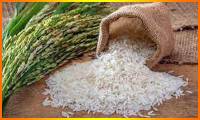
India s basmati exports surge on short-supply from Pakistan.
Basmati rice exports from India have gained in value and volume following short-supplies from Pakistan, the only other competitor in the global market for the long-grained rice.
Data from the Agricultural and Processed Food Products Export Development Authority (APEDA) show that basmati shipments during April-November of the current fiscal have increased to 2.73 million tonnes (mt), a 13 per cent jump over 2.4 mt in 2021-22.
The value of exports, on the other hand, has increased to $2.87 billion from $.2.06 billion. This is in view of the unit value rising 39 per cent during April-November to $1,051 a tonne from $860 for the entire 2021-22.
More room for a hike
In rupee terms, the rise in value is 48.6 per cent. Though data are available only till November, the picture has changed dramatically since then with Pakistan basmati exports dropping 44 per cent during the July-December period.
Since then, basmati rice prices have increased further. Currently, the fragrant rice from India is quoted at $1,450 a tonne, while the Pakistan variety is offered at $1,350.
The buoyant exports have resulted in basmati farmers fetching 60 per cent higher price this fiscal. According to data from Agmarket, an arm of the Agriculture Ministry, the weighted average price of basmati paddy is Rs.4,326 a quintal against Rs.2,688 a year ago. 'There is room for India to increase basmati prices further in view of the shortage in Pakistan,' said S Chandrasekaran, who has authored the book 'Basmati Rice: The Natural History and Geographical Indication' and is a trade analyst.
Wettest August in 61 years
Pakistan has been badly hit by the wettest August in 61 years it witnessed last year. The neighbouring country’s agricultural production, mainly basmati and non-basmati paddy, has been badly affected by floods.
Despite the damage, the US Department of Agriculture (USDA) has not projected any major setback to agricultural production. However, Rice Exporters Association of Pakistan has been quoted by the media that basmati production had declined 40 per cent in the Sindh province due to floods.
On the other hand, India’s basmati production is expected to be higher but details are awaited. Trade sources said Pakistan is going through a turbulent period due to a shortage of US dollars that is preventing it from importing commodities. The drop in basmati exports will further affect Islamabad’s balance of payment problem.
Damage to rail link
Pakistan is currently witnessing skirmishes for food with social media flooded with such incidents. Last year, its wheat crop suffered due to a heatwave and currently, it is having to look at imports to overcome the shortage in the domestic market.
Chandrasekaran said during the August-December period, there would have been at least 50,000 tonnes shortfall in Pakistan basmati supplies in the global market each month. 'The historic floods have damaged the Karachi-Lahore rail link. It is another reason for Pakistan’s basmati exports to be affected,' he said. Differences between Pakistan and China over Main Line railway project under China Pakistan Economic Corridor have delayed the work to restore the link.
India, on the other hand, has gained with Iran buying 6.28 lakh tonnes (lt) of basmati rice during the first half of the current fiscal. This is two-thirds of its total basmati imports last fiscal. Saudi Arabia and United Arab Emirates are the next big buyers of Indian basmati, importing 4.45 lt and 1.8 lt respectively in the first half.
Source: thehindubusinessline.com

India exports 16.92 lac tons of sugar till Jan 4 of 2022-23; over 59K tons to China.
India has exported 16.92 lakh tonnes of sugar till January 4 of the ongoing 2022-23 marketing year, including 59,596 tonnes of the sweetener to neighbouring China, trade body AISTA said on Tuesday. Among other neighbouring nations, India has exported 1.47 lakh tonnes of sugar to Bangladesh, and 82,462 tonnes to Sri Lanka during October-January 4 of the current marketing year, All India Sugar Trade Association (AISTA) said in a statement.
The sugar marketing year runs from October to September. The government has allowed export of 6 million tonnes till May of the 2022-23 marketing year.
According to AISTA, mills have exported a total of 16,92,751 tonnes of sugar from October 1, 2022 to January 4, this year.
Over 3.47 lakh tonnes of sugar is under loading, while 2.54 lakh tonnes of sugar has been delivered to refineries considered to be deemed export in the said period, it said.
Of the total exports undertaken so far, maximum exports have been to Somalia at 1.70 lakh tonnes, followed by the UAE at 1.69 lakh tonnes, Djibouti at 1.50 lakh tonnes, and Sudan at 1.37 lakh tonnes.
India exported 1.36 lakh tonnes to Malaysia, 1.18 lakh tonnes to Indonesia, and 1.08 lakh tonnes to Saudi Arabia till January 4 of the current marketing year, AISTA added.
Sugar exports from India, one of the world's major sugar producing nations, stood at 11.2 million tonnes in the 2021-22 marketing year.
AISTA has made an initial projection of sugar output to be lower at 35.8 million tonnes during the 2022-23 marketing year, from a record 36.5 million tonnes in the previous year.
Source: economictimes.indiatimes.com
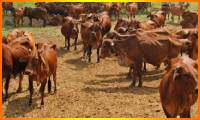
Meghalaya initiates schemes to boost livestock industry.
The Meghalaya government is working towards fostering development-friendly environment through initiatives such as the Meghalaya Milk Mission, Piggery Mission and Meghalaya State Aquaculture Mission 2.0 to harness rural entrepreneurship and improve living conditions.
Under the initiative, the state government looks to consolidate Meghalaya as self-sufficient on resources and infrastructure and retaining its status as a high-value contributor to the nation’s animal husbandry industry, said a statement.
The Meghalaya Milk Mission intents replicating the country’s White Revolution structure by encouraging new farmers to participate as a community-based dairy cooperative societies. Under the initiative, 66 dairy co-operative societies, 588 beneficiaries with 1,066 cattle have been provided with Rs.25 ccore financial support to boost productivity.
Piggery Mission
To improve the economic and nutritional status, the state government launched a Rs.209-crore Piggery Mission uplifting the incomes of over 25,000 households. The mission aims to affect a radical shift in domestic pork production. The mission’s primary objective is to establish economically viable, self-sustaining breeding and fattening units throughout the State. Through this mission, 253 co-operatives received close to Rs.45 crore in monetary grant, the release said.
Aquaculture Mission 2.0
The state government has also launched the Meghalaya State Aquaculture Mission 2.0 with Rs.378 crore investment to enhance aquaculture output. Over 7,000 fishers benefitted from the scheme.
'To make the most of upcoming opportunities in the industry, the mission is actively enhancing vital aspects of aquaculture in the state, such as area and productivity expansion; critical infrastructure development; establishing sanctuaries for conserving indigenous and endemic species; and capacity building in terms of human resources,' it said.
Due to the topography, climate, and socioeconomic circumstances of Meghalaya, only about 10 per cent of the State’s land area can be used for agricultural. Therefore, a popular source of secondary income the villagers rely on is raising livestock. The application of modern technologies has raised the potential for commercial livestock and poultry farming as a full-time occupation for a decent living, the release added.
Source: thehindubusinessline.com
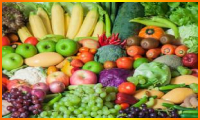
This decade in agriculture, horticulture sectors belongs to J&K: LG Sinha.
An official spokesman in a statement issued here said that inaugurating the Mega Fruit Plant Nursery at Chakroi in R S Pura, the LG congratulated the farmers and fruit growers on the occasion.
He said that the nursery would provide best technologies as well as true-to-type quality planting material that would reshape the horticulture sector in the area.
'It is a massive achievement that in one year a mega fruit plant nursery has been established in an area where cross border shelling was a normal thing in fields,' the LG said. 'The policies through holistic development plan have laid the foundations for a sea change in J&K's economic growth.'
He shared the vision of the government to bring a significant change in the lives of farmers of J&K and accelerate the growth of J&K’s economy.
'Our effort is to make sub-tropical fruit cultivation a multi-faceted business by increasing efficiency of orchards with the help of various interventions like setting up new nurseries and new plant material testing labs,' the LG said. 'The government is committed to serve the present and future needs of farmers in an integrated manner. Our endeavour is also to convert the potential of farms and orchards into farmer's power and transform all the districts of both Kashmir and Jammu divisions into a hub of export with the cultivation of niche crops and value addition of special products.'
He said that to meet the future challenges and to ensure a new wave of growth momentum, 29 projects approved by the Apex Committee for Holistic Development of Agriculture and Allied Sectors were being implemented.
'The plan worth Rs 5013 crores will bring significant change in the lives of around 13 lakh farming families of J&K including 2.62 lakh small and marginal farming families,' the LG said.
He said no other region in the country had made such a revolutionary intervention in the agriculture and allied sector.
'All arrangements, from seed to market have been made through the implementation framework of the plan,' the LG said.
He said Prime Minister Narendra Modi had ensured that there would be no shortage of funds for farmers of J&K.
The LG also suggested improving productivity and tackling challenges as well as opportunities of the agriculture and allied sectors.
'A strong agricultural marketing ecosystem will increase the farm income and reduce the value loss. We are working on covering the entire value chain including inputs, harvesting, processing, packing, storage, besides meeting the need of quality planting material and developing infrastructure and other facilities while taking climatic conditions into consideration,' he said. 'We have also made provisions to arrange and grow 80 percent of fodder requirements locally within J&K.'
Speaking on the services extended by the government, the LG said that around 31 lakh land passbooks have been generated and more than 400 public services have been made fully online with a provision of Public Services Guarantee Act.
On the issue of proper functioning of the Ranbir Canal, he said that a permanent solution via a policy for uninterrupted and proper functioning of the Ranbir Canal would be ensured.
The LG also clarified that there was no such rule for compulsory buying of cattle from outside the region to avail the subsidy.
'And if there is any, I declare it and void,' he said.
Chairman District Development Council (DDC) Jammu, Bharat Bhushan extended his gratitude to the Centre under PM Modi for ensuring peace in border areas, which led to development works like the Mega Fruit Plant Nursery at Chakroi.
Additional Chief Secretary, Agriculture Production Department, Atal Dulloo congratulated the Horticulture Department for completing the project of Mega Fruit Plant Nursery within a stipulated time frame.
This mega fruit plant nursery established with state-of-the-art equipment like automatic weather monitoring system would facilitate easy supply of quality fruit saplings.
VC SKUAST Jammu, Prof J P Sharma stressed the need to convert low-density orchards into high-density orchards and increase farmer’s income through horticulture.
An official spokesman said: 'The Mega Fruit Plant Nursery houses 50 different blocks for growing mother plants of different fruits including citrus fruits. Spanning over more than 800 kanal, the Mega Fruit Plant Nursery will grow and provide saplings of guava, mango, litchi, other citrus fruits and also of the dragon fruit. It is the biggest fruit nursery in north India. In the coming time, 10 lakh saplings of fruit plants will be distributed to farmers. Micro irrigation system was also established in the mega fruit nursery for irrigation in addition to other advanced facilities and modern equipment. Tissue culture lab and other labs will also be established in the coming time.'
Several publications including Mega Fruit Plant Nursery Chakroi Magazine, cultivation of litchi and strawberry and strategic management of stone fruit were also released on the occasion.
The LG also planted a sapling in the premises of the nursery to mark the occasion.
Divisional Commissioner Jammu Ramesh Kumar, Deputy Commissioner Jammu Avny Lavasa, and Director Horticulture Jammu Ram Savak were also present at the inauguration event.
Source: greaterkashmir.com

Namakkal poultry farmers hope export of eggs to Malaysia to rise.
Malaysian Minister of Agriculture and Food Security Mohamad Sabu’s visit to Namakkal gives poultry farmers a hope that egg exports from Namakkal will increase in the coming days.
Namakkal, known as 'Egg Town' and 'Poultry Capital,' has around 1,100 poultry farmers and produces five to six crore eggs per day, transporting 1.50 crore to 1.75 crore eggs to Kerala, 45 lakh eggs to the Noon Meal Scheme, 40 lakh eggs to Bengaluru, and the remaining eggs are sent to various parts of Tamil Nadu and other States on a daily basis. Likewise, eight crore eggs are exported to foreign countries such as Muscat, Dubai, Qatar and the United Arab Emirates (UAE) per month from Namakkal.
In December, for the first time, eggs from Namakkal were exported to Malaysia, and in the first phase, 50 lakh were exported. On Sunday, Mr. Mohamad Sabu visited a poultry farm and an egg collection centre in Namakkal and interacted about how the chicken eggs are processed before being exported to Malaysia. The Minister discussed with Tamil Nadu Poultry Farmers’ Association (TNPFA) president K. Singaraj and All India Poultry Products Exporters’ Association (AIPPEA) secretary Valsan Parameswaran. .
Mr. Valsan said that Malaysia consumes three crore eggs per day. 'As the Minister’s words about Namakkal eggs increase their credibility, we hope that in January three to four crores of eggs will be exported to Malaysia, and that number will increase in the near future. Not only eggs, but all other poultry products will have a chance to be exported to Malaysia,' Mr. Valsan added.
Source: thehindu.com
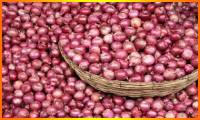
Philippines rushes to import onions as prices touch nearly Rs 1,000 per kg.
The Philippines’ agriculture department is planning to import 22,000 tons of onions to boost domestic supply as surging prices of the cooking ingredient, possibly the most expensive in the world, helped push inflation to a 14-year high.
The import proposal was arrived at during a meeting of the department’s executive committee and will be recommended to President Ferdinand Marcos Jr. for approval, its assistant secretary Rex Estoperez said in a phone interview Sunday. Marcos is also the agriculture secretary.
The proposed purchase 'will be good for a month and to pull down prices,' Estoperez said. 'We can’t sit idly because one of the drivers of inflation is the price of onions.'
The purchase would be a 'temporary solution' and there are no further plans to import for now, he said. The Southeast Asian nation consumes around 17,000 tons of onions a month, Estoperez said. The agriculture department expects the planned imports, once approved, would arrive no later than the first week of February, he said.
Red onions were selling for as much as 650 pesos ($11.68) a kilogram in the Philippines and the white variety was priced as high as 600 pesos, about three times the price of chicken and around 25% costlier than beef, based on the retail prices of farm commodities monitored by the agriculture department as of Jan. 5.
Onion is a key ingredient in Filipino cuisine which most households use along with garlic. The price spike hit consumers particularly hard during the yearend holidays with food taking centerstage in many gatherings, prompting not a few to air their rants on social media.
A drop in local output helped lift onion prices, said Estoperez. Onions contributed 0.3 percentage points to the Philippines’ overall inflation, the same as rice, National Statistician Dennis Mapa said in a briefing last week. Consumer prices in December rose 8.1%, reaching a 14-year high, from 8% the previous month.
Half of the planned imports will be distributed in the main island of Luzon and the remaining will be shipped to Visayas and Mindanao, Estoperez said. While domestic harvests are continuing, the output is only expected to peak in the March-to-May period, resulting in the need to augment supply, he said.
Source: business-standard.com