Shri Piyush Goyal calls for forging new partnerships among countries of the Global South to build resilient supply chains, increase trade and promote tourism.
India hosted a special virtual Summit - 'Voice of Global South Summit' under the theme 'Unity of Voice, Unity of Purpose' on 12-13 January 2023. The Summit encompassed inaugural and concluding sessions at Head of State / Government level, and hosted by the Prime Minister, and 8 Ministerial sessions hosted by respective Cabinet Ministers of India.
Union Minister of Commerce and Industry, Consumer Affairs, Food and Public Distribution and Textiles, Shri Piyush Goyal, hosted the Commerce and Trade Ministers’ Session, today, on the theme - ‘Developing Synergies in the South: Trade, Technology, Tourism, Resources’. Hon’ble Ministers from 13 countries, namely, Benin, Bosnia and Herzegovina, Burundi, Central African Republic, Côte d'Ivoire, Democratic Republic of Congo, Gabon, Haiti, Malaysia, Myanmar, South Sudan, Timor Leste, and Zimbabwe, participated in the Session.
Delivering his opening remarks, the Minister called upon countries of Global South to forge new partnerships and mechanisms so that the voice of the Global South is reflected on the decision-making table. The Minister said the objective of the Summit is to pay attention to the issues pertaining to the Global South and those issues before key global forums like G20, the UN and other multilateral settings. Touching upon the theme of the Session, Shri Goyal said these are the key pillars for development of the countries of the South.
Highlighting the impact of COVID-19 on global trade and particularly on developing countries, he stressed upon the need to work together to build resilient supply chains. He also emphasised upon the need for de-politicization of the global supply of essential medicines. He said, “At the WTO Ministerial Conference held in Geneva in June 2022, India, South Africa, and other developing countries worked together to obtain the TRIPS waiver decision providing equitable and affordable access to vaccines. We shall redouble our efforts at the WTO to get the TRIPS waiver extended to COVID-19 diagnostics and therapeutics.'
Shri Goyal highlighted that the countries of the Global South are now contributing more than half of the world’s economic growth with South-South trade touching $5.3 trillion in 2021. In this regard, he urged for enhanced trade linkages for the mutual benefit of all our countries.
Mentioning that India is providing unilateral duty-free market access to the least-developed countries (LDCs) since 2008 through the duty-free tariff preference (DFTP) scheme of India, he said that India is also open to enter into Preferential Trade Agreements (PTAs) with interested countries in the South.
Calling Connectivity as a defining factor for success in the developing world, Shri Goyal spoke of India’s National Logistic policy (NLP) and the PM-Gati Shakti as the steps in this direction. He said countries of the Global South can work together to exchange best practices in models of connectivity that we employ in our countries.
Shri Goyal said southern countries are also helping to drive world investment. Indian companies are also investing abroad in a big way, including in the Southern countries. Financial cooperation between developing countries is also enabling developing countries to engage more in the global policy debates and shape the international agenda.
Emphasising on the use of technology for development, Shri Goyal shared India's experience that an inclusive digital architecture can bring about socio-economic transformation. He cited examples of UPI which has transformed India's Digital Payment Landscape, CoWIN platform which played a key role in the success of India’s COVID-19 vaccination programme.
On tourism, Shri Goyal noted developing countries are now fast emerging from the impact of covid, and the tourism sector has picked up in the last one year. He called for working together with the countries of the Global south to promote tourism. Shri Goyal noted that many countries of the South have huge deposits of these resources and emphasised that we should work closely to use such resources for the benefit of the South.
Shri Goyal concluded by stating that India is ready to share its development experience with the global South, and are eager to learn from other fellow countries and bring forth the matters of our common concern for further discussion and cooperation towards our joint sustainable and inclusive growth.
Source: pib.gov.in
ODOP can be a game changer for India s export sector.
The 'One District One Product' initiative is a transformative step towards achieving the goal of Aatmanirbhar Bharat, by driving economic growth, creating employment and rural entrepreneurship opportunities. India is a home to a variety of products that are specific to each region and provide people with sources of income. These include both agricultural and non-agricultural products, such as manufacturing, which are unique to each district. From ancient, nutritional crops and their by-products to rare and exquisite crafts, renowned embroidery work, sophisticated horn and bone art, and environmentally friendly alternatives to ivory, India offers something for everyone.
CAPITALIZING THE RICH CULTURE OF INDIA
The goal of the ODOP scheme is to make these products more accessible, providing employment opportunities for those who have dedicated themselves to preserving them. The scheme has been integrated with the 'Districts as Export Hub (DEH)' program of the Directorate General of Foreign Trade (DGFT) and Department of Commerce, with the Department for Promotion of Industry and Internal Trade (DPIIT) as the primary stakeholder.
The aim is to turn each district into a manufacturing and export hub by identifying products with export potential within them. For this purpose, institutional mechanisms in the form of State Export Promotion Committees (SEPCs) and District Export Promotion Committees (DEPCs) have been set up in 36 states/union territories to support export promotion and address any obstacles that stand in the way of export growth in the districts.
EXPORTS JUMP THREE TIMES WITH ODOP
In the past few years, various indigenous crafts and products made at a district level in different states under the 'One District One Product' (ODOP) scheme have gained great popularity both domestically and internationally. According to the data released by SBI Research, exports of almost 16 states have trebled due to this initiative. These states include Andhra Pradesh, Bihar, Chhattisgarh, Gujarat, Haryana, Himachal Pradesh, Jharkhand, Karnataka, Madhya Pradesh, Maharashtra, Punjab, Rajasthan, Sikkim, Telangana, Uttar Pradesh, and West Bengal.
In the fiscal year 2021-22, Gujarat led the exports tally with $126,805 million, up from $27,159 million in FY19. Maharashtra was second in line with $73,120 million exports during FY22, compared to $22,986 million in the previous financial year.
The Uttar Pradesh government’s data revealed that the total worth of ODOP exports from the state went up from Rs 58,000 crore in FY17-18 to Rs 96,000 crore in FY21-22. It is estimated that ODOP products make up approximately 62% of Uttar Pradesh’s total exports. Through the ODOP-DEH program, export potential products and services have been identified in 733 districts across the country, including agricultural and toy clusters and Geographical Indication (GI) products. Toy manufacturing clusters have been identified in almost 12 districts in India.
The ODOP initiative has tremendous potential due to its objective of achieving a district’s true potential through economies of scale, product specialization via identification and promotion via marketing, MSME growth, and job creation. The ODOP initiative is attempting to raise awareness of its products and the advantages of buying them in domestic and international markets. This offers a chance to reinforce local products with health, environmental, or other beneficial characteristics. This will assist India in becoming a stronger economy and fulfilling the Prime Minister’s vision of becoming truly Aatmanirbhar. Open Network for Digital Commerce (ONDC) is a network based on open protocol which will enable local commerce across segments by network-enabled application. It will create new opportunities, curb digital monopolies. Hence, looking holistically, the small businesses of India have a bright future ahead such as small and medium enterprises.
Source: sundayguardianlive.com
India s exports to UAE likely to double at US$50 Billion by 2027: PHD Chamber.
According to a study conducted by PHDCCI, India’s exports to UAE are projected at US$50 billion by 2027 as there is an untapped potential between the two countries which is being explored by the trade and Industry to enhance the trade volumes, said Industry body PHDCCI.
Revealed comparative advantage (RCA) and Bilateral Revealed comparative advantage (BRCA) also indicate large unexplored trade potential between the two countries, said the analysis conducted by the Industry body.
The Comprehensive Economic Partnership Agreement (CEPA) was signed between India and the United Arab Emirates (UAE) on 18 February, 2022.
Bilateral trade between India and UAE has increased from US$60 billion in 2014 to US$69 billion in 2021.UAE share in India’s exports has registered very small increase from 5.9% in 2014 to 6.4% in 2021, said PHDCCI.
Further, the steady share of UAE in India’s exports and imports demonstrates the mutual importance for both countries to increase their bilateral trade and investment, Industry body PHDCCI stated.
India had trade surplus with UAE from 2014 to 2017 but the gap between exports and imports widened after that, resulting in a trade deficit for India from 2018 onwards till now. The trade deficit of India with UAE stands at US$18 billion in 2021, as per PHDCCI.
Under the India- UAE trade agreement, UAE offered duty elimination on more than 97 per cent of its products which accounts for 99 per cent of India’s exports to UAE. This will create new avenues for India and open doors for the rest of the Middle East, parts of Africa and Europe, said Saket Dalmia, president, PHDCCI in a statement.
India’s eight major export sectors to UAE i.e. Stone and Glass, Fuels, machinery and electrical, Textile and Clothing, Metals, Chemicals, transport and Vegetables contributed around 90% in India’s total exports to UAE, Dalmia added.
Majority of India’s exports to UAE are in those product categories in which India has comparative advantage. In 2014, there were five product categories in which India had Revealed Comparative Advantage (RCA), but recently, the number increased to eight product categories, he said.
Detailed analysis of bilateral revealed comparative advantage(BRCA) carried out at HS-6 digit level (around 3479 tariff lines) reveal that India has bilateral revealed comparative advantage in 276 tariff lines which account for 5.4% of UAE’s total imports(US$15.26 billion/US$275 billion) in 2020, said the Industry body, PHDCCI.
Going ahead, there is India’s large trade potential yet to be fully realized with UAE, he said.
In light of India’s large untapped potential with UAE, and considering its futuristic growth prospects, India’s exports to UAE are expected to touch US$50 billion by 2027 along with trade surplus, Dalmia stated.
Source: economictimes.indiatimes.com

SIMFED to Host North East's 1st Expo on Organic Farming in Feb; Check Major Highlights.
The first Expo on Organic North East is set to take place from February 3rd to 5th, 2023; an immersive experience into the world of organic fruits and vegetables hosted by the Department of Agriculture in Assam and organized by the Sikkim State Cooperative Supply and Marketing Federation Ltd (SIMFED), with Krishi Jagran as the expo's media partner.
India has seen significant growth in organic product exports and is Asia's second-largest exporter of organic products. The most popular organic products in India are oilseeds, sugarcane, cereals and millets, cotton, pulses, medicinal plants, tea, fruits, and spices. In recent years, India's total exports have totaled 4,60,320.40 MT, valued at more than Rs 5,000 crore (US$ 770 million).
A high-quality exhibition from leading companies in naturals, organics, and exports, as well as agribusinesses, B2B meetings, B2C events, international and domestic buyer delegations, an International Conference, Farmers' Workshop, and government/department pavilions, will be included.
Key Highlights of NE's 1st Expo:
Exhibition: Over 160 organic and natural brand booths will showcase a variety of organic food and non-food products. Exporters, retailers, farmer groups, organic input manufacturers, government agencies, and others are among the exhibitors.
Pavilions of States: The Central and State Government pavilions will offer farmer groups various government schemes and marketing assistance.
Pavilions of Certification Agencies: Third-party or PGS certification, fair trade, and sustainability standards will be assisted by certification agency pavilions.
Pavilion of Industries: Businesses can be promoted by companies involved in food processing, packaging, testing laboratories, equipment, new technologies, and startups.
International Conference on: Associations across the world will also be invited to participate.
Buyer-Seller Meets: Buyer-seller meetings, an essential component of the Fair, bring together international and domestic buyers (including exporters, wholesalers, and retailers) with suppliers and farmer groups/FPOs to conduct actual business. B2B meetings are scheduled to meet the needs of both buyers and sellers. A dedicated Buyer Seller lounge is created at the venue.
International Conference: There will be a two-day knowledge-sharing conference. Top exporters from India and around the world will be invited. More than 200 delegates from various sectors attended, including farmers, traders/exporters, researchers, non-governmental organisations, and state and federal governments.
Farmers' Workshop: Farmers from across the state and country are attending special workshop sessions. These classes will be held in Assamese, English, and Hindi. These sessions will be led by experts in organic production and value chains. Participants will gain an understanding of market trends, demand, the organic certification process, export potential, and other aspects of organic products and natural agribusiness.
Source: krishijagran.com
20 FPOs leave for Mumbai to learn nuances of agri export.
A group of 20 Farmer Producers Organisations left for Mumbai by a bus on Sunday to meet the farm and agricultural products exporters to know the methods and mechanism needed for export.
Organised by Agricultural and Processed Food Products Export Development Authority (APEDA), the tour was flagged-off by divisional commissioner Kaushal Raj Sharma at a function held at circuit house. Commissioner expressed the hope that the FPOs going to meet exporters of farm and agriculture products in Nasik, Mumbai and other places in Maharashtra will train other farmers and FPOs of east UP region.
APEDA assistant general manager CB Singh said that the efforts of the past three years to develop Varanasi and surrounding region of east UP as a hub of farm and agriculture products has resulted in export of three lakh metric ton of such products. 'On an average 3-4 metric ton agricultural products including vegetables and fruits are being exported from Varanasi airport per day,' he said adding that among 100 FPOs registered in UP, 50 are from the east UP region.
Since 2019, APEDA has ensured bringing exporters to this region to make the FPOs aware about their requirements, he said. For the first time FPOs from east UP are being sent to places like Nasik and Mumbai, the hub of agriculture and horticulture products exporters to learn the nitty gritty of export, said Singh. Apart from Varanasi, the FPOs from Sonbhadra, Chandauli, Bhadohi, Ghazipur, Ballia, Azamgarh, Mirzapur, Jaunpur and Kaimur (Bihar) had gone to Mumbai, he added.
Source: timesofindia.indiatimes.com

Washington lawmakers seek removal of tariffs on American apples imported to India.
The lawmakers from the US State of Washington have urged the Biden administration to help remove or reduce the tariffs on American apples imported to India as the country's fruit industry has incurred significant losses due to New Delhi's retaliatory measures. In a letter to US Trade Representative Katherine Tai and Commerce Secretary Gina Raimondo, all members of the House of Representatives from Washington State and other two senators said the tree fruit industry suffered losses due to India's retaliation to US tariffs.
On average, 30 per cent of the apples, cherries, and pears produced in the Pacific Northwest are exported and India was once a strong market. With retaliatory tariffs in place, Washington state apple growers have continuously lost market share in India, the lawmakers said.
Prior to the implementation of these tariffs, India was our number two export market, valued at USD 120 million annually, they said.
Last season, growers exported fruits barely worth USD 3 million.
As growers have watched hard-earned market share and sales evaporate, their competitors in other countries have gained more of the market share, they said.
The lawmakers in their letter dated January 10, urged Tai and Raimondo to raise the issue with visiting Indian Commerce and Industry Minister Piyush Goyal. The India-US Trade Policy Forum (TPF) meeting was held on January 11.
'The damage inflicted by the retaliatory tariffs on tree fruit growers, their employees, and communities is clear and a solution is long overdue. On behalf of the many stakeholders throughout our region, we appreciate your attention to this matter,' the letter said.
'Following the TPF, we request that you meet with members of the Pacific Northwest tree fruit industry to discuss the next steps to remove the retaliatory tariffs,' it said.
According to the lawmakers, continued export losses coincide with the ongoing cost-of-production increases that are forcing multi-generational family farms out of business.
The 'Red Delicious' variety accounts for nearly all the exports to India. Families operating legacy 'Red Delicious' orchards, many of whom may not have the financial capacity to modernise their orchards, are disproportionately affected by the tariffs, the lawmakers wrote.
This year the 'Red Delicious' crop is the lowest since 1968. Corporate, out-of-state, entities are acquiring and consolidating larger operations, while smaller farms simply go out of business, they said.
Source: economictimes.indiatimes.com
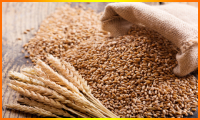
India's wheat output may set new record of over 112 lakh tonnes in 2022-23: Govt officials.
The country's wheat production is likely to set a new record of more than 112 million tonnes in the 2022-23 crop year (July-June), according to official sources. Wheat production had declined to 106.84 million tonnes due to heat wave in key growing states in 2021-22 crop year, as per the agriculture ministry data.
In 2020-21, the country had achieved record wheat output of 109.59 million tonnes.
'The crop prospect of wheat crop is better due to current weather conditions and slightly higher acreage. The total production is estimated to be more than 112 million tonnes this year,' sources said.
Sowing of wheat, the main rabi (winter) crop, had begun from October onwards, while harvesting will start from March/ April.
According to the latest data, farmers have sown wheat in 332.16 lakh ha till January 6 of the current rabi season of the 2022-23 crop year (July-June), against 329.88 lakh ha during the same period last year.
Higher coverage was reported from Rajasthan (2.52 lakh ha), Uttar Pradesh (1.69 lakh ha), Maharashtra (1.20 lakh ha), Gujarat (0.70 lakh ha), Chhattisgarh (0.63 lakh ha), Bihar (0.44 lakh ha), West Bengal (0.10 lakh ha), Jammu & Kashmir (0.06 lakh ha) and Assam (0.03 lakh ha), according to the data.
Source: economictimes.indiatimes.com
Roundtable of Secretary, FPI with industry associations/business chambers/IPAs/Trade agencies on the activities related to Mega Food Event 2023.
Secretary, FPI, Smt Anita Praveen chaired a roundtable interaction with international industry associations / business chambers / trade agencies on the activities related to Mega Food Event 2023 on Thursday, 12th January 2023 at Vigyan Bhawan Annexe, New Delhi. This was the fourth session in the series of roundtable interactions that are being held with key stakeholders such as major agri-food companies, resident commissioners of States and UTs, Central Ministries and Departments, and other relevant stakeholders. The roundtable witnessed participation from representatives of 13 countries.
During the keynote address, Secretary, FPI informed the participants that the Mega Food Event will be organized between 03rd to 05th November 2023 in New Delhi. She encouraged the participants to share their inputs and expectations from the Mega Food Event which will provide opportunities for all stakeholders from farm to fork such as processors, equipment manufacturers, technology providers, start-up innovators, etc.
Source: pib.gov.in
Bangladesh drags its feet to sign contracts with India co-op agencies to import 2 lt rice.
Bangladesh is hesitating to sign contracts with Indian co-operative agencies NCCF and Kendriya Bhandar (National Cooperative Consumers Federation of India Ltd) to import two lakh tonnes of parboiled rice under government-to-government (G2G) deals following criticism that is paying more.
Dhaka is dragging its feet as it is being criticised for offering $35/tonne more to these cooperative agencies than what private traders offered in a 50,000 tonnes global import tender.
Bangladesh placed a letter of intent (LOI) to purchase one lakh tonnes each of parboiled rice from NCCF and Kendriya Bhandar on December 21, 2022, at $433.60 and $433.50 a tonne, respectively.
Utilising opportunity
In addition, it floated two global tenders to procure 50,000 tonnes each as part of its efforts to procure 3 lakh tonnes of parboiled rice for the public distribution system.
India’s Bagadiya Brothers was the lowest bidder in the first tender opened on December 21, offering the cereal at $393.90/tonne. Singapore’s AgroCorp International offered the most competitive rate in the second tender opened on December 27 at $397.03.
The LOI was placed after accepting the Indian cooperatives’ offer. The Indian agencies were to furnish bank guarantees but as it got delayed by six days, Bangladesh has utilised the opportunity to probably renegotiate by refusing to accept them, trade sources, who did not want to be identified, said.
'It was a minor clerical error that delayed the bank guarantee. If it wanted, Bangladesh could have accepted the guarantee,' said a trader.
Dhaka’s need
Bangladesh media reports said the Sheikh Hasina Wajed government’s Food Ministry and the Cabinet committee that decides on public procurement have cleared the imports.
Trade sources said Bangladesh had to pay more since it required the rice from the current crop within two months. 'Had it given more time and opted for an older crop, it could have got the rice at a cheaper rate,' an official said on condition of anonymity.
Traders say the additional amount that Bangladesh is paying is justified since it is looking for a guarantee in delivery. 'You cannot be sure of delivery of such huge quantity from private traders, who are bidding aggressively by settling for a lower margin,' the trader said.
An email sent to Bangladesh’s Directorate General of Food did not get any response until this report was published.
India most competitive
Rice exporters say Indian rice is the most competitive in view of this aggressive bidding. A South-based exporter told businessline that in 2021 some exporters settled for a margin as low as $1 a tonne.
Traders wonder where can Bangladesh find parboiled rice more competitively in the global market. 'Bangladesh officials had gone to Vietnam, Thailand and Cambodia scouting for supplies in November. They returned empty-handed. India stepped up to help despite being overlooked,' they said.
Currently, private traders in India are quoting 5 per cent broken parboiled rice at $380 a tonne free-on-board (f.o.b). Thailand, the main competitor, is offering the rice at $517 f.o.b and Pakistan, whose stock positions are not clear, is quoting $453-57 f.o.b.
Traders say India’s kharif rice production scenario is still unclear, though procurement for the central pool is higher than last year. In these circumstances, Bangladesh’s best bet would be to buy from these cooperative agencies under the G2G deal as supply will be guaranteed even if India resorts to any sudden export curb.
'Officials in Dhaka have to remember how India banned wheat exports all of a sudden. Rice exports are also restricted,' the trader pointed out.
A senior trader said India, which currently enjoys a 40 per cent of the global rice market, will be calling the shots in two years.
Source: thehindubusinessline.com
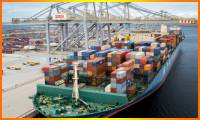
Trade Policy Forum has resulted into a smoother, friendly and trusted business environment for both India and USA: Shri Piyush Goyal.
Union Minister for Commerce and Industry, Consumer Affairs, Food and Public Distribution and Textiles, Shri Piyush Goyal today said the India US Trade Policy Forum has resulted into a smoother, friendly and trusted business environment for businesses from both sides to expand their trade and investment. He was briefing the media after the conclusion of 13th Ministerial Trade Policy Forum (TPF) dialogue at Washington DC.
Shri Goyal said TPF, which was relaunched in a new form in November 2021, has become a very robust and outcome oriented platform to have free and frank discussion on a plethora of issues of mutual interest. Informing about the 13th Ministerial TPF dialogue, Shri Goyal said that issues related to resolving WTO disputes, restarting of exports of wild caught shrimps, speeding up of business visas, resilient supply chains, data flow and addressing climate change were discussed.
Shri Goyal said both countries had a robust discussion on finding bilateral solutions to outstanding WTO disputes between them. He hoped for a satisfactory outcome in the next few months over these issues.
Explaining the background on exports of wild caught shrimps from India to the US, Shri Goyal said exports were banned by the US due to concerns around turtles in the areas where shrimps were being fished. He said that fruitful discussions took place between both for restarting wild caught shrimps exports from India to the USA. He informed that turtle excluder device which will minimise impact of fishing on sea turtle population has been designed with support from the US. He said exports will be restarted post the successful completion of trials of these devices.
He said India has requested USA to expedite the issuance of business visas to facilitate faster movement of business persons across both sides.
Another important focus issue was the discussion around strengthening resilient global supply chains. Shri Goyal said both the countries are keen to have an effective and trusted supply chain between them in several areas including telemedicine services.
He further informed that discussions took place on environmental issues around sustainable finance to promote innovative clean technology, circular economy, technology required to address climate change.
He informed that both nations have shared interest to have greater flow of data between two countries and are continuing engagement on data protection and privacy.
He said a data protection and privacy bill which has been put for public consultation by MEITY is an effort by the Indian Government to align the needs of the industry while also maintaining a high standard of data protection and privacy.
Minister also announced that a new TPF working group on resilient trade has been created. This new working group will enable both sides to deepen our dialogue on a range of issues which will help us enhance our resilient supply chains and also help us create sustainable bilateral trade relationships to meet challenges of tomorrow.
Briefing about his meeting with his US counterpart Secretary Gina Raimondo, Minister said he had a positive dialogue and Secretary will visit India in March with high power delegation of CEOs. He said CEO forums on both sides are putting in lots of effort to come up with a robust framework to help expand trade business and manufacturing.
He said several other aspects regarding India’s efforts to become self-sufficient in areas like semiconductor, defence production, strengthening laws around quality standards, were discussed.
He also informed India will be hosting the next round of talks on IPEF in February in New Delhi.
Speaking about his engagements with CEOs of US companies during his course of visit, the Minister said they are looking at India as a trusted partner to diversify their dependence on the geographies, to expand their own manufacturing set-ups. US Companies have ambitious plans and are looking to invest large capital and bring technology to India.
Responding to a question on progress regarding GSP, Shri Goyal said India has requested US to restore GSP. Having said that, he also mentioned that withdrawal of GSP has not been detrimental to growing trade ties.
When asked about Mini trade deals, Shri Goyal said both the countries are looking at bilaterally much larger footprints for trade and investments rather than mini trade deals. Focus is on greater market access, ease of doing business between two countries.
Speaking about IPEF, he said India stands with USA in its commitment to free and open indo pacific.
He said the focus at the level of Ministerial meetings TPF is to set context and principles on which further engagements/negotiations can take place at official level. We have moved out of 1:1 ratio based outcomes and are now looking at bigger substantive outcomes. He informed that progress is being made on specific issues like mangoes issues on agriculture, animal husbandry, FSSAI.
Shri Goyal said the G20 presidency is a great opportunity for India, which is today the voice of the global south, a voice of the less developed countries, to bring balance in the G20 discussion on areas of world interest. He said for example in the area of environment, while it’s a collective responsibility of all the countries, its important that developed countries also recognize that developing countries will need affirmative actions such as low cost finance, technology support. He further said G20 priorities in India have been widely welcomed and USA has committed to give full support to India’s efforts to make the G20 truly a vibrant body in which we can discuss issues around sustainability, climate change, poverty alleviation, SDGs. He said G20 presidency is going to be an exciting opportunity for India to provide leadership to many challenges that the world is facing. On G20 engagements in India, he said it will be held in over 56 locations across length and breadth of the country, in every state every UTs. New Initiatives like startup 20 under B20 engagement will also be launched.
Source: pib.gov.in