13 Jan, 2023
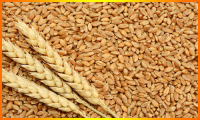
Govt will take appropriate decision in March-April on lifting wheat export ban: DGFT chief.
Director General of Foreign Trade Santosh Kumar Sarangi on Thursday said the government will take an appropriate decision on the demand to lift the ban on wheat exports at the time of crop harvest around March-April. Before this decision, a review will be done of the gap between the demand and supply of wheat in the country, he said. The head of the Directorate General of Foreign Trade (DGFT) was in Indore to participate in the Global Investors Summit 'Invest Madhya Pradesh' organised by the MP government. India banned wheat exports in May 2022 with immediate effect as part of measures to control rising domestic prices. Asked about the demand for lifting the ban, Sarangi told PTI, 'The wheat crop is harvested in the country generally in March-April. Around that period, the government will take an appropriate decision on this subject.' 'At the time when it will be felt that there is an equilibrium in the demand and supply of wheat, arrangements will be made to allow the export of this food grain,' he said on the sidelines of the investors summit. Sarangi also said special attention should be paid to promote exports from Madhya Pradesh in the area of textile production as there is a huge availability of cotton as the raw material for this industry in the state. He also said along with wheat, rice, fruits, vegetables and spices, there is a scope of increasing the export of organic and non-organic chemicals and engineering products from the state. To a question, Sarangi said the government's Production Linked Incentive (PLI) scheme is currently being run for 14 sectors and could be expanded to some more areas.
Source:
economictimes.indiatimes.com
|
13 Jan, 2023
FSSAI releases comprehensive standards for identification of basmati rice.
Food regulator FSSAI for the first time has come out with comprehensive standards for the identification of basmati rice as part of efforts to ensure fair trade practices and check adulteration. Basmati rice should have a natural fragrance characteristics of basmati rice and there should be no artificial colouring, polishing agents and artificial fragrances. These standards, which have been notified, will be effective from August this year. 'For the first time in the country, Food Safety and Standards Authority of India (FSSAI) has specified the identity standards for basmati rice...,' the Health Ministry said in a statement. Basmati rice includes brown basmati rice, milled basmati rice, parboiled brown basmati rice and milled parboiled basmati rice. The FSSAI has come out with these standards through Food Safety and Standards (Food Products Standards and Food Additives) First Amendment Regulations, 2023 notified in the Gazette of India. 'As per these standards, basmati rice shall possess natural fragrance characteristics of basmati rice and be free from artificial colouring, polishing agents and artificial fragrances,' the statement said. These standards also specify various identity and quality parameters for basmati rice such as average size of grains and their elongation ratio after cooking. These norms also state maximum limits of moisture, amylose content, uric acid, defective/damaged grains and incidental presence of other non-basmati rice etc. 'The standards are aimed at establishing fair practices in the trade of basmati rice and protect consumer interest, both domestically and globally,' the ministry said. These standards will be enforced with effect from 1st August 2023. Basmati rice is a premium variety of rice cultivated in the Himalayan foothills of the Indian sub-continent and is universally known for its long grain size, fluffy texture and unique inherent aroma and flavour, the ministry highlighted. Agro-climatic conditions of the specific geographical areas where basmati rice is grown; as well as the method of harvesting, processing and ageing of the rice contributes to the uniqueness of basmati rice. Due to its unique quality attributes, basmati is a widely consumed variety of rice both domestically and globally. India accounts for two thirds of its global supply, the statement said. Being a premium quality rice and fetching a price higher than the non-basmati varieties, the ministry said that the basmati rice is prone to various types of adulteration for economic gains which may include, among others, undeclared blending of other non-basmati varieties of rice. 'Therefore, in order to ensure supply of standardised genuine basmati rice in domestic and export markets, FSSAI has notified regulatory standards for basmati rice that have been framed through extensive consultations with the concerned government departments / agencies and other stakeholders as well.'
Source:
economictimes.indiatimes.com
|
13 Jan, 2023
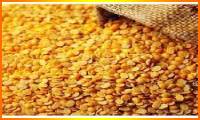
1 MT tur dal imports likely as output dips.
India is likely to import a million tonnes of tur dal (pigeon peas) in the marketing year 2023-24 to meet the domestic demand as production in the country is expected to drop due to wilt disease, said Rohit Kumar Singh, secretary, Department of Consumer Affairs. 'We will be importing 10 lakh tonnes of tur dal against last year's 7.6 lakh tonnes to meet the domestic demand,' said Singh. The marketing year for tur is from December to November. Tur is mainly imported from east African nations and Myanmar. These countries have an export surplus of 1.1-1.2 million tonnes, so availability is not an issue, according to Singh. 'The disease, wilt, has been seen in certain areas in Karnataka and Maharashtra and could affect production by 10-12%,' said Suresh Agrawal, president, All India Dal Mill Association. The government is also set to relax some quality norms of the Food Safety Standards Authority of India levied on imported pulses to speed up the process of quality checks at the port. 'This will help the commodity reach the market faster,' said Singh. The Centre had earlier extended the import of tur and urad pulses under the 'free' category for another year, till March 31, 2024, according to a notification by the Department of Commerce. The decision has been taken to ensure seamless import of these pulses and palm oil to augment the domestic availability and ensure affordable rates for consumers.
Source:
economictimes.indiatimes.com
|
13 Jan, 2023

India and United States to increase dialogue on food, agricultural trade in 2023.
India and the United States have established a new working group to build sustainable supply chains and boost bilateral trade, the governments said in a joint statement on Thursday. The working group will initially focus on trade facilitation, digitization of customs procedures, issues related to sustainable finance and the scaling up of innovative clean technologies, according to the statement issued after a Trade Policy Forum meeting in Washington D.C. At a meeting co-chaired by India's trade minister, Piyush Goyal, and U.S. Trade Representative Katherine Tai, the countries also agreed to continue close monitoring of visa issues and increase dialogue on food and agricultural trade issues in 2023. The United States will also consider India's interest in the restoration of beneficiary status under the U.S. generalized system of preferences program, the statement added. The Trade Policy Forum, revived in 2021 after a gap for four years, will reconvene on a ministerial level before end of 2023. The two countries said they mean to continue to work together on resolving outstanding trade issues. 'Waiting for all-or-nothing comprehensive agreements will only slow our shared goal of achieving a $500 billion trade relationship,' the president of the U.S. Chamber of Commerce's U.S.-India Business Council, Atul Keshap, said in a statement. Goyal also said the two countries are looking at larger bilateral footprints for trade and investments than mini deals, with a focus on greater market access and ease of doing business. U.S. companies are also looking to invest more in India, he added. 'U.S. companies have ambitious plans and are looking to invest large capital and bring technology to India,' Goyal said in a statement released on Thursday.
Source:
economictimes.indiatimes.com
|
13 Jan, 2023
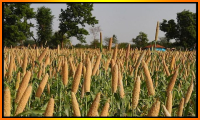
Guyana offers 200 acres of land to India for production of millets for private sector.
Guyana president Mohamed Irfaan Ali on Thursday offered 200 acres of land in Guyana to India for cultivation and production of millets for private sector after UN declared 2023 as the International Year of Millet (IYOM). The Guyanese president made the offer in a meeting with agriculture minister Narendra Singh Tomar. 'During the meeting, he asked the Indian minister to send a team of experts to set up millets farm in Guyana and promised all help in production and promotion of millets in the Caribbean and Latin American countries,' said the Agriculture Ministry said. Irfaan Ali also requested for Prime Minister Narendra Modi’s presence at the Conference of Heads of Government of the Caribbean Community (CARICOM) in February 2023 to present India’s vision on agriculture and food security. 'A virtual address by PM Modi to 17 heads of states will go a long way in promoting and popularizing millets in the Carribean community,' he said. He also extended an invitation to the union agriculture minister to visit Guyana and deliver a lecture on agriculture and millets as chief guest in CARICOM Agri forum scheduled in August, 2023. Tomar said that the International Year of Millets 2023 will provide an opportunity to increase global production, efficient processing and better use of crop rotation. 'It will promote millet as a major component of the food basket.' The minister added that UN declared 2023 as IYOM on the initiative of PM Modi. 'The Ministry of Agriculture and Farmers Welfare is working in mission mode to increase millet production and consumption in collaboration with other central ministries, all state governments and other stakeholder organizations.' He said that millets provide an alternative food system in times of increasing demand for vegetarian foods as it contributes to a balanced diet as well as a safe environment and described them as the gifts of nature to mankind. 'Asia and Africa are the major production and consumption centers of millet crops, particularly India, Niger, Sudan and Nigeria are the major producer of millet and it his earnest desire to see that Millets should take pride of place in every eating plate in the globe.' Millets were the first crops to be cultivated in Asia and Africa, later spreading as an important food source for advanced civilizations around the world.
Source:
livemint.com
|
12 Jan, 2023

Cabinet approves setting up three national level co-operative societies to promote export, organic farming.
The union cabinet on Wednesday approved setting up three multi-State co-operative societies to facilitate export, organic farming and seed distribution. 'These institutions will help in achieving the goal of ‘Sahakar-se-Samriddhi’ (Prosperity through Cooperation) through the inclusive growth model of cooperatives,' Union Labour Minister Bhupendra Yadav said in a press conference. Further, he added that these will also be instrumental in improving rural economy. All three will be registered under Multi-State Cooperative Societies (MSCS) Act, 2002. They can have members from primary to national level cooperative societies including primary societies, district, state and national level federations, multi-State cooperative societies and farmers producer organisations (FPOs). All these cooperatives will have their elected representatives in the Board of the society as per its by-laws. Targeting exports First of the three, Multi-State Cooperative Export Society, will act as an umbrella organisation for the export of surplus goods/services produced by various cooperative societies across the country with support from relevant Union Ministries. The institution will be promoted with support from relevant Ministries especially the Ministry of External Affairs and Ministry of Commerce and Industry through their export related policies, schemes and agencies by following the ‘whole of government approach’ for undertaking exports of all goods and services produced by cooperatives and related entities. 'Higher exports through the proposed society will increase production of goods and services by the cooperatives at various levels thus leading to more employment in the cooperative sector. Processing of goods and enhancing the services to match international standards will also generate additional employment. Increased export of cooperative products would, in turn, also promote 'Make in India' thus leading to Atmanirbhar Bharat,' a government statement said. Going organic Second institution, Multi-State Cooperative Organic Society will manage various activities related to organic sector by providing certified and authentic organic products. It will also provide institutional support for aggregation, certification, testing, procurement, storage, processing, branding, labelling, packaging, logistic facilities, marketing of organic products and arranging financial assistance to the organic farmers through cooperatives and will take up all promotion and development related activities of organic products with the help of various schemes and agencies of the government. It will empanel accredited organic testing labs and certification bodies who meet the criteria specified by the society to bring down the cost of testing and certification. The third one, Multi-State Cooperative Seed Society will act as an apex organisation for production, procurement, processing, branding, labelling packaging, storage, marketing and distribution of quality seeds; strategic research and development; and to develop a system for preservation and promotion of indigenous natural seeds. It will promote seed replacement rate (SRR) and variety replacement rate (VRR) and help reducing the yield gaps thereby enhancing productivity. 'Quality seed production through this national level seed cooperative society will increase the agriculture production in the country leading to more employment in the agriculture and cooperative sector; reducing the dependence on imported seeds and provide boost to rural economy, promoting 'Make in India' and leading to Atmanirbhar Bharat,', the statement said.
Source:
thehindubusinessline.com
|
12 Jan, 2023
India, US 'thinking big', says Goyal, rules out mini trade deal or FTA.
The Modi government and the Biden administration are 'thinking big' in terms of their trade and commerce relationship, a top Indian official said Wednesday as he ruled out the previously talked about mini trade deal or a free trade agreement and noted that revoking of GSP is not a priority for New Delhi. The previous Trump administration has revoked the Generalized System of Preferences (GSP) from India. The GSP allows eligible developing countries to export duty-free goods to the US. It is during the previous administration as well that the two countries were on the verge of a mini trade deal, which has now been kicked out of the table. The Biden administration is also not in favour of a free trade agreement which businesses from either side are now talking about. 'I think in terms of GSP, I have not heard any significant clamour from the Indian industry. To focus our energies on the GSP issue, I have raised it today with my counterparts,' Union Commerce and Industry Minister Piyush Goyal told reporters at a news conference at the conclusion of the India-US Trade Policy Forum meeting which he co-chaired with US Trade Representative Katherine Tai. 'It's an issue, which is probably something that the Congress will have to take a call on. But it's not something which has been high on our priority lists or something on which we spend a lot of time to discuss, it was discussed, but more in passing,' he said. 'I have placed on record our requests that GSP should be restored. But I can assure you the trade between the two countries continues to expand very rapidly. I do not think that GSP withdrawal has been to the detriment of our growing trade ties,' the minister said in response to a question. Responding to another question on the mini trade deal, Goyal said 'it was too mini' to really merit any great effort on both sides. 'We have even forgotten most of those issues. We are looking at much, much bigger ambitions in our trade with the US.' 'While of course, we are doing free trade deals, we've concluded and entered into force free trade deals with Australia and the UAE. We are in active dialogue with the UK, Canada with Israel, and the EU. The United States is currently not looking at any free trade deals with any country whatsoever, as a matter of their political policy,' the minister said when asked about the prospects of a free trade deal. 'The FTA is not on the table,' he asserted. 'Rather than that, we are focusing on greater market access. We are focusing on ease of doing business between the two countries, you're looking at, bilaterally, a much larger footprint between the two countries, for trade, investment and business. And therefore, the small mini trade deals have lost relevance today,' Goyal said. Meanwhile, India and the United States on Wednesday launched a new TPF Working Group on Resilient Trade. This new Working Group will enable officials to deepen bilateral dialogue on a range of issues that can enhance the resiliency and sustainability of the trade relationship so that it is better able to withstand current and future global challenges, said a joint statement. During the meeting, Goyal and Tai underlined the significance of the TPF in forging robust bilateral trade ties and enhancing the bilateral economic relationship to benefit working people in both countries. They appreciated that bilateral trade in goods and services continued to rise rapidly and reached about USD160 billion in 2021. Responding to a question, Goyal disagreed that TPF has not been productive in terms of deliverables. 'I don't think so. There are market access issues which don't come into the TPF in terms of the detailing. Both Katherine Tai and I decided that we should leave those details for the officials to work on and continuously expand,' he said. Goyal said they both agreed to move beyond the one is to one issue like India will open table grapes for them and the US will open up their country for Indian mangoes. 'That was the level of discussions and that many trade deals that were once upon a time and massaged or in earlier engagements,' he said. 'Katherine Tai and I decided that this is not the age and day where we will be looking at literally, that I give you one item you give me one item and we square off issues. I think we both agreed that we should look at the big picture. We should look at what's good for both countries. And at the ministerial level, we set the context in with them, the official should find that day to day solutions,' he said. 'We discussed and decided that let's move out of this one is to one ratio based outcomes and look at the big picture. For example, on the big picture when we discussed semiconductor manufacturing, we are looking at a much deeper engagement with the US on semiconductor manufacturing,' the minister said. Several American companies are looking at the big Indian opportunity on defense production, making it competitive, giving an opportunity to tap into the large Indian market, where they are encouraged to make India products and they feel comfortable working with India. 'Because unlike other countries, we do not steal technology. We allow you to maintain the sanctity of your technology. We allow you to keep your technology with you. We don't demand technology transfer,' he asserted.
Source:
economictimes.indiatimes.com
|
12 Jan, 2023
FCI to start open market sales soon.
India’s wheat production in the current crop year (2022-23) is likely to touch a record 112 million tonne (MT), an increase of around 5% compared to the previous year, thanks to favourable weather conditions, higher acreage and sowing of climate resilient varieties. Meanwhile, the FCI has decided to undertake open market sale of 2 – 2.5 MT of wheat to the bulk buyers such as flour millers, this month to curb rising prices of the grain. Sources told FE the finance ministry approval for these sales is expected soon. With higher productions easing concerns over the stocks, the ban on exports of the grain may be up for review in March. India banned wheat exports for ensuring domestic supplies in May last year. Wheat retail inflation rose by 17.6% in November 2022 on year. Following the government decision to discontinue the free ration scheme from December 31, 2022, the FCI is likely to have 3 MT of surplus wheat stock by the end of the current fiscal against the buffer. As per latest assessment, the wheat stocks held with FCI by April 1, 2023 would be a comfortable 11.3 MT against a buffer of 7.4 MT. 'Sowing of climate resilient varieties, favorable weather conditions currently prevailing and slightly higher acreage under wheat may lead to this year’s wheat production to reach a record 112 MT,' Gyanendra Singh, Director, Indian Institute of Wheat and Barley Research, a Karnal-based institute affiliated to the Indian Council for Agricultural Research, told FE. Singh said that the production may even surpass the 112 MT mark if favorable weather continues till March end. In the current season, area under wheat has touched 33.2 million hectare (MH), against the last five year average sown area of 32.4 MH as per the data released by the agriculture ministry last week. Wheat, a key rabi or winter crop, is mostly grown in Punjab, Haryana, Rajasthan, Uttar Pradesh and Rajasthan. Last crop year (July-June), a sudden rise in temperature in March pulled down the output mainly of late sown crop. 'However, the chances of a repeat of last year’s phenomenon of spike in temperature in March, considered as the grain filling stage of the crops, is unlikely to occur based on experience and views from India Meteorological Department,' Singh said. Climate resilient varieties such as DBW187 and DBW 303 recommended for nearly 75% of the wheat grown area of around 33 MH, can withstand sudden change in temperature and farmers across all the key growing states have been using the varieties. Wheat output in the 2021-22 crop year, as per the agriculture ministry, has declined by around 3% on year to 106.8 MT because of heat waves during the flowering stage of the crop in March. Due to lower production and higher global demand, Food Corporation of India (FCI)’s procurement in the 2022-23 marketing season fell by more than 56.6% to only 18.8 MT against 43.3 MT purchased from the farmers in the previous year. The FCI had earlier stopped sale of wheat in the open market from its stocks for the first time more than a decade in view of a sharp drop in procurement in 2022-23 rabi marketing season and additional allocations of the grain under the free ration scheme. The FCI has fixed Rs 2250 a quintal (excluding transportation cost) as the open market sale scheme (OMSS) price. The FCI’s open market sales stood at 7 MT in 2021-22. 'We would like to keep wheat prices under check, prior to the commencement of procurement season which begins from April 1, 2023,' an official said. The MSP announced for wheat to be procured during 2023-24 marketing season (April-June) is Rs 2125/quintal. Sources said that if the mandi prices of wheat prevail far above the MSP, it would adversely impact the government’s MSP procurement drive. According to the department of consumer affairs’ price monitoring cell data, the modal retail price of wheat and flour (atta) on Saturday rose to Rs 28/kg and Rs 35/kg, respectively, fromRs 22/kg and Rs 28/kg six months ago.
Source:
financialexpress.com
|
12 Jan, 2023

India invites Israeli PM Netanyahu to India at an early date .
Prime Minister Narendra Modi on Wednesday had a telephone conversation with the newly elected Israeli Prime Minister Benjamin Netanyahu and invited him to visit India 'at an early date'. 'Prime Minister conveyed his warm congratulations to H.E. Mr. Netanyahu for his election as the Prime Minister of Israel for a sixth time and wished him a very successful tenure,' the Ministry of External Affairs (MEA) said in a statement. Mr. Netanyahu paid a six-day visit to India in January 2018, when he was welcomed by Mr. Modi at the Indira Gandhi International Airport here. The Israeli leader was then accompanied by a 130-member business delegation. Mr. Modi had visited Israel in 2017, when Mr. Netanyahu had welcomed him at the Ben Gurion airport. 'The two leaders expressed satisfaction at the rapid progress in the India-Israel Strategic Partnership in recent years, and agreed on the potential for further strengthening strategic cooperation in a variety of areas. Prime Minister invited H. E. Mr Netanyahu to visit India at an early date,' the MEA said. India and Israel joined the U.S. and the United Arab Emirates to form the I2U2 — a new regional initiative — in July 2022. The initiative is aimed at increasing cooperation in areas like digital connectivity, agriculture, infrastructure, trade and clean energy. Mr. Netanyahu was sworn-in on December 29, 2022 when he also won a vote of confidence in the Israeli Parliament, the Knesset. Israel’s Ambassador to India Naor Gilon had informed the media in December 2022 of the possibility of the visit by the Israeli leadership to New Delhi. Days after Mr. Netanyahu’s swearing-in, the National Security Minister of his far-right government, Itamar Ben Gvir, walked into the Temple Mount for a brief period on the morning of January 3. Under a status quo formula, the religious location is administered by the Jordanian Islamic Waqf while the Israeli police maintains security at the premises. Mr. Gvir’s visit to the venerated site was criticised by Palestinian groups like the Hamas as well as the U.S. administration. The religious space which is called Temple Mount by the Jewish side and Haram al Sharif by the Muslim community is a sensitive zone, and has been at the centre of competing claims from both sides in the past. The shrine is considered holy by all the Abrahamic faiths but non-Muslims are forbidden from praying at the location that they can visit only as tourists at designated hours. The site which triggered the first controversy of the Mr. Netanyahu sixth term came under Israeli control after the Arab-Israel war of 1967.
Source:
thehindu.com
|
12 Jan, 2023
Chili farmer from Madhya Pradesh sets up processing unit after buying expensive chili power.
About 8 months ago, Prem Tantvare of Piplia Khurd in Maheshwar, Madhya Pradesh went to sell his chilies in the local market. He was happy to some extent with the price of chili in the local market, but when he bought chili powder, he was very disappointed with the high price. He then made up his mind to start his own business for processing chili into chili powder. For this purpose, Prem approached the Department of Horticulture in May-June 2022 to set up his industry with one district one product scheme. Today, Prem Tantvare has started a grinding unit by purchasing chilies from other farmers besides his own. Now Premji is selling not one but five types of chili powder at good prices. From 15 December 2022 till now, he has sold 10 to 15 quintals of chili powder. His buyers include local farmers of the village, traders, and nearby hotels and dhabas. Bought machines worth 14 lakhs Prem Tantvare told he received a grant from the government in a very short time. Bank officials visited his house and took complete information after which the bankers were satisfied and the case was also approved. He received a 35 percent grant of Rs. 7.18 lakh through the scheme PM Formalisation of Micro Food Processing Enterprises (PMFME) of the Ministry of Food Processing Industries for a total project cost of Rs. 26 lakhs. This amount was received with a 3 percent interest subvention.
Source:
en.krishakjagat.org
|