Indian diaspora in Canada to promote HP's ODOP drive.
Indian Diaspora or Himachali Pravasi Global Assocation (HPGA) Canada has decided to promote Himachal Pradesh's 'one district one product' drive this was conveyed to Sanjay Kumar Verma India High commissioner to Canada on Saturday, in a press release issued here today copy of which also shared with UNI HPVA.
The step has been taken as new year resolution to promote Himachali Handloom, Kangra Tea, Morel and Himachal Tourism in Canada under ODOP drive of Himachal Pradesh. Mr. Sanjay Kumar Verma assured his high office HCI support and guidance for upcoming projects of the association such as ODOP, GI linkage and other ways to promote Himachal and its culture in Canada. HPGA members discussed the HPGA's vision and mission with HCI and made him aware about the projects which HPGA is doing along with it's associated counterparts (Himachali Diaspora) across the globe from 18 countries (USA, Canada, England, Ireland, Scotland, Germany, Netherland, Japan, Malaysia, Singapore, UAE,Bahrain, Oman, Qatar, India, Australia and New Zealand.
Source: uniindia.com
FSSAI to give 6 months for FBOs to comply with milk logo norms
The Food Safety and Standards Authority of India (FSSAI) has decided to give six months to food business operators for compliance with the regulations related to milk logo. The FSSAI has stated that when finalised, six months’ time shall be given to FBOs for compliance with the specification of milk logo.
The milk logo was made mandatory through FSS (Food Products Standards and Food Additives) Amendment Regulations notified in December ’21. However, specifications including dimensions and colour scheme of the milk logo, were yet to be finalised. Subsequently, directions issued by the FSSAI extended the time period for compliance of the notification up to Dec 31, 22.
According to the FSSAI, since the specifications of milk logo were still being finalised, representations have been received from stakeholders for providing an extension of at least six months from the date of issue of such specifications for compliance with the mandatory milk logo required under the amendment regulations.
And the food authority has decided to give six months' time for compliance with the specification, after it was notified.
“It has been decided to extend the timeline for mandatory compliance with the clause 2(iv) of the notification related to milk logo for a period of six months from the date of issue of logo specifications by FSSAI,” reads the order.
Source: fnbnews.com
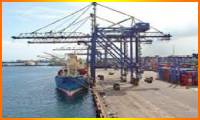
Paradip Port cargo handling up 16 per cent in April-December period
Paradip Port handled 96.81 million tonnes (mt) of cargo between April and December, up 15.5 per cent over the year-ago period, with nearly 12.6 mt being the throughput handled in December alone.
This was the highest monthly throughput handled, a statement said, adding that the port is poised to 'set an all-time record for cargo handling of more than 125 mt' in the current fiscal.
Thermal coal handling grew by 58.11 per cent year-on-year. At 30.56 mt, thermal coal accounted for nearly a third (31.56 per cent) of the total volume handled.
'Paradip Port is emerging as a coastal shipping hub and plans to ship thermal coal to power houses in Rajasthan, Uttar Pradesh and Haryana,' the statement said.
Petroleum, oil and lubricant (POL) products formed the second largest chunk of items handled at 27.59 mt or 28.49 per cent of the total.
Other items handled include coking coal (7.88 per cent of the total at 7.63 mt) and iron ore and pellets (constitute 11.76 per cent at 11.39 mt).
Source: thehindubusinessline.com
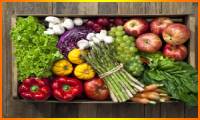
Blockchain to be used to push farm exports.
India's natural farming could soon get a technological push through blockchain, as the government plans to use the technology across all export-driven crops to increase the country's food shipments and incentivise farmers to take up chemical-free processes.
The Niti Aayog has launched a pilot project in collaboration with the Himachal Pradesh government on apple farming, to ensure quality production while also monitoring the produce across the entire storage and supply chain.
'Lack of quality produce and traceability has hampered India's food exports apart from disincentivising growers. Blockchain technology can help bridge this gap,' a senior government official told ET.
'By recording information about products at every stage of the agricultural supply chain, a blockchain helps remove redundant processes, ensure quality control and monitor storage conditions,' the official added.
After the completion of the pilot project on apples, the technology will be replicated across other crops including mangoes, bananas, grapes and pomegranates, besides vegetables.
India ranks second in fruits and vegetable production in the world, after China, but its share in the global fruits and vegetable market is just 1%.
Under the blockchain technology, IoT sensors are used to generate crop data and its storage, distribution of grown crops to the food processing companies, supply of processed food to wholesalers and retailers and its storage. Through this, even consumers can back-trace the supply chain to ensure quality products while buying.
According to the Agriculture and Processed Food Products Export Development Authority, India exported fresh fruits and vegetables worth about $1.52 billion in 2021-22, with fruits accounting for $750.7 million and vegetables for $767.01 million.
Exports of processed fruits and vegetables totalled $1.73 billion. These included about $1.12 billion of processed vegetables including pulses and $610.69 million of processed fruits and juices.
Major destinations for India's fresh fruits and vegetables include Bangladesh, the UAE, Nepal, the Netherlands, Malaysia, Sri Lanka, the UK, Oman and Qatar.
Source: economictimes.indiatimes.com
Vietnam is central to India s Act East policy.
Many dramatic paradigms of foreign policies of different countries have witnessed the collapse of the USSR and the end of Cold War. India has been one of the front runners of inducing its long pending reforms, specifically in foreign policy. India has announced its Look East Policy (LEP) in 1991 by the then Prime Minister P.V. Narasimha Rao. Undoubtedly, India’s LEP remains the most effective foreign policy during the post-Cold War period. It involves intensive and continuous engagement with Southeast Asian countries in the field of connectivity, trade, culture, defence and people-to-people-contact at bilateral, regional and multilateral levels, in the first phase. It has been extended geographically up to Japan and New Zealand which includes East Asia and South Pacific as its second phase. The Narendra Modi government has upgraded the LEP as Act East Policy (AEP) in November 2014 which reflects the intension of intensifying India’s engagement in the region by its ‘action’ instead of ‘looking’. Of course, India has completed all the formalities (ASEAN Sectoral Partner, 1992; Dialogue Partner,1996; Summit Level Partner, 2002; and Strategic Partner, 2012) to emerge as one of the major players of the region.
General understanding is that Myanmar stands as the Gateway of India to Southeast Asia in terms of geographical merits but Vietnam has been incipient of the India’s Gateway and caters the needs of geopolitical, security, trade, culture, energy, defence, etc., of mutual interests. As Modi attributed during his visit to Vietnam in 2014, Vietnam had been in the frontrunner of India’s engagement in the region. Both the countries committed to share common concerns of security, sovereignty, territorial integrity and maintaining rules-based order, specifically in the Indo-Pacific region. On the lines of common understanding and mutual interests, India and Vietnam entered into a ‘Comprehensive Strategic Partnership’ during the landmark visit of Modi to Vietnam in September 2016.
Prime Minister Modi asserted on different occasions that Vietnam is an important pillar of India’s Act East Policy and is an important partner in India’s Indo-Pacific vision. Indo-Pacific region emerges as one of the strategic engagements of India and Vietnam, since China factor has been common in Indian Ocean and South China Sea. Vietnam, as the Chair of ASEAN, made tremendous efforts to bring out ‘ASEAN Outlook on the Indo-Pacific’, on the other side, India has launched its ‘Indo-Pacific Oceans Initiative’ complementing each other. These two significant initiatives have prominently underlined the ‘China Factor’ as a common agenda. The former Vietnamese envoy to India Mr. Pham Sanh Chau has emphasized that Vietnam has been a staunch supporter of India’s Act East Policy and serves as a bridge between India and ASEAN, helping India extend its reach beyond the Indian Ocean.
The China factor will always be the focal point during any discourse on India-Vietnam partnership. Vietnam enjoys the advantages and encounters the challenges being a neighbouring country to China. It may be difficult to separate Vietnam from China in the spheres of culture, diaspora and economy over centuries. On the other flip, Vietnam waged a war with China and facing many maritime issues in South China Sea. Desires of a common man from Vietnam completely differs from the reality at ground level. Vietnamese want to invite India as an alternative to China but not any country from the west. Surprisingly, they are looking at India with great ray of hope for the future. Unfortunately, for many domestic challenges, India may not be the immediate solution for Vietnamese expectations.
In fact, India’s inner ambitions are also on the lines of emerging as an active player in Southeast Asia, especially in Vietnam. But the current scenario has not been a conducive atmosphere for both the countries. There are many negative factors which may either delay or stop such process of finding alternatives. Firstly, the economic dependency of Vietnam on China, as per the world bank data of 2020, China has emerged as the major trade partner with 17 per cent of exports and 32 per cent imports of Vietnam, whereas India accounts only 1.72 per cent of imports and 1.86 per cent of exports of Vietnam’s total imports and exports; secondly, the impact of Chinese diaspora dominates the Indian diaspora; and thirdly, Vietnam has the established links with China and trying to convert the established friendship of India into an expected partnership. Therefore, it may be difficult for India and Vietnam for an immediate alternative to China in Vietnam.
Any strategy to strengthen the India-Vietnam partnership reminds the role of China. Naturally, the impact of China over Vietnam’s economy and society can’t be ignored which may hinder the relations between India and Vietnam. Therefore, these two countries primarily concentrate to find alternatives to avoid dependency on China..
IMPACT OF ACT EAST POLICY
Vietnam-India relations have seen steady expansions over the past years, especially since the two countries upgraded their ties to a comprehensive strategic partnership in 2016. India-Vietnam bilateral efforts have brought many more interesting and effective results since 2014 in different spheres of mutual interests. Bilateral trade has crossed US$ 14.0 billion for the first time as against the trade in 2013-14 was only US$ 8.0. Tourism sector has registered tremendous growth of annual visitors to Vietnam and vis-à-vis. The number of Indian visitors to Vietnam rose from 82,000 in 2016 to 1,69,000 in 2019. Direct flights are connecting different major cities of India and Vietnam for the first time.
India and Vietnam are vigorously engaged and designed grand defence framework. In this direction India enhanced its Line of Control to Vietnam which has been multiplied during the last two decades. Significant development has been that both the Defence Ministers signed the ‘Joint Vision Statement on India-Vietnam Defence Partnership towards 2030’ to bolster bilateral defence cooperation. Further, the two ministers agreed on the finalisation of the USD 500 million Defence Line of Credit extended to Vietnam which helps to improve defence capabilities of Vietnam and furthering the government’s vision of ‘Make in India, Make for the World.’
India-Vietnam engagement matters much to the common desire of new paradigm in multilateralism with an inclusive approach towards establishing a strong regional security architecture. Such committed efforts of India and Vietnam cooperation, surely brings regional stability of Indo-Pacific region. The strategic cooperation between India-Vietnam would be critical towards building the vision laid out under India’s ‘Act East’ Policy. Strengthening ties with Vietnam will eventually lead a step towards the realisation of SAGAR (Security and Growth all in the region) initiative as hailed by the Indian Prime Minister. As the Chair of G20, India looks forward to intensifying and expanding its global, regional and domestic initiatives to bring peace and prosperity at regional and global levels apart from protecting its national interests.
Prof. G. Jayachandra Reddy is former Director, Centre for Southeast Asian and Pacific Studies, Sri Venkateswara University, Tirupati.
Source: sundayguardianlive.com

Sri Lanka to import eggs after price controls decimate layer, parent bird populations.
Sri Lanka’s cabinet of ministers have given the go ahead to import eggs Trade Minister Nalin Fernando said as domestic prices rose steeply after price controls disrupted farming on top of a currency collapse.
'The cabinet of ministers gave the go ahead to take decisions according to the needs of the people, and import if necessary,' Trade Minister Nalin Fernando told reporters in Colombo after a cabinet meeting Monday.
'If necessary, we will look at the quantity and import to give eggs at a lower price to the people.'
It is said that eggs can be imported from India for about 35 rupees.
Sri Lanka’s eggs were around 20 to 25 rupees before the rupee collapsed from 200 to 360 to the US dollar. Sri Lanka’s chicken meat and egg prices are generally higher than the world due to import licensing on maize which has pushed up production costs.
As a result of protection given to maize farmers and collectors, Sri Lanka has lost an opportunity to be a competitive export producer of poultry products.
Eggs spiked to 65 rupees after the Consumer Affairs Authority imposed price controls amid high prices and shortages of feed leading to killing of layers for meat.
Industry officials say lack of demand for layer chick then led to a collapse in the parent bird population in hatcheries and farmers ordering chicks have to wait until March.
Sri Lanka’s daily egg output is estimated to have dropped to about 4 million a day from the normal 7 million after farmers killed layer chicken for meat in the wake of price controls imposed by the Consumer Affairs Authority last year.
Sri Lanka needs around 80,000 parent birds to produce the required layer chicks but now there are only around 42,000, at the main hatcheries according to the All Island Poultry Associatio. It takes about 5.5 months grow both layer parent birds and birds.
Source: economynext.com

IHA & NIFTEM collaborate to strengthen Indian honey industry
India Honey Alliance (IHA), and National Institute of Food Technology & Entrepreneurship Management (NIFTEM), collaborate with an aim to strengthen the creation of a robust honey ecosystem in India.
The agreement includes identification and mutual collaboration in the areas of, testing systems for honey, research and data analysis, training facilitation and any emerging areas in the related fields.
Under the long-term strategic partnership, both the organisations will work together to create scientific systems in terms of food safety, nutrition for honey and bee-keeping products across the country. NIFTEM has recently got the tag of Institute of National Importance and, will use their academic training center to train the bee-keeping and honey community and FBOs, along with assisting in the creation of a robust scientific eco-system for all related products.
Dr Chindi Vasudevappa, vice chancellor, NIFTEM, said, 'We are looking forward to collaborating with India Honey Alliance (IHA), in their vision to support and strengthen the honey ecosystem. Together with IHA, we aim towards establishing and setting up industry benchmarks for quality, authenticity and safety of Indian honey, and work towards creating robust, affordable and accessible technology for the honey industry. Together, we look forward to awareness activities which will promote knowledge and information dissemination & training of stakeholders.'
Additionally, the International Centre of Excellence in Food Safety & Quality at NIFTEM would also function as a National Reference Laboratory of IHA in the chosen area of competence for the purpose of honey authenticity, method development, proficiency testing. NIFTEM will also function as the academic partner of IHA for developing the content and conducting the training, for all areas of the honey value chain, through a joint certification programme.
Deepak Jolly, general secretary, IHA, said, 'The honey industry in India has a huge potential to grow. However, we have not been able to take full advantage of the available opportunities of the sector and there is a long way to go when it comes to organising the fragmented industry. There are several challenges at the ground level which include training and capacity framework, understanding & rollout of appropriate testing methodology, quality, authenticity etc. Our partnership with NIFTEM is a step forward in addressing many such issues. We hope that this collaboration will be highly fruitful and will result in win-win for both IHA and NIFTEM.'
Source: fnbnews.com
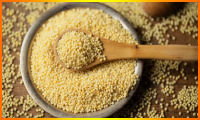
Govt. lines up millet-centric activities as International Year of Millets kicks in
The Centre ministries, State governments and Indian embassies have been allocated a focused month in 2023 to carry out various activities for the promotion of International Year of Millets
The government on January 1 announced it has lined up a series of millet-centric promotional activities across the country as the International Year of Millets (IYM) kicks in, while noting that millets are also integral part of the G-20 meetings.
The Centre ministries, State governments and Indian embassies have been allocated a focused month in 2023 to carry out various activities for the promotion of IYM and increase awareness about benefits of millets, the nodal agriculture ministry said in a statement.
January is the focused month for the Union Ministry of Sports and Youth Affairs as well as State governments of Chhattisgarh, Mizoram and Rajasthan for conducting activities, it said.
The Ministry also urged international organisations, academia, hotel industry, media, Indian Diaspora, start-up communities, civil society, and all others in the millets value-chain to come forward and join hands to revive the forgotten glory of 'Miracle Millets' through the grand celebration of IYM.
Millets are also an integral part of the G-20 meetings and delegates will be given a true millet experience through tasting, meeting farmers and interactive sessions with start-ups and FPOs, it added.
Till January 15, the Sports and Youth Affairs Ministry has planned 15 activities which include engaging sports persons, nutritionists and fitness experts through video messages, conducting webinars on millets with leading nutritionists, dieticians and elite athletes, promotion amplification through Fit India App, etc.
The Food Processing Industries ministry too will be organizing millet fair-cum-exhibitions in Andhra Pradesh, Bihar and Madhya Pradesh, while food safety regulator FSSAI will organize 'Eat Right Melas' in Punjab, Kerala and Tamil Nadu.
Chhattisgarh, Mizoram and Rajasthan will carry out specific activities for sensitization and promotion of IYM.
The States will be conducting millet-centric activities including mahotsava/ melas and food festivals, training of farmers, awareness campaigns, workshops/ seminars, placement of hoardings and distribution of promotional material at various key locations in the state, etc.
Other States that are organising similar activities in the month of January include Maharashtra, Uttarakhand and Punjab, the statement said.
In the current month, the Agricultural and Processed Food Products Export Development Authority (APEDA) and Agriculture Ministry will be participating in a trade show in Belgium wherein a multi-stakeholder delegation will showcase the diversity of Indian millets.
Moreover, Embassies of India across more than 140 countries will be conducting side events on IYM involving the Indian Diaspora through exhibition, seminars, talks, panel discussions, etc.
In January, the Indian embassy in Azerbaijan and Belarus will be conducting activities such as B2B meetings with the participation of local chambers, food bloggers, importers of food items and local restaurants etc.
Cooked millets dish exhibitions/ contests will be organized with the help of Indian diaspora and millet dishes will be served as part of the Republic Day celebrations.
The High Commission of India in Abuja and Consulate General of India in Lagos, as part of promotion of IYM, have planned a Millets Food Festival and a Millets Food preparation competition in January.
The Millets Food Festival would be held at the High Commission premises and provide stalls for preparation with invitees including both Nigerian dignitaries and Indian community.
The agriculture Ministry has taken a proactive multi-stakeholder engagement approach to achieve the aim of IYM 2023 and taking Indian millets globally.
On December 6, 2022, U.N. body Food and Agriculture Organization had organized an opening ceremony for the IYM at Rome, Italy. The government hosted a special 'Millet Luncheon' for Members of Parliament in the Parliament complex.
Recognising the enormous potential of Millets, which also aligns with several U.N. Sustainable Development Goals (SDGs), India has prioritized millets. In April 2018, millets were rebranded as “Nutri Cereals”, followed by the year 2018 being declared as the National Year of Millets.
The U.N.'s declaration as IYM 2023 has been instrumental for India to be at the forefront in celebrating the millet year. Prime Minister Narendra Modi has also shared his vision to make IYM 2023 a "people's movement" alongside positioning India as the "Global hub of millets".
The global millets market is projected to register a CAGR of 4.5% between 2021-2026.
Millets' were among the first crops to be domesticated in India with several evidence of its consumption during the Indus valley civilization. Being grown in more than 130 countries at present, millets are considered traditional food for more than half a billion people across Asia and Africa.
In India, millets are primarily a kharif crop, requiring less water and agricultural inputs than other similar staples. Millets are important by virtue of its mammoth potential to generate livelihoods, increase farmers' income and ensure food and nutritional security all over the world.
Source: thehindu.com
Food safety certification validates ensuring safety and quality.
A food safety certification ensures compliances to legal requirements of the country of origin and destination country. A food safety certification enables the food business to work in the world market thereby reducing barriers to international trade. Food safety certification validates that the food business is managed by following healthy practices that ensure safety and quality. The environmental and other management systems are also required to be up to the mark along with the legal and standard compliant. If your business is associated with foods either directly or indirectly, you are eligible to get food safety certification. From legal compliance to market requirements, there are many reasons why a food business must have appropriate food safety certifications. Some of the reasons to consider getting food certifications are:
To maintain food quality
To ensure safety and well-being of the consumers
To avoid food hazards and risks
To gain trust of customers, stakeholders and vendors
To become legal compliant
To validate that the practices are healthy and safe
Here is the list of Food Standards and Services that you can incorporate in your organisation irrespective of the size or the product. The objective of the services is to help businesses maintain a standard quality, safety and efficient practices which in return enable them to gain customer trust along with global recognition.
Food Safety Certifications
ISO 22000 FSMS
ISO 22000 is applicable to all the types of food suppliers as it provides assurance within the food supply chain at the national as well as international level. With globalisation increasing and easier inter-state and international expansion, it has become essential to ensure the safety and quality of the foods for the well-being as well as trust of the people.
FSSC 22000
The objective of the FSSC 22000 is to control food safety risks. FSSC stands for Food Safety Management Certification Scheme which essentially provides structured plans and system for managing food safety risks and as a result, safe products.Since it fulfils all the Global Food Safety Initiatives (GFSI) benchmark requirements, the FSSC 22000 is widely accepted and recognised as a trustworthy certification across the globe. It is applicable to the food, feed and food packaging manufacturing and supplying sector. Also, its flexibility allows food businesses to integrate with other management systems for quality, environment, health as well as safety.
Source: fnbnews.com
Agricultural and processed food products exports up by 16% to USD 17.43 billion for period April-November FY 22-23 compared to same period last year.
The exports of agricultural and processed food products rose by 16 percent in the eight months (April-November) of the current Financial Year 2022-23 in comparison to the corresponding period of FY 2021-22.
According to the provisional data by the Directorate General of Commercial Intelligence and Statistics (DGCI&S), the overall export of Agricultural and Processed Food Products Export Development Authority (APEDA) products increased by 16 percent growth in terms of USD during April-November 2022 to USD 17.43 billion from USD 15.07 billion over the same period of the last fiscal.
The initiatives taken by the APEDA (Agricultural and Processed Food Products Export Development Authority) that works under the Ministry of Commerce and Industry have helped the country in achieving 74 percent of its total export target for the year 2022-23 in eight months of the current fiscal.
For the year 2022-23, an export target of USD 23.56 billion has been fixed for the agricultural and processed food products basket and an export of USD 17.435 billion has already been achieved in eight months of the current fiscal.
As per the DGCI&S provisional data, processed fruits and vegetables recorded a growth of 32.60 percent (April-November 2022), while fresh fruits registered four percent growth in compare to corresponding months of the previous year.
Also, processed food products like cereals and miscellaneous processed items reported a growth of 28.29 percent in compare to the first eight months of the previous year.
In April-November, 2021, fresh fruits were exported to the tune of USD 954 million that increased to USD 991 million in the corresponding months of the current fiscal. Exports of processed F&V jumped to USD 1310 million in eight months of the current fiscal from USD 988 million in the corresponding months of the previous year.
The export of pulses has witnessed an increase of 90.49 percent in eight months of the current fiscal in compare to the same months of the last fiscal as the export of lentils increased from USD 206 million (April-November 2021-22) to USD 392 million (April-November 2022-23).
Basmati Rice exports witnessed a growth of 39.26 percent in eight months of FY 2022-23 as its export increased from USD 2063 million (April-November 2021) to USD 2873 million (April-November 2022), while the export of non-Basmati rice registered a growth of 5 percent in eight months of current fiscal. Non-basmati rice export increased to USD 4109 million in eight months of the current fiscal from USD 3930 million in the corresponding months of the previous year.
The export of poultry products increased by 88.45 percent and the export of other cereals recorded a growth of 12.90 percent in eight months of the current fiscal. The export of poultry products rose to USD 82 million in eight months of the current fiscal from USD 43 million in corresponding months of the previous year.
Similarly, dairy products recorded a growth of 33.77 percent as its export rose to USD 421 million in April-November 2022 from USD 315 million in the corresponding months of the previous year.
Wheat export has registered an increase of 29.29 percent in eight months of the current fiscal as its export rose to USD 1508 million in April-November 2022 from USD 1166 million in April-November 2021.
Other cereals’ exports increased from USD 619 million in April-November 2021 to USD 699 million in April-November 2022 and the export of livestock products increased from USD 2665 million in April-November 2021 to USD 2709 million in April-November 2022.
On the achievement, M Angamuthu, Chairman, APEDA, said, 'We have been working with all the stakeholders such as farmers, exporters, processors to ensure that quality agricultural and processed food products are exported from the country.'
The rise in the export of agricultural and processed food products is the outcome of various initiatives taken for the export promotion of agricultural and processed food products such as organising B2B exhibitions in different countries, exploring new potential markets through product-specific and general marketing campaigns by the active involvement of Indian Embassies.
Several initiatives were also taken to promote products having registered geographical indications (GI) in India by organising virtual Buyer Seller Meets on agricultural and food products with the United Arab Emirates and on GI products, including handicrafts with the USA.
Source: pib.gov.in