
250 tonnes of apple exported to India from Ghazni.
A large amount of apple has been exported to India from southern Ghazni province, says the provincial Agriculture, Irrigation and Livestock Department.
Source: pajhwok.com

Indian eggs to hit Bangladesh market at Tk 11 next week: officials.
Commerce ministry officials expect eggs imported from India to start arriving in the market at 'much lower prices' in the coming weeks, a month after the government announced egg imports to increase the supply in the market and to stabilise the price.
According to them, at least three companies will import eggs from the Indian state of Haryana by next Tuesday.
Saifur Rahman, the owner of Tiger Trading, informed http://bdnews24.com that they along with Popular Trade and Ripa Enterprises had initiated the process of opening LC (Letter of Credit).
The egg shipment will initially be sourced from Haryana, with each egg costing Rs 5.5. A 33 percent duty will be levied on this price. Each of the three companies will import 240,000 eggs in the first phase.
'We anticipate that each egg will be priced at around Tk 11 for consumers. By removing intermediaries, we are streamlining the distribution process and partnering with Happy Haat, an organisation that will store our eggs in their warehouse,' Saifur elaborated.
Ruhul Amin, an additional secretary at the import and domestic trade cell of the Ministry of Commerce, told bdnews24 that it has taken some time for traders to initiate the process.
However, importers have now confirmed that these eggs will be in the market next week, he added.
In the past two months, the soaring prices of eggs and broiler chicken meat have plunged people into financial trouble amid a spike in commodity prices.
To address this, the commerce ministry fixed the maximum price of eggs at Tk 12 apiece on Sept 14.
As the market remained volatile, the ministry started allowing egg imports on Sept 17. So far, 15 companies have been approved to import a total of 150 million eggs.
Source: bdnews24.com

Sri Lanka takes Amul s help to achieve self-sufficiency in the dairy industry.
The well-established and successful Amul model of dairy development through co-operatives is being exported to other countries across the world and crisis-hit Sri Lanka is set to be a beneficiary of this.
A joint venture agreement has been signed between India’s National Dairy Development Board, Gujarat Cooperative Milk Marketing Federation and Cargills of Sri Lanka to make the latter self-sufficient in the dairy industry. NDDB and GCCMF will hold a majority stake in the venture and Cargills will hold the remainder. Under the terms of the agreement, some of the dairy farms under the government-controlled MILCO and the brand Highland will come under the JV.
The country produces about 40 per cent of its total domestic demand and depends on imports for the remaining. The new JV company will take up the task of making Sri Lanka self-sufficient in the dairy industry in one decade, GCMMF’s Managing Director Jayen Mehta said. He added that the investment in the venture will be finalised based on the valuations of the assets being handed over to the JV.
The agreement was signed on Wednesday in the presence of President of Sri Lanka Ranil Wikremsinghe, India’s External Affairs Minister S Jaishankar, Gopal Baglay, High Commissioner of India in Sri Lanka. Other ministers and officials in the Sri Lankan government were also present.
Sri Lanka had collaborated with NDDB way back in 1997-2000 and earlier this year the government again sought assistance from India through NDDB and AMUL to help it achieve its nutritional requirements and improve the livelihoods of smallholder dairy farmers across the country.
Source: thehindubusinessline.com
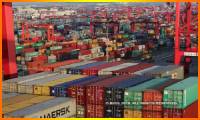
Trade between Bahrain and India tops $750mln.
BILATERAL trade between Bahrain and India has reached between $750 million and $800m since the start of the year, based on preliminary data of the past few months – and there is an increased interest from both sides to boost the commercial ties further.
Revealing this, new Indian Ambassador Vinod Jacob said the historic ties between the two nations continue to be strong, with both looking to explore new opportunities in different sectors.
In his first interview since he assumed office in August, he spoke about trade ties, plans to promote tourism, labour issues and community outreach programmes.
'The emphasis on trade is a reflection of the strength of the bilateral partnership between India and Bahrain, and for over centuries, we have had this strong engagement in the commercial sphere between the two nations,' he told the GDN yesterday.
'If you look at the trade (figures) last year, it reached $1.6 billion, which, I would say, is a little bit of an abnormal figure.
'This was largely due to the response to pent-up demand during the Covid-19 lockdown period, and the restrictions lifted thereafter due to which trading took place at very high levels.
'I expect this year to see a sort of correction, and the data shows that in the past few months since the start of the year between $750m to $800m of bilateral trade has taken place.'
Mr Jacob explained that in 2005 the India-Bahrain bilateral trade was worth $575m.
He added that he expected the trade to reach an estimated $1.3bn during the financial year with both sides stepping up bilateral engagement.
Bahrain’s imports from India include rice, boneless meat, shrimp, sugar, fresh fruit and vegetables, machinery and engineering goods, medicines, jewellery and polymers.
Meanwhile, its exports to India include urea, methanol, mineral fuel, mineral oils and products, iron ore, aluminium, copper and bridge sections.
'Cumulative Indian investment in Bahrain was $1.4bn between April 2000 and June this year, while Bahraini investments are slowly increasing and as of today it stands at $185m worth of foreign direct investment in India,' said Mr Jacob.
During a high-level Bahrain delegation visit to India in March backed by the Bahrain Economic Development Board, it was announced that two leading India-based companies, Aerolam Middle East and Titan Company Limited (Titan), would launch their operations in Bahrain with a total investment of approximately $45m.
The envoy also pointed out that Bahrain-based Investcorp, a leading alternative investment manager, had inaugurated its office in Mumbai in 2019.
Mr Jacob has been a diplomat for more than two decades, and his last posting was as the Indian Deputy High Commissioner in Sri Lanka. He has also tackled India’s bilateral relations with Pakistan, Afghanistan and Iran.
When asked for an update on the introduction of RuPay card and India’s Unified Payment Interface (UPI), the envoy said discussions continue with relevant stakeholders.
Indian Prime Minister Narendra Modi during his state visit to Bahrain in 2019 first announced the launch of the RuPay scheme following the signing of an agreement.
RuPay, which is the Indian payment network, allows Indians to use the card abroad, and Indian Commerce Minister Piyush Goyal announced last week that the scheme would be operational in the UAE by mid-next year.
The GDN previously reported that RuPay was set for wide acceptance at ATMs and point of sale (PoS) terminals across Bahrain under a new collaboration between NPCI International Payments (NIPL) and Benefit.
'India is keen to promote the ease of digital payments and this is a priority to even reach the rest of the international community,' said Mr Jacob.
'Talks started between the two sides but there were interruptions due to the Covid-19 pandemic.
'We hope to pick up the pieces very soon and make substantial progress.'
On the potential GCC-India Free Trade Agreement, the diplomat added that similar agreements were signed with Sri Lanka, while trade agreements were inked with the UAE and Australia.
'There are efforts to have an FTA between the GCC and India, and discussions have been going on for a few years.
'I am hopeful that now we have gone over the Covid-19 challenges and restrictions there will be space or opportunity opening up for the two sides to sit and discuss.'
'I expect the process to be interesting.'
Source: zawya.com

Special Campaign 3.0 of Department of Agricultural Research and Education during 2nd -7th October 2023.
Department of Agricultural Research and Education (DARE) is actively participating in the Special Campaign 3.0 driven by Government of India. The focus of the Department and its Attached Office/Autonomous Bodies and their field offices is to adapt cleanliness and elevate workplace experiences in their Offices/premises.
DARE and its subordinating organisations viz. Indian Council of Agricultural Research (ICAR) including Krishi Vigyan Kendras (KVKs) and its regional offices, Agricultural Scientists Recruitment Board (ASRB) and three Central Agricultural Universities (CAUs) and their colleges are also conducting the Special Campaign across all over country. The preparatory phase started from 15th September, 2023 when targets were identified under various categories and sites for cleaning were selected. The special focus during the campaign is on Record Management, space management by weeding out of physical files, creating awareness about Swachhata in Villages with Farmers and enhancement of workplace experience in offices/premises.
The Department has identified 19843 physical files and 4717 E-files for review during the Special Campaign 3.0. Out of this, 6279 physical files have been reviewed so far, while 4171 physical files have been weeded out during this Campaign. 4717 electronic files have also been reviewed and 1465 have been identified for closure. Further a target of 3326 numbers of 'Special Campaign on Swachhata' during 2nd -31st October, 2023 has been set out and out of this, 690 ‘Swachhata Campaigns’ have been conducted so far. Around 34,886 square feet space has been freed and revenue of Rs. 10,35,731/- has been generated. The campaign is in full swing to achieve the targets set by the Department. Secretary, DARE has directed all the concerned officers to bring all the pendencies to 'zero' by 31st October, 2023 and encouraged the officers to channel their best efforts to achieve the targets of the campaign. The campaign will continue up to 31st October, 2023.
Source: pib.gov.in

Nirmala Sitharaman meets Brazil's Minister of Economy, discusses issues of mutual interest.
Finance Minister Nirmala Sitharaman on Thursday met Brazil's Minister of Economy Fernando Haddad and discussed various issues of mutual interest, including the strengthening of Multilateral Development Banks (MDBs). She also met UK Chancellor of Exchequer Jeremy Hunt and discussed Bilateral Investment Treaty among other issues.
'FM Smt. @nsitharaman thanked Mr. @Jeremy_Hunt for UK's strong and continued support to #G20India Presidency particularly in the Framework Working Group #FWG co-chair,' the finance ministry said in a post on X.
These meetings took place on the sidelines of the 4th G20 Finance Ministers and Central Bank Governors (FMCBG) and the IMF-WB annual meetings in Marrakech, Morocco.
Brazil will take over the G20 presidency from India on December 1 and will host the next G20 meeting in 2024.
Sitharaman wished Brazil success and assured full support.
'The two ministers discussed issues of mutual interest, including strengthening MDBs, mobilising finance for climate change, crypto assets, financing cities of tomorrow, advancing financial inclusion, managing global debt vulnerabilities, and BRICS expansion,' the finance ministry said in a statement.
With Brazil taking over the G20 chair in 2024 and India joining South Africa as part of the 2024 G20 Troika, she said, 'it is an excellent opportunity to provide positive momentum and elevation to the issues of the Global South, like the G20 Finance Track had done under the India Presidency to advance the interests of the Global South.'
Source: economictimes.indiatimes.com
Shri Goyal asks the industry to accelerate production activity and make India a global hub for manufacturing, highlights reforms and schemes undertaken to support manufacturing ecosystem.
Union Minister of Commerce & Industry, Consumer Affairs, Food & Public Distribution and Textiles, Shri Piyush Goyal highlighted various reforms and schemes undertaken by the government to support the manufacturing ecosystem and welcomed the suggestions to catalyse the process for achieving economies of scale. While chairing the 'Chintan Shivir - Unleashing the power of India’s Manufacturing Industry' at Bharat Mandapam, New Delhi today, the Minister commended the attendees, recognizing their spirited engagement and unwavering dedication to propelling India's manufacturing sector to scale greater heights and to become globally competitive.
Shri Goyal also asked the industry to accelerate production activity and contribute in making India a global hub for manufacturing. The Minister emphasized the Government's steadfast commitment to providing consistent policies while acknowledging the pivotal role and the support from industry leaders. The presence of Union Minister of State for Commerce and Industry, Shri Som Prakash, further underscored the significance of the occasion, emphasizing the collaborative spirit driving India's industrial growth.
The Department for Promotion of Industry and Internal Trade (DPIIT), Ministry of Commerce and Industry in association with SCALE Committee and Invest India organized a 'Chintan Shivir - Unleashing the power of India’s manufacturing industry'. The event brought together industry leaders from across CII, FICCI, ASSOCHAM, ACMA, SIAM along with knowledge partners BCG and McKinsey. The event was successfully hosted at Bharat Mandapam, Pragati Maidan, New Delhi today. The conclave served as a crucial platform for discussing the challenges and opportunities within India’s manufacturing sector. The major focus was to understand and deliberate on increasing manufacturing capacities across various sectors and enhance contribution to GDP by 2030.
The event evoked enriching discussions on 12 sectors (Textiles, Capital Goods, Auto and EV, Defence, Aerospace & Space, Metals & Mining, Leather & Footwear, Energy, Food Processing, Chemicals, Medical Devices, ESDM Value Chains, Drones) from manufacturing industry on key topics such as creating manufacturing ecosystem, maintaining quality standards, promoting domestic value addition, government policies and support, fostering industry agility These discussions laid the foundation for innovative strategies, trade enhancement, integration with global supply chains and increased investments in the Indian Manufacturing Industry.
The presentations made by each sector encompassed a comprehensive industry snapshot, detailing the current and projected industry potential and export potential. The presentations delved into the critical enablers necessary for achieving these goals spanning the ecosystem, policy landscape, technological advancements, and skill development initiatives. Moreover, attendees experienced a detailed overview of the proposed collaborative plans between the government and the industry to drive these initiatives forward.
The discussions were the culmination to the sector-based brainstorming session of the working groups held with Industry Members and the SCALE Committee.
Source: pib.gov.in

7th Africa Agri Expo Commences in February, 2024, Participate in Largest Agriculture Show.
The Africa Agri Expo (AAE) - Africa’s largest agriculture gathering is a well-known event among agriculture enthusiasts — especially those who are targeting the African agriculture sector.
The show after the conclusion of its previous six editions has now started inviting participation for its successor — the 7th edition, scheduled for 19th and 20th Feb 2024 in Sarit Expo Centre, Nairobi, Kenya.
The two-day exhibition cum conference will witness participation from more than 35 countries and TAB group (the organizers) are confident of surpassing all previous records. The anticipated footfall will be 5000+ with thousands of global agriculture companies taking the lead.
The show is held under the patronage of the Ministry of Agriculture and Livestock Development Kenya and companies that will be here at the show will get tremendous exposure in terms of new markets, insights, prospects and captivating deals.
New technologies and solutions that can aid and uplift Africa’s rich agribusiness market will be the centre of attraction when displayed in front of the attendees. Top companies from agrochemicals, agriculture machinery, equipment, technologies, fertilizers and irrigation and many more will be present, and it will be a boon to watch new offerings first-hand.
The conference, having 500+ senior delegates, ministry officials, key associations’ representatives, decision-makers and highly designated persons will run parallel to the exhibition.
With more than 10 sessions comprising technical, knowledge and panel discussions – the expert speakers will talk about how to strengthen the agriculture sector, make food more resilient and at the same time figure out ways towards achieving sustainability targets — incorporating new technologies and solutions.
Top companies and organisations like Rokosan, Natural Storage Solutions, DVA, Draminski, A & S Thai Works, Navbharat Seeds, Borregaard, Agrex Do Brasil, Kenya Investment Authority (KenInvest), National Irrigation Authority Kenya (NIA), Agriculture Sector Network (ASNET), aak/CropLife Kenya, Kenya Organic Agriculture Network (KOAN), Society of Crop Agribusiness Advisors of Kenya, Rural Agency for Community Development and Assistance (RACIDA) and many others who are already coming to the show to engage and talk business with people that matter most to their business.
7th AAE is running an Early Bird Offer till 31st Oct 2023 wherein interested companies can book their booths or buy conference tickets at significantly discounted rates.
Source: krishijagran.com

Women and youth agri-preneurs need support to foster just and resilient agri-food systems.
Women and youth agri-preneurs still face challenges that prevent them from leading progress towards just and resilient agri-food systems, including lack of access to finance, limited land ownership, informal and unpaid work, and few opportunities to voice their needs. These were the lessons brought to the forefront by a panel of business leaders, model farmers, and scientists at the ongoing international gender conference at ICAR-NASC Pusa, here from 9-12 October 2023. 'From research to impact: Towards just and resilient agri-food systems', which is hosted by the CGIAR GENDER Impact Platform and the Indian Council of Agricultural Research (ICAR),and which was inaugurated by President of India Smt Droupadi Murmu on Monday.
The second day of the four-day conference saw a total of 18 parallel sessions, including presentations of more than 80 scientific posters on topics such as remedies for reducing the drudgeries of women farmers in post-harvest processing of millets; assessments of gender gaps among women street vendors and hawkers; and gendered drivers of seed choice among farmers in Andhra Pradesh and Telangana.
Reiterating the significance of this conference, Dr Nicoline de Haan, Director of the CGIAR GENDER Impact Platform, said 'Globally, gender inequality in agri-food systems remains a very significant challenge – overall, women are often less food secure than men, and they are hit harder by external shocks, such as floods and droughts. We are combining research, evidence and practical understanding to guide policy-makers and investors towards best-bet solutions that can help us get on track to achieve Global Goals on gender equality and women’s empowerment.'
Speaking in a panel discussion on second day of conference were Smt. Anusha Jookuri,?Founder and Director of Bee Fresh Products, a honey producer company; Shri Dhruv Tomar, Founder and Managing Director of M Lense Research Private Limited, an outfit that produces single-use milk adulteration testing cards; Shri Jyotsna Kaur Habibullah, CEO of Lucknow Farmers Market, an online platform that links start-ups and consumers; and Dr. Akriti Sharma, CEO of Pusa Krishi, an ag-tech incubator, and Senior Scale Scientist at ICAR. The session, titled ‘Grounding the research: Experiences from the field’, was chaired by Dr. V. Geethalaxmi, Vice Chancellor, Tamil Nadu Agricultural University.
Shri Jyotsna Kaur Habibullah said when you go out in the fields, it is women that you see working on the fields, but those women neither own the land, nor get the proceeds from their hard work. Most of the time their works goes unnoticed and is unpaid.
Smt. Anusha Jookuri, who grew her business from five to 1,500 beehives in four year, lamented the lack of access to finance, reporting that banks were reluctant to grant her loans when she first started, and are only willing now that she has already achieved business success.
Shri Dhruv Tomar expressed that successful entrepreneurship takes persistence and patience, while Sharma added that capacity-building and technology assistance can support farmers to change their mindsets and become agri-preneurs.
The panelists’ experiences were complemented by a keynote presentation by Dr Soma K Parthasarathy, a policy analyst at MAKAAM (Mahila Kisan Adhikari Manch). She expressed how women and landless tenant farmers could redefine and drive resilience in agri-food systemsthrough a ‘basket of activities,’ including farming, gathering, and environmental care work.
Dr Parthasarathy proposed that a move towards circular economies—of solidarity, exchange, and co-ownership—could be achieved by granting women access to spaces in which they can make their voices heard, by making women count in data, and through exchanges of seeds. She added that women’s roles and voices in climate discourse as well as in the formulation of policies on land and forest conservation should be enhanced.
The session was closed by Shri Eleanor Dean, General Manager, Outreach & Capacity Building, at the Australian Centre for International Agricultural Research (ACIAR). Dean said that poverty and inequality are underpinned by unequal power relations that are not exclusive to gender, and this is one of the reasons why ACIAR has expanded its work to encompass not only gender equality but also social inclusion, as expressed in its recently published Gender Equity and Social Inclusion (GESI) Strategy and Action Plan.
Source: pib.gov.in

Assam to Host Conclaves on Agriculture Value Chain Financing.
A series of Value-Chain Financing Conclaves is set to kick off in Assam from October 12 to November 2, with the ambitious goal of bringing about a transformation in the agricultural sector.
This innovative initiative, known as the Agri Value-Chain Financing Conclave, aims to bridge the knowledge gap and introduce effective financing tools to ensure seamless financial services in agriculture.
Organized by the Assam Rural Infrastructure and Agricultural Services Society (ARIAS) as part of the state-run Assam Agribusiness and Rural Transformation Project, these conclaves will be conducted in four key zones: Silchar, Jorhat, Morigaon, and Lakhimpur. The target audience includes farmers, farmer interest groups (FIGs), farmer producer companies (FPCs), self-help groups (SHGs), and traders hailing from 12 different districts of Assam.
The primary objectives of these conclaves are to promote value-chain financing models that benefit various stakeholders within the agricultural ecosystem.
This event will also serve as a platform for collaboration and knowledge exchange among participants from diverse sectors. Innovative financial products, digital financial literacy, financial inclusion, Kisan credit cards, and funding for agricultural infrastructure projects will be showcased to enhance access to agricultural finance for all involved in the value chain.
These conclaves are not just limited to district officials; they will also feature representatives from institutions such as the National Bank for Agriculture and Rural Development (NABARD) and other financial entities. Currently, despite a high demand for credit and financial services, there exists a significant knowledge gap and a dearth of suitable financial instruments, which have hindered the widespread provision of these services. Financial institutions often grapple with managing risks and costs associated with agricultural financing, resulting in a substantial gap in meeting the financing needs of the agricultural sector.
The Agri Value-Chain Financing Conclave seeks to address these challenges and usher in a new era of financial empowerment for the agricultural community in Assam.
Source: krishijagran.com