
Scientists should strive to infuse more mechanisation in agriculture, says Union Minister Rupala.
In view of the increasing demand for food, environmental degradation and challenges posed by climate change, there is an urgent need to transform agri-food systems into sustainable enterprises through scientific innovations, said Union Minister of Fisheries, Animal Husbandry and Dairying Parshottam Rupala.
He was speaking after inaugurating the 16th Agricultural Science Congress (ASC) here on Tuesday.
Rupala said agricultural scientists should strive to infuse greater mechanisation in the agriculture production process, and develop and popularise specialised farm implements for women in agriculture.
The Minister made the observation, during the Sagar Parkirama,drive that marine and inland water pollution has seriously affected aquatic life and coastal ecology. He exhorted scientists to find lasting and sustainable solutions to address this perilous threat.
The Union Minister highlighted that traditional farm produce such as pokkali rice need to be promoted and measures be taken to ensure profitability for farmers cultivating the GI tagged rice. He said minimising post-harvest losses is equivalent to boosting production and this can be achieved by focusing attention on advanced technological interventions.
The future of India’s agriculture depends a lot on how the accumulated scientific knowledge can be translated to commercial success, he said.
The Minister inaugurated the Agri Expo being held on the sidelines of the event which showcases innovative agricultural technologies of public and private sector research institutes, universities, agro-industries, extension agencies and NGOs.
Research on genomics
Himanshu Pathak, Secretary to the Department of Agricultural Research and Education (DARE) and Director General of the Indian Council of Agricultural Research (ICAR), said India’s foodgrain demand will rise to 340-355 tonnes by 2033. Research on genomics and genome editing would be the core focus for technological breakthroughs in agriculture and commodities where traditional breeding cannot yield the desired results.
Kerala Agriculture Minister P Prasad stressed on ensuring food and nutritional security for all the citizen of the country, while maintaining the health of the ecosystem and environment intact. He was emphatic that the ‘Poshaka Samrudhi’ scheme recently launched by the Kerala government will contribute towards this goal.
It is the time to turn to carbon neutral development pathways, and focus on newer technologies to augment production, he said adding that post-harvest sector also needs urgent attention.
Source: thehindubusinessline.com

Agriculture Ministry, SFAC & CSC Jointly Organizes FPO Mela to Showcase Products and Promote Farmer Empowerment.
The Ministry of Agriculture and Farmers Welfare, the Small Farmers Agri-Business Association (SFAC), and the Common Service Centre (CSC) organized a Farmer Producer Organization (FPO) Mela at INA Market, Delhi Haat. The event saw participation from major FPOs representing various regions and offered a glimpse of the diverse array of products from over 20 FPOs.
The FPO Mela was not just an exhibition but an opportunity for visitors to immerse themselves in the natural essence of farm-fresh products. The concept of Farmer Producer Organizations (FPOs) has been pivotal in transforming the agricultural landscape in India. These are essentially groups of farmers who engage in commercial activities related to farming and crop production within their respective regions.
They offer farmers substantial discounts on wholesale prices for essential agricultural inputs such as seeds, fertilizers, equipment, and manure. Additionally, they play a significant role in helping farmers bring their finished crops and produce to the market, thereby contributing to the overall rural economy.
To enhance accessibility to markets for farmers, the government has been actively establishing FPOs in every block across the country. Currently, more than 2,165 FPOs comprising 8 lakh farmers are engaged in business activities through the online platform, ONDC.
Sanjay Rakesh, Managing Director & CEO of CSC SPV, highlighted the organization's commitment to improving the lives of rural citizens. He emphasized that agriculture plays a central role in their initiatives and that CSCs have an extensive presence in remote areas, offering services such as tele-consultation, crop insurance, e-veterinary, Kisan Credit Card, and PM Kisan schemes to farmers. The organization is actively participating in the formation of FPOs across the country, with Village Level Entrepreneurs (VLEs) playing a significant role in empowering farmers.
CSCs have been instrumental in providing rural citizens with easy access to various government services, including caste, income, domicile, character certificates, and employment registration. Their reach, extending to over 5.5 lakh CSCs in remote areas, has brought about significant changes in the lives of people through e-governance.
In India, there are an estimated 12 crore small and marginal farmers, typically owning less than 1.1 hectares of land. These farmers require access to both production and post-production functions, including technology, quality inputs, seed production, farming machinery, value-added products, processing, credit, investment, and, most importantly, markets. The formation of FPOs is a critical step to address these challenges and increase farmers' income.
FPO Mela not only highlighted the benefits of joining FPOs but also educated farmers about accessing FPO services. The government's focus on promoting FPOs is a welcome step that promises to empower farmers and boost the rural economy, ensuring a brighter future for small and marginal farmers in India.
Source: krishijagran.com

India, UK may ink FTA by the end of this month.
India and the UK are likely to sign a proposed free trade agreement (FTA) in the last week of this month. It will be New Delhi's first such comprehensive deal with an industrialised nation, seeking to spur bilateral annual business beyond the current $20 billion.
India has extended an invitation to UK Prime Minister Rishi Sunak to visit India on October 28 and ink the ambitious pact, people aware of details told ET.
Senior commerce and industry ministry officials on Monday made a presentation to the Prime Minister's Office on the agreement, the people cited said.
UK sees Customs as bureaucratic
Trade negotiators met in the UK last week to finalise the contours of the pact, they said. The two contentious issues of rules of origin and intellectual property rights are still being discussed.
'India has invited the UK Prime Minister to sign the pact on October 28. Both sides are keen to ink it,' said one of the persons cited above.
The UK will be the first developed country with which India is seeking to sign a comprehensive FTA.
The pact will have 26 chapters. Product-specific rules, value addition, change in the chapter heading, and certification are being discussed in the rules of origin chapter, where an in-principle agreement has been reached.
Work in progress
India has sought assurance that the UK will not be used to route goods from other countries, as New Delhi is keen to check its overall burgeoning trade deficit that hit $263 billion in FY23, up from $191 billion the year earlier.
On the UK side, there is a perception that the Indian Customs apparatus is too bureaucratic, requiring elaborate paperwork.
Also, the UK's life sciences and biotech sectors had suggested 37 changes to India's intellectual property rights laws.
Separately, the UK and the European Union (EU) have sought amendments in India's Patents Act to allow the 'evergreening' of patents, especially in pharma. Section 3(d) of the Patents Act prohibits the grant of 'evergreening' patents, which are additional patents for a drug with no therapeutic benefit, and are seen to increase the term of a patent monopoly - a red line for India.
Experts also said that as elections are due in both countries next year, a difference of views on some points couldn't be entirely ruled out.
Source: economictimes.indiatimes.com
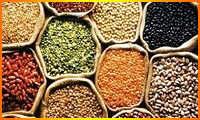
Govt mulling 100% procurement of pulses and oilseeds from farmers.
After allowing procurement of 100 per cent of production in case of tur (pigeon pea), urad (black matpe) and masur (lentil) at minimum support prices this year, the Centre is considering allowing more pulses and some oilseeds under it. However, the official procurement will depend on prices at agriculture market yards (mandis) as currently prices of some of these crops are ruling higher or at par.
In the Central Zonal Council meeting recently, co-operation minister Amit Shah is believed to have indicated that agri co-operative Nafed will be asked to buy 100 per cent of farmers’ production this year at minimum support prices (MSPs).
On June 6, the Centre announced its decision removing quantitative limit on procurement of tur, urad and masur under Price Support Scheme (PSS) for 2023-24 following approval by the committee of secretaries, with the objective to encourage farmers expand the area and increase production.
Move to raise acreage
'In order to boost domestic production, the government removes ceiling for procurement of tur, urad and masur under PSS for 2023-24 and farmers are free to sell any amount of their produce this year,' the Consumer Affairs Ministry had said in a release. The decision expected to increase the sowing area of tur and urad during current kharif and of masur in rabi season, it said.
However, according to the Agriculture Ministry’s compilation of sowing data from States, the pulses acreage in kharif 2023 was lower by 4 per cent at 123.57 lakh hectares (lh), compared with 128.98 lh in the year-ago period. Arhar, urad, moong, kulthi and other pulses all ended with a lower coverage.
The Agriculture Ministry, which manages the PSS scheme, moved the proposal well in advance before the CoS, headed by the Cabinet Secretary as it was apprehensive about production of pulses.
Stock limited extended
Under PSS, the government buys maximum 25 per cent of production of pulses and oilseeds from farmers at their minimum support prices (MSPs) when mandi rates fall below these benchmark prices. However, if States request, the ceiling is enhanced to 40 per cent.
The Centre had also imposed stock limit in June which got extended until December 31 for tur dal and urad dal, specifying wholesalers, retailers, big chain retailers, millers, and importers not to keep these pulses more than the specified limit.
Currently, the all India average mandi prices of tur are around Rs.9,561/quintal against its MSP of Rs.7,000, while that of urad at Rs.6,931/quintal against Rs.6,950/quintal MSP and moong Rs.7,877 against Rs.8,558/quintal MSP.
Source: thehindubusinessline.com
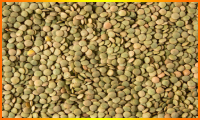
Bangladesh: Purchase body approves import of fertiliser, lentil, edible oil.
Finance Minister AHM Mustafa Kamal presided over the meeting on Wednesday (11 October).
As per separate proposals of the Ministry of Industries, the Bangladesh Chemical Industries Corporation (BCIC) will import a total of 60,000 tonnes of fertiliser of which 30,000 bulk granular urea will be imported from SABIC Agrinutrients Company of Saudi Arabia under a state level agreement while remaining 30,000 tonnes of bagged granular urea will be procured from Karnaphuli Fertilizer Company Limited of Bangladesh.
Some 100,000 tonnes of different kinds of fertiliser will be imported by the Agriculture Development Corporation (BADC) under the Agriculture Ministry.
Of the total import, the BADC will import 40,000 tonnes of DAP fertiliser from Ma'aden of Saudi Arabia, 60,000 tonnes of TSP fertiliser from OCP, SA of Morocco in two separate lots under state level agreements.
State marketing agency Trading Corporation of Bangladesh (TCB) will purchase a total of 18,500 tonnes of lentil from local and international suppliers.
Of this, 6,000 tonneswill be procured through open tender method (OTM) from local suppliers while remaining 12,500 tonnes will be imported from international suppliers under direct procurement method.
The TCB will import 5 million (50 lakh) litres of soybean oil from local suppliers through open tender method (OTM).
The committee approved three separate proposals of Public Works Department (PWD) for awarding contracts under the titles: 'Supplying fitting & fixing of Furniture', 'Supplying fitting & fixing of Curtain Accessories' and 'Supplying fitting & fixing of Home Appliance' at 1500 sft at number 02 of 20 storeyed Buildings of 136 Units Under the project of Construction of Rooppur Green city Residential complex at Ishwardi in Pabna.
However, costs of the procurements were not known as no briefing was held for reporters.
Source: tbsnews.net
IMF revises India's GDP growth forecast for FY24 to 6.3 pc.
The International Monetary Fund has raised India’s growth forecast by 20 basis points to 6.3 per cent FY24 and retained 6.3 per cent for FY25. IMF had predicted retail inflation to be at 5.5 per cent in FY24 before easing to 4.6 per cent in FY25.
'Growth in India is projected to remain strong, at 6.3 per cent in both 2023 (FY24) and 2024 (FY25), with an upward revision of 0.2 percentage point for 2023 (FY24), reflecting stronger-than-expected consumption during April-June,' said IMF in its World Economic Outlook.
In its July WEO, the IMF had projected a growth rate of 6.1 per cent for India for FY24, up 20 basis points from the April forecast on the back of strong domestic investment.
The World Bank too has predicted India’s FY24 growth to be 6.3 per cent, while the Asian Development Bank has projected 6.4 per cent for FY24 and 6.7 per cent for FY25. However, both the finance ministry and the Reserve Bank of India have retained their 6.5 per cent growth estimate for FY24.
IMF has retained its global growth forecast unchanged at 3 per cent for 2023 while paring down the 2024 projection by 10 basis points to 2.9 per cent.
IMF also has projected India’s consumer price-based inflation to be 5.5 in FY24 before easing to 4.6 per cent in FY25. India’s monetary policy projections are consistent with achieving the Reserve Bank of India’s inflation target over the medium term.
IMF finds that global price risks are exacerbated by the proliferation of food export restrictions. 'Food security concerns prompted recent export restrictions in India, the world’s largest rice exporter. Risks to prices are tilted to the upside, stemming mostly from the ramifications of the end of the Black Sea Grain Initiative and uncertain effects of El Niño, possibly exacerbated by the proliferation of food export restrictions,' it said. However, global inflation may decline to 6.9 per cent in 2023 and 5.8 per cent in 2024.
The global lender also expects the country's current account deficit to remain at 1.8 per cent of GDP in FY24 and FY25. The IMF said that after the invasion Russian oil shipments rose to countries, including India. About 35 to 40 per cent of India’s crude oil imports came from Russia during April–June 2023, a stark rise from less than 5 per cent before the war in Ukraine. While India’s oil exports (mostly petroleum products) are small relative to its oil imports (mostly crude oil), India increased its oil exports to the European Union substantially, IMF said.
Source: deccanchronicle.com

Indonesia to import additional 1.5 million tonnes of rice for 2023: minister.
Indonesia to import additional 1.5 million tonnes of rice for 2023: minister.
Indonesia will import an additional 1.5 million metric tonnes of rice in 2023, its agriculture minister said on Monday (Oct 9), amid rising prices of the staple as drought affects harvests in many production centres countrywide.
The additional quota comes on top of a 2 million tonne rice import quota for 2023 and an additional 300,000 tonnes carryover from last year's import plan.
'We will do our best for the 1.5 million,' Arief Prasetyo Adi, who is acting agriculture minister, told Reuters.
He also said realistically Indonesia may only be able to procure 600,000 tonnes of the new import plan up to year-end.
Indonesian officials have previously said the country was looking to import 1 million tonnes from China to bolster stockpiles.
It was unclear where the rest of the imports would be sourced.
Indonesia typically buys rice from major shippers Thailand, Vietnam and India. Authorities have said talks of potential imports had also been held with Cambodia and Pakistan.
Source: thestar.com.my

Marketing strategy to help tap $112 bn export in 10 nations in 3 yrs: Study.
Aggressive marketing strategy including support from the government can help Indian businesses tap $112 billion export potential in ten countries like the US and UK in three years, according to a study by FIEO.
Federation of Indian Export Organisations (FIEO) said that to tap this potential, a proper strategy is required.
It suggested the government to formulate a scheme to support participation of domestic industry in exhibitions, buyers-sellers meet, and roadshows in important cities of these ten countries to showcase Indian goods.
Besides, Indian missions in these countries should identify market access issues so that those problems can be resolved to promote shipments of domestic goods in those destinations as non-tariff barriers impact exports.
The missions can also help industry organise meetings with leading importers, FIEO said, adding active print and electronic media campaigns can be considered to show the prowess of domestic manufacturing capabilities in these countries.
'The top 10 countries with the value of untapped exports potential of $ 112 billion are the US ($ 31 billion), China ($ 22 billion), UAE ($ 11 billion), Hong Kong ($ 8.5 billion), Germany (7.4 billion), Vietnam ($ 9.3 billion), Bangladesh ($ 5 billion), UK ($ 5.4 billion), Indonesia ($ 6 billion) and Malaysia $ (5.8 billion),' the organisation said.
It said that due to global slowdown, rising interest rate and high inflation, the demand has taken a hit affecting India's exports also and in this backdrop, it is important to focus on untapped exports potential.
According to the study, there is a potential to increase exports of domestic products to these ten destinations and those goods include diamonds, vehicles, jewellery, electronic items, auto components, marine products, apparel, insecticides, iron and steel, tea, and coffee.
In the US, huge potential is there for diamonds ($ 3.7 billion), motor vehicles ($ 2.2 billion), jewellery ($ 1.4 billion), telephone sets and other voice/image transmission apparatus ($ 1.3 billion).
Similarly, exports of items like motor vehicles, auto parts, jewellery, bovine meat, shrimp, human hair, pepper, granite, castor oil and aluminium hold huge potential in China.
In Germany, domestic exporters can explore areas such as aluminium, coffee, apparel, cashew nuts, motor vehicles, and jewellery.
In the UK, exports of diamonds, jewellery, shrimp, wooden furniture, rice, black tea, turbojets, auto components, sandstone and baby garments can be increased, the study said.
Indonesia and Malaysia, according to the study, hold potential for iron and steel items, raw cane sugar, auto components, insecticides, aluminium alloys, copper cathodes, shrimp and pharma products.
Increasing exports help in creating jobs, boost domestic manufacturing and earn foreign exchange for the country.
The government is taking steps to boost India's outbound shipments and it is targeting to increase the goods and services exports to $ 2 trillion by 2030. It was $ 776 billion in 2022-23.
Source: business-standard.com

India-Tanzania to work for the collective good of Africa and India: Shri Piyush Goyal at India Tanzania Investment Forum.
Welcoming the President of Tanzania Her Excellency Samia Suluhu Hassan at the India Tanzania Investment Forum in New Delhi today, Shri Piyush Goyal, Union Minister of Commerce & Industry, Consumer Affairs, Food & Public Distribution and Textiles said that the friendship between the two countries has been elevated to the level of strategic partnership and the wonderful people-to-people and business relationship that exists between the two countries will only get stronger in the years to come.
Shri Goyal noted that the Prime Minister Narendra Modi is a big advocate of bringing the Global South on one platform. The India Africa partnership has flourished under his leadership and the effort that Prime Minister Modi put in to create convergence on making the African Union a full member of the G20 has finally happened, he added.
Shri Goyal said that Prime Minister Narendra Modi looks at this partnership between two modern, vibrant nations as a very defining and substantial relationship that will work for the good of two billion people of Africa and India for inclusive and sustainable growth.
Shri Goyal pointed out that the two countries share a rich history and our ties go back decades and noting that Mahatma Gandi learnt his first lesson in Africa, Shri Goyal said that there is a lot of similarity in our freedom struggle, we have worked together as non-aligned nations and that we have successfully decolonized our economies. He said that we now have important engagements with each other and are working from investments to startups, from the healthcare sector to business and trade. He added that there is huge potential and our business persons will truly make both countries proud with their commitment to make this relationship grow, expand and really provide opportunities for jobs and for entrepreneurs in both countries.
India will partner with Tanzania in different sectors like education, skill development, capacity building, culture, energy, climate action, trade settlement in local currencies and in technology, Shri Goyal said. He noted that India has offered lines of credit to ensure infrastructure development and ensure creation of utilities in Tanzania.
Tanzania is the biggest export destination of India in Africa and we look forward to making this another fast growing story, Shri Goyal said adding that we can work together to ensure mutual food security, and in pharma sector and the new and emerging space sector.
Source: pib.gov.in
IMF raises India's GDP growth forecast marginally to 6.3 pc for FY24.
International Monetary Fund (IMF), on Tuesday, raised India's GDP projection marginally by 0.2 per cent to 6.3 per cent even as it slashed the global growth forecast to 3 per cent.
IMF in July had estimated India's GDP forecast at 6.1 per cent for 2023-24. However, this is lower than the RBI's latest estimate of 6.5 per cent for the current financial year.
However, India's growth is projected to be higher than China's, the third-largest economy in the world.
IMF's 'World Economic Outlook' revised China's growth forecast downward by 0.2 percentage points for 2023 and by 0.3 percentage points for 2024 to 5 per cent and 4.2 per cent, respectively.
With the property market crisis in that country, lower investment is the main contributor to the revision, it said.
'Growth in India is projected to remain strong, at 6.3 per cent in both 2023 and 2024, with an upward revision of 0.2 percentage point for 2023, reflecting stronger-than-expected consumption during April-June,' the 'World Economic Outlook' said.
Monetary policy projections are consistent with achieving the Reserve Bank of India's inflation target over the medium term, it noted.
The government has mandated the RBI to keep CPI inflation at 4 per cent with a margin of 2 per cent on either side.
Observing that the food security concerns prompted recent export restrictions in the world's largest rice exporter India, it said, risks to prices are tilted to the upside, stemming mostly from the ramifications of the end of the Black Sea Grain Initiative and uncertain effects of El Nino, possibly exacerbated by the proliferation of food export restrictions.
On the oil import, it said about 35 to 40 per cent of India's crude oil imports came from Russia during April-June 2023, a stark rise from less than 5 per cent before the war in Ukraine.
'While India's oil exports (mostly petroleum products) are small relative to its oil imports (mostly crude oil), India increased its oil exports to the European Union substantially,' it said.
Last week, the World Bank retained India's growth forecast at 6.3 per cent for the current financial year on the back of robust service activities despite global headwinds.
In India, which accounts for the bulk of the South Asia region, growth is expected to remain robust at 6.3 per cent in 2023-24, India Development Update of the World Bank said.
The World Bank had projected 6.3 per cent GDP growth in its April report as well. India recorded 7.2 per cent growth in 2022-23.
Last month, Asian Development Bank (ADB) marginally lowered India's growth forecast to 6.3 per cent for the current financial year.
The Organisation for Economic Cooperation and Development (OECD) in its latest report upped the GDP growth projection for India to 6.3 per cent from the previous estimate of 6 per cent.
Source: theweek.in